The Classroom as a Laboratory: Experimenting with Behavioral Psychology in Education
Introduction: The Educational Revolution
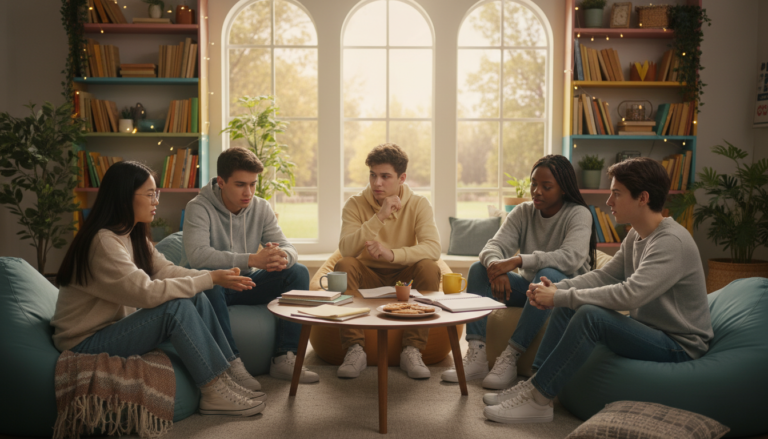
Imagine walking into a classroom where students are not just passive learners but active participants in their educational journey. Picture a space where emerging theories of behavioral psychology are applied with precision, transforming traditional education into an inclusive, engaging, and effective learning environment. This is not a far-off dream; it’s the essence of “The Classroom as a Laboratory: Experimenting with Behavioral Psychology in Education.”
As educators continue to seek innovative solutions to improve student outcomes, behavioral psychology emerges as a compelling framework. By understanding how people learn and what motivates them, we can fine-tune classroom strategies to cultivate not only academic success but also lifelong learners equipped for the challenges of tomorrow.
The Foundations of Behavioral Psychology in Education
Understanding Behavioral Psychology: Key Concepts
Behavioral psychology centers on the idea that behavior is learned and can be modified based on external stimuli. Key concepts include:
- Reinforcement: Positive or negative reinforcement can encourage or deter specific behaviors.
- Conditioning: Classical and operant conditioning are crucial in shaping responses to stimuli.
- Social Learning Theory: Suggests that learning occurs through observing others, emphasizing the role of modeling.
Using these frameworks, educators can create a rich landscape for experimentation within the classroom.
Historical Context: From Theory to Practice
The application of behavioral psychology in education is not new. Pioneers such as B.F. Skinner championed operant conditioning in the mid-20th century, advocating for the use of rewards and consequences as tools for learning. Understanding the historical context helps us appreciate the evolution of educational strategies and provides a foundation for current practices.
Classroom Strategies: Implementing Behavioral Psychology
1. Creating a Reinforcement-Driven Environment
Reinforcement strategies are paramount in behavioral psychology. The classroom can be viewed as a laboratory where experimental reinforcements lead to varied outcomes.
Case Study: Token Economies in Practice
In a middle school located in Chicago, a token economy system was established to encourage positive behavior. Students earned tokens for demonstrating good behavior and could exchange them for privileges such as extra recess time or homework passes.
| Behavior | Token Value |
|---|---|
| Arriving on time | 2 tokens |
| Completing homework | 3 tokens |
| Helping peers | 5 tokens |
Analysis: As noted in the school’s quarterly report, there was a 30% decrease in disciplinary incidents, illustrating the effectiveness of reinforcement strategies.
2. Utilizing Conditional Learning
Conditioning can also play a significant role in classroom management and academic performance.
Case Study: Mindfulness Practices
In a California high school, students participated in mindfulness sessions aimed at effectively conditioning a distraction-free learning environment. Studies reported increased focus, leading to better grades across subjects.
Analysis: Mindfulness practices conditioned students to react to stressors positively, proving that emotional well-being is foundational for academic success.
3. Implementing Social Learning Strategies
Social learning theories suggest that students can learn effectively from peer interaction and modeling.
Case Study: Peer Tutoring Programs
A peer tutoring program was launched in a Washington, D.C. elementary school, allowing students to teach others. The initiative not only improved academic performance but also fostered leadership skills among tutors.
| Program Features | Outcomes |
|---|---|
| Structured pairings | 15% increase in test scores for tutees |
| Bi-weekly training for tutors | Enhanced self-esteem among tutors |
Analysis: The social dynamics in peer tutoring became a powerful mechanism for behavioral reinforcement, as students learned collaboratively.
Assessing and Adapting: Feedback Loops in the Classroom
The Importance of Feedback
Continuous feedback is essential in behavioral psychology. It allows educators to assess the effectiveness of their strategies and adapt them as necessary.
Case Study: Digital Feedback Systems
A New York City school adopted a digital feedback system to give students immediate feedback on assignments. This real-time reinforcement resulted in a notable improvement in students’ self-efficacy and lowered anxiety around assessments.
Analysis: Instant feedback provided students with a clearer understanding of their progress, reinforcing learning behaviors and encouraging them to take ownership of their education.
Data-Informed Decision Making
Critical to the success of these strategies is the systematic collection and analysis of data. By tracking performance and behavioral changes, educators can determine which interventions are most successful.
Challenges in the Laboratory Classroom
The Pitfalls of Behaviorism
While behavioral psychology provides invaluable insights for creating effective educational environments, it is not without its challenges:
Overemphasis on External Rewards: Relying solely on reinforcement can lead to shallow learning, where students are motivated only by rewards rather than intrinsic interest.
Neglecting Emotional and Social Aspects: A purely behavioral approach may overlook the emotional and social dimensions of learning, vital for holistic education.
- Resistance to Change: Some educators may resist new methodologies, preferring traditional approaches that may not align with contemporary understanding of learning.
Balancing Applications and Theory
It is crucial to strike a balance between the theoretical aspects of behavioral psychology and its practical applications. Combining behavioral strategies with other educational theories can yield a richer educational experience for students.
Conclusion: The Future of Education
As the landscape of education continues to evolve, “The Classroom as a Laboratory: Experimenting with Behavioral Psychology in Education” becomes more relevant each day. By applying the principles of behavioral psychology, educators can create innovative and effective learning experiences that cater to the unique needs of their students.
Students equipped with the skills to learn actively and positively will thrive, transcending the confines of traditional educational settings. The challenge lies in cultivating environments where experimentation and adaptation are not just encouraged but celebrated.
FAQs
1. What is the role of behavioral psychology in education today?
Behavioral psychology helps educators design strategies that promote positive behaviors and enhance learning outcomes through reinforcement and conditioning.
2. Can behavioral psychology be applied in all subjects?
Yes, behavioral psychology principles can be adapted to various subjects, enhancing student engagement and learning in math, science, humanities, and the arts.
3. How can I implement these strategies in my classroom?
Start small by introducing reinforcement systems and gather data on student behaviors to understand what motivates them.
4. Are there any risks associated with using behavioral psychology?
Yes, one risk is the reliance on extrinsic rewards, which may undermine intrinsic motivation if not balanced.
5. How can I ensure my classroom remains inclusive while using behavioral strategies?
Focus on creating a culture of collaboration and discussion. Adapt your strategies to meet diverse student needs and backgrounds.
By embracing “The Classroom as a Laboratory: Experimenting with Behavioral Psychology in Education,” we can foster an educational journey that is as dynamic as the students we serve, paving the way for a brighter future in learning.
About the Author