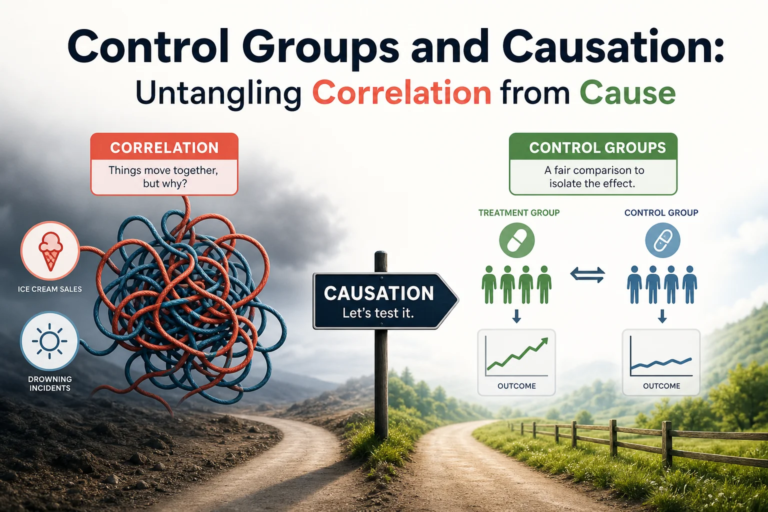
Can we really get to know human behavior without changing the things that affect it? This is the core of experimental research methods in psychology. It’s all about finding out how things cause other things to happen.
Experimental design is key to figuring out these causes. It lets researchers see how certain things change human behavior. By changing independent variables and seeing how they affect dependent variables, researchers can learn a lot about psychology.
Key Takeaways
- Understanding the basics of experimental design is essential for psychological research.
- Experimental research methods help establish cause-and-effect relationships.
- Careful manipulation of variables is critical for getting accurate results.
- Experimental design is vital for understanding human behavior.
- Good research design and analysis lead to solid conclusions.
Introduction to Experimental Design
Experimental design in psychology is a detailed research method. It involves changing variables to find cause-and-effect links. It’s about testing ideas in a controlled setting to understand variable relationships.
This method is key in psychology experiments. It lets scientists see how an independent variable affects a dependent variable. They also control outside factors that might change the results.
Definition of Experimental Design
Experimental design is a systematic way to test hypotheses. It involves changing variables and controlling outside factors. This is the heart of controlled experiments in psychology, aiming to mimic real-life closely while reducing outside effects.
A good experiment has a clear hypothesis, changes the independent variable, and measures the dependent variable. It also controls outside variables. This setup helps researchers find cause-and-effect links between variables.
Importance in Psychological Research
The role of experimental design in psychology research is huge. It offers a strict way to test hypotheses and find causality. This is vital for deepening our knowledge of human behavior and mental processes.
Using experimental design principles ensures findings are trustworthy and apply to more people. This is critical in psychology, where human behavior’s complexity and subjective nature make it hard to reach clear conclusions.
Also, experimental design lets researchers compare groups under the same conditions. This helps them see how specific variables affect psychological results. This is key for creating effective treatments for various mental health issues.
Key Concepts in Experimental Design
Experimental design is based on several key concepts. These are vital for conducting solid psychological research. They ensure the results are trustworthy and accurate.
Variables: Independent and Dependent
Variables are key in experimental design. The independent variable is what researchers change to see its impact. The dependent variable is what they measure as a result.
Control Groups and Experimental Groups
Experiments have a control group and an experimental group. The control group doesn’t get the treatment, acting as a standard. The experimental group does get the treatment.
Random Assignment
To avoid bias, researchers use random assignment. This means participants are randomly put into either group.
| Concept | Description | Importance |
|---|---|---|
| Independent Variable | Factor manipulated by the researcher | Determines the cause in a cause-effect relationship |
| Dependent Variable | Outcome measured in response to the independent variable | Reveals the effect in a cause-effect relationship |
| Control Group | Group not receiving the experimental treatment | Provides a baseline for comparison |
| Experimental Group | Group exposed to the independent variable | Shows the effect of the independent variable |
| Random Assignment | Method to minimize bias by randomly allocating participants to groups | Ensures that the groups are comparable |
Types of Experimental Designs
It’s key to know the different types of experimental designs for solid psychological research. These designs change based on how participants are grouped and how data is collected.
Between-Subjects Design
A between-subjects design compares different groups of people. Each group faces a unique condition of the independent variable. This setup helps avoid carryover effects, where one condition affects another.
Advantages: It makes it easier to see the independent variable’s effect by avoiding carryover effects.
Example: A study might compare a new teaching method with traditional ones. Two groups of students are taught each way, and their results are compared.
Within-Subjects Design
In a within-subjects design, the same people are tested under different conditions. This design is good for reducing error from individual differences.
Benefits: It boosts statistical power by controlling for individual differences.
Illustration: A memory test is given to participants under two conditions: with and without background noise. Their results in both conditions are compared.
Factorial Design
Factorial design looks at how multiple independent variables affect the dependent variable. It’s great for studying how variables interact.
Key Feature: It lets researchers check for interaction effects between variables.
Application: A study might look at sleep deprivation and caffeine’s effect on thinking. It uses a factorial design to see each variable’s main effect and their interaction.
| Design Type | Description | Advantages |
|---|---|---|
| Between-Subjects | Different groups for each condition | Reduces carryover effects |
| Within-Subjects | Same participants under different conditions | Increases statistical power |
| Factorial | Examines multiple independent variables | Studies interaction effects |
The Role of Hypotheses
Hypotheses are key in experimental design. They are educated guesses that researchers test through experimental manipulation. These guesses predict how variables relate to each other, guiding the research and setting its direction.

Formulating Hypotheses
Creating hypotheses is a vital step in experimental psychology. It means making statements that can be tested and proven wrong. A good hypothesis clearly shows how the independent and dependent variables are connected. Researchers must think about both directional and non-directional hypotheses, based on the research question and current knowledge.
Types of Hypotheses
There are many types of hypotheses in experimental design. Null hypotheses say there’s no effect or relationship. On the other hand, alternative hypotheses suggest there is a significant effect or relationship. Researchers might use directional hypotheses to guess the direction of the effect or non-directional hypotheses to just predict an effect without saying which way it goes.
Testing Hypotheses in Experiments
Testing hypotheses means changing the independent variable and seeing how it affects the dependent variable. Researchers use statistical tests to see if the data backs up or goes against the null hypothesis. The results of these tests help figure out if the hypothesis is right or not, guiding further research or conclusions.
In summary, hypotheses are very important in research design and analysis. They give a structure for testing theoretical ideas. By knowing how to make and test hypotheses, researchers can make sure their experiments are solid and useful.
Reliability and Validity in Research
The trustworthiness of research in psychology depends on reliability and validity. These are key to making sure research is consistent, accurate, and can be applied widely.
What is Reliability?
Reliability means that measurements are consistent. It shows how well an instrument or method gives the same results when conditions are the same. In psychology, reliability is vital to avoid errors.
For example, if a psychological test is given twice to the same group and shows similar results, it’s reliable. Also, if different people rate the same behavior and agree, the tool is reliable.
Understanding Validity
Validity is about how well a measure really captures what it’s supposed to. It’s about the precision of the measurement. Without validity, study results might not truly show what they’re meant to.
There are different types of validity, like face validity and content validity. For instance, a test has face validity if it seems to measure what it says it does. Content validity is about whether the test items cover the whole area being measured.
Importance of Both in Experiments
Reliability and validity are both critical in experiments. They make sure the results are reliable and meaningful. Without them, results could be shaky or not show what they’re supposed to.
To get both reliability and validity, researchers need to design their studies well. They must choose the right tools and analyze their data carefully. This way, they can be sure of their findings and help grow knowledge in their field.
Ethical Considerations in Experimental Psychology
Ethical issues are key in designing and running psychological experiments. Researchers must handle these issues carefully. This ensures their studies respect participants’ rights and dignity.
Informed Consent
Informed consent is vital in ethical research. It means participants agree to join a study knowing what it involves. They must understand the risks and benefits, the study’s procedures, and their rights, like withdrawing anytime without penalty.
Key elements of informed consent include clear study information, ensuring participants understand, and getting their explicit consent. Researchers must also ensure participants are not forced to join and can ask questions freely.
Deception in Research
Deception in research means participants are not told the study’s true purpose. While it can be necessary for some experiments, it’s a big ethical concern. Researchers must consider the benefits against the harm to participants.
When using deception, it must be justified by the study’s scientific, educational, or applied value. There should be no other ways to get the same results without deception.
Debriefing Participants
Debriefing is critical in research, mainly when deception is used. It explains the study’s true purpose, the reasons for deception, and the expected outcomes. Debriefing helps restore participants’ understanding and can lessen the negative effects of deception.
Good debriefing involves discussing the study’s results, answering questions, and ensuring participants are in the same or better state than when they started. This way, researchers keep their studies ethical while respecting participants’ welfare.
Data Collection Methods
Experimental psychologists use many ways to study human behavior and mental processes. The method they choose depends on their research question and the data they need. It also depends on the study’s design.
Surveys and Questionnaires
Surveys and questionnaires are common for getting self-report data. They help find out about people’s attitudes, beliefs, and past actions. They are good because they can quickly gather data from many people. They can also be given in different ways, like online or in person. But, they can be biased, like when people don’t answer truthfully.
A well-known researcher said, “Surveys can show what a group thinks at one time. But, they need to be made carefully to avoid bias.”
“The art of asking questions is key in survey research. How a question is asked can really change the answer.”
Observational Techniques
Observational techniques mean watching and recording behavior in real or controlled settings. This method is great for studying hard-to-catch behaviors. It gives detailed data on how people act. But, it takes a lot of time and needs trained observers to be reliable.
| Method | Advantages | Limitations |
|---|---|---|
| Surveys/Questionnaires | Efficient, flexible, large sample size | Subject to bias, self-report limitations |
| Observational Techniques | Rich, detailed data, natural behavior | Time-consuming, observer training required |
| Performance-based Measures | Objective, quantifiable data | Limited to specific tasks, may not generalize |
Performance-based Measures
Performance-based measures test cognitive or motor skills through specific tasks. These measures are clear and give exact data. They are great for studying how the mind works or the effects of treatments. But, they only show what happens in the specific tasks used, not in other situations.
In summary, picking a data collection method in experimental psychology depends on the research question and the data needed. Each method has its good points and downsides. Knowing these is key to making good studies.
Analyzing Experimental Data
Analyzing experimental data is key to understanding research studies. It involves several steps to draw conclusions from the data.
Statistical Tests Summary
Statistical tests help analyze data and check if it supports the research hypotheses. The right test depends on the research question and data type. Common tests include t-tests, ANOVA, and regression analysis. Choosing the right test is essential for accurate conclusions.
- t-tests compare the means of two groups.
- ANOVA compares means across three or more groups.
- Regression analysis models the relationship between variables.
Interpreting Results
Interpreting results means understanding their significance. Researchers look at the p-value, effect size, and confidence intervals. A significant result means the effect is unlikely by chance. It’s also important to consider the practical significance.
“Statistical significance is not the same as practical significance. Researchers must interpret their findings in the context of the research question and study design.”
Reporting Findings
Reporting research findings should be clear and concise. Include details on statistical tests, results, and interpretations. Being transparent and clear is important. Use tables, figures, and graphs to illustrate data.
When reporting, also mention the study’s limitations and future research directions. This adds context and guides further study.
Challenges in Experimental Design
Creating an experiment that gives reliable and useful results is hard. Many challenges must be overcome. Researchers need to think about several key factors to make sure their findings are valid and useful.
Controlling for Confounding Variables
One big challenge is managing confounding variables. These are factors other than the main variable that can change the study’s results. They can make the findings less accurate.
To deal with this, researchers use methods like randomization. This means participants are randomly put into different groups. They also use matching, where participants are paired across groups based on important traits.
| Technique | Description | Benefit |
|---|---|---|
| Randomization | Random assignment of participants to groups | Reduces bias and ensures groups are comparable |
| Matching | Matching participants across groups based on characteristics | Ensures groups are similar in relevant factors |
Participant Bias and Demand Characteristics
Participant bias and demand characteristics are also big challenges. These happen when participants’ expectations or how they see the experiment can change their behavior. This can affect the study’s results.
To tackle this, researchers use blinding. This means participants don’t know which group they’re in or what the study is testing. They also try to avoid giving away what the expected results are.
Generalizability of Findings
It’s also important to make sure the study’s results can be applied to a wider group. This means the findings should be relevant to more than just the people in the study.
To make results more generalizable, researchers pick a sample that represents the wider population they want to apply the findings to. They also think about how the study’s setup might affect the results.
By tackling these challenges, researchers can create experiments that give us important insights into psychology.
Real-World Applications of Experimental Design
Experimental design in psychology has many uses. It helps in clinical, educational, and organizational psychology. It lets researchers study complex topics and find ways to help people and improve performance.
Clinical Psychology
In clinical psychology, it’s key to check if treatments work. Researchers use designs to see how different therapies stack up. This helps find the best treatments for mental health issues.
For example, a study might compare cognitive-behavioral therapy (CBT) with medication for depression. Such studies guide doctors on what treatments to use.
Educational Psychology
Experimental design is also important in education. It helps find the best ways to teach and learn. By changing teaching methods or content, researchers can see what works best for students.
For instance, a study might look at how technology affects math skills. By using technology in some classrooms and not others, researchers can see its impact.
Organizational Psychology
In work settings, experimental design helps understand and improve performance. It studies how management and work environments affect productivity and happiness. Researchers use experiments to see what changes work best.
For example, a study might check if flexible work hours boost productivity. By comparing flexible and traditional schedules, companies can decide what works best for them.
| Field | Application of Experimental Design | Example |
|---|---|---|
| Clinical Psychology | Evaluating treatment efficacy | Comparing CBT vs. medication for depression |
| Educational Psychology | Investigating learning strategies | Assessing technology integration in math education |
| Organizational Psychology | Improving workplace dynamics | Evaluating flexible work arrangements on productivity |
Case Studies in Experimental Psychology
Experimental psychology has a rich history filled with key case studies. These studies have greatly improved our understanding of psychology. They have also shaped how we do research today.
Famous Experiments and Their Impact
Some experiments have become major milestones in psychology. For example, the Stanford Prison Experiment by Philip Zimbardo in 1971 showed how situation can change people. It showed that even good people can act badly when in certain situations.
Stanley Milgram’s obedience study is another important one. It showed how far people will go to follow orders, even if it goes against their morals. These studies have greatly influenced our understanding of human behavior.
Lessons Learned from Key Studies
These studies have taught us a lot about psychology. One big lesson is how much situations can affect our actions. The Stanford Prison Experiment showed how quickly people can become abusive when given power.
Milgram’s study also showed the power of authority. It showed how people often follow orders, even if it goes against their values. These findings are important for psychology, sociology, and ethics.
| Experiment | Key Findings | Impact |
|---|---|---|
| Stanford Prison Experiment | Situational factors significantly influence behavior | Highlighted the danger of abuse of power |
| Milgram’s Obedience Study | Individuals tend to obey authority figures | Revealed the dangers of blind obedience |
| Loftus’ Misleading Information Study | False memories can be induced through suggestion | Challenged the reliability of eyewitness testimony |
These studies have greatly helped us understand psychology. They have also influenced many fields, like education and criminal justice. By looking at these experiments, researchers can keep improving their methods and explore new areas.
Current Trends in Experimental Psychology
The field of experimental psychology is changing fast. New technologies and research methods are making studies more detailed and complex. This change is helping the field grow in exciting ways.
Use of Technology and Virtual Reality
Virtual reality (VR) is becoming a big part of experimental psychology. It lets researchers create detailed, safe spaces for studying. For example, VR helps treat anxiety and PTSD by simulating real-life situations.
Technology is also being used in other ways, like:
- Online platforms for collecting data, reaching more people.
- Tools for tracking eye movements and body responses, giving more accurate data.
- Machine learning to find patterns in big data, revealing new insights.

Trends in Data Analysis Techniques
New ways to analyze data are also emerging. Researchers are using advanced statistics and machine learning. These tools help spot subtle patterns and connections, giving deeper insights into psychology.
Some key trends in data analysis include:
- Bayesian statistics for more detailed data interpretation.
- Machine learning to predict outcomes from big data, improving research accuracy.
- Using multilevel modeling to handle complex data structures.
These trends are not just improving experimental psychology. They’re also opening up new research paths. As technology keeps advancing, we’ll see even more creative ways to study human psychology.
Resources for Further Learning
There are many ways to learn more about experimental design. This field is always growing, so it’s important to keep up with new research and methods. Whether you’re just starting out or have been studying for a while, there’s always something new to learn.
Recommended Texts and Journals
Some key texts and journals are essential for understanding experimental design in psychology. Recommended texts include “Experimental Design: Procedures for the Behavioral Sciences” by Roger Kirk. It gives a detailed look at the basics of experimental design. Journals like the Journal of Experimental Psychology: General and Psychological Methods share the latest research and new methods.
- Experimental Design: Procedures for the Behavioral Sciences by Roger Kirk
- Journal of Experimental Psychology: General
- Psychological Methods
Websites and Online Courses
The internet is full of resources for learning about experimental design. Sites like the American Psychological Association (APA) offer guidelines, articles, and educational materials. Online platforms like Coursera and edX have courses on research methods and experimental design from top universities.
- Coursera: Offers a variety of courses on research methods and experimental design.
- edX: Provides courses and certifications in psychology and research methods.
- American Psychological Association (APA): A valuable resource for guidelines, research, and education in psychology.
Professional Organizations and Conferences
Getting involved with professional organizations and attending conferences is a great way to keep up with new developments in experimental design. The Association for Psychological Science (APS) and the American Psychological Association (APA) host events and workshops. These focus on research in experimental design and other related areas.
- Association for Psychological Science (APS): Hosts conferences and publishes research on psychological science.
- American Psychological Association (APA): Organizes conferences and publishes journals and books on psychology.
Conclusion: The Future of Experimental Design in Psychology
Looking ahead, the future of experimental design in psychology is bright. New technologies like virtual reality are changing the game. They allow for more complex and controlled studies.
Innovations on the Horizon
New tech and methods will make experiments more precise and useful. Researchers are keeping up, making sure experimental design stays key in psychology.
Maintaining Research Rigor
Even with new tools, keeping research reliable and valid is key. This ensures we can trust the findings. As the field grows, sticking to these standards will be more important than ever.
The future of experimental design looks exciting. With new challenges and breakthroughs, the field will keep advancing. By focusing on both innovation and research quality, we’ll deepen our understanding of human behavior.
FAQ
What is experimental design in psychology?
Why is random assignment important in experimental design?
What are the different types of experimental designs used in psychology?
How do you formulate a hypothesis for an experiment?
What is the difference between reliability and validity in experimental research?
What are some common ethical considerations in conducting psychological experiments?
How do researchers analyze data from experiments?
What are some challenges faced in experimental design?
How is experimental design applied in different areas of psychology?
What are some current trends in experimental psychology?
About the Author