
The study of behavioral psychology has uncovered many groundbreaking insights into human behavior. This is thanks to key case studies that have greatly shaped our understanding of psychological principles.
Behavioral psychology focuses on observable behaviors and how they are learned through conditioning. Classic case studies have given us valuable lessons. They show how these principles work in real-life situations.
These studies are taught in psychology courses today. They show the power of conditioning in shaping behavior. By looking at these cases, we learn more about the complex links between environment, behavior, and cognition.
Key Takeaways
- Understanding behavioral psychology through case studies.
- The role of conditioning in shaping human behavior.
- Insights from classic case studies into psychological principles.
- Applications of behavioral psychology in real-world scenarios.
- The significance of observable behaviors in psychological research.
The Foundation of Behavioral Psychology
Behavioral psychology aims to understand human behavior. It studies actions we can see, not what’s inside our minds. This approach helps us understand how people act.
Behavioral psychology relies on key principles and theories. It looks at how we learn and change our behaviors.
Key Principles and Theoretical Framework
The main ideas of behavioral psychology come from two main types of conditioning: classical and operant.
Classical and Operant Conditioning
Classical conditioning was discovered by Ivan Pavlov. It shows how we can link a neutral stimulus to a response. Operant conditioning, by B.F. Skinner, teaches us about changing behavior through rewards or penalties.

Behaviorism is different from thinking about our minds. It looks at what we do, not what we think. This is important for understanding how we act based on what’s around us.
Knowing these basics helps us see how wide-ranging behavioral psychology is. It’s used in many areas, like teaching and helping people with mental health issues.
Understanding the Methodology Behind Behavioral Case Studies
Behavioral case studies use strong research methods to explore human behavior. They are key to understanding many psychological issues and creating solutions.
Research Methods in Behavioral Psychology
Behavioral psychology research uses different methods to study behavior. The main ones are single-subject designs and group experimental designs.
Single-Subject Designs
Single-subject designs focus on one person’s behavior. This way, the person acts as their own control. It helps see how behavior changes over time.
Group Experimental Designs
Group designs, on the other hand, compare groups in different situations. This method shows how behavior changes in different groups and how well interventions work.
Both single-subject and group designs are vital in studying behavior. They give us different views on how people behave, helping us understand complex behaviors better.
| Research Method | Description | Advantages |
|---|---|---|
| Single-Subject Designs | In-depth analysis of individual behavior | Detailed examination of behavioral changes |
| Group Experimental Designs | Comparison of different groups under various conditions | Insights into broader behavioral trends |
B.F. Skinner, a famous behavioral psychologist, said, “The behavior of an individual is not determined by a single factor, but by the interaction of multiple variables.” This shows how complex behavior research is and why we need many methods.
“The behavior of an individual is not determined by a single factor, but by the interaction of multiple variables.”
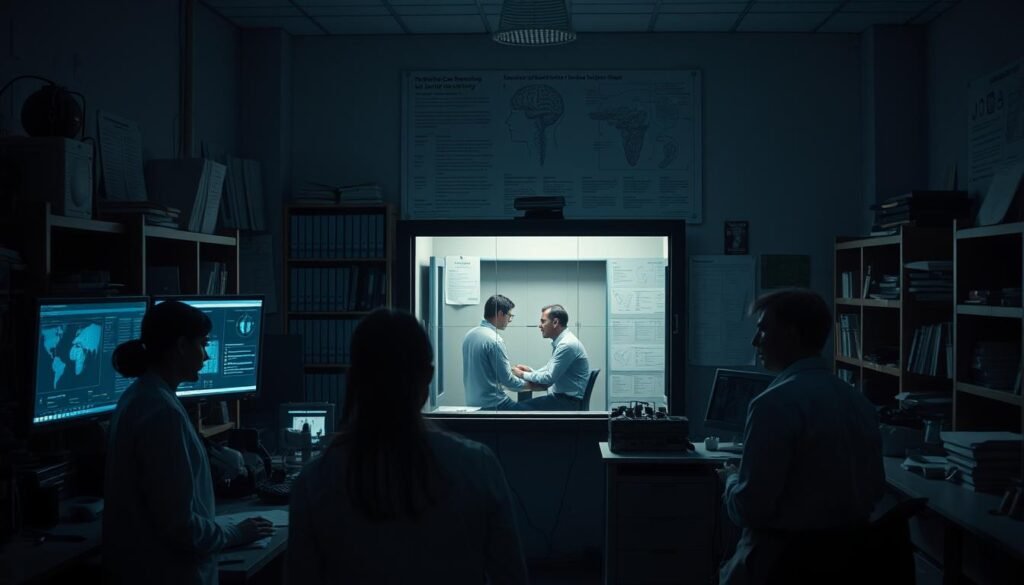
Knowing these methods is key to understanding behavioral case studies. By using many research methods, psychologists can deeply understand human behavior.
The Little Albert Experiment: Fear Conditioning in Action
John Watson and Rosalie Rayner’s Little Albert experiment is a key study in fear conditioning. It was done in the early 20th century. This study showed how a neutral thing can make a young child, Little Albert, fear it.
Watson and Rayner’s Methodology
The study tested classical conditioning, first found by Ivan Pavlov. Watson and Rayner wanted to make Little Albert fear a neutral thing. They used an unpleasant noise to do this.
Experimental Design and Implementation
The study had several steps. First, Little Albert was shown different things, like a white rat, without fear. Then, they paired the rat with a loud, scary noise.
After many times of seeing the rat with the noise, Little Albert started to fear the rat alone. He also feared other similar things, like a fur coat and a Santa Claus mask. This showed how fear can spread to other things, helping us understand phobias.
The Little Albert experiment has greatly influenced psychology. It shows how fear can be learned and how it affects behavior. Even though it’s been criticized for its ethics, it’s a study that continues to shape psychology today.
B.F. Skinner’s Operant Conditioning Chamber
B.F. Skinner’s operant conditioning chamber, also known as the Skinner Box, was a groundbreaking invention. It allowed Skinner to study behavior in a controlled setting. This device helped him understand how behavior changes based on its consequences.
The Skinner Box Experiments
The Skinner Box experiments were key in showing how operant conditioning works. Skinner put animals, like rats or pigeons, in the box. He watched how they learned to do actions to get rewards or avoid punishments.
Experimental Setup and Procedures
The chamber had a lever or key for the animal to press for food rewards. It could also give punishments or remove unpleasant stimuli. Skinner changed the reward and punishment schedules to see their effects on behavior.
He used different schedules, like fixed-ratio or variable-interval, to study learning and behavior. This helped him see how different reinforcement patterns affect behavior frequency and persistence.
Key Findings and Interpretations
Skinner’s work showed that consequences greatly influence behavior. Rewards increase behavior, while punishments decrease it. He also found that the schedule of reinforcement greatly impacts learning and behavior persistence.
| Reinforcement Schedule | Description | Effect on Behavior |
|---|---|---|
| Fixed-Ratio | Reward given after a fixed number of responses | High response rate, with a pause after reward |
| Variable-Interval | Reward given after an unpredictable interval | Moderate, steady response rate |
| Continuous | Reward given after every response | High response rate, but can lead to satiation |
Skinner’s research has greatly influenced education and behavioral therapy. It shows the power of operant conditioning in shaping behavior. Understanding reinforcement schedules helps educators and therapists teach new behaviors and reduce undesired ones.
Behavioral Psychology in Practice: Lessons from Notable Case Studies
Looking at famous case studies in behavioral psychology, we find key principles for changing behavior. These principles help in many areas, like schools and mental health.
Synthesizing Research Findings
Studying many case studies, we see important principles for good behavior change. These include using rewards, changing the environment, and making plans for each person.
Common Principles Across Case Studies
Many case studies show the same important points. For example, rewards help people do better. Also, where we are affects how we act, as shown in operant conditioning studies.
- Reinforcement: Encouraging desired behaviors through rewards or positive reinforcement.
- Environmental Control: Modifying the environment to influence behavior.
- Tailored Interventions: Designing interventions based on individual needs.
Translating Theory to Practice
It’s key to use what we learn from theory in real life. This helps us make effective plans based on solid evidence. For example, B.F. Skinner’s work has helped in schools and therapy.
| Theory | Practical Application |
|---|---|
| Operant Conditioning | Token Economy Systems in Institutional Settings |
| Social Learning Theory | Modeling desired behaviors in educational settings |
As Joseph Wolpe said, “The more we know about learning, the better we can help people.” This shows why we must keep studying behavioral psychology.
“The more we know about the learning process, the more we can do to improve the human condition.” – Joseph Wolpe
In summary, behavioral psychology has many uses. By combining research and applying it, we can keep improving and helping people change for the better.
The Bobo Doll Experiments: Social Learning Theory
The Bobo Doll experiments by Albert Bandura shed light on social learning theory. They showed how watching others can shape our actions, mainly in kids.
Methodology and Findings
Bandura’s study had kids watch an adult act aggressively towards a Bobo Doll. Then, he checked how the kids acted in the same situation. His results proved that watching others is key to learning.
Experimental Design and Procedures
The study aimed to see if seeing aggressive acts leads to copying them. Here’s how it worked:
- Children were split into groups to watch either an aggressive or calm adult.
- The adult’s actions towards the Bobo Doll were either mean or nice.
- Then, the kids were in a room with the Bobo Doll and toys to see what they did.
Key Results and Interpretations
The study found that kids who saw the mean adult acted meaner towards the Bobo Doll. This backed up Bandura’s theory, showing how watching others can change our actions.
Key findings included:
- Children copied the mean behavior they saw.
- Seeing calm behavior made kids less aggressive.
This study’s results are very important. They show that seeing violence can make people, mainly kids, act more aggressively.
In summary, the Bobo Doll experiments highlight the power of social learning theory. Understanding how we learn from watching others helps us tackle aggression and violence better.
Systematic Desensitization: Wolpe’s Contribution to Anxiety Treatment
Joseph Wolpe’s systematic desensitization has been key in fighting anxiety disorders. It uses a behavioral therapy approach. This method slowly exposes people to things they fear, teaching them to relax and reduce anxiety.
The Process of Systematic Desensitization
The systematic desensitization process has several important steps. It starts with assessing the person’s anxiety to understand it better.
Creating Anxiety Hierarchies
Creating an anxiety hierarchy is a critical step. It’s a list of things that make someone anxious, from mildly to very scary. This list is made just for the person and helps guide the therapy.
Relaxation Training Techniques
Relaxation training is also key. It teaches people how to relax and lower their body’s tension. Techniques like deep breathing, muscle relaxation, or visualization are used. These skills help people deal with their anxiety when faced with feared situations.
The therapy moves through the anxiety hierarchy slowly. Starting with the least scary thing, the person practices relaxation. This helps them get used to things that once scared them a lot.
| Component | Description | Benefit |
|---|---|---|
| Anxiety Hierarchy | A ranked list of anxiety-provoking stimuli | Guides the desensitization process |
| Relaxation Training | Techniques to reduce physiological tension | Helps manage anxiety during exposure |
| Gradual Exposure | Progressing through the anxiety hierarchy | Reduces anxiety response over time |
Systematic desensitization combines gradual exposure with relaxation techniques. This method, created by Joseph Wolpe, is a powerful tool in treating anxiety. It remains a valuable part of behavioral therapy today.
Token Economy Systems: Behavior Modification in Institutional Settings
Token economy systems help change behavior in places like schools and hospitals. They use operant conditioning to reward good actions and punish bad ones.
Implementation Strategies and Protocols
For a token economy to work, a few things are key. You need to know what behaviors you want to see and what rewards will motivate people.
Setting Up a Token Economy
First, decide what behaviors you want to encourage. This means:
- Clearly defining the behaviors you want to see
- Creating a way to give out tokens
- Figuring out how many tokens are needed for rewards
Selecting Reinforcers and Behaviors
Choosing the right rewards is very important. Rewards should be something people want and can enjoy. They can be things you can hold or special privileges.
Good rewards are given right after the good behavior. They should be seen as valuable by the people getting them.
By using token economy systems well, places can make a better environment. They can also help people change their behavior for the better.
Applied Behavior Analysis and Autism Spectrum Disorders
Applied Behavior Analysis (ABA) is a key therapy for Autism Spectrum Disorders (ASD). It uses behavior analysis to help people behave better and stop bad behaviors.
ABA works by breaking down big behaviors into small parts. Then, it rewards good behaviors. This way, ABA helps fit therapy to each person’s needs.
Lovaas Method and Early Intensive Behavioral Intervention
The Lovaas method is a type of ABA that really helps kids with ASD. Early Intensive Behavioral Intervention (EIBI) is based on Lovaas. It focuses on starting therapy early and doing it a lot.
Protocol and Implementation Guidelines
EIBI follows a strict plan. This includes:
- Intensive one-on-one therapy sessions
- Working on new skills and reducing bad behaviors
- Teaching parents to use the same methods everywhere
Following these steps is key to making EIBI work well.
Training Requirements for Practitioners
People doing ABA and EIBI need a lot of training. They learn:
- How to analyze behavior and understand autism
- How to do therapy in real situations
- How to keep up with the latest in therapy
Good training means better care for those with ASD.
Cognitive-Behavioral Therapy: Merging Thought and Action
Cognitive-behavioral therapy (CBT) is a big step forward in treating mental health issues. It looks at both how we think and how we act. Developed by Aaron Beck, it combines cognitive and behavioral methods to tackle many mental health problems.
Beck’s Cognitive Therapy for Depression
Beck’s Cognitive Therapy is a key part of CBT, aimed at fighting depression. It says that negative thoughts lead to feeling down.
Identifying and Challenging Cognitive Distortions
A big part of Beck’s therapy is spotting and fighting cognitive distortions. These are:
- All-or-nothing thinking: Seeing things as either completely good or completely bad.
- Overgeneralization: Drawing big conclusions from just one event.
- Catastrophizing: Always expecting the worst.
By spotting and fighting these distortions, people can start thinking more positively and realistically.
Behavioral Activation Components
Behavioral activation is also a key part of CBT. It helps people do things they’ve been too scared to do because of their depression. This includes:
- Increasing motivation by getting people to do things they used to enjoy.
- Reducing avoidance behaviors that make depression worse.
CBT helps people fight their depression better, making their lives better overall.
Ethical Considerations in Behavioral Interventions
Ethical considerations are key in behavioral interventions. They protect the rights and well-being of those involved. It’s important for practitioners to follow ethical rules to be both effective and respectful.
Informed Consent and Participant Rights
Getting informed consent is a big part of ethical practice. It means clearly telling participants about the intervention, its risks, and benefits. Participants should also know they can leave the study anytime.
Ethical Guidelines for Practitioners
Practitioners follow ethical rules like respect for persons, doing good, not doing harm, and fairness. These rules help shape how interventions are designed and carried out.
- Respect for persons means treating participants with dignity and respect.
- Doing good means acting in the best interest of participants.
- Not doing harm is key to avoiding harm to participants.
- Justice means making sure research benefits and burdens are fair.
Documentation and Transparency
Keeping detailed records is vital for transparency and accountability. This includes notes on consent, intervention steps, and any issues that come up.
| Ethical Principle | Application in Behavioral Interventions |
|---|---|
| Respect for Persons | Informed consent, autonomy |
| Beneficence | Maximizing benefits, minimizing harm |
| Non-maleficence | Avoiding harm to participants |
| Justice | Fair distribution of benefits and burdens |
By sticking to these ethical rules, practitioners can make sure interventions are respectful, helpful, and safe for everyone involved.
Modern Applications and Digital Behavioral Interventions
Technology and behavioral psychology have merged to create new, effective ways to help people. Digital tools are key in understanding and changing human behavior. They play a big role in helping us improve our actions.
Mobile apps are a big part of this change. They offer tools and advice to help people change their habits. This includes tracking what you do and getting feedback that’s just for you.
Mobile Applications for Behavior Modification
Mobile apps are now a big part of changing behavior. They make it easy and convenient to get help. This helps many people get the support they need.
Evidence-Based Digital Interventions
There are many digital tools that help people change for the better. These tools are based on solid research. For example, apps that use CBT can help with anxiety and depression.
“The use of mobile apps in behavioral interventions represents a significant shift towards more accessible and personalized treatment options.”
Implementation and Adherence Strategies
To make digital interventions work best, we need to focus on how to use them well. This includes reminders, games, and support groups. These help people stick with the program and get better results.
| Strategy | Description | Benefits |
|---|---|---|
| Personalized Reminders | Tailored notifications to encourage engagement | Improved adherence, increased user engagement |
| Gamification | Using game design elements to enhance motivation | Increased user participation, enhanced motivation |
| Social Support Networks | Connecting users with peers for support and encouragement | Enhanced sense of community, improved outcomes |
As technology keeps getting better, we’ll see even more ways to use psychology in real life. These new tools will help us make better interventions. This will improve lives all over the world.
Conclusion
Behavioral psychology has greatly helped us understand human behavior. This is clear from the case studies in this article. These studies have led to effective ways to change behavior for the better in many areas.
The Little Albert Experiment, B.F. Skinner’s Operant Conditioning Chamber, and the Bobo Doll Experiments show how powerful behavioral psychology is. By using these methods, experts can create specific plans to fix certain behavior problems.
As we keep learning about behavioral psychology, we must think about its ethics. We need to make sure these methods are used right and with respect for all cultures. Behavioral psychology can lead to real positive changes in fields like education and mental health.
By combining what we’ve learned from these examples, we can better understand human behavior. This will help us make more effective plans to improve behavior.
FAQ
What is behavioral psychology?
What are the key principles of behavioral psychology?
What is the significance of the Little Albert experiment?
How does operant conditioning work?
What is the Bobo Doll experiment, and what did it demonstrate?
What is systematic desensitization, and how is it used?
What is a token economy system, and how is it used?
What is Applied Behavior Analysis (ABA), and how is it used?
What is Cognitive-Behavioral Therapy (CBT), and how is it used?
What are the ethical considerations in behavioral interventions?
How are digital technologies being used in behavioral interventions?
About the Author



















certainly like your web site but you need to take a look at the spelling on several of your posts. Several of them are rife with spelling issues and I to find it very troublesome to tell the reality nevertheless I will surely come again again.
Outstanding post, you have pointed out some wonderful points, I besides believe this s a very good website.
Pretty! This was a really wonderful post. Thank you for your provided information.
When I originally commented I clicked the -Notify me when new comments are added- checkbox and now each time a comment is added I get four emails with the same comment. Is there any way you can remove me from that service? Thanks!
You could definitely see your expertise within the paintings you write. The world hopes for even more passionate writers like you who are not afraid to mention how they believe. At all times go after your heart. “What power has law where only money rules.” by Gaius Petronius.
You are a very bright individual!
I like the helpful information you supply in your articles. I will bookmark your weblog and take a look at again here regularly. I’m reasonably certain I’ll be told plenty of new stuff right right here! Best of luck for the following!
Oh my goodness! an amazing article dude. Thanks However I’m experiencing subject with ur rss . Don’t know why Unable to subscribe to it. Is there anybody getting similar rss problem? Anyone who is aware of kindly respond. Thnkx
Hey there just wanted to give you a quick heads up and let you know a few of the pictures aren’t loading properly. I’m not sure why but I think its a linking issue. I’ve tried it in two different browsers and both show the same outcome.
I wish to show some appreciation to this writer just for bailing me out of such a dilemma. Because of searching throughout the search engines and coming across basics which were not productive, I was thinking my entire life was over. Being alive devoid of the answers to the problems you’ve resolved by way of this write-up is a crucial case, as well as ones that would have in a negative way damaged my career if I had not come across your web blog. Your main natural talent and kindness in handling every part was priceless. I don’t know what I would’ve done if I hadn’t encountered such a thing like this. It’s possible to at this time relish my future. Thanks for your time very much for the expert and amazing help. I will not be reluctant to endorse the blog to any individual who should get support about this issue.
I think this is among the so much significant information for me. And i am glad studying your article. However want to commentary on some common things, The site taste is wonderful, the articles is really nice : D. Excellent process, cheers
Hello.This article was really remarkable, particularly since I was looking for thoughts on this topic last week.
Very interesting subject, appreciate it for posting. “Welcome to President Bush, Mrs. Bush, and my fellow astronauts.” by Dan Quayle.
Hey! I know this is kinda off topic but I was wondering which blog platform are you using for this website? I’m getting fed up of WordPress because I’ve had problems with hackers and I’m looking at alternatives for another platform. I would be fantastic if you could point me in the direction of a good platform.
I liked as much as you will receive carried out right here. The caricature is attractive, your authored material stylish. nonetheless, you command get bought an nervousness over that you wish be turning in the following. unwell definitely come more formerly once more as exactly the same nearly a lot ceaselessly inside case you shield this hike.
You have mentioned very interesting points! ps decent internet site.
Your place is valueble for me. Thanks!…
Its fantastic as your other blog posts : D, thankyou for posting. “You can’t have everything. Where would you put it” by Steven Wright.
You are my inhalation, I have few web logs and rarely run out from post :). “To die for a religion is easier than to live it absolutely.” by Jorge Luis Borges.
Hi, I think your site might be having browser compatibility issues. When I look at your website in Safari, it looks fine but when opening in Internet Explorer, it has some overlapping. I just wanted to give you a quick heads up! Other then that, fantastic blog!
I like what you guys are up also. Such intelligent work and reporting! Keep up the superb works guys I¦ve incorporated you guys to my blogroll. I think it’ll improve the value of my website 🙂
Thank you for any other informative blog. The place else may I am getting that kind of info written in such an ideal manner? I’ve a undertaking that I am simply now working on, and I’ve been on the look out for such info.
I have been absent for some time, but now I remember why I used to love this website. Thanks, I’ll try and check back more often. How frequently you update your website?
Merely wanna input that you have a very decent web site, I like the style it really stands out.
Hello, Neat post. There is a problem along with your website in web explorer, would test this… IE still is the marketplace chief and a big component of folks will leave out your wonderful writing because of this problem.
You are my aspiration, I possess few blogs and occasionally run out from to brand.
Very interesting subject, thank you for posting.
My partner and I stumbled over here different web page and thought I may as well check things out. I like what I see so i am just following you. Look forward to looking into your web page for a second time.
I like what you guys are up also. Such clever work and reporting! Keep up the superb works guys I’ve incorporated you guys to my blogroll. I think it’ll improve the value of my website 🙂
You have brought up a very superb points, thanks for the post.
Hey very cool site!! Man .. Beautiful .. Amazing .. I’ll bookmark your site and take the feeds also…I am happy to find so many useful info here in the post, we need work out more techniques in this regard, thanks for sharing. . . . . .
There are some attention-grabbing closing dates in this article however I don’t know if I see all of them heart to heart. There’s some validity but I will take hold opinion till I look into it further. Good article , thanks and we want more! Added to FeedBurner as well
My brother recommended I might like this blog. He was totally right. This post actually made my day. You can not imagine simply how much time I had spent for this info! Thanks!
Good day! This is kind of off topic but I need some help from an established blog. Is it difficult to set up your own blog? I’m not very techincal but I can figure things out pretty fast. I’m thinking about setting up my own but I’m not sure where to begin. Do you have any tips or suggestions? Thanks
There are some fascinating deadlines on this article however I don’t know if I see all of them heart to heart. There is some validity however I will take hold opinion till I look into it further. Good article , thanks and we wish extra! Added to FeedBurner as properly
What¦s Taking place i am new to this, I stumbled upon this I’ve found It absolutely useful and it has aided me out loads. I am hoping to give a contribution & assist other customers like its helped me. Great job.
I simply wanted to send a small message to be able to appreciate you for all of the unique tips you are sharing on this website. My particularly long internet research has at the end of the day been compensated with brilliant content to exchange with my best friends. I ‘d mention that most of us readers actually are quite blessed to exist in a good network with so many perfect professionals with beneficial tactics. I feel somewhat lucky to have used your entire webpages and look forward to so many more excellent minutes reading here. Thanks a lot again for all the details.
I’m not that much of a online reader to be honest but your blogs really nice, keep it up! I’ll go ahead and bookmark your website to come back down the road. Cheers
I know this if off topic but I’m looking into starting my own weblog and was wondering what all is needed to get setup? I’m assuming having a blog like yours would cost a pretty penny? I’m not very internet savvy so I’m not 100 positive. Any recommendations or advice would be greatly appreciated. Cheers
Sweet internet site, super style and design, rattling clean and employ genial.
Almost all of what you claim happens to be supprisingly accurate and it makes me ponder the reason why I hadn’t looked at this with this light before. This piece truly did switch the light on for me as far as this issue goes. Nonetheless there is 1 issue I am not really too cozy with so whilst I attempt to reconcile that with the central theme of the point, allow me see just what the rest of your visitors have to point out.Well done.
That is very interesting, You are an overly professional blogger. I’ve joined your feed and stay up for in search of more of your magnificent post. Additionally, I have shared your site in my social networks!
My brother recommended I might like this web site. He was totally right. This post truly made my day. You can not imagine simply how much time I had spent for this information! Thanks!
Hi my friend! I want to say that this post is amazing, nice written and include almost all important infos. I would like to see more posts like this.
I conceive this website has very good pent written content blog posts.
Loving the information on this web site, you have done great job on the articles.
This blog is definitely rather handy since I’m at the moment creating an internet floral website – although I am only starting out therefore it’s really fairly small, nothing like this site. Can link to a few of the posts here as they are quite. Thanks much. Zoey Olsen
Whoa! This blog looks just like my old one! It’s on a completely different subject but it has pretty much the same page layout and design. Excellent choice of colors!
When I originally commented I clicked the -Notify me when new comments are added- checkbox and now each time a comment is added I get four emails with the same comment. Is there any way you can remove me from that service? Thanks!
I have been exploring for a little bit for any high-quality articles or blog posts in this kind of space . Exploring in Yahoo I ultimately stumbled upon this website. Studying this info So i¦m glad to convey that I’ve an incredibly excellent uncanny feeling I came upon exactly what I needed. I so much undoubtedly will make sure to don¦t overlook this site and give it a glance regularly.
I see something really special in this web site.
You could definitely see your skills within the work you write. The sector hopes for even more passionate writers like you who aren’t afraid to say how they believe. Always go after your heart. “In America, through pressure of conformity, there is freedom of choice, but nothing to choose from.” by Peter Ustinov.
Some truly nice stuff on this web site, I like it.
It’s appropriate time to make some plans for the long run and it’s time to be happy. I’ve learn this submit and if I may just I desire to counsel you few interesting things or advice. Perhaps you could write subsequent articles referring to this article. I want to learn even more issues approximately it!
I got what you mean , thankyou for posting.Woh I am delighted to find this website through google.
I do enjoy the way you have framed this particular problem plus it really does provide me personally some fodder for thought. Nevertheless, from just what I have personally seen, I basically trust as other reviews pile on that people today continue to be on issue and don’t get started upon a soap box associated with the news du jour. Anyway, thank you for this exceptional piece and even though I do not really agree with the idea in totality, I regard the perspective.
I like this web site so much, saved to bookmarks.
I dugg some of you post as I cerebrated they were very beneficial very useful
Hey would you mind letting me know which webhost you’re utilizing? I’ve loaded your blog in 3 different internet browsers and I must say this blog loads a lot faster then most. Can you recommend a good web hosting provider at a honest price? Cheers, I appreciate it!
I think other site proprietors should take this website as an model, very clean and wonderful user friendly style and design, as well as the content. You are an expert in this topic!
Pretty nice post. I just stumbled upon your blog and wanted to mention that I’ve really loved surfing around your blog posts. After all I will be subscribing on your feed and I’m hoping you write once more soon!
Thanks for the auspicious writeup. It actually was a amusement account it. Glance advanced to more delivered agreeable from you! However, how can we keep in touch?
hello!,I love your writing very much! share we communicate more approximately your article on AOL? I require an expert on this house to resolve my problem. May be that is you! Having a look ahead to see you.
I¦ll right away grab your rss as I can not in finding your email subscription link or e-newsletter service. Do you have any? Please let me recognize in order that I could subscribe. Thanks.
A person essentially help to make seriously articles I would state. This is the very first time I frequented your website page and thus far? I surprised with the research you made to make this particular publish amazing. Magnificent job!
This web site is my inhalation, really good pattern and perfect subject material.
Really clear internet site, thanks for this post.
You should take part in a contest for one of the best blogs on the web. I will recommend this site!
Pretty great post. I just stumbled upon your weblog and wished to say that I’ve really loved surfing around your weblog posts. In any case I will be subscribing for your feed and I’m hoping you write again soon!
Rattling instructive and great bodily structure of subject matter, now that’s user genial (:.
Hey very cool website!! Man .. Excellent .. Amazing .. I’ll bookmark your website and take the feeds also…I’m happy to find so many useful information here in the post, we need work out more techniques in this regard, thanks for sharing. . . . . .
Hi! This is kind of off topic but I need some advice from an established blog. Is it very hard to set up your own blog? I’m not very techincal but I can figure things out pretty quick. I’m thinking about making my own but I’m not sure where to begin. Do you have any ideas or suggestions? Appreciate it
Very superb info can be found on website.
Very good written information. It will be valuable to anybody who utilizes it, including yours truly :). Keep doing what you are doing – can’r wait to read more posts.