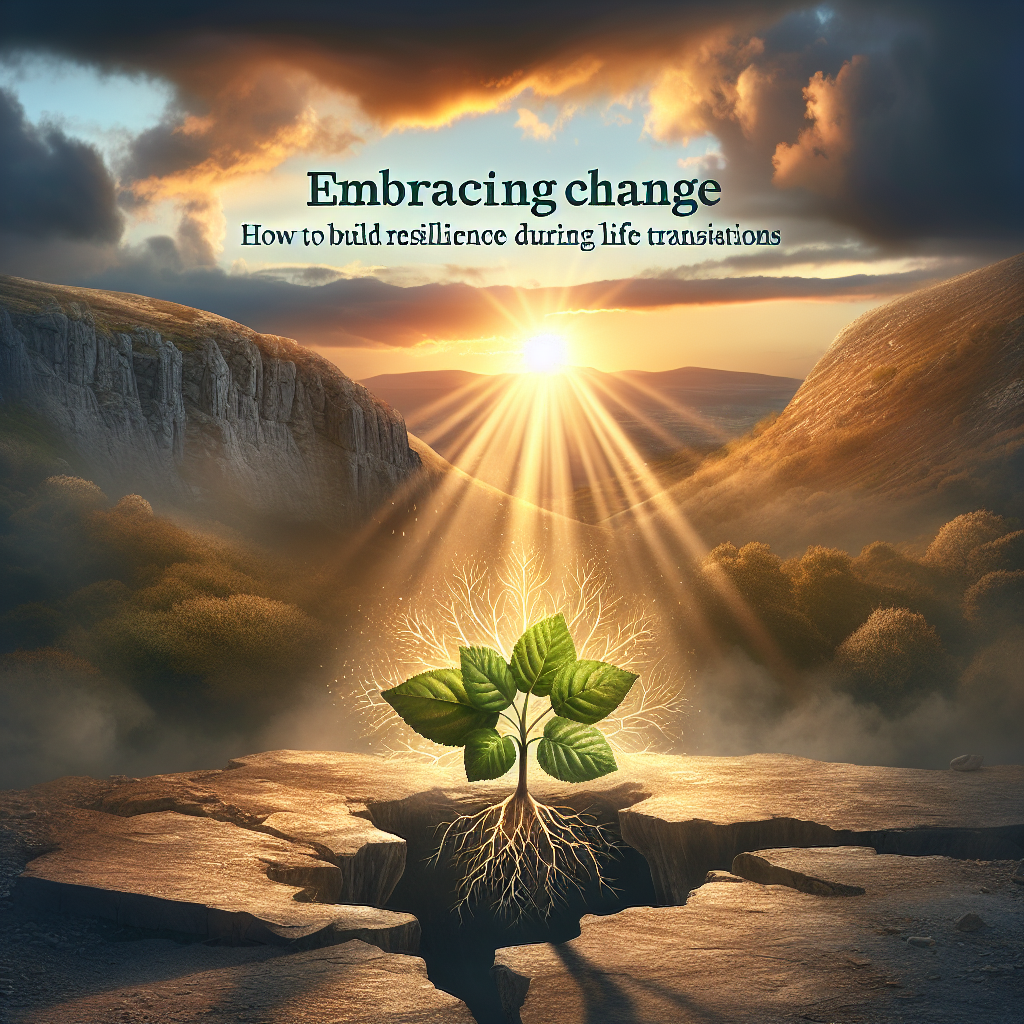
Embracing Change: The Ultimate Guide to Building Resilience During Life Transitions
Introduction
Life is a series of transitions—some expected, some unforeseen. Every shift, whether personal or professional, carries the potential for growth and development. Yet, navigating these changes can often feel overwhelming. This is where the art of embracing change: how to build resilience during life transitions becomes essential. Understanding how to adapt can not only enhance our ability to cope but also empower us to flourish amid uncertainty.
Resilience isn’t about simply bouncing back; it’s about growth, learning, and becoming stronger. In this article, we delve deep into strategies, insights, and real-world examples that illustrate how embracing change can lead to enhanced resilience, particularly during significant life transitions.
Understanding Life Transitions
Before diving into resilience, it’s crucial to recognize the types of life transitions we often encounter:
- Personal Changes: These can include marriage, divorce, parenthood, or losing a loved one.
- Professional Changes: Jobs can change due to promotions, layoffs, or career shifts.
- Health-Related Changes: Changes in physical or mental health can profoundly affect one’s lifestyle.
- Social Changes: Relocation, friendship changes, or even shifts in social dynamics within communities or workplaces.
Identifying which category your transition falls into is the first step in embracing change: how to build resilience during life transitions effectively.
The Importance of Resilience
Resilience is a skill that enables individuals to handle adversity. Building resilience equips us to meet stress with a positive outlook and to recover quickly from setbacks. Research indicates that resilient individuals tend to have better mental health, higher levels of motivation, and more fulfilling relationships.
Here’s a brief table summarizing the benefits of resilience:
| Benefits of Resilience | Description |
|---|---|
| Improved Mental Health | Reduces anxiety and depression levels. |
| Better Problem-Solving Skills | Increases adaptability to new challenges. |
| Stronger Relationships | Fosters empathy and understanding in interactions. |
| Increased Motivation | Enhances goal-oriented behavior. |
| Effective Coping Mechanisms | Promotes healthier responses to stress. |
Strategies for Embracing Change
1. Recognize Your Emotions
The first step in embracing change: how to build resilience during life transitions is to acknowledge and accept your feelings. Whether it’s fear, anxiety, or even excitement, recognizing these emotions helps to prevent them from overwhelming you.
Case Study: Sara’s Career Change
Sara, a marketing executive, found herself anxious about a sudden job loss. Instead of suppressing her fears, she embraced them. By journaling her feelings, she gained clarity on her career aspirations and successfully transitioned to a more fulfilling role in non-profit management.
2. Develop a Growth Mindset
A growth mindset is the belief that challenges are opportunities for development. This mindset allows you to perceive changes positively and encourages learning.
Case Study: John’s Health Journey
When John was diagnosed with a chronic illness, he initially felt defeated. However, he started viewing his health challenges as a journey of self-discovery. By adopting a healthy lifestyle, he found an invigorated purpose and became an advocate for others facing similar health issues.
3. Create a Support System
Surrounding yourself with a supportive network can provide the encouragement and perspective needed to navigate change. Friends, family, and mentors can offer both emotional and practical support.
Chart: Building Your Support System
| Support Sector | Potential Supporters |
|---|---|
| Emotional Support | Friends, family, support groups |
| Professional Guidance | Mentors, coaches, therapists |
| Community Connections | Local clubs, social organizations |
4. Set Realistic Goals
Amid change, setting realistic and achievable goals is vital. Break down larger objectives into smaller, manageable tasks. This will help maintain focus and prevent feelings of being overwhelmed.
Case Study: Maria’s Transition to Parenthood
Maria felt lost after the birth of her first child. Instead of aiming for perfection, she set daily goals—like taking a walk or meditating for ten minutes. Gradually, these small steps built her confidence and helped her enjoy motherhood more fully.
5. Practice Self-Compassion
Being kind to yourself during transitional periods is key. Recognize that everyone struggles with change, and permit yourself to respond as needed without undue pressure.
Case Study: Tom’s Divorce Experience
Following a tough divorce, Tom initially succumbed to self-criticism. After reading about self-compassion, he began practices like positive affirmations and mindfulness. Over time, he developed resilience and emerged with a renewed sense of self-acceptance.
The Importance of Mindfulness
Mindfulness techniques, such as meditation and deep-breathing exercises, can significantly enhance your ability to embrace change: how to build resilience during life transitions. mindfulness not only helps to reduce stress but also provides clarity amid chaos.
Practical Mindfulness Techniques
- Meditation: Engage in daily meditation practices, even if just for five minutes.
- Deep Breathing: Utilize deep-breathing exercises during stressful situations to ground yourself.
- Gratitude Journaling: Maintain a gratitude list to shift focus from negatives to positives.
Embracing Change in the Workplace
Work-related transitions often require unique strategies due to the environment’s demands. Here are key points to consider:
1. Stay Adaptable
Flexibility is crucial in professional settings. Adaptability involves being open to new methods, ideas, or responsibilities.
Example: A Marketing Team’s Shift to Remote Work
During the pandemic, marketing teams transitioned to remote work. Teams that exhibited adaptability quickly embraced new tools and communication methods, thriving in the virtual environment.
2. Upskill Regularly
Continuous learning is a cornerstone of career resilience. Regularly upgrading your skills assures you remain relevant and competent, even during changes.
Chart: Professional Development Opportunities
| Opportunity | Description |
|---|---|
| Online Courses | Platforms like Coursera or LinkedIn Learning |
| Networking Events | Join industry-specific conferences or webinars |
| Mentorship Programs | Seek mentors through professional networks |
3. Seek Feedback
Regularly engaging with supervisors or colleagues about your performance can provide valuable insights. Constructive feedback helps frame transitions positively and identifies areas for growth.
Conclusion
Embracing change is a powerful tool that leads to a more resilient self. By recognizing emotions, developing a growth mindset, nurturing support systems, setting realistic goals, practicing self-compassion, and deploying mindfulness, you can skillfully navigate life transitions.
The journey through change may be challenging, but it’s also a ripe opportunity for growth. As you apply the insights from this article, remember that building resilience is a continuous process. Each challenge you face equips you with wisdom for the future, ultimately making you stronger.
In conclusion, whether you are starting a new job, adapting to parenthood, or tackling personal grief, the principles of embracing change: how to build resilience during life transitions will empower you to flourish in every arena of life.
FAQs about Building Resilience During Life Transitions
1. What is resilience, and why is it important?
Resilience is the ability to bounce back from adversity and adapt to change. It’s important because it enhances our ability to cope with stress and supports our overall mental health.
2. How can I build resilience during stressful times?
You can build resilience by recognizing your emotions, developing a growth mindset, seeking support, setting realistic goals, and practicing self-compassion.
3. What role does mindfulness play in resilience?
Mindfulness helps to reduce stress and allows you to remain present during transitions, making it easier to respond to challenges calmly and effectively.
4. How can I support others in building resilience?
You can support others by listening without judgment, offering encouragement, and suggesting they adopt strategies like those mentioned in this article.
5. Can resilience be learned, or is it innate?
While some may have an innate tendency toward resilience, it can definitely be learned and strengthened over time through practice and experience.
By applying these principles of embracing change: how to build resilience during life transitions, you can enhance your ability to adapt and grow, making every transition a stepping stone rather than a stumbling block.
About the Author