Introduction
In an age where decisions can dramatically impact resources, lives, and strategies, the need for evidence-based decision-making has never been more crucial. Companies, governments, and organizations routinely face complex challenges that demand clarity and precision. Enter Field Experiments: A Catalyst for Evidence-Based Decision Making—an innovative tool that merges scientific rigor with real-world application. This article delves deep into the significance of field experiments, their methodologies, and their transformative impact on decision-making across various sectors.
Understanding Field Experiments
What Are Field Experiments?
Field experiments are a type of research conducted in real-world settings where variables can be manipulated to observe causal effects. Unlike lab experiments that occur in artificial environments, field experiments allow researchers to engage with participants in their natural contexts. This leads to results that hold more relevance in practical application.
Importance of Field Experiments
- Realism: By conducting experiments in natural settings, field experiments provide authentic reactions and behaviors.
- Causality: They enable researchers to draw more definitive conclusions about cause and effect.
- Actionable Insights: Field experiments yield insights that can be translated into effective strategies.
The Role of Field Experiments in Evidence-Based Decision Making
Bridging Theory and Practice
Field experiments serve as a vital link between theoretical frameworks and practical applications. They enable organizations to test hypotheses in settings that mimic actual conditions, increasing the likelihood that findings will be relevant to real-world challenges.
Case Study: The Chicago Public Schools Experiment
In 2017, researchers conducted a series of field experiments in Chicago Public Schools to evaluate various teaching strategies. By randomizing classrooms to different pedagogical approaches, they discovered significant improvements in student performance in classrooms that utilized interactive learning methods. This evidence forced school administrators to rethink traditional teaching methodologies and implement more engaging strategies.
Analysis of the Case Study
This case exemplifies how field experiments can shatter long-held beliefs—showing that interactive teaching could lead to better educational outcomes. It demonstrated that decision-makers could rely on this substantial evidence to substantiate changes in educational policy and practice.
Methodologies in Field Experiments
Randomized Control Trials (RCTs)
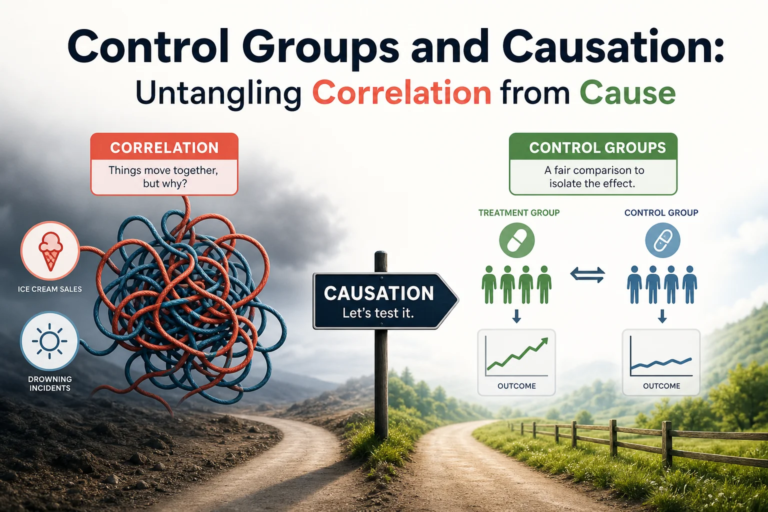
RCTs are the most popular method of conducting field experiments, where participants are randomly assigned to either a treatment group or a control group. This randomization minimizes bias and allows for clearer comparisons.
Example: Healthcare Interventions
In a field experiment conducted by the World Health Organization (WHO), RCTs were implemented to test the effectiveness of a new drug in rural communities. The results indicated a significant reduction in disease prevalence, leading to the drug’s adoption on a larger scale.
Other Methodologies
While RCTs dominate, other methodologies include:
- Quasi-experimental designs: Useful when randomization is impractical.
- Natural experiments: Utilized when external factors create opportunities for experimentation.
Advantages of Field Experiments
Field experiments, specifically in the context of Field Experiments: A Catalyst for Evidence-Based Decision Making, offer numerous advantages:
- External Validity: Because they occur in real-world settings, findings can be generalized more confidently than in laboratory experiments.
- Immediate Feedback: Organizations can quickly adapt strategies based on results.
- Cost-Effectiveness: When executed efficiently, field experiments can yield rich data without exorbitant costs.
Visualization of Findings
| Advantage | Explanation |
|---|---|
| External Validity | Real-world applicability of findings |
| Immediate Feedback | Quick adaptations based on results |
| Cost-Effectiveness | Efficient data collection without high expenditures |
Challenges of Field Experiments
Despite their advantages, field experiments also present unique challenges:
- Logistical Barriers: Implementing experiments in complex environments can be difficult and require careful planning.
- Participant Compliance: Ensuring participants engage with the experiment as intended is vital for data integrity.
- Ethical Considerations: In some cases, the intervention may have unintended negative consequences, raising ethical concerns.
Real-World Applications of Field Experiments
Marketing Strategies
Campaign Testing: Companies like Google and Facebook regularly conduct field experiments to test advertising strategies. For instance, A/B testing allows brands to see which campaigns resonate better with their target audiences.
Policy Evaluation
Social Programs: Governments utilize field experiments to evaluate the effectiveness of new policies or social programs. In a study conducted in the UK, a field experiment assessed the effectiveness of a new unemployment benefit scheme, with findings that provided empirical support for policy adjustments.
Workplace Productivity
Employee Engagement: Field experiments can also shed light on workplace dynamics. A notable experiment by a tech firm investigated the impact of flexible working hours on employee productivity, yielding results that prompted changes in company policy.
Conclusion: The Future of Decision Making
Field experiments have emerged as central to modern decision-making processes across sectors. With their ability to provide actionable insights backed by empirical evidence, they truly are a Catalyst for Evidence-Based Decision Making. As organizations continue to face complexity in their decision-making environments, embracing field experiments will empower them with the knowledge necessary to navigate challenges effectively.
Call to Action
Embrace field experiments in your organization! Start small, perhaps with a marketing test or an employee engagement strategy. The insights gleaned from these experiments may catalyze transformative changes that redefine your approach and enhance your decision-making capabilities.
FAQs
1. What are the key differences between field experiments and lab experiments?
Field experiments occur in real-world settings, while lab experiments take place in controlled environments. The primary difference lies in the realism and applicability of the findings.
2. Are field experiments expensive to conduct?
Field experiments can vary in cost. However, their efficiency in gathering relevant data often justifies the investment.
3. How do you ensure participant compliance in field experiments?
Clear communication about the experiment’s purpose and maintaining participant engagement throughout can help improve compliance rates.
4. Can field experiments be used in social sciences?
Absolutely! Field experiments are widely used in social sciences to study behavior, policy impacts, and educational methods, among other areas.
5. What ethical considerations should be taken into account?
Researchers must ensure that interventions do not cause harm, provide informed consent, and respect the privacy and autonomy of participants.
In an era fueled by data and innovation, Field Experiments: A Catalyst for Evidence-Based Decision Making will continue to shape how we understand and respond to pressing issues, paving the way for a more informed and effective future.
About the Author


The PsyForU Editorial Collective is the research and editorial team of PsyForU Research International. The collective prepares educational, psychological, mental-health-awareness, inclusion, neurodiversity, and research-methodology content for students, parents, educators, researchers, and general readers. PsyForU content is intended for awareness, education, and capacity-building and should not be treated as clinical diagnosis, therapy, medical advice, legal advice, or emergency mental-health support.