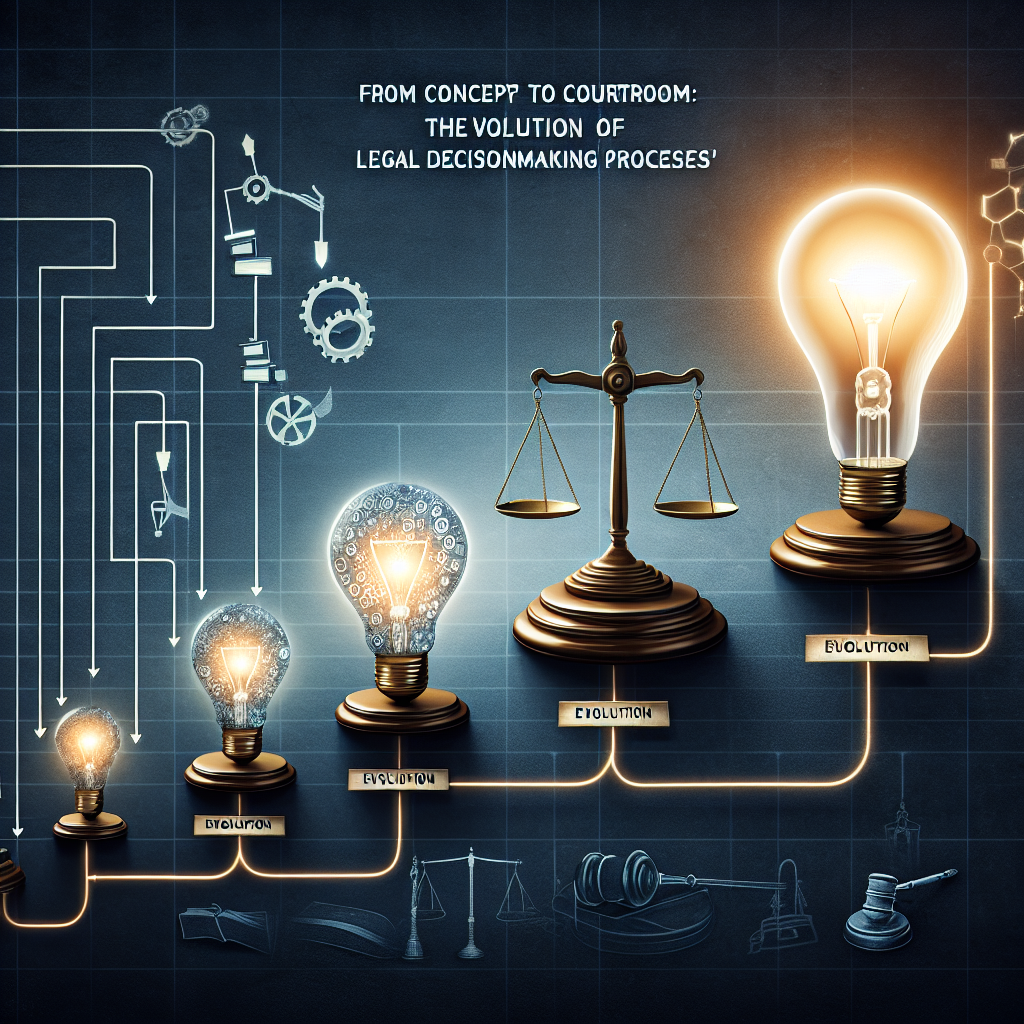
Introduction
In today’s fast-paced world, the legal landscape is not just about the black and white of statutes and precedents; it’s a complex interplay of human intuition, technology, and evolving societal norms. The journey from concept to courtroom is one that has undergone monumental changes, refining the legal decision-making processes into what they are today. This evolution is crucial for legal professionals, businesses, and even everyday citizens, as it impacts how justice is administered and understood. Understanding this journey not only highlights the importance of legal evolution but also equips one with the knowledge to navigate the contemporary legal environment.
The Foundations of Legal Decision-Making
Historical Perspective: The Roots of Legal Decision-Making
Legal systems around the world can trace their roots back to ancient civilizations, where decision-making was often influenced by divine laws. Early judges relied heavily on their interpretation of these laws, leading to a somewhat capricious style of justice. This set the stage for the gradual development of a more structured approach.
Case Study: Hammurabi’s Code
One of the earliest instances of codified law comes from the reign of King Hammurabi of Babylon around 1754 BC. His code established standardized rules that were publicly displayed, preventing arbitrary decisions by judges. The principles found in Hammurabi’s Code highlight the initial shift towards what we now consider more formalized legal processes.
Common Law vs. Civil Law
The evolution of legal decision-making processes can be largely categorized into two major legal systems: common law and civil law. Common law, primarily found in Anglo-American jurisdictions, emphasizes the role of judicial decisions and precedents, while civil law, predominant in Europe and parts of Asia, is based on comprehensive statutes and codes.
Key Differences:
| Feature | Common Law | Civil Law |
|---|---|---|
| Source of Law | Judicial precedents | Codified laws |
| Judge’s Role | Active in law creation | Passive, applies laws |
| Flexibility | More adaptable | More rigid |
This framework has become essential in modern legal contexts, as understanding the distinctions can profoundly influence legal strategies in courtrooms worldwide.
From Concept to Courtroom: The Evolution in Modern Times
The Role of Technology
As we traverse the timeline from concept to courtroom, one of the most striking advancements has been the incorporation of technology into legal decision-making. From case management software to artificial intelligence, technology has transformed how legal professionals operate.
Real-World Application: AI in Legal Research
Artificial Intelligence tools now allow lawyers to sift through mountains of legal texts to find relevant precedents. For instance, platforms like ROSS Intelligence provide lawyers with real-time answers to legal questions, enabling them to cite relevant cases more efficiently.
Shift Towards Collaborative Law
The past two decades have seen a rise in collaborative law, reflecting a shift in the mindset about the adversarial nature of traditional litigation. This approach encourages cooperation between parties, focusing on win-win solutions rather than courtroom battles.
Case Study: The Collaborative Law Movement
In the 1990s, a small group of family law attorneys in the United States began advocating for a collaborative approach to divorce. Instead of the traditional model of litigation, they offered an alternative that emphasized negotiation and mutual respect. Today, this model is gaining traction globally and is impacting how legal conflicts are resolved.
The Crucial Role of Ethical Decision-Making
The Importance of Ethics in Law
Legal professionals must navigate a complex landscape of ethical considerations. As technology enhances decision-making capacities, the ethical implications of these advancements become increasingly significant.
Examining Ethical Dilemmas
From issues surrounding client confidentiality with AI systems to prejudicial biases in machine learning algorithms, the ethical responsibilities of legal professionals have grown multifaceted. Training in legal ethics has become a cornerstone of law school curricula globally.
Case Study: The Uber Litigation
In a landmark case, Uber faced lawsuits regarding driver classification (employee vs. contractor). Legal representatives had to balance effective representation, company interests, and ethical considerations around employee rights. The outcome of this case has led to legislative changes in several jurisdictions, emphasizing the ethical dimensions of legal strategies in the evolving landscape.
The Impact of Globalization on Legal Decision-Making
Cross-Border Legal Issues
As the world becomes increasingly interconnected, so do legal challenges. The evolution of legal decision-making processes now requires an understanding of international laws and treaties.
Case Study: The GDPR
The General Data Protection Regulation (GDPR), enacted by the European Union, set a precedent for how companies handle data across borders. Legal teams worldwide had to adapt their strategies, reflecting globalization’s impact on legal frameworks. This regulation not only influenced European companies but also had global repercussions, as businesses that interact with EU citizens must comply with these laws.
The Future: Integrative Approaches
Looking forward, the integration of legal systems presents an opportunity for revitalized decision-making processes. Multinational corporations and international law firms often face hybrid challenges, requiring knowledge of diverse legal systems.
From Concept to Courtroom: Legal Trends Shaping Decision-Making
Diversity and Inclusion
Legal decision-making processes have evolved to prioritize diversity. Creating teams that reflect various backgrounds fosters innovative approaches to legal challenges, leading to fairer outcomes.
Importance of Diverse Legal Teams
Studies show that diverse teams are more effective at problem-solving. By incorporating various perspectives, the decision-making process becomes more holistic, ultimately leading to better representation in the courtroom.
Alternative Dispute Resolution (ADR)
As court systems become overwhelmed, alternative dispute resolution methods such as mediation and arbitration are gaining traction. These approaches offer parties faster and often less costly resolutions.
Case Study: Mediation in Family Law
Many states now mandate mediation before allowing family law cases to proceed to court. Meditation has proven to yield higher satisfaction rates among disputants and reduce the adversarial nature typically associated with family disputes.
The Role of Education and Continuous Learning
Lifelong Learning in Law
To adapt to these multiple dimensions of legal decision-making, continuous education and learning in the legal profession have become essential.
Importance of Continuing Legal Education (CLE)
Many jurisdictions mandate CLE, ensuring that legal professionals remain informed about recent developments in law. This adaptability has become a hallmark of successful practitioners navigating the complexities from concept to courtroom.
Future Skills for Legal Professionals
With the integration of technology, legal professionals must now cultivate a diverse skill set. Knowledge of data analytics, negotiation techniques, and a firm grasp of technological solutions can significantly enhance their effectiveness.
Conclusion
The evolution of legal decision-making processes—from concept to courtroom—illustrates the dynamic nature of the legal landscape. With technological advancements, ethical considerations, globalization, and an emphasis on inclusivity shaping this journey, the legal profession is poised for a revolutionary future. By understanding these dimensions, legal professionals and stakeholders can adapt their strategies to meet the demands of a continually changing environment, ensuring not just the application of laws but the robust pursuit of justice.
FAQs Section
1. What are the key components of legal decision-making?
Legal decision-making often involves analyzing laws, facts of a case, ethical considerations, and the potential outcomes based on existing precedents.
2. How has technology impacted the legal profession?
Technology has streamlined legal research, enhanced communication, and introduced tools like AI that assist in case analysis and decision-making.
3. What is collaborative law and how does it differ from traditional litigation?
Collaborative law emphasizes cooperation between disputing parties to reach mutually beneficial solutions, contrasting with traditional litigation, which is adversarial.
4. Why is diversity important in legal settings?
Diversity in legal teams leads to better problem-solving and more equitable outcomes, as it incorporates various perspectives and experiences.
5. What role does continuing legal education (CLE) play in a lawyer’s career?
CLE is crucial for lawyers to stay current with legal developments, ensuring their practices are effective and aligned with contemporary standards and regulations.
This compelling evolution of legal decision-making processes reflects far more than legislative changes; it is a shifting landscape that reflects societal values, technological impacts, and the ever-changing demands of justice in our world. Embrace this journey, and prepare to adapt to the ongoing transformations unfolding before us.
About the Author