Introduction
Imagine stepping into a dimly lit crime scene, where every detail—the smeared blood, scattered footprints, and shattered glass—tells a compelling story. Each clue holds the potential to unravel a mystery, to pinpoint a suspect, or even exonerate the innocent. In our modern justice system, understanding human behavior amidst chaos is vital, making Behavioral Evidence Analysis (BEA) an essential tool. Join me in exploring From Crime Scenes to Courtrooms: The Impact of Behavioral Evidence Analysis, highlighting its role in criminal investigations, court proceedings, and the broader implications for society.
Understanding Behavioral Evidence Analysis
What is Behavioral Evidence Analysis?
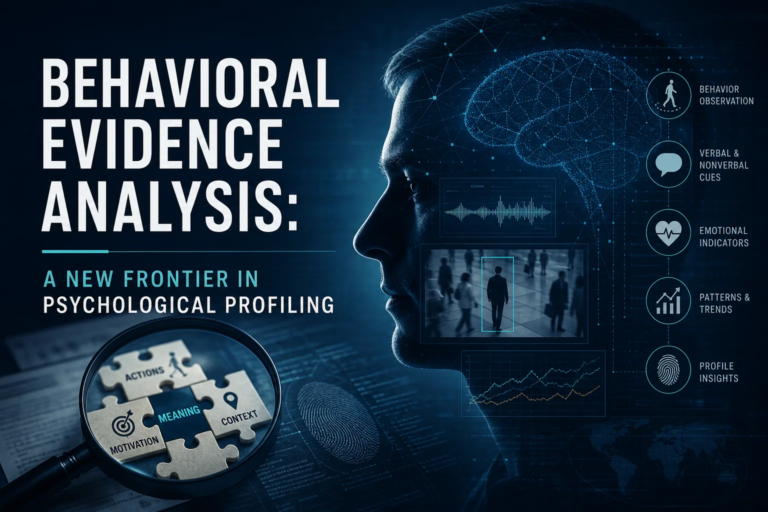
Behavioral Evidence Analysis involves the application of psychological principles and criminological insights to analyze crime scenes and suspect behavior. This multidisciplinary approach intertwines psychology, sociology, and forensic science to decode the motives behind crimes. Essentially, BEA transforms the abstract concepts of human behavior into tangible evidence that can sway objective reality.
The Relevance of BEA in the Justice System
The significance of Behavioral Evidence Analysis can’t be overstated. In a world where wrongful convictions pose a serious threat to justice, BEA emerges as a beacon of hope, providing law enforcement officials, attorneys, and juries with insights that conventional forensic methods may overlook. By analyzing behavioral patterns instead of focusing solely on physical evidence, BEA enhances the accuracy and efficacy of investigations, leading to more informed decisions in courtrooms.
Key Elements of BEA
Victimology: Understanding the victim’s background, relationships, and lifestyle can offer insights into the perpetrator’s motives.
Crime Scene Analysis: Analyzing the crime scene can reveal whether it was a premeditated act or a crime of passion.
Criminal Profiling: This process aids investigators in building composite sketches and understanding the psychological makeup of perpetrators.
- Interview Techniques: Utilizing BEA during interrogations helps distinguish between deceptive and truthful behaviors.
The Journey from Scene to Courtroom
Case Study: The Unabomber
One of the most famous applications of Behavioral Evidence Analysis was in the case of Ted Kaczynski, better known as the Unabomber. The FBI utilized BEA to construct a profile of the unhinged mathematician who committed a series of bombings across America.
- Analysis: Through behavioral insights, agents concluded that the bomber’s motives stemmed from a profound disdain for modern technology. With this understanding, they could narrow the search significantly and identify Kaczynski as a prime suspect.
| Key Evidence | Behavioral Insights | Application in Court |
|---|---|---|
| Bombing locations | Targeted areas of technological advancement | Establishes intent and motive |
| Manifesto | Insights into beliefs and philosophical motivations | Foundation for establishing criminal ideology |
| Behavioral patterns | Precise timing and placement of bombs | Supports premeditation over impulse |
The Role of BEA in Courtrooms
Once evidence is collected and analyzed, BEA’s findings transition seamlessly into courtroom proceedings. Expert witnesses often present behavioral profiles and insight, aiding judges and juries in grasping the nuances behind a suspect’s actions.
Establishing Credibility
In high-profile cases, the credibility of the expert witness becomes crucial. Effective use of BEA not only enhances the reliability of testimony but also serves as a defense strategy that can counteract emotionally driven arguments, Articulating behavioral analysis allows attorneys to provide a balanced view.
Case Study: The Boston Strangler
Albert DeSalvo, the man implicated as the Boston Strangler, serves as another prime example. Behavioral analysts examined the pattern and selections of the victims—women who fit specific social profiles.
- Analysis: DeSalvo’s criminal behavior suggested a compulsive need for power and control, which ultimately informed the prosecution’s stance in court.
| Victim Profile | Behavioral Traits | Court Dependency |
|---|---|---|
| Specific demographic | Indicates familiarity with victims’ lifestyles | Authenticates motive and method |
| Crime scene details | Reflects personal preferences | Reinforces psychological understanding in court |
How BEA Changed the Landscape of Criminal Investigations
The Shift Toward Proactive Policing
The integration of Behavioral Evidence Analysis into law enforcement has paved the way for proactive policing strategies. By understanding behavioral patterns, police can anticipate criminal behavior and implement preventive measures.
- Example: Many police departments worldwide utilize BEA to profile likely offenders based on geographical and social data, leading to reduced crime rates.
Beyond the Basics: Advanced Behavioral Techniques
Geographic Profiling: By analyzing the locations of crimes committed, investigators can craft profiles that narrow down suspect searches and highlight potential hiding places or future target areas.
- Behavioral Mapping: This uses statistical techniques and software to assess spatial relationships and criminal hotspots, providing further context for investigators.
The Technology Behind BEA
Technological advancements have empowered Behavioral Evidence Analysis. Tools like AI-driven pattern recognition, predictive analytics, and data mining allow officers to access a wealth of information quickly, elevating their standard investigative methods beyond human capacity.
Real-World Applications and Challenges
Case Study: The Green River Killer
Gary Ridgway, known as the Green River Killer, was apprehended with the help of BEA. By analyzing his victim selection and behaviors, law enforcement understood his compulsive pattern leading to his eventual capture.
- Analysis: Ridgway’s offenses were marked by a specific psychological need to dominate vulnerable women, underscoring the application of BEA in understanding the psychology of serial offenders.
| Behavioral Patterns | Insights | Impact on Case |
|---|---|---|
| Selection of victims | Characteristics indicative of desire for power | Supports profiling efforts |
| Modus operandi | Consistent method of luring victims | Establishes a repetitive criminal pattern |
Challenges Faced by Behavioral Analysts
While BEA offers robust insights, it isn’t without its challenges:
Subjectivity: Behavioral interpretations can vary drastically among analysts, leading to inconsistent findings and unreliable conclusions.
- Over-reliance on Profiling: Law enforcement must avoid stigmatization based on profiles; relying too heavily can lead to wrongful accusations.
Conclusion: The Future of Justice
From Crime Scenes to Courtrooms: The Impact of Behavioral Evidence Analysis fundamentally transforms how we approach crime. As legal practitioners and law enforcement agencies evolve, the principles of behavioral analysis will continue to shape the future of criminal investigations and justice.
By embracing these insights, professionals can enhance their understanding of the human psyche amid chaos, paving the way for more equitable outcomes in courtrooms nationwide. The continuing evolution of Behavioral Evidence Analysis represents not just a methodology but a journey toward a more just and informed legal system.
FAQs
1. What exactly is Behavioral Evidence Analysis?
Behavioral Evidence Analysis is a multidisciplinary approach that incorporates psychological principles and criminological insights to understand criminal behavior and the motives behind crimes.
2. How is BEA used in actual investigations?
BEA is used to analyze crime scenes, build profiles of offenders, and inform investigative strategies, thereby guiding law enforcement in apprehending suspects.
3. Can BEA help in exonerating the innocent?
Yes, BEA can be instrumental in analyzing evidence that might point away from a suspect, thus potentially exonerating wrongfully accused individuals.
4. What are some limitations of Behavioral Evidence Analysis?
Key limitations include the subjectivity of behavioral interpretations and the potential for over-reliance on profiling, which can lead to incorrect accusations.
5. How does BEA influence court proceedings?
Experts utilizing BEA provide testimony in court, helping judges and juries understand the psychological dynamics behind criminal acts, ultimately influencing legal outcomes.
By highlighting the intersection of crime, behavior, and justice, we understand the profound impact of Behavioral Evidence Analysis, ensuring more insightful, accurate, and just outcomes in the legal system.
About the Author


The PsyForU Editorial Collective is the research and editorial team of PsyForU Research International. The collective prepares educational, psychological, mental-health-awareness, inclusion, neurodiversity, and research-methodology content for students, parents, educators, researchers, and general readers. PsyForU content is intended for awareness, education, and capacity-building and should not be treated as clinical diagnosis, therapy, medical advice, legal advice, or emergency mental-health support.