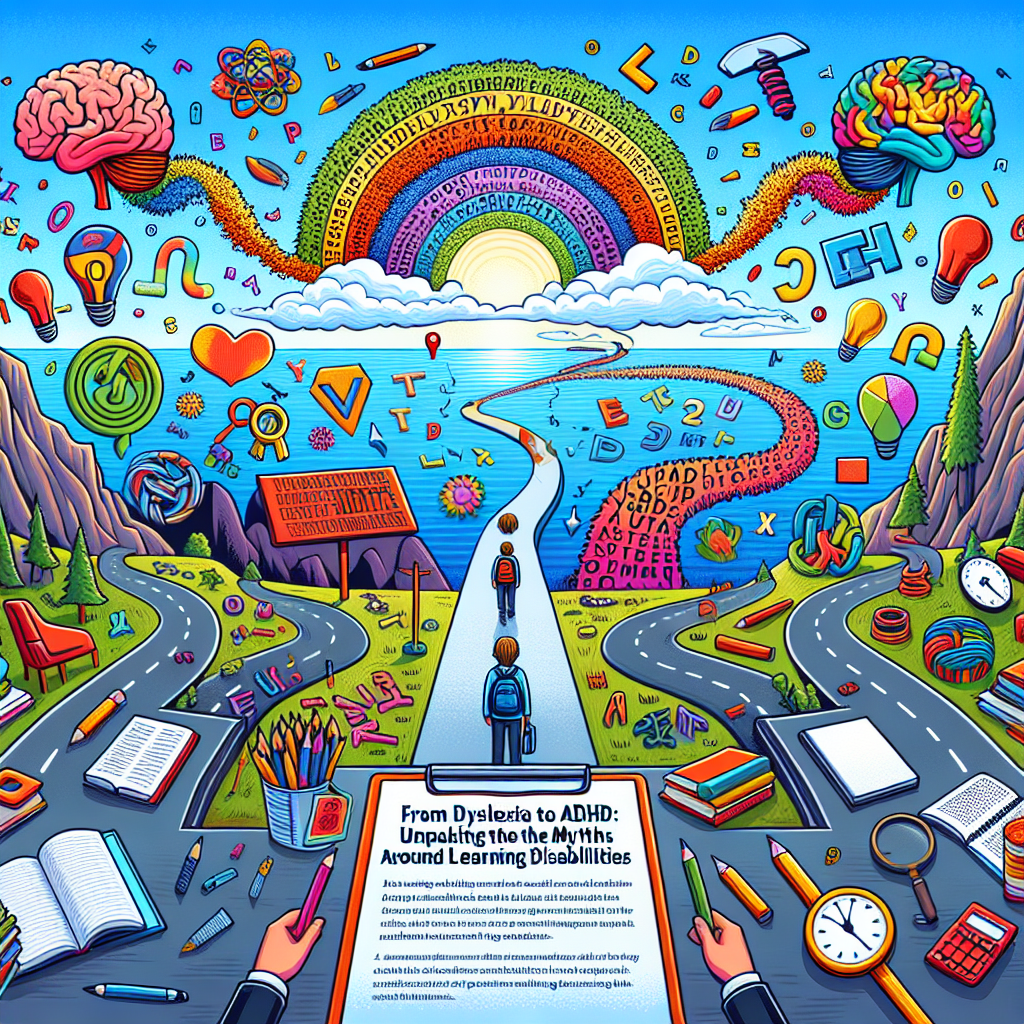
From Dyslexia to ADHD: Unpacking the Myths Around Learning Disabilities
Introduction
Imagine the frustration of a bright child struggling to read or focus. For many, this is the reality of living with a learning disability. The terms ‘dyslexia’ and ‘ADHD’ often bubble to the surface in discussions about educational challenges, yet they come surrounded by a cloud of misconceptions. The topic of learning disabilities is not merely academic—it’s deeply personal and profoundly impactful. In this article, we delve into the myths surrounding these conditions, uncover the truths, and explore how understanding can pave the way for better support and success.
Understanding Learning Disabilities
Before we embark on unboxing myths, it’s crucial to define what we mean by learning disabilities. Learning disabilities refer to a range of disorders that affect the brain’s ability to receive, process, and respond to information. Two of the most commonly discussed are dyslexia and ADHD. Both can significantly affect a child’s educational journey, yet they manifest in notably different ways.
Dyslexia: More Than Just Reversing Letters
Dyslexia affects a person’s ability to read, write, and spell accurately and fluently. Contrary to common belief, it’s not just about letters being reversed; it encompasses a wide range of challenges related to phonological processing, memory, and language.
ADHD: Beyond Simply Being Hyperactive
Attention Deficit Hyperactivity Disorder (ADHD) is characterized by persistent patterns of inattention and/or hyperactivity-impulsivity. Many people believe ADHD is simply an inability to sit still, but it includes a myriad of symptoms that complicate learning. Children with ADHD often face difficulties focusing, following through on tasks, and managing time.
Myth 1: Learning Disabilities Are Rare
One of the most prevalent myths surrounding learning disabilities is the belief that they are rare occurrences. In reality, research indicates that about 1 in 5 individuals has a learning disability. This means that many classrooms contain children facing these challenges.
Case Study: A school district in California implemented a universal screening for learning disabilities. As a result, they identified that nearly 20% of their students exhibited signs of learning disabilities. This data challenged the myth and pushed for better resource allocation to support affected students.
Key Takeaway
Understanding the prevalence of learning disabilities is essential for fostering inclusive education systems.
Myth 2: Learning Disabilities Result from Lack of Intelligence
Another common misconception is that students with learning disabilities are less intelligent than their peers. This could not be further from the truth. Many individuals with dyslexia or ADHD possess average or above-average intelligence.
Case Study: Consider a high-achieving student who struggled with reading due to dyslexia. Through targeted interventions and support, this individual maintained a GPA above 3.5 while majoring in a rigorous STEM field. This success reflects the reality that learning disabilities do not dictate potential.
Key Takeaway
Intelligence doesn’t determine the presence of learning disabilities. Understanding this can shift the narrative towards finding the right strategies for support.
Myth 3: Medication Is the Only Solution for ADHD
A prevalent belief is that medication is the sole option for managing ADHD. While medication can help alleviate symptoms for many, it’s only one part of a comprehensive treatment approach that may include behavioral therapy, educational support, and lifestyle changes.
Case Study: A student named Alex was diagnosed with ADHD and initially placed on medication. However, with the inclusion of individualized education plans (IEPs) that focused on behavioral strategies, his grades improved significantly without solely relying on medication.
| Treatment Method | Benefits | Drawbacks |
|---|---|---|
| Medication | Quick symptom relief | Side effects possible |
| Therapy | Skill development | Time-intensive |
| Lifestyle Changes | Holistic benefits | Requires commitment |
Key Takeaway
A multi-faceted approach combining medication and supportive interventions proves most effective in managing ADHD.
Myth 4: Dyslexia Is Just a Childhood Condition
Many people assume dyslexia is a condition that one grows out of. However, dyslexia can persist into adulthood, affecting reading, writing, and even workplace performance if not appropriately managed.
Case Study: Sarah, now a 28-year-old professional, shared her journey with dyslexia. She learned effective coping strategies throughout her educational career, enabling her to thrive in a demanding corporate job.
Key Takeaway
Dyslexia is a lifelong condition that individuals can learn to manage effectively; awareness and ongoing support are key.
Myth 5: All Learning Disabilities Are the Same
Each learning disability has a unique set of symptoms and challenges. Treating them as interchangeable can lead to ineffective support strategies.
Case Study: At a local chapter of the learning disabilities association, multiple case studies showcased different learning profiles. A student with dyscalculia struggled with math, while another with ADHD found it difficult to remain focused during lessons. Tailored interventions helped each student based on their individual challenges and strengths.
Key Takeaway
Recognizing the distinct nature of learning disabilities allows educators and parents to provide tailored support options, maximizing each child’s potential.
The Importance of Advocacy and Awareness
Raising awareness about learning disabilities is essential for reducing stigma and empowering affected individuals. Schools, parents, and communities must unite to:
- Educate themselves and others about the signs and symptoms of learning disabilities.
- Advocate for resources and support.
- Create inclusive environments that recognize and celebrate different learning styles.
Case Study: A community initiative in Chicago organized workshops to train teachers and parents in recognizing learning disabilities. The project’s success led to improved intervention strategies and increased understanding of each child’s potential.
Key Takeaway
Advocacy can change lives, providing necessary support and resources that empower students with learning disabilities.
Conclusion
From dyslexia to ADHD: unpacking the myths around learning disabilities requires a willingness to confront misconceptions and illuminate the truths that can transform lives. Understanding, advocacy, and dedicated support can significantly improve outcomes for individuals facing these challenges.
Final Inspiration:
Let us build bridges of understanding rather than walls of misunderstanding. Together, we can foster environments where all learners can thrive, embracing their unique paths to success.
FAQs
1. What are common signs of dyslexia?
Dyslexia might present as trouble with reading, spelling, writing, and phonetic errors despite being intelligent.
2. Is ADHD purely a childhood disorder?
No, ADHD can continue into adulthood and manifest in various ways over a lifetime.
3. Are learning disabilities genetic?
Genetics can play a role in learning disabilities, but environmental factors also contribute significantly.
4. Can people with learning disabilities attend college?
Absolutely! Many individuals with learning disabilities thrive in college settings, especially with appropriate support and resources.
5. How can parents support children with learning disabilities?
Understanding their specific needs, advocating for accommodations, and seeking professional help when necessary are powerful steps.
6. Can learning disabilities be diagnosed through tests?
Yes, professionals conduct assessments to identify learning disabilities, considering both cognitive abilities and academic performance.
By fostering a deeper understanding of learning disabilities, we can create a more compassionate world. Together, let’s strive for an inclusive future where every child’s potential is celebrated!
About the Author