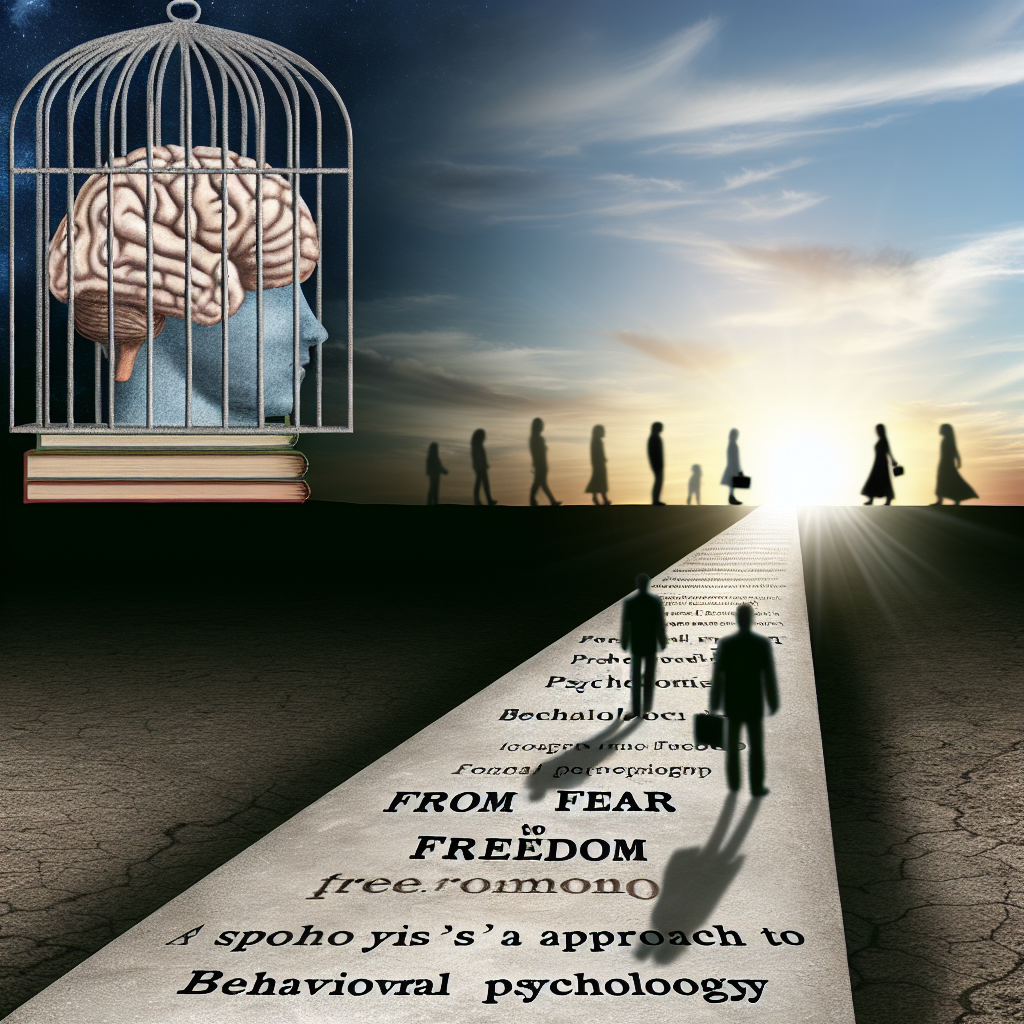
From Fear to Freedom: Behavioral Psychology’s Proven Approach to Overcoming Anxiety
Introduction
In an age where anxiety presents itself as a prevalent issue experienced by countless individuals, understanding its psychological underpinnings and the pathways to liberation becomes essential. Whether it manifests as performance anxiety, social anxiety, or generalized anxiety disorder, anxiety can imprison us, limiting our potential and enjoyment of life. The journey "From Fear to Freedom: Behavioral Psychology’s Approach to Overcoming Anxiety" is not just a hopeful saying; it’s a roadmap to healing grounded in empirical research and practical applications.
Let’s explore how behavioral psychology—a profound branch of mental health—offers innovative strategies to replace fear with empowerment and resilience.
Understanding Anxiety Through Behavioral Psychology
The Roots of Anxiety
Behavioral psychology posits that our thoughts, feelings, and behaviors are interconnected. Anxiety often arises from learned responses; thus, understanding its origins requires us to delve into the conditioning that individuals experience throughout their lives.
Case Study: Julie’s Social Anxiety
Julie, a 27-year-old graphic designer, experienced extreme anxiety when attending social gatherings. Rooted in her childhood experiences of ridicule, she developed a fear response to social interaction. Julie’s behavioral psychologist used exposure therapy, a key technique in behavioral psychology, to gradually desensitize her to these anxiety-provoking situations.
Analysis
Julie’s case exemplifies how anxiety can be learned and unlearned. With consistent exposure to social settings—accompanied by coping strategies—Julie’s anxiety lessened, showcasing one pathway in the journey "From Fear to Freedom: Behavioral Psychology’s Approach to Overcoming Anxiety."
The Behavioral Approach to Anxiety
Behavioral psychologists focus on altering behaviors and thought patterns. Their methods frequently involve:
- Exposure Therapy: Gradual exposure to anxiety-inducing stimuli.
- Cognitive Behavioral Therapy (CBT): Addressing negative thought patterns that fuel anxiety.
- Positive Reinforcement: Rewarding healthy coping mechanisms to encourage behavior change.
Techniques for Overcoming Anxiety
Exposure Therapy: Facing the Fear
Exposure therapy is predicated on the principle that by facing fears in a controlled environment, individuals can reduce their anxiety over time.
Table 1: Steps in Exposure Therapy
| Step | Action | Objective |
|---|---|---|
| 1 | Identify Fear | Acknowledge the anxiety trigger |
| 2 | Create Hierarchy of Fears | Rank fears from least to most anxiety-provoking |
| 3 | Gradual Exposure | Face the fear start from least intimidating to more challenging |
| 4 | Process Emotions | Reflect and mitigate emotional responses post-exposure |
Cognitive Behavioral Therapy (CBT): Reframing Thoughts
CBT posits that changing negative thought patterns can lead to changes in feelings and behaviors. Through exercises like thought records, individuals learn to identify irrational fears and replace them with rational, positive thoughts.
Case Study: Mark’s Public Speaking Anxiety
Mark, a teacher, struggled with public speaking due to negative past experiences. Through CBT, he learned to identify his automatic negative thoughts about public speaking and replace them with positive affirmations. After six months of practice, he was able to deliver a successful lecture.
Analysis
Mark’s transformation illustrates how behavioral psychology can guide individuals "From Fear to Freedom: Behavioral Psychology’s Approach to Overcoming Anxiety" by allowing them to reframe their thought processes.
Positive Reinforcement: Celebrating Small Wins
Incorporating positive reinforcement into treatment not only motivates individuals but also builds confidence. Celebrating small victories allows patients to forge a conscious connection between their efforts and tangible outcomes.
Real-World Applications
Behavioral psychology’s techniques have transcended therapeutic settings, demonstrating effectiveness in educational and workplace environments.
Case Study: Workplace Anxiety Program
A tech company introduced a behavioral program focusing on anxiety management for its staff. Employees participated in group exposure therapy sessions, alleviating performance anxiety linked to presentations. Feedback revealed a significant increase in self-reported confidence levels and overall workplace satisfaction.
Analysis
This program illustrates a practical manifestation of the principles outlined in "From Fear to Freedom: Behavioral Psychology’s Approach to Overcoming Anxiety," as it showcased how collective engagement could foster a supportive culture around mental health.
The Role of Mindfulness and Relaxation Techniques
While behavioral approaches primarily focus on external behaviors, integrating mindfulness can further enhance the transition from fear to freedom. Mindfulness practices encourage individuals to remain present, warding off anxiety prompted by thoughts of future events or past failures.
Techniques to Incorporate Mindfulness
- Breathing Exercises: Focusing on breath helps anchor individuals in the present, reducing anxiety.
- Meditation: Regular meditation practices have been found to lower anxiety levels and improve overall mental health.
- Body Scan: This technique promotes awareness of the body and its responses to anxiety, fostering relaxation.
Conclusion
Navigating anxiety can be an arduous journey for many; however, the path "From Fear to Freedom: Behavioral Psychology’s Approach to Overcoming Anxiety" reveals that freedom is not only possible but achievable. By integrating techniques from behavioral psychology—such as exposure therapy, cognitive restructuring, and positive reinforcement—individuals can develop robust tools to manage their anxiety.
As you embark on your personal journey toward freedom, remember: each small step counts. No victory is too small; celebrate your progress, learn from your setbacks, and be assured that there’s a supportive community willing to guide you through.
FAQs
1. What is behavioral psychology’s primary focus in terms of anxiety?
Behavioral psychology primarily focuses on changing behavioral responses to anxiety through techniques such as exposure therapy, CBT, and positive reinforcement.
2. How long does it usually take to see results from behavioral therapy?
While results can vary, many individuals see noticeable improvements within 6 to 12 weeks of consistent therapy, depending on the severity of their anxiety.
3. Can mindfulness really help with anxiety?
Yes, mindfulness practices, like meditation and breathing exercises, have been scientifically shown to reduce anxiety by promoting present-moment awareness and reducing stress.
4. Are there any side effects of behavioral therapy?
Behavioral therapy is generally considered safe, with minimal side effects. Some individuals may initially experience increased anxiety during exposure therapy as they confront their fears.
5. What if I don’t feel comfortable talking about my anxiety?
It’s common to feel hesitant. Consider journaling your thoughts or starting with a trusted friend or family member. Professional therapists are also trained to build rapport and create a safe environment for discussion.
By embracing these insights and techniques, readers can begin their journey toward managing anxiety, moving authentically "From Fear to Freedom: Behavioral Psychology’s Approach to Overcoming Anxiety." Remember, seeking help is a sign of strength, and the first step toward reclaiming your life from anxiety is within reach.
About the Author