From Survival to Self-Actualization: Understanding Maslow’s Hierarchy of Needs for Personal Growth
Introduction
In today’s fast-paced, increasingly complex world, understanding the driving forces behind human motivation is more important than ever. The journey from mere survival to the peak of personal fulfillment—self-actualization—offers profound insights into our behavior, desires, and potential. At the heart of this journey lies Maslow’s Hierarchy of Needs, a psychological framework that offers a roadmap for navigating this path.
From basic physiological requirements to the lofty ideals of personal growth and self-awareness, Maslow’s theory stands as a fundamental pillar in psychology, education, and even corporate structures. This article seeks to unravel the nuances of Maslow’s hierarchy, illustrating its real-world applications and effectiveness in guiding individuals toward a life of purpose and satisfaction.
The Foundations of Maslow’s Hierarchy
Understanding the Hierarchy
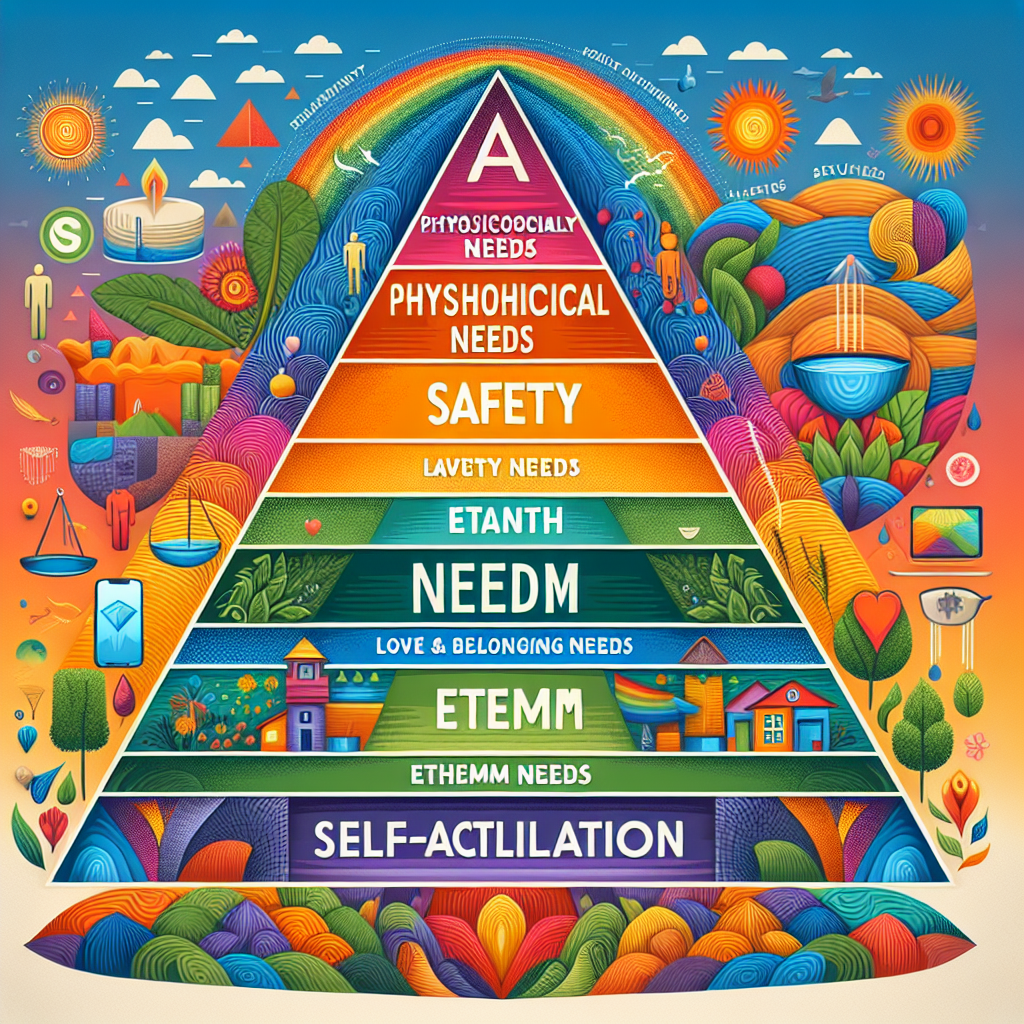
Maslow’s Hierarchy of Needs is traditionally represented as a pyramid with five distinct levels:
Physiological Needs: These are the basic requirements for human survival, such as food, water, shelter, and sleep.
Safety Needs: Once physiological needs are met, individuals seek security and protection from danger, encompassing physical safety, emotional stability, and financial security.
Love and Belongingness Needs: This level highlights the human desire for social relationships, intimacy, and acceptance, emphasizing the importance of community and connection.
Esteem Needs: Here, individuals focus on self-esteem and the esteem of others. This includes feelings of accomplishment, prestige, and recognition.
- Self-Actualization Needs: At the pinnacle of the hierarchy, self-actualization reflects the realization of personal potential, self-fulfillment, and the pursuit of personal growth.
Each successive level builds upon the previous one, illustrating a clear pathway from survival to self-actualization. But what does it mean to go from survival to self-actualization? Let’s delve deeper.
The Importance of Each Level
| Need Level | Key Characteristics | Real-World Implications |
|---|---|---|
| Physiological Needs | Basic survival needs like food and water | Without these, focus cannot shift to higher needs. |
| Safety Needs | Security, health, and well-being | Instills confidence to pursue higher goals. |
| Love and Belongingness | Emotional relationships and community | Enhances cooperation, teamwork, and social functioning. |
| Esteem Needs | Self-respect and recognition | Boosts motivation, ambition, and personal development. |
| Self-Actualization | Creativity, problem-solving, personal growth | Encourages innovation, fulfillment, and legacy building. |
Understanding these levels is crucial for anyone aiming for personal or professional growth. Recognizing where you—or your team—stand within this hierarchy allows you to target efforts accordingly.
Case Study: Overcoming Food Insecurity
Consider a community where food insecurity remains a prevalent issue. Residents primarily focus on securing their physiological needs, often overlooking elements of safety and belongingness. Local non-profits have implemented accessible food pantries and community meal programs that not only alleviate hunger but foster a sense of community. This illustrates the transition from survival mode to building relationships and support systems. Programs like these demonstrate how once physiological needs are met, individuals can begin to address higher-order needs like safety and belonging.
Relevance
This case study reinforces the idea that thriving communities often grow from meeting basic needs first. Once food security is achieved, people are able to bond with others, build friendships, and create networks of support—key factors in fostering a strong community.
Safety in the Workplace: A Business Perspective
Imagine a company focused solely on profits without considering employee well-being. This company is likely to experience high turnover rates and low morale. In contrast, firms that prioritize safety and psychological well-being create environments where employees feel secure—resulting in higher productivity and job satisfaction.
The Impact of Safety Needs in Corporate Culture
To further illustrate this, a report by the World Economic Forum indicates that companies prioritizing employee safety and well-being see, on average, a 20% improvement in job performance. When individuals feel safe within their workspace, they not only remain loyal to the organization but are also more willing to pursue self-actualization through innovation and creativity.
The Quest for Belonging
Building Relationships
Belongingness is often illustrated in social movements, like the LGBTQ+ rights movement. Individuals seeking acceptance and affirmation prioritize community and relationships. The journey from survival to belonging transforms lives, providing a foundation for self-actualization.
Analysis
The importance of social connections emphasizes that belonging can be a precursor to achieving self-actualization. Successful movements that foster understanding and inclusivity demonstrate the power of communal relationships—inviting every individual to thrive.
Cultivating Esteem
The Role of Recognition
In a corporate setting, esteem plays a vital role. Companies that recognize and reward individual contributions empower employees, fueling motivation and ambition. Tesla, for instance, actively encourages a culture of acknowledgment and open feedback, enabling employees to feel valued and appreciated.
Analysis
Recognition catalyzes personal development, as employees are motivated to reach their potential. Esteem is not just a personal pursuit; it’s vital for fostering a positive work culture.
Ascending to Self-Actualization
Confronting Challenges
Achieving self-actualization often involves confronting fears, insecurities, and societal expectations. Oprah Winfrey, for instance, faced numerous challenges throughout her life yet transformed her experiences into a quest for knowledge, growth, and self-fulfillment.
Achieving Potential
Oprah’s story exemplifies that the journey to self-actualization is both personal and communal. Education, mentorship, and community involvement are critical for nurturing individual potential and bringing about meaningful change in society.
Conclusion: The Journey Awaits
From survival to self-actualization: understanding Maslow’s Hierarchy of Needs offers insight into the detailed layers of our psychological makeup. Recognizing where we stand in this hierarchy can serve as a roadmap toward fulfillment, growth, and, ultimately, success.
As we focus on these levels—addressing basic health, establishing security, fostering relationships, boosting self-esteem, and pursuing personal growth—we embark on a transformative journey toward our highest potential. The question remains: where are you on your journey?
Actionable Takeaway
- Reflect on Your Needs: Take the time to assess your position within the hierarchy. What are your unmet needs?
- Set Goals: Create actionable goals for each level of the hierarchy. Start small but be consistent.
- Foster Connections: Focus on building relationships and community as you grow—personal progress often accelerates in supportive environments.
FAQs
1. How does Maslow’s Hierarchy apply to everyday life?
Maslow’s hierarchy can be applied to personal development by assessing what needs are unmet in one’s life, allowing for targeted improvements and personal growth.
2. Can someone skip levels in the hierarchy?
While the model is sequential, life events may force an individual to prioritize higher needs regardless of unmet lower-level needs. However, unmet basic needs often hinder progress.
3. How can organizations implement Maslow’s theory?
Organizations can implement Maslow’s hierarchy by creating a supportive workplace culture that meets employees’ needs, paving the way for productivity and innovation.
4. How does social media fit into this framework?
Social media plays a role in fulfilling love and belongingness needs, facilitating relationships and connections, which can enhance one’s journey toward self-actualization.
5. Why is self-actualization important?
Self-actualization is important because it enables individuals to realize their fullest potential, contributing to personal happiness and societal progress.
Through understanding from survival to self-actualization: understanding Maslow’s Hierarchy of Needs, we can navigate our personal paths and inspire growth in others, cultivating a more fulfilled and harmonious society.
About the Author