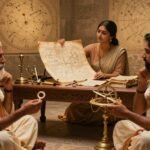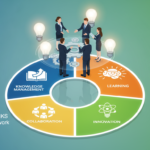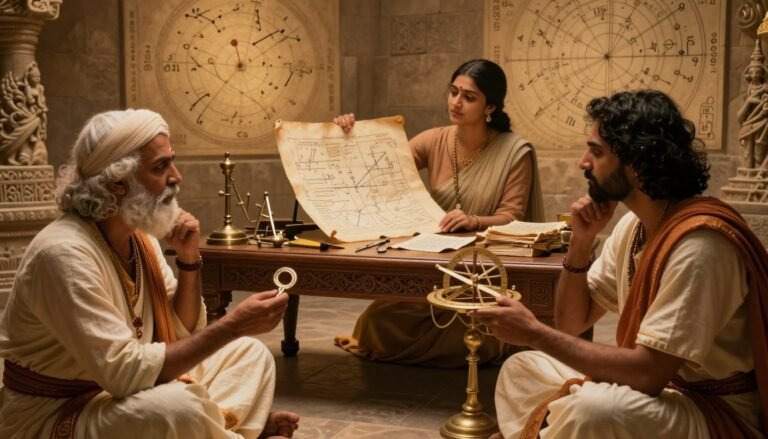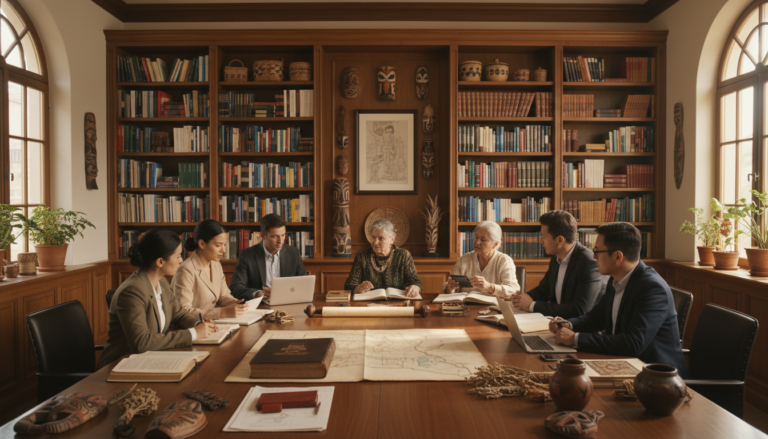
In a quiet classroom in Varanasi, a teacher starts the day with shlokas from ancient texts. Then, they move on to math and science. This scene shows more than just tradition—it’s a new way of learning for the nation.
On July 29, 2020, India’s government launched the National Education Policy 2020. It’s a big plan to change how students learn and grow. The policy focuses on learning that’s whole, critical thinking, and creativity, all while keeping ethics in mind.
The policy brings Bharatiya Gyan Parampara into the mix. This is a big change from old education models. It blends ancient wisdom with new learning methods, making students both culturally aware and ready for the world.
This mix of old and new aims for a big goal: to make India a developed nation by 2047. The Indian knowledge system and NEP 2020 are key to this dream. They prepare people to face both national goals and global challenges.
Key Takeaways
- The policy was launched on July 29, 2020, to transform the education landscape through holistic and flexible learning approaches
- It emphasizes multidisciplinary education grounded in ethics, human values, and cultural heritage
- Indigenous wisdom traditions are integrated with modern pedagogical methods to create globally competent learners
- The framework supports the ambitious goal of transforming the nation into a developed country by 2047
- Critical thinking, creativity, and innovation form the core skills this educational vision aims to cultivate
- The policy represents a departure from colonial education models toward culturally relevant learning systems
Understanding the Indian Knowledge System and NEP 2020
Indian Knowledge Systems are a deep intellectual tradition. They go beyond religious texts to cover many areas of human study and achievement. Adding these systems to education is more than just changing the curriculum. It’s a big change in how we see learning, making knowledge, and cultural identity in schools.
The link between ancient wisdom and today’s education policy needs careful look. The National Education Policy 2020 sets up a framework. It makes room for indigenous knowledge while keeping up with the fast-changing world. This mix of old and new is key to India’s education change.
To get this, we need to look at three main points. First, we must understand what Indian Knowledge Systems are and how wide they are. Second, we should see how NEP 2020 helps put these systems into education. Lastly, we must see how these two come together to make a new way of learning. This way honors the past while preparing for the future.
Defining Indian Knowledge Systems: Scope and Components
Indian Knowledge Systems are a multidimensional epistemological tradition that has grown over thousands of years. They use observation, experimentation, and thought to learn. Unlike Western education, they see knowledge as connected and whole.
This view sees math linked to astronomy, medicine tied to philosophy, and environmental science connected to spiritual understanding. The scope of IKS covers many areas of human knowledge. It includes advanced math, astronomy, and medicine like Ayurveda.
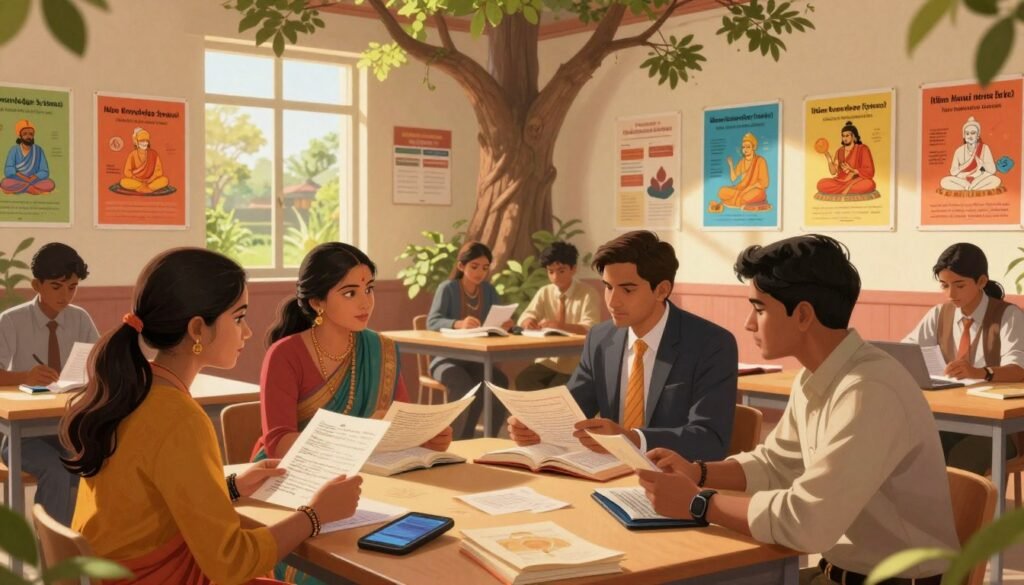
IKS also includes practical skills. Traditional farming shows deep ecological knowledge. Classical arts and performances show complex beauty theories. Architecture shows advanced geometry and material knowledge.
What makes IKS special is its pedagogical methodology as much as its content. Learning happened through direct experience, stories, and the guru-shishya bond. It focused on both learning and character building. This way, knowledge was used wisely and with ethics.
Today, integrating IKS into education must cover both content and teaching methods. It should introduce specific knowledge and use teaching methods that focus on experience, connections, and values. This ensures IKS is truly integrated, not just added on.
Overview of National Education Policy 2020 Framework
The National Education Policy 2020 brings transformative changes to Indian education. It changes the old 10+2 system to a new 5+3+3+4 structure. This new system fits how children learn and grow.
The early stage (ages 3-8) focuses on play and activity. The next stage (ages 8-11) starts formal learning but keeps experience-based learning. The middle stage (ages 11-14) develops abstract thinking and specialized subjects. The last stage (ages 14-18) offers deep study in chosen areas.
Several key parts of the nep 2020 framework help achieve its goals. The Multiple Entry Multiple Exit (MEME) system lets learners leave and come back to school. The Academic Bank of Credits helps students build and transfer credits. Learning in the mother tongue at the start helps with language skills.
| NEP 2020 Component | Traditional Approach | New Framework | IKS Alignment |
|---|---|---|---|
| Curricular Structure | 10+2 rigid system | 5+3+3+4 flexible architecture | Matches natural learning stages in Bharatiya traditions |
| Learning Approach | Rote memorization focus | Experiential and competency-based | Reflects guru-shishya direct knowledge transmission |
| Subject Organization | Strict disciplinary boundaries | Multidisciplinary with flexibility | Mirrors holistic knowledge integration in IKS |
| Language Policy | English-medium priority | Mother tongue emphasis, multilingualism | Preserves indigenous languages and classical texts access |
| Assessment Methods | High-stakes board examinations | Continuous formative assessment | Evaluates character and competency beyond cognitive recall |
NEP 2020 clearly includes Indian Knowledge Systems in education. It adds IKS content across subjects, not just in separate courses. It also sets up special research centers for Indian knowledge traditions. Sanskrit and classical languages are offered at all levels.
The policy also adds vocational education from an early age. This connects to traditional Indian ways of learning practical skills and theory together. It focuses on all-around development, like ancient Indian education did.
The Strategic Convergence of Ancient Wisdom and Modern Education
The mix of Indian Knowledge Systems and NEP 2020 is a deliberate philosophical shift. It tackles a big challenge: how to keep cultural identity while preparing for global economies. The answer is in recognizing IKS’s value in both content and teaching methods.
Several key points make this mix work. First, both IKS and NEP 2020 focus on whole development, not just one area. Traditional Indian education never separated learning from character or health. NEP 2020’s focus on social-emotional learning and ethics reflects these values.
Second, the integration through NEP 2020 connects hands-on learning with modern teaching research. Modern education psychology supports ancient Indian ways of learning. The guru-shishya bond finds new life in NEP 2020’s focus on mentorship and personalized learning.
Third, this mix helps with economic growth and cultural preservation. IKS has practical wisdom for today’s challenges. Traditional farming, architecture, and Ayurveda offer sustainable and innovative solutions. By adding IKS to education, NEP 2020 opens doors for entrepreneurship and innovation based on indigenous knowledge.
This strategic mix also positions India globally. Instead of always using foreign education models, NEP 2020 lets India share its unique contributions. This builds national pride and confidence while staying open to global knowledge and collaboration.
Implementing this mix needs careful planning. It must avoid idealizing the past and critically look at what IKS is relevant today. It should blend indigenous content with other knowledge traditions. The goal is to enrich, not just revive.
This mix aims for a developed India that grows economically while keeping strong cultural roots. Education is key to this goal, making citizens who know their culture and are ready for the future. They see their heritage as living knowledge, not just old artifacts.
Historical Context of Traditional Indian Education Systems
Before formal schools existed, India had a well-developed education system. It focused on developing the whole person, not just knowledge. The new National Education Policy 2020 recognizes this rich history as a base for today’s education.
India’s education legacy includes many types of schools and methods. From small gurukuls in forests to big universities, these systems were advanced. They created places where knowledge was kept, debated, and passed on for generations.
Understanding this history helps us improve education today. Traditional Indian education tackles problems modern schools face. These include fragmented learning and the gap between knowledge and character.
Gurukul System and Its Pedagogical Principles
The gurukul system was key in Indian education for centuries. Students lived with their guru in an ashram, away from city life. This made learning focused and central to daily life.
The guru-student relationship was deep and personal. The guru helped students grow in all ways, not just academics. Students showed great respect and dedication to their learning.
Learning in gurukuls was tailored to each student. The guru watched students closely to see their strengths and weaknesses. This made learning personal and effective.
Learning was practical and theoretical at the same time. Students did real-world work, like medicine and astronomy. This made knowledge useful and not just abstract.
The curriculum included intellectual, physical, and ethical training. Students did physical exercises, learned crafts, and helped others. They also meditated and practiced spirituality to grow emotionally and spiritually.
Gurukuls taught important skills that schools value today. Critical thinking was encouraged through debates and questions. Students of all levels learned together, with older ones teaching younger ones.
“I have traveled across India and seen no beggars or thieves. The wealth and high moral values here are unmatched. We can’t conquer this country without breaking its spiritual and cultural heritage.”
Assessment in gurukulas was ongoing and based on observation. The guru checked students’ progress and character. Education ended when students were ready for life, not by tests.
Ancient Indian Universities: Nalanda, Takshashila, and Vikramashila
While gurukulas were basic, ancient India had universities for advanced learning. These places attracted scholars from all over and taught many subjects.
Takshashila, from the 6th century BCE, was one of the world’s first universities. It taught over 60 subjects, including medicine and astronomy. Students came from Babylon, Greece, and China, showing its fame.
Getting into Takshashila was tough. Only the best students were accepted. The university had high standards and specialized teachers. Famous figures like Chanakya and Charaka studied there.
Nalanda University was the peak of ancient Indian education. It was at its best from the 5th to the 12th centuries CE. It had over 10,000 students and 2,000 teachers. Its library was one of the world’s greatest.
Nalanda taught a wide range of subjects. It included Buddhist philosophy and logic, but also medicine and mathematics. The university used debates and discussions to teach.
- Medicine and healing practices
- Mathematics and astronomy
- Metallurgy and chemistry
- Sanskrit grammar and literature
- Fine arts and architecture
Nalanda had a rigorous system. Students moved up levels based on exams. Only about 30% of applicants got in.
Vikramashila, from the 8th century CE, focused on Buddhist tantra and logic. It had its own teaching methods and contributed to Buddhist philosophy. It exchanged knowledge with other institutions.
These universities showed features modern education is rediscovering. They mixed research and teaching, welcomed international students, and had high standards. Their libraries and facilities were well-organized.
Knowledge Transmission Through Bharatiya Gyan Parampara
The tradition of Indian education relied on effective knowledge sharing. The Bharatiya Gyan Parampara developed ways to keep and grow knowledge.
Oral tradition was key in ancient India. It was not just memorization but a complex system. Students recited texts with precision, and methods ensured accuracy over time.
Sanskrit helped this tradition. Its grammar, made by Panini, created a stable way to encode knowledge. Texts used devices like poetry to aid memorization.
Knowledge was organized into branches with specific ways of sharing:
- Shruti (heard knowledge): Vedic texts kept their exact sound for centuries
- Smriti (remembered knowledge): Texts like epics allowed for interpretation
- Nyaya (logical reasoning): Philosophical systems taught through debates
- Purana (ancient narratives): Knowledge of history and the cosmos shared through stories
The guru was essential in sharing knowledge. They taught texts, gave context, and offered deeper insights. This tradition made knowledge dynamic and always evolving.
Commentaries added to this tradition. Each generation explained ancient texts in new ways. This layered understanding built on earlier knowledge.
Places for learning were designed carefully. Pathshalas taught basic skills and values. Regional centers focused on specific subjects. This made knowledge accessible at different levels.
The system had quality checks. Students had to show they understood basics before moving on. Debates and scholarly discussions tested their knowledge. Peer review was common in scholarly assemblies.
Traditional Indian education recognized the need for different teaching methods. Practical skills needed hands-on learning. Philosophical ideas needed debates. Spiritual practices needed personal experience. This diversity made education well-rounded.
This system of knowledge sharing is impressive. Despite challenges, it kept knowledge alive for centuries. NEP 2020 aims to bring this tradition into today’s education.
Core Principles of NEP 2020 for Cultural Integration
NEP 2020 shifts education’s focus to holistic development. It sees education as a journey, not just grades. The policy aims to restore India’s rich educational heritage while preparing students for global challenges.
The nep 2020 cultural heritage integration strategy changes how we learn. It embeds cultural values in learning, creating experiences that honor tradition and innovation. This approach goes beyond adding cultural elements to the curriculum, reshaping how we understand and share knowledge.
Holistic and Multidisciplinary Education Framework
The holistic education framework india of NEP 2020 breaks down barriers between subjects. It lets students see knowledge as a connected web, not separate parts. This reflects India’s traditional view, where subjects like math, philosophy, and arts were seen as interconnected.
NEP 2020 introduces a new academic structure, the 5+3+3+4 system. It replaces the old 10+2 pattern. This new system aligns with how we develop cognitively at different ages.
- Foundational Stage (3-8 years): Focuses on play-based learning and early literacy
- Preparatory Stage (8-11 years): Introduces formal learning while keeping it interactive
- Middle Stage (11-14 years): Develops abstract thinking through experiential learning
- Secondary Stage (14-18 years): Offers in-depth study with flexibility and critical thinking
This approach recognizes that learning changes as we grow. Young children need hands-on experiences, while teens benefit from analytical skills and specialization. It supports natural growth, not uniform expectations.
The policy encourages combining arts with sciences and humanities with technology. Students can study environmental science with indigenous knowledge or technology with ancient math. This approach enriches learning by connecting past and present.
Flexibility and Choice in Curriculum Design
NEP 2020 offers a big step forward in personalized learning. Students can choose subjects based on their interests and strengths. This approach aligns with traditional Indian education, which valued individualized learning.
The Academic Bank of Credits lets students accumulate credits across institutions and time. This digital bank stores their achievements, allowing them to pause and return without losing progress. It offers flexible paths, from certificates to research degrees.
This flexibility helps students in various situations. It lets them earn diplomas and enter the workforce, then return to finish a degree. Or, they can discover research interests and switch to a four-year research track.
| Educational Stage | Age Range | Key Flexibility Features | Cultural Integration Elements |
|---|---|---|---|
| Foundational | 3-8 years | Activity-based learning, no formal examination | Stories from Panchatantra, traditional games, regional festivals |
| Preparatory | 8-11 years | Experiential learning, formative assessment | Local crafts introduction, folk arts, indigenous knowledge |
| Middle | 11-14 years | Subject choices begin, project-based learning | Ancient scientific contributions, classical texts, traditional practices |
| Secondary | 14-18 years | Full subject flexibility, multiple specializations | Deep philosophical study, research in traditional knowledge systems |
This structure allows students to explore traditional knowledge alongside modern subjects. They can study Sanskrit literature with computer science or ancient metallurgy with materials engineering. This integration enriches learning by connecting past and present.
Emphasis on Indian Languages and Cultural Values
NEP 2020 sees multilingualism as a cognitive and cultural asset. It makes regional languages or mother tongues the medium of instruction until Grade V. This approach is backed by research showing that learning in one’s native language enhances understanding and critical thinking.
This focus on mother tongue serves multiple goals. It helps children grasp abstract concepts better in familiar languages. It also preserves linguistic diversity and validates regional identities often marginalized by uniform educational standards.
Language is not just a medium of instruction; it’s a treasure of cultural wisdom, a carrier of values, and a foundation for cognitive growth.
Beyond mother tongue, the policy promotes learning classical languages like Sanskrit and Tamil. These languages offer direct access to traditional knowledge, providing insights and meanings lost in translations. Students engaging with original texts in Sanskrit gain nuances and contextual meanings.
The cultural heritage in nep 2020 framework integrates values education throughout the curriculum. It makes traditional values like community welfare and environmental stewardship guiding principles. This integration uses stories, examples, and practical applications from India’s diverse traditions.
Equity and Inclusion Through Indigenous Perspectives
The policy views equity and inclusion as fundamental rights, rooted in the Indian philosophy of Vasudhaiva Kutumbakam. It recognizes the inherent dignity and worth of every individual, regardless of gender, socio-economic status, or abilities.
NEP 2020 has specific provisions for Socio-Economically Disadvantaged Groups (SEDGs). It ensures education is accessible beyond economic barriers. Scholarship programs, residential schools, and transportation support help marginalized communities fully participate in education. These measures address systemic disadvantages through targeted interventions.
The policy places a strong emphasis on education for female and transgender students. It recognizes the historical exclusions they faced. Gender-inclusive infrastructure, sensitization programs, and curriculum that challenges stereotypes create inclusive learning environments. Traditional texts like Gargi and Maitreyi provide role models for women’s intellectual contributions.
Indigenous knowledge systems and tribal learning traditions are formally recognized in the curriculum. The policy honors these traditions as valuable intellectual assets. Students learn about sustainable agriculture, traditional medicine, and ecological wisdom from indigenous communities.
Provisions for students with disabilities focus on inclusive design. Educational environments are designed to accommodate diverse learning needs. Assistive technologies, modified assessments, and teacher training ensure equal opportunities. This approach reflects traditional Indian values, recognizing diverse forms of intelligence and learning paths.
The equity framework in nep 2020 cultural heritage integration shows how indigenous perspectives inform inclusive practices. Traditional Indian philosophy’s emphasis on unity and diversity provides a foundation for today’s inclusion policies. These principles transform equity into a cultural practice deeply rooted in India’s ethos.
Integration of Indian Knowledge Systems in Education
Education is key to unlocking human talent, as NEP 2020 highlights. It aims to blend integration of indian knowledge in education policy across all subjects. This approach goes beyond traditional learning to include ancient wisdom and modern skills.
NEP 2020 sees the need for new skills in biology, chemistry, and physics. It also values humanities and arts as India grows. This mix offers chances to include traditional knowledge in education.
Turning policy into practice needs a well-thought-out curriculum. Schools must weave traditional knowledge into everyday learning. This way, it’s not just a separate subject.
Curriculum Design Principles for IKS Integration
Creating an effective bharatiya knowledge systems curriculum follows four key principles. These principles are the foundation for integrating traditional knowledge well.
Authentic representation is the first principle. Traditional knowledge should be treated with the same respect as Western knowledge. Ancient Indian wisdom should be seen as complex systems of thought.
The second principle is contextual integration. Traditional knowledge should be woven throughout the curriculum. It should appear naturally in subjects like physics and literature.
The best education happens through thinking, discussion, and making things.
Critical engagement is the third principle. Students need to analyze both the strengths and weaknesses of traditional knowledge. This helps them think critically and not accept or reject ancient wisdom blindly.
The final principle is contemporary application. It shows how ancient indian wisdom in modern curriculum tackles today’s problems. Students learn to see the relevance of ancient knowledge in solving modern challenges.
Subject-wise Implementation Strategy
Different subjects need different ways to include traditional knowledge. The curriculum must respect these differences while keeping a unified educational philosophy.
Subject-specific strategies ensure that integration of indian knowledge in education policy fits each subject’s unique approach. This approach avoids forced connections and maximizes genuine integration.
Vedic math offers elegant ways to solve problems, complementing modern math. The Nikhilam method for multiplication near base numbers enhances pattern recognition and mental math skills.
Ancient Indian astronomy, like Aryabhata’s work, shows sophisticated scientific methods. His predictions of planetary positions and eclipses demonstrate advanced mathematical modeling based on observation. His recognition of Earth’s rotation was centuries ahead of Europeans.
Traditional metallurgy, like the Delhi Iron Pillar, introduces materials science and highlights indigenous technological achievements. Analyzing this pillar’s durability involves chemistry, materials engineering, and manufacturing processes. It shows how ancient craftsmen solved practical problems with empirical knowledge.
Ayurveda’s holistic health principles integrate biology, chemistry, and environmental science. Studying the tridosha theory helps understand homeostasis, individual variation, and the connection between diet, environment, and wellness. These concepts are increasingly supported by modern integrative medicine research.
Arts and Humanities: Reviving Classical Traditions
The Natyashastra’s aesthetic theory rivals Western dramatic theories. It provides frameworks for analyzing performing arts. Students learn about emotional essence and mood, essential for discussing artistic expression and audience response.
Sanskrit literature offers rich material for comparative studies. The kavya poetry tradition and Kalidasa’s plays provide diverse literary models. Examining these works alongside Western literature broadens students’ literary understanding.
Temple architecture combines mathematical precision, astronomical alignment, and aesthetic philosophy. Students analyzing structures like the Konark Sun Temple explore geometry, proportion, symbolism, and engineering. This shows how ancient indian wisdom in modern curriculum connects art with science.
Classical music theory from texts like the Sangita Ratnakara introduces mathematical relationships in sound and psychological effects of different ragas. These concepts bridge arts and sciences, highlighting India’s musicology contributions.
Social Sciences: Indian Perspectives on Governance and Economics
The Arthashastra presents political theory as sophisticated as Machiavelli or Hobbes. It offers alternative frameworks for analyzing statecraft, diplomacy, and administration. Students gain insights into non-Western political philosophy, challenging Eurocentric views on governance.
Traditional resource management practices demonstrate sustainable development principles. The sacred grove tradition and community-based water harvesting systems provide case studies in ecological economics. These examples enrich discussions of collective decision-making and social organization.
Economic concepts from classical texts include trade, taxation, and market regulation. Examining these alongside modern economics reveals continuities and culturally specific approaches to wealth creation and distribution.
Age-appropriate IKS Content Distribution Across Grade Levels
Effective bharatiya knowledge systems curriculum implementation requires content that matches student development. Younger students engage with traditional knowledge through stories and cultural practices. Older students undertake critical analysis and original research.
The foundational stage (ages 3-8) focuses on experiential learning through folk tales and cultural celebrations. Students absorb values and cultural identity without formal analysis. Stories from Panchatantra and Jataka tales introduce ethical concepts through engaging narratives.
During the preparatory stage (ages 8-11), students explore the concepts behind cultural practices. They learn about the timing of festivals and mathematical principles in rangoli designs. This stage builds conceptual understanding through hands-on activities.
The middle stage (ages 11-14) introduces systematic study of traditional knowledge systems alongside modern subjects. Students compare different mathematical approaches and examine scientific contributions historically. They develop critical thinking skills through comparative analysis.
Secondary and higher secondary stages (ages 14-18) focus on advanced analysis, research skills, and creative application. Students conduct original investigations and evaluate primary sources. They explore how traditional knowledge addresses contemporary challenges, preparing them for specialized study or professional application.
| Educational Stage | Age Range | IKS Integration Approach | Sample Activities | Learning Outcomes |
|---|---|---|---|---|
| Foundational | 3-8 years | Story-based cultural immersion | Folk tales, traditional games, festival participation, basic yoga | Cultural familiarity, value formation, sensory engagement with heritage |
| Preparatory | 8-11 years | Conceptual exploration through activities | Rangoli mathematics, seasonal science, ancient sports, simple Sanskrit verses | Pattern recognition, environmental awareness, basic analytical skills |
| Middle | 11-14 years | Systematic comparative study | Vedic math techniques, Ayurveda basics, classical art forms, philosophical concepts | Critical comparison, historical context understanding, interdisciplinary connections |
| Secondary | 14-16 years | Advanced analysis and application | Research projects, primary text analysis, traditional craft apprenticeships, debate on philosophical schools | Research methodology, independent inquiry, sophisticated argumentation |
| Higher Secondary | 16-18 years | Specialized study and innovation | Original research, contemporary applications, interdisciplinary projects, community engagement | Expert-level knowledge in chosen areas, innovation capabilities, practical application skills |
This developmental progression ensures students build understanding gradually. Early experiences with cultural heritage lay the groundwork for later critical engagement. By higher secondary, students have deep knowledge and analytical skills to offer original insights.
The age-appropriate strategy allows for logical content sequencing. Foundational math concepts come before Vedic math. Basic awareness of traditional medicine precedes detailed Ayurvedic pharmacology. This approach maximizes learning while avoiding overwhelming students.
This framework transforms integration of indian knowledge in education policy into real classroom practice. Through careful curriculum design, subject-specific strategies, and age-appropriate sequencing, schools can honor India’s intellectual heritage. They also prepare students for future challenges.
Vedic Mathematics and Science Education in Modern Curriculum
Vedic math and ancient Indian science are more than old stories. They help students get better at math and think deeply about science. The world is changing fast, with new tech like big data and AI changing jobs.
Many jobs might soon be done by machines. But, we need more people skilled in math, computer science, and data science. These skills, along with knowledge in many subjects, will be very important soon.
Adding vedic mathematics and science education to schools is smart. It’s not just about keeping old traditions alive. It’s also about preparing students for the future.
By mixing old knowledge with new STEM lessons, students get a big advantage. They learn technical skills and also understand their cultural roots. This helps them do well in the global job market and stay connected to their heritage.
Vedic Mathematical Techniques and Contemporary Applications
Vedic math comes from ancient Sanskrit texts. It offers simple ways to do math that make students better at solving problems. The vertically and crosswise method for multiplying numbers is a great example. It’s easy to understand and use.
The all from nine and the last from ten method for subtracting numbers is another clever trick. There are many sutras, or short sayings, that help with algebra. Studies show that using these methods makes students more confident and creative in math.
It’s not about saying one way is better than another. Learning both old and new ways of doing math helps students understand math better. They learn to think about math in different ways.
Vedic math is not just for quick math tricks. It also helps with modern topics like computer science and cryptography. It shows that math has always been evolving.
When students learn many ways to solve math problems, they become better at tackling new challenges. They have more tools to use when solving problems.
Ancient Indian Scientific Contributions: Astronomy, Medicine, and Metallurgy
Ancient India made big contributions in many areas of science. These achievements show that ancient Indians were skilled observers and thinkers. Learning about these contributions helps students see the deep roots of scientific thinking in Indian culture.
In astronomy, Aryabhata was very accurate in measuring the Earth’s size in the 5th century CE. He also said the Earth rotates on its axis. The Surya Siddhanta has detailed astronomy and math for predicting the sky.
Ayurveda is a holistic health approach that focuses on prevention and lifestyle. It’s very relevant today for dealing with chronic diseases. It shows how ancient wisdom can help us today.
The Sushruta Samhita talks about detailed surgery and anatomy. Sushruta described over 300 surgical procedures and 120 tools. His work in plastic surgery, like rhinoplasty, was very advanced for its time.
Indian metallurgy was very advanced, making high-quality wootz steel. The Delhi Iron Pillar, standing for over 1,600 years without rust, shows the advanced understanding of materials. By teaching about these achievements, students can see the value of traditional knowledge in modern science.
| Scientific Domain | Ancient Indian Contribution | Contemporary Relevance | Educational Integration Strategy |
|---|---|---|---|
| Mathematics | Vedic computational techniques, decimal system, concept of zero | Mental calculation, algorithm design, computational thinking | Parallel teaching of conventional and Vedic methods with comparative analysis |
| Astronomy | Accurate planetary calculations, eclipse predictions, Earth’s rotation concept | Observational methodology, mathematical modeling, scientific reasoning | Historical case studies in science classes demonstrating scientific method evolution |
| Medicine | Holistic health approach, surgical procedures, herbal pharmacology | Preventive medicine, mind-body integration, complementary therapies | Interdisciplinary units connecting traditional and modern medical concepts |
| Metallurgy | Wootz steel production, corrosion-resistant alloys, advanced fabrication | Material science principles, sustainable manufacturing, innovation processes | Practical experiments exploring traditional techniques with modern analysis |
Integrating Traditional Methods with Contemporary STEM Education
Integrating old and new ways of learning math and science needs careful planning. It’s not about saying old ways are better. It’s about showing that science has always been evolving.
Effective integration of traditional scientific methods follows a few key steps. First, teach ancient contributions in the right historical context. Second, show how science has changed over time. Third, use old knowledge to inspire new ideas and build cultural pride.
Teachers can make learning more interesting by comparing different ways to solve problems. For example, students can learn the standard way to multiply, then the Vedic vertically and crosswise method. This helps them understand math better.
Project-based learning is a great way to mix old and new knowledge. Students can study the Delhi Iron Pillar using modern tools. They can also compare Ayurvedic medicine with modern treatments. This shows how old and new knowledge can work together.
Teachers need to be well-prepared to teach ancient indian wisdom in modern pedagogy. They need to know the history, how to teach both old and new ways, and how to assess students’ understanding. Professional development is key.
Assessments should focus on how well students can compare and use different methods. They should show that students can appreciate and use knowledge from many cultures. This helps them think critically and solve problems in many ways.
Technology can help integrate vedic mathematics and science education into schools. Digital tools can make learning math and science fun and interactive. Online resources can connect students with experts and primary sources from many fields.
By adding vedic mathematics and science education to schools, we achieve many goals. Students get better at math and science, learn about their culture, and develop critical thinking. This prepares them for the complex world they will face as adults.
This integration is not just about looking back. It’s about preparing students for the future. By learning from ancient wisdom and modern science, students can think in new and exciting ways.
Sanskrit and Classical Languages Revival Under NEP 2020
NEP 2020 makes a big push for sanskrit and classical studies promotion. It sees Sanskrit and other classical languages as keys to India’s vast knowledge. This knowledge spans many areas like philosophy, science, and medicine.
This approach aims to build a society based on ancient wisdom and modern learning. It sees classical language education NEP 2020 as key to this goal.
The policy supports learning in many languages. It suggests using regional languages or mother tongues until grade V. This way, classical languages get the attention they deserve.
By doing this, students get to learn from primary sources. They also improve their thinking skills and connect with their culture. These languages serve as bridges between ancient wisdom and modern applications, enriching education in many fields.
Sanskrit as a Language Choice Across All Educational Levels
NEP 2020 lets students choose Sanskrit at all levels of education. This is a big change from before, when Sanskrit was only for certain students. Now, it’s open to everyone, no matter their interests or goals.
This change helps students in many ways. Those interested in science and technology find Sanskrit’s logic helps their thinking. Humanities students get to explore ancient texts. And language learners see how Sanskrit has shaped modern Indian languages.
Learning Sanskrit also boosts memory and logical thinking. Its structured grammar helps students understand language better. This is a big advantage in many areas of study.
NEP 2020 wants to teach Sanskrit in new and exciting ways. It encourages students to speak and use Sanskrit in everyday life. Schools use drama, poetry, and stories to make learning fun and interactive.
The policy also aims to make Sanskrit seem easier to learn. It starts teaching Sanskrit in simple ways at an early age. This helps students feel comfortable with the language as they grow.
Establishing Classical Language Learning Centers
NEP 2020 sets up special centers for classical language learning. These centers help solve the problem of not enough teachers and resources. They focus on Sanskrit and other important languages like Tamil and Persian.
These centers do many things. They create new ways to teach classical languages. They train teachers and develop new curricula. They also do research to show how ancient knowledge is useful today.
| Classical Language | Historical Significance | Knowledge Domains | Modern Applications |
|---|---|---|---|
| Sanskrit | Vedic literature, philosophical treatises, scientific texts | Philosophy, mathematics, astronomy, medicine, linguistics | Computational linguistics, cognitive science, yoga studies |
| Tamil | Sangam literature, Bhakti movement texts | Poetry, ethics, governance, trade, architecture | Literary studies, cultural preservation, historical research |
| Pali | Buddhist canonical texts, Tripitaka | Buddhist philosophy, ethics, meditation practices | Mindfulness studies, comparative religion, peace education |
| Prakrit | Jain scriptures, early literature | Jain philosophy, narrative traditions, linguistics | Historical linguistics, religious studies, literary analysis |
The centers also work on translating ancient texts for everyone. They create digital libraries that preserve and share these texts worldwide. This makes ancient knowledge more accessible.
By working together, these centers share resources and improve teaching standards. They help new institutions by sharing knowledge and materials. This makes learning classical languages better and more consistent.
These centers also offer special programs for different needs. They use local resources and partner with museums to give students real-world experiences. This makes learning more engaging and relevant.
Digital Resources and Modern Tools for Sanskrit Education
Technology is changing how we learn Sanskrit. It makes learning Sanskrit fun and accessible for today’s students. NEP 2020 uses technology to make Sanskrit learning engaging and relevant.
Online platforms offer Sanskrit courses for everyone. They have video lessons, quizzes, and exercises. Students can learn at their own pace, which helps them understand better.
Mobile apps make learning Sanskrit easy and fun. They use games and stories to teach vocabulary and grammar. This makes learning Sanskrit a natural and enjoyable part of everyday life.
Key digital tools for learning classical languages include:
- Digitized manuscript libraries providing access to rare texts and historical documents previously available only to specialized researchers
- Computational linguistics tools enabling textual analysis, concordance generation, and pattern identification across large corpora
- Virtual reality experiences recreating ancient learning environments, bringing historical contexts to life for immersive education
- AI-powered chatbots providing conversational practice in Sanskrit, providing immediate responses and language correction
- Online community platforms connecting learners globally for peer learning, discussion forums, and collaborative translation projects
Learning Sanskrit can also help in computer science. Its logical structure makes it useful for natural language processing. This shows how Sanskrit is connected to modern technology.
Digital tools also help teachers improve their skills. They share lesson plans and ideas online. This helps teachers learn from each other and improve their teaching methods.
But, there are challenges in making digital resources available to all. Some areas lack good internet, and teachers need training. Classical language education NEP 2020 works to solve these problems by providing resources and training.
This approach combines policy, institutions, and technology. It makes learning classical languages possible and sustainable. NEP 2020 aims to make these ancient languages relevant and valuable in today’s world.
Indian Philosophy and Ethical Values in School Education
Building character and academic excellence go hand in hand. NEP 2020 focuses on this by adding Indian wisdom to school curricula. It sees education as more than just learning facts. It’s about developing the whole person, making ethical choices, and growing in values.
This approach is different from other systems that treat moral education as an add-on. Instead, it weaves ethics and philosophy into every subject. This helps students grow both smart and kind. It also shows that learning is better when you feel good and can handle stress.
Yoga and Mindfulness Practices in Daily Curriculum
Yoga is now a part of daily school life, thanks to Indian traditions. Yoga is more than just exercise. It includes poses, breathing, ethics, focus, and meditation. These practices help students manage stress, stay calm, and think clearly.
Studies show yoga improves focus, mood, and grades. Kids who do yoga regularly do better in class and feel less stressed during tests. Yoga gives them tools for wellness that last a lifetime.
Mindfulness, inspired by Buddhism and yoga, helps students stay present. It reduces anxiety and boosts concentration. In today’s world, it’s key to stay focused and make thoughtful choices.
Teaching Indian Philosophical Schools: Vedanta, Sankhya, and Yoga
Introducing Indian philosophy in schools opens up new ways of thinking. It covers six main schools and others like Buddhism and Jainism. This diversity encourages critical thinking and broadens perspectives.
Vedanta explores who we are and our place in the world. It asks big questions about identity and awareness. Sankhya looks at the world as made of matter and consciousness. Yoga teaches how to change our minds through practice.
Teaching these philosophies doesn’t push one view. Instead, it encourages students to think for themselves. This way, they learn to question and debate, not just follow rules.
- Nyaya school: Teaches logical thinking and how to know things
- Vaisheshika school: Introduces atomic theory and ways to classify the world
- Mimamsa school: Focuses on understanding texts and rituals
- Buddhist philosophy: Talks about change, connection, and being present
Value Education Through Panchatantra, Hitopadesha, and Ancient Texts
Stories from ancient texts like Panchatantra and Hitopadesha teach ethics in a fun way. They use animal tales and human stories to show important life lessons. These stories have shaped world literature for centuries.
Each story presents a moral dilemma and shows the results of different choices. This makes learning about ethics engaging and memorable. It lets students learn from characters’ experiences without feeling lectured.
Classics like the Ramayana and Mahabharata also teach ethics through stories. They show how to make tough choices and weigh different values. This helps students think deeply about right and wrong.
Ethics and Character Building from Bhagavad Gita Principles
The Bhagavad Gita offers wisdom for today’s world. It talks about acting right, staying calm, and fulfilling duties without attachment. It’s a guide for personal growth and making good choices.
The idea of selfless action teaches students to focus on doing their best, not just getting good grades. This helps them learn without stress. It’s about effort, not just results.
The Gita also teaches about doing the right thing based on your role and situation. This helps students think critically and make good choices. It shows that there are many ways to live a meaningful life.
You have a right to perform your prescribed duty, but you are not entitled to the fruits of action. Never consider yourself to be the cause of the results of your activities, and never be attached to not doing your duty.
Using the Bhagavad Gita in schools must be done carefully. It should be seen as part of India’s rich intellectual heritage. This way, students from all backgrounds can learn from it without being forced to follow a religion.
Learning ethics and philosophy helps students become better people. They learn important values like integrity, compassion, and wisdom. These are key for success in life, not just school.
NEP 2020 knows that true education is about more than just grades. It’s about helping students live well and make a positive impact on the world.
Holistic Education Approach Through Bharatiya Knowledge Traditions
The holistic education approach India has adopted through NEP 2020 draws from ancient learning systems. These systems saw learning as a whole human experience. They focused on intellectual, physical, emotional, and spiritual growth all at once.
The gurukul system was a great example of this. It offered personalized learning that helped students grow both academically and personally.
NEP 2020 sees knowledge, wisdom, and truth as the highest goals for humans. This idea guides the policy’s focus on holistic growth. It aims to help students develop fully, not just intellectually.
Traditional Indian education believed that learning best happens when the body, mind, and spirit are all involved. This approach is becoming more important as modern schools realize the limits of just focusing on books.
Mind-Body-Spirit Integration in Learning Processes
Holistic education through Indian heritage believes in learning that involves the whole person. Traditional Indian teaching included yoga and martial arts to improve physical and mental focus. These activities were key parts of the learning experience.
Arts, music, and stories helped students develop emotionally and aesthetically. Mentorship and moral stories taught ethics. Spiritual growth came from contemplation and philosophical inquiry.
NEP 2020 wants schools to include arts and physical education again. It reduces the curriculum to allow for deeper learning. This shows that mental health is as important as academic success.
This approach recognizes that students learn best when they are fully engaged. Physical health, emotional balance, and spiritual awareness all play a role in learning.
Traditional Arts, Crafts, and Indigenous Skills Development
Traditional arts and crafts are key in bharatiya knowledge traditions in schools. They help preserve culture and teach practical skills. These skills were passed down through generations.
These skills offer alternatives to traditional school paths. They include pottery, weaving, and sustainable building. These are valuable knowledge systems that deserve recognition.
Learning crafts improves fine motor skills and creativity. It connects students to their cultural heritage. Supporting artisans also helps the economy and preserves heritage.
The following table shows how traditional skills meet modern educational goals:
| Traditional Practice | Cognitive Skills Developed | Contemporary Applications | Cultural Value |
|---|---|---|---|
| Handloom Weaving | Pattern recognition, mathematical thinking, patience and focus | Textile design, sustainable fashion, entrepreneurship | Preserves regional textile heritage and artisan livelihoods |
| Traditional Agriculture | Ecological understanding, observation skills, systems thinking | Organic farming, food security, environmental sustainability | Maintains indigenous seed varieties and farming wisdom |
| Folk Music and Dance | Rhythm and coordination, memory, emotional expression | Performing arts, cultural tourism, therapeutic applications | Transmits oral histories and community identity |
| Natural Architecture | Engineering principles, material properties, design thinking | Sustainable construction, climate-appropriate building | Demonstrates traditional ecological knowledge |
Environmental Consciousness from Vedic and Upanishadic Perspectives
Environmental awareness from ancient Indian thought offers a different view of nature. Holistic education through Indian heritage teaches us to see the Earth as one family. It encourages us to care for nature, not just use it.
Traditional views saw humans as part of nature, not above it. This approach emphasizes living in harmony with the environment. The idea of ahimsa (non-harm) applies to all living things, including the planet.
Today’s environmental problems need old wisdom to solve them. Ancient Indian thought helps us live sustainably. Students learn to care for the Earth through these teachings.
Practical steps include school gardens and reducing waste. These actions connect abstract ideas to real-world actions. Students learn to care for nature in a personal way.
Community Learning and Collaborative Knowledge Building
Community learning and teamwork are at the heart of traditional Indian education. It focused on group achievements over individual ones. Bharatiya knowledge traditions in schools show us the value of working together.
Learning through apprenticeships linked education to community work. Young people gained skills while helping their communities. This approach made learning relevant and useful.
NEP 2020 encourages teamwork in schools. Project-based learning and community service connect classroom learning to real life. This helps students develop important social skills.
Working together improves communication, empathy, and teamwork. These skills are essential for success in school and society. They help students become active, responsible citizens.
Education is not just filling a vessel, but lighting a flame. It should light up the whole person—body, mind, and spirit. It should connect us to our community and the world.
The holistic approach from Bharatiya knowledge traditions addresses today’s educational challenges. It combines mind-body-spirit practices, traditional skills, and teamwork. This approach offers a path to truly transformative education for a better India.
Implementation Framework and Institutional Mechanisms
Implementing the NEP 2020 indigenous knowledge framework needs strong institutional support. This support empowers teachers and builds sustainable learning environments. The process of turning policy into classroom practice requires teamwork across the educational system.
Creating effective pathways for national education policy 2020 implementation involves setting up clear structures. It also requires developing human resources and allocating necessary resources. This ensures a smooth transition to the new educational paradigm.
The success of IKS integration depends on building strong institutional capacity. This capacity bridges traditional wisdom with modern educational standards. It includes teacher training, curriculum development, and strategic resource deployment.
Teacher Training Programs for IKS Integration
Teachers are key to successful indigenous pedagogy implementation. Their preparation, both before and during their careers, affects the quality of IKS instruction. The indigenous pedagogy national education policy 2020 framework sees teachers as cultural ambassadors.
NEP 2020 requires all teachers to complete at least 50 hours of Continuous Professional Development (CPD) annually. This ensures they deepen their understanding of Indian Knowledge Systems. The policy recognizes that IKS integration is a continuous learning journey.
“The teacher must be at the center of the fundamental reforms in the education system. The new education policy must help re-establish teachers at all levels as the most respected and essential members of our society.”
Pre-service and In-service Training Modules
The Integrated Teacher Education Programme (ITEP) is a significant step in pre-service teacher preparation. This four-year undergraduate degree prepares educators for various educational stages. It allows prospective teachers to gain broad expertise in both subject matter and pedagogy.
ITEP incorporates IKS components throughout its curriculum. Student teachers engage with traditional knowledge systems in multiple ways. They study the philosophical foundations of Indian educational traditions and explore subject-specific applications of indigenous knowledge.
The program includes extended internship periods for practical teaching experiences. During these internships, student teachers implement IKS-integrated lessons under mentor guidance. This practical application bridges theoretical understanding with classroom reality, building confidence and competence.
In-service training modules address the immediate needs of current teachers. These educators are responsible for near-term implementation. The modules focus on several critical areas, including foundational knowledge of Indian Knowledge Systems and pedagogical strategies for teaching traditional concepts.
- Foundational knowledge of Indian Knowledge Systems across disciplines
- Pedagogical strategies for teaching traditional concepts to contemporary students
- Resource identification and utilization for IKS content
- Assessment approaches aligned with holistic learning outcomes
- Classroom management techniques for experiential IKS learning activities
The National Testing Agency conducts suitable subject and aptitude tests for teacher preparation programs. This selective approach ensures that candidates entering the teaching profession possess both content knowledge and the disposition necessary for effective instruction.
Developing IKS Expertise Among Educators
Creating deep expertise in Indian Knowledge Systems among educators requires systematic approaches. The nep 2020 indigenous knowledge framework sees teachers as cultural ambassadors. They authentically represent traditional wisdom while maintaining pedagogical rigor.
Master teacher programs identify and support educators with exceptional IKS knowledge and teaching effectiveness. These individuals mentor colleagues, create demonstration lessons, and contribute to curriculum development efforts. They serve multiple functions within the educational ecosystem.
Teacher resource centers equipped with IKS materials provide ongoing support. These centers house translated classical texts, contemporary scholarship, and ready-to-use lesson plans. Educators access these resources for lesson preparation and professional learning.
Partnerships between schools and cultural institutions create opportunities for authentic learning experiences. Teachers participate in workshops, interact with traditional knowledge practitioners, and observe cultural practices. These experiences deepen understanding and provide genuine connections to living traditions.
Digital platforms democratize access to IKS content and teaching resources. Online repositories contain video demonstrations, expert lectures, and collaborative spaces. This digital infrastructure is valuable for teachers in remote locations with limited access to physical resource centers.
Recognition and career advancement mechanisms incentivize IKS specialization development. Teachers who demonstrate expertise receive acknowledgment through awards, opportunities for leadership roles, and pathways for professional growth. By 2030, all stand-alone Teacher Education Institutions will convert to multidisciplinary institutions, creating expanded opportunities for specialized preparation.
Curriculum Development Bodies and IKS Resource Cells
The national education policy 2020 implementation strategy establishes specialized bodies for quality learning materials and educator support. These bodies operate at national, state, and district levels, ensuring coordinated efforts while respecting regional diversity.
The National Council for Teacher Education (NCTE) oversees teacher education curriculum incorporating IKS components. It establishes standards, approves programs, and ensures quality across institutions. Its guidance shapes how future teachers learn about indigenous knowledge systems during their preparation.
IKS Resource Cells function as specialized units within educational bodies. These cells comprise scholars with dual expertise in traditional knowledge and contemporary pedagogy. Their composition ensures that developed materials meet both authenticity and educational effectiveness criteria.
The responsibilities of curriculum development bodies include several critical functions:
- Creating age-appropriate learning materials that authentically represent traditional knowledge
- Developing teacher guides with pedagogical strategies and background information
- Establishing quality assurance mechanisms for IKS content accuracy
- Conducting research on effective practices and learning outcomes
- Facilitating knowledge sharing across institutions and regions
These bodies collaborate with traditional knowledge holders to ensure authenticity. Subject matter experts from communities work alongside curriculum designers. This collaborative approach honors living traditions while making them accessible to contemporary learners.
Resource cells maintain digital repositories containing diverse materials. Educators access textbook supplements, multimedia content, assessment tools, and professional development resources. Regular updates keep materials current with evolving pedagogical understanding and emerging scholarship.
Assessment Methods for Holistic Learning Outcomes
Traditional examination systems focusing on content recall are inadequate for evaluating integrated, experiential learning. The indigenous pedagogy national education policy 2020 framework calls for assessment redesign. It aims to capture multiple dimensions of student development.
Holistic assessment approaches recognize that IKS learning encompasses knowledge, skills, values, and dispositions. Students learn about traditional systems and develop capabilities for applying this knowledge. Assessment methods must reflect this holistic educational vision.
| Assessment Approach | Primary Focus | IKS Application Example |
|---|---|---|
| Project-Based Assessment | Application of integrated knowledge | Students design solutions to environmental problems using traditional ecological knowledge principles |
| Portfolio Assessment | Learning journey documentation | Collection of reflections, artwork, and skill demonstrations showing growth in understanding traditional arts |
| Performance Assessment | Demonstration of skills and practices | Students perform classical dance, demonstrate traditional crafts, or recite Sanskrit verses with proper pronunciation |
| Self and Peer Assessment | Metacognitive development | Students reflect on their understanding of philosophical concepts and provide constructive feedback to classmates |
Project-based assessments allow students to demonstrate integrated understanding through practical applications. A student might explore water conservation by researching traditional water management systems. They compare these with contemporary approaches and propose solutions for their community.
Portfolio assessments document learning journeys over extended periods. Students compile evidence of their developing understanding through written reflections, artistic creations, photographs of completed projects, and recordings of skill demonstrations. Teachers evaluate growth trajectories, not single-point performances.
Performance assessments prove valuable for arts, crafts, and skill-based IKS components. Students demonstrate competence through actual performance, not written descriptions. A student learning traditional pottery techniques shows mastery by creating functional pieces, not by answering questions about the process.
Self and peer assessment activities develop metacognitive capabilities essential for lifelong learning. Students articulate their understanding, identify areas needing further development, and learn to evaluate quality constructively. These processes align with traditional guru-shishya relationships, focusing on self-reflection and continuous improvement.
Holistic rubrics evaluate multiple dimensions of learning simultaneously. Instead of single numerical scores, these rubrics provide feedback across categories such as conceptual understanding, skill development, creative expression, and value internalization. Teachers gain nuanced insights into student growth that inform instructional adjustments.
Infrastructure Requirements and Resource Allocation
Effective IKS integration requires physical and digital infrastructure for diverse learning experiences. The nep 2020 indigenous knowledge framework recognizes that traditional knowledge often involves hands-on practice and experiential learning.
Specialized facilities enable authentic learning experiences that classroom lectures alone cannot provide. Schools establish dedicated spaces for traditional arts and crafts instruction. They are equipped with appropriate tools and materials. Music rooms accommodate diverse instruments from various Indian traditions. Outdoor spaces support gardening activities that teach traditional agricultural knowledge and environmental principles.
Library resources expand beyond conventional textbooks to include translated classical texts, contemporary scholarship on traditional knowledge systems, and multimedia materials. Students access primary sources in translation, enabling direct engagement with foundational texts. Audio and video recordings document traditional practices, performances, and interviews with knowledge holders.
Digital infrastructure provides connectivity to online IKS resources and collaborative learning platforms. High-speed internet access enables virtual field trips to museums and cultural sites. Students participate in video conferences with traditional practitioners and scholars across the country. Digital tools support documentation of student projects and creation of multimedia presentations.
Partnerships with cultural institutions extend school resources significantly. Museums, art centers, traditional knowledge centers, and cultural organizations provide expertise, facilities, and authentic learning experiences. These collaborations are valuable for schools with limited internal resources.
Strategic resource allocation recognizes that IKS integration may require investments beyond conventional academic subjects. Budgets account for specialized materials, expert honorariums for traditional knowledge holders, transportation for field experiences, and professional development for teachers. Adequate funding ensures implementation quality, not superficial compliance.
Only educationally sound, multidisciplinary, and integrated approaches shall be in force by 2030. This transformation timeline provides institutions with clarity regarding expectations while allowing gradual capacity building. Schools develop implementation roadmaps that align resource acquisition with programmatic development, ensuring sustainable progress toward complete IKS integration.
IKS Contribution to Viksit Bharat Vision
Indian Knowledge Systems have the power to transform the nation. They help in achieving the goal of a developed India by 2047. The vision of Viksit Bharat goes beyond just building infrastructure and boosting the economy. It aims to create citizens who are both skilled and deeply rooted in their culture.
This vision is aligned with the integration of indigenous knowledge systems through NEP 2020. It shows how education can transform and align with national goals.
Dr. APJ Abdul Kalam envisioned India as a free, self-reliant nation. He wanted India to stand strong globally, both militarily and economically. This vision is reflected in educational policies that connect learners with India’s knowledge traditions while also teaching modern skills.
With more students in higher education and a growing number of educational institutions, India has the infrastructure to implement this vision. This includes 1,168 universities, 45,473 colleges, and 12,002 standalone institutions.
Building Strong Cultural Identity and National Pride
Cultural confidence is key to a developed nation. Integrating indigenous knowledge systems into education addresses the issue of psychological colonization. This issue has lasted long after India gained political freedom.
Colonial education systems undermined traditional knowledge. This created generations who doubted their own cultural heritage.
NEP 2020 aims to change this by making students proud of their traditions. This pride does not lead to isolation. Instead, it gives people the confidence to engage with the world.
Students who know their ancestors’ contributions to math, universities, and philosophy learn differently. They see education as a way to build on their heritage, not just accept foreign knowledge.
This change in perspective makes education more meaningful. It encourages creativity and participation, not just passive learning.
Fostering Innovation Through Traditional Knowledge Systems
Innovation often comes from combining old knowledge in new ways. Traditional knowledge systems are full of tested solutions to real-world problems. By integrating these systems, we enhance creative problem-solving.
Traditional knowledge is being used in many areas. For example, it inspires sustainable building designs and offers farming methods that are better for the environment.
It also helps in drug development and management. By teaching both traditional and modern knowledge, we prepare students for innovation in our interconnected world.
Economic Development Through Indigenous Skills and Entrepreneurship
Integrating IKS into education has economic benefits. India’s traditional crafts and services are growing markets. This supports the Viksit Bharat vision.
It creates skilled workers, jobs in rural areas, and opportunities in global markets. This boosts India’s economy and supports development.
| IKS Sector | Economic Potentia | Employment Impact | Global Market Position |
|---|---|---|---|
| Traditional Crafts | Export revenues exceeding ₹26,000 crore annually | Direct employment for 7+ million artisans | Growing demand in sustainable design markets |
| Yoga and Wellness | Global industry valued at $300+ billion | Certified instructors exceeding 200,000 | India recognized as authentic source |
| Ayurveda and Traditional Medicine | Domestic market of ₹30,000 crore with 15% annual growth | Practitioners, manufacturers, researchers | Increasing integration with mainstream healthcare |
| Classical Performing Arts | Tourism and cultural economy contributor | Artists, teachers, support industries | Unique cultural offer in global arts landscape |
The global wellness industry and sustainable design offer new market opportunities. Education that prepares students for these areas helps India stand out.
Global Leadership in Knowledge-based Society
Integrating indigenous knowledge systems positions India as a global leader. It offers solutions to global challenges like sustainability and mental health. Indian traditions provide perspectives that Western knowledge may overlook.
Environmental consciousness from Vedic and Upanishadic traditions supports sustainable development. Yoga and meditation offer mental health solutions. Philosophical traditions offer holistic views that contrast with Western reductionism.
By educating in both traditional and modern knowledge, India gains a unique advantage. This positions India as a contributor to global challenges, not just an economic or military power.
This intellectual leadership, along with India’s growing economy and population, sets it up for success in the 21st century. The vision of a developed India by 2047 goes beyond material success. It includes India’s role as a civilization that values its heritage and contributes to humanity’s future.
Challenges in Integrating Indigenous Knowledge Systems
The National Education Policy 2020 aims to include indigenous knowledge in education. But, there are many barriers to overcome. These include practical, conceptual, and institutional challenges.
India lost its knowledge leadership after gaining independence. Poverty, illiteracy, and poor infrastructure made education hard. Western education models replaced traditional ones.
Education changed from holistic to exam-focused. This led to a generation not knowing traditional knowledge. Now, there’s a push to make India a Vishwa Guru by 2047.
Balancing Modernization with Traditional Wisdom
It’s hard to mix old wisdom with new values. We need to use ancient knowledge wisely, without ignoring modern values. This balance is key.
Too much modernization or too much tradition can be bad. We must value both old and new knowledge. This way, we learn from the past and the present.
Teachers need to think deeply about both old and new knowledge. Students should learn to judge knowledge based on its value, not just its age.
This approach sees value in both old and new knowledge. It’s about finding wisdom, not just accepting or rejecting everything blindly. Critical thinking is essential.
Addressing Resource and Expertise Gaps
There’s a lack of teachers, materials, and places to learn about indigenous knowledge. This makes it hard to integrate IKS into education. There are not enough experts who know both traditional and modern ways of teaching.
Young teachers want to include IKS but lack the knowledge. Traditional scholars know a lot but need to learn modern teaching methods.
Creating learning materials takes time, money, and expertise. These materials need to be in many languages. Digital resources can help but need the right content and technology.
- Translate old texts into easy-to-understand formats
- Train teachers in both traditional and modern teaching methods
- Make multimedia resources for different ages
- Set up centers for IKS materials
- Invest in building teaching skills over time
Many texts are not translated, making it hard to access old knowledge. Building strong educational institutions takes years. We need to plan for the long term, not just now.
Ensuring Standardization and Quality Assurance
Integrating IKS is hard because it’s diverse and not always well-defined. The nep 2020 cultural heritage provisions guide us but don’t give all the answers. We need to figure out what to include and how to teach it.
Ensuring quality is a big challenge. We must avoid including false or outdated knowledge. Including IKS in a superficial way wastes time and doesn’t help students learn.
Standardizing IKS is tough because it varies a lot. What’s considered true knowledge changes depending on the tradition. Getting scholars to agree on what’s important is hard.
| Quality Assurance Dimension | Key Challenge | Potential Solution Approach |
|---|---|---|
| Content Authenticity | Distinguishing genuine traditional knowledge from modern fabrications | Expert review panels with traditional scholars and modern academics |
| Pedagogical Effectiveness | Adapting traditional teaching methods for contemporary classrooms | Evidence-based curriculum design with pilot testing and iteration |
| Assessment Methods | Evaluating holistic learning outcomes beyond standardized testing | Portfolio-based assessment combining knowledge and application |
| Regional Diversity | Balancing national standards with local knowledge traditions | Framework approach with core standards and regional flexibility |
Assessments should show deep understanding, not just memorization. Traditional knowledge focuses on experience and practical skills. Modern tests might not measure these well.
Overcoming Perception Barriers and Misconceptions
There are misconceptions about traditional knowledge. Some think it’s always right, while others see it as outdated. Both views are wrong and make integrating IKS hard.
Some people think IKS is only for certain cultures. Others worry it will hurt students in exams. These concerns make it hard to include IKS in education.
Parents and students are skeptical about the value of IKS. They worry it will not prepare them for jobs. These concerns are real and need to be addressed.
- Clearly explain why IKS is important
- Show how IKS is useful today
- Include many knowledge traditions
- Share success stories and results
- Explain how IKS fits with modern education
Changing minds about IKS takes time and effort. We need to share accurate information and show its benefits. Success stories and evidence can help overcome doubts.
Integrating ancient indian wisdom in modern pedagogy requires a broad agreement. This agreement comes from showing the value of IKS in a thoughtful and evidence-based way. The challenges are opportunities for growth, not just obstacles.
Success Stories and Best Practices Across Indian States
Many Indian states have shown how well IKS-NEP integration works. They’ve seen real benefits in education and culture. These stories are great examples for schools wanting to follow suit.
Schools in different places have found ways to fit IKS-NEP into their own plans. This has helped both city and country schools to join in. They’ve found ways to make it work, keeping local traditions and resources in mind.
Pioneering Institutions Leading IKS-NEP Implementation
Some schools are leading the way with IKS-NEP. They’ve found ways to mix old and new learning methods. This shows that traditional knowledge and modern teaching can work together well.
One key thing these schools do is start the day with yoga and mindfulness. This helps students focus better. Teachers say students can pay attention longer and do better in class.
Stress management has also gotten better. Students learn to handle stress better, thanks to breathing and mindfulness. They also feel better physically, like they’re more flexible and have better posture.
Hands-on learning is another big part of success. Students learn from local experts, like artisans and traditional doctors. This makes learning real and interesting.
Learning from elders is a natural part of this. Students learn pottery, about plants, and music from experts. This connects old knowledge to today’s learning.
Project-based learning shows how old knowledge is useful today. Students work on projects like water management and sustainable buildings. This makes learning relevant and fun.
Regional traditions are also a big part of success. Schools connect students to their local culture. This makes learning more meaningful and diverse.
Learning in many languages is also key. Schools teach in local languages and English. This helps students understand better and think more deeply.
State-Level Programs Driving Educational Innovation
States have started many programs to help schools. These programs offer support and ideas for IKS integration. They show different ways to make it work.
Some states have set up special centers for IKS. These centers help teachers and develop materials. Teachers get training and support to use IKS in their teaching.
Working with cultural institutions has also helped. Schools get to learn from museums and experts. This gives students real experiences and knowledge.
Programs like Samagra Shiksha include IKS in school education. This helps make traditional knowledge a part of regular learning. It shows how IKS can improve education for all.
The National Council for Teacher Education has a new teacher training program. It prepares teachers to teach in many ways, including traditional methods. This helps teachers teach students in different ways.
States have also made special materials for IKS. These materials fit local traditions but also meet national standards. Schools can use these materials to fit their needs.
New ways to test learning have been tried. These tests look at skills, creativity, and teamwork. They show how well students are doing in many areas.
Digital platforms have made IKS learning easy to access. Schools can use videos, games, and more to teach IKS. This helps all schools, even in rural areas.
Some states have competitions and festivals for IKS. These events celebrate student learning and show the value of traditional knowledge. They help students feel proud of their heritage.
| State Initiative Type | Key Features | Primary Benefits | Implementation Scale |
|---|---|---|---|
| IKS Resource Centers | Teacher training, curriculum materials, expert consultations | Systematic capacity building, quality standardization | District and state level |
| Cultural Institution Partnerships | Museum visits, expert sessions, workshop programs | Authentic experiences, specialized expertise access | Selected schools with institutional proximity |
| Digital Learning Platforms | Video resources, interactive modules, virtual experiences | Equitable access, scalability, rural reach | Statewide accessibility |
| Assessment Innovation Programs | Portfolio methods, skill demonstrations, holistic evaluation | Comprehensive learning measurement, reduced exam pressure | Pilot schools expanding gradually |
Documented Educational Outcomes and Student Development
Studies show that IKS-NEP integration works well. Schools have tracked many outcomes. This proves that it’s not just a dream but a reality.
Students are more likely to attend school and participate. They enjoy learning more, thanks to IKS. Teachers see students more engaged in class.
Students are doing better in school, even those who struggled before. This shows that different teaching methods reach more students. Students who find books hard to understand do well with hands-on learning.
Students are learning practical skills that are useful today. These skills open up more career options. They also appreciate their cultural heritage more.
Students are feeling less stressed and more confident. They handle exams better and feel good about themselves. Regular yoga and mindfulness help them stay calm.
Students are learning about their culture and respecting others more. This shows that learning about one’s own culture doesn’t lead to being narrow-minded. Instead, it makes students curious and open-minded.
Students are working better together. They learn to support each other, just like in traditional Indian education. This helps them become better team players.
Studies show that the benefits last even after students leave school. Alumni keep learning and using traditional knowledge in their lives. They help keep traditions alive and innovate within them.
Parents and the community are happier with schools that use IKS. They see their children learning about their heritage and gaining modern skills. This makes everyone feel connected to the school.
Teachers are happier too, despite initial worries. They find their work more meaningful. They enjoy teaching in many ways and see students succeed in different areas.
These stories show that IKS-NEP integration can really make a difference. It’s not just a dream. It’s a reality that can improve education, culture, and development. These examples guide schools starting their journey, showing that it’s worth it.
Conclusion
NEP 2020 shows that education is key to unlocking human fullness, fairness, and national growth. It links the indian knowledge system with NEP 2020 as a way to achieve this vision. This approach aims to change education for the better.
This analysis shows how traditional Indian education meets many important goals. It brings back cultural pride and offers new ways to think. It also helps tackle today’s big issues like sustainability and social unity.
To make NEP 2020 work, we need more than just plans. We must invest in teacher training, quality materials, and better ways to test students. Success stories from Indian states show that with effort, we can see real improvements.
As India moves toward Viksit Bharat 2047, education is at the heart of it. This approach makes people who are proud of their roots but also open to the world. They can bring unique Indian views to global problems.
The vision of NEP 2020 and IKS integration can turn India into a leader in knowledge. This is a real step toward becoming a fully developed nation.
About the Author