
Many parents and researchers worry if social media harms teen mental health. Surveys show a big change: 48% of teens now think social media is bad for their friends. This is up from 32% in 2022.
This shift shows the complicated link between social media use and teen mental health. We need to think about what these findings mean. They help us understand teen anxiety in today’s world.
Key Takeaways
- Growing concern among parents about the impact of social media on teen mental health.
- 48% of teens believe social media negatively affects their peers.
- The percentage of teens concerned about social media’s impact rose from 32% in 2022.
- The need for a nuanced discussion around social media’s effects on teenagers.
- Importance of understanding the relationship between social media use and teen mental health.
The Current Landscape of Teen Social Media Use
Social media is everywhere, and it’s important to know how it affects teens. The digital world keeps changing, and so does how teens use social media.
Usage Statistics and Trends in 2023
A 2022 survey showed a big jump in teen social media use. It found that 35% of teens use at least one of five platforms more than several times a day. This trend is likely to grow in 2023, making social media even more central to teen life.
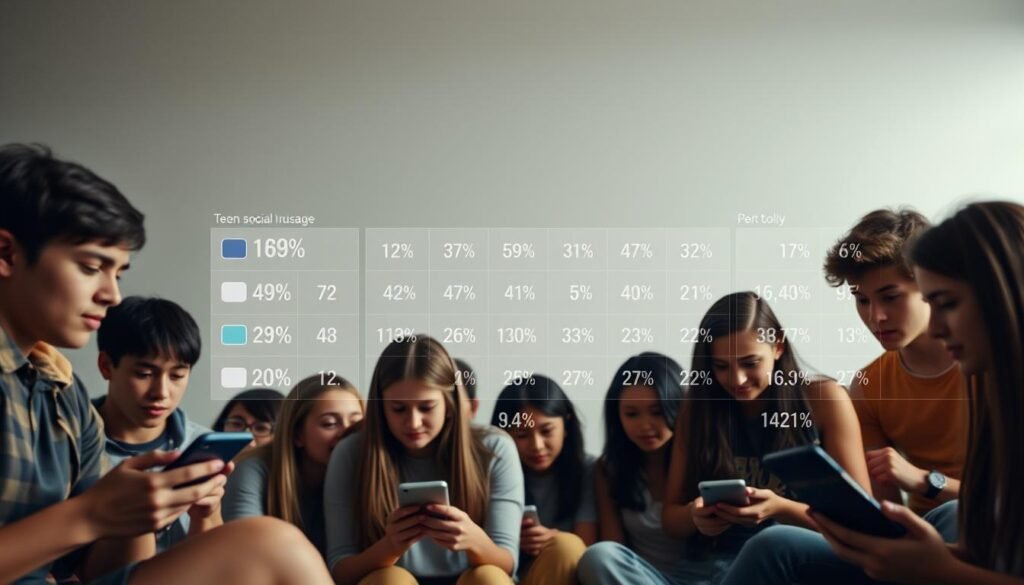
Most Popular Platforms Among American Adolescents
The top social media sites for American teens are YouTube, TikTok, Facebook, Instagram, and Snapchat. These sites are big parts of their daily lives. They shape their social interactions, entertainment, and how they see themselves.
Average Screen Time and Engagement Patterns
Teens are spending more time on social media, with many saying they’re online almost all the time. This can affect their mental health, social skills, and overall happiness. It’s important to understand how they engage with social media.
Looking at how teens use social media helps us see its impact on their mental health and happiness. Knowing this is key to helping teens use social media in a healthy way.
Social Media and Teen Mental Health: What Research Reveals
Recent studies have uncovered a link between social media and teen mental health. The impact of social media on teens is complex. It depends on the content they see, how long they use it, and their own mental health.
Latest Scientific Findings and Meta-Analyses
Many studies have looked into how social media affects teens. A meta-analysis found that too much social media can lead to more depression and anxiety. Seeing perfect lives online can also make teens feel bad about themselves.
Correlation vs. Causation: Understanding the Nuance
It’s important to know the difference between correlation and causation. While social media might be linked to mental health issues, it’s hard to say it causes them. Many things, like a person’s mental state and their environment, also matter.
Demographic and Individual Vulnerability Factors
Some teens are more vulnerable to social media’s negative effects. For example, those with mental health issues, feeling lonely, or facing cyberbullying are at higher risk. Knowing these factors helps in creating better support for teens.

The Dual Nature of Social Media for Adolescents
Social media has a big impact on teens, both good and bad. It helps them find who they are and connect with others. But, it also has risks for their mental health. It’s important to know both sides of social media’s effect on teens.
Potential Benefits for Identity Development and Connection
Social media lets teens express themselves and explore their identities. They can find friends who like the same things, making them feel part of a group. For teens who are different or have health issues, online spaces can be a lifeline, providing support and resources they might not find elsewhere.

Documented Risks to Psychological Well-being
But, social media can also hurt teens’ mental health. Things like cyberbullying, comparing oneself to others, and seeing only the best parts of people’s lives can make teens feel bad about themselves. It can also make them feel lonely and isolated, which is worse for vulnerable teens.
The Importance of Usage Context and Patterns
The way teens use social media matters a lot. It’s not just about how much they use it, but also why and how they use it. What they see, how often they use it, and how they interact with others online all affect their experience.
| Aspect | Potential Benefits | Documented Risks |
|---|---|---|
| Identity Development | Self-expression and exploration | Unrealistic comparisons and decreased self-esteem |
| Social Connection | Community and belonging, special for marginalized teens | Cyberbullying and social isolation |
| Usage Patterns | Support networks for teens with chronic conditions | Excessive use leading to loneliness and anxiety |
Recognizing Warning Signs of Problematic Social Media Use
Social media is a big part of teenagers’ lives. It’s important to know the signs of too much social media use. This includes social media addiction, teen loneliness, and cyberbullying.
Behavioral Changes to Monitor
Behavioral changes can show if someone uses social media too much. Look for irritability without social media, less physical activity, or late-night use. Watching for these signs can help early.
Emotional Indicators of Digital Distress
Feeling anxious, depressed, or isolated can be linked to too much social media. Teens might have mood swings, become withdrawn, or lose interest in fun activities. Spotting these emotional signs is key for help.
Academic and Social Function Disruptions
Too much social media can hurt school work and social life. Look for lower grades, less participation in activities, or problems with family and friends. Finding these issues can help fix the social media problem.
Knowing these warning signs helps parents, teachers, and mental health experts. They can offer support and advice to teens with social media issues.
Understanding the Link Between Social Media and Teen Anxiety
Social media has grown a lot, and so has the worry among teens. This worry is linked to many factors, like how we feel and how we interact with others.
The Fear of Missing Out (FOMO) Phenomenon
The fear of missing out, or FOMO, is a big worry for teens. It happens when they feel they must always be online. They worry they’ll miss something important. This makes them always on edge, making their anxiety worse.
Social Comparison and Digital Perfectionism
Social media shows only the best parts of people’s lives. This makes teens feel bad about themselves when they compare. They feel they must look perfect online, which adds to their anxiety.
Practical Strategies to Reduce Social Media-Induced Anxiety
To lessen anxiety from social media, we can try a few things:
- Limit Social Media Use: Setting limits on how much time you spend online can help. It reduces the chance of seeing things that make you anxious.
- Engage in Offline Activities: Doing things offline helps teens find new interests and friends. It makes them less dependent on social media.
- Promote Digital Literacy: Teaching teens about the real nature of social media helps them use it wisely. They learn to see through the fake parts.
By understanding how social media affects teens and using these strategies, we can help. We can make social media better for their mental health.
Platform-Specific Concerns: Instagram, TikTok, and Depression
Social media is a big part of teens’ lives. It’s important to look at how Instagram, TikTok, and others might link to depression. Each platform has its own features that can affect teens’ mental health differently.
Instagram’s Image-Focused Impact on Self-Esteem
Instagram focuses on pictures, leading to unrealistic comparisons. Seeing perfect images online can hurt teens’ self-esteem. They feel bad when their life doesn’t match up to what they see online.
Key factors contributing to this issue include:
- The prevalence of idealized beauty standards
- The pursuit of likes and followers as a measure of self-worth
- The possibility of cyberbullying and online harassment
TikTok’s Algorithmic Influence on Mood and Behavior
TikTok’s “For You” page can change how users feel and act. It shows them content that might be fun but also has risks. These include:
- Echo chambers and the reinforcement of negative emotions
- Seeing content that’s not right for them
- Getting hooked on scrolling endlessly
Snapchat, BeReal, and Social Pressure Dynamics
Snapchat and BeReal also shape teens’ online world. Snapchat’s quick nature can make teens feel like they must act fast. BeReal’s daily posts encourage sharing real moments.
| Platform | Key Features | Potential Impact on Teenagers |
|---|---|---|
| Image-focused, curated content | Unrealistic comparisons, self-esteem issues | |
| TikTok | Algorithm-driven content, endless scroll | Addictive behavior, exposure to negative content |
| Snapchat | Ephemeral content, immediate responses | Pressure to respond, FOMO |
| BeReal | Daily prompts, authentic sharing | Encourages authenticity, but may create pressure to present a perfect online image |
It’s key to understand these specific issues with social media. By knowing how each platform works, we can help teens stay safe online. This way, we can better handle the challenges of social media and its effects on young minds.
Addressing Cyberbullying: Prevention and Intervention Approaches
Cyberbullying has a big impact on teenagers. It’s important to tackle this issue head-on. Cyberbullying includes sending scary messages or sharing bad stuff about someone online. Knowing how to stop and handle cyberbullying is key for parents and teens today.
Recognizing Different Forms of Digital Harassment
Cyberbullying can take many forms. This includes direct attacks, being left out, or spreading rumors online. It’s important for everyone to know these types to spot cyberbullying.
Teaching Teens Effective Response Strategies
Teaching teens how to deal with cyberbullying is vital. They should learn to block bullies, save evidence, and get help from adults or online resources.
When and How to Involve Schools or Authorities
It’s important to know when to involve schools or authorities in cyberbullying cases. A good plan looks at how bad the bullying is, how it affects the victim, and what schools and police must do. Here’s a table with key points:
| Severity Indicator | Recommended Action | Involving Authorities |
|---|---|---|
| Threats of physical harm | Immediate reporting to school administration or law enforcement | Yes |
| Repeated harassment | Document incidents and report to school; consider involving parents | Potential |
| Single incident of cyberbullying | Address through school policies or parental guidance | No |
By understanding cyberbullying and using good prevention and intervention methods, we can help teens deal with the digital world better.
Building Digital Literacy for Healthier Social Media Engagement
Teenagers live in a world where social media is everywhere. Digital literacy is key for their well-being. It’s important to teach teens how to use social media in a healthy way.
Critical Content Evaluation Skills
Learning to evaluate online content is essential. It means teaching teens to check if sources are trustworthy, spot bias, and find false information. This helps them make smart choices about what they read and share online.
“The ability to critically evaluate online content is a critical skill in today’s digital landscape.”
Understanding Algorithmic Influence and Design
It’s important to know how algorithms shape what we see on social media. These algorithms aim to keep us hooked, often by showing us sensational stuff. Teens can better handle their online world by understanding these algorithms.
| Algorithmic Feature | Impact on Users |
|---|---|
| Personalization | Creates an echo chamber effect, reinforcing existing beliefs. |
| Infinite Scrolling | Encourages prolonged engagement, potentially leading to excessive screen time. |
Recognizing and Resisting Manipulative Features
Social media has features that try to control our behavior. Knowing about these, like auto-play videos or endless notifications, helps teens stay healthy online. They can avoid getting caught up in these traps.
Implementing Effective Boundaries Around Screen Time
Setting limits on screen time is key to better social media habits. Social media is a big part of teens’ lives. So, it’s important to have clear rules and limits to keep a balance between online and offline life.
Age-Appropriate Limits and Guidelines
It’s vital to set limits based on a teen’s age. The American Academy of Pediatrics suggests limits for teens aged 13-18. These limits help ensure screen time doesn’t get in the way of physical activity, sleep, and other important activities.
Parents should think about their teen’s needs, maturity, and health when setting these limits. This helps manage screen time effectively.
- Make some areas in the home screen-free, like the dinner table or bedrooms.
- Set times when screens are off, like during meals or before bed.
- Encourage physical activities and outdoor play to balance screen time.
Creating Tech-Free Zones and Times in Your Home
Creating tech-free zones and times can cut down on screen time. This could mean no screens at the dinner table or in bedrooms. It also means setting aside times when devices are off during family activities or before bed.
Using Built-in Control Features and Monitoring Apps
Using built-in controls and monitoring apps can help manage screen time. Many devices and platforms have parental controls. These controls let parents monitor usage, set time limits, and block bad content.
Setting Up Apple Screen Time and Google Family Link
Apple Screen Time and Google Family Link are great tools for managing screen time. They let parents set time limits, check app usage, and get reports on screen time habits. To use these tools, parents need to create a family account, set up the desired settings, and check the reports regularly.
Handling Resistance and Workarounds
Teens might not like the screen time limits and try to find ways around them. It’s important for parents to talk openly with their teens about these limits. This helps teens understand the reasons and feel involved in setting boundaries.
By being consistent and understanding, parents can better handle resistance. This helps teens develop healthier screen use habits, reduces the risk of social media addiction, and promotes a balanced lifestyle.
Fostering Positive Online Experiences and Digital Citizenship
It’s key to help teenagers have good online experiences in today’s digital world. Social media is a big part of their lives. So, it’s important to encourage healthy online interactions.
Curating Healthier, More Diverse Feeds
Helping teens manage their social media feeds is a good start. They should follow accounts that show diverse views and support positive self-image. This helps them avoid getting stuck in algorithmic manipulation and echo chambers.
They should look for accounts that share learning, creativity, and community. This way, they can find content that’s both educational and inspiring.
Finding Supportive Online Communities
It’s also important for teens to find online communities that support them. These communities offer a sense of belonging and help with challenges. By connecting with others, teens can grow stronger and more confident.
Using Social Media for Creativity, Learning, and Advocacy
Social media can be a powerful tool for teens. It can help them be creative, learn new things, and stand up for what they believe in. By using it positively, they can make a difference online.
Parent-Teen Communication Strategies About Digital Life
Talking to teenagers about digital life needs a careful plan. As social media and tech change, parents must find new ways to help their teens. This helps with their mental health and digital safety.
Opening Non-Judgmental Conversations
It’s important to talk about digital life without judging. Parents should make a safe space for teens to share their online stories. This means being really interested and not quick to judge.
Active Listening Techniques for Digital Concerns
Listening well is key when talking about digital worries with teens. Parents should really listen, get what their teen is saying, and respond carefully. This builds trust and helps teens open up about online issues.
Building Trust Through Transparency and Consistency
Being open and consistent helps build trust with teens about digital life. Parents should clearly state their rules and why they have them. Sticking to these rules and being open to change shows teens they are safe online.
Conversation Starters and Discussion Prompts
Starting conversations with questions can lead to deeper talks about digital life. For example, ask about their favorite social media, online safety, or how they connect with friends online. These chats help parents understand their teens’ digital world better.
By using these strategies, parents can create a better digital space for their teens. Good communication is key to supporting their mental health and digital safety. It helps parents guide their teens through the digital world.
When and How to Seek Professional Support
Getting help from professionals is key for teens facing social media’s bad effects on their mental health. Knowing when to ask for help is important for their well-being.
Recognizing Serious Mental Health Warning Signs
Teens showing severe mental health signs like constant sadness, intense worry, or thoughts of suicide need help fast. Look out for big mood or behavior changes, eating less or more, sleep issues, or staying away from friends.
Key indicators that professional help is needed include:
- Drastic changes in mood or behavior
- Increased irritability or aggression
- Decline in academic performance
- Social isolation or avoidance
Types of Available Support Resources
There are many ways to help teens with mental health problems from social media. These include:
- Therapists and counselors who focus on teen mental health
- Support groups, online or in-person, for teens to share
- Online resources like crisis hotlines and mental health forums
Finding Qualified Mental Health Providers
To find a good mental health provider, ask your doctor, school counselor, or check with groups like the American Psychological Association.
What to Expect from Professional Intervention
Professional help starts with checking the teen’s mental health. Then, a plan is made. This might include therapy, counseling, or other help based on the teen’s needs.
Understanding when and how to get professional help is a big step. It helps families tackle mental health issues from social media. This ensures a healthier online life for teens.
Creating a Comprehensive Family Media Plan
A good family media plan can lessen the bad effects of social media on teens. It sets clear rules and encourages talking openly. This helps families develop better digital habits and boosts everyone’s well-being.
Step 1: Assessing Current Usage Patterns
The first step is to look at how much time teens spend on social media. It’s important to know what they watch and how they access it. Parents can use built-in tools or apps to track this. Knowing this helps families set better goals.
Step 2: Collaborative Rule-Setting Process
It’s important to involve everyone in making rules. This way, teens feel more responsible for their online actions. Families should talk about screen time limits, what’s okay to watch, and what happens if rules are broken.
Step 3: Implementation and Enforcement Strategies
After setting rules, families need to stick to them. This might mean no screens in certain places or at certain times. Using tools to control what apps are used is also helpful.
Step 4: Regular Review and Adaptation
A family media plan needs to be updated often. Families should meet regularly to check if the plan is working. They can talk about any problems and change the plan as needed.
By following these steps and keeping the lines of communication open, families can make a media plan that helps teens stay healthy online.
Conclusion: Balancing Digital Connection with Mental Well-being
It’s important to find a balance between digital life and mental health. This balance includes learning, setting limits, and getting support. Social media and teen mental health are closely connected, with both good and bad effects on young people.
To help teens with social media, we need to watch for signs of too much use. We should teach them about digital safety and set limits on screen time. Knowing the good and bad sides of social media helps parents guide their teens online.
Creating a family plan for media use and talking openly about digital life are key. If needed, getting help from mental health experts can offer more support. This support is vital for teens facing mental health challenges.
By using social media wisely and using mental health resources, we can help teens stay healthy online. This approach supports their well-being in our connected world.
FAQ
What are the most significant effects of social media on teen mental health?
How can parents monitor their teen’s social media use effectively?
What are some warning signs that a teen’s social media use is problematic?
How can teens protect themselves from cyberbullying?
What strategies can help reduce social media-induced anxiety in teens?
How does Instagram’s image-focused environment impact teen self-esteem?
What is digital literacy, and why is it important for teens?
How can families create a media plan?
When should parents consider seeking professional help for their teen’s social media-related issues?
What are some effective ways to promote positive online experiences for teens?
About the Author