Introduction
In today’s fast-paced workplace, effective communication extends far beyond the spoken word. Nonverbal cues in the workplace play a crucial role in how we interact, convey messages, and build relationships with colleagues, clients, and stakeholders. Whether you are in a boardroom meeting, having a casual conversation over coffee, or presenting to a large audience, nonverbal signals can significantly impact the outcome of these interactions. This article delves into the essential role that nonverbal cues play in enhancing professional interactions, offering practical insights and real-world applications that can help you navigate the subtleties of workplace communication.
Understanding Nonverbal Communication
What are Nonverbal Cues?
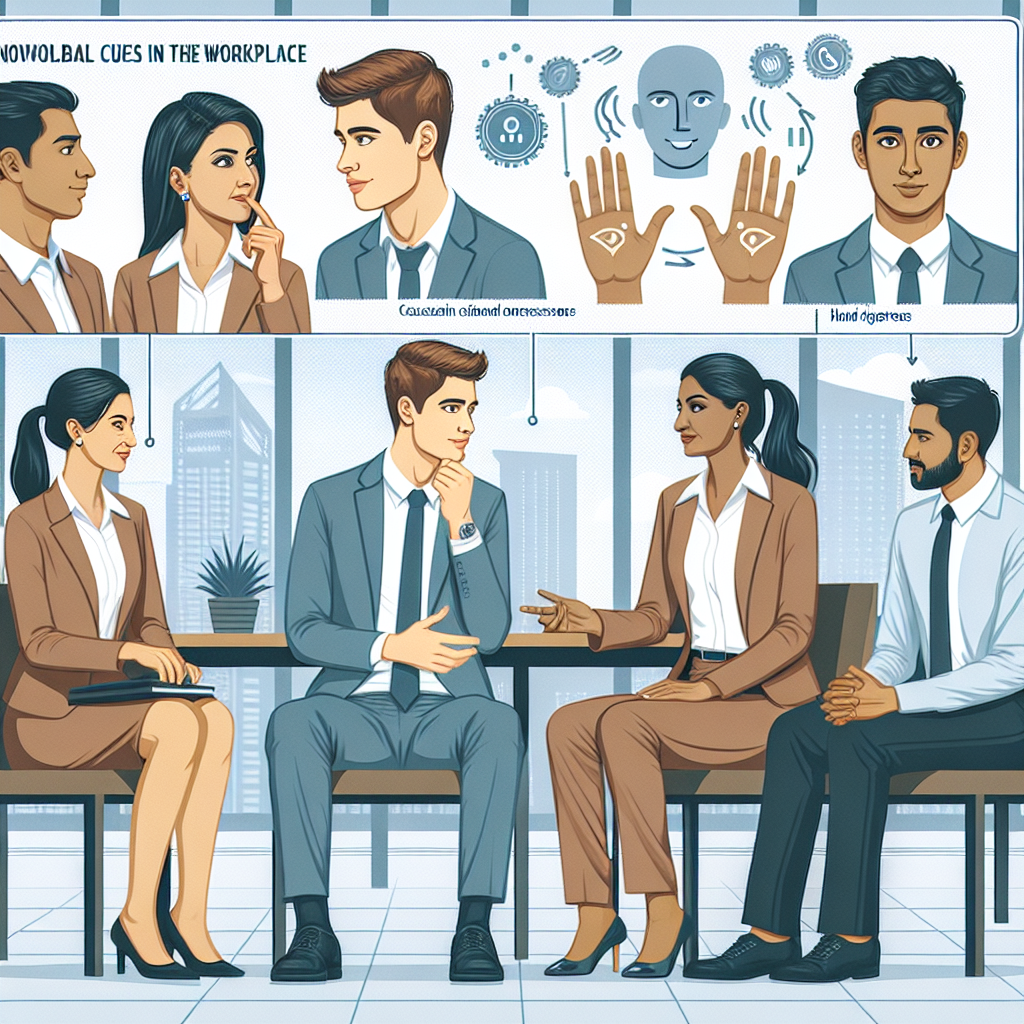
Nonverbal cues encompass a wide range of forms of communication that do not involve words. These include facial expressions, body language, gestures, posture, eye contact, and even the physical space between individuals. Each of these elements conveys vital information about emotions, intentions, and reactions.
The Importance of Nonverbal Cues
Research has shown that up to 93% of communication is nonverbal (Mehrabian, 1971). This includes 55% body language and 38% tone of voice, leaving only 7% for verbal content. Understanding nonverbal cues in the workplace can enhance clarity, foster connections, and mitigate misunderstandings.
Key Nonverbal Cues to Consider
Body Language
Body language speaks volumes. Open stances, leaning slightly forward, and maintaining a relaxed posture can indicate interest and engagement. Conversely, crossed arms, leaning back, or looking away may suggest disinterest.
Case Study: During a team meeting, Sarah noticed that John, who usually engages actively, was sitting back with crossed arms and avoiding eye contact. Recognizing this nonverbal cue, Sarah decided to check in with him later, opening the door for him to express any concerns he might have had about the discussion.
Facial Expressions
Facial expressions are perhaps the most evocative nonverbal cues. A smile can foster warmth and approachability, while a frown or furrowed brows may indicate concern or disagreement.
Case Study: In a performance review, Emily’s initial nervousness was evident due to her tight lips and furrowed brow. By encouraging her to take a deep breath and smile, her manager was able to change the dynamic of the conversation, making it more productive and positive.
Eye Contact
Eye contact is crucial in establishing trust and demonstrating confidence. Looking someone in the eye conveys assurance and sincerity, while avoiding eye contact can suggest evasiveness or lack of interest.
Case Study: During a major client presentation, Jake made a conscious effort to maintain eye contact with all participants. As a result, he received positive feedback afterward; clients felt engaged and respected, which aided in closing the deal.
Proxemics (Personal Space)
Proxemics refers to the physical distance between individuals during interactions. Understanding appropriate personal space can prevent discomfort. For instance, a close distance may suggest intimacy or aggression, while a larger distance can indicate formality or professionalism.
Case Study: During a networking event, Lisa used space effectively by standing at an appropriate distance. This allowed her to initiate conversations and be approachable without overwhelming others, leading to several meaningful connections.
Nonverbal Cues and Cultural Context
The Impact of Culture on Nonverbal Communication
Nonverbal communication is not universal. Cultural backgrounds significantly influence the interpretation of nonverbal cues. For instance, while eye contact might signify confidence in some cultures, it may be perceived as disrespectful in others.
Case Study: Within a multinational team, Mark, an American, was puzzled when his Japanese colleague, Hiro, avoided eye contact. After discussing cultural norms, Mark learned that Hiro’s behavior was rooted in respect rather than disinterest. This insight helped improve their working relationship.
Adapting Nonverbal Cues in a Diverse Workplace
Understanding and adapting nonverbal cues in a diverse environment involves increasing cultural awareness and sensitivity. It is vital for professionals to educate themselves about various cultural practices to ensure successful interactions.
Practical Applications of Nonverbal Cues
Enhancing Team Collaboration
Using nonverbal cues can foster better collaboration among team members. Encouraging open body language and maintaining eye contact during discussions can create an environment of trust and openness.
| Nonverbal Cues | Impact on Team Collaboration |
|---|---|
| Open posture | Encourages sharing of ideas |
| Smile | Fosters a positive mindset |
| Leaning forward | Shows interest and engagement |
Conducting Effective Presentations
Mastering nonverbal cues can elevate your presentation skills. Make use of body language to reinforce your message and maintain eye contact to engage your audience.
Tips for Enhancing Presentations:
- Practice Good Posture: Stand tall to exude confidence.
- Engage with the Audience: Use eye contact to connect with participants individually.
- Incorporate Gestures: Use hand movements to emphasize key points.
Case Study: In a sales presentation, Rachel used animated gestures and maintained eye contact, keeping the audience engaged. The team secured a lucrative contract as a result of her compelling delivery.
Negotiation Skills
In negotiation scenarios, nonverbal cues can offer critical insights into the other party’s position. Observing shifts in body language or changes in facial expressions can signal whether the other person is nearing agreement or hesitation.
Case Study: Tim, an experienced negotiator, successfully read nonverbal cues during a tense contract negotiation. By recognizing that the other party’s body language had become tense, he adjusted his approach to ease the atmosphere, leading to a more amicable agreement.
Challenges with Nonverbal Communication
Misinterpretation of Cues
Misreading nonverbal signals can lead to misunderstandings. For example, someone might misinterpret a colleague’s avoidance of eye contact as disinterest, when in fact, the colleague is simply shy.
Case Study: During a company retreat, Alex misinterpreted Maria’s body language as disengagement. After discussing her feelings, he realized she was overwhelmed rather than disinterested. This taught him the importance of clearer communication.
Overreliance on Nonverbal Cues
While nonverbal cues can enhance communication, relying solely on these signals can obscure the intended message. It’s crucial to combine verbal and nonverbal communication for clarity.
Conclusion
Nonverbal cues in the workplace: enhancing professional interactions is an essential skill that every professional should develop. By becoming more attuned to body language, eye contact, and spatial dynamics, individuals can refine their communication, foster meaningful relationships, and create a cooperative work environment.
To cultivate these skills, consider seeking feedback from colleagues, observing interactions, and practicing mindfulness in your communication approach. By doing so, you’ll not only enhance your professional interactions but also pave the way for your career success.
FAQs
1. What are the most common nonverbal cues in a workplace setting?
Common nonverbal cues include body language, facial expressions, gestures, eye contact, and proximity. Each of these can convey emotions or attitudes, impacting workplace relationships.
2. How can nonverbal cues affect team dynamics?
Nonverbal cues can enhance or hinder team dynamics by influencing trust, engagement, and collaboration. Positive nonverbal communication fosters an open atmosphere, while negative cues can create barriers.
3. How can I improve my nonverbal communication skills?
To improve nonverbal communication, practice self-awareness, observe others, seek feedback, and engage in mindfulness exercises that heighten your observations of body language and cues.
4. Are nonverbal cues the same across different cultures?
No, nonverbal cues vary significantly across cultures. Familiarizing yourself with cultural norms can help prevent misunderstandings when working in diverse environments.
5. Can nonverbal cues be trained?
Yes, many organizations provide training programs focused on nonverbal communication skills. These programs often focus on increasing awareness and practicing effective nonverbal techniques.
By incorporating these insights and best practices on nonverbal cues in the workplace, you’ll be on your way to transforming your professional interactions and driving towards ultimate success.
About the Author