Introduction
In an era where evidence-based decisions are paramount, random assignment has emerged as a cornerstone in shaping impactful policies. From education reforms to healthcare programs and social interventions, the principle of random assignment provides an efficient, unbiased method to evaluate the effectiveness of policy initiatives. By fostering a data-driven approach, policymakers can better understand what works and what doesn’t, significantly enhancing the quality and efficacy of public programs. As we delve into the topic of Random Assignment and Its Impact on Policy Making: A Data-Driven Approach, we will explore how this method can not only inform policy but also transform how we approach societal challenges.
Understanding Random Assignment
What is Random Assignment?
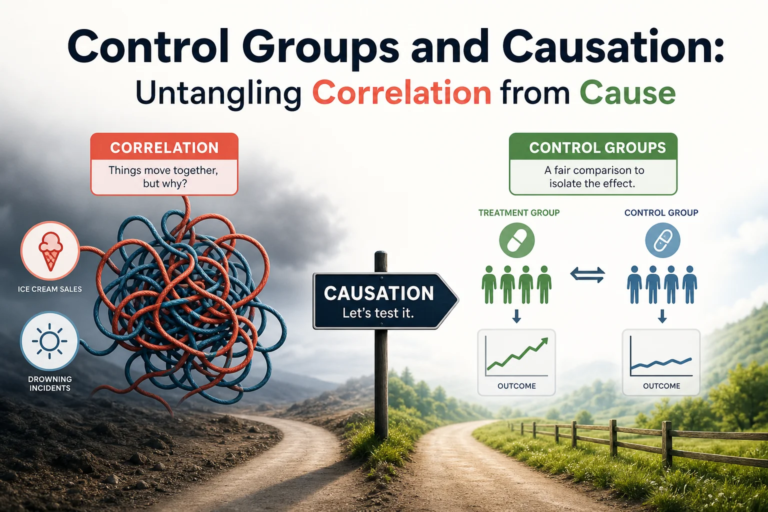
Random assignment refers to the process of allocating participants randomly to different groups within a study. This technique is critical in establishing causal relationships and minimizing bias. In the context of policy making, random assignment allows for a fair comparison between a group that receives an intervention and one that does not.
Why is Random Assignment Important?
The significance of random assignment lies in its ability to equalize both observed and unobserved variables between treatment and control groups. This minimizes selection bias and enhances the internal validity of the study. For instance, when examining the impacts of a new educational curriculum, random assignment ensures that the differences observed between students are attributable to the curriculum, rather than confounding factors.
The Methodology of Random Assignment
Steps in Implementing Random Assignment in Policy Research
1. Define Populations and Variables: Identify the target population and the specific variables that will be affected by the intervention.
2. Develop Randomization Protocol: Use software or probability methods to randomly assign participants to control and treatment groups.
3. Collect Baseline Data: Gather data before the intervention begins to ensure comparability between groups.
4. Implement the Intervention: Administer the policy or program to the treatment group while the control group receives no intervention.
Visual Representation of Random Assignment Process
| Step | Description |
|---|---|
| Define Population | Identify target groups and characteristics |
| Develop Protocol | Create a randomization plan for allocation |
| Collect Data | Measure relevant variables pre-intervention |
| Implement Intervention | Deliver policy to test group |
Case Studies Illustrating Random Assignment in Policy Making
Case Study 1: The Impact of Cash Transfers on Employment
A notable example of random assignment in policy making is the evaluation of cash transfer programs aimed at increasing employment rates among low-income families. In this study, families were randomly assigned to either receive cash transfers or not. The results revealed that those who received the cash transfers were significantly more likely to seek and attain employment, highlighting not only the efficacy of the program but also the importance of random assignment in establishing causation.
Analysis
The impact of cash transfers provides compelling evidence for policymakers, demonstrating how direct financial support can lead to improved outcomes. This case underscores the necessity of Random Assignment and Its Impact on Policy Making: A Data-Driven Approach.
Case Study 2: Educational Interventions in Schools
Another powerful illustration of the use of random assignment is found in educational research. A large-scale study involved randomly assigning schools to receive a new teaching method that emphasized creative problem-solving. Schools not receiving the method served as a control group. The results indicated that students in the experimental schools performed better on standardized tests.
Analysis
The successful implementation of a data-driven intervention through random assignment allows educators and policymakers to secure funding for effective teaching methodologies while discarding less beneficial ones. This reinforces the argument for broad adoption of Random Assignment and Its Impact on Policy Making: A Data-Driven Approach.
Case Study 3: Health Interventions in Community Settings
A randomized controlled trial (RCT) aimed at improving public health found that participants randomly assigned to receive regular health screenings exhibited lower rates of chronic illness compared to those who didn’t. The randomization not only provided clarity on the effectiveness of health interventions but also helped in strategizing future healthcare policies.
Analysis
This case reinforces how random assignment is essential in public health policy. The findings led to a sweeping recommendation for integrating routine health screenings into community health initiatives.
Benefits of Random Assignment in Policy Making
Reducing Bias
One of the greatest advantages of employing random assignment is its ability to significantly reduce selection bias. This ensures a more accurate representation of outcomes.
Enhancing Credibility
When policies are supported by rigorous data collected through random assignment, they carry greater weight within legislative discussions and public discourse.
Cost-Effectiveness
Policymakers can conserve resources by investing in programs that are proven to be effective through rigorous evaluation methods, mitigating wasteful spending on ineffective initiatives.
Challenges and Criticisms
Implementation Barriers
Despite its advantages, the application of random assignment can be logistically challenging. Randomization may require significant resources and time, potentially delaying the implementation of urgent policies.
Ethical Concerns
There may also be ethical dilemmas regarding the withholding of treatment from control groups, especially in contexts like healthcare. Policymakers must navigate these challenges carefully to uphold ethical standards while pursuing scientific rigor.
Conclusion
The utilization of random assignment in policy making marks a transformative step towards evidence-based governance. By enhancing the understanding of effective interventions, policymakers can create impactful programs tailored to the needs of the populace. As we continue to grapple with various social issues, embracing data-driven decisions through Random Assignment and Its Impact on Policy Making: A Data-Driven Approach is not just beneficial; it is essential for creating a responsive and accountable government.
Takeaway
As you move forward in your own endeavors—whether as a policymaker, educator, or concerned citizen—consider how the principles of random assignment could apply to your own work and advocacy. The path to effective policy is paved with data, and the commitment to rigor in evaluation is a commitment to progress.
FAQs
1. What is random assignment, and why is it important in policy making?
Random assignment is a method used to allocate participants into different groups randomly, ensuring that any outcomes can be attributed to the interventions being studied rather than pre-existing differences. It is crucial in policy making because it helps eliminate bias and enhances the credibility of results.
2. How does random assignment reduce bias?
Random assignment reduces bias by equally distributing both observed and unobserved characteristics across groups. This means that differences in outcomes between groups are likely due to the treatment or intervention rather than confounding factors.
3. Can random assignment be applied in all policy contexts?
While random assignment is widely applicable, its feasibility can fluctuate based on the policy context. Ethical considerations, resource availability, and logistical challenges may limit its use in certain scenarios.
4. What are some real-world examples of policies evaluated through random assignment?
Notable examples include cash transfer programs aimed at increasing employment, educational interventions to improve student outcomes, and health initiatives promoting regular screenings among communities.
5. How can I advocate for the use of random assignment in policy making?
To advocate for the use of random assignment, you can gather evidence from successful case studies, engage with policymakers about the importance of data-driven approaches, and encourage the incorporation of rigorous evaluation methods in policy proposals.
By adopting the principles of Random Assignment and Its Impact on Policy Making: A Data-Driven Approach, we can pave the way for more effective, transparent, and impactful governance.
About the Author


The PsyForU Editorial Collective is the research and editorial team of PsyForU Research International. The collective prepares educational, psychological, mental-health-awareness, inclusion, neurodiversity, and research-methodology content for students, parents, educators, researchers, and general readers. PsyForU content is intended for awareness, education, and capacity-building and should not be treated as clinical diagnosis, therapy, medical advice, legal advice, or emergency mental-health support.