Introduction
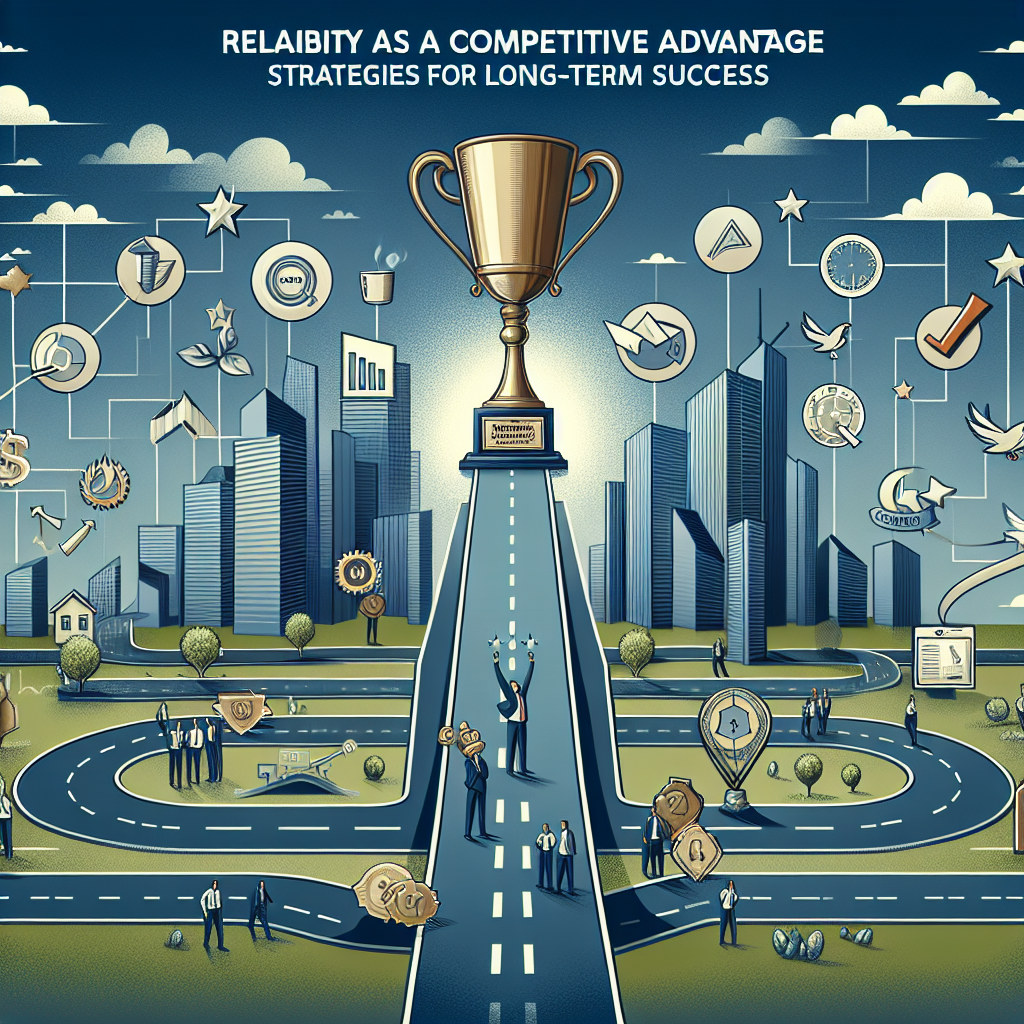
In today’s fast-paced and increasingly competitive market, businesses are constantly seeking ways to differentiate themselves from the competition. One of the most formidable ways to achieve this is through reliability. In an era where consumers are bombarded with choices, reliability as a competitive advantage becomes not just desirable, but essential.
When customers associate a brand with reliability, trust builds, and loyalty follows. This article delves deep into how reliability as a competitive advantage can pave the way for long-term success. From case studies to actionable strategies, we will explore how businesses can harness the power of reliability to achieve sustainable growth.
Understanding Reliability in Business
What is Reliability?
Reliability in the context of business refers to the ability of a company to deliver quality products and services consistently over time. It encompasses various dimensions, including product quality, service consistency, and the overall customer experience.
The Importance of Reliability
Businesses that prioritize reliability stand to gain a significant competitive edge. According to a study by the American Society for Quality, organizations that focus on quality management report a higher level of customer satisfaction and loyalty. Reliability not only fosters trust among customers but also enhances brand reputation and can lower operating costs.
Strategies for Building Reliability
1. Quality Management Systems
Implementing robust quality management systems (QMS) can significantly enhance a business’s reliability. A proven QMS ensures that processes are standardized, monitored, and continuously improved.
Case Study: Toyota
Toyota is renowned for its commitment to quality and reliability through its Toyota Production System (TPS). This QMS not only streamlined operations but also fostered a culture of continuous improvement. The result was a brand that became synonymous with reliability and quality in the automotive industry.
| Aspect | Toyota | Impact |
|---|---|---|
| Quality Control | Auto Quality Standards | Consistent product reliability |
| Employee Training | Kaizen Techniques | Continuous improvement culture |
| Customer Feedback | Customer Satisfaction | Higher loyalty and brand trust |
2. Consistent Customer Communication
Effective communication is another cornerstone of reliability. Keeping customers informed about products, services, and any potential issues can enhance their trust.
Case Study: Zappos
Zappos is often cited for its extraordinary customer service, showcasing how proactive communication builds reliability. Their customer service team is trained to communicate transparently, whether dealing with a delay or a stock issue.
3. Building a Strong Brand Image
A strong brand image enhances reliability by establishing expectations in the consumer’s mind. Consistency in branding—whether through logos, messaging, or customer service—reinforces the reliability potential.
Case Study: Apple
Apple’s commitment to design, quality, and user experience has built a brand synonymous with reliability. Customers often turn to Apple for their tech needs, trusting that they will receive quality and performance—a direct result of years of consistent branding.
4. Investing in Employee Training
Employees play a crucial role in delivering reliability. Investing in comprehensive training ensures that staff are knowledgeable and can provide consistent service.
Case Study: Ritz-Carlton
Ritz-Carlton invests significantly in employee training to ensure top-notch service. Their motto, "We are Ladies and Gentlemen serving Ladies and Gentlemen," exemplifies their focus on reliability through service quality and employee empowerment.
The Role of Technology in Enhancing Reliability
1. Data Analytics
Leveraging data analytics can deepen insights into customer preferences and enhance service reliability. By understanding patterns, businesses can anticipate needs and address them proactively.
Case Study: Amazon
Amazon uses advanced analytics to streamline its supply chain, ensuring that products are consistently available to customers. Their predictive algorithms help in managing inventory effectively, further showcasing how reliability can serve as a competitive advantage.
2. Automation Systems
Integrating automation can reduce human error and enhance operational reliability. Automated processes ensure that every aspect of production or service delivery is standardized.
Case Study: McDonald’s
McDonald’s utilizes automation in its kitchen processes, assuring customers that they will receive consistent quality across all locations. This use of technology bolsters their reputation for reliability in fast food.
Measuring Reliability
Key Performance Indicators (KPIs)
To gauge reliability, businesses should adopt KPIs such as:
- Customer Satisfaction Score (CSAT): Measures how satisfied customers are with product/service quality.
- Net Promoter Score (NPS): Assesses customer loyalty and likelihood to recommend.
- First-Call Resolution Rate (FCR): Indicates the effectiveness of customer service in resolving issues on the first interaction.
Creating a Reliability Framework
A framework focusing on reliability can help in systematically addressing and improving reliability across business processes. Components include:
- Quality control processes
- Employee engagement surveys
- Customer feedback mechanisms
Overcoming Challenges in Establishing Reliability
1. Resource Allocation
Achieving reliability often requires significant resource allocation. Companies must be willing to invest time and money into employee training, technology, and quality systems.
2. Cultural Resistance
Implementing reliability-focused strategies may face resistance due to company culture. Engaging employees and fostering a culture of reliability through education and incentivization can mitigate this resistance.
Conclusion
In a hyper-competitive landscape, reliability as a competitive advantage is not just an add-on; it’s a necessity. Companies that invest in building reliability through quality management, customer relations, branding, and employee training will position themselves for long-term success.
As we’ve explored through the insights and case studies, reliability fosters trust, enhances brand reputation, and leads to sustainable growth. The key takeaway is simple: prioritize reliability, and watch your organization thrive.
FAQs
1. Why is reliability essential for long-term success?
Reliability builds customer trust and loyalty. Customers are more likely to return to brands they can depend on.
2. How can I measure my business’s reliability?
Use KPIs like Customer Satisfaction Score (CSAT), Net Promoter Score (NPS), and First-Call Resolution Rate (FCR) to gauge reliability.
3. What role does employee training play in reliability?
Well-trained employees are crucial for consistent service delivery, ensuring that customers have a reliable experience.
4. Can technology improve my company’s reliability?
Absolutely. Automation and data analytics streamline operations and enhance service quality, fostering reliability.
5. What are some common challenges in establishing reliability?
Resource allocation and cultural resistance are common challenges. Investing in employee engagement and management buy-in can help overcome these obstacles.
Incorporating reliability as a competitive advantage is a multifaceted strategy that requires intentionality and dedication. Use these insights to build a framework that prioritizes reliability, and witness the transformative effects on your business over time.
About the Author


Dr. Jonathan Reed, Cognitive Psychology and Behavioral Therapy
Dr. Reed specialises in understanding the inner workings of the human mind, focusing on cognitive processes, memory, and decision-making. His articles delve into how cognitive-behavioral therapy (CBT) can help individuals reshape thought patterns and behaviours.