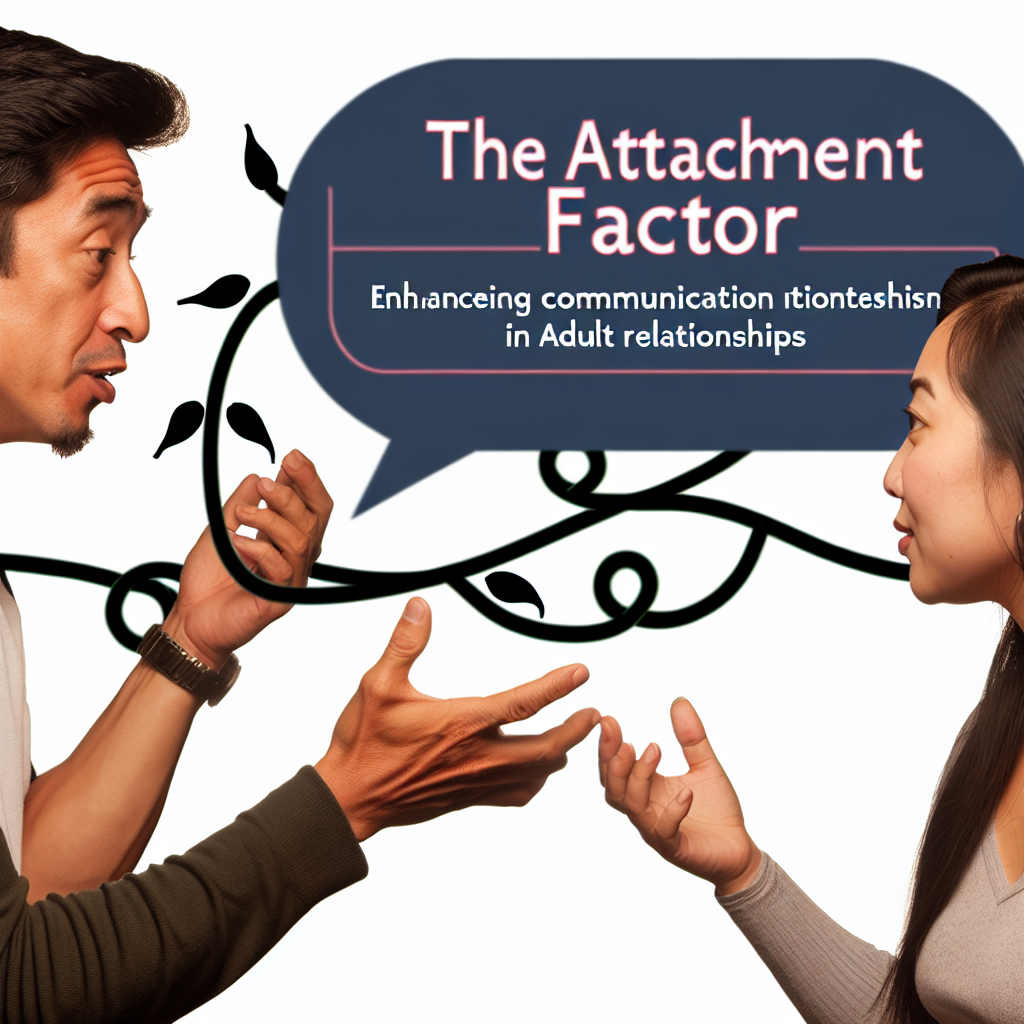
The Attachment Factor: Enhancing Communication in Adult Relationships
Introduction
In the complex tapestry of adult relationships, communication often serves as the golden thread that holds everything together. Many of us frequently wonder why some relationships thrive while others falter despite the effort. The answer often lies in a seemingly innocuous but potent concept known as attachment theory. By understanding The Attachment Factor: Enhancing Communication in Adult Relationships, we can decipher the nuances of our connections and improve our relationships substantially.
Just as young children develop distinct ways of relating to their caregivers, these patterns often carry over into adult romantic relationships. Whether you’re navigating a new romance, a long-term partnership, or even friendships, comprehending your attachment style and the attachment styles of those around you can dramatically transform your communication dynamics.
What is Attachment Theory?
Attachment theory, developed by psychologist John Bowlby and further expanded by Mary Ainsworth, posits that early relationships with caregivers influence our emotional and relational outcomes throughout life. These early interactions foster distinct attachment styles—secure, anxious, avoidant, and disorganized—that play a role in how we engage and communicate in adult relationships.
Table 1: The Four Attachment Styles
| Attachment Style | Characteristics | Implications for Communication |
|---|---|---|
| Secure | Comfortable with intimacy, healthy communication, and conflict resolution | Effective in expressing needs and resolving issues. |
| Anxious | Highly attuned to partner’s needs, often seeking constant reassurance | Overly sensitive to partner’s signals, which may lead to miscommunication. |
| Avoidant | Values independence, often withdraws from emotional intimacy | Tends to avoid expressing needs or engaging in difficult conversations. |
| Disorganized | Fearful of intimacy but also desiring it, leading to chaotic and unpredictable behavior | Struggles with communication, creating confusion and emotional turbulence. |
Understanding these styles leads us to the core of our topic—The Attachment Factor: Enhancing Communication in Adult Relationships—as it becomes clear that recognizing ourselves and our partners can pave the way for more mindful and effective communication strategies.
The Influence of Attachment Styles on Communication
Exploring Secure Attachment in Communication
Individuals with a secure attachment style leverage their comfort with intimacy to foster open dialogues. Their authentic communication creates a safe space for vulnerability. They display strong emotional intelligence, allowing them to express their feelings without fear of judgment.
Case Study: “The Open Discussion”
Take Sarah and Tom, a couple characterized by secure attachment. They frequently engage in "open discussions," where each partner articulates their feelings, needs, and concerns without fear of alienation. This transparency leads to deeper emotional bonding and conflict resolution
Analysis: What we can observe here is that secure attachment enables Sarah and Tom to tackle issues head-on rather than avoiding or tiptoeing around them. Their effective communication reflects the Attachment Factor and demonstrates its crucial role in their relationship’s success.
The Challenges Faced by Anxiously Attached Individuals
Individuals with an anxious attachment style often crave constant affection and reassurance, which can result in overwhelming their partners. This dynamic can lead to misunderstandings, as anxious partners might interpret silence or lack of affection as indicators of disinterest.
Case Study: “The Communication Breakdown”
Laura often texts her boyfriend, Mike, seeking reassurance. However, his avoidant tendencies lead him to withdraw, intensifying Laura’s anxiety and prompting more frequent messages. Their lack of understanding about each other’s attachment styles creates a cycle of miscommunication.
Analysis: This scenario illustrates the importance of recognizing attachment styles. Had Laura and Mike engaged in discussions to clarify their needs, they could have bridged the communication gap and enhanced their relational satisfaction.
Avoidant Attachment and Its Impact
The avoidant attachment style emphasizes independence, leading individuals to avoid expressing emotional needs. This avoidance can create an emotional distance that confounds communication efforts.
Case Study: “The Silent Treatment”
Rachel often feels neglected in her relationship with David, who exhibits an avoidant attachment. When conflicts arise, David tends to retreat, resulting in silence rather than resolution. Rachel feels abandoned, and David feels overwhelmed, creating a cycle of disconnection.
Analysis: In this scenario, both partners’ differing attachment styles prevent them from addressing their communication woes. By understanding the Attachment Factor, they could tackle the discomfort of conflict, leading to progressive dialogue and effective resolutions.
Navigating Disorganized Attachment Styles
Those with a disorganized attachment style experience a tumultuous relationship with intimacy. Their contradictory behavior can confuse both themselves and their partners, often resulting in communication difficulties.
Case Study: “The Rollercoaster of Emotion”
Emily and Jake’s relationship is filled with passionate highs and devastating lows. They yearn for connection but simultaneously fear it. This pattern leads to erratic communication, often leaving emotional fallout in its wake.
Analysis: Emily and Jake illustrate how disorganized attachment can severely impact communication. By working to understand their attachment needs, they could cultivate a more stable and supportive dialogue.
Techniques for Enhancing Communication
With awareness of the different attachment styles and their impact on communication, let’s explore practical techniques individuals can adopt to improve communication in their relationships.
1. Regular Check-Ins
Implement weekly or biweekly "check-in" sessions where partners discuss their feelings, expectations, and needs. This provides both partners an opportunity to express their needs without consequences.
2. Practice Active Listening
Active listening techniques—repeating what has been said for clarification and validating emotions—can bridge gaps in communication.
3. Use "I" Statements
Using "I" statements rather than "You" statements can prevent defensiveness. For example, "I feel neglected when you don’t respond to my texts," is more effective than "You never text me back."
4. Seek Couples Therapy
Consider seeking assistance from a trained therapist, who can provide tools tailored to your unique relationship dynamics.
5. Flashcard Exercise
Create flashcards with different emotional expressions written on them. When conflict arises, partners can draw cards to communicate how they feel in a constructive manner.
Conclusion
The journey toward effective communication in adult relationships is one marked by self-awareness, patience, and, most importantly, understanding the Attachment Factor. By recognizing our attachment styles and those of our partners, we can develop tailored communication strategies that respond to the nuanced emotional landscape we navigate daily.
Building robust communication skills is not merely a goal; it is a transformative process leading to deeper connections, greater empathy, and ultimately, stronger bonds. As we become aware of the attachment dynamics at play, let’s actively strive for enhanced communication that enriches our relationships profoundly.
FAQs
1. What is the best attachment style for a successful relationship?
The secure attachment style is generally regarded as the most advantageous for healthy relationships, fostering open communication, trust, and resilience.
2. Can attachment styles change over time?
Yes! While our early attachment experiences shape us, relationships and therapeutic interventions can facilitate shifts toward more secure attachments.
3. How can I identify my attachment style?
Self-reflection, relationship history, and online assessments can help you determine your attachment style. Understanding your patterns is the first step toward change.
4. How can I communicate with a partner who has an avoidant style?
Encourage openness by creating a safe space where they feel comfortable expressing their feelings and needs. Use gentle prompts and reassure them of your commitment.
5. Can therapy help with attachment issues?
Absolutely! Therapists can provide insights into attachment styles and guide couples through discussions and exercises intended to improve communication.
By fully embracing The Attachment Factor: Enhancing Communication in Adult Relationships, we empower ourselves to cultivate relationships that are resilient, fulfilling, and characterized by effective, loving communication.
About the Author