Introduction
In the intricate world of policy-making, one of the underappreciated yet crucial elements often makes the difference between successful and ineffective decisions: control groups. Understanding the impact of control groups on policy decisions can unlock insights that pave the way for more effective strategies, interventions, and programs. Consider the staggering statistics: policies based on sound empirical evidence lead to a 50% increase in effectiveness compared to those based on intuition alone. This article delves into the synergy between control groups and policy decisions through a rich tapestry of case studies that illustrate their powerful role.
Understanding Control Groups
What are Control Groups?
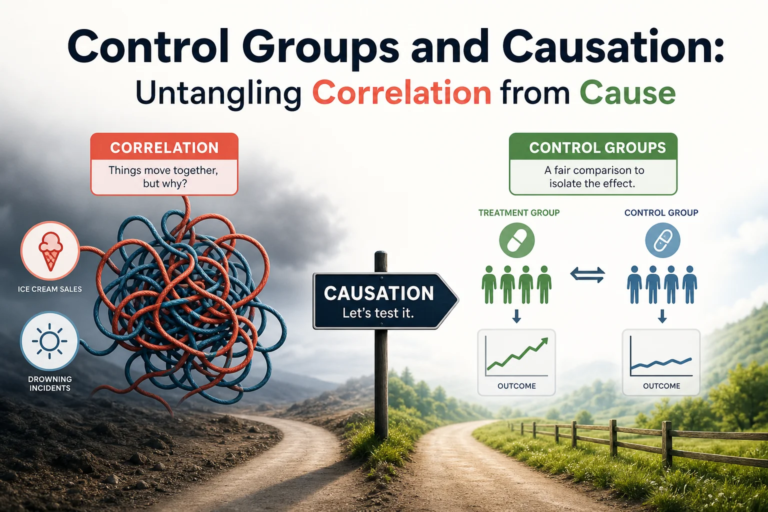
In research and experimental settings, control groups are essential in helping to isolate the effects of an intervention by providing a baseline against which the experimental group can be compared. The significance of control groups extends beyond academia; they are fundamental in driving policy decisions that truly make a difference.
The Role of Control Groups in Policy Formulation
When policies are created based on controlled experiments, the reliability and validity of the outcomes can be significantly improved. This section will explore how academic research, clinical trials, and social experiments leverage control groups to yield actionable insights.
Table: The Benefits of Control Groups in Policy-Making
| Benefits | Description |
|---|---|
| Minimized Bias | Control for variables that could skew results |
| Enhanced Credibility | Provides a scientifically grounded foundation |
| Improved Allocation of Resources | Ensures funding is directed towards effective programs |
| Quick Adjustments | Allows policymakers to iterate quickly based on findings |
Case Studies Demonstrating the Impact of Control Groups on Policy Decisions
Case Study 1: The Role of Control Groups in Education Policy
In recent years, education reform has increasingly relied on randomized controlled trials (RCTs) to inform policy decisions. A notable case involved the Tennessee Star Project, where students in smaller classes exhibited significant academic improvement compared to their peers in larger classes.
Analysis
This study emphasized the importance of using control groups to substantiate claims about educational outcomes. By isolating the variable of class size, policymakers were able to advocate effectively for reforms based on solid evidence, demonstrating the profound impact of control groups on policy decisions.
Case Study 2: Health Interventions and Public Health Policies
The COVID-19 pandemic showcased how control groups can significantly influence public health decisions. For instance, the Clinical Trial of Hydroxychloroquine included control groups to assess the drug’s efficacy in treating COVID-19. The findings eventually led to a re-evaluation of its use.
Analysis
The use of control groups in this context was vital, showcasing how scientific evidence can shape urgent policy decisions. Policymakers were able to pivot from less effective treatment protocols to more reliable alternatives, highlighting a clear example of the impact of control groups on policy decisions.
Case Study 3: Economic Policy and Social Programs
Research conducted in the form of the Social Experiment on Universal Basic Income (UBI) in Finland employed control groups to gauge the effects of financial support on people’s well-being.
Analysis
The presence of control groups allowed researchers to draw nuanced conclusions about the program’s impact, leading to informed discussions about UBI as a viable policy option. The insights gained speak to the importance of the impact of control groups on policy decisions, notably in economic reforms.
Making the Most of Control Groups
Best Practices for Implementing Control Groups in Policy Research
- Design a Comprehensive Framework: A well-planned framework is crucial for the successful implementation of control groups.
- Engage Stakeholders Early: Include policymakers and community members at the onset to align goals and methods.
- Continuous Evaluation and Feedback: Iterative processes help refine interventions based on findings continually.
The Importance of Transparency
Transparency in how control groups are managed and analyzed bolsters public trust in the findings. Policymakers are more likely to embrace research grounded in clear methodologies.
Conclusion
The evidence is resounding: the impact of control groups on policy decisions cannot be overstated. From education to health to economic reform, control groups serve as the backbone of sound policy-making. By incorporating the lessons learned from diverse case studies, policymakers can design more effective programs that positively impact society.
As we move forward, the call to action is clear: invest in robust research designs that incorporate control groups to ensure policies are founded on empirical evidence rather than conjecture. This approach will not only enhance the effectiveness of current policies but also cultivate trust and support from the public.
FAQs
1. What exactly is a control group?
A control group is a group in an experiment that does not receive the treatment or intervention being tested, serving as a baseline to compare against the experimental group.
2. Why are control groups essential in policy decisions?
Control groups minimize biases, provide a credible foundation for conclusions, and improve the allocation of resources by ensuring interventions are effective.
3. Can control groups lead to better public health outcomes?
Yes, control groups allow policymakers to identify effective interventions, significantly improving public health outcomes based on empirical evidence.
4. How can policymakers ensure their research includes control groups?
Policymakers should collaborate with researchers who employ rigorous experimental designs, including control groups, to validate their policies.
5. What are the common pitfalls in using control groups?
Common pitfalls include inadequate sample sizes, poor randomization techniques, and failure to maintain the integrity of the control group, all of which can lead to misleading results.
In summary, when policy decisions are informed by rigorous applications of control groups, the likelihood of success increases exponentially. Embrace the methodologies that allow evidence to lead, and transform how policies are shaped for future generations.
About the Author


The PsyForU Editorial Collective is the research and editorial team of PsyForU Research International. The collective prepares educational, psychological, mental-health-awareness, inclusion, neurodiversity, and research-methodology content for students, parents, educators, researchers, and general readers. PsyForU content is intended for awareness, education, and capacity-building and should not be treated as clinical diagnosis, therapy, medical advice, legal advice, or emergency mental-health support.