Can researchers truly understand human behavior without deciphering the underlying data?
Statistical analysis is a key tool in psychology research. It helps psychologists make sense of their studies. By using different data analysis techniques, they find patterns and trends. These insights help them understand psychological phenomena better.
In the world of psychology, data-driven decision making is very important. This article will show why statistical analysis is so vital. It plays a big role in advancing our knowledge in psychology.
Key Takeaways
- Understanding the importance of statistical analysis in psychology research.
- Exploring various data analysis techniques used in the field.
- The role of data-driven decision making in advancing psychological knowledge.
- How statistical analysis informs our understanding of psychological phenomena.
- The significance of statistical techniques in shaping the field of psychology.
Understanding the Importance of Statistical Analysis in Psychology
Statistical analysis is key to understanding human behavior and mental processes. It uses statistical methods to analyze data and draw conclusions. This makes it a vital tool in psychological research.
What is Statistical Analysis?
Statistical analysis helps collect, analyze, and interpret data. In psychology, it lets researchers understand complex data, find patterns, and test hypotheses. It helps psychologists quantify their findings and draw evidence-based conclusions.
It includes various techniques, from descriptive statistics to inferential statistics. Descriptive statistics summarize data, while inferential statistics help make inferences about a population from a sample.
Why Use Statistics in Psychological Research?
Statistics are vital in psychological research for analyzing data systematically. They help researchers:
- Identify trends and patterns in data
- Test hypotheses and theories
- Make informed decisions based on data-driven evidence
As noted by renowned psychologist,
“Statistics are the backbone of any scientific inquiry, providing a means to objectify subjective experiences.”
This highlights the importance of statistical analysis in psychology.
Key Benefits of Statistical Analysis
The benefits of statistical analysis in psychology are many. Some key advantages include:
- Improved accuracy: It helps reduce errors and biases in data interpretation.
- Enhanced reliability: Statistical methods increase the reliability of findings.
- Better decision-making: It provides a basis for informed decision-making in research and practice.
By using statistical analysis, psychologists can deepen our understanding of human behavior and mental processes. This helps develop effective interventions and treatments.
Basic Statistical Concepts in Psychology
In psychology, statistics are key to understanding human behavior. They help us analyze data and draw conclusions. Various methods are used to grasp complex phenomena.
Descriptive Statistics
Descriptive statistics summarize data’s basic features. It’s vital in psychology to understand data, like mean and standard deviation. This simplifies large datasets and shows data’s trends.
For example, in a study on student scores, descriptive stats help find the mean score. This shows how scores vary around the mean. It’s key for spotting patterns.
Inferential Statistics
Inferential statistics use sample data to make broader conclusions. It’s essential in psychology for generalizing findings. Methods like confidence intervals and hypothesis testing are used.
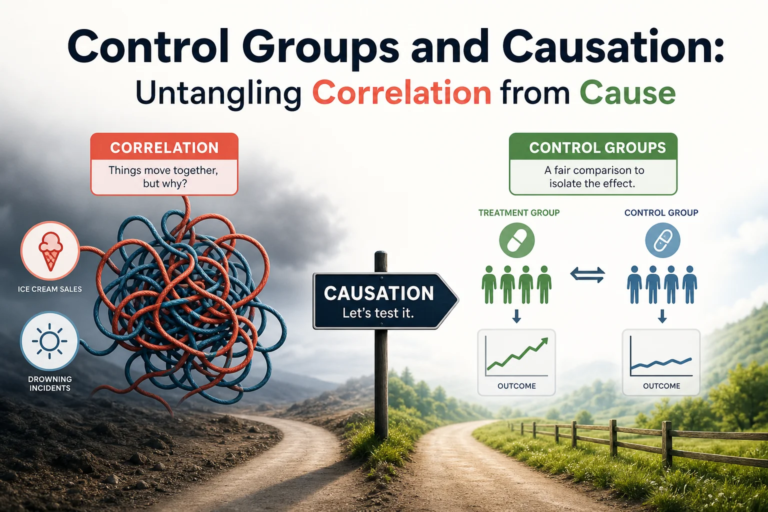
For instance, a study might test if a new therapy reduces anxiety. Inferential stats compare treatment and control groups. This helps infer the therapy’s effect on the wider population.
Hypothesis Testing
Hypothesis testing is a core part of statistical analysis in psychology. It tests if data supports a hypothesis. A null and alternative hypothesis are set, then tested with sample data.
For example, a researcher might test if a new cognitive training improves function. Hypothesis testing compares groups to see if the difference is significant.
Types of Statistical Tests Used in Psychology
Understanding different statistical tests is key for solid research in psychology. These tests help researchers analyze data, test hypotheses, and draw conclusions about psychological phenomena.
T-Tests
T-tests compare the means of two groups to see if there’s a significant difference. They’re often used in psychology to compare a control group with an experimental group. For example, a researcher might use a t-test to see if a new therapy reduces anxiety more than standard treatment.
Example of T-Test Application: A study might use a t-test to compare stress levels in college students who did mindfulness meditation with those who didn’t.
ANOVA
Analysis of Variance (ANOVA) compares the means of three or more groups. It shows if at least one group mean is different, but doesn’t say which. ANOVA is useful in psychology for studies with multiple treatment groups.
Example of ANOVA Application: A researcher might use ANOVA to compare test scores of students taught with different methods, like traditional, technology-integrated, or project-based learning.
Regression Analysis
Regression analysis finds relationships between variables. In psychology, it’s used to predict outcomes based on predictor variables. For instance, a researcher might use it to predict depression levels based on stress, social support, and coping mechanisms.
| Variable | Coefficient | p-value |
|---|---|---|
| Stress | 0.5 | 0.01 |
| Social Support | -0.3 | 0.05 |
| Coping Mechanisms | -0.2 | 0.1 |
Chi-Square Tests
Chi-square tests analyze categorical data to find significant associations between variables. In psychology, they’re used to study the relationship between categorical variables, like the presence of a psychological disorder and treatment type.
Example of Chi-Square Test Application: A study might use a chi-square test to see if there’s a difference in the likelihood of men and women seeking mental health services.
Choosing the Right Statistical Test
Choosing the right statistical test is key to good research in psychology. It’s not easy and depends on many important factors. These factors help make sure the research is valid and reliable.
Factors Influencing Test Selection
Several key factors influence the selection of a statistical test in psychological research. These include:
- Research Question: The nature of the research question dictates the type of statistical test required. For instance, comparing means between groups might require a t-test or ANOVA, while examining relationships between variables might necessitate correlation or regression analysis.
- Data Type and Level of Measurement: The type of data (nominal, ordinal, interval, ratio) and its distribution (normal or skewed) are critical. For example, parametric tests are used for normally distributed interval or ratio data, while non-parametric tests are more suitable for ordinal data or skewed distributions.
- Study Design: The study design, including whether it’s experimental, quasi-experimental, or observational, and whether it involves independent or paired samples, also influences the choice of statistical test.
Common Mistakes in Test Choice
Researchers often make mistakes when choosing statistical tests. Common errors include:
- Ignoring the assumptions of the statistical test, such as normality or homogeneity of variance.
- Using the wrong test for the level of measurement (e.g., using a parametric test for ordinal data).
- Failing to account for multiple comparisons, which can inflate Type I error rates.
Knowing these common mistakes can help researchers make better choices when selecting a statistical test.
Guidelines for Practitioners
To navigate the complex process of selecting a statistical test, practitioners should:
- Clearly define their research question and hypotheses.
- Understand the characteristics of their data, including the level of measurement and distribution.
- Consider the study design and the nature of the samples.
- Consult statistical resources or experts when unsure about the appropriate test.
- Use statistical software for psychologists that can help in identifying the right test based on the data characteristics and research question.
By following these guidelines and being mindful of the factors that influence test selection, researchers can ensure that their use of statistical tests is appropriate and effective. This enhances the validity and reliability of their research findings.
The Role of Data Collection Techniques
Psychological research depends a lot on good data collection methods. The method used affects the quality of the data. This, in turn, impacts the study’s conclusions.
There are many data collection techniques in psychology. Each has its own strengths and weaknesses. The main ones are surveys and questionnaires, experimental designs, and observational methods.
Surveys and Questionnaires
Surveys and questionnaires are common in psychology for getting self-report data. They’re good for collecting lots of data fast. But, they have some downsides.
People might not always tell the truth, due to biases or not knowing themselves well enough.
Best practices for using surveys and questionnaires include:
- Make sure questions are clear and simple
- Test the survey first to fix any problems
- Use different types of questions to keep it interesting
Experimental Designs
Experimental designs are key in psychology. They help show cause-and-effect relationships. By changing one thing and seeing how it affects another, researchers learn about psychological processes.
Key elements of experimental design include:
- Randomly assign people to different groups
- Control other factors that could affect the study
- Change the independent variable
These designs are great for testing if one thing causes another.
Observational Methods
Observational methods involve watching and recording behavior. They’re useful when you can’t or shouldn’t change things. This method is good for studying behavior in real or controlled settings.
Observational research gives detailed insights into behavior. But, it needs careful planning to avoid bias and make sure it’s representative.
Knowing the good and bad of different methods helps researchers choose the best one. This makes their findings more reliable and valid.
The Importance of Sample Size in Psychological Research
Sample size is key in psychological research. It affects how sure we can be about our findings. A good sample size makes sure our results are reliable and apply to the whole group we’re studying.
Determining Appropriate Sample Size
Figuring out the right sample size involves several things. We look at the expected effect size, how powerful we want our study to be, and the significance level. Power analysis helps us find out how many people we need to see a real effect.
Factors influencing sample size determination:
- Expected effect size
- Desired statistical power
- Significance level (alpha)
- Variability in the data
Effects of Small Samples on Results
Small samples can give us wrong or unreliable results. Studies with few participants might miss important effects or show too big of an effect. This can make it hard to repeat the study, which is a big problem in psychology.
Consequences of small sample sizes:
| Issue | Description | Impact |
|---|---|---|
| Lack of Statistical Power | Inability to detect true effects | False negatives |
| Overestimation of Effect Size | Exaggerated effect sizes due to small samples | Non-replicable findings |
| Increased Variability | Higher variability in small samples | Less reliable estimates |
Power Analysis
Power analysis is a way to figure out how many people we need for our study. It makes sure our study can find important effects. It’s a key part of planning our research.
By doing a power analysis, we can make sure our study is strong. We can find the right balance between needing significant results and not using too many resources. This makes our study design better and our results more meaningful.
Interpreting Statistical Results Effectively
Understanding statistical results is key in psychology. It helps validate hypotheses and guides future research. Statistical analysis gives us a lot of data, but it’s how we interpret it that matters. Knowing the basics of statistics is essential.
Understanding p-Values
The p-value is a core part of statistical testing. It shows the chance of getting results as extreme as ours, assuming the null hypothesis is right. A p-value under 0.05 means the data is unlikely if the null hypothesis is true. But, remember, p-values don’t show how big or important an effect is.
Many researchers misuse p-values, thinking they prove everything. But, it’s important to look at the study’s design, sample size, and question. This helps avoid mistakes in using p-values.
Confidence Intervals
Confidence intervals give a range where the true population parameter might be. They show how sure we are about our estimate. A tight interval means we’re pretty sure, while a wide one means we’re less sure.
When looking at confidence intervals, check if they include zero. If they do, the result might not be significant. But, also think about the interval’s width and its real-world importance.
Effect Sizes
Effect sizes tell us how big the effect is. They’re not affected by sample size, making them useful. Common measures include Cohen’s d for comparing means and r for correlation.
To understand effect sizes, consider the study’s context and question. A small effect size in a big sample can be significant, while a large effect in a small sample might not be.
| Statistical Measure | Description | Interpretation |
|---|---|---|
| p-Value | Probability of obtaining results as extreme as those observed, assuming the null hypothesis is true. | Less than 0.05 is generally considered statistically significant. |
| Confidence Interval | Range of values within which the true population parameter is likely to lie. | Narrower intervals indicate more precise estimates. |
| Effect Size | Measure of the magnitude of the observed effect. | Provides insight into the practical significance of the results. |
In conclusion, to interpret results well in psychology, you need to know about p-values, confidence intervals, and effect sizes. By using these tools together, researchers can make more accurate and meaningful conclusions from their data.
Ethical Considerations in Statistical Analysis
Keeping ethical standards high is key in using statistics in psychology. Data accuracy is vital for drawing conclusions. Ethical aspects cover several areas to ensure research is done right and results are trustworthy.
Maintaining Data Integrity
Data integrity is the base of good statistical analysis. It means data is correct, complete, and untouched. Researchers must use rigorous data collection methods and validation techniques to keep data sound. They should also be open about how they collect data, making it easier to check their work.
Statistical software for psychologists helps keep data integrity. It offers tools for cleaning and checking data. These tools help spot odd data points, handle missing info, and check data types.

Reporting Results Transparently
Being open about results is another big ethical point. Researchers should share all findings, not just the ones that fit their theories. They should also talk about their study’s limits and any biases.
Being clear about statistical methods used is part of transparency. This lets others check the study’s validity and try to repeat it. It also helps build knowledge by comparing studies.
By keeping data accurate and sharing results openly, researchers follow their ethics. This way, they help grow psychology knowledge through research methodology in psychology that’s solid and dependable.
Software Tools for Statistical Analysis
In the world of psychology, analyzing data is key. Many software tools have been developed to help with this. They are essential for researchers, making it easier to understand complex data.
Popular Statistical Software
Several software packages are popular among psychology researchers. These include:
- SPSS: Known for its easy-to-use interface and wide range of statistical tools.
- R: A flexible and powerful tool with lots of libraries for analysis.
- SAS: Offers advanced analytics, multivariate analysis, and data management in a robust suite.
| Software | User Interface | Programming Language | Key Features |
|---|---|---|---|
| SPSS | User-friendly | No | Comprehensive statistical procedures, data visualization |
| R | Command-line | Yes | Extensive libraries, customizable, open-source |
| SAS | User-friendly | Yes | Advanced analytics, multivariate analysis, data management |
Choosing the Right Tool for Your Research
Choosing the right statistical software depends on several things. These include the research question, data complexity, and the researcher’s skill level. When picking a software, think about:
- The type of statistical analysis needed
- The size and complexity of the data
- The need for programming skills
- The availability of support and resources
By considering these factors, researchers can pick the best software for their needs. This ensures accurate and reliable results.
Real-World Applications of Statistical Analysis in Psychology
Statistical analysis in psychology is used in many ways. It helps in clinical assessments, educational research, and studies on organizational behavior. It lets psychologists understand complex data, spot patterns, and make smart choices in different fields.
Clinical Psychology
In clinical psychology, stats are key for checking if treatments work. Randomized controlled trials (RCTs) are top for testing new treatments. Tests like t-tests and ANOVA help compare treatment results with controls.
Here’s how stats are used in clinical psychology:
| Treatment Type | Sample Size | Mean Outcome Score | Standard Deviation |
|---|---|---|---|
| Cognitive Behavioral Therapy | 50 | 3.2 | 0.8 |
| Psychodynamic Therapy | 50 | 3.0 | 0.9 |
Educational Psychology
Educational psychologists use stats to see how education affects students. Regression analysis helps link study habits, socio-economic status, and grades.
For example, a study might compare teaching methods’ effects on students:
| Teaching Method | Number of Students | Average Test Score | Improvement Rate |
|---|---|---|---|
| Traditional Teaching | 100 | 75 | 20% |
| Innovative Teaching | 100 | 85 | 35% |
Organizational Psychology
In organizational psychology, stats help study work environments, employee happiness, and company success. Factor analysis uncovers what really affects employee actions and company results.
By using stats, organizational psychologists can create plans to make workplaces better and companies more effective.
Advanced Statistical Techniques in Psychological Research
Psychological research has seen a big change with new statistical methods. These methods help solve complex problems better. They give deeper insights into data.
Advanced statistical techniques are key for complex data in psychology. They help find relationships between variables. This gives a clearer view of psychological phenomena.
Structural Equation Modeling
Structural Equation Modeling (SEM) is a powerful tool. It looks at complex relationships between variables. SEM is great for testing models with many variables.
SEM mixes factor analysis and regression. It helps understand complex psychological concepts. It shows how these concepts relate to each other.
Multilevel Modeling
Multilevel modeling is used for nested data. It’s good for seeing differences at different levels, like individual and group.
This method helps account for data variations. It looks at how different levels affect outcomes. Multilevel modeling gives a more precise analysis of data.
Meta-Analysis
Meta-analysis combines findings from many studies. It gives a summary of research on a topic. This helps researchers make broader conclusions.
Meta-analysis is very useful in psychology. It brings together findings from various studies. This gives a fuller understanding of psychological topics. It spots patterns and differences in studies.
| Technique | Description | Application in Psychology |
|---|---|---|
| Structural Equation Modeling | Examines complex relationships between observed and latent variables. | Testing theoretical models involving multiple variables. |
| Multilevel Modeling | Analyzes nested data structures to understand variations at different levels. | Understanding individual and group-level variations. |
| Meta-Analysis | Synthesizes findings from multiple studies to provide a quantitative summary. | Integrating findings across studies to understand psychological phenomena. |
Future Trends in Statistical Analysis in Psychology
Statistical analysis in psychology is on the verge of a big change. This is thanks to big data and machine learning. We’re seeing a lot of data, and we need better ways to analyze it. This section looks at the future, including big data, machine learning, and the ethics of these new tools.
Big Data in Psychology
Big data is changing how we do research in psychology. It’s a huge amount of information from places like social media and health records. This data lets us study complex things, find patterns, and make predictions.
Big data has many benefits:
- It gives us more detailed data.
- It lets us study more people and in more ways.
- It helps us make better predictions.
But, big data also has its challenges. We have to make sure the data is good, handle its complexity, and protect privacy.

Machine Learning Applications
Machine learning is being used more in psychology to understand and predict data. It uses things like clustering and neural networks to find patterns and classify behaviors.
Machine learning can predict patient outcomes from past data. It helps doctors make better choices. It also helps tailor treatments to fit each person’s needs.
Ethical Implications of Advanced Techniques
As we get better at analyzing data, we have to think about the ethics. We need to protect privacy, get consent, and watch for bias in our methods.
“The use of big data and machine learning in psychology raises important ethical questions about how we balance the need for data-driven insights with the need to protect individual privacy and maintain trust in research.”
To handle these issues, researchers must follow strict rules. They need to be open about their methods and check their algorithms for bias.
By facing these challenges, psychology can keep growing. We can learn more about how people think and behave.
Conclusion: The Future of Statistical Analysis in Psychology
The future of statistical analysis in psychology is linked to new research methods and using quantitative methods. As the field grows, it’s key to use statistical techniques wisely. This ensures our research is reliable and valid.
Key Takeaways
In this article, we’ve seen how vital statistical analysis is in psychology. We’ve covered basic and advanced techniques. Understanding these helps researchers tackle complex questions.
Responsible Statistical Practice
As we look ahead, promoting responsible statistical practice is essential. This means keeping data clean, sharing results clearly, and avoiding common mistakes. This way, statistical analysis will keep helping us understand psychology better.
FAQ
What is the importance of statistical analysis in psychology?
What are the basic statistical concepts used in psychology?
How do I choose the right statistical test for my research?
What is the role of sample size in psychological research?
How do I interpret statistical results effectively?
What are the common statistical tests used in psychology?
What software tools are available for statistical analysis in psychology?
How is statistical analysis used in different subfields of psychology?
What are the future trends in statistical analysis in psychology?
What are the ethical considerations in statistical analysis?
What is the role of power analysis in determining sample size?
How do I maintain data integrity in my research?
About the Author