Introduction
In a world overflowing with data, how do we make sense of it all? As we sift through bytes and bits, the art of drawing conclusions from a mere sample to represent an entire population becomes vital. From Sample to Population: The Magic of Inferential Statistics in Data Interpretation unravels how we wield this statistical wand to gain insight from data. Imagine predicting future trends, making informed decisions, or understanding societal behaviors—all rooted in the magic of inferential statistics. Let’s embark on this enlightening journey together!
Understanding Inferential Statistics
What is Inferential Statistics?
Inferential statistics is a realm of statistics that allows us to make predictions or generalizations about a population based on a sample of data. Unlike descriptive statistics, which merely describes data, inferential statistics infers properties and relationships that extend beyond the immediate data set.
For example, if you conduct a survey with 100 participants from a city of 1 million, inferential statistics enables you to draw conclusions about the entire city based on that sample. This is where the magic lies—transforming the specific into the general.
The Importance of Sample Selection
One of the critical elements in From Sample to Population: The Magic of Inferential Statistics in Data Interpretation is the selection of a proper sample. A sample must be representative of the population to ensure accuracy in results. Various sampling methods, such as random sampling, stratified sampling, and cluster sampling, serve different purposes.
Consider the impact of a poorly chosen sample. If researchers conducted a study on voting preferences using only responses from college students, they might miss crucial perspectives from working adults or retirees.
| Sampling Method | Description | Pros | Cons |
|---|---|---|---|
| Random Sampling | Every individual has an equal chance of selection. | Minimizes bias | May not be feasible in large populations |
| Stratified Sampling | Population divided into subgroups before sampling. | Ensures representation across subgroups | More complex to execute |
| Cluster Sampling | Dividing the population into clusters and sampling whole clusters. | Cost-effective and convenient | Potentially less accurate |
Key Concepts in Inferential Statistics
Hypothesis Testing
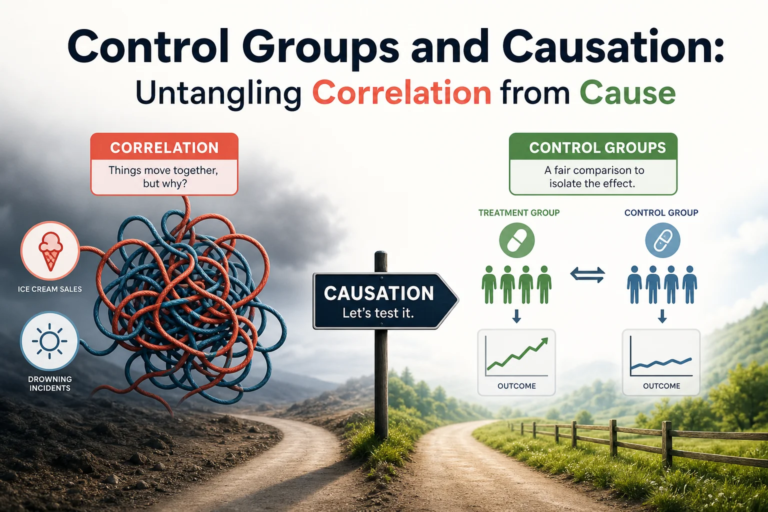
Hypothesis testing forms the backbone of inferential statistics. Researchers formulate a null hypothesis (a statement of no effect) and an alternative hypothesis (a statement suggesting an effect). Through various tests (like t-tests and chi-square tests), they evaluate which hypothesis is more likely based on the sample data.
Case Study: In a pharmaceutical study testing a new drug, researchers hypothesized that the drug would lower blood pressure more effectively than a placebo. Through rigorous testing and the application of inferential statistical methods, they found that the drug significantly reduced blood pressure in a sample of participants, leading to a broader conclusion that could apply to the entire patient population.
Confidence Intervals
Another critical concept is the confidence interval, which provides a range within which we can expect the population parameter to lie. For instance, if a poll has a 95% confidence interval of 45% to 55% regarding voter preferences, we can be 95% confident that the true voter preference lies within this range.
Table 1: Confidence Interval Example
| Sample Mean | Margin of Error | Confidence Interval |
|---|---|---|
| 50% | ± 5% | 45% to 55% |
| 70% | ± 4% | 66% to 74% |
| 30% | ± 3% | 27% to 33% |
P-Values and Significance Levels
P-values signify the probability that the observed results occurred by chance if the null hypothesis is true. A common threshold for significance is 0.05. If the p-value is less than 0.05, researchers typically reject the null hypothesis.
Example: If a study shows a p-value of 0.03 when testing the effectiveness of a new teaching method, it indicates strong evidence against the null hypothesis, suggesting that the new teaching method is indeed effective.
Real-World Applications
Marketing Strategies
In the world of marketing, companies use inferential statistics to gauge customer preferences. Consider a beverage company that conducts a taste test on a new flavor. By analyzing the responses from a sample, they can make predictions about the flavor’s acceptance in the broader market.
For instance, if 70% of a sample group prefers the new flavor and the confidence interval suggests strong support, the company may decide to launch the product nationwide.
Public Health
Public health officials rely on inferential statistics to understand health trends and impacts. When a new virus emerges, rapid testing is conducted on a sample of the population. The findings enable officials to extrapolate potential infection rates, informing public health policies.
For example, during the 2020 COVID-19 pandemic, studies utilized inferential statistics to estimate the prevalence of the virus in communities based on sample testing, helping guide lockdown measures and vaccine distribution.
Political Polling
Political analysts use inferential statistics extensively to predict election outcomes. Polls are conducted on a sample of voters, and results are interpreted to reflect the broader population’s opinions. The findings are pivotal in shaping campaign strategies and understanding voter dynamics.
Case Study: In the 2020 U.S. Presidential election, various polls indicated support for candidates based on surveys of hundreds to thousands of individuals. Although some estimates deviated, the overall trends drawn from inferential statistics shaped election narratives and candidate strategies.
The Challenges and Limitations
Bias in Sampling
The effectiveness of inferential statistics is contingent upon the quality of the sample. Any bias—be it selection bias, response bias, or nonresponse bias—can lead to inaccurate interpretations.
For instance, if a health survey is only distributed online, it may skew results toward younger, more tech-savvy demographics, leaving out insights from older populations who might not have internet access.
Misinterpretation of Results
Interpreting inferential statistics requires caution. P-hacking, where researchers manipulate data to achieve significant results, can lead to misleading conclusions.
Overgeneralization
Another pitfall is overgeneralizing results. Just because a sample indicates a trend does not mean it’s universally applicable. The context, demographics, and specific conditions matter.
Conclusion
In summary, understanding From Sample to Population: The Magic of Inferential Statistics in Data Interpretation reveals the powerful potential of navigating through a sea of data to uncover valuable insights. From medical breakthroughs to marketing strategies, the principles of inferential statistics guide us in making informed and impactful decisions.
As you embrace these concepts, remember the importance of accurate sampling, careful interpretation, and ethical data handling. With the right approach, the magic of inferential statistics becomes not just a theoretical framework but a practical tool for engagement and understanding in our data-driven world.
FAQs
1. What is the difference between descriptive and inferential statistics?
Descriptive statistics summarize and describe the characteristics of a data set, while inferential statistics use a sample to make predictions or generalizations about a larger population.
2. How do I know if my sample is representative?
To ensure your sample is representative, use proper sampling methods like random sampling and check for demographic alignment with the population you wish to study.
3. What are confidence intervals?
Confidence intervals provide a range within which we expect a population parameter to lie, indicating the reliability of an estimate based on sample data.
4. Why are p-values important?
P-values help determine the significance of your findings. A low p-value indicates strong evidence against the null hypothesis, suggesting a meaningful effect.
5. Can inferential statistics be misused?
Yes, inferential statistics can be misused through practices like p-hacking or biased sampling, leading to inaccurate conclusions. Always apply ethical standards and best practices in data analysis.
With a better understanding of the power and techniques behind inferential statistics, you can now harness its magical potential in data interpretation to make informed decisions in both personal and professional arenas. Each conclusion drawn from a sample can illuminate aspects of a larger narrative—proving that the journey from a sample to a population is indeed a remarkable and enlightening adventure!
About the Author


The PsyForU Editorial Collective is the research and editorial team of PsyForU Research International. The collective prepares educational, psychological, mental-health-awareness, inclusion, neurodiversity, and research-methodology content for students, parents, educators, researchers, and general readers. PsyForU content is intended for awareness, education, and capacity-building and should not be treated as clinical diagnosis, therapy, medical advice, legal advice, or emergency mental-health support.