Introduction
In a world that moves faster than ever, understanding the nuances of attention-deficit/hyperactivity disorder (ADHD) has never been more crucial. As we delve into ADHD and the Brain: What Developmental Milestones Tell Us, we uncover the profound linkage between developmental stages in children and their neurological growth. Recognizing these milestones not only enhances our understanding of ADHD but also paves the way for more effective strategies and interventions. Join us on this enlightening journey as we explore the brain intricacies tied to ADHD and the pivotal milestones that shape our understanding of this condition.
Understanding ADHD: A Brief Overview
Attention-deficit/hyperactivity disorder, commonly known as ADHD, is a neurodevelopmental disorder that affects both children and adults. It is characterized by symptoms such as inattention, hyperactivity, and impulsivity. Understanding ADHD and the Brain: What Developmental Milestones Tell Us begins with a foundational grasp of how ADHD manifests at various stages of development.
Key Characteristics of ADHD
- Inattention: Difficulty in sustaining focus on tasks or activities; often thought to be careless or forgetful.
- Hyperactivity: Excessive fidgeting, restlessness, or talking.
- Impulsivity: Acting without thinking, often leading to reckless decisions.
The Brain: The Core of ADHD
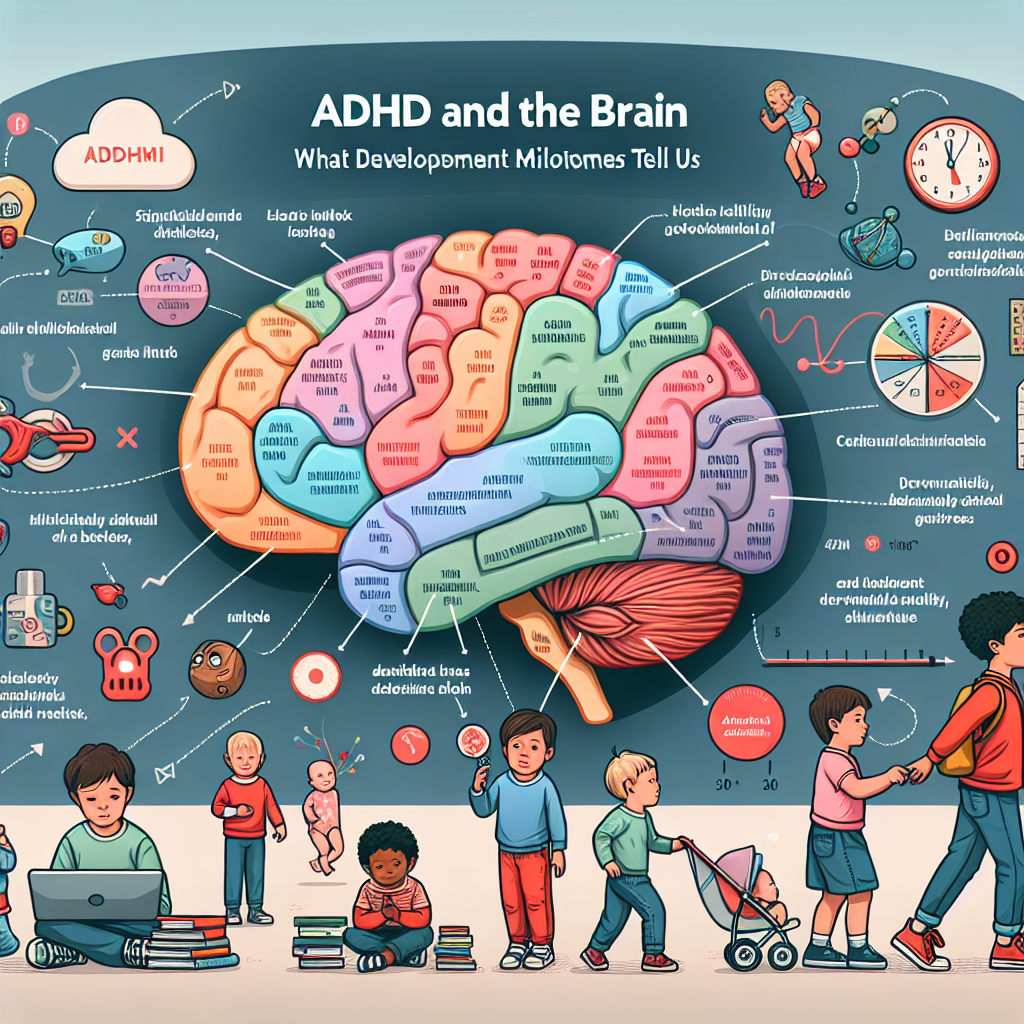
ADHD is fundamentally a brain-based disorder, and its symptoms can often be traced to specific brain regions and functions. Neuroimaging studies reveal that the brains of individuals with ADHD may exhibit differences in connectivity and structure, particularly in areas like the prefrontal cortex, which governs executive functions.
Neuroanatomy of Attention and Impulse Control
- Prefrontal Cortex: Essential for decision-making and impulse control.
- Basal Ganglia: Involved in movement regulation and attention.
- Cerebellum: Plays a role in attention, timing, and motor control.
Understanding ADHD and the Brain: What Developmental Milestones Tell Us requires framing these neuroanatomical aspects within developmental contexts.
Developmental Milestones: The Foundation of Understanding ADHD
Developmental milestones are key indicators of a child’s growth and ability to meet age-appropriate cognitive, emotional, and physical benchmarks. Milestones are crucial for understanding the progression and potential emergence of ADHD.
Infancy to Toddlerhood: The Early Signs
During infancy and toddlerhood, key milestones include:
- Social Smiles (around 2 months): Lack of social engagement can be an early indicator of ADHD.
- Independent Walking (around 12 months): Delays may correlate with attention challenges.
Case Study: Early Detection in Infants
A study of 100 toddlers indicated that those who struggled with social engagement showed a 30% higher incidence of ADHD by preschool age. This underscores the predictive value of early developmental milestones in ADHD diagnosis.
Preschool Years: The Crucial Window
By age 3 to 5, children exhibit critical communication and social skills:
- Language Development: Speech delays may signal challenges in attention regulation.
- Play Skills: Difficulty in parallel play can highlight issues with social functioning linked to ADHD.
Case Study: Language and Play
Research conducted by the National Institute of Mental Health found that children with language delays between ages 3 and 5 were 40% more likely to develop ADHD symptoms later on. Highlighting ADHD and the Brain: What Developmental Milestones Tell Us informs educators and parents about interventions necessary during this period.
School Age: The Expanding Horizon
During ages 6-12, children face new academic challenges that could exacerbate ADHD symptoms:
- Academic Performance: Children often struggle with reading and math, reflecting underlying attention issues.
- Peer Relationships: The rise of social dynamics can lead to increased stress for children with ADHD.
Case Study: Academic Challenges
A longitudinal study of school-aged children indicated that those diagnosed with ADHD were twice as likely to experience academic failure compared to their peers. Understanding ADHD and the Brain: What Developmental Milestones Tell Us reveals points where interventions can significantly alter outcomes.
The Role of Neuroplasticity in ADHD
Neuroplasticity—the brain’s ability to reorganize itself—plays a crucial role in how children with ADHD can adapt to their challenges. Insights into ADHD and the Brain: What Developmental Milestones Tell Us stress the importance of supportive interventions.
Strategies for Enhancing Neuroplasticity
- Cognitive Behavioral Therapy (CBT): Helps children develop coping strategies.
- Medication: Can enhance focus and minimize impulsivity.
- Mindfulness Practices: Promote self-regulation and awareness.
Practical Applications: Guiding Interventions Through Milestones
Understanding the links between developmental milestones and ADHD symptoms allows caregivers and professionals to tailor interventions effectively.
Approaching ADHD with Milestones in Mind
Assessment Tools: Utilizing checklists based on developmental milestones can enhance early detection.
Intervention Programs: Implementing supportive measures focused on social and academic skills can be beneficial.
Conclusion
In exploring ADHD and the Brain: What Developmental Milestones Tell Us, the intricate relationship between developmental stages and ADHD becomes evident. Recognizing and understanding these milestones empowers parents, educators, and healthcare professionals to take proactive steps, ensuring children receive the support they need to thrive. By fostering environments enriched with understanding and patience, we can shift the narrative around ADHD from one of challenges to one of possibilities.
FAQs
What are common early signs of ADHD in children?
- Early signs include difficulty focusing on tasks, excessive movement, and impulsivity.
How can I help my child reach developmental milestones?
- Encourage structured routines, provide enriching activities, and consult with professionals when necessary.
Is ADHD related to genetics?
- Yes, ADHD has a genetic component, but environmental factors also play a significant role.
What role does diet play in managing ADHD symptoms?
- Some children may benefit from a balanced diet rich in omega-3 fatty acids, though individual responses vary.
- Can ADHD symptoms change as children grow?
- Yes, symptoms can evolve over time, and targeted interventions can help manage these changes effectively.
This comprehensive overview of ADHD and the Brain: What Developmental Milestones Tell Us opens pathways for understanding and addressing ADHD from early childhood through adulthood. Recognizing the milestones helps advocate for appropriate resources and support while fostering a more empathetic approach to this common yet often misunderstood condition.
About the Author


The PsyForU Editorial Collective is the research and editorial team of PsyForU Research International. The collective prepares educational, psychological, mental-health-awareness, inclusion, neurodiversity, and research-methodology content for students, parents, educators, researchers, and general readers. PsyForU content is intended for awareness, education, and capacity-building and should not be treated as clinical diagnosis, therapy, medical advice, legal advice, or emergency mental-health support.