Introduction
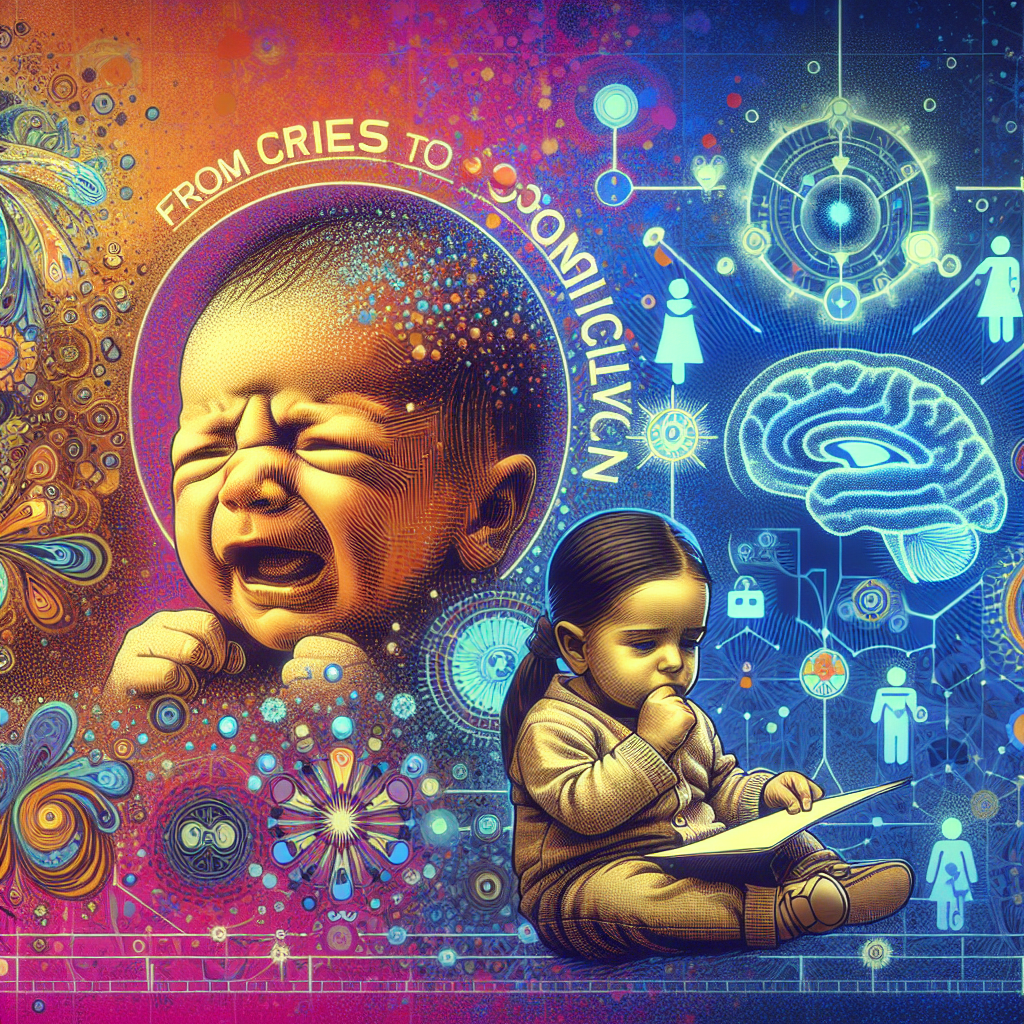
Imagine a world where every cry, coo, and gurgle of an infant holds the key to their burgeoning intelligence. This is not merely a whimsical thought; it’s a powerful testament to the profound journey from cries to cognition. In the first months of life, an infant’s understanding of their environment and their ability to communicate their needs are just beginning to form. The evolution of infant thought is a captivating exploration into how these early sounds transition into complex cognitive processes.
Understanding this developmental arc is not only essential for parents and caregivers but also for educators, psychologists, and child development specialists. As we delve deeper into "From Cries to Cognition: The Evolution of Infant Thought," we will uncover fascinating insights into how infants process experiences, learn from their environment, and how these early stages lay the foundation for later intellectual growth.
The Early Days: Understanding Infant Communication
The Significance of Early Communication
From the moment they enter the world, infants communicate in purely instinctual ways. Their cries signify hunger, discomfort, and even a need for companionship. But what lies behind these primitive sounds?
Instinctual Responses: Newborns are equipped with innate reflexes, such as the rooting reflex, which encourages feeding. This demonstrates the early forms of cognitive engagement where a baby starts to understand cause and effect.
Variability in Crying: Research shows that different types of cries can convey various emotions. For example, a hunger cry often has a distinct tone compared to a tired cry. This early form of differentiation indicates the beginnings of cognitive processing.
Type of Cry Possible Reason Tone Characteristics Hunger Cry Seeking nourishment High-pitched, rhythmic Pain Cry Discomfort Unpredictable, sharp Frustration Cry Need for attention Prolonged, whiny
Case Study: The Research of Dr. Harvey Karp
Dr. Harvey Karp, renowned pediatrician and author, highlights the significance of understanding infant cries in his book "The Happiest Baby on the Block.” He suggests that by interpreting these cries, parents can better respond to their infants’ needs, thus fostering a secure attachment. His approach illustrates how early comprehension of emotional cues facilitates cognitive development.
Analysis: This case underscores the interconnectivity between emotional security and cognitive progress. Recognizing and responding to infant cries lays the groundwork for trust and learning.
The Transition: Gestures and Social Interaction
The Emergence of Non-Verbal Communication
As infants grow, they begin to move beyond mere vocalizations. By approximately 6 months, they start using gestures as a form of communication.
Pointing and Reaching: These actions signify an understanding of shared attention and intention, essential building blocks for social cognition.
- Imitation: Infants start to imitate sounds and actions, showcasing their capacity for learning through observation. This is a critical stage in the evolution of thought, where they begin to connect actions with outcomes.
Case Study: The Work of Dr. Andrew Meltzoff
Dr. Andrew Meltzoff’s studies underscore the importance of imitation in early cognitive development. His research demonstrated that 14-month-old infants who were exposed to new actions replicated them, illustrating the foundational role of imitation in learning.
Analysis: Meltzoff’s findings highlight the transition from cries to gestures as a pivotal moment in cognitive evolution, showcasing how infants begin to navigate their social world.
Exploring Language: The Gateway to Cognition
The Foundations of Language Development
Around 12 months, infants typically utter their first words. This milestone is a significant leap in cognition, as language is deeply tied to thought processes.
Vocabulary Expansion: By 18 months, most children have a vocabulary of around 50 words. This rapid development indicates not just language acquisition but also improved cognitive function.
- Understanding Syntax: As infants begin to combine words into simple phrases, they exhibit an understanding of grammatical structures, paving the way for more complex thinking.
Charts: Vocabulary Growth Over Time
| Age (Months) | Average Number of Words |
|---|---|
| 12 | 1-3 |
| 18 | 50 |
| 24 | 200+ |
Case Study: The Research of Dr. Noam Chomsky
Dr. Noam Chomsky’s theories on language acquisition suggest that humans are pre-wired for language. His concept of a "universal grammar" implies that children instinctively grasp the underlying rules of language, further supporting the idea that cognition is evolving alongside language.
Analysis: Chomsky’s insights into language development illuminate the mechanisms behind cognitive growth, emphasizing how verbal skills enrich an infant’s thought processes.
Social Engagement and Cognitive Growth
The Role of Play in Development
Play is a fundamental aspect of cognitive development in infants. During the second year, infants engage in more complex forms of play, which directly correlates with cognitive advancements.
Symbolic Play: Activities such as pretending to drink from an empty cup show an understanding of representation, a significant step in cognitive evolution.
- Social Play: Interaction with peers promotes the development of social cognition and empathy, further pushing the boundaries of an infant’s cognitive growth.
Case Study: Vygotsky’s Social Development Theory
Lev Vygotsky’s theory emphasizes the crucial role of social interaction in cognitive development. He posited that learning is inherently a social process, with cognitive skills emerging from the dynamic between parties.
Analysis: Vygotsky’s contributions highlight the importance of the social environment in shaping cognitive abilities, reinforcing the idea that communication evolves hand-in-hand with thought.
Milestones of Cognitive Development
Key Developmental Stages
Infant cognitive development can be broken down into various milestones influenced by environmental exposure, interaction, and inherent biological predispositions.
Object Permanence (8-12 months): Understanding that objects continue to exist, even when unseen, marks a critical cognitive leap.
- Deferred Imitation (12-18 months): The ability to imitate actions observed at an earlier time indicates advanced cognitive function, including memory.
Table: Cognitive Milestones
| Age Range | Key Milestones |
|---|---|
| 0-3 months | Focus on faces |
| 4-6 months | Object permanence begins |
| 6-12 months | Seeks hidden objects |
| 12-18 months | Exhibits deferred imitation |
| 18-24 months | Begins to understand simple counts |
Conclusion
From cries to cognition, the evolution of infant thought is a remarkable journey of transformation. Each stage of development interlinks to create a complex framework of understanding that continues to unfold throughout childhood. Recognizing the critical milestones and the factors that contribute to cognitive growth sheds light on how we can nurture young minds effectively.
In embracing strategies that promote secure attachments, engagement, and exposure to rich language environments, we can significantly enhance cognitive development. By understanding the nuances of this evolution, we equip ourselves with the tools necessary to foster a generation of curious, capable thinkers.
FAQs
1. What is the earliest sign of cognitive development in infants?
The earliest sign of cognitive development in infants is their ability to recognize faces and respond to emotional cues, typically manifesting within the first few months.
2. How can caregivers promote cognitive growth in infants?
Caregivers can foster cognitive growth through responsive interaction, providing a rich language environment, and engaging in varied play activities that stimulate curiosity.
3. What role does play have in cognitive development?
Play is crucial for cognitive development as it enables infants to explore, experiment, and understand their world, enhancing problem-solving skills and social understanding.
4. How does language acquisition affect cognitive development?
Language acquisition serves as a foundation for cognitive development by giving infants the tools to articulate thoughts, express needs, and connect with others, facilitating complex thinking.
5. At what age should parents be concerned about cognitive delays?
If infants show minimal responsiveness, lack of eye contact, or delayed milestones beyond 12 months, it may be beneficial to consult a pediatrician for further evaluation.
The evolution of infant thought is essential to understanding how our future thinkers and doers begin their journey. Each discovery contributes to the ever-expanding tapestry of human cognition.
About the Author


The PsyForU Editorial Collective is the research and editorial team of PsyForU Research International. The collective prepares educational, psychological, mental-health-awareness, inclusion, neurodiversity, and research-methodology content for students, parents, educators, researchers, and general readers. PsyForU content is intended for awareness, education, and capacity-building and should not be treated as clinical diagnosis, therapy, medical advice, legal advice, or emergency mental-health support.