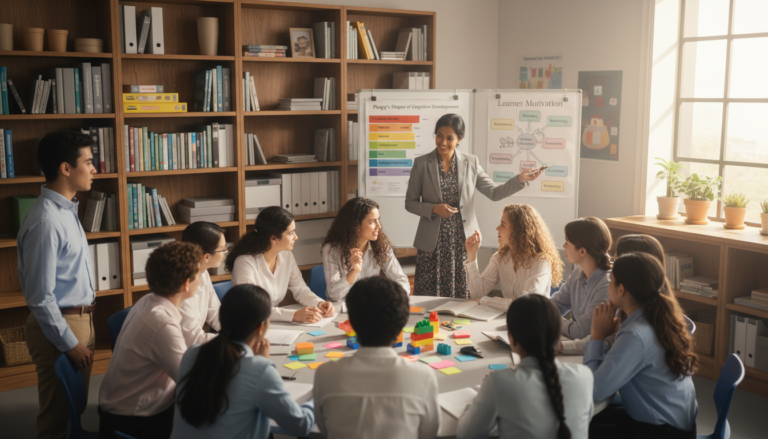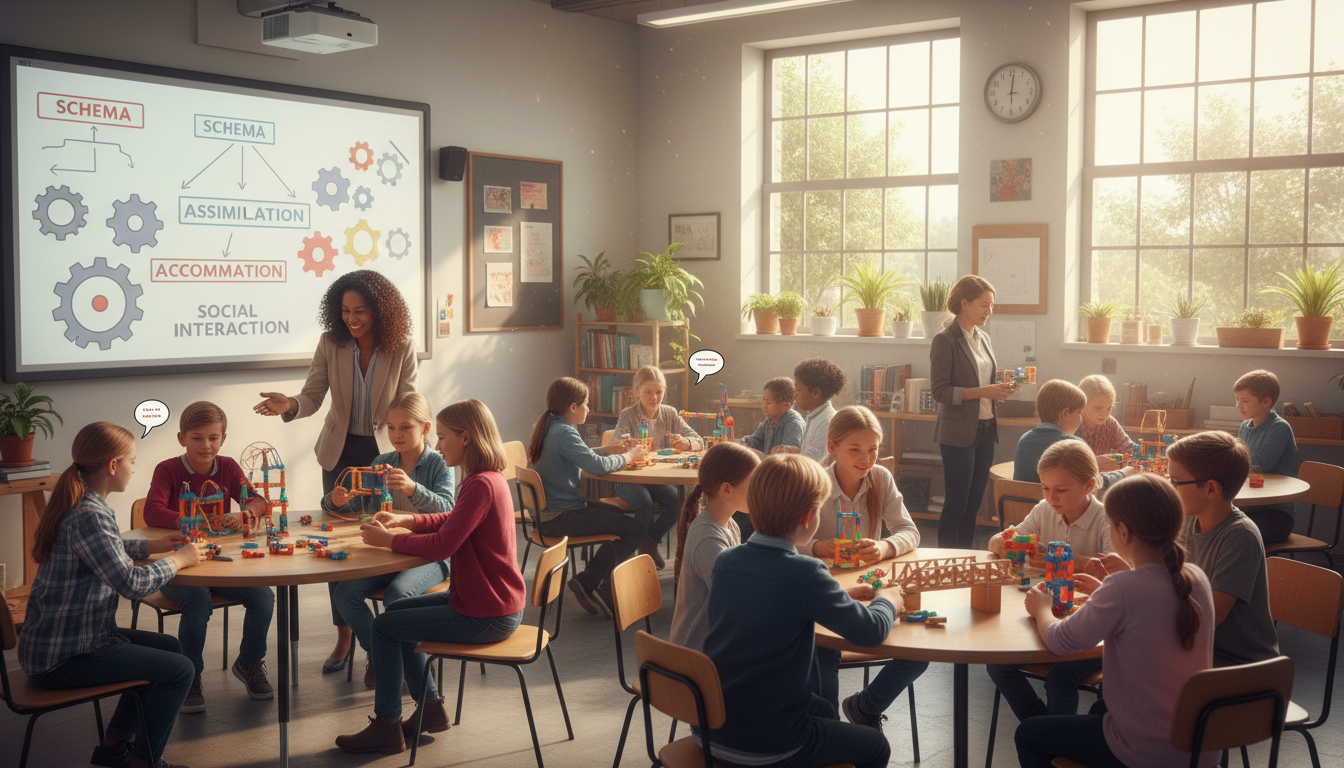
How do students really learn and take in knowledge? Is it by just listening or by actively engaging with their surroundings? The truth is in a learning theory that has changed how we teach.
Constructivism says that students build knowledge through what they do and see, shaking up old ways of teaching and learning. As teachers, we need to see how important this educational philosophy is for making teaching better.
Key Takeaways
- Understanding constructivism is key for good teaching.
- Learners build knowledge through what they do and see.
- Constructivist ideas challenge old teaching methods.
- This educational philosophy greatly affects how well students learn.
- Teachers must change how they teach to fit constructivist ideas.
Understanding Constructivism: Definition and Principles
For educators, understanding constructivism is key to creating learning environments focused on students. Constructivism is a learning theory. It says learners build knowledge through their experiences and interactions.
Definition of Constructivism: At its heart, constructivism believes knowledge isn’t just given but made by the learner. It highlights the learner’s role in the learning journey.
Key Theorists in Constructivist Learning
Many theorists have shaped constructivist theory. These include:
- John Dewey, known for his focus on experiential learning.
- Maria Montessori, who created the Montessori method for self-directed learning.
- Jean Piaget, whose work on cognitive development stages is key to constructivism.
- Lev Vygotsky, who introduced the Zone of Proximal Development concept.
- Jerome Bruner, famous for his work on discovery learning.
The Role of Knowledge Construction
Knowledge construction is at the heart of constructivist learning. It’s about learners actively making sense of their experiences and adding new information to what they already know.
The Process of Knowledge Construction: This process is helped by inquiry-based learning, problem-solving, and teamwork. Teachers act as guides, helping learners through these steps.
The Importance of Constructivism in Education
Constructivism is key in today’s education. It creates a space where students build their own knowledge. This approach values active learning strategies to help students understand and remember better.
Enhancing Critical Thinking Skills
Constructivism boosts critical thinking in students. It teaches them to question, analyze, and put information together. This way, they grasp complex ideas more deeply.
For example, solving real-world problems requires critical thinking. Students must weigh different solutions and pick the best one. This sharpens their analytical skills and prepares them for future hurdles.
Promoting Collaboration Among Students
Constructivism also encourages teamwork. Students work together on projects and share their ideas. This teamwork builds a sense of community and respect, which is vital for learning.
Collaborative learning improves communication skills. Students must share their thoughts and listen to others to reach a goal. This not only helps them work in teams but also prepares them for today’s team-based workplaces.
| Benefits of Constructivism | Description |
|---|---|
| Enhanced Critical Thinking | Students develop deeper understanding through analysis and synthesis. |
| Promoted Collaboration | Students work together, fostering a sense of community and mutual respect. |
| Improved Communication Skills | Students articulate their thoughts and listen to others effectively. |
How Constructivism Differs from Traditional Teaching
Constructivist learning is very different from traditional teaching. It focuses on students being active and involved. Traditional teaching puts the teacher at the center, giving out information. But constructivism turns this around.
Teacher-Centered vs. Student-Centered Learning
In old-school classrooms, teachers talk a lot, and students just listen. But in constructivist classrooms, it’s all about student-centered learning. Students get to explore and learn by doing.
Here’s what sets these two apart:
- The teacher’s role changes: In traditional classrooms, teachers are in charge. In constructivist ones, they help guide.
- How students learn: Constructivism makes learning active. Traditional teaching makes it more passive.
- How learning is checked: Constructivist teaching uses ongoing checks and self-assessment. Traditional teaching relies on final exams.
Implications for Curriculum Design
Constructivism changes how we design curricula. It moves away from strict plans and towards something more flexible. This lets students learn about things they’re really interested in.
Here’s what to think about when designing a constructivist curriculum:
- Make sure there’s room for inquiry and solving problems.
- Include chances for students to work together and give each other feedback.
- Make sure what students learn can be applied in real life.
By using constructivism, teachers can make learning more fun and useful. It helps students get ready for today’s world.
The Role of the Educator in a Constructivist Classroom
Educators in constructivist classrooms focus on creating an interactive learning space. They center it around students’ interests and questions. This method changes how teachers teach, focusing more on helping students learn than just telling them.
Creating a Facilitator Mindset
To use constructivism well, teachers need to think like facilitators. They should encourage students to be independent, think critically, and explore through inquiry. This helps students really get the material.
Being a facilitator means several things. It includes:
- Encouraging open-ended questions
- Fostering a collaborative learning environment
- Providing scaffolding support as needed
Encouraging Inquiry-Based Learning
Inquiry-based learning is key in constructivism. Teachers can spark curiosity by asking questions. These questions lead students to find answers through their own research and investigation.

The table below shows how teaching changes from traditional to constructivist methods. It highlights the shift in teacher roles and how students get involved:
| Aspect | Traditional Teaching | Constructivist Approach |
|---|---|---|
| Educator’s Role | Primary source of information | Facilitator or guide |
| Student Engagement | Passive reception of information | Active participation in learning |
| Teaching Methodology | Lecturing and rote memorization | Inquiry-based learning and collaboration |
By using these strategies, teachers can make a learning space that boosts student involvement. It also helps students understand the material more deeply and meaningfully.
Designing Constructivist Learning Environments
Creating learning spaces that follow constructivist ideas is a mix of physical setup and tech tools. This method is key for active learning strategies and cognitive development in students.
Physical Space Considerations
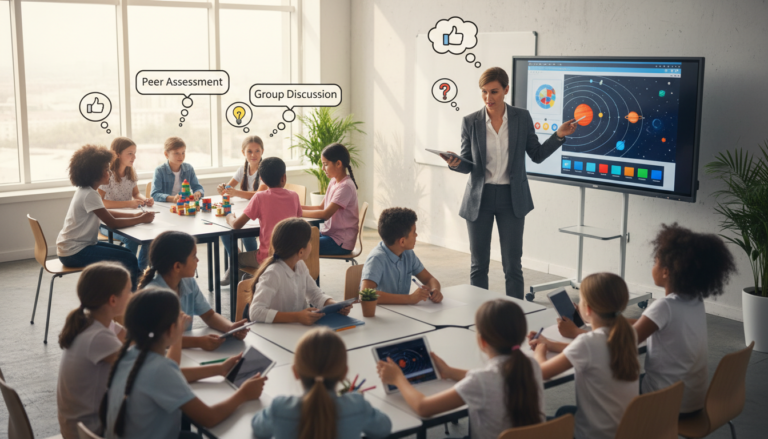
The classroom’s layout greatly affects learning. In a constructivist classroom, furniture and resources should help with teamwork, inquiry, and movement. For example, flexible seating and modular furniture support group work and discussions.
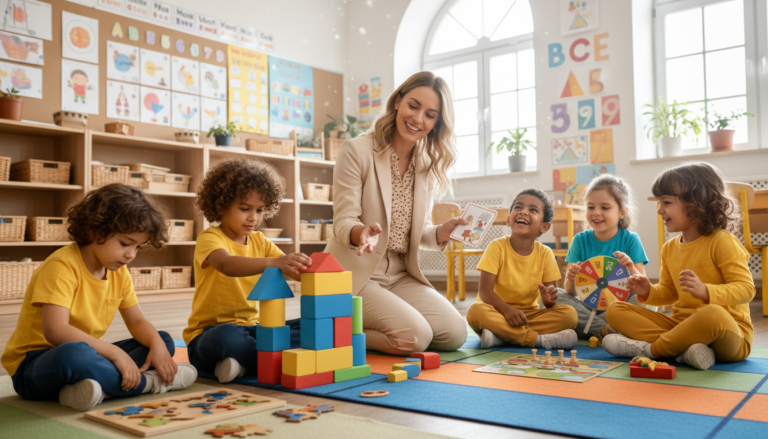
The classroom should also encourage discovery and exploration. This can be done by setting up different learning zones. Each zone has resources for specific tasks or projects. This setup supports various learning styles and lets students take charge of their learning.
Utilizing Technology in the Classroom
Technology is essential in modern constructivist classrooms. It offers many tools to improve learning. From educational software and online resources to interactive whiteboards and mobile devices, technology aids inquiry-based learning and gives students access to lots of information.
Using technology well means more than just giving out devices. It’s about how these tools help meet learning goals. Teachers can use digital platforms for collaborative projects across subjects. This helps students understand the curriculum better.
Also, technology can make learning more personal. Adaptive learning software adjusts tasks to fit each student’s level. This personalized approach is a core part of educational philosophy in constructivist settings.
Effective Assessment Strategies in Constructivist Classrooms
Constructivist classrooms need new ways to check how students are doing. Student-centered learning and cognitive development are key. Old methods don’t show what students really know and can do.
Assessment in these classrooms is more than just checking if students learned. It’s about letting students think about their learning. They can see what they need to work on and help plan their own learning.
Formative vs. Summative Assessments
Formative assessments are checks during learning to see how students are doing. They help teachers change their teaching to help students more.
- Quizzes and class discussions help see if students understand.
- Watching how students act and participate in class gives clues about their learning.
- Portfolios and projects show how students grow over time.
Summative assessments are big tests at the end of a lesson or term. They check if students meet certain standards.
Self and Peer Assessment
Self-assessment lets students think about their own learning. They set goals and see what they need to get better at. This makes them feel more in charge of their learning.
Peer assessment is when students review each other’s work. They give feedback that helps and teaches them too. It’s good for both the student being reviewed and the reviewer.
Using these strategies, teachers can make a classroom that really supports learning. It helps students think deeply, work together, and understand better.
Incorporating Student Interests and Contexts
Teachers can make learning better by using what students like and what they know about. This makes school more fun and real. It also helps students feel included and learn better.
When students see how school relates to their lives, they get more excited about learning. Inquiry-based learning helps them dive deep into topics they care about.
Personalizing Learning Experiences
Learning should fit each student’s needs and interests. Teachers can use different ways to do this, like special lessons and tech tools.
Letting students choose what they learn makes school more fun. It also helps them think better and solve problems.
- Offering choices within assignments
- Using technology to provide personalized learning paths
- Incorporating student feedback into curriculum design
Connecting Curriculum to Real-Life Situations
Linking school to real life makes learning more interesting. Teachers can use examples from today’s world and projects that tackle big issues.
In science class, for example, students can work on projects about saving the environment or health. This makes their learning more real and important.
“The learning process is more effective when it is contextual and relevant to the learner’s life.”
By using these methods, teachers can make school more engaging and effective. It’s about creating a place where every student feels heard and valued.
Challenges of Implementing Constructivism
Constructivist teaching has many benefits, but it faces challenges in schools. Switching from old teaching methods to new ones is hard. This is because of several reasons.
Resistance from Traditional Mindsets
One big challenge is when teachers and school leaders stick to old ways. They might not get constructivist teaching or think it’s wrong. Professional development programs can help by showing them how it works.
Teachers might also worry that constructivist teaching is too loose. They might feel they don’t know how to do it right. Schools need to keep giving them support and training.
Resource Limitations in Schools
Another big problem is when schools don’t have enough resources. This includes limited access to technology, bad facilities, and not enough money for materials and training.
To solve these issues, schools can look for other ways. They can use community partnerships, get grants, and find creative ways to use what they have. For example, working with the community can give students real-life learning experiences.
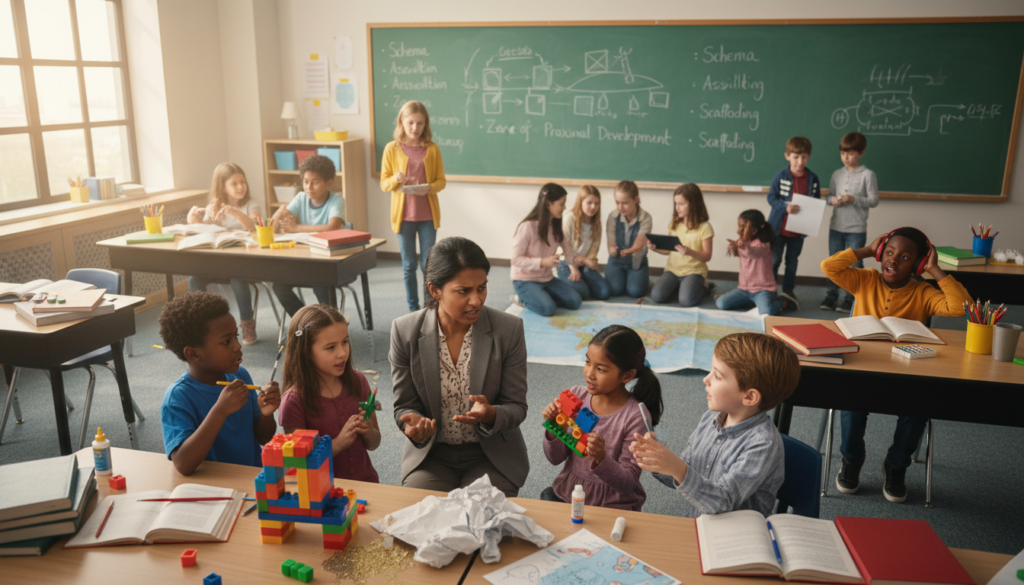
In summary, while there are hurdles to overcome, understanding and tackling these problems can help make constructivist teaching work in schools.
Case Studies of Constructivism in Indian Classrooms
Constructivism is changing Indian education, with great success stories from both cities and countryside. This part shows how constructivist methods work in different classrooms across India.
Successful Implementations in Urban Settings
Urban schools in India lead in using constructivist teaching. They use their resources to make learning fun and interactive. For example, a school in Mumbai started a project-based learning program.
This program let students tackle real-world issues. It boosted their critical thinking and teamwork skills.
A notable example is a school in Delhi that used technology to make learning personal. This method increased student interest and helped teachers teach better to each student’s needs.
Innovations in Rural Education
Rural India faces special challenges in education, but constructivism is making a difference. A school in Karnataka used activity-based learning to get students more involved and understanding.
Community involvement was key to this success. Local resources helped make learning materials and activities that mattered to students. This made learning more meaningful and connected the school to the community.
These stories show how constructivism can change education in India, in cities and countryside. By trying different methods and using local resources, teachers can make learning more fun and effective.
Integrating Constructivism Across Subjects
Constructivist principles are not just for one subject. They can be used in many areas of learning. This makes school more fun and helps students think better, be creative, and solve problems.
Constructivism works well in both STEM and arts and humanities. It helps students see how what they learn applies to the real world.
Application in STEM Education
In STEM, students learn by doing. They do experiments to understand science better. This way, they get a hands-on feel for complex ideas.
- Encouraging inquiry-based learning through experiments and projects.
- Utilizing technology to simulate real-world scenarios and enhance understanding.
- Fostering collaboration among students to solve complex problems.
Using constructivism in STEM helps students think critically, be creative, and solve problems. This prepares them for a world that’s full of technology and challenges.
Arts and Humanities Perspectives
In arts and humanities, constructivism boosts creativity and critical thinking. Students work on projects like making art, writing stories, or studying history. This helps them understand culture and history better.
Some good ways to use constructivism in arts and humanities include:
- Having students make projects that show what they’ve learned about history or culture.
- Using technology for group projects and presentations.
- Teaching critical thinking by analyzing art, literature, and history.
By using constructivism in all subjects, teachers can make learning more fun and complete. This prepares students for a world that’s always changing.
Professional Development for Educators
Professional development is key for educators to learn new skills for constructivist classrooms. As teaching methods change to focus more on students, teachers need to be ready to adapt.
Workshops and training sessions are vital. They give teachers real experience and a chance to learn from experts. For example, workshops on project-based learning help teachers create lessons that spark inquiry and teamwork.
Effective Training Initiatives
Good training meets educators’ needs and is contextual and relevant. For instance, training on using technology in learning environments boosts teachers’ skills.
“Teachers who are equipped with the knowledge and skills to implement constructivist approaches are better positioned to foster critical thinking and problem-solving in their students.”
Collaborating with peers is also key. Teachers can share ideas, talk about problems, and find solutions together. This builds a supportive community that helps everyone grow professionally.
Peer Collaboration Benefits
Peer collaboration brings many benefits, like sharing new ideas and understanding constructivist principles better. By working together, educators can develop a unified way to apply constructivism in various subjects and settings.
In summary, professional development through workshops, training, and peer collaboration is essential for educators. By focusing on these areas, schools can make sure their teachers are ready to offer top-notch, student-focused education.
Future Directions for Constructivism in Indian Education
The future of education in India is closely tied to constructivism. As the country moves towards educational reforms, it’s important to understand where constructivism is headed.
Constructivism can change the Indian education system. It can make learning more focused on students and better for the 21st century. To do this, we need to work on two main things: using new technology and making policy changes for schools.
Adapting to Technological Advancements
Technology is changing education, and constructivism can use this to improve learning. Here are some ways to do it:
- Integrating Digital Tools: Using digital tools for group learning and inquiry-based education.
- Online Platforms: Creating online spaces for constructivist learning, making education easier to access.
- Blended Learning: Mixing old teaching methods with new digital tools.
Policy Recommendations for Schools
To make constructivism work in Indian schools, we need good policies. Here are some ideas:
- Curriculum Reform: Changing the curriculum to include more project-based and inquiry-driven learning.
- Teacher Training: Giving teachers regular training to learn about constructivist teaching methods.
- Infrastructure Development: Investing in spaces that support group and tech-rich learning.
By focusing on these areas, Indian education can fully use constructivism. This will lead to a more engaging, effective, and ready-for-the-future education system.
Conclusion: Embracing Constructivism for Student Success
Teachers who embrace constructivism see a big change in their students’ success. They learn to create spaces where students think deeply, work together, and solve problems. This approach helps students grow in many ways.
Constructivist learning helps students for their whole lives, not just in school. It teaches them to handle new situations, think outside the box, and deal with complex info. It makes learning personal and relevant, helping students really get what they’re studying.
Lifelong Benefits of Constructivist Learning
Constructivist learning has many lasting benefits. Students who learn this way grow to be more open-minded and eager to learn. They’re ready to face tough challenges and take charge of their learning.
Teachers who use constructivist methods help shape the future. They prepare students to be thinkers and problem-solvers. As education keeps changing, the role of constructivism in helping students succeed is more important than ever.
FAQ
What is constructivism, and how does it apply to classroom learning?
How does constructivism enhance critical thinking skills in students?
What is the role of the educator in a constructivist classroom?
How can educators design constructivist learning environments?
What assessment strategies are effective in constructivist classrooms?
How can educators incorporate student interests and contexts into learning?
What are some challenges of implementing constructivism, and how can they be overcome?
How can constructivism be integrated across different subjects?
What is the importance of professional development for educators in implementing constructivist approaches?
What are the future directions for constructivism in Indian education?
About the Author


The PsyForU Editorial Collective is the research and editorial team of PsyForU Research International. The collective prepares educational, psychological, mental-health-awareness, inclusion, neurodiversity, and research-methodology content for students, parents, educators, researchers, and general readers. PsyForU content is intended for awareness, education, and capacity-building and should not be treated as clinical diagnosis, therapy, medical advice, legal advice, or emergency mental-health support.