Behavioral Psychology in Action: Proven Real-World Applications of Social Learning
Introduction
In a world constantly shaped by interactions, understanding how people learn from one another is not only fascinating but essential. Behavioral psychology, particularly social learning theory, sheds light on the intricate web of behaviors influenced by modeling, observation, and peer feedback. This article, titled Behavioral Psychology in Action: Real-World Applications of Social Learning, will explore how this psychological framework is applied in various real-world scenarios—from education to workplace dynamics—and reveal its profound implications in personal and societal domains.
Just think about the last time you picked up a habit or learned a skill from someone else. Was it a coworker, a friend, or perhaps a mentor? The way we observe and emulate others forms the backbone of our learning process. By the end of this in-depth exploration, you’ll not only appreciate the relevance of social learning but also how it influences behaviors in everyday life.
Understanding the Basics of Behavioral Psychology
What is Behavioral Psychology?
Behavioral psychology delves into the behaviors that can be observed and measured, diverging from introspective approaches that focus on private mental states. It’s a field that emphasizes the principles of conditioning, reinforcement, and, crucially, social learning.
The Essence of Social Learning Theory
Social learning theory, pioneered by Albert Bandura, posits that learning occurs in a social context. This theory emphasizes three key components:
- Observation: Individuals can learn by watching the behaviors of others.
- Imitation: People often imitate the action of those they observe.
- Modeling: Effective learning often involves some form of modeling, where an observer adopts the behaviors they observe.
Now, let’s segment these ideas further into real-world applications that showcase Behavioral Psychology in Action: Real-World Applications of Social Learning.
Real-World Applications
1. Education: Fostering Collaborative Learning
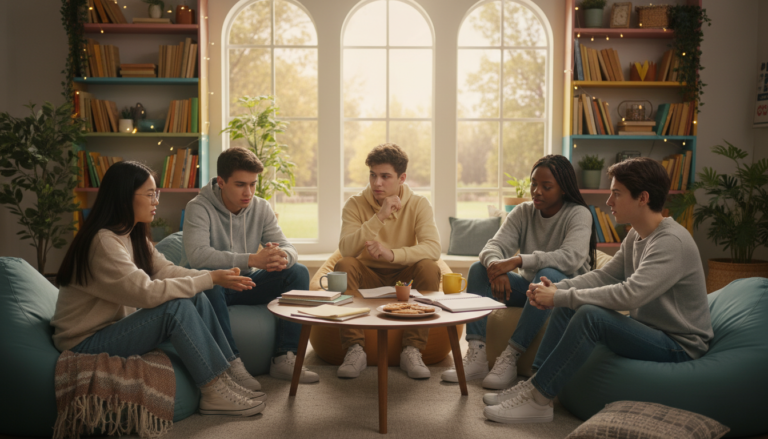
Social learning is profoundly influential in educational settings. The shift from teacher-centered education to student-centered paradigms has redefined how we approach learning.
Case Study: The Flipped Classroom Model
In a typical flipped classroom, students engage with new content at home and then apply that knowledge collaboratively in the classroom. Research from the Journal of Educational Psychology demonstrates significant improvements in student retention and understanding when this model is applied.
| Key Insights from the Flipped Classroom Model |
|---|
| Increased Engagement: Students participate actively. |
| Peer Teaching: Students learn from one another. |
| Real-Life Skills: Develops teamwork and communication skills. |
Analysis: The flipped classroom exemplifies Behavioral Psychology in Action: Real-World Applications of Social Learning by illustrating how students can learn through collaborative observation and shared experiences.
2. Workplace Training: Enhancing Performance through Peer Learning
In corporate environments, the synergy of social learning enhances employee performance and reinforces company culture.
Case Study: Google’s Peer-Feedback Mechanisms
Google emphasizes a culture of continuous learning, encouraging employees to provide and receive feedback regularly. This practice not only fosters open communication but also creates an environment where best practices are quickly shared and adopted.
| Benefits of Peer Learning at Google |
|---|
| Enhanced Team Cohesion: Stronger relationships between coworkers. |
| Skill Development: Employees learn relevant skills faster. |
| Boosted Morale: A supportive environment promotes job satisfaction. |
Analysis: Google’s peer-feedback system serves as a prime example of Behavioral Psychology in Action: Real-World Applications of Social Learning, highlighting the value of observational learning in the professional sphere.
3. Health Behavior Change: Encouraging Healthy Lifestyles
Social learning theory can dramatically impact public health initiatives by encouraging individuals to adopt healthier behaviors through social modeling.
Case Study: The "Walk 21" Campaign in UK Cities
The Walk 21 campaign aimed to promote walking as a sustainable mode of transport. By showcasing community members walking together, the campaign effectively utilized social proof—people were more likely to adopt walking habits when they saw others doing the same.
| Impact of Walk 21 Campaign |
|---|
| Increased Walking Rates: Significant uptick in walking among participants. |
| Building Community: Fostering social connections and interactions. |
| Environmental Awareness: Enhancing understanding of sustainable practices. |
Analysis: The success of the Walk 21 campaign illustrates Behavioral Psychology in Action: Real-World Applications of Social Learning, demonstrating how visibility of others’ behaviors can effectively motivate personal change.
4. Parenting Techniques: Modeling Behavior
Every parent knows that children learn a great deal through observation. Effective parenting can harness social learning principles to foster positive behavior in children.
Case Study: The Incredible Years Program
This parenting program focuses on enhancing children’s social, emotional, and academic skills by teaching parents effective ways to model and reinforce positive behaviors.
| Outcomes of the Incredible Years Program |
|---|
| Reduced Behavioral Problems: Significant decrease in issues like aggression. |
| Improved Parent-Child Relationships: Strengthened bonds through positive reinforcement. |
| Boosted Academic Performance: Children engaged have better learning prospects. |
Analysis: The Incredible Years Program exemplifies Behavioral Psychology in Action: Real-World Applications of Social Learning, showing how parents can positively influence their children’s behavior through modeling and reinforcement.
5. Social Media: Influencing Behavior through Online Communities
Social media platforms can amplify societal behaviors, showcasing the power of observational learning in the digital age.
Case Study: #MeToo Movement
The #MeToo movement showcases how social learning can influence societal change. By sharing personal experiences, individuals created a collective narrative that led to widespread awareness and behavioral shifts regarding sexual harassment.
| Elements of the #MeToo Movement’s Success |
|---|
| Collective Empowerment: Individuals feel supported by communal storytelling. |
| Heightened Awareness: Broadening the understanding of sexual harassment impacts. |
| Behavioral Change: Prompting discussions and changes in workplace policies. |
Analysis: The #MeToo movement represents Behavioral Psychology in Action: Real-World Applications of Social Learning, illuminating how the sharing of personal experiences can mobilize change in attitudes and behaviors across society.
Conclusion
As we’ve explored, Behavioral Psychology in Action: Real-World Applications of Social Learning reveals the profound impact of social learning mechanisms across varied sectors. From education to health initiatives, each case study underscores the interconnectedness of our behaviors and experiences.
By embracing the principles of social learning, we can foster environments that not only enhance personal growth but also promote community flourishing. The lessons from observational learning aren’t just academic; they apply to our everyday lives, urging us to model the behaviors we wish to see in our children, colleagues, and communities.
Remember: What you observe matters. Whether you’re in a classroom, a corporate meeting, or engaging with family, the power of social learning is at work, shaping behaviors, fostering connections, and creating change.
FAQs
1. What is social learning theory?
Social learning theory posits that people learn through observation and interaction with others, emphasizing the importance of modeling and imitation in the learning process.
2. How can social learning be applied in education?
By encouraging collaborative learning techniques, such as group projects and peer feedback, educators can facilitate social learning, allowing students to observe and model each other’s behaviors.
3. Can social learning influence health behaviors?
Yes, public health initiatives often utilize social learning by showcasing positive community behaviors to encourage individuals to adopt healthier lifestyle changes.
4. How does social media contribute to social learning?
Social media amplifies social learning by providing a platform for individuals to observe, model, and share behaviors and experiences, influencing social norms and attitudes.
5. What are practical ways to implement social learning in workplaces?
Encouraging peer feedback, creating mentorship programs, and facilitating collaborative projects can harness social learning principles to enhance skills and foster team dynamics.
Whether you’re diving into personal development, looking for ways to enhance learning environments, or striving to understand societal movements, Behavioral Psychology in Action: Real-World Applications of Social Learning offers invaluable insights into the dynamics of human behavior. By harnessing these principles, we can create a more connected, informed, and supportive world for all.
About the Author


The PsyForU Editorial Collective is the research and editorial team of PsyForU Research International. The collective prepares educational, psychological, mental-health-awareness, inclusion, neurodiversity, and research-methodology content for students, parents, educators, researchers, and general readers. PsyForU content is intended for awareness, education, and capacity-building and should not be treated as clinical diagnosis, therapy, medical advice, legal advice, or emergency mental-health support.