Did you know that nearly 1 in 5 adults in the United States has a neurodiverse condition? This includes ADHD or autism. It shows how vital neurodiversity initiatives and inclusive workplace practices are. They help everyone reach their best.
Building and keeping neuroinclusive habits is key for growth. Tools like Ali Abdaal’s habit app, Momentum, and Hume Band’s health tracking help a lot. They show that measuring progress is essential. With the right metrics and strategies, we can create a more welcoming place. This boosts well-being and productivity for all.
Key Takeaways
- Understanding the importance of neurodiversity initiatives in the workplace.
- Recognizing the role of habit-tracking tools in sustaining neuroinclusive habits.
- Leveraging metrics to measure progress and promote inclusive practices.
- Fostering a culture that supports neurodiverse individuals.
- Implementing strategies for long-term success in neuroinclusive habits.
The Foundation of Lasting Neuroinclusive Change
To create a neuroinclusive environment, it’s not just about policies. It’s about understanding the metrics that lead to real change. Organizations must use data to see where they stand and how they’re doing.
Why Measurement Matters in Neuroinclusion
Measuring neuroinclusion is key. It helps organizations know how inclusive they are, find what needs work, and see if their plans are working. By using metrics like those from Hume Band’s Metabolic Momentum, they can understand their journey better. For example, looking at how many people join neuroinclusive programs shows if efforts are paying off.
The Connection Between Habits and Sustainable Progress
Habits are vital for lasting progress in neuroinclusion. By making habits that support inclusivity, organizations can make it a part of their culture. For instance, regular training and campaigns can help keep positive behaviors alive. The table below shows how different methods can help build habits and ensure progress in neuroinclusion.
| Strategy | Habit Formation | Sustainable Progress |
|---|---|---|
| Regular Training Sessions | Reinforces inclusive behaviors | Ensures ongoing education and awareness |
| Awareness Campaigns | Promotes cultural shift towards inclusion | Fosters a culture of acceptance and empathy |
| Inclusive Policy Development | Embeds neuroinclusion into organizational fabric | Supports long-term commitment to diversity and inclusion |
Understanding how habits lead to lasting progress helps organizations create effective strategies. These strategies not only boost neuroinclusion but also make sure it lasts.
Understanding the Neuroinclusive Landscape
The journey to a neuroinclusive workplace starts with grasping the complexities of neuroinclusion. It’s about supporting and including people with neurodiverse conditions like autism, ADHD, and dyslexia. This means making the workplace welcoming for everyone.
Defining Neuroinclusion in Today’s Workplace
Neuroinclusion today means creating a space where neurodiverse people can grow and share their unique skills. It’s about changing how we hire, providing accommodations, and building a culture of acceptance. This way, organizations can benefit from the creativity and problem-solving that neurodiversity brings.

Common Challenges in Sustaining Neuroinclusive Initiatives
Keeping neuroinclusive efforts going is tough due to many reasons. It’s important to know these challenges to find ways to beat them.
Organizational Resistance Points
Some organizations might resist neuroinclusive efforts because they don’t understand them well. They might worry about the cost or how it will change their team. Managers might struggle with changing their ways or fear it will upset the team’s balance.
Individual Adaptation Hurdles
Neurodiverse employees might find it hard to fit in with workplace norms. Their colleagues might also struggle to support them properly. It’s key to offer the right support and resources to help everyone adapt.
| Challenge | Description | Potential Solution |
|---|---|---|
| Organizational Resistance | Lack of understanding and inadequate training | Comprehensive training programs |
| Individual Adaptation Hurdles | Difficulties in adjusting to workplace norms | Personalized support and accommodations |
“Creating a neuroinclusive workplace requires a multifaceted approach that addresses both organizational and individual needs.”
By understanding the neuroinclusive landscape and tackling common challenges, organizations can build a more inclusive workplace. This benefits neurodiverse individuals and improves the whole work environment. It makes the workplace better for everyone.
Setting the Stage: Preparatory Steps for Measurement
The journey to a more inclusive workplace starts with measuring progress. Before we can see how well we’re doing, we need a solid foundation for assessment.
Establishing Your Neuroinclusion Baseline
Creating a neuroinclusion baseline is key. It shows where we stand now. This baseline helps us see how far we’ve come.
Conducting Initial Assessments
To find our baseline, we need to do initial assessments. We can use surveys, focus groups, and look at our current policies and practices.
Documenting Starting Points
It’s vital to document starting points well. We should track things like employee engagement and policy success. It’s like tracking habits with apps. We need to know where we start to see how far we go.
Identifying Key Stakeholders and Champions
Finding key stakeholders and champions is also important. They help push forward and support our efforts. People like HR leaders, diversity officers, and group representatives are key.
- HR leaders can give insights into our current policies.
- Diversity and inclusion officers can share their knowledge on diversity efforts.
- Employee resource group representatives can offer their views from the ground.
With a strong baseline and the right people on board, we’re ready to measure and improve our inclusivity.

Essential Metrics for Measuring Progress and Sustaining Neuroinclusive Habits at Scale
Measuring neuroinclusion needs a mix of numbers and stories. This mix helps organizations see how they’re doing and where they can get better. It’s all about tracking progress and improving neuroinclusive practices.
Quantitative Metrics: Numbers That Tell a Story
Quantitative metrics give us numbers to understand neuroinclusive efforts. These numbers are key to seeing how big the impact is.
Participation and Representation Data
Looking at participation data shows how many people join in. This includes things like training sessions and employee groups. For example, Hume Bank saw a 25% jump in their neurodiversity group’s participation.
Performance and Retention Metrics
Performance and retention metrics show the lasting effects of neuroinclusive actions. By checking employee success and how long they stay, we see if these efforts work. A study showed companies with neuroinclusive cultures keep neurodiverse employees 30% longer.
Qualitative Metrics: Capturing the Human Experience
Qualitative metrics give us the real stories behind the numbers. They help us understand how neuroinclusive practices change people’s lives.
Sentiment Analysis Techniques
Sentiment analysis looks at what employees say about their work. Surveys and interviews help us see how they feel. A tech company found their neuroinclusive policies made employees feel more supported.
Narrative and Testimonial Collection
Stories from employees add depth to our understanding. These stories show the real impact of neuroinclusive efforts.
Using both numbers and stories, we get a full picture of neuroinclusive success. This balanced view helps us make better choices for a more inclusive workplace.
Key Performance Indicators for Neuroinclusion
The path to neuroinclusion is filled with data insights, thanks to specific KPIs. These Key Performance Indicators show how well an organization is doing in being inclusive. By watching these KPIs, companies can see how they’re doing, find what needs work, and make smart choices to be more welcoming.
Representation and Participation KPIs
Being inclusive means having a good mix of people and making sure everyone gets involved. KPIs in this area help see if a company is doing well in these areas.
Some important KPIs include:
- Percentage of neurodiverse employees in the workforce
- How many neurodiverse people are in leadership roles
- How many neurodiverse employees take part in training
- How many neurodiverse people are on project teams
Here’s a table showing why these KPIs matter:
| KPI | Baseline Year | Current Year | Change |
|---|---|---|---|
| Neurodiverse Employees (%) | 2% | 5% | +3% |
| Neurodiverse in Leadership (%) | 0.5% | 2% | +1.5% |
| Participation in Training (%) | 10% | 25% | +15% |
Experience and Satisfaction KPIs
It’s also key to check how happy and included neurodiverse employees feel. This shows if the workplace is really welcoming.
Belonging and Inclusion Scores
Belonging and inclusion scores come from surveys and feedback. They show if neurodiverse employees feel they belong and are included.
Accommodation Satisfaction Rates
Accommodation satisfaction rates show how happy neurodiverse employees are with the help they get. This could be flexible work hours, special tech, or different workspaces.
By focusing on these KPIs, companies can really understand their neuroinclusion efforts. They can see where they need to do better. Keeping an eye on these numbers helps make a workplace that supports everyone.
Implementing Effective Measurement Systems
To keep neuroinclusive changes going, it’s vital to have good measurement systems. These systems track progress and find areas to get better. They help organizations make choices based on data, making work places better for neurodiverse employees.
Pulse Surveys: Taking the Temperature of Inclusion
Pulse surveys are great for checking how well a place includes neurodiverse people. They give insights into what employees think and feel. It’s key to make these surveys easy to understand and use for everyone.
Designing Neuroinclusive Survey Questions
When making survey questions, use simple and clear language. Stay away from words or terms that might confuse some people. Also, make sure the survey works well with tools that help people with disabilities.
Establishing Survey Cadence and Participation Goals
To make sure surveys work well, set a regular schedule (like every three months) and goals for who should answer. This keeps things moving and gets more people involved.
Accessibility Audits: Ensuring Equal Access
Accessibility audits are key to measuring neuroinclusion. They find out if there are barriers that stop people from joining in. Regular audits help fix these problems before they get worse.
| Accessibility Audit Components | Description | Benefits |
|---|---|---|
| Physical Accessibility | Evaluation of physical spaces, including entrances, meeting rooms, and workstations | Ensures equal access for employees with mobility impairments |
| Digital Accessibility | Assessment of digital platforms, including websites, intranets, and software applications | Facilitates equal access to information and resources for employees with visual or hearing impairments |
| Communication Accessibility | Evaluation of communication channels, including email, phone, and video conferencing | Enhances communication for employees with hearing or visual impairments |
Tracking Utilization and Engagement
To keep neuroinclusive programs working well, it’s key to watch how they’re used. We need to see how often and well the resources and programs are used by those who need them.
Measuring Resource Utilization Rates
It’s important to check how well neuroinclusive programs are being used in a workplace. We track how often and how much employees use the resources given to them.
For example, if a company has a neuroinclusive training program, we look at how many employees finish it. We also check how often they use the training materials and how engaged they are with it. This helps us see if the program is working.
Tracking Participation in Neuroinclusive Programs
It’s vital to keep an eye on who’s taking part in neuroinclusive programs. This helps us see their impact and what we can do better. We look at who’s attending events, using digital resources, and what they do after participating.
Event Attendance and Follow-up Actions
Watching who comes to events tells us how interested and engaged employees are. We also look at what happens after, like feedback or more training. This shows us how well the program is doing and where it can get better.
Digital Resource Access Patterns
Looking at how people use digital resources gives us clues on how they’re interacting with neuroinclusive tools. We track things like how many unique visitors there are, how long they stay, and how many downloads there are.
| Metric | Description | Example |
|---|---|---|
| Resource Utilization Rate | Percentage of employees accessing neuroinclusive resources | 75% of employees accessed training materials |
| Event Attendance | Number of employees attending neuroinclusive events | 200 employees attended the neuroinclusion workshop |
| Digital Resource Access | Frequency and duration of digital resource access | Average time spent on resource page: 10 minutes |
Analyzing Promotion Parity and Career Development
Organizations need to look into promotion parity and career growth for neurodiverse workers. They should check how these factors affect neurodiverse people’s careers in the company.
Promotion parity is key for inclusive growth strategies. It makes sure neurodiverse workers get the same chances to move up. This is important for their job happiness and staying with the company.
Measuring Advancement Opportunities for Neurodiverse Individuals
Measuring chances for advancement means tracking how many neurodiverse people are in top jobs. It’s compared to their share in the whole workforce. This can be done by:
- Regular workforce analytics
- Promotion rate analysis
- Leadership pipeline tracking
Tracking Professional Development Access and Outcomes
It’s important to track professional development access and results. This shows if neurodiverse employees get the same chances to grow. It looks at training, mentorship, and career coaching.
By looking into promotion parity and career growth, companies can find ways to get better. They can make plans to help neurodiverse employees advance. This makes the company more inclusive and uses the special skills of neurodiverse workers for success.
Building Sustainable Neuroinclusive Habits
To build lasting habits in the workplace, we need to understand how habits form. This knowledge helps us make real changes in our work environment.
The Science of Habit Formation in Organizational Settings
Habits form through cue-routine-reward cycles. In neuroinclusion, these cycles help make our workplaces more inclusive.
Cue-Routine-Reward Cycles in Neuroinclusion
Cue-routine-reward cycles are key to forming habits. In neuroinclusive settings, cues can be sounds or visuals that start inclusive actions. Rewards can be things like feeling proud or getting praise.
- Find cues that start neuroinclusive actions
- Make routines that help these actions
- Use rewards to keep these routines going
Overcoming the Habit Formation Plateau
Progress can slow down, hitting a plateau. To get past this, add variety to your cycles or offer more support.
Creating Systems That Reinforce Neuroinclusive Behaviors
To keep neuroinclusive habits alive, we need systems that support them. This means making these habits part of our daily work. It also means using technology, policies, and training to help.
Key strategies include:
- Use technology that helps neurodiverse workers
- Make policies that offer flexibility and support
- Keep training and support going for everyone
By knowing how habits form and creating supportive systems, we can make our workplaces more inclusive. This leads to lasting, positive changes.
Governance Structures for Long-term Success
Governance structures are key to making neuroinclusive practices last. They provide the framework for accountability, integration, and growth. This is what keeps neuroinclusion initiatives going strong over time.
Establishing Accountability Frameworks
For neuroinclusive practices to thrive, strong accountability frameworks are essential. These frameworks need clear roles and responsibilities. They also need systems that encourage accountability.
Role-Specific Responsibilities
It’s important to define each role’s duties clearly. For example, HR handles neuroinclusive policies. Team leaders focus on making their teams inclusive.
Consequence and Reward Systems
Having systems for consequences and rewards helps too. This way, employees who support neuroinclusion get recognized. Those who don’t face consequences.
| Role | Responsibilities | Accountability Measures |
|---|---|---|
| HR Department | Oversee neuroinclusive policy implementation | Regular audits and feedback |
| Team Leaders | Create inclusive team environments | Performance evaluations and team feedback |
Integrating Neuroinclusion into Business Processes
Neuroinclusion must be woven into an organization’s daily operations. This means it should be part of strategic planning, performance reviews, and day-to-day work.
By making neuroinclusion a core part of business, it becomes essential. It’s not just an extra effort but a key to success.
Maintaining Momentum Through Continuous Learning
Creating a culture of continuous learning is key for the success of neuroinclusive programs. As companies work to be more inclusive, they must understand that progress is ongoing. It’s a journey of learning and adapting.
Training Refreshers and Knowledge Reinforcement
Regular training refreshers are essential. They keep employees up-to-date with the latest neuroinclusive practices. These sessions help fill knowledge gaps and keep everyone committed to neuroinclusive values.
Leveraging ERG Programs for Ongoing Education
Employee Resource Group (ERG) programs are important for ongoing education. They help make the workforce more informed and empathetic. This is key for neuroinclusive initiatives.
Structured Mentorship Programs
Structured mentorship programs in ERGs offer support to neurodiverse employees. They aid in career growth and foster a sense of belonging.
Community-Building Activities
Community-building activities through ERGs build a sense of community. They help employees understand each other better. These activities are vital for keeping neuroinclusive efforts going strong.
By making continuous learning a part of their culture, companies can keep their neuroinclusive efforts effective and current.
Scaling Neuroinclusive Practices Across Organizations
To scale neuroinclusive practices, a strategic plan is needed. It should cover the whole organization and be flexible for local needs. This means creating a plan that works for all departments but also fits each team’s unique situation.
Strategies for Enterprise-Wide Implementation
Getting neuroinclusive practices to work across an organization takes careful planning. There are two main strategies to consider:
Phased Rollout Approaches
A phased rollout starts small, with pilot programs or specific teams. This lets teams test and improve their strategies before expanding. For example, a company might start with one department, get feedback, and then grow to more areas.
Cross-Functional Collaboration Methods
Working together across departments is key for wide implementation. It helps create a culture of inclusion. This means teams from different areas come together to make sure neuroinclusive practices are used everywhere. This can include setting up groups with members from HR, IT, and more.
Balancing Global Standards with Local Adaptation
Scaling neuroinclusive practices globally means finding a balance. You need to keep global standards but also adapt to local needs. This involves:
- Setting core principles that everyone follows
- Being flexible in how you implement to fit local cultures and rules
- Offering training and resources that meet different regional needs
This balanced approach makes sure neuroinclusive practices work well everywhere.
Technology Tools for Progress Tracking
As companies work to be more inclusive, using tech for tracking progress is key. These tools help monitor progress, spot areas to get better, and make choices based on data. This way, they can improve their inclusive practices.
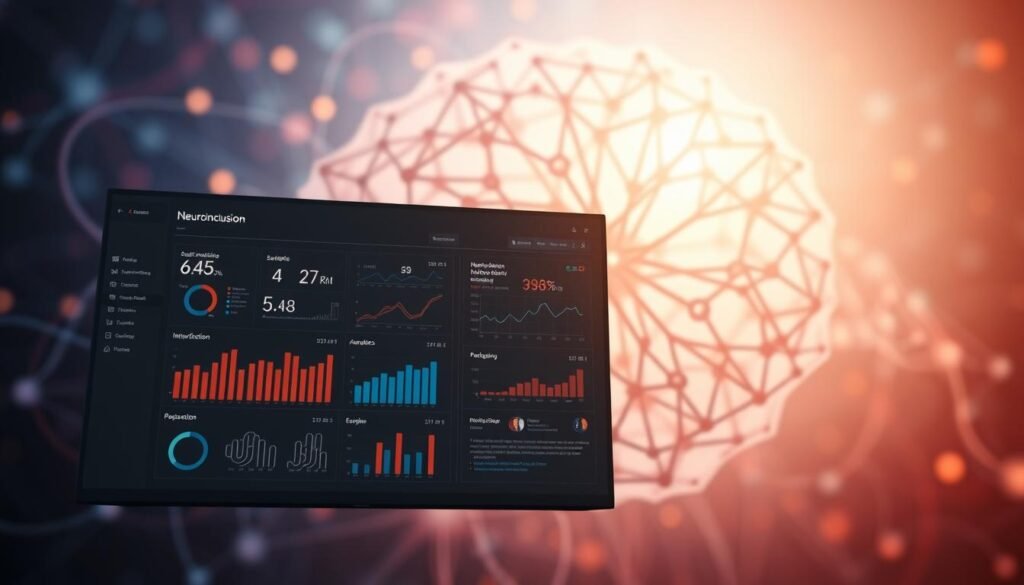
Digital Dashboards and Analytics Platforms
Digital dashboards and analytics platforms lead in tracking neuroinclusion progress. They give a clear view of important metrics and how well things are doing.
Real-Time Monitoring Solutions
Real-time monitoring lets companies keep an eye on their neuroinclusion metrics as they change. This way, they can quickly respond to new trends or problems.
Trend Analysis and Predictive Capabilities
Advanced analytics platforms can analyze trends and predict future challenges and chances in neuroinclusion. This helps companies plan ahead.
Accessibility Tools and Their Measurement Capabilities
Accessibility tools are essential for an inclusive space. They help measure different parts of neuroinclusion. For example, tools like Hume show how employees use digital platforms. This helps find ways to make things more accessible.
| Tool | Functionality | Measurement Capability |
|---|---|---|
| Digital Dashboards | Centralized metric viewing | Real-time tracking of neuroinclusion metrics |
| Analytics Platforms | Trend analysis and forecasting | Predictive insights into neuroinclusion progress |
| Accessibility Tools (e.g., Hume) | Digital platform interaction analysis | Insights into employee engagement and accessibility |
Overcoming Common Obstacles to Sustainable Progress
Neuroinclusion progress faces many challenges. Companies aim to be more inclusive but hit roadblocks. They need to tackle these obstacles to move forward.
Addressing Resistance and Initiative Fatigue
Resistance to change is a big hurdle. It shows up as initiative fatigue in employees. To fight this, clear communication and employee involvement are key. Keeping everyone updated on progress helps keep the momentum going.
Navigating Resource Constraints and Competing Priorities
Companies often struggle with resource constraints and competing priorities. This can pull focus away from neuroinclusive efforts. Smart budget allocation strategies are essential here.
Budget Allocation Strategies
To manage resources well, organizations should:
- Find the most impactful areas for neuroinclusive practices.
- Plan a phased rollout to spread costs.
- Use technology to cut costs and streamline processes.
Making the Business Case for Continued Investment
It’s important to show the business case for neuroinclusion. This means pointing out the benefits, like happier employees and better productivity. Tracking and sharing these results helps keep the investment coming.
Case Studies: Organizations Excelling at Neuroinclusive Measurement
Many companies are leading the way in neuroinclusive measurement. They are setting a high standard for inclusive workplace practices. By looking at these case studies, we can learn a lot about successful strategies and their effects on neurodiversity initiatives.
Success Stories from Different Industries
Microsoft and SAP are leading the charge in neuroinclusive measurement. Microsoft’s neurodiversity hiring program has seen a big jump in hiring neurodiverse employees. SAP’s Autism at Work program has also made a big difference, making the workplace more inclusive.
These stories show how neuroinclusive measurement can lead to real change.
Lessons Learned and Transferable Practices
The case studies teach us a few important lessons. One is the need for leadership buy-in and continuous measurement and feedback. Companies can use regular surveys and audits to improve.
Also, using technology like digital dashboards and analytics can help measure progress better. This technology supports making decisions based on data.
Conclusion: Creating a Legacy of Neuroinclusion
Creating a more inclusive workplace is key. We must build a lasting legacy of neuroinclusion. This means using neuroinclusive practices and keeping them going over time.
By tracking progress and keeping neuroinclusive habits, we can make our workplaces better for everyone. This helps create a culture where everyone feels included.
It’s important to monitor neurodiversity progress. We can do this with key performance indicators, pulse surveys, and accessibility audits. These tools help us find areas to improve and make smart choices for a more inclusive workplace.
To make a lasting impact, we need to keep learning and have strong governance and technology. This ensures neuroinclusive practices are part of our culture. It leads to success for everyone involved.
FAQ
What are neuroinclusive habits, and why are they important?
How do I measure the effectiveness of neuroinclusive practices in my organization?
What are some common challenges in sustaining neuroinclusive initiatives?
How can I ensure that my organization’s neuroinclusive practices are scalable?
What role do Employee Resource Groups (ERGs) play in promoting neuroinclusion?
How can technology tools support neuroinclusive practices?
What are some strategies for overcoming resistance to neuroinclusive practices?
How can I track the progress of neuroinclusive practices in my organization?
What are some best practices for sustaining neuroinclusive habits at scale?
About the Author