Can teachers really change how motivated their students are to learn? The answer is yes, by understanding student motivation and using the right strategies. This helps create a fun and engaging learning space.
Teaching is more than just sharing facts. It’s about making sure students want to learn. This guide offers practical ways for teachers to boost student engagement. It aims to make learning more enjoyable for everyone.
Key Takeaways
- Understanding the importance of student motivation in learning.
- Strategies to enhance student engagement in the classroom.
- Practical tips for educators to motivate students effectively.
- The role of the learning environment in student motivation.
- Techniques to foster a positive and engaging classroom atmosphere.
Understanding the Importance of Student Engagement
It’s key for teachers to grasp the concept of student engagement. This means how much students care about their studies, actively join in class, and want to do well. It’s all about making learning meaningful and fun.
What is Student Engagement?
Student engagement has three main parts: behavior, emotions, and thinking. Behavioral engagement is when students take part in class, like answering questions or taking notes. Emotional engagement is when they feel excited or motivated to learn. Cognitive engagement is when they really dive into learning, even when it’s tough.
| Dimension | Description | Examples |
|---|---|---|
| Behavioral Engagement | Participation in learning activities | Raising hands, taking notes, completing assignments |
| Emotional Engagement | Emotional responses to learning | Feeling interested, motivated, or enthusiastic |
| Cognitive Engagement | Investment in learning | Putting in effort to understand complex concepts, self-regulation |
Why Engagement Matters for Learning
Engagement is key for learning because it helps students absorb and remember what they learn. When students are engaged, they’re more likely to ask questions and seek help. This leads to better grades and a more enjoyable learning experience.
Teachers can boost engagement by making lessons interactive, giving helpful feedback, and creating a supportive classroom. This makes learning fun and effective.
Benefits for Educators
Boosting student engagement helps teachers too. Engaged students are easier to teach and more likely to follow rules. This makes the classroom a better place to learn, allowing teachers to focus on teaching well.
By using student engagement strategies, teachers can create a positive learning environment. This environment encourages students to be more involved and interested in their studies.
The Role of Motivation in Learning
Understanding motivation in learning is key for teachers to boost student motivation and grades. Motivation drives students to start and keep learning. It makes them more engaged in school activities.
Motivation comes in two forms: intrinsic and extrinsic. Intrinsic motivation comes from inside, driven by personal interest and joy in learning. Extrinsic motivation comes from outside, like rewards or praise.
Intrinsic vs. Extrinsic Motivation
Knowing the difference between intrinsic and extrinsic motivation helps teachers. Studies show intrinsic motivation leads to better learning and engagement. But, extrinsic rewards can also help, in the right situations.
- Intrinsic motivators include personal satisfaction and the joy of learning.
- Extrinsic motivators include grades, awards, and approval from teachers or parents.
Psychological Theories of Motivation
Many theories try to explain motivation. These include:
- Self-Determination Theory: Says autonomy, competence, and relatedness boost intrinsic motivation.
- Expectancy-Value Theory: Believes motivation comes from success expectations and task value.
- Social Cognitive Theory: Focuses on observation, imitation, and reinforcement in motivated behavior.
How Motivation Influences Academic Success
Motivation directly affects how well students do in school. Motivated students:
- Participate more in learning.
- Work towards and achieve goals.
- Face and overcome challenges.
- Look for more learning chances.
By knowing what drives student motivation, teachers can make learning better. This helps students do well in school.
Strategies to Enhance Student Motivation
To make a classroom more motivated, teachers need to use the right strategies. Making students motivated is key for success in school. It’s about using many different methods to get students to dive deeper into their studies.
Goal Setting and Achievement
Setting goals that students can reach is a great way to keep them motivated. When goals are clear and reachable, students stay focused. Goal setting gives students direction and purpose, letting them see how far they’ve come.
To set goals well, teachers should:
- Help students make SMART goals.
- Break down big goals into smaller steps.
- Give feedback and support often.
| Goal Setting Strategies | Description | Benefits |
|---|---|---|
| SMART Goals | Specific, Measurable, Achievable, Relevant, Time-bound | Clear direction, measurable progress |
| Breaking Down Goals | Divide larger goals into smaller tasks | Less overwhelming, increased sense of accomplishment |
| Regular Feedback | Ongoing support and guidance | Staying on track, adjustments as needed |
Providing Constructive Feedback
Giving feedback that helps students grow is key. Feedback that is specific, timely, and focused on improvement shows students their strengths and areas to work on. This makes students want to learn more and do better.
Good feedback should:
- Be specific and focused on certain parts of the student’s work.
- Point out both good things and areas to improve.
- Give clear ways for the student to get better.
Creating Relevant Learning Experiences
Learning that matters to students is important for keeping them interested. When students see how what they’re learning relates to their lives or future, they’re more likely to be involved. Learning that’s relevant makes it more meaningful and useful, boosting motivation and participation.
To make learning relevant, teachers can:
- Use real-life examples and case studies.
- Include students’ interests in lessons.
- Let students apply what they’ve learned in real ways.
By using these strategies, teachers can really boost student motivation. This makes learning more fun and productive for everyone.
Engaging Students Through Technology
Technology has changed education, making it more fun and interactive. Teachers use tech tools to make learning exciting and hands-on.
Interactive Learning Platforms
Interactive learning platforms have changed how teachers teach. They offer tools for different learning styles, helping students get more out of their lessons. For example, Moodle and Blackboard have features like discussion forums and quizzes.
Virtual Reality and Augmented Reality
Virtual Reality (VR) and Augmented Reality (AR) are changing education. VR lets students dive into virtual worlds, making learning fun and interactive. AR adds digital info to the real world, making learning even better.
AR can turn 3D models into interactive tools. This helps students understand complex ideas in a new way.
Gamification in Education
Gamification uses game elements to make learning fun. It adds points, badges, and leaderboards to make learning a game. This approach makes learning more enjoyable and interactive.
Platforms like Classcraft and Duolingo use gamification to improve language skills and classroom behavior.
By using these tech tools, teachers can make learning more engaging. This leads to better grades and a more positive learning experience.
Creating a Supportive Classroom Environment
To boost student motivation, educators must create a supportive classroom. This means building a culture that values learning and promotes respect. It also means encouraging students to participate actively.
Building Positive Teacher-Student Relationships
Positive teacher-student relationships are key to a supportive classroom. When students feel seen and heard, they are more motivated. They also engage more in learning.
Key Strategies for Building Positive Relationships:
- Regular one-on-one check-ins with students
- Showing genuine interest in students’ lives and interests
- Providing constructive feedback that guides improvement
Encouraging Collaboration Among Peers
Encouraging students to work together is also important. This helps them learn teamwork, communication, and problem-solving skills.
Effective Methods for Encouraging Peer Collaboration:
- Group projects that require collective effort
- Peer-to-peer teaching and mentoring
- Classroom discussions and debates
Celebrating Student Achievements
Celebrating student achievements is vital. It reinforces positive behaviors and motivates students to keep striving for excellence.
Ways to Celebrate Student Achievements:
- Public recognition in class or school assemblies
- Awards and certificates for outstanding performance
- Personalized notes of appreciation from teachers
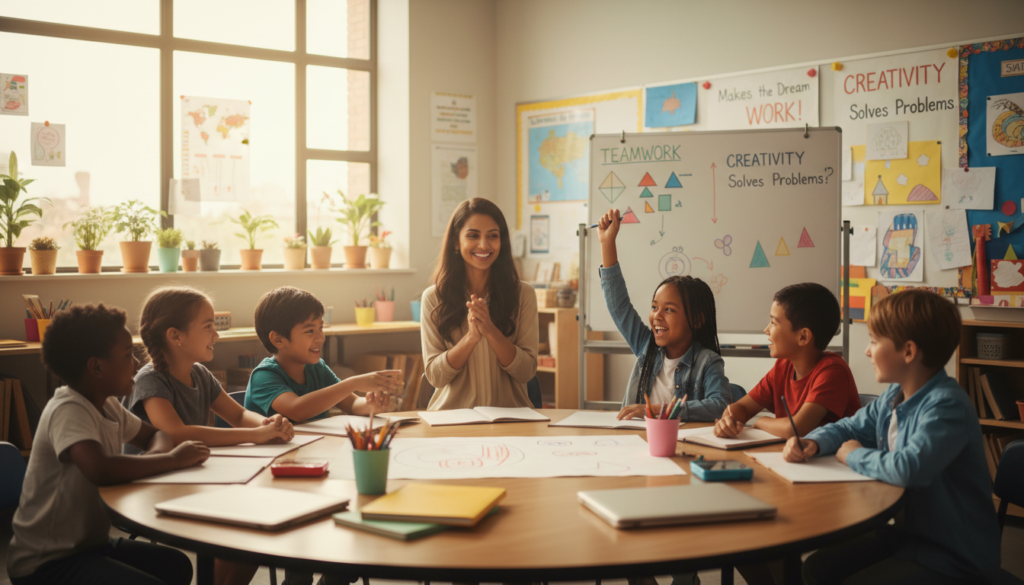
A supportive classroom environment greatly impacts student motivation and engagement. The table below shows key strategies and their outcomes:
| Strategy | Outcome |
|---|---|
| Building positive teacher-student relationships | Increased student motivation and engagement |
| Encouraging collaboration among peers | Development of teamwork and communication skills |
| Celebrating student achievements | Reinforced positive behaviors and motivation |
Active Learning Techniques
Teachers are now using active learning techniques to make learning more fun and interactive. Active learning gets students involved in the learning process. They do this through discussions, solving problems, and other fun activities.
Cooperative Learning Activities
Cooperative learning means students work together in small groups. They aim to achieve a common goal. This method helps students learn to work together, communicate well, and respect each other.
Benefits of Cooperative Learning:
- Improved communication skills
- Enhanced teamwork and collaboration
- Increased student engagement and motivation
Project-Based Learning
Project-Based Learning (PBL) lets students work on real projects. They apply what they’ve learned to solve real-world problems. This approach helps students think deeply, solve problems, and create quality work.
Key Features of PBL:
- Real-world applications
- In-depth exploration of topics
- Development of critical thinking and problem-solving skills
Problem-Based Learning
Problem-Based Learning (PBL) gives students real-world problems to solve. It makes them think critically, work together, and find effective solutions.
Comparing these active learning methods helps teachers pick the best ones for their classrooms.
| Technique | Description | Benefits |
|---|---|---|
| Cooperative Learning | Students work together in groups | Teamwork, communication, mutual respect |
| Project-Based Learning | Real-world projects applying learned concepts | Critical thinking, problem-solving, real-world applications |
| Problem-Based Learning | Open-ended, real-world problems to solve | Critical thinking, collaboration, effective solutions |
Adapting to Diverse Learning Styles
Teaching in a way that fits different learning styles can really help students stay motivated and engaged. When students have different ways of learning, a single teaching method can make them feel left out and unmotivated.
Identifying Different Learning Styles
Students learn in different ways, like seeing, hearing, or doing. Visual learners like diagrams and videos. Auditory learners do well with lectures. And kinesthetic learners learn by doing hands-on activities.
To figure out these styles, teachers can use tests and watch how students learn. For example, if a student likes to read instructions, they might be a visual learner.
Tailoring Instruction to Meet Needs
After finding out how students learn, teachers can adjust their teaching. This means using different teaching methods for each style. For example, visual learners get multimedia, and kinesthetic learners get hands-on activities.
- Using visual aids like diagrams and charts
- Incorporating auditory elements such as podcasts and audiobooks
- Providing hands-on activities and experiments
Flexible Grouping Strategies
Flexible grouping lets teachers group students in different ways. This can be based on learning style, interest, or need. It means grouping students by style for some activities or mixing them for peer learning.
Using these strategies, teachers can make a learning space that fits everyone. This helps keep students engaged and motivated.
Incorporating Student Interest into Curriculum
By adding student interests to the curriculum, teachers can make learning more fun and exciting. This method boosts student motivation and offers student engagement tips for different classrooms.
To include student interests, it’s key to know what they are. This can be done through surveys and feedback.
Surveys and Feedback Mechanisms
Surveys and feedback are vital for knowing what students like. Teachers can use online surveys or in-class talks to learn what students find interesting.
Regular feedback helps teachers tailor their lessons to what students need. It’s important to make a safe space where students can share their thoughts freely.
Integrating Relevant Topics
After finding out what students like, teachers can add those topics to lessons. This might mean changing old lesson plans or creating new ones that match student interests.
For example, if students like tech, teachers can add coding, app making, or digital projects. This makes learning fun and teaches useful skills.
Importance of Student Voice
It’s important to let students have a say in their education. When they feel heard and valued, they’re more likely to be interested in learning.
Student voice can be encouraged through student-led talks, project-based learning, and letting students help decide on their education.
By adding student interests and listening to their voices, teachers can greatly improve student motivation and engagement. This not only helps students do better in school but also creates a more positive learning environment.
The Impact of Classroom Management
How a classroom is managed greatly affects student motivation and engagement. Good classroom management is more than keeping order. It’s about making a space that supports learning and encourages students to get involved.
Setting Clear Expectations
Setting clear expectations is key to good classroom management. When students know what’s expected, they tend to stay focused and engage with the material. Teachers should set clear rules and consequences, but also praise good behavior.
Clear expectations reduce confusion and misbehavior, letting teachers teach without interruptions. It’s vital to clearly share these expectations and stick to them.
Creating Routines to Foster Engagement
Routines are vital in classroom management. They create a structured setting that encourages participation. Regular routines for group work, transitions, and individual tasks help keep students busy and engaged.
- Start the class with a routine
- Use consistent signals for transitions
- Have a set schedule for activities
These routines make students feel secure and focused, boosting their engagement with the lesson.
Addressing Behavioral Issues Effectively
Even with the best plans, behavioral issues can pop up. Effective classroom management means having plans to handle these issues quickly and fairly. This could include restorative practices, individual support, or conflict resolution.
By tackling behavioral issues well, teachers can stop small problems from getting bigger. This keeps the classroom positive and improves student engagement.
In summary, classroom management is essential for improving student engagement and making student engagement activities work. By setting clear expectations, creating routines, and handling behavioral issues, teachers can make a supportive and productive learning space.
Promoting a Growth Mindset
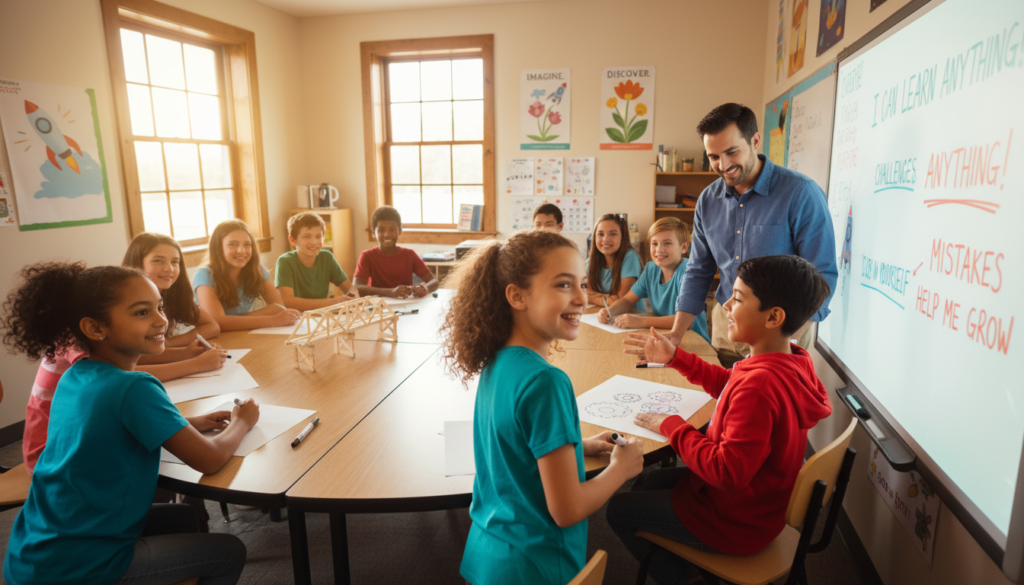
Encouraging a growth mindset in students can really boost their interest and drive to learn. A growth mindset means believing that skills can grow with effort and hard work. This is different from a fixed mindset, where people think their abilities are set.
The Concept of Growth vs. Fixed Mindset
Understanding the difference between growth and fixed mindsets is key to motivating students. Those with a fixed mindset think their smarts are fixed, leading to fear of failure. On the other hand, a growth mindset sees challenges as chances to learn and grow.
Key differences between a growth and fixed mindset include:
- View of Intelligence: Fixed mindset sees intelligence as static, while growth mindset views it as developable.
- Response to Challenges: Fixed mindset avoids challenges, whereas growth mindset embraces them.
- Perception of Failure: Fixed mindset sees failure as a reflection of intelligence, while growth mindset views it as a learning opportunity.
Strategies for Cultivating a Growth Mindset
To foster a growth mindset in students, educators can use several strategies. Praising effort over talent is a great way to encourage this mindset. It shows students that their abilities can grow with hard work and dedication.
Effective strategies include:
- Praising effort and progress, not just talent or grades.
- Encouraging students to take on challenges and view failures as learning experiences.
- Providing constructive feedback that guides improvement.
Success Stories to Inspire
There are many success stories that show how a growth mindset can boost student motivation and success. For example, research has found that teaching students to have a growth mindset can make them more resilient and motivated when facing challenges.
“The view you adopt for yourself profoundly affects the way you lead your life. You can either see yourself as someone who is destined to fail or as someone who is capable of growth and development.”
These stories are powerful motivators for both teachers and students. They show how a growth mindset can change the way we learn and grow.
Encouraging Parental Involvement
Getting parents involved in schools can really help students do better. When teachers and parents work together, students feel more supported and motivated. This makes learning a team effort.
Communication Strategies for Parents
Good communication is key to a strong partnership between parents and teachers. There are many ways to stay in touch, such as:
- Regular updates on student progress
- Parent-teacher conferences
- Email and phone communication
- School portals and apps
Involving Parents in Learning Activities
When parents get involved in school activities, it’s good for everyone. It makes learning more fun and helps parents feel closer to their child’s education. Some ways to do this include:
- Encouraging parents to attend school events
- Inviting parents to join in classroom activities
- Assigning homework that parents can help with
Collaboration Between Home and School
Working together at home and school is important for a supportive learning place. This can happen through:
- Setting clear goals and expectations
- Sharing student progress and feedback regularly
- Listening to and using parental ideas
Strategies for Effective Parental Involvement
| Strategy | Description | Benefits |
|---|---|---|
| Regular Communication | Keeping parents updated on student progress and school news | Boosts parental involvement and support |
| Parent-Teacher Conferences | Meetings to talk about student performance and goals | Helps understand student needs and progress better |
| Parental Participation in Classroom Activities | Inviting parents to join in classroom lessons and events | Strengthens the bond between home and school and makes learning richer |
Assessing Engagement and Motivation
Measuring student engagement helps us understand how to boost motivation and participation. To improve engagement, educators must know the current level of engagement in their classrooms.
Tools for Measuring Student Engagement
There are many tools and methods to measure student engagement. These include:
- Surveys and Questionnaires: Surveys can gather data on students’ feelings about their engagement.
- Observation Techniques: Teachers can watch how students behave to see their engagement level.
- Learning Analytics: Digital learning platforms can show how students interact with course materials.
Analyzing Engagement Data
After collecting data on student engagement, it’s important to analyze it well. This means:
- Finding trends and patterns in the data.
- Comparing engagement levels in different activities or times.
- Linking engagement data with academic performance to see its effect.
By analyzing engagement data, educators can understand what works and what doesn’t. This helps them make better decisions.
Making Adjustments Based on Feedback
The main goal of assessing engagement is to improve. Based on data analysis insights, educators can:
- Change their teaching strategies to better meet student needs.
- Try new engagement strategies that are proven to work.
- Keep watching and checking if these changes are effective.
By regularly checking engagement and making changes, educators can make learning more engaging and motivating. This boosts student motivation and improves engagement.
Overcoming Common Barriers
It’s key to know what stops students from being motivated. Teachers face many challenges that can either help or hurt student interest. They must find ways to overcome these obstacles.
Identifying Challenges to Motivation
Some common problems include not being interested, finding the material hard to understand, and personal issues. Identifying these challenges is the first step. Teachers can use surveys, feedback, and observation to figure out these issues.
| Barrier | Description | Potential Solution |
|---|---|---|
| Lack of Interest | Students may not see the relevance of the material to their lives or future careers. | Integrate real-world examples and applications into the curriculum. |
| Difficulty in Understanding | Complex concepts can overwhelm students, leading to disengagement. | Use simplified explanations, visual aids, and peer-to-peer teaching methods. |
| Personal Issues | Students may be dealing with personal problems that affect their motivation. | Provide support through counseling services and flexible assignment deadlines. |
Strategies for Overcoming Resistance
After finding out what’s holding students back, teachers can start to help. This might mean adapting teaching methods or giving extra support.
- Encourage a growth mindset by praising effort over talent.
- Use technology to make learning more interactive and engaging.
- Foster a positive classroom environment that encourages participation.
Addressing Mental Health Needs
Mental health issues can really affect how motivated students are. Teachers should know the signs and how to help. This might mean working with mental health professionals to support students.
By tackling the common barriers to motivation, teachers can make learning better for everyone. This boosts student engagement and helps their overall well-being.
Professional Development for Educators
The success of student engagement strategies depends on teacher training. As schools change, teachers need new skills to keep students interested.
It’s key to invest in teacher growth for better teaching and student interest. This can mean training, sharing ideas, and ongoing learning.
Training on Engagement Strategies
Training on student engagement strategies boosts teacher skills. Topics include new teaching ways and tech use in class.
- Workshops on interactive learning techniques
- Seminars on classroom management
- Training sessions on using educational technology
Such training refreshes teachers’ skills and encourages them to innovate. This leads to better student motivation and engagement.
Sharing Best Practices Among Teachers
Teachers learning from each other is very helpful. They share successes and learn from each other’s experiences.
This can happen through:
- Peer mentoring programs
- Teacher-led workshops
- Online forums and discussion groups
Sharing ideas builds a supportive community. It helps teachers keep improving their teaching.
Continuous Learning Opportunities
Education is always changing with new research and tech. Giving teachers ongoing learning chances keeps them up-to-date on motivation techniques for students.
Examples include:
- Online courses on educational platforms
- Conferences and seminars on educational innovation
- Subscription to educational journals and publications
By always learning, teachers can update their teaching. This keeps them effective in engaging and motivating students.
Conclusion: Sustaining Student Motivation and Engagement
Keeping students motivated and engaged is key to their success. By using the strategies from this tutorial, teachers can make a big difference. They can help their students on their learning path.
Strategies for Long-Term Success
For lasting success, set goals that students can reach. Give feedback that helps them grow. Make learning relevant and fun. This creates a supportive classroom where students work together and feel proud of their achievements.
Role of Feedback in Continuous Improvement
Feedback is critical for ongoing growth. Teachers can use tools to check how students are doing. This lets them see what needs work and make changes.
Celebrating Progress and Achievements
It’s important to celebrate students’ progress and wins. This boosts their confidence and keeps them motivated. By doing so, teachers create a positive space where students enjoy learning and stay engaged.
FAQ
What are some effective strategies for boosting student motivation?
How can educators promote a growth mindset in the classroom?
What role does technology play in boosting student engagement?
How can educators adapt their instruction to meet diverse learning needs?
What are some effective ways to involve parents in their child’s learning?
How can educators assess student engagement and motivation?
What are some common barriers to student motivation and engagement?
Why is professional development important for educators in promoting student engagement and motivation?
How can educators sustain student motivation and engagement over time?
What is the significance of student engagement in the learning process?
About the Author


The PsyForU Editorial Collective is the research and editorial team of PsyForU Research International. The collective prepares educational, psychological, mental-health-awareness, inclusion, neurodiversity, and research-methodology content for students, parents, educators, researchers, and general readers. PsyForU content is intended for awareness, education, and capacity-building and should not be treated as clinical diagnosis, therapy, medical advice, legal advice, or emergency mental-health support.