Introduction: Why Victimology Matters More Than Ever
A crime does not end when the police report is filed. For many victims, that is when the second journey begins—the journey through fear, grief, medical bills, court dates, social stigma, financial stress, and the hard work of rebuilding trust in the world.
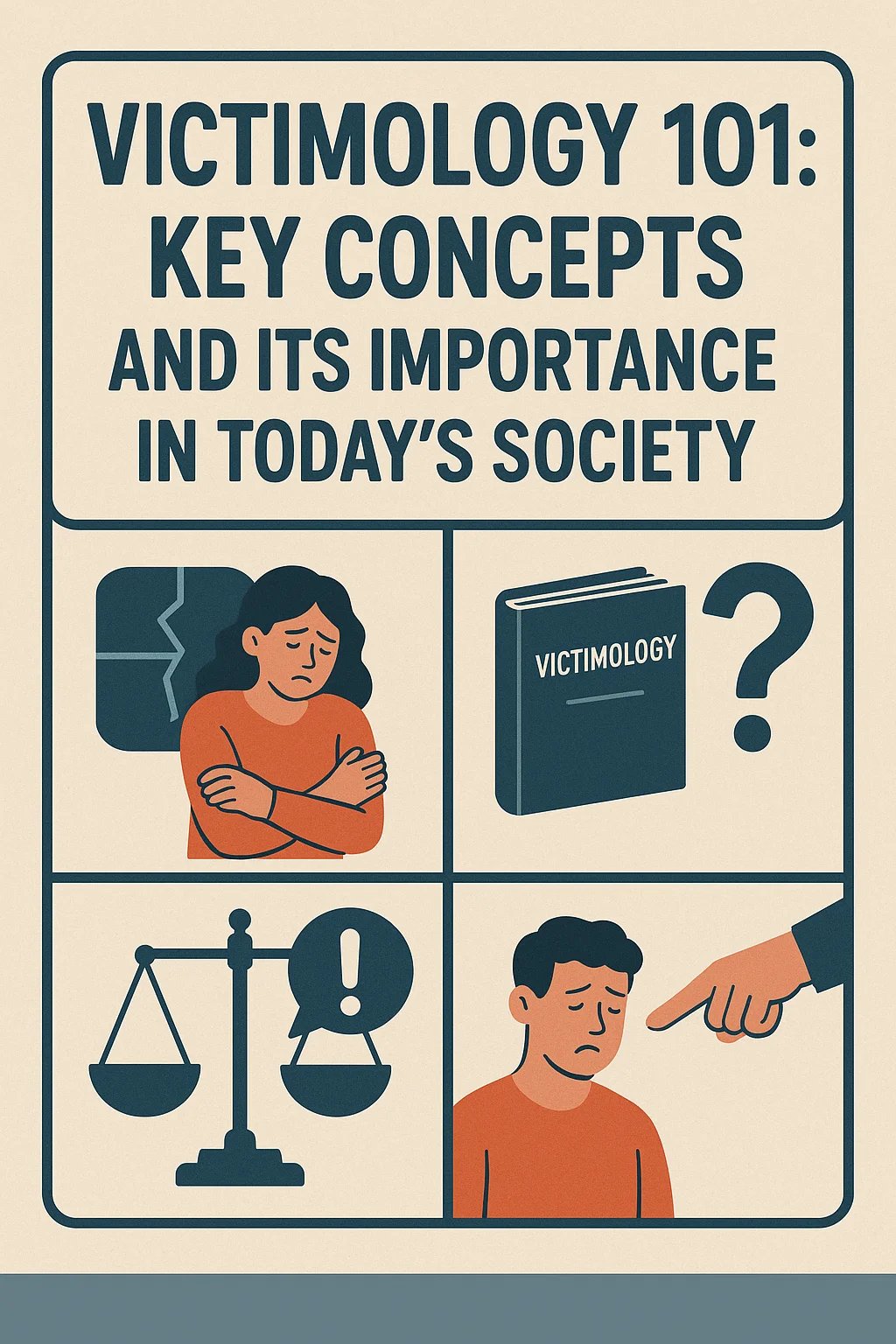
That is exactly why Victimology 101: Key Concepts and Its Importance in Today’s Society is such a vital topic. Victimology helps us understand not only what happened to victims, but also what they need afterward, how systems respond to them, and how society can prevent further harm.
In the past, criminal justice systems often focused mainly on offenders: Who committed the crime? What law was broken? What punishment is appropriate? Those questions still matter. But victimology asks equally important questions: Who was harmed? What impact did the harm have? What support does the victim need? How can we prevent revictimization? How can justice become more humane?
In today’s society—where cybercrime, domestic violence, mass violence, hate crime, elder abuse, human trafficking, and online harassment are increasingly visible—the importance of victimology in today’s society cannot be overstated. It shapes policing, courts, counseling, social work, public policy, education, healthcare, and community safety.
This guide to Victimology 101: Key Concepts and Its Importance in Today’s Society breaks down the field in a clear, practical, and engaging way. Whether you are a student, professional, advocate, survivor, or simply a concerned citizen, understanding victimology can change how you see crime, justice, and healing.
What Is Victimology?
Victimology is the study of victims, victimization, and society’s response to harm. It examines the experiences of people who suffer from crime, abuse, disaster, discrimination, violence, exploitation, or systemic injustice.
At its core, victimology looks at three big areas:
The victim’s experience
This includes physical injury, emotional trauma, financial loss, social disruption, and long-term effects.The causes and patterns of victimization
Victimology studies why certain individuals, groups, or communities face higher risks.- The response to victims
This includes police treatment, court processes, victim services, compensation programs, counseling, advocacy, and public policy.
A strong understanding of Victimology 101: Key Concepts and Its Importance in Today’s Society helps us move beyond a narrow “crime and punishment” mindset. It encourages a broader view of justice—one that includes safety, dignity, recovery, accountability, and prevention.
Victimology at a Glance
| Core Area | Key Question | Why It Matters |
|---|---|---|
| Victim experience | What harm did the victim suffer? | Helps identify emotional, physical, financial, and social needs |
| Victim-offender relationship | Did the victim know the offender? | Important in domestic violence, child abuse, workplace violence, and stalking |
| Risk factors | Who is more vulnerable and why? | Supports prevention and targeted intervention |
| System response | How do police, courts, and services treat victims? | Reduces secondary victimization |
| Victim rights | What protections and supports should victims receive? | Promotes fairness and participation in justice processes |
| Recovery and healing | What helps victims rebuild their lives? | Improves long-term well-being |
This is the foundation of Victimology 101: understanding harm from the victim’s perspective without ignoring accountability, law, or public safety.
A Brief History of Victimology
Victimology is a relatively young academic field. Criminology, which focuses on crime and offenders, has been studied for much longer. Victims, however, were often treated as witnesses or evidence rather than people with independent needs and rights.
Early victimology emerged in the mid-20th century. Researchers began asking why some people were more likely to become victims and how victim behavior, environment, social inequality, and offender choices interacted.
Some early work was controversial because it sometimes appeared to blame victims. Modern victimology has worked hard to correct that. Today, responsible victimology makes a clear distinction between understanding risk and blaming the person harmed.
That distinction is central to Victimology 101: Key Concepts and Its Importance in Today’s Society. Studying victimization should never mean suggesting victims “caused” their harm. Instead, it should help communities reduce risk, improve support, and hold offenders and systems accountable.
Key Concepts in Victimology
To understand Victimology 101: Key Concepts and Its Importance in Today’s Society, it helps to learn the field’s major concepts.
1. Victimization
Victimization refers to the process of being harmed, injured, exploited, or violated. It can result from crime, abuse, negligence, discrimination, war, terrorism, disasters, or institutional failure.
Victimization can be:
- Direct, when a person is personally harmed
- Indirect, when family members, friends, or communities are affected
- Primary, referring to the original harm
- Secondary, caused by insensitive responses from institutions or society
- Repeat, when someone experiences multiple incidents over time
For example, a robbery victim experiences direct victimization. Their child, who becomes afraid to leave home afterward, may experience indirect victimization. If police dismiss the victim’s concerns or a court process retraumatizes them, that can become secondary victimization.
2. Primary, Secondary, and Tertiary Victims
Victimology recognizes that harm often spreads beyond the immediate target.
| Type of Victim | Description | Example |
|---|---|---|
| Primary victim | Person directly harmed | A person assaulted in public |
| Secondary victim | Someone emotionally or socially affected by the harm | Family members of a homicide victim |
| Tertiary victim | Wider community affected by fear, grief, or disruption | A neighborhood after a violent attack |
This concept is especially important in mass violence, terrorism, school shootings, hate crimes, and domestic violence cases. The harm does not stop with one person.
3. Victim Precipitation
Victim precipitation is one of the most misunderstood concepts in victimology. It refers to situations where a victim’s actions may somehow contribute to the sequence of events leading to victimization.
However, this concept must be handled carefully. It should never be used to excuse offenders or blame victims.
For instance, if two people argue and one person violently attacks the other, researchers might study the interaction. But the offender is still responsible for choosing violence.
In modern Victimology 101, the focus is not “What did the victim do wrong?” but “What conditions allowed harm to happen, and how can harm be prevented?”
4. Victim Blaming
Victim blaming occurs when responsibility for harm is shifted from the offender to the victim.
Common victim-blaming questions include:
- “Why didn’t they leave?”
- “Why were they there?”
- “Why didn’t they report sooner?”
- “What were they wearing?”
- “Why did they trust that person?”
These questions often ignore fear, coercion, trauma, poverty, social pressure, manipulation, disability, immigration status, or lack of safe options.
One reason Victimology 101: Key Concepts and Its Importance in Today’s Society is so important is that it teaches people to replace judgment with informed understanding.
A better question is: “What barriers prevented safety, reporting, or support?”
5. Secondary Victimization
Secondary victimization happens when victims are harmed again by the response they receive after the original incident.
This can happen through:
- Dismissive police treatment
- Aggressive cross-examination in court
- Media exposure
- Public shaming
- Lack of privacy
- Delays in legal proceedings
- Insensitive medical or social services
- Family disbelief or rejection
Secondary victimization can sometimes feel as damaging as the original crime. A survivor of sexual assault, for example, may suffer additional trauma if they are doubted, blamed, or forced to retell the event repeatedly in harsh settings.
The importance of victimology in today’s society is especially clear here: systems must be designed to help victims, not retraumatize them.
6. Trauma-Informed Care
Trauma-informed care is an approach that recognizes the widespread impact of trauma and avoids practices that may retraumatize victims.
It is built around principles such as:
- Safety
- Trust
- Choice
- Collaboration
- Empowerment
- Cultural sensitivity
In practice, trauma-informed care might mean allowing a victim to have an advocate present during an interview, explaining each step of a legal process, avoiding judgmental language, and giving the victim control where possible.
This is a central theme in Victimology 101: Key Concepts and Its Importance in Today’s Society because victims are not just case numbers. They are people navigating deeply stressful experiences.
7. Restorative Justice
Restorative justice focuses on repairing harm rather than simply punishing offenders. It may involve dialogue between victims, offenders, and community members, but only when it is safe, voluntary, and appropriate.
Restorative justice asks:
- Who was harmed?
- What are their needs?
- Who has obligations to repair the harm?
- How can accountability become meaningful?
Restorative justice is not suitable for every case. It must never pressure victims into forgiveness or contact with offenders. But when done carefully, it can give some victims a stronger voice than traditional court processes.
8. Victim Rights
Victim rights vary by country and jurisdiction, but they often include:
- The right to be treated with dignity
- The right to be informed about case progress
- The right to protection from intimidation
- The right to participate in proceedings
- The right to restitution or compensation
- The right to submit victim impact statements
- The right to privacy
The modern victim rights movement is one of the strongest examples of Victimology 101: Key Concepts and Its Importance in Today’s Society in action.
Major Theories in Victimology
Victimology uses theories to explain patterns of victimization. These theories are not about blaming victims. They help identify risks, improve prevention, and guide policy.
| Theory | Main Idea | Practical Use | Caution |
|---|---|---|---|
| Lifestyle theory | Daily routines and activities can affect victimization risk | Helps design safety education and prevention programs | Must not imply victims are responsible for crime |
| Routine activities theory | Crime occurs when a motivated offender, suitable target, and lack of guardianship meet | Useful in cybersecurity, urban planning, and policing | Can oversimplify complex social issues |
| Victim precipitation theory | Victim-offender interactions may influence some incidents | Helps analyze conflict escalation | High risk of victim-blaming if misused |
| Social learning theory | Violence and abuse can be learned through environment | Supports early intervention and education | Must consider structural inequality |
| Feminist victimology | Examines gender, power, coercion, and patriarchy | Crucial for domestic violence and sexual assault work | Requires intersectional awareness |
| Critical victimology | Studies power, inequality, and state or institutional harm | Useful for human rights and systemic injustice | Can be politically sensitive |
These theories show why Victimology 101 is both practical and complex. Victimization is rarely caused by one factor alone.
Why Victimology Is Important in Today’s Society
The importance of victimology in today’s society has grown because harm itself has changed. Crime is no longer limited to physical spaces. Victims may be targeted through smartphones, financial systems, workplaces, schools, intimate relationships, and global trafficking networks.
Here are several reasons victimology matters now.
1. Crime Is Becoming More Complex
Modern victimization includes:
- Cyberstalking
- Identity theft
- Online fraud
- Revenge pornography
- Sextortion
- Human trafficking
- Financial scams targeting elders
- Hate crimes
- Digital harassment
- Workplace bullying
- Coercive control in relationships
A traditional criminal justice lens may miss the full impact of these harms. Victimology 101: Key Concepts and Its Importance in Today’s Society helps professionals understand the emotional, social, digital, and financial dimensions of modern victimization.
2. Victims Need More Than Legal Outcomes
A conviction can matter deeply. But it does not automatically heal trauma, restore income, rebuild trust, or repair relationships.
Victims may need:
- Emergency shelter
- Medical care
- Counseling
- Legal advocacy
- Financial assistance
- Immigration support
- Childcare
- Safety planning
- Workplace accommodations
- Digital privacy protection
Victimology reminds us that justice is not only about what happens to the offender. It is also about what happens to the victim afterward.
3. Trauma Affects Health and Communities
Victimization can affect mental and physical health for years.
Possible effects include:
- Anxiety
- Depression
- Post-traumatic stress symptoms
- Sleep problems
- Chronic pain
- Substance misuse
- Social withdrawal
- Relationship difficulties
- Loss of income
- School or work disruption
When many people in a community experience violence, the impact becomes collective. Neighborhoods may experience fear, mistrust, reduced social cohesion, and economic decline.
This is why Victimology 101: Key Concepts and Its Importance in Today’s Society belongs not only in criminal justice classrooms, but also in public health, education, urban planning, and community development.
4. Victimology Improves Criminal Justice Systems
A victim-centered justice system is more likely to:
- Encourage reporting
- Build trust with communities
- Improve evidence collection
- Reduce retraumatization
- Support witness participation
- Increase fairness
- Strengthen public confidence
When victims feel dismissed, they may stop cooperating or discourage others from reporting. When they are treated with respect, they are more likely to engage with the process.
5. It Helps Prevent Future Harm
Victimology is not only reactive. It is preventive.
By studying victimization patterns, communities can design better prevention strategies, such as:
- Safer public transportation
- Better lighting in public spaces
- Cybersecurity education
- School-based violence prevention
- Domestic violence risk assessment
- Elder fraud awareness
- Anti-trafficking training
- Community support networks
The best version of Victimology 101 is not just about understanding victims after harm occurs. It is about reducing the chances that harm happens again.
Common Types of Victimization
Victimization takes many forms. Some are visible; others are hidden for years.
| Type of Victimization | Common Impacts | Support Needs |
|---|---|---|
| Domestic violence | Fear, injury, isolation, financial control | Safety planning, shelter, legal protection, counseling |
| Sexual assault | Trauma, shame, health concerns, self-blame | Medical care, advocacy, trauma therapy, legal options |
| Cybercrime | Financial loss, privacy invasion, anxiety | Digital security, fraud reporting, financial recovery |
| Hate crime | Fear, identity-based trauma, community harm | Legal support, community solidarity, mental health care |
| Child abuse | Developmental trauma, trust issues, behavioral changes | Protection, therapy, stable caregiving |
| Elder abuse | Financial loss, neglect, dependency fear | Adult protective services, healthcare, legal aid |
| Human trafficking | Coercion, trauma, exploitation, isolation | Safe housing, legal support, long-term recovery |
| Homicide survivorship | Grief, anger, court stress, media exposure | Bereavement support, advocacy, financial assistance |
Understanding these categories is a major part of Victimology 101: Key Concepts and Its Importance in Today’s Society because each type of harm requires a different response.
Case Study 1: Domestic Violence and Coercive Control
The Situation
Maria, a 34-year-old mother of two, rarely had visible injuries. Her partner controlled her bank account, monitored her phone, isolated her from family, threatened to take the children, and told her she would be deported if she contacted police.
For years, outsiders asked, “Why doesn’t she just leave?” But leaving was the most dangerous moment. She had no independent money, no safe housing, and no confidence that authorities would believe her.
Eventually, a healthcare worker trained in trauma-informed screening noticed signs of coercive control. Instead of pressuring Maria to leave immediately, the worker connected her with a domestic violence advocate. Together, they created a safety plan, secured legal advice, and found emergency housing.
Analysis
This case illustrates why Victimology 101: Key Concepts and Its Importance in Today’s Society is essential. Domestic violence is not always a single physical attack. It often involves coercive control—patterns of intimidation, isolation, financial abuse, threats, and psychological manipulation.
A victim-blaming response would ask why Maria stayed. A victimological response asks:
- What risks did she face?
- What barriers limited her options?
- What support would increase her safety?
- How can systems recognize non-physical abuse?
This case also shows the importance of trauma-informed care and coordinated community response.
Case Study 2: Cybercrime and Elder Financial Exploitation
The Situation
James, a 76-year-old widower, received a call from someone claiming to be from his bank. The caller knew basic personal information and warned that his account had been compromised. Panicked, James followed instructions and transferred money to a “secure account.”
He lost $38,000.
At first, James told no one. He felt embarrassed and feared his adult children would think he was incapable of living independently. When he finally reported the crime, the bank investigation was slow, and local police had limited cybercrime resources.
Analysis
This case highlights a modern application of Victimology 101. Cybercrime victims often suffer more than financial loss. They may experience shame, anxiety, distrust, and loss of independence.
It also shows why the importance of victimology in today’s society is increasing. Digital crimes can cross jurisdictions, involve sophisticated manipulation, and target emotional vulnerabilities such as loneliness, fear, or urgency.
A victim-centered response would include:
- Nonjudgmental reporting processes
- Cybercrime education for older adults
- Banking safeguards
- Family communication without blame
- Specialized digital investigation resources
Victimology helps us see James not as “gullible,” but as a person targeted by organized manipulation.
Case Study 3: Hate Crime and Community Trauma
The Situation
After a series of attacks against members of a religious minority community, many residents became afraid to attend services, wear visible religious symbols, or let children walk alone. Even people who were not directly attacked felt threatened.
Local officials initially treated the incidents as isolated assaults. Community leaders argued that the harm was broader because the attacks sent a message of fear to the entire group.
After public pressure, law enforcement created a hate crime response team, increased community liaison meetings, and partnered with local organizations to support victims.
Analysis
This case is a powerful example of Victimology 101: Key Concepts and Its Importance in Today’s Society because it shows the difference between individual and collective victimization.
Hate crimes target both a person and an identity group. The victim may be one individual, but the message reaches a whole community.
Victimology teaches that effective response must include:
- Individual victim support
- Community reassurance
- Cultural competence
- Accurate hate crime reporting
- Public condemnation of bias
- Long-term trust-building
This is where victimology intersects with civil rights, social cohesion, and democracy itself.
Case Study 4: Sexual Assault and Secondary Victimization
The Situation
A university student reported sexual assault after a party. During the process, she was asked repeated questions that made her feel blamed: Why did she drink? Why did she go to the room? Why did she wait two days to report?
Rumors spread on campus. Friends took sides. She stopped attending classes and considered dropping out.
Later, a victim advocate helped her understand her rights, access counseling, request academic accommodations, and decide whether to continue with formal proceedings.
Analysis
This case demonstrates secondary victimization, one of the most important concepts in Victimology 101.
The original assault caused trauma. But the response—judgment, disbelief, gossip, and institutional confusion—deepened the harm.
A better approach would include:
- Trauma-informed interviewing
- Confidential support services
- Clear reporting options
- Protection from retaliation
- Academic and housing accommodations
- Respect for the survivor’s choices
The case shows why Victimology 101: Key Concepts and Its Importance in Today’s Society is critical in schools, universities, workplaces, and justice systems.
Case Study 5: Restorative Justice After Burglary
The Situation
A family returned home to find their house burglarized. Jewelry, electronics, and sentimental items were gone. Even after locks were replaced, the family felt unsafe.
The offender, a young adult with no prior violent record, was arrested. As part of a carefully screened restorative justice program, the family chose to participate in a facilitated meeting.
They explained that the worst part was not the stolen property—it was the feeling that their home had been violated. The offender apologized, answered questions, and agreed to restitution and community service.
Analysis
This case shows how restorative justice can support victim healing when it is voluntary and safe.
Traditional court might focus on charges and sentencing. Restorative justice allowed the victims to express harm directly, ask questions, and participate in shaping accountability.
This does not mean restorative justice is always appropriate. In cases involving severe violence, coercion, or ongoing danger, it may be harmful. But this example shows an important lesson from Victimology 101: Key Concepts and Its Importance in Today’s Society: victims often need voice, validation, information, and meaningful repair—not just punishment.
Victimology and the Criminal Justice System
Victimology influences every stage of the criminal justice process.
Reporting
Many victims never report crimes. Reasons may include fear, shame, distrust, immigration concerns, financial dependency, trauma, or belief that nothing will happen.
Victimology helps agencies create safer reporting options.
Investigation
Trauma-informed investigation recognizes that victims may remember events in fragmented ways. This does not automatically mean they are lying. Stress and trauma can affect memory, emotion, and communication.
Prosecution
Victims may need updates, preparation, protection, and emotional support. Prosecutors who understand victimology are better able to communicate respectfully and clearly.
Sentencing
Victim impact statements allow victims to describe the harm they experienced. Restitution may help address financial loss.
Reentry
Victimology also matters when offenders return to the community. Victims may need notification, safety planning, or no-contact enforcement.
A justice system shaped by Victimology 101 is more humane and more effective.
Victimology in Public Policy
Public policy influenced by victimology may include:
- Victim compensation funds
- Domestic violence shelters
- Sexual assault nurse examiner programs
- Human trafficking task forces
- Child advocacy centers
- Elder abuse reporting systems
- Hate crime laws
- Cybercrime reporting portals
- Victim notification systems
- Restitution enforcement
- Trauma-informed school policies
These policies reflect the importance of victimology in today’s society because they turn research into real-world protection.
Victimology and Technology
Technology has transformed victimization. It has created new types of harm and new tools for support.
Digital Risks
Victims may face:
- Doxxing
- Image-based abuse
- Cyberstalking
- Online impersonation
- Financial scams
- Data breaches
- GPS tracking
- Harassment campaigns
Digital Support
Technology can also help through:
- Online counseling
- Emergency safety apps
- Digital evidence preservation
- Virtual court participation
- Cybercrime reporting tools
- Secure victim notification systems
A modern discussion of Victimology 101: Key Concepts and Its Importance in Today’s Society must include digital life because many victims are harmed through devices they use every day.
Victimology and Vulnerable Populations
Some groups face higher risks of victimization due to social, economic, physical, or political vulnerability.
These may include:
- Children
- Older adults
- People with disabilities
- LGBTQ+ individuals
- Immigrants and refugees
- Indigenous communities
- People experiencing homelessness
- Sex workers
- People in abusive relationships
- Racial, ethnic, or religious minorities
The point is not that these groups are weak. The point is that offenders and systems may exploit inequality, isolation, dependency, discrimination, or lack of protection.
This is why intersectionality matters in Victimology 101. A victim’s experience may be shaped by race, gender, class, disability, sexuality, age, immigration status, and community context.
Barriers Victims Face When Seeking Help
| Barrier | How It Affects Victims | Better Response |
|---|---|---|
| Fear of retaliation | Victims may stay silent | Safety planning and protective measures |
| Shame or self-blame | Victims may delay reporting | Nonjudgmental support |
| Financial dependence | Victims may remain in abusive situations | Emergency funds, housing, legal aid |
| Language barriers | Victims may not understand options | Interpreters and multilingual resources |
| Distrust of authorities | Victims may avoid systems | Community-based advocacy |
| Trauma symptoms | Victims may seem confused or inconsistent | Trauma-informed interviewing |
| Social stigma | Victims may fear rejection | Public education and confidentiality |
| Lack of services | Victims may have nowhere to go | Stronger funding and referral networks |
Understanding these barriers is a practical part of Victimology 101: Key Concepts and Its Importance in Today’s Society.
Victimology in Healthcare
Healthcare providers often encounter victims before police, courts, or social workers do.
Doctors, nurses, therapists, and emergency responders may identify signs of:
- Domestic violence
- Sexual assault
- Child abuse
- Elder neglect
- Human trafficking
- Self-harm after victimization
- Violence-related trauma
A victimology-informed healthcare system emphasizes safety, consent, documentation, privacy, and referrals.
For example, instead of asking, “Why didn’t you leave?” a provider might ask, “Do you feel safe at home?” or “Would you like information about support options?”
That small shift reflects the heart of Victimology 101: dignity first.
Victimology in Schools and Universities
Schools are major sites for prevention and response. Students may experience bullying, dating violence, sexual assault, online harassment, hate incidents, or community trauma.
Victimology-informed schools can:
- Teach consent and healthy relationships
- Create safe reporting channels
- Train staff on trauma
- Address bullying quickly
- Provide counseling
- Support academic accommodations
- Prevent retaliation
- Include parents and communities when appropriate
The importance of victimology in today’s society is especially clear among young people. Early support can prevent long-term harm.
Victimology in the Workplace
Workplace victimization may include harassment, discrimination, bullying, wage theft, threats, stalking, assault, or exploitation.
Employers should understand:
- Power imbalances affect reporting
- Retaliation fears are real
- Confidentiality matters
- Trauma can affect performance
- Policies must be enforced consistently
- Support should not depend on public disclosure
A workplace that understands Victimology 101: Key Concepts and Its Importance in Today’s Society is better prepared to protect employees and maintain trust.
The Role of Victim Advocates
Victim advocates are trained professionals who support victims through crisis, recovery, and legal processes.
They may help with:
- Safety planning
- Court accompaniment
- Emotional support
- Explaining rights
- Filing compensation claims
- Referrals to counseling or shelter
- Communication with police or prosecutors
- Crisis intervention
- Resource navigation
Advocates do not make decisions for victims. They help victims understand options and regain control.
This empowerment-based approach is one of the most valuable lessons in Victimology 101.
Practical Principles for Supporting Victims
If someone tells you they have been harmed, your response matters.
Helpful Responses
- “I believe you.”
- “I’m sorry this happened.”
- “You’re not alone.”
- “What do you need right now?”
- “Would you like help finding support?”
- “You have options.”
- “This was not your fault.”
Harmful Responses
- “Why didn’t you fight back?”
- “Are you sure?”
- “What did you do to cause it?”
- “You should have known better.”
- “I would have handled it differently.”
- “You need to forgive and move on.”
Supporting victims does not require perfect words. It requires respect, patience, and belief.
Victimology and Prevention: What Communities Can Do
A victim-centered community does not wait until harm happens. It builds prevention into everyday life.
Community Prevention Strategies
| Strategy | Example | Impact |
|---|---|---|
| Education | Consent, cyber safety, fraud awareness | Reduces risk and increases reporting |
| Environmental design | Lighting, safe transit, public cameras with safeguards | Improves public safety |
| Social support | Community centers, peer groups, crisis lines | Reduces isolation |
| Early intervention | School counseling, family support | Prevents escalation |
| Strong services | Shelters, advocacy, legal aid | Helps victims escape danger |
| Accountability | Effective enforcement and offender programs | Reduces repeat harm |
| Public awareness | Anti-stigma campaigns | Encourages help-seeking |
Prevention is where Victimology 101: Key Concepts and Its Importance in Today’s Society becomes more than theory. It becomes action.
Ethical Issues in Victimology
Victimology must be practiced ethically. Researchers, journalists, police, advocates, and policymakers all have responsibilities.
Key ethical principles include:
- Avoid exploiting victim stories
- Protect privacy
- Obtain informed consent
- Avoid sensationalism
- Do not pressure victims to participate
- Respect cultural context
- Avoid victim-blaming language
- Recognize power imbalances
- Center survivor dignity
A responsible approach to Victimology 101 means remembering that every “case” involves real human beings.
Common Myths About Victims
Myth 1: “Real victims report immediately.”
Many victims delay reporting because of fear, trauma, shame, threats, confusion, or distrust.
Myth 2: “If there are no injuries, it was not serious.”
Many forms of victimization leave no visible injuries, including coercive control, stalking, fraud, and psychological abuse.
Myth 3: “Victims always want harsh punishment.”
Some do. Others want safety, answers, restitution, apology, treatment, or simply to be believed.
Myth 4: “False reports are common.”
False reports exist, but they are often exaggerated in public conversation. Most victims face significant barriers to reporting.
Myth 5: “Victimology excuses offenders.”
Victimology does not excuse offenders. It expands the justice conversation to include harm, healing, prevention, and rights.
These myths show why Victimology 101: Key Concepts and Its Importance in Today’s Society should be part of public education.
The Future of Victimology
The field of victimology will continue to evolve as society changes.
Important future directions include:
- Better cybercrime victim support
- More trauma-informed courts
- Stronger services for marginalized communities
- Expanded restorative justice safeguards
- Improved victim compensation systems
- Greater focus on environmental and corporate harm
- More attention to mass violence and community trauma
- AI-related abuse prevention, such as deepfake exploitation
- Global responses to trafficking and forced migration
The future of Victimology 101 will require collaboration across law, psychology, sociology, technology, healthcare, education, and public policy.
Actionable Takeaways: How to Apply Victimology in Everyday Life
You do not need to be a criminologist to use victimology-informed thinking.
Here are practical steps:
- Listen without judgment when someone shares harm.
- Avoid victim-blaming language, even in casual conversation.
- Learn local victim support resources, such as hotlines, shelters, and advocacy centers.
- Support trauma-informed policies in schools, workplaces, and justice systems.
- Protect your digital privacy and help vulnerable people understand online scams.
- Encourage respectful media coverage of crime and victims.
- Promote prevention, not just punishment.
- Recognize community harm, especially after hate crimes or public violence.
- Respect victim choice whenever safety allows.
- Remember that healing is not linear and victims may need long-term support.
These actions reflect the real-world value of Victimology 101: Key Concepts and Its Importance in Today’s Society.
Conclusion: Building a More Compassionate and Safer Society
Victimology teaches us that crime and harm are not only legal events. They are human experiences.
Through Victimology 101: Key Concepts and Its Importance in Today’s Society, we learn that victims need more than sympathy. They need safety, respect, information, justice, resources, and meaningful support. We also learn that systems can either help victims heal or deepen their wounds.
The most powerful lesson is this: a society’s character is revealed in how it treats people after they have been harmed.
When we understand victimology, we become better listeners, better professionals, better policymakers, better neighbors, and better human beings. We stop asking, “Why didn’t they prevent it?” and start asking, “How can we prevent harm, support recovery, and create justice that truly restores dignity?”
That is the promise of Victimology 101—not just to study victims, but to build a world where fewer people become victims in the first place, and where those who do are met with courage, compassion, and care.
1. What is victimology in simple terms?
Victimology is the study of victims, victimization, and how society responds to people who have been harmed. It examines the impact of crime or abuse, the needs of victims, and ways to improve support, justice, and prevention.
2. Why is victimology important today?
The importance of victimology in today’s society is growing because victimization now includes complex harms such as cybercrime, domestic abuse, trafficking, hate crimes, elder exploitation, and online harassment. Victimology helps communities respond with greater compassion, accuracy, and effectiveness.
3. Does victimology blame victims?
No. Modern victimology should not blame victims. While it may study risk factors and patterns, its purpose is to understand harm, improve support, prevent future victimization, and hold offenders and systems accountable.
4. What is secondary victimization?
Secondary victimization happens when victims are harmed again by poor responses from police, courts, media, family, workplaces, schools, or communities. Examples include disbelief, shaming, privacy violations, or being forced to retell traumatic events unnecessarily.
5. How does victimology help the criminal justice system?
Victimology improves the justice system by promoting victim rights, trauma-informed interviewing, better communication, safety planning, restitution, and respectful treatment. It helps victims participate without being retraumatized.
6. What careers use victimology?
Victimology is useful in criminal justice, law enforcement, social work, psychology, counseling, public health, law, education, victim advocacy, policy research, corrections, human rights, and community safety.
7. What is trauma-informed care in victimology?
Trauma-informed care means recognizing how trauma affects victims and responding in ways that promote safety, trust, choice, empowerment, and dignity. It avoids practices that may retraumatize victims.
8. How can ordinary people support victims?
Listen without judgment, believe them, avoid blaming questions, respect their choices, help them find resources, and understand that recovery takes time. Small responses can make a major difference.
9. What is the difference between criminology and victimology?
Criminology mainly studies crime, offenders, and criminal behavior. Victimology focuses on victims, the impact of harm, victim rights, recovery, and how systems respond to victimization.
10. What is the biggest takeaway from Victimology 101?
The biggest takeaway from Victimology 101: Key Concepts and Its Importance in Today’s Society is that justice must include victims’ voices, needs, safety, and dignity. A truly effective society does not only punish harm—it works to prevent it and help people heal from it.
About the Author