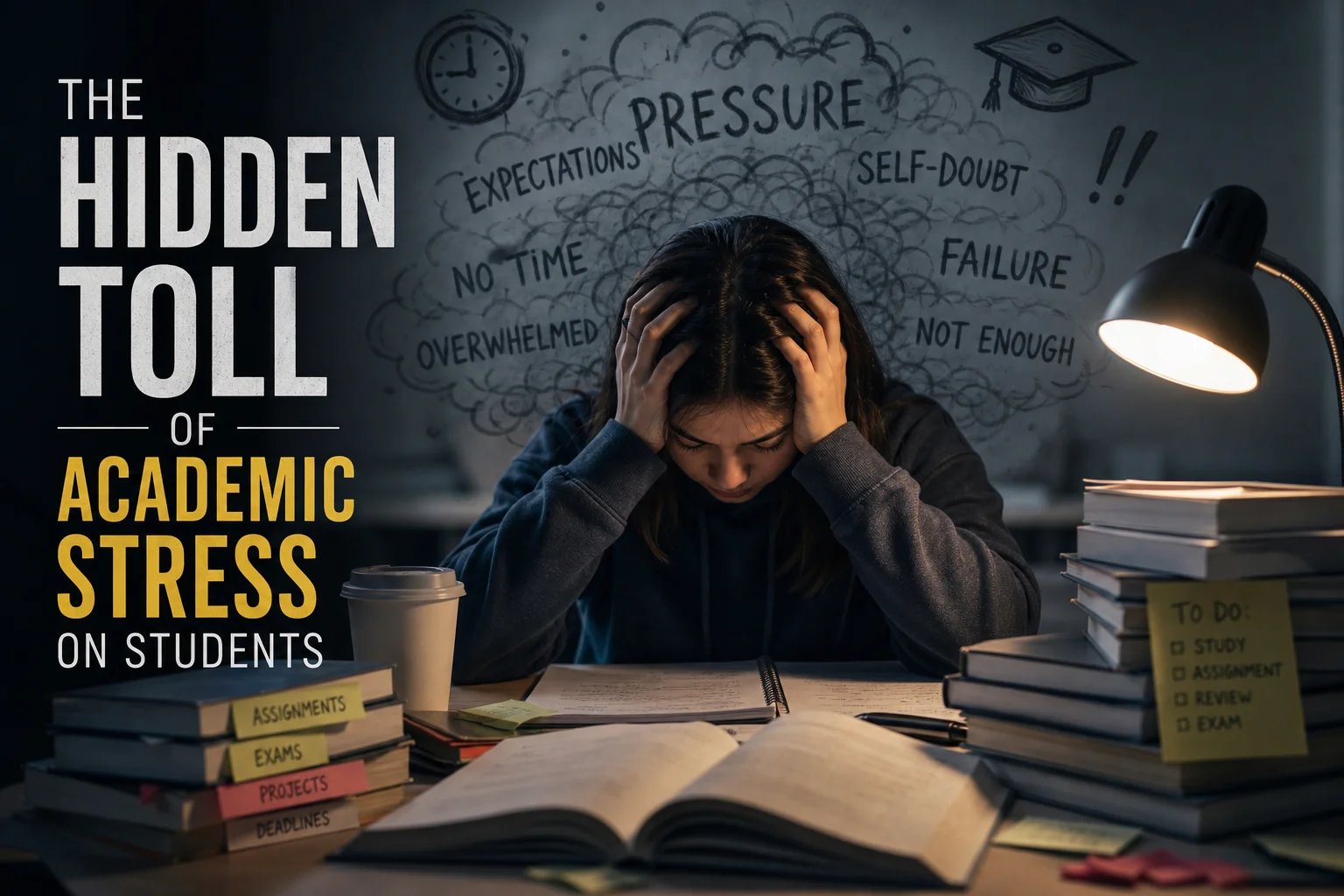
The Essential Guide to The Hidden Toll of Academic Stress on Students—and How to Turn Pressure Into Healthy Growth
Introduction: The Quiet Crisis Sitting in the Front Row
A student can look “fine” and still be falling apart.
They may submit assignments on time, smile during group projects, answer questions in class, and still be sleeping four hours a night, skipping meals, battling constant headaches, or feeling like one bad grade could ruin their future. That is the unsettling reality behind The Hidden Toll of Academic Stress on Students: much of the damage happens quietly, behind achievement, politeness, and the appearance of control.
Academic stress is not simply “having a lot of homework.” It is the ongoing emotional, physical, social, and psychological pressure students experience when expectations exceed their perceived ability to cope. It can come from exams, grades, competition, parental expectations, college admissions, financial worries, perfectionism, social comparison, or fear of failure.
Some stress can be useful. A deadline can create focus. A challenge can build resilience. But chronic academic stress is different. When pressure becomes constant, students may begin to lose sleep, confidence, motivation, creativity, and even their sense of identity.
That is why understanding The Hidden Toll of Academic Stress on Students matters so deeply. It affects not only school performance but also mental health, relationships, physical wellbeing, and long-term development. And because many students hide their struggle so well, parents, teachers, and even friends often miss the warning signs until the cost becomes severe.
This article explores The Hidden Toll of Academic Stress on Students in depth: what it looks like, why it happens, how it affects the mind and body, what real-world cases reveal, and what students, families, educators, and institutions can do to reduce harm while still encouraging excellence.
Why Academic Stress Feels More Intense Than Ever
Academic pressure has always existed, but today’s students are navigating a uniquely demanding environment. They are expected to perform well in school, build impressive extracurricular profiles, maintain social lives, prepare for uncertain job markets, and constantly compare themselves to others online.
The result is a culture where achievement can feel endless. A good grade is no longer enough. Students are often pushed to be outstanding, well-rounded, emotionally composed, socially active, and future-focused—all at once.
Common Modern Sources of Academic Stress
| Stress Source | What It Looks Like | Why It Becomes Harmful |
|---|---|---|
| Grade pressure | Fear of losing GPA, scholarships, or opportunities | Creates constant anxiety and perfectionism |
| College admissions pressure | Overloaded schedules, test prep, extracurricular competition | Makes students feel their future depends on every choice |
| Parental expectations | Pressure to meet family standards or sacrifice | Can create guilt, shame, and fear of disappointing loved ones |
| Financial stress | Working while studying, fear of debt, scholarship demands | Reduces time for rest, study, and social connection |
| Social comparison | Seeing peers’ achievements online | Fuels feelings of inadequacy and burnout |
| Heavy workload | Multiple exams, assignments, and deadlines | Leads to sleep loss and chronic fatigue |
| Unclear academic support | Students do not know where to ask for help | Stress becomes private and unmanaged |
This combination explains why The Hidden Toll of Academic Stress on Students is not limited to one age group or education level. It affects middle schoolers trying to qualify for advanced classes, high school students chasing college acceptance, university students managing debt and independence, and graduate students facing intense professional expectations.
Defining The Hidden Toll of Academic Stress on Students
To understand The Hidden Toll of Academic Stress on Students, we need to separate visible performance from invisible wellbeing.
A student may appear successful because they are still producing results. But success can mask suffering. Some students maintain high grades while experiencing panic attacks. Others become “quiet quitters,” emotionally disengaged but physically present. Some lose curiosity and begin treating education as survival rather than growth.
Academic stress becomes hidden when students:
- Normalize exhaustion because “everyone is tired.”
- Avoid asking for help because they fear looking weak.
- Believe stress proves they are working hard.
- Hide anxiety to avoid worrying parents.
- Compare their struggles to others and decide they “don’t have it bad enough.”
- Tie self-worth entirely to grades or academic recognition.
The hidden toll is not only emotional. It can show up in digestion, immunity, sleep, concentration, friendships, self-esteem, and long-term health habits.
In short, The Hidden Toll of Academic Stress on Students is the damage that occurs when academic pressure becomes chronic, internalized, and unsupported.
The Difference Between Healthy Challenge and Harmful Stress
Not all stress is bad. In fact, students need some level of challenge to learn. A manageable amount of pressure can increase alertness, sharpen focus, and build confidence after a task is completed.
The problem begins when stress becomes constant, unpredictable, or overwhelming.
Healthy Academic Challenge vs. Harmful Academic Stress
| Healthy Challenge | Harmful Academic Stress |
|---|---|
| Encourages growth | Creates fear and avoidance |
| Includes recovery time | Continues without real breaks |
| Builds confidence | Damages self-worth |
| Allows mistakes as part of learning | Treats mistakes as failure |
| Motivates action | Causes paralysis or panic |
| Is supported by teachers, family, or peers | Feels isolating and shameful |
| Improves skills over time | Leads to burnout and disengagement |
A student preparing for a difficult exam may feel nervous but still sleep, eat, study effectively, and recover afterward. That is challenge.
A student who cannot sleep for weeks, feels worthless over one grade, isolates from friends, and experiences stomach pain every morning is facing something much deeper. That is where The Hidden Toll of Academic Stress on Students becomes serious.
The Psychological Toll: Anxiety, Perfectionism, and Fear of Failure
One of the most damaging aspects of academic stress is how it changes a student’s inner voice.
Instead of thinking, “This assignment is hard, but I can try,” a stressed student may think:
- “If I fail, everything is over.”
- “Everyone else is smarter than me.”
- “I can’t disappoint my family.”
- “I’m only valuable when I achieve.”
- “Rest is lazy.”
- “I should be able to handle this.”
These thoughts can fuel anxiety, depression, shame, and perfectionism.
Anxiety and Academic Stress
Academic anxiety often appears as excessive worry about tests, grades, deadlines, or performance. Students may overprepare, avoid starting tasks, constantly seek reassurance, or freeze during exams despite studying.
The hidden cost is mental exhaustion. The brain remains on high alert, scanning for possible failure. Over time, this reduces concentration and memory—ironically making academic performance harder.
Perfectionism
Perfectionism is one of the clearest examples of The Hidden Toll of Academic Stress on Students. On the surface, perfectionistic students may seem disciplined and successful. But internally, they often experience fear, self-criticism, and an inability to feel satisfied.
They may rewrite the same paragraph for hours, panic over small mistakes, or avoid submitting work unless it feels flawless. Perfectionism can look like excellence, but it often functions as fear in disguise.
Depression and Emotional Numbness
When stress feels endless, students may stop feeling motivated. They might lose interest in subjects they once enjoyed, withdraw from friends, or feel emotionally flat. Some students describe this as “not caring anymore,” but underneath that numbness may be burnout or depression.
This is why The Hidden Toll of Academic Stress on Students deserves attention before students reach a breaking point.
The Physical Toll: When Stress Moves Into the Body
Academic stress does not stay in the mind. The body responds to stress through hormones such as cortisol and adrenaline. In short bursts, this response is useful. But when stress continues for weeks or months, the body pays a price.
Physical Symptoms Students May Experience
| Body System | Possible Stress Symptoms |
|---|---|
| Sleep | Insomnia, restless sleep, nightmares, difficulty waking |
| Digestive system | Nausea, stomachaches, appetite changes, IBS-like symptoms |
| Muscles | Tension headaches, jaw pain, neck and shoulder tightness |
| Immune system | Frequent colds, slow recovery, fatigue |
| Heart and breathing | Racing heart, chest tightness, shortness of breath |
| Energy | Exhaustion, brain fog, reduced stamina |
| Skin | Acne flare-ups, rashes, stress-related irritation |
A student who repeatedly complains of headaches before exams may not be “making excuses.” A student who feels nauseated every Monday morning may be experiencing a real stress response. A student who falls asleep in class may not be lazy—they may be chronically sleep-deprived.
The physical side of The Hidden Toll of Academic Stress on Students is often overlooked because adults tend to focus on behavior: grades, attendance, effort, and attitude. But the body frequently reveals what students are trying not to say.
Sleep: The First Casualty of Academic Pressure
If there is one area where academic stress causes immediate damage, it is sleep.
Students often sacrifice sleep to study more, finish assignments, work jobs, scroll late at night to decompress, or worry about the next day. Unfortunately, sleep is not optional maintenance. It is central to learning, memory, emotional regulation, and health.
Why Sleep Matters for Learning
During sleep, the brain consolidates memories, processes information, and restores attention. A student who studies for six hours but sleeps only four may perform worse than a student who studies efficiently and sleeps well.
Sleep loss can cause:
- Poor concentration
- Increased irritability
- Weakened memory
- Lower problem-solving ability
- Higher anxiety
- Reduced immune function
- Increased risk-taking
- Emotional sensitivity
This creates a dangerous loop. Academic stress reduces sleep, poor sleep reduces performance, lower performance increases stress, and the cycle continues.
The Academic Stress-Sleep Cycle
| Stage | What Happens | Result |
|---|---|---|
| Pressure increases | Exams, deadlines, expectations build | Student feels overwhelmed |
| Sleep is sacrificed | Student studies late or worries at night | Brain and body recover less |
| Performance drops | Memory, focus, and mood decline | Work takes longer and feels harder |
| Stress intensifies | Student fears falling behind | Cycle repeats |
Breaking this cycle is one of the most practical ways to reduce The Hidden Toll of Academic Stress on Students.
Social Consequences: Isolation Behind Achievement
Academic stress can quietly damage relationships. Students may cancel plans, avoid family conversations, withdraw from friends, or feel jealous of peers who seem to be doing better.
Some students isolate because they genuinely lack time. Others isolate because they feel ashamed. They assume everyone else is coping, so they keep their own struggle private.
This isolation makes stress worse. Human connection is one of the strongest buffers against emotional distress. When students lose that support, they become more vulnerable to burnout and anxiety.
How Academic Stress Affects Social Life
- Students stop participating in hobbies.
- Friendships become competitive rather than supportive.
- Family conversations revolve only around grades.
- Students feel guilty when resting or socializing.
- Group projects become sources of resentment.
- Students compare themselves constantly to classmates.
- Loneliness increases even in crowded campuses or schools.
The social dimension of The Hidden Toll of Academic Stress on Students is especially important because students often need connection most when they feel least able to seek it.
Identity and Self-Worth: When Students Become Their Grades
Perhaps the deepest hidden cost of academic stress is the way it can reshape identity.
Many students begin to believe:
- “I am my GPA.”
- “My value depends on my ranking.”
- “If I am not exceptional, I am nothing.”
- “A bad grade means I am not smart.”
- “My future is ruined if I fall behind.”
This is emotionally dangerous. Grades are feedback, not identity. They measure performance under specific conditions, not a person’s worth, potential, kindness, creativity, resilience, or future contribution.
Yet in highly competitive academic environments, students may feel reduced to numbers: test scores, class ranks, grade point averages, admissions statistics, and scholarship eligibility.
This is where The Hidden Toll of Academic Stress on Students becomes more than a school issue. It becomes a human development issue. Students are still forming their sense of self. If they learn that love, respect, or security depends on achievement, they may carry that belief into adulthood.
Academic Stress Across Different Student Groups
Not all students experience academic stress in the same way. The pressure may be intensified by social, economic, cultural, or personal circumstances.
Students at Higher Risk of Severe Academic Stress
| Student Group | Added Stressors |
|---|---|
| First-generation students | Navigating unfamiliar systems, family expectations, imposter syndrome |
| Low-income students | Work obligations, food or housing insecurity, financial aid pressure |
| International students | Language barriers, cultural adjustment, visa concerns |
| Students with disabilities | Accessibility challenges, stigma, extra administrative burden |
| High-achieving students | Perfectionism, fear of losing identity as “the smart one” |
| Student-athletes | Training demands, travel, performance pressure |
| Graduate students | Research pressure, advisor relationships, career uncertainty |
| LGBTQ+ students | Identity stress, possible lack of family or institutional support |
| Students from marginalized communities | Discrimination, stereotype threat, unequal access to resources |
Understanding these differences is essential. A one-size-fits-all approach will not fully address The Hidden Toll of Academic Stress on Students because the causes and consequences vary widely.
Case Study 1: The High-Achieving Student Who Looked “Fine”
Background
Maya, a composite case based on common patterns seen by school counselors, was a high school junior taking advanced classes, preparing for standardized tests, volunteering, and leading two clubs. Her grades were excellent, and teachers described her as responsible and mature.
At home, however, Maya cried at night, slept five hours or less, and felt intense panic before every test. She believed that one B would destroy her chances of getting into a competitive university. Her parents were supportive but often praised her mainly for achievements, which unintentionally reinforced her fear of failure.
What Changed
A school counselor helped Maya complete a stress inventory. She realized she had no recovery time during the week. Together, they created a plan:
- Dropped one extracurricular activity.
- Set a fixed bedtime before school nights.
- Used a “good enough” rule for low-stakes assignments.
- Practiced test anxiety techniques.
- Had a family conversation about praise and expectations.
Outcome
Maya’s grades remained strong, but her anxiety decreased. She began sleeping more and reported feeling “like a person again, not just an application.”
Analysis
Maya’s story reflects The Hidden Toll of Academic Stress on Students who appear successful. High achievement can conceal emotional distress. The solution was not to remove all challenge, but to restore balance, redefine success, and build support.
Case Study 2: The First-Generation College Student Carrying Invisible Pressure
Background
Daniel was the first in his family to attend college. He worked 20 hours per week, sent money home when possible, and felt responsible for proving that his family’s sacrifices were worth it. Although he was intelligent and motivated, he struggled in his first semester.
He avoided office hours because he assumed professors would judge him. He did not know how to access tutoring. When his grades dropped, he stopped answering family calls because he felt ashamed.
What Changed
Daniel’s university used an early-alert system that flagged missed assignments. An academic advisor reached out—not with punishment, but support. Daniel was connected with:
- A first-generation student mentorship program.
- Emergency financial assistance.
- Tutoring in two courses.
- A campus counseling group.
- A professor who helped him plan realistic study strategies.
Outcome
Daniel did not become stress-free, but he became supported. His grades improved, and he felt less alone. Most importantly, he stopped interpreting struggle as proof that he did not belong.
Analysis
This case reveals how The Hidden Toll of Academic Stress on Students often intersects with money, identity, and belonging. Academic stress is not always about poor time management. Sometimes it is about navigating systems without a map.
Case Study 3: The Burned-Out Graduate Student
Background
Aisha was a graduate student in a demanding research program. She loved her field but felt constant pressure to publish, teach, network, and secure funding. Her advisor rarely gave positive feedback. Over time, Aisha began working seven days a week.
She developed migraines, stopped exercising, and felt guilty whenever she rested. Eventually, she considered leaving her program, not because she lacked ability, but because she could no longer imagine surviving the process.
What Changed
After speaking with a peer, Aisha contacted campus mental health services and joined a graduate student support group. She also negotiated clearer expectations with her advisor and began tracking work hours.
Her department later introduced structured advisor-student agreements, annual progress reviews, and workshops on sustainable research habits.
Outcome
Aisha stayed in the program but changed how she worked. She learned that intellectual passion cannot compensate for chronic exhaustion.
Analysis
Graduate education often intensifies The Hidden Toll of Academic Stress on Students because academic work can feel endless. Without boundaries, research culture may reward overwork and normalize burnout. Institutional reform matters as much as individual coping.
Case Study 4: A School That Reduced Stress Without Lowering Standards
Background
A competitive secondary school noticed rising student anxiety, frequent nurse visits, and increasing absenteeism before exam periods. Teachers were concerned but hesitant to reduce academic rigor.
What Changed
The school formed a student wellbeing task force. Instead of eliminating standards, it redesigned pressure points:
- Coordinated major assignment deadlines across departments.
- Limited the number of major tests per day.
- Created advisory periods for planning and emotional check-ins.
- Trained teachers to identify stress warning signs.
- Offered parent workshops on healthy achievement.
- Encouraged formative feedback rather than grade-only evaluation.
Outcome
Students reported lower stress and better sleep. Teachers noticed improved engagement. Academic outcomes did not decline; in some areas, they improved.
Analysis
This example shows that addressing The Hidden Toll of Academic Stress on Students does not mean lowering expectations. It means designing learning environments where students can meet expectations without sacrificing health.
Warning Signs Adults Should Not Ignore
Because many students hide stress well, parents and educators need to notice subtle changes.
Emotional Warning Signs
- Frequent crying or irritability
- Excessive worry about grades
- Panic before tests or presentations
- Loss of motivation
- Hopeless comments
- Feeling worthless after setbacks
Behavioral Warning Signs
- Avoiding school or classes
- Missing assignments despite caring
- Studying constantly with little effectiveness
- Procrastinating due to fear
- Withdrawing from friends
- Dropping hobbies
- Increased use of caffeine, alcohol, or substances
Physical Warning Signs
- Headaches
- Stomachaches
- Sleep problems
- Fatigue
- Appetite changes
- Frequent illness
- Muscle tension
Academic Warning Signs
- Sudden grade decline
- Refusal to discuss school
- Extreme distress over minor mistakes
- Difficulty concentrating
- Perfectionistic overworking
- Giving up after setbacks
Recognizing these signs early can reduce The Hidden Toll of Academic Stress on Students before it becomes crisis-level distress.
The Role of Parents: Support Without Pressure
Parents often want the best for their children, but support can accidentally become pressure. A student may hear “We believe in you” as “You must not fail.” They may hear “Did you study?” as “Your worth depends on your performance.”
Parents play a powerful role in reducing The Hidden Toll of Academic Stress on Students by changing the emotional climate around achievement.
Helpful Parent Responses
Instead of: “Why did you get this grade?”
Try: “How are you feeling about what happened, and what support would help?”
Instead of: “You need to work harder.”
Try: “Let’s look at your workload and see what is realistic.”
Instead of: “You’re so smart.”
Try: “I’m proud of your effort, honesty, and persistence.”
Instead of: “Everyone is stressed; deal with it.”
Try: “Stress is common, but you don’t have to handle it alone.”
What Students Need to Hear
- “Your grades matter, but your wellbeing matters more.”
- “One setback does not define your future.”
- “You can ask for help without disappointing us.”
- “Rest is part of success.”
- “We love you beyond your achievements.”
These messages may sound simple, but they can protect students from tying their identity entirely to academic outcomes.
The Role of Teachers: Creating High-Expectation, Low-Shame Classrooms
Teachers are not therapists, but they are often the first adults to notice when students are struggling. They also shape classroom culture.
A classroom can be rigorous without being fear-based. Students can be challenged without being humiliated. Feedback can be honest without being crushing.
Teacher Strategies That Reduce Academic Stress
| Strategy | Why It Helps |
|---|---|
| Clear rubrics | Reduces uncertainty and anxiety |
| Reasonable deadline planning | Prevents overload from multiple major assignments |
| Formative feedback | Helps students improve without feeling defined by one grade |
| Flexible support options | Encourages help-seeking |
| Normalizing mistakes | Builds resilience and growth mindset |
| Check-ins before high-stress periods | Helps identify struggling students |
| Balanced workload | Protects sleep and wellbeing |
| Encouraging office hours | Reduces fear of asking for help |
Teachers can reduce The Hidden Toll of Academic Stress on Students by making learning feel challenging but safe. Students do better when they believe mistakes are part of growth rather than evidence of inadequacy.
The Role of Schools and Universities: Systems Matter
Individual coping skills are important, but they are not enough. If the academic system constantly overloads students, telling them to meditate is not a complete solution.
Schools and universities need to examine the structures that create unnecessary stress.
Institutional Changes That Make a Difference
Coordinated assessment calendars
Prevents students from facing multiple major exams or projects on the same day.
Accessible mental health services
Support should be easy to find, affordable, and stigma-free.
Academic advising that is proactive
Students should not have to fail before someone reaches out.
Faculty training
Teachers and professors need tools to recognize distress and respond appropriately.
Peer mentorship programs
Students often open up to peers before adults.
Reasonable workload policies
Academic rigor should not depend on chronic sleep deprivation.
Financial support systems
Emergency grants, food assistance, and work-study flexibility can reduce stress.
- Inclusive learning environments
Belonging reduces stress, especially for marginalized students.
When institutions take responsibility, they address The Hidden Toll of Academic Stress on Students at its source rather than placing the entire burden on students.
The Digital Factor: Comparison, Distraction, and Always-On Pressure
Technology has transformed academic life. Students can access resources, collaborate, and learn in powerful ways. But digital life also intensifies academic stress.
How Digital Culture Adds Pressure
- Students compare grades, internships, awards, and college acceptances online.
- Learning platforms make assignments visible at all hours.
- Notifications interrupt concentration.
- Group chats spread panic before exams.
- Productivity content can make rest feel shameful.
- Students decompress by scrolling, then lose sleep.
Social media often creates the illusion that everyone else is succeeding effortlessly. A student may see classmates posting awards, study routines, acceptance letters, or polished summaries of their lives. What they do not see are the tears, doubts, family conflicts, or failed attempts behind those posts.
This comparison culture deepens The Hidden Toll of Academic Stress on Students because it turns private insecurity into constant public measurement.
Healthier Digital Habits
- Turn off nonessential school notifications after a set hour.
- Use website blockers during deep study.
- Avoid grade comparison conversations.
- Create phone-free wind-down time before sleep.
- Curate social media feeds to reduce toxic comparison.
- Remember that online success is edited, not complete.
Academic Stress and Burnout: When Students Run Out of Fuel
Burnout is more than being tired. It is a state of emotional, mental, and physical exhaustion caused by prolonged stress.
Signs of Student Burnout
| Burnout Sign | What It May Sound Like |
|---|---|
| Emotional exhaustion | “I can’t do this anymore.” |
| Cynicism | “None of this matters.” |
| Reduced effectiveness | “No matter how much I study, I can’t focus.” |
| Detachment | “I feel like I’m just going through the motions.” |
| Loss of joy | “I used to love this subject, but now I hate it.” |
| Physical fatigue | “I’m tired all the time.” |
Burnout is one of the clearest expressions of The Hidden Toll of Academic Stress on Students. It often happens to dedicated students, not lazy ones. They push past limits for so long that their system eventually refuses to keep going.
Recovery requires more than a weekend off. It may involve changing workload, rebuilding sleep, seeking counseling, reconnecting with meaningful goals, and learning boundaries.
Why “Just Manage Your Time” Is Not Enough
Time management is useful, but it is often presented as the universal answer to academic stress. That can be unfair.
Some students are not stressed because they waste time. They are stressed because their workload is unreasonable, they are working to pay rent, they lack support, they are dealing with family responsibilities, or they are struggling with anxiety, ADHD, depression, trauma, or discrimination.
Better time management cannot fix every structural problem.
A more compassionate approach asks:
- Is the workload realistic?
- Does the student know how to study effectively?
- Are they sleeping enough?
- Do they feel safe asking for help?
- Are financial or family pressures involved?
- Are mental health concerns present?
- Are expectations clear?
- Does the student have recovery time?
Addressing The Hidden Toll of Academic Stress on Students requires looking beyond productivity hacks and asking what students actually need to function well.
Practical Strategies for Students: How to Reduce the Hidden Toll
Students cannot control every source of pressure, but they can learn tools to protect their wellbeing.
1. Use a Stress Audit
Write down everything currently causing stress. Then label each item:
- Can control
- Can influence
- Cannot control
Focus energy on the first two. For example, you may not control the exam date, but you can control your study plan, sleep routine, and whether you ask questions early.
2. Study Smarter, Not Longer
Long hours do not always mean effective learning.
Evidence-informed study methods include:
- Active recall
- Practice testing
- Spaced repetition
- Teaching the concept to someone else
- Interleaving related topics
- Reviewing mistakes carefully
Passive rereading and highlighting can feel productive but may not lead to strong retention.
3. Protect Sleep Like an Academic Tool
Sleep is not a reward after work. It is part of the work.
Try:
- Setting a consistent bedtime.
- Avoiding all-night study sessions.
- Creating a 30-minute wind-down routine.
- Keeping the phone away from the bed.
- Reviewing material earlier in the day when possible.
4. Break Tasks Into Smaller Starts
Stress often causes avoidance. Instead of saying, “Write the essay,” begin with:
- Open the document.
- Write the title.
- List three sources.
- Draft one messy paragraph.
- Set a 15-minute timer.
Small starts reduce fear and build momentum.
5. Talk Before You Collapse
Ask for help early. That might mean emailing a teacher, visiting office hours, speaking with a counselor, telling a parent, or asking a friend to study together.
You do not need to be in crisis to deserve support.
6. Redefine Success
Success is not constant perfection. Success includes learning, recovering, adapting, asking for help, and continuing after setbacks.
This mindset is essential for reducing The Hidden Toll of Academic Stress on Students because it separates performance from personal worth.
A Simple Weekly Wellbeing Checklist for Students
Use this checklist once a week. If you answer “no” to several items, it may be time to adjust your workload or seek support.
| Question | Yes/No |
|---|---|
| Did I sleep enough most nights this week? | |
| Did I eat regular meals? | |
| Did I move my body or get outside? | |
| Did I have at least one real conversation with someone I trust? | |
| Did I take breaks without guilt? | |
| Did I ask for help when I needed it? | |
| Did I spend time on something not related to grades? | |
| Did I treat myself with respect after mistakes? | |
| Do I know my top priorities for next week? | |
| Is my current workload sustainable? |
This simple tool helps make The Hidden Toll of Academic Stress on Students visible before it becomes overwhelming.
How to Have a Conversation With a Stressed Student
Many adults want to help but do not know what to say. The goal is not to interrogate or immediately solve everything. The goal is to create safety.
Conversation Starters
- “You seem more tired than usual. Do you want to talk?”
- “I’m not here to judge your grades. I care about how you’re doing.”
- “What feels heaviest right now?”
- “Is there anything you wish adults understood about your workload?”
- “Would you like advice, help planning, or just someone to listen?”
- “What is one thing we could take off your plate this week?”
What to Avoid
- “Everyone goes through stress.”
- “You just need to try harder.”
- “When I was your age…”
- “This grade is unacceptable.”
- “You’re being dramatic.”
- “Other students can handle it.”
Dismissive comments deepen The Hidden Toll of Academic Stress on Students because they teach students to hide distress rather than seek support.
The Importance of Professional Help
Sometimes stress becomes too heavy for self-help strategies alone. Students should seek professional support if they experience:
- Persistent sadness or anxiety
- Panic attacks
- Thoughts of self-harm
- Not wanting to be alive
- Severe sleep disruption
- Eating difficulties
- Substance misuse
- Inability to function academically or socially
- Feeling unsafe
- Overwhelming hopelessness
If a student is in immediate danger or may harm themselves, contact emergency services or a local crisis hotline right away. In the United States and Canada, calling or texting 988 connects people to crisis support. Other countries have their own emergency and crisis resources.
Professional support can include school counselors, therapists, doctors, psychologists, psychiatrists, academic advisors, disability services, or trusted community organizations.
Seeking help is not failure. It is a responsible response to a real burden.
Long-Tail Keyword Variations for Contextual SEO
The focus keyword is The Hidden Toll of Academic Stress on Students, but related long-tail variations can help readers and search engines understand the topic naturally.
Examples include:
- hidden effects of academic stress on students
- how academic stress affects student mental health
- physical symptoms of academic stress in students
- academic pressure and student burnout
- emotional impact of school stress on students
- how to reduce academic stress for students
- signs of academic stress in teenagers
- college student stress and mental health
- academic stress and sleep problems in students
- long-term consequences of academic pressure
- student anxiety caused by school workload
- how parents can help with academic stress
- teacher strategies to reduce student stress
- academic stress in high-achieving students
- the hidden cost of academic pressure on students
Using these phrases naturally supports a deeper discussion of The Hidden Toll of Academic Stress on Students without making the writing feel repetitive.
The Hidden Toll of Academic Stress on Students: What the Data Often Misses
Data on student stress usually focuses on measurable outcomes: grades, attendance, graduation rates, test scores, counseling visits, or dropout numbers. These are important, but they do not tell the whole story.
What data often misses includes:
- Students who are suffering but still performing well.
- Students who do not seek counseling because of stigma.
- Students who normalize sleep deprivation.
- Students who quietly lose interest in learning.
- Students who feel emotionally disconnected from family.
- Students who appear disciplined but are driven by fear.
- Students who internalize failure for years.
That is why The Hidden Toll of Academic Stress on Students must be understood through both numbers and lived experience. A student is not simply an academic output. They are a developing person with a nervous system, relationships, dreams, fears, and limits.
Building a Healthier Definition of Achievement
One of the most powerful ways to reduce academic stress is to expand the definition of success.
A healthier definition of achievement includes:
- Curiosity
- Integrity
- Effort
- Creativity
- Collaboration
- Emotional resilience
- Rest
- Self-awareness
- Problem-solving
- Kindness
- Adaptability
- Courage to ask for help
Academic excellence and wellbeing do not have to be enemies. In fact, students often learn better when they are rested, supported, and emotionally safe.
The goal is not to remove ambition. Ambition can be meaningful and energizing. The goal is to prevent ambition from becoming self-punishment.
When families and schools understand The Hidden Toll of Academic Stress on Students, they can help students pursue excellence without losing themselves.
Action Plan: What Students, Parents, and Schools Can Do This Week
For Students
- Choose one night this week to prioritize sleep.
- Ask one question in class or office hours.
- Break one overwhelming task into three small steps.
- Stop comparing grades with classmates.
- Tell one trusted person how you are really doing.
- Schedule one activity that has nothing to do with school.
For Parents
- Ask about wellbeing before asking about grades.
- Praise effort, honesty, and growth—not only outcomes.
- Watch for sleep loss, irritability, or withdrawal.
- Help your child create a realistic schedule.
- Avoid turning every conversation into academic advice.
- Remind your child they are loved beyond achievement.
For Teachers
- Clarify expectations early.
- Coordinate major deadlines when possible.
- Offer formative feedback before high-stakes grading.
- Normalize help-seeking.
- Notice sudden changes in behavior.
- Build classroom cultures where mistakes are part of learning.
For Schools and Universities
- Audit student workload.
- Expand counseling and advising access.
- Train staff to identify stress warning signs.
- Create peer support networks.
- Review grading and testing policies.
- Include students in wellbeing decisions.
These steps may seem small, but they directly reduce The Hidden Toll of Academic Stress on Students by making stress visible, manageable, and shared.
Conclusion: Students Are More Than Their Performance
The Hidden Toll of Academic Stress on Students is not always obvious. It hides behind good grades, quiet classrooms, late-night study sessions, perfect resumes, and students who say, “I’m fine” because they do not know how to say anything else.
But the toll is real.
Academic stress can affect mental health, physical wellbeing, sleep, identity, relationships, motivation, and long-term confidence. It can turn learning into fear and achievement into exhaustion. It can make talented, capable students feel like they are never enough.
The good news is that this toll is not inevitable.
Students can learn healthier coping tools. Parents can offer support without pressure. Teachers can create rigorous but compassionate classrooms. Schools and universities can design systems that value wellbeing alongside achievement.
The most important shift is this: students should not have to sacrifice their health to prove their potential.
Education should stretch students, not break them. It should challenge them, not consume them. And when we recognize The Hidden Toll of Academic Stress on Students, we take the first step toward building learning environments where students can succeed—not just on paper, but as whole human beings.
FAQs About The Hidden Toll of Academic Stress on Students
1. What is The Hidden Toll of Academic Stress on Students?
The Hidden Toll of Academic Stress on Students refers to the emotional, physical, social, and psychological effects of ongoing academic pressure that are not always visible. These may include anxiety, sleep loss, burnout, headaches, isolation, perfectionism, and reduced self-worth.
2. How can I tell if a student is experiencing academic stress or just normal pressure?
Normal pressure is usually temporary and manageable. Harmful academic stress is persistent and affects sleep, mood, health, relationships, or daily functioning. If a student seems constantly overwhelmed, withdrawn, exhausted, or fearful of failure, the stress may be more serious.
3. Can academic stress affect physical health?
Yes. Academic stress can cause headaches, stomachaches, muscle tension, sleep problems, appetite changes, fatigue, and frequent illness. The body often responds to chronic stress even when students do not openly discuss their emotions.
4. Why do high-achieving students often experience hidden stress?
High-achieving students may feel pressure to maintain their identity as successful, smart, or dependable. Because they continue performing well, adults may overlook their distress. This is a major part of The Hidden Toll of Academic Stress on Students.
5. How can parents help reduce academic stress?
Parents can help by focusing on wellbeing, not just grades. They should listen without judgment, encourage sleep and breaks, praise effort and character, avoid constant comparison, and remind students that love is not dependent on performance.
6. What can teachers do to reduce The Hidden Toll of Academic Stress on Students?
Teachers can reduce stress by setting clear expectations, coordinating deadlines, providing feedback before major grades, encouraging help-seeking, normalizing mistakes, and watching for signs of distress. A supportive classroom can still be academically rigorous.
7. Is stress always bad for students?
No. Short-term, manageable stress can motivate students and build resilience. The problem is chronic, overwhelming stress without enough support or recovery. Healthy challenge helps students grow; harmful stress wears them down.
8. When should a student seek professional help?
A student should seek professional help if stress causes persistent anxiety, depression, panic attacks, severe sleep problems, hopelessness, substance misuse, self-harm thoughts, or difficulty functioning. Immediate danger should be treated as an emergency.
9. How does academic stress affect sleep?
Academic stress can lead to late-night studying, racing thoughts, insomnia, and poor sleep quality. Lack of sleep then worsens memory, mood, focus, and performance, creating a cycle of increasing stress.
10. What is the most important takeaway about The Hidden Toll of Academic Stress on Students?
The most important takeaway is that students are more than their academic results. Achievement matters, but wellbeing matters too. When students are supported, rested, and emotionally safe, they are more likely to learn, grow, and succeed in sustainable ways.
About the Author