Ever wondered why some smart students can’t follow simple instructions, even with normal hearing? Or why some people get really stressed in crowded places? These issues often come from neurological processing conditions. These conditions mess with how our brains handle what we see and hear around us.
These conditions represent a spectrum of developmental issues. They affect people all their lives. They are different from regular learning problems, but often happen together.
There are many types, like problems with hearing, seeing, or mixed issues. Each one has its own signs but all deal with how our brains work. In India, schools are now better at helping students with these problems.
This guide will cover everything about processing disorders. We’ll look at what they are, their types, symptoms, causes, and how to treat them. We see these disorders as something we can tackle, not just accept. With the right help, people can find ways to succeed in school, work, and life.
Key Takeaways
- Neurological processing conditions affect how the brain interprets sensory information, impacting daily functioning across educational and social contexts.
- Multiple subtypes exist, including auditory, visual, sensory, and mixed varieties, each with distinct characteristics and intervention approaches.
- These conditions differ from general learning difficulties but frequently co-occur with other neurodevelopmental challenges.
- Growing awareness in Indian educational systems has increased recognition and support services for affected individuals.
- Evidence-based treatments and compensatory strategies enable individuals to overcome challenges and achieve success.
- Early identification and appropriate intervention create pathways for meaningful academic and professional achievement.
Understanding Processing Disorders
When the brain has trouble making sense of sensory signals, despite healthy senses, processing disorders might be the cause. These conditions affect millions globally, making it hard for the mind to understand what the senses see or hear. Recognizing processing disorders as more than just learning issues is key.
The brain must handle lots of sensory information at once. It gets constant data from our senses. This requires the brain to work together across many areas to process it all well.
Those with processing disorders face unique challenges. Unlike issues with the senses themselves, these disorders affect how the brain interprets information. This difference changes how we diagnose, help, and support them.
What Are Processing Disorders
Processing disorders are when the brain has trouble turning sensory input into meaningful thoughts. These conditions show a gap between what the senses send and what the brain can process. The key difference is that the senses themselves are fine, but the brain’s processing is not.
Processing is not just one thing. It involves many operations working together. These include focusing, recognizing patterns, and processing information from different senses at the same time.
Cognitive processing challenges happen when these operations don’t work as they should. Kids might have trouble organizing information or understanding things from different senses at once.
Tests help tell if someone has a processing disorder. They check how fast and accurately the brain processes information. This shows where the brain’s operations might be off.
Key signs of processing disorders include:
- Discrepancy between sensory organ function and cognitive interpretation
- Difficulty organizing or sequencing incoming information
- Reduced processing speed compared to developmental expectations
- Challenges integrating information across multiple sensory channels
- Inconsistent performance despite adequate instruction and practice
Why Early Recognition Matters
Spotting processing disorders early is very important. Catching them in preschool or early elementary school can make a big difference. Young brains can change and adapt with the right help early on.
Ignoring processing issues can lead to big problems later. Kids might get frustrated and feel like they’re not good enough. This can make them feel bad about themselves for a long time.
As time goes on, the gap between kids and their peers gets bigger. What starts as a small delay in kindergarten can become a big problem by middle school.
Identifying issues early can prevent more problems later. Kids might act out or feel left out if they can’t keep up. This can hurt their social life and make them feel isolated.
The benefits of early identification are many:
- Academic performance improves with the right help
- Self-esteem stays strong with support and realistic goals
- Social relationships grow naturally with the right guidance
- Compensatory strategies help before bad habits form
- Families get the help they need to support their child
Parents and teachers who notice early signs can start evaluations right away. These evaluations show what the child can do well and what they struggle with. Then, teams can create plans that really help.
How Processing Disorders Affect Everyday Activities
Processing disorders affect more than just schoolwork. They make everyday tasks hard for kids. Understanding this helps families, teachers, and doctors give better support.
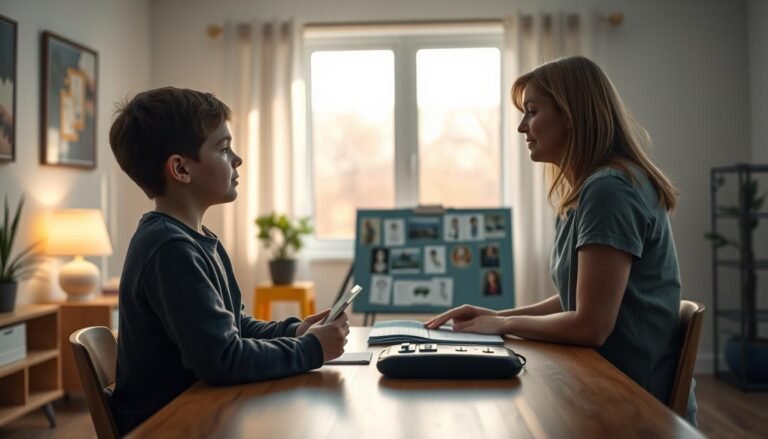
In school, kids with cognitive processing challenges might have trouble following instructions. A simple task like “take out your math book” can be overwhelming. They might forget the next step before they can do it.
Doing homework on time is another big challenge. While others finish quickly, kids with processing disorders might take longer. Their brains work well but slower, leading to time pressure and unfinished work.
Social situations also pose challenges. Kids might miss nonverbal cues like facial expressions or tone of voice. This can lead to misunderstandings and trouble making friends.
Even simple tasks like getting ready in the morning or following a recipe can be hard. Here’s how processing disorders affect daily life:
| Daily Activity | Processing Challenge | Visible Impact |
|---|---|---|
| Morning routines | Sequencing and organization | Forgetting steps, arriving late, missing items |
| Following recipes | Multi-step processing and timing | Skipped ingredients, incorrect order, burnt food |
| Navigating buildings | Spatial processing and memory | Getting lost, missing rooms, poor map reading |
| Sports participation | Rapid sensory integration | Delayed reactions, coordination difficulties, rule confusion |
Managing time and staying organized is very hard. Keeping track of things and planning can be overwhelming. This leads to messy backpacks, lost homework, and missed deadlines.
These daily struggles can hurt a child’s feelings and self-image. They might feel like they’re always trying too hard. This can make them anxious, avoid challenges, and feel like they’re not good enough.
Seeing processing disorders as more than just school issues changes how we help. Comprehensive support helps with school, social life, and everyday skills. Families learn to help their kids in many ways, not just schoolwork.
This approach helps kids build strong skills for life. It’s not just about doing well in school. It’s about being able to handle life’s challenges and use their strengths to overcome them.
Types of Processing Disorders
There are many types of processing disorders, each with its own challenges. These disorders affect how the brain handles information from our senses. Understanding these differences helps professionals and families find the right help.
Our knowledge of processing disorders has grown. We now know how different parts of the brain handle different types of sensory input. But, many people have symptoms that overlap, making diagnosis and treatment tricky.
Auditory Processing Disorder
Auditory processing disorder (APD) is when the brain has trouble with sound, even if hearing tests show nothing wrong. It affects how the brain turns sound into meaningful information. People with APD often have trouble understanding speech and sounds in noisy places.
APD can happen to anyone, but it’s more common in children and older adults. It makes it hard to tell where sounds are coming from.
Those with auditory processing disorder struggle with several things. They have trouble telling similar sounds apart. They also have trouble with the order of sounds, which is important for understanding speech and music.
It’s hard for them to understand in noisy places. They also have trouble recognizing patterns in sounds and rhythms.
ADHD and autism can also affect how people understand sounds. But, these are different from auditory processing disorder. Knowing the difference is important for getting the right help.
Visual Processing Disorder
Visual processing disorder is when the brain has trouble with visual information, even if eyesight is normal. People with this disorder can see clearly but struggle to make sense of what they see. This creates a paradox where someone can see well but can’t process visual information efficiently.
This disorder includes several types of visual challenges. It can make reading and math hard. It also makes it hard to pick out objects in busy scenes.
It affects how people understand the order of things. This impacts spelling, reading, and following instructions. It also makes it hard to understand spatial relationships and distances.
Visual motor processing is another area affected by visual processing disorder. It involves using visual information to guide physical movements. This is important for things like handwriting and sports. It also affects memory for visual information, making learning harder.
Navigation and orientation are also tough. Reading maps and understanding graphs becomes a challenge. These problems affect more than just schoolwork.
Sensory Processing Disorder
Sensory processing disorder affects how the brain handles information from all senses. It’s different from disorders that only affect one sense. The brain has trouble organizing and responding to sensory input from the environment.
There are three main patterns of this disorder. Some people are too sensitive to sensory input and react strongly to normal experiences. Others are not sensitive enough and need more intense stimulation to feel sensations. Some people seek out intense sensory experiences all the time.
This disorder affects how people interact with their environment. It often involves problems with balance and body awareness. These challenges require a detailed approach to help.
Mixed Processing Disorder
Many people have trouble with multiple processing areas at once. Mixed processing disorder recognizes this. It’s when someone has problems with both auditory processing disorder and visual processing disorder and possibly others.
This creates unique challenges for figuring out what’s going on and how to help. A child might have trouble with both auditory processing disorder and visual processing disorder, making school harder than usual. The combination of different processing problems makes things even more difficult.
Getting a full understanding of what’s going on is key. Specialists need to look at how different problems affect each other. Standard treatments might not be enough for someone with mixed problems.
Creating a treatment plan that takes into account all the different problems is important. This approach helps people find ways to cope better and improve their function.
| Disorder Type | Primary System Affected | Key Characteristics | Common Manifestations |
|---|---|---|---|
| Auditory Processing Disorder | Central auditory pathways in the brain | Difficulty interpreting sounds despite normal hearing; problems with temporal processing and sound localization | Struggles in noisy environments, mishears similar words, difficulty following spoken directions |
| Visual Processing Disorder | Visual interpretation centers in the brain | Challenges processing visual information despite normal eyesight; affects discrimination and spatial relationships | Reading difficulties, trouble copying text, problems with navigation and visual memory |
| Sensory Processing Disorder | Multiple sensory integration systems | Over-responsivity, under-responsivity, or sensory seeking across tactile, vestibular, and proprioceptive systems | Texture aversions, reduced pain awareness, constant movement seeking, balance difficulties |
| Mixed Processing Disorder | Multiple processing domains simultaneously | Co-occurring deficits across two or more processing areas creating complex interaction effects | Compounded learning challenges, difficulty with multisensory tasks, need for extensive intervention |
Each disorder is different, and they can overlap. This means that understanding each person’s unique challenges is key. By recognizing these differences, professionals can provide the right support for each individual.
Common Symptoms of Processing Disorders
Spotting symptoms of processing disorders takes careful watching. Look at how people handle language, visual tasks, and sensory stuff every day. These language processing difficulties and cognitive processing challenges show up in how they act. This affects school, social life, and daily tasks. Knowing these signs helps parents, teachers, and doctors see when someone might need help.
People with these issues face different problems. Some have trouble with sounds, while others struggle with seeing things clearly or handling sensory info. Many have symptoms in more than one area, making it hard to figure out without a pro’s help.
Difficulties with Language
Those with auditory processing disorder find it hard to get what’s being said. They might have trouble figuring out where sounds come from. It’s tough to understand fast talk or in noisy places because other sounds get in the way.
Following directions is hard, too, when they’re long or complicated. Kids might ask for things to be repeated a lot. They need more time to think about what was said before they can answer.
Reading and spelling are also big challenges. Mixing sounds with letters is confusing. Learning new languages or enjoying music and singing is hard because of these issues.
It’s hard to get the subtleties of conversation, like sarcasm or jokes. They might not always get what’s meant or respond in ways that don’t fit. Finding the right words can be tough, leading to pauses or using simpler words.
- Receptive language challenges: Trouble following directions, struggling in noisy places, asking for things to be repeated
- Expressive language difficulties: Trouble finding the right words, slow to respond, hard to tell stories
- Phonological processing issues: Trouble with rhyming, sound segmentation, and sound-symbol correspondence
- Academic impacts: Struggling with reading, spelling mistakes, less detail in writing
- Social communication problems: Missing the point of jokes, misunderstanding sarcasm, saying things that don’t fit
Trouble with Visual Perception
Visual processing issues make seeing things hard. Kids might keep mixing up letters or numbers, even when they’re older. This shows they have trouble seeing differences.
Writing down what’s on the board is a big job. They might have trouble keeping things lined up or spaced right. Their handwriting looks messy, even if their hands are fine, because they can’t plan it out well.
Math is tough, too, because of visual problems. Understanding shapes, reading graphs, or seeing numbers in a different way is confusing. Puzzles or patterns that others find easy are hard for them.
Reading is hard because of tracking problems. They might skip lines, read the same line over and over, or lose their place. Finding things in a busy room or on a worksheet takes a lot of time and effort.
Over- or Under-Responsiveness to Sensory Input
Sensory processing issues show up in how people react to their surroundings. Some are too sensitive to sounds or lights, while others don’t notice them enough. Clothes might feel too scratchy, or food textures might be overwhelming.
Loud noises are very upsetting, causing them to cover their ears. Bright lights are too much, making them uncomfortable in places with lots of light. Even a light touch can be startling.
On the other hand, some people don’t notice sensory input as much. They might not feel pain as easily or bump into things because they’re not aware of their surroundings. They might seek out intense sensory experiences, like spinning or crashing into things.
These cognitive processing challenges affect daily life a lot. Kids might have trouble sitting in class or getting upset by normal classroom sounds. Simple tasks like bathing or brushing teeth can be hard because of how they feel things. Being around other kids can be hard because of how overwhelming it feels.
| Symptom Category | Over-Responsive Behaviors | Under-Responsive Behaviors | Functional Impact |
|---|---|---|---|
| Tactile Processing | Distress from clothing textures, avoiding messy play, discomfort with light touch | High pain tolerance, reduced awareness of temperature, seeking deep pressure | Self-care difficulties, limited play experiences, social withdrawal |
| Auditory Processing | Covering ears in noisy environments, distress from sudden sounds, avoiding loud places | Not responding to name, appearing oblivious to environmental sounds, difficulty localizing sound | Learning challenges, social communication problems, safety concerns |
| Visual Processing | Discomfort in bright lights, squinting frequently, preferring dimly lit spaces | Seeking visual stimulation, staring at lights or spinning objects, missing visual cues | Academic difficulties, attention problems, navigation challenges |
| Movement Processing | Fear of movement activities, avoiding playground equipment, motion sickness | Constant movement seeking, difficulty sitting, enjoys intense spinning or swinging | Limited physical activity participation, classroom behavior issues, motor planning difficulties |
Knowing these signs helps find and help people with processing disorders early. This can make a big difference in how they do at home, school, and in the community.
Causes of Processing Disorders
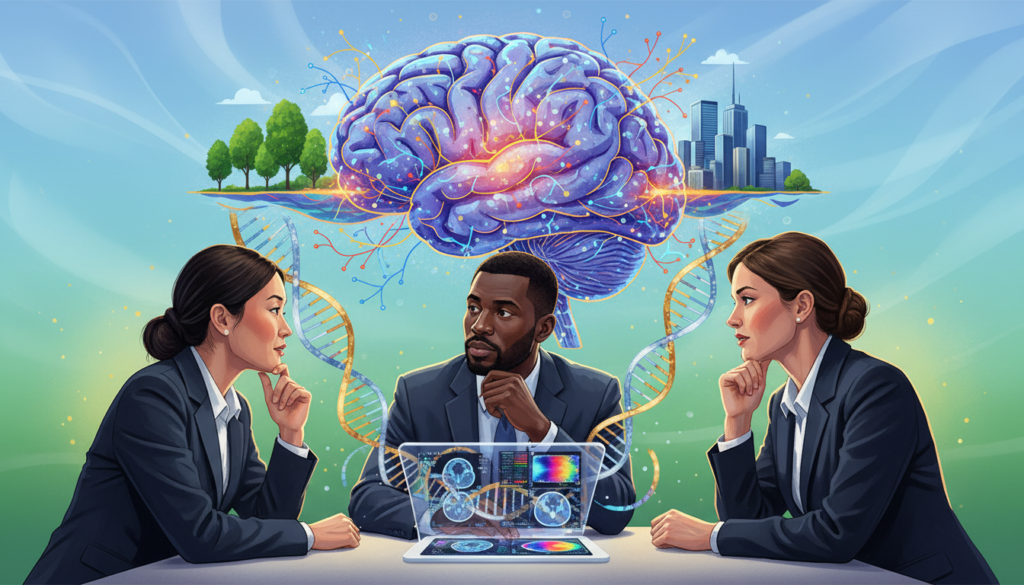
Processing disorders come from a mix of genetics, early life experiences, and brain structure issues. These problems start when brain development gets disrupted or changes how it handles information. Knowing what causes these issues helps families and experts spot risks early and start treatments.
Studies show processing disorders don’t have one single cause. Instead, many factors come together to make the brain struggle with sensory information. The mix of genes, environment, and brain health shapes how each person processes information in their own way.
Hereditary Patterns and Genetic Contributions
Family and twin studies show a big role of genetics in processing skills. Kids with processing disorders often have family members who faced similar challenges. This suggests that many genes work together to influence brain development and function.
Genetic differences affect brain growth in many ways. They influence how neurons move during fetal development, how they prune during childhood, and how neurotransmitter receptors work. These factors help determine how well neural networks communicate and process information.
Genetic predisposition is more about probability than certainty, needing environmental factors to show up as symptoms.
Genes that control myelination, key for fast signal transmission, play a big role. Genetic variations in these genes can make the brain more prone to processing problems, which can be worsened by environmental stress during key development times.
Environmental Risk Factors Across Development
Environmental factors affect brain development in three main stages: before birth, at birth, and after birth. Each stage has its own risks that can impact brain growth and processing skills. Prenatal exposures are very risky because they happen when the brain is first forming.
Drinking alcohol, using drugs, or infections during pregnancy can harm fetal brain development. These issues can mess with cell movement, synapse formation, and early neural connections. These early problems can affect how the brain processes information later on.
Birth complications also pose risks. Sometimes, hearing problems can start at birth due to being premature, having low birth weight, or not getting enough oxygen. These issues can affect how the brain grows and develops in the first years of life.
After birth, environmental factors include:
- Chronic otitis media: Repeated ear infections during important times for hearing development can mess with how the brain learns to process sound
- Environmental toxins: Exposure to toxins like lead can harm brain function and connections
- Nutritional deficiencies: Not getting enough nutrients can affect myelination and brain growth during critical times
- Sensory deprivation: Not enough stimulation during times when the brain is most adaptable can hinder learning and adaptation
In typical hearing, the brain turns sound waves into recognizable sounds. But, if environmental factors disrupt this process during development, hearing problems can arise, even if the ears work fine.
Neurological Pathology and Brain Injury
Traumatic brain injury is a big cause of processing disorders. It happens when an injury affects areas of the brain that handle sensory integration or information processing. The severity and location of the injury decide which processing skills are affected.
In older adults, injuries like strokes and head trauma often lead to processing problems. Strokes can damage neural pathways, causing selective impairments based on where the blood flow is reduced. This damage can affect hearing, vision, or multisensory processing, depending on the location.
Other neurological conditions that can lead to processing disorders include:
- Seizure disorders that can cause temporary or permanent processing problems through abnormal electrical activity
- Central nervous system infections that damage neural tissue or disrupt connections
- Structural brain abnormalities that affect specific processing centers or neural pathways
- Neurodegenerative conditions that gradually impair cognitive and sensory processing functions
The link between brain pathology and processing symptoms depends on neural plasticity and how the brain compensates. Younger brains can reorganize more easily after injury, but recovery varies a lot based on the injury’s timing, severity, and treatment.
Many cases of processing disorders are not fully understood, even with thorough testing. Specific causes can’t be found, suggesting that subtle neural differences are present. The lack of identified causes doesn’t make symptoms any less real or reduce the need for proper support and treatment.
Knowing that processing disorders come from many factors helps us understand each case better. Whether due to genetics, environment, brain injuries, or a mix, each case needs a tailored approach. This includes personalized assessments and interventions based on the individual’s unique processing profile and challenges.
Diagnosis of Processing Disorders
Identifying processing disorders needs careful assessment. This process separates real processing issues from other problems. Experts use detailed evaluations to spot the difference between processing disorders and other learning issues.
Families often face a complex diagnostic journey. They go through many assessments over weeks or months. This thorough evaluation helps understand a child’s unique processing needs. It guides specific help strategies, not general ones.
Role of Psychological Evaluation
Psychological tests are key in finding processing disorders. Clinical psychologists and neuropsychologists look at a child’s early development. They gather info on milestones, family history, and school performance.
These tests also include watching behavior and cognitive tests. This helps tell if a child has a processing disorder or a general cognitive delay. Kids with processing disorders usually have average to high intelligence but struggle in specific areas.
Psychologists use a method where they first screen for specific processing areas. For example, if there’s a worry about hearing, they test auditory skills. This focused approach finds exact weaknesses, not just testing everything.
They check several important thinking skills:
- Processing speed: How fast someone sees, analyzes, and acts on information
- Working memory capacity: The ability to hold and work with information in the mind
- Sequential processing: Skills in following steps and remembering in order
- Simultaneous processing: Ability to handle many pieces of information at once
- Executive functions: Higher-order thinking that manages different processing tasks
Psychologists also check for other conditions that might be present. Issues like attention problems, anxiety, or other learning challenges can exist alongside processing disorders. Finding these helps plan a complete treatment plan.
Importance of Standardized Testing
Standardized tests are essential for diagnosing processing disorders. They compare an individual’s performance to that of peers. This helps tell if someone’s difficulties are significant or just normal variation.
These tests measure how severe the processing problems are. They use established systems to classify the severity. This data-driven approach helps plan the right treatment intensity.
Each type of processing disorder needs its own set of tests. For example, tests for hearing processing are different from those for visual or sensory processing:
| Processing Type | Assessment Tools | Measured Skills |
|---|---|---|
| Auditory Processing | Dichotic listening tasks, temporal patterning tests, speech-in-noise measures | Sound discrimination, auditory sequencing, filtering background noise |
| Visual Processing | Visual-motor integration tests, visual memory assessments, spatial reasoning tasks | Visual discrimination, spatial relationships, visual memory retention |
| Sensory Processing | Sensory Profile questionnaires, clinical observations, sensory integration tests | Sensory modulation, sensory discrimination, praxis and motor planning |
Standardized tests show if a child needs special help in school. Many places need proof of significant processing problems before they can get help. These tests provide the needed proof.
These tests also help track how well treatments work. By using the same tests over time, we can see if the help is making a difference. This way, we can adjust the treatment as needed.
Collaborating with Specialists
Getting a clear diagnosis takes a team of experts. No one person has all the skills needed. Working together, they get a full picture of a child’s abilities and challenges.
Audiologists do special tests for hearing problems. They check how the brain and ears handle sound. Regular hearing tests can’t find these issues.
Occupational therapists look at how a person handles different senses. They watch for signs of sensory problems. Parents and teachers also fill out questionnaires to help.
Speech-language pathologists check how well someone understands and uses language. They make sure it’s not just a hearing problem. This helps find the right treatment.
The team includes:
- Educational specialists: Look at how a child does in school
- Physicians: Check for any medical issues that might affect processing
- Developmental pediatricians: Look at the big picture of development and health
- School psychologists: Help plan how to help in school
This team approach helps avoid mistakes. When many experts agree, it’s more likely to be right. If they don’t agree, they keep looking until they find the answer.
This team is ready to start treatment right away. They don’t make families search for help. This means kids get help faster, which helps them more.
Treatment Options for Processing Disorders
There’s no cure for processing disorders, but special therapies can help a lot. These therapies help people better understand sensory, auditory, and visual information. They work by making new connections in the brain, helping kids and adults to cope better every day.
Many different therapies work together to tackle each person’s unique challenges. This team effort is key to improving how people process information.
Targeted Approaches for Speech and Language Challenges
Speech-language pathologists focus on auditory processing disorder in a special way. They don’t just work on speaking skills. Instead, they help the brain better understand sounds and organize language.
They use special training to improve sound recognition. This training starts with simple tasks and gets harder. It helps people with auditory processing disorder to understand speech better.
They also teach about language rules. This includes breaking down words into sounds and remembering spoken information. They use visual aids and repetition to help.
Environmental changes also help. Things like sitting away from loud noises and using devices to make voices clearer are recommended. These changes make it easier for people to hear and understand.
The goal is not to cure auditory processing disorder. It’s to give people the tools to do well in noisy places.
Sensory Integration and Occupational Support
Occupational therapists help with sensory processing disorder in a big way. They use special therapy to help the brain handle sensory information better. This therapy makes the brain stronger by giving it new experiences.
They use special equipment in a sensory gym to give the right kind of input. This helps with movement, touch, and body awareness. Studies show it helps with focus, behavior, and less anxiety.
They create a special plan for each person based on how they react to sensory input. This plan helps keep their senses in balance all day. For those who are too sensitive, they slowly introduce new sensations in a safe way.
They also teach parents and teachers how to help at home and school. This includes activities that help kids stay focused and calm. These activities are simple but very helpful.
When kids have sensory processing disorder and also struggle with movement or posture, occupational therapy helps with that too. They work on fine motor skills for writing and gross motor skills for movement. They also help with visual-motor skills, which connect what we see with how we move.
| Therapy Component | Primary Focus | Documented Outcomes |
|---|---|---|
| Sensory Integration | Regulated sensory response through controlled input | Improved concentration, behavior, reduced anxiety |
| Motor Planning | Coordination and movement sequencing skills | Enhanced academic performance, daily living independence |
| Home Sensory Activities | Maintaining regulation between therapy sessions | Sustained focus, organizational skills, emotional stability |
Behavioral Strategies and Cognitive Approaches
Behavioral therapy helps by teaching new ways to handle challenges. It uses rewards to teach new skills in small steps. This way, people can learn and grow without feeling overwhelmed.
Cognitive-behavioral therapy teaches self-monitoring and organization skills. It helps people plan and manage their time better. For students, it makes learning easier by being clear and predictable.
It also helps with the emotional side of processing disorders. Kids might feel anxious or frustrated. Therapy helps them see things differently and builds their confidence.
Combining speech, occupational therapy, and behavioral therapy is the best way to help. It tackles all areas affected by processing disorders. This approach helps people improve in many ways, not just one.
The Role of Parents in Treatment
Parents play a key role in helping children with processing disorders. They work closely with professionals to create a supportive environment at home. This helps children apply what they learn in therapy to everyday life.
Parents and treatment teams work together to support children’s development. Parents notice things that therapists might miss. They adapt strategies to fit their child’s changing needs.
Creating a Supportive Home Environment
The home is where children practice skills learned in therapy. Parents make changes to reduce stress and build confidence. These changes should match the child’s unique needs.
Having a regular daily schedule helps children with processing disorders. It reduces stress from unexpected changes. Visual schedules help children prepare for activities and transitions.
Organizing spaces with clear labels helps children with visual processing issues. Color-coded bins and designated zones for activities create order. This helps children become more independent.
Multisensory learning approaches help children access information in different ways. For example, tracing letters in sand while saying sounds aloud. This redundancy helps when one way of processing fails.
Occupational therapists may suggest sensory activities at home and school. These activities help children stay focused and organized. They are tailored to the child’s needs.
A sensory diet includes activities like movement breaks and using weighted blankets. These activities help maintain focus and emotional control throughout the day.
| Processing Challenge | Home Modification | Daily Implementation | Expected Benefit |
|---|---|---|---|
| Auditory processing weakness | Reduce background noise during homework | Designate quiet workspace away from TV and siblings | Improved comprehension and task completion |
| Visual processing difficulties | Minimize visual clutter on study surfaces | Clear desk of unnecessary items before work begins | Enhanced focus on relevant materials |
| Sensory over-responsiveness | Create calming retreat space | Provide access to quiet corner with soft lighting | Self-regulation during sensory overwhelm |
| Sequential processing weakness | Post visual task breakdowns | Use checklist format for multi-step routines | Independent completion of complex tasks |
Effective Communication Strategies
Adapting communication helps children with language processing difficulties. Parents use clear language that avoids confusion. This approach keeps challenges appropriate for the child’s age.
Using simple language helps children understand better. Instead of saying “We need to get the ball rolling,” say “Let’s start your project now.” This avoids confusion.
Breaking down instructions helps children process information better. Instead of giving many instructions at once, give one at a time. This allows children to focus on each step.
Allowing children more time to respond is important. Children with language processing issues need extra time to understand and respond. Rushing them can cause frustration.
Teaching children to ask for help is empowering. They can ask for things like repeating instructions or writing them down. This helps them manage their needs.
Setting realistic goals helps children feel successful. Celebrate their efforts and small achievements. This builds confidence and resilience.
Advocacy in Educational Settings
Parents are their child’s biggest advocates in school. They need to know their rights and communicate effectively with teachers. This ensures their child gets the support they need.
Knowing legal rights helps parents advocate for their child. They can request evaluations and services confidently. This partnership with schools is key to success.
Requesting evaluations is the first step in getting support. These evaluations provide important information about a child’s needs. Without them, children may not get the help they need.
Being involved in IEP meetings is important. Parents should bring relevant information and examples of challenges. This helps create a plan that meets their child’s needs.
Ensuring accommodations are followed requires regular communication. Parents should check in with teachers to see if strategies are working. This helps create consistency and supports learning.
Keeping records of challenges and progress is essential. This helps ensure support continues. It also shows that progress is due to interventions, not lack of need.
Advocacy goes beyond IEP meetings. Parents should share strategies that work at home with teachers. This helps create a consistent learning environment that supports their child’s growth.
Educational Rights for Children with Processing Disorders
Knowing the laws that protect students with processing disorders helps families fight for the right education. Kids with these challenges have the right to quality education and support. This ensures they can learn and grow without barriers.
Disability rights laws and education policies work together to help students. Both global and national rules guide schools. Parents who know these rules can be strong advocates for their kids.
Legal Framework and International Standards
The Individuals with Disabilities Education Act (IDEA) is a key law that has influenced disability rights worldwide. It requires free appropriate public education (FAPE) in the least restrictive environment for students with disabilities. This law has shaped how schools include students with disabilities globally.
IDEA protects students with processing disorders in many ways. It requires schools to identify and serve these students with individual programs. It also ensures parents have a say in their child’s education.
In India, the Rights of Persons with Disabilities Act, 2016 offers similar protections. It ensures inclusive education and accommodations for kids with learning disabilities. The Right to Education Act also guarantees free education for kids aged six to fourteen.
In India, how well schools follow these laws varies. Urban schools often have more resources and understanding of processing disorders. But, the laws give families a way to get help when schools don’t support their kids enough.
School-Based Support Systems
Accommodations help students with processing disorders by making learning easier without changing what they need to learn. Schools must provide these supports once they know a student’s needs.
Students with processing disorders often need different kinds of help. This includes:
- Extended time to process information and finish work
- Preferential seating to help them focus better
- Assistive technology like audiobooks to help with reading
- Modified presentation formats to make information easier to understand
- Visual supports like charts to help with instructions
- Chunking strategies to break down big tasks into smaller ones
It’s important to know the difference between accommodations and modifications. Accommodations help students access the same curriculum and meet the same standards. Modifications change what students learn or how they’re expected to perform.
Most students with processing disorders need accommodations, not modifications. They can learn grade-level material with the right support. The goal is to help them show what they know, despite their challenges.
Individualized Education Programs
The Individualized Education Program (IEP) is key for special education. It’s a legally binding agreement that outlines the support a school will give a student. Every IEP is a personalized plan for success.
A good IEP for processing disorders includes several important parts. It starts with a detailed look at the student’s current abilities. This sets the baseline for measuring progress.
Measurable annual goals are at the heart of every IEP. These goals must be specific, achievable, and directly related to the student’s challenges. Good goals clearly show what the student will do and how progress will be tracked.
The IEP team includes many people who bring different perspectives. Parents, teachers, specialists, and administrators all work together. This teamwork ensures the plan is based on a full understanding of the student’s strengths and needs.
Regular reviews keep IEPs up to date with a student’s changing needs. Annual meetings check on progress and adjust the plan as needed. Parents can ask for extra meetings if they have concerns about their child’s education.
For students with processing disorders, IEPs must clearly show how their challenges affect learning. The plan should include specific goals and accommodations based on detailed evaluations. This focus ensures that services really help overcome learning barriers.
Understanding these rights changes parents from passive observers to active advocates. Knowing the laws, available supports, and the IEP process helps families get the right help for their kids. These frameworks are in place to make sure processing disorders don’t hold kids back from learning and growing.
Strategies for Coping with Processing Disorders
Managing processing disorders goes beyond just medical help. It involves using strategies that help with both thinking and feeling. These strategies help people deal with daily challenges better. They make it easier to handle tasks and reduce stress.
Creating personal strategies is a team effort. It involves the person with the disorder, their family, and doctors. Each strategy should fit the person’s specific needs and be flexible for different situations.
Mindfulness and Relaxation Techniques
People with processing disorders often feel anxious. This is because their brains work harder than others. Mindfulness practices help control the body’s stress response and improve focus. Techniques like meditation, deep breathing, and guided imagery are helpful.
Mindfulness helps people notice when they’re getting overwhelmed. This lets them take steps to manage their stress before it gets too much. Relaxation techniques, like muscle relaxation, help reduce physical tension caused by hard work.
Deep breathing exercises help control stress right away. When faced with tough situations, deep breathing can calm the body. This is very useful during tests, social events, or places with lots of noise.
For those with sensory processing disorder, using their senses to calm down is key. Weighted blankets and rocking can help organize their senses. Listening to calming music or spending time in nature can also help.
Organizational Aids and Tools
Tools like visual schedules help by reducing memory load. They make it easier to follow a plan. This is great for those who have trouble remembering things or following instructions.
Checklists break down big tasks into smaller steps. This makes it easier to remember what to do. Color-coding helps organize things, making it easier to find what you need.
Digital tools have made organizing easier. Apps remind you of things to do and when. They help with time management and note-taking, making it easier to stay organized.
Here are some tools for specific challenges:
- Graphic organizers: Help organize ideas and concepts visually
- Text-to-speech software: Makes reading easier by turning text into sound
- Speech-to-text applications: Let you write without typing
- Timer applications: Help keep track of time
- Label makers: Make it easy to find things
It’s important to choose tools that fit your needs. Letting the person with the disorder help choose tools makes them more likely to use them.
Creating Structured Routines
Having a routine makes life easier. It means you don’t have to think about what to do next. This is helpful for those who have trouble planning or switching tasks.
Having a set place for activities helps make things automatic. This means you can focus on learning and socializing instead of just getting through the day. It’s like having a map for your day.
Having a set routine for things like getting ready in the morning or going to bed helps. It makes these tasks easier by breaking them down into smaller steps. Visual aids like pictures can help remember these routines.
Getting ready for changes helps avoid stress. Transition warnings give you time to adjust. This is important for those with sensory processing disorder, as they may need time to adjust to changes in their environment.
Routines should be consistent but also flexible. Being too rigid can be a problem when things change. Adding flexibility, like “choice times,” helps prepare for different situations while keeping a sense of order.
Support Groups and Resources
Families and individuals with processing disorders find strength in community and quality resources. Beyond therapy, connections with others who get it are key. Accurate info and supportive networks help in adapting and growing.
Across India and worldwide, communities share experiences and strategies. This reduces feelings of isolation that come with neurological differences. The right resources help make informed decisions about treatment and education.
Locating Supportive Communities Near You
Start by looking for local and online support groups. Face-to-face connections are valuable, but online platforms reach further.
Local parent support groups meet in schools, hospitals, or community centers. They offer practical advice and emotional support. Parents find solutions to daily challenges through shared experiences.
National and international organizations focus on specific processing disorders. They offer webinars, conferences, and online forums. Experts guide discussions to ensure accurate information.
Social media groups provide connections across time zones. But, it’s important to critically evaluate the information shared. Not all advice is based on current research.
Peer support groups for adolescents and adults address unique challenges. These groups help individuals discuss their experiences with others who understand. Such connections reduce feelings of isolation.
When looking for support groups, consider these key factors:
- Evidence-based information exchange
- Respectful communication
- Hopeful outlooks
- Confidentiality guidelines
- Constructive moderation
Curated Educational Materials
Quality educational resources enhance community connections. It’s important to evaluate sources and evidence carefully.
Scholarly texts explain the neurological bases of processing disorders. They include chapters on assessment, intervention, and research. University libraries and professional organizations have these resources.
Practical guidebooks translate research into actionable steps. They provide instructions for creating supportive environments. Many include downloadable tools.
Knowledge is power. Understanding processing challenges transforms frustration into informed advocacy and effective support strategies.
Peer-reviewed journal articles detail current research on processing disorders. Professional organizations publish summaries of significant findings. These updates inform families about new treatments.
Reputable websites from medical institutions offer accurate, updated information. Organizations like the National Institute of Neurological Disorders and Stroke provide unbiased overviews. They distinguish between proven and experimental treatments.
First-person narratives offer insider perspectives. They illuminate daily experiences and successful coping strategies. Reading about others’ journeys offers hope and practical wisdom.
When evaluating educational resources, consider these factors:
| Evaluation Criteria | What to Look For | Warning Signs |
|---|---|---|
| Author Credentials | Advanced degrees, clinical experience, peer-reviewed publications | Vague qualifications, self-proclaimed expertise without verification |
| Supporting Evidence | References to research studies, clinical trials, established guidelines | Anecdotal claims, testimonials without data, promises of miraculous results |
| Professional Alignment | Consistency with guidelines from recognized medical and educational organizations | Contradiction of established practices, promotion of unproven treatments |
| Balanced Perspective | Acknowledgment of both benefits and limitations of interventions | Extreme claims, dismissal of conventional approaches, single-solution focus |
The Power of Collective Experience
Community support offers more than just information. Emotional validation from others who share similar experiences is powerful. Families feel less alone in their struggles.
The practical wisdom from those who have navigated similar challenges is invaluable. Parents share creative solutions for homework, sensory sensitivities, and social skill development. These strategies often address specific situations not covered by clinical guidelines.
Collective advocacy amplifies individual voices. Support groups advocate for awareness, improved education policies, and resource allocation. United efforts achieve results that individuals alone cannot.
Communities celebrate successes and milestones. These achievements may seem small to outsiders but are significant for individuals with processing disorders. Celebrations reinforce motivation and acknowledge the effort required for progress.
Successful adults with processing disorders serve as role models. Their presence shows that these conditions are compatible with meaningful, productive lives. Younger individuals gain hope by seeing others who have successfully navigated similar obstacles.
Connection with supportive communities transforms the experience of living with processing disorders. Emotional support, practical strategies, and collective advocacy create conditions for optimal adaptation and growth. Resources and relationships build resilience and capability across the lifespan.
Living with Processing Disorders
Processing disorders are lifelong challenges that don’t limit human ability. They affect daily life, from childhood to adulthood. People with these disorders find ways to succeed in school, work, and social life.
It’s important to see the whole picture of processing disorders. We should celebrate how people adapt and find their strengths. This approach helps us understand how to support them better.
Changing how we view and support processing disorders is key. In India and worldwide, more people are open about their challenges. This shift helps us understand neurodiversity better.
Inspiring Examples of Achievement
Many people with processing disorders have achieved great things. Their stories inspire and show us that success is possible. They’ve found ways to excel despite their challenges.
In India’s creative fields, unique processing styles bring new perspectives. Artists and innovators find creative advantages in their work. Designers and musicians see things differently, adding to their talents.
Athletes with processing disorders also show their abilities. They excel in sports, proving that processing disorders don’t limit everyone. Their success shows that each person has unique strengths.
Advocates who share their experiences help raise awareness. They educate others and push for change. Their work helps us see processing disorders as a part of neurodiversity, not just deficits.
Success stories offer hope and show different paths to achievement. They teach us about self-advocacy and finding strengths. They show us that processing disorders don’t define our limits.
Developing Self-Determination Skills
As people with processing disorders grow older, they learn to advocate for themselves. This journey from dependence to independence is important. It helps them understand and express their needs.
Developing self-advocacy skills is a gradual process. It involves understanding one’s processing strengths and challenges. This knowledge is the first step in asking for the right support.
Teaching self-advocacy should be done in a way that’s easy to understand. It’s about helping people find the right words to ask for help. This skill is essential for navigating the world.
Teaching self-advocacy involves several steps:
- Helping children find the right words to describe their challenges
- Teaching them when to ask for help before they get frustrated
- Practicing how to ask for help in a safe way
- Supporting them as they take more responsibility for their needs
- Encouraging them to think about what works best in different situations
Learning to advocate for oneself can be scary. It involves sharing personal challenges with others. This can be hard, but it’s necessary for getting the support needed.
In India, where collectivist values are strong, self-advocacy can be even harder. But, legal protections and growing awareness help. Learning to advocate is a key skill that goes beyond managing processing challenges.
Integrating Difficulties and Capabilities
Understanding processing disorders means seeing both challenges and strengths. It’s important to acknowledge the real difficulties. But, we should also recognize the unique abilities people have.
Processing disorders can make everyday tasks hard. But, they also bring strengths. For example, someone with auditory challenges might be great at visual tasks. This balanced view helps us see the whole picture of a person’s abilities.
Living with processing disorders means finding a balance. It’s about accepting challenges while celebrating strengths. This approach helps us see the full range of human abilities.
| Processing Domain | Common Challenges | Potential Strengths | Adaptive Strategies |
|---|---|---|---|
| Auditory Processing | Following multi-step verbal instructions, understanding speech in noise, phonological processing | Enhanced visual learning, strong written communication, attention to visual details | Written instructions, visual schedules, noise-canceling technology, preferential seating |
| Visual Processing | Reading fluency, spatial navigation, visual memory for symbols and faces | Strong verbal reasoning, excellent auditory memory, narrative thinking skills | Audiobooks, verbal directions, text-to-speech tools, extended time for visual tasks |
| Sensory Processing | Regulating responses to sensory input, managing overwhelming environments, filtering stimuli | Heightened awareness of subtleties, creative problem-solving, determination and resilience | Sensory accommodations, environmental modifications, self-regulation techniques, breaks |
| Mixed Processing | Multiple domains affected, complex accommodation needs, increased fatigue from compensation | Exceptional adaptability, sophisticated self-awareness, advocacy skills, holistic perspective | Comprehensive support plans, multimodal approaches, assistive technology, regular assessment |
Strength-based approaches help people grow and develop. They focus on building strengths, not just fixing weaknesses. This balanced approach helps individuals find their true abilities.
This balanced view helps people see themselves in a new light. It shows that processing disorders are just one part of who they are. It’s about finding a balance between challenges and strengths.
In India, more people are understanding this balance. They see processing disorders as a part of neurodiversity, not just limitations. This perspective helps everyone participate fully in society.
Future Trends in Processing Disorder Research
New discoveries in neuroscience and digital tech are changing how we find and treat processing disorders. Scientists are on the verge of big breakthroughs that will change how we understand and help people with these challenges. These new tools use advanced brain scans, computer analysis, and therapy to offer more precise and personal help.
Research labs around the world are exploring new ways to diagnose beyond old methods. By combining genetics, artificial intelligence, and more, they’re making huge strides. Soon, families and doctors will have access to tools that were unthinkable just a few years ago.

Advanced Assessment Technologies
Today’s tests use neuroimaging techniques to see how the brain works during tasks. Functional magnetic resonance imaging (fMRI) shows how the brain reacts in real-time. This helps find the exact brain problems linked to processing disorders.
These tests are better than old methods because they show how brain connections work. Diffusion tensor imaging (DTI) maps these connections, helping doctors see if they’re working right. If they’re not, it helps confirm a diagnosis.
Electrophysiological measures add more detail by tracking brain activity. Event-related potentials (ERPs) measure brain responses with millisecond accuracy. This shows how long it takes for the brain to process information, even if the person answers correctly.
Machine learning algorithms are also changing diagnosis. These tools analyze lots of data at once, finding patterns that humans can’t see. Artificial intelligence systems make diagnoses more accurate and suggest the best treatments.
These technologies are slowly making their way into doctor’s offices. Soon, doctors will use them to diagnose processing disorders more accurately. Experts in India and worldwide think this will happen in the next decade.
Novel Intervention Approaches
New treatments are being tested, just like new tests. Neurofeedback training helps people control their brain activity. It teaches them to change their brain patterns for better processing.
Non-invasive brain stimulation is another promising area. Techniques like TMS and tDCS temporarily change brain activity. Early studies suggest they can help therapy work better for processing disorders.
Computer programs for cognitive training have gotten much better. They adjust to how well you’re doing, making practice more effective. These programs help improve specific skills while being fun.
Virtual reality is also being used for training. It creates safe, controlled spaces for practice. For example, a child with visual processing disorder can practice in virtual environments.
Research on medicines is ongoing, but they’re not the main treatment. Medications might help a bit, but they’re not a cure. Scientists are looking at how to improve brain function, but it’s not easy.
Digital Support Systems
Technology is becoming a big help for people with processing differences. Speech-recognition software can understand spoken words almost as well as humans. This helps students with hearing problems by providing written versions of what’s said.
Real-time captioning systems do more than just transcribe. They add context and show who’s speaking. This helps people follow conversations in noisy places like classrooms.
Augmented reality adds digital info to the real world. It helps people with visual processing disorder by highlighting important things. It can show directions or instructions right on objects.
Artificial intelligence assistants are getting smarter at helping with organization. They manage schedules, remind you of things, and break down big tasks. Their ability to adapt makes them very helpful for those who struggle with organization.
Adaptive learning platforms adjust how they teach based on how you learn. They might show information in different ways or give you more time. They learn how you do best and change to help you.
Even with all these tools, experts say technology is just a help, not a replacement. The best approach combines tech, therapy, family support, and skill-building. Relying too much on tech without improving basic skills can limit progress.
Research into processing disorders is always moving forward. Today’s new ideas will become tomorrow’s standard care. Those dedicated to finding the best ways to help see the importance of staying up-to-date with new research. The future looks bright for making a real difference in people’s lives.
Conclusion
Understanding processing disorders is key to helping those affected. The path from noticing symptoms to finding help is long. It needs patience, skill, and teamwork from families, teachers, and experts.
Core Insights
Processing disorders change how our brains handle sensory info. They need careful checks by experts. Treatments like occupational therapy and speech help a lot.
Getting the right help early is vital. Families in India can find help in big cities. This support helps people with these issues do well.
Taking Action
Spotting these issues early helps a lot. Getting a professional check-up is the first step. This leads to a plan to help.
Families in India can find experts in big cities. This helps set up the right support for each person.
Moving Forward
Living with processing disorders is tough, but not impossible. The right help and support can make a big difference. People can find ways to succeed despite their challenges.
Processing disorders are just one part of who we are. With the right support, people can lead happy, fulfilling lives. They can reach their goals and dreams.
FAQ
What exactly are processing disorders, and how do they differ from general learning difficulties?
Can processing disorders be cured, or are they lifelong conditions?
At what age can processing disorders be reliably diagnosed?
How do I know if my child’s difficulties represent a processing disorder or attention problems?
What is the difference between auditory processing disorder and hearing loss?
Will accommodations in school hurt my child’s independence or create learned helplessness?
Can children with processing disorders succeed academically and professionally?
What is sensory integration therapy, and does it really work for sensory processing disorder?
How do processing disorders affect social relationships and friendships?
Are there specific warning signs in toddlers and preschoolers that might indicate processing disorders?
What role does assistive technology play in supporting individuals with processing disorders?
Can processing disorders improve with age, or do they worsen over time?
How do I explain my child’s processing disorder to teachers, family members, or others who may not understand?
What should I do if I suspect I have an undiagnosed processing disorder as an adult?
How do processing disorders interact with other conditions like ADHD, autism, or learning disabilities?
About the Author


The PsyForU Editorial Collective is the research and editorial team of PsyForU Research International. The collective prepares educational, psychological, mental-health-awareness, inclusion, neurodiversity, and research-methodology content for students, parents, educators, researchers, and general readers. PsyForU content is intended for awareness, education, and capacity-building and should not be treated as clinical diagnosis, therapy, medical advice, legal advice, or emergency mental-health support.