Your screen is probably the first thing you see in the morning, the tool you use to earn a living, the place you go for entertainment, the map that gets you home, and the device you reach for when you feel bored, stressed, lonely, curious, or overwhelmed.
That is exactly why learning how to build a healthier relationship with your screen matters so much.
This is not about deleting every app, moving to a cabin, or pretending modern life can function without technology. Screens are not the enemy. In many ways, they are astonishingly useful. They connect families across continents, help people work flexibly, provide access to education, support creativity, and make daily life more convenient.
The problem begins when your screen stops feeling like a tool and starts feeling like the one in charge.
If you have ever opened your phone “just for a second” and looked up 45 minutes later, checked email while trying to relax, scrolled even though you felt worse afterward, or felt phantom vibrations in your pocket, you are not alone. The goal is not perfect screen discipline. The goal is digital self-respect.
This guide will show you how to build a healthier relationship with your screen using practical strategies, real-world case studies, mindset shifts, and simple systems you can actually keep.
Why Your Screen Relationship Matters More Than Ever
For many people, screen time is no longer a separate activity. It is woven into work, learning, shopping, banking, socializing, dating, exercising, parenting, entertainment, and even rest.
That means the question is not simply, “How much screen time is too much?”
A better question is:
“Is my screen helping me live the life I want, or quietly pulling me away from it?”
A healthy screen relationship is not measured only in hours. Someone may spend eight hours on a screen doing meaningful, focused work and feel satisfied. Another person may spend 45 minutes doomscrolling and feel anxious, distracted, and emotionally drained.
To understand how to build a healthier relationship with your screen, you need to look at quality, intention, timing, emotional impact, and control.
What a Healthy Screen Relationship Actually Looks Like
A healthier screen relationship does not mean you never binge-watch a show, scroll social media, or play a game. It means you use screens consciously rather than compulsively.
Here is a simple comparison:
| Unhealthy Screen Pattern | Healthier Screen Pattern |
|---|---|
| Checking your phone automatically | Picking it up with a clear purpose |
| Scrolling to avoid emotions | Noticing emotions before choosing an action |
| Working with constant notifications | Creating focused blocks of screen use |
| Using screens until the moment you sleep | Creating a wind-down buffer |
| Feeling controlled by apps | Designing your digital environment intentionally |
| Measuring life through online comparison | Using online spaces for connection, learning, and creativity |
When people ask how to build a healthier relationship with your screen, they often want a quick hack. But the real answer is broader: you need better boundaries, better defaults, and better awareness.
The Hidden Psychology Behind Screen Overuse
Most people blame themselves for too much screen time. They say, “I have no discipline,” or “I’m addicted to my phone.” But screen habits are not formed in a vacuum.
Many apps are designed to keep you engaged for as long as possible. Infinite scroll, autoplay, push notifications, streaks, likes, personalized feeds, and algorithmic recommendations all reduce friction and increase repetition.
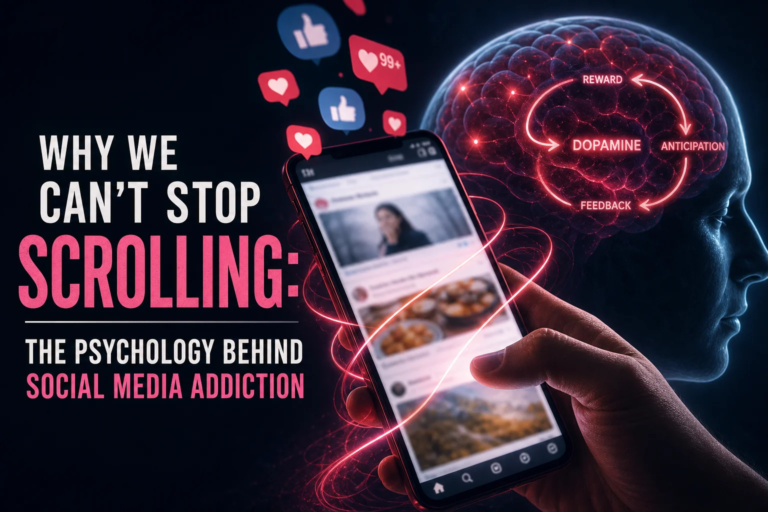
Your brain responds strongly to novelty, social validation, and unpredictable rewards. That is why checking your phone can feel irresistible even when you know nothing important is waiting.
Understanding this is essential if you want to learn how to build a healthier relationship with your screen. You are not fighting only against “bad habits.” You are interacting with systems built to capture attention.
The solution is not shame. The solution is design.
You can redesign your environment so that healthier choices become easier and unhealthy loops become harder.
Start With Awareness: Audit Your Screen Life
Before making changes, observe your current behavior. Most people underestimate how often they check their devices and overestimate how intentional their use is.
Try a three-day screen audit. Do not judge yourself. Just collect data.
Screen Audit Questions
| Question | Why It Matters |
|---|---|
| When do I pick up my phone most often? | Reveals triggers such as boredom, stress, or transition moments |
| Which apps leave me feeling better? | Helps identify nourishing digital use |
| Which apps leave me feeling worse? | Highlights draining or compulsive patterns |
| What time of day do I lose control most easily? | Shows where boundaries are most needed |
| What am I usually avoiding when I scroll? | Connects screen use to emotional needs |
| Do I use screens differently on weekdays vs. weekends? | Helps create realistic routines |
This step is foundational in how to build a healthier relationship with your screen because you cannot improve what you do not understand.
Many people discover that their problem is not “screens” generally. It may be late-night video watching, morning email anxiety, social media comparison, constant news checking, gaming after midnight, or multitasking during family time.
Specific problems need specific solutions.
The Four Types of Screen Time
Not all screen time is equal. A healthier approach begins with sorting your screen use into categories.
| Type of Screen Time | Examples | Usually Feels Like | Healthier Approach |
|---|---|---|---|
| Productive | Work, study, planning, creative tools | Useful but sometimes draining | Use focus blocks and breaks |
| Connective | Video calls, messaging, online communities | Meaningful when intentional | Prioritize quality over quantity |
| Restorative | Guided meditation, music, relaxing shows | Calming in moderation | Set clear endings |
| Compulsive | Doomscrolling, hate-watching, endless feeds | Numbing or agitating | Add friction and limits |
A key part of building a healthier relationship with your screen is increasing intentional screen time and reducing compulsive screen time.
The goal is not “less screen time” at all costs. The goal is better screen time.
Case Study 1: The Burned-Out Knowledge Worker
Profile: Maya, 34, marketing manager
Challenge: Constant email, Slack notifications, and social media checking during work
Symptoms: Fatigue, shallow focus, evening irritability, inability to disconnect
Maya felt like she was working all day but accomplishing less. Her laptop was open from 8 a.m. to 6 p.m., and her phone stayed beside her during dinner. She checked messages every few minutes because she feared missing something urgent.
To learn how to build a healthier relationship with your screen, Maya began with an audit. She discovered that she switched between apps more than 70 times during a typical workday.
What Changed
Maya introduced three rules:
- Two daily email windows: 10:30 a.m. and 3:30 p.m.
- Notification filtering: Only calls from family and urgent work channels could interrupt her.
- End-of-work ritual: She wrote tomorrow’s top three priorities, closed her laptop, and placed it in a drawer.
Within three weeks, Maya reported deeper focus and less evening tension.
Analysis
Maya’s issue was not that she used screens for work. Her issue was fragmented attention. This case shows that how to build a healthier relationship with your screen often begins with reclaiming control over when screens are allowed to interrupt you.
Create Digital Boundaries That Protect Your Attention
Boundaries are not punishments. They are protection for what matters.
If your attention is always available, your priorities become vulnerable. A notification can interrupt a conversation, a creative idea, a workout, a prayer, a meal, a memory, or a moment of rest.
To practice healthier screen habits, start with boundary zones and boundary times.
Helpful Screen Boundaries
| Boundary Type | Example | Benefit |
|---|---|---|
| Time boundary | No social media before 10 a.m. | Protects your morning mood |
| Place boundary | No phone at the dinner table | Improves relationships |
| App boundary | News apps only once daily | Reduces anxiety loops |
| Social boundary | No texting during conversations | Builds presence |
| Sleep boundary | Phone outside bedroom | Improves rest and recovery |
| Work boundary | No email after 7 p.m. | Supports mental separation |
Learning how to build a healthier relationship with your screen means deciding in advance where technology belongs—and where it does not.
Build a Better Morning Routine Without Immediate Scrolling
The way you start your morning shapes your attention for the rest of the day.
If the first thing you do is check messages, news, or social media, you hand your mind to other people’s priorities before you have touched your own.
A healthier morning does not need to be elaborate. You do not need a two-hour routine with journaling, yoga, and green juice. Even ten screen-free minutes can change the tone of your day.
Try this:
- Wake up without checking your phone.
- Drink water.
- Get natural light.
- Move your body for two minutes.
- Ask: “What matters most today?”
- Then check your device intentionally.
This is one of the simplest practices in how to build a healthier relationship with your screen because it interrupts automatic behavior at the most influential point of the day.
Reclaim Your Evenings: The Digital Sunset
Your brain needs time to transition from stimulation to sleep. Screens can interfere with that transition in two major ways: light exposure and emotional activation.
It is not just blue light. It is also the content. Work emails, dramatic videos, arguments, breaking news, shopping decisions, and social comparison can all keep your nervous system alert.
A “digital sunset” is a chosen time when stimulating screen activity ends.
For example:
| Time | Action |
|---|---|
| 8:30 p.m. | Stop work email and demanding tasks |
| 9:00 p.m. | Put phone on charger outside bedroom |
| 9:15 p.m. | Read, stretch, talk, journal, prepare for tomorrow |
| 10:00 p.m. | Sleep routine |
If you are serious about how to build a healthier relationship with your screen, protecting sleep is non-negotiable. Poor sleep makes impulse control harder, increases stress, and makes the next day’s screen cravings stronger.
Case Study 2: The Teen Who Couldn’t Stop Scrolling at Night
Profile: Jordan, 16, high school student
Challenge: Late-night social media and video scrolling
Symptoms: Tired mornings, lower grades, mood swings, conflict with parents
Jordan’s parents initially tried taking the phone away, which led to arguments and secrecy. Eventually, the family shifted from control to collaboration.
They discussed what Jordan wanted: better sleep, fewer morning fights, and more energy for basketball. Instead of banning the phone completely, they created a charging station in the kitchen for everyone, including the parents.
What Changed
The family agreed on:
- Devices charged outside bedrooms by 10 p.m.
- One flexible weekend night
- Parents following the same rule
- An alarm clock replacing phone alarms
- A weekly check-in instead of daily nagging
After a month, Jordan was sleeping more consistently and reported less pressure to respond instantly to friends.
Analysis
This case highlights an important truth about how to build a healthier relationship with your screen: shared standards work better than hypocrisy. When families create norms together, screen boundaries feel less like punishment and more like support.
Replace, Don’t Just Remove
One of the biggest mistakes people make when changing screen habits is removing a behavior without replacing the need it served.
If you scroll because you are lonely, deleting an app will not solve loneliness. If you watch videos because you are exhausted, strict limits may leave you restless. If you check news because you feel unsafe, removing news may increase anxiety unless you create another calming practice.
To understand how to build a healthier relationship with your screen, ask:
- What does this screen habit give me?
- What does it cost me?
- What healthier activity could meet the same need?
Screen Habit Replacement Chart
| Screen Habit | Underlying Need | Healthier Replacement |
|---|---|---|
| Doomscrolling | Certainty, control | Scheduled news check + grounding exercise |
| Late-night videos | Decompression | Music, stretching, light fiction |
| Constant texting | Connection | Voice call, planned meet-up, focused reply times |
| Social comparison | Belonging, validation | Create something, message a close friend |
| Random app checking | Stimulation | Walk, puzzle, breathing break |
| Online shopping | Reward, mood boost | Wishlist delay, budgeted treat, hobby |
A healthier screen relationship becomes easier when your real needs are respected rather than ignored.
Design Your Phone Like a Calm Tool, Not a Slot Machine
Your device’s default settings are not neutral. They are often optimized for engagement, not peace.
If you want to know how to build a healthier relationship with your screen, redesign your phone environment.
Practical Phone Design Changes
Turn off non-essential notifications.
Keep calls, calendar reminders, banking alerts, and key contacts. Silence the rest.Move tempting apps off your home screen.
If you must search for an app, you create a moment to reconsider.Use grayscale mode.
A less colorful phone is often less stimulating.Delete apps you prefer to use intentionally on desktop.
Social media, shopping, and news are often less compulsive when accessed through a browser.Set app limits—but pair them with intention.
Limits work best when you know what you are protecting.- Create focus modes.
Have different settings for work, sleep, exercise, and family time.
This is digital minimalism in practice: not rejecting technology, but shaping it around your values.
The “Purpose Before Pickup” Rule
Here is a simple rule that can transform your screen habits:
Before you pick up your phone, name your purpose.
“I’m checking the weather.”
“I’m replying to Sarah.”
“I’m setting a timer.”
“I’m taking a photo.”
“I’m checking my calendar.”
This small pause teaches your brain that the phone is a tool, not an automatic escape hatch.
If you forget your purpose after unlocking the screen, stop. Lock it again. This may sound too simple, but it is one of the most effective ways of building a healthier relationship with your screen because it interrupts unconscious loops.
Use Friction as Your Friend
We often think convenience is always good. But too much convenience can make unwanted habits effortless.
Friction is anything that makes a behavior slightly harder. When used wisely, it helps you act in line with your intentions.
Examples of Healthy Digital Friction
| Goal | Add This Friction |
|---|---|
| Stop checking phone in bed | Charge it in another room |
| Reduce social media | Log out after each use |
| Avoid impulse shopping | Remove saved payment details |
| Stop news spirals | Use one trusted source at a scheduled time |
| Focus at work | Block distracting sites during deep work |
| Be present with family | Put phones in a basket during meals |
Friction is central to how to build a healthier relationship with your screen because willpower alone is unreliable. Environment beats intention when you are tired, stressed, or bored.
Case Study 3: The Remote Team That Reduced Digital Exhaustion
Profile: A 22-person software company
Challenge: Meeting overload, constant chat messages, blurred work-life boundaries
Symptoms: Burnout, delayed deep work, lower morale
The company assumed their productivity problem came from workload. But after an internal survey, they discovered the real issue was communication overload. Employees felt they had to respond immediately to every message.
What Changed
The team implemented:
- “Deep work mornings” with no meetings before noon
- Clear response expectations: urgent, today, this week
- Fewer default meetings
- Meeting notes for optional attendance
- No chat expectation after working hours
- One weekly asynchronous update
After six weeks, employees reported better focus and less stress. Project completion improved because people had longer uninterrupted blocks.
Analysis
This case shows that how to build a healthier relationship with your screen is not only a personal issue. Work cultures shape digital behavior. Healthier norms around response time, meetings, and availability can dramatically improve well-being.
Rethink Productivity: More Screen Time Does Not Equal More Work
Many professionals confuse being online with being productive. But a full day of messages, tabs, dashboards, calls, and notifications can leave little room for actual thinking.
To build a healthier screen relationship at work, separate communication from creation.
A Better Work Rhythm
| Work Mode | Screen Use Style | Best Practice |
|---|---|---|
| Deep work | Focused, single-task | Close communication apps |
| Communication | Email, chat, calls | Batch at planned times |
| Planning | Calendar, tasks, notes | Start and end the day with priorities |
| Admin | Forms, updates, routine tasks | Group low-energy tasks together |
| Recovery | Breaks away from screen | Move, hydrate, rest eyes |
A powerful strategy for how to build a healthier relationship with your screen is to stop letting every digital demand enter the same attention lane.
Not everything is urgent. Not everything deserves your best mental energy.
Protect Your Eyes, Body, and Brain
A healthier screen relationship is not only emotional. It is physical.
Long screen sessions can affect posture, eyes, neck, wrists, sleep, and movement. You can make screen use less harmful by building recovery into your day.
The 20-20-20 Rule
Every 20 minutes, look at something 20 feet away for 20 seconds. This gives your eye muscles a break.
Ergonomic Basics
| Area | Healthier Setup |
|---|---|
| Eyes | Screen at or slightly below eye level |
| Neck | Avoid looking down for long periods |
| Wrists | Keep wrists neutral while typing |
| Back | Sit with support or alternate standing |
| Feet | Keep feet flat or supported |
| Movement | Stand, stretch, or walk every 30–60 minutes |
If you are learning how to build a healthier relationship with your screen, do not ignore the body holding the device. Your posture, breathing, and movement all influence your digital well-being.
Social Media: Curate Ruthlessly
Social media can be inspiring, educational, funny, and connecting. It can also be a comparison machine that leaves you feeling behind in life.
The difference often comes down to curation and intention.
Ask yourself:
- Who do I follow that makes me feel thoughtful, encouraged, or informed?
- Who leaves me feeling inadequate, angry, or addicted?
- Which platforms support my values?
- Which platforms hijack my attention?
- Am I creating, connecting, or only consuming?
A major part of how to build a healthier relationship with your screen is learning to unfollow without guilt. Your attention is not a public resource. You are allowed to protect it.
Try a monthly “feed cleanup.” Unfollow, mute, or hide accounts that consistently drain you. Follow people and sources that support your growth, creativity, humor, learning, or genuine relationships.
News Consumption Without Doomscrolling
Staying informed is important. Staying constantly alarmed is not.
Doomscrolling often creates the illusion of control while increasing helplessness. You may feel that if you keep reading, you will eventually feel prepared. But endless exposure to distressing content can keep your nervous system activated.
A healthier approach:
- Choose one or two reliable news sources.
- Check at set times, not continuously.
- Avoid news right before bed.
- Balance global awareness with local action.
- Ask, “Is there anything useful I can do with this information?”
This supports how to build a healthier relationship with your screen by turning news from a compulsive emotional loop into an intentional information practice.
Case Study 4: The Parent Who Wanted More Presence
Profile: Daniel, 41, father of two
Challenge: Checking phone during family time
Symptoms: Children competing with the device, guilt, distracted evenings
Daniel did not think he used his phone excessively. But one evening his daughter said, “Dad, you always say ‘one second,’ but it’s never one second.”
That comment hit hard.
Daniel decided to create visible phone boundaries. When he came home, he placed his phone in a kitchen drawer for the first hour. He also told his children, “If you see me checking it during dinner, you can remind me.”
What Changed
The family created:
- Phone-free dinner
- Saturday morning outdoor time
- Shared movie night with no second screens
- A “work emergency” rule for rare exceptions
After several weeks, Daniel noticed that his children talked more at dinner and bedtime felt calmer.
Analysis
Daniel’s story shows that how to build a healthier relationship with your screen is often about protecting relationships from partial attention. Presence is not only physical. It is emotional availability.
Create Screen-Free Rituals That Feel Rewarding
If screen-free time feels like punishment, it will not last. Make it enjoyable.
Screen-free rituals give your brain places to rest and reconnect. They also remind you that life outside the screen is not empty; it is textured, sensory, and real.
Ideas include:
- Morning coffee without a phone
- Walks without podcasts
- Cooking with music instead of videos
- Reading physical books
- Board games
- Gardening
- Drawing
- Journaling
- Stretching
- Prayer or meditation
- Device-free meals
- In-person conversations
One underrated secret of how to build a healthier relationship with your screen is to make offline life more attractive, not just online life more restricted.
The Emotional Side of Screen Habits
Sometimes screen overuse is a symptom, not the root problem.
People often reach for screens when they feel:
- Anxious
- Lonely
- Tired
- Understimulated
- Rejected
- Overwhelmed
- Sad
- Uncertain
- Avoidant
- Bored
Instead of asking, “Why am I so bad at self-control?” try asking, “What am I needing right now?”
This question changes everything.
If you are anxious, you may need grounding.
If you are lonely, you may need connection.
If you are tired, you may need rest.
If you are bored, you may need challenge or play.
If you are overwhelmed, you may need one small next step.
This emotional awareness is vital in how to build a healthier relationship with your screen because habits become easier to change when you address the feeling underneath them.
A Simple Framework: The S.C.R.E.E.N. Method
To make the process memorable, use the S.C.R.E.E.N. method.
| Letter | Meaning | Action |
|---|---|---|
| S | See your patterns | Track when, why, and how you use screens |
| C | Clarify your values | Decide what your attention should serve |
| R | Remove triggers | Turn off alerts, move apps, add friction |
| E | Establish boundaries | Create screen-free times and places |
| E | Engage intentionally | Use screens for clear purposes |
| N | Nourish offline life | Replace scrolling with meaningful alternatives |
This framework offers a practical path for anyone wondering how to build a healthier relationship with your screen without taking extreme measures.
How to Talk About Screen Boundaries With Others
Changing your screen habits can affect people around you. Friends may expect instant replies. Coworkers may be used to after-hours responses. Family members may need shared agreements.
Use clear, kind communication.
Examples:
- “I’m trying to be off my phone after 9 p.m., but I’ll reply in the morning.”
- “If something is urgent, please call instead of texting.”
- “I’m keeping dinner phone-free so I can be more present.”
- “I check email at set times now, so my replies may be less immediate.”
- “I’m taking a break from social media this weekend.”
This is an important part of how to build a healthier relationship with your screen because boundaries work best when they are visible and understandable.
Do Digital Detoxes Work?
Digital detoxes can be useful, but they are not a complete solution.
A weekend without screens may help you reset, notice cravings, and reconnect with offline activities. But if you return to the same apps, same notifications, same work expectations, and same emotional triggers, old habits often return quickly.
Think of detoxes as experiments, not cures.
A better question is not, “Can I survive without my phone for two days?”
The better question is, “What did I learn about the role my screen plays in my life?”
Use detoxes to inform your long-term system. That is a more sustainable approach to how to build a healthier relationship with your screen.
Suggested 7-Day Reset Plan
If you want to begin immediately, try this one-week reset.
| Day | Focus | Action |
|---|---|---|
| Day 1 | Awareness | Check your screen-time report and list top triggers |
| Day 2 | Notifications | Turn off all non-essential alerts |
| Day 3 | Morning | Keep your phone away for first 15 minutes |
| Day 4 | Evening | Create a 30-minute digital sunset |
| Day 5 | Environment | Move or delete your most distracting apps |
| Day 6 | Replacement | Plan one enjoyable screen-free activity |
| Day 7 | Reflection | Decide which habits to keep next week |
This plan is a gentle entry point into how to build a healthier relationship with your screen because it focuses on progress, not perfection.
Long-Tail Keyword Ideas and Natural Variations
For readers, writers, wellness professionals, or content creators exploring this topic, here are natural variations related to How to Build a Healthier Relationship with Your Screen:
| Keyword Variation | Search Intent |
|---|---|
| how to develop healthier screen habits | Practical behavior change |
| ways to reduce unhealthy screen time | Problem-solving |
| how to use your phone more intentionally | Mindful technology use |
| healthy screen time boundaries for adults | Lifestyle improvement |
| how to stop compulsive scrolling | Habit control |
| tips for a better relationship with technology | Digital wellness |
| how to manage screen time without quitting technology | Balanced approach |
| how to create phone-free routines | Daily habit building |
| healthy digital habits for families | Parenting and household norms |
| how to avoid screen burnout | Work and mental health |
| how to build mindful screen habits | Mindfulness and self-regulation |
| healthier social media habits | Emotional well-being |
Using these variations can help discuss how to build a healthier relationship with your screen in a way that feels natural, useful, and relevant.
Common Mistakes to Avoid
Even with good intentions, people often make changes that are too rigid or unrealistic.
Mistake 1: Trying to Change Everything at Once
If you delete five apps, ban your phone from three rooms, stop watching TV, and commit to two hours of reading nightly, you may burn out quickly.
Start small.
Mistake 2: Focusing Only on Time
Two hours of creative work is different from two hours of anxious scrolling. Measure impact, not just minutes.
Mistake 3: Using Shame as Motivation
Shame may create short-term change, but it rarely builds healthy habits. Curiosity works better.
Mistake 4: Ignoring Work Culture
If your workplace rewards constant availability, personal boundaries may need team conversations.
Mistake 5: Forgetting Joy
A healthier screen relationship should create more life, not less pleasure.
Avoiding these mistakes makes how to build a healthier relationship with your screen more sustainable.
What Progress Really Looks Like
Progress is not never getting distracted again. Progress may look like:
- Catching yourself sooner
- Choosing not to open an app
- Sleeping with your phone outside the bedroom
- Taking a walk without checking messages
- Having a full conversation without glancing down
- Ending a scrolling session after five minutes instead of fifty
- Feeling less anxious when away from your device
- Using technology for creation more than comparison
In other words, building a healthier relationship with your screen is not about becoming a different person overnight. It is about becoming more intentional, one choice at a time.
Conclusion: Your Attention Is Your Life
Your screen can be a doorway to knowledge, connection, creativity, convenience, and joy. It can also become a drain on your focus, sleep, relationships, and peace.
The difference is not the device itself. The difference is the relationship you build with it.
Learning how to build a healthier relationship with your screen starts with awareness. Then it grows through boundaries, better digital design, emotional honesty, physical care, and meaningful offline rituals.
You do not need to reject technology. You need to reclaim your role as the user.
Start with one small change today. Put your phone outside the bedroom. Turn off unnecessary notifications. Take the first ten minutes of the morning for yourself. Eat one meal without a screen. Ask why you are reaching before you unlock.
Your attention is not unlimited. Spend it like it matters—because it does.
1. What is the first step in building a healthier relationship with your screen?
The first step is awareness. Track when, why, and how you use screens for a few days. Notice which habits help you and which ones leave you distracted, anxious, or drained. You cannot create better screen boundaries until you understand your current patterns.
2. Is all screen time bad?
No. Screen time can be productive, creative, educational, social, and restorative. The goal is not to eliminate screens but to use them intentionally. A healthy screen relationship depends on purpose, quality, timing, and emotional impact.
3. How can I stop scrolling so much at night?
Create a digital sunset. Choose a time when you stop using stimulating apps, charge your phone outside the bedroom, and replace scrolling with a calming routine such as reading, stretching, journaling, or listening to quiet music.
4. How do I reduce screen time if I need screens for work?
Separate work screen time from distraction screen time. Use focus blocks, batch email, silence non-essential notifications, take regular eye and movement breaks, and create an end-of-work shutdown ritual. The goal is not less work—it is less digital fragmentation.
5. How can families build healthier screen habits together?
Families can create shared rules such as phone-free meals, device charging stations outside bedrooms, screen-free outings, and agreed-upon media times. The most important factor is modeling. Children and teens respond better when adults follow the same standards.
6. Do app limits actually work?
App limits can help, but they work best when paired with intention and replacement habits. If you limit social media but have no alternative for boredom or stress, you may override the limit. Add friction and choose healthier replacements.
7. What should I do if being away from my phone makes me anxious?
Start gradually. Try short phone-free periods and notice what feelings come up. Anxiety may signal fear of missing out, social pressure, work expectations, or discomfort with stillness. Practice grounding techniques and communicate availability boundaries with others.
8. How long does it take to build healthier screen habits?
It varies, but many people notice changes within one to three weeks when they adjust notifications, create screen-free zones, and protect sleep. Long-term change comes from consistent systems, not one-time detoxes.
9. Can social media be part of a healthy screen relationship?
Yes, if it is intentional. Curate your feed, follow accounts that educate or uplift you, unfollow accounts that trigger comparison or anger, and set clear time boundaries. Social media should serve your life, not replace it.
10. What is the most powerful habit for healthier screen use?
The “purpose before pickup” rule is one of the most powerful. Before unlocking your phone, name exactly why you are using it. This simple pause helps turn automatic screen use into intentional screen use.
About the Author