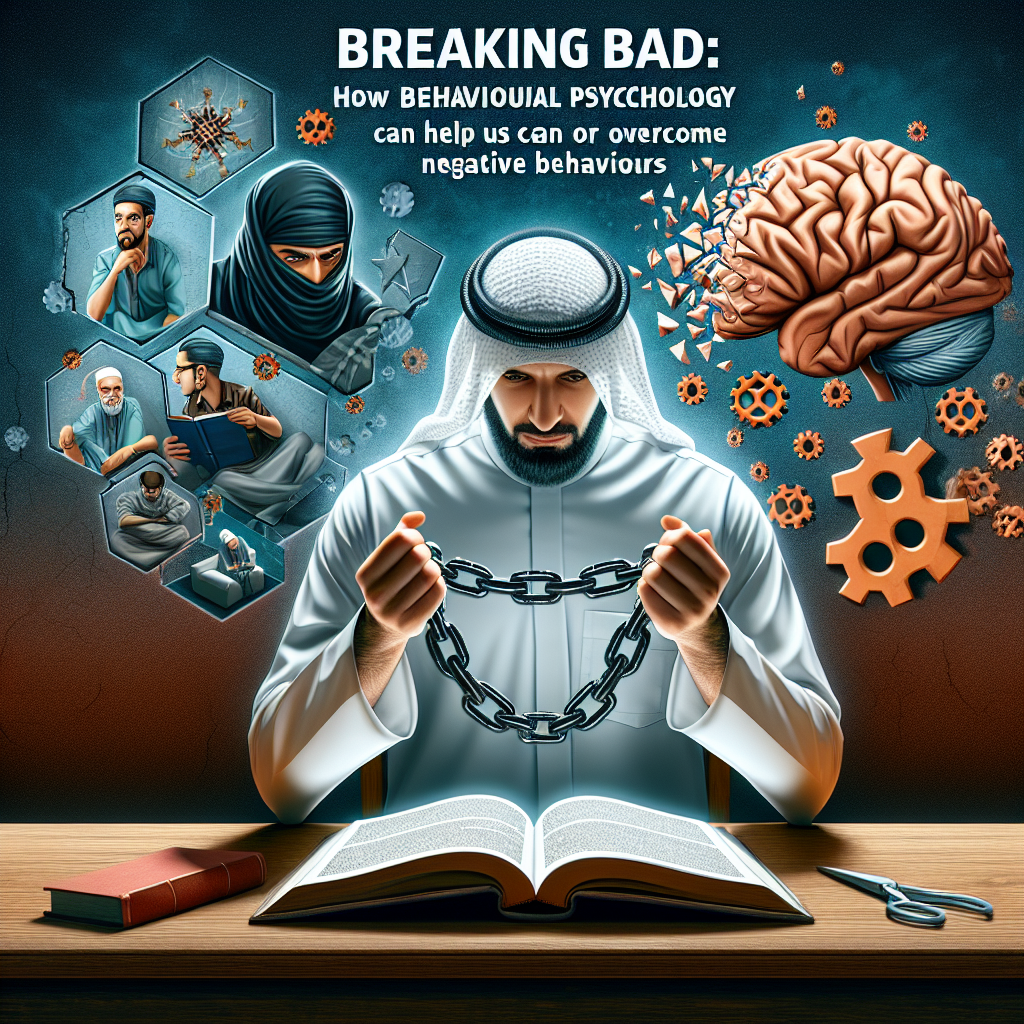
Breaking Bad: How Behavioral Psychology Can Help Us Overcome Negative Behaviors
Introduction
In a world filled with distractions and unhealthy habits, the pursuit of self-improvement often feels like an uphill battle. Whether it’s procrastination, unhealthy eating, or negative thought patterns, many of us find ourselves trapped in behavioral loops that seem impossible to break. This is where the insights of behavioral psychology can play a transformative role. By understanding the underlying reasons for our negative behaviors, we can harness proven psychological principles to instigate genuine change.
In this article, we will delve into "Breaking Bad: How Behavioral Psychology Can Help Us Overcome Negative Behaviors." We will explore psychological theories, case studies, and actionable strategies designed to motivate readers on their journey to self-betterment.
Understanding Behavioral Psychology
The Foundations of Behavioral Psychology
Behavioral psychology focuses on observable behaviors rather than inner thoughts or feelings. It posits that human behavior is learned through interactions with the environment. Two critical components underpin this discipline: reinforcement and punishment.
- Reinforcement: Positive or negative stimuli that increase the likelihood of a behavior being repeated.
- Punishment: Similarly, this can be used to decrease the likelihood of unwelcome behaviors.
Understanding these concepts is essential to comprehending "Breaking Bad: How Behavioral Psychology Can Help Us Overcome Negative Behaviors."
Key Theories in Behavioral Psychology
Classical Conditioning
This concept, originally tested by Ivan Pavlov, states that people can be conditioned to respond to a stimulus in a certain way through association. For example, if a person always feels anxious in a specific situation (like public speaking), they may begin to avoid it altogether.
Operant Conditioning
B.F. Skinner pioneered this theory, which focuses on the reinforcement of behaviors. If positive behaviors are rewarded, they are more likely to be repeated.
Social Learning Theory
Albert Bandura introduced this idea, emphasizing that we can learn by observing others. If we see someone succeed through positive behaviors, we may be more inclined to adopt similar strategies.
The Role of Cognitive Behavioral Therapy (CBT)
Cognitive Behavioral Therapy (CBT) blends cognitive and behavioral psychology and serves as a robust tool for addressing negative behaviors. By identifying thought patterns that lead to undesirable behaviors, individuals can make conscious choices to change their actions.
Case Study 1: Overcoming Procrastination
Procrastination is a widespread issue affecting productivity and mental health.
The Diagnosis
John, a college student, struggled to complete his assignments on time. He frequently found himself distracted, leading to stress and low grades. His behaviors fell into the cycle of avoidance and guilt.
The Behavioral Approach
Using the principles of behavioral psychology, John adopted a strategy of incremental reinforcement. He set small, achievable goals for himself and rewarded himself after completing each task. Over time, he trained his brain to associate studying with positive feelings, breaking the cycle of procrastination.
The Results
After a semester of employing this method, John saw a significant improvement in his grades and a reduction in stress.
Tools and Techniques
Habit Formation and the Habit Loop
Charles Duhigg’s "The Power of Habit" explains the habit loop: cue, routine, and reward. This model can be instrumental in "Breaking Bad: How Behavioral Psychology Can Help Us Overcome Negative Behaviors."
| Component | Description |
|---|---|
| Cue | A trigger that initiates a behavior. |
| Routine | The behavior itself. |
| Reward | The positive outcome that reinforces the behavior. |
The 21/90 Rule
A common strategy for forming new habits is the 21/90 rule: it takes 21 days to form a habit and 90 days to make it a permanent lifestyle change.
Goal Setting
Setting SMART (Specific, Measurable, Achievable, Relevant, Time-bound) goals can significantly enhance self-control and motivation.
Case Study 2: Transforming Eating Habits
The Diagnosis
Maria, a 35-year-old woman, wanted to lose weight but found herself emotionally eating, particularly during stressful times.
The Behavioral Approach
Utilizing CBT, Maria identified her triggers—stress and boredom. She began journaling her thoughts and emotions, which allowed her to replace eating with healthier coping mechanisms such as exercise or meditation.
The Results
After three months, Maria lost weight and reported increased emotional resilience. She learned to celebrate her small victories rather than succumbing to negative behaviors.
Application in Daily Life
Mindfulness and Behavior Change
Mindfulness, the practice of staying present, can significantly influence behavioral changes. By increasing self-awareness, individuals are more likely to catch themselves in the act of their negative behaviors and can replace them with positive alternatives.
The Role of Social Support
Strengthening positive behaviors often requires a support system. Sharing goals with friends or family creates accountability, spurring individuals to stick to their commitments.
Tools for Tracking Progress
Behavioral Contracts
Creating a behavioral contract can provide structure and measurable goals for overcoming negative behaviors.
Apps and Technology
Numerous apps are available, like Todoist or Habitica, that gamify habit formation, keeping users engaged while tracking their progress.
Conclusion
"Breaking Bad: How Behavioral Psychology Can Help Us Overcome Negative Behaviors" showcases the incredible potential of behavioral psychology to foster meaningful change. Understanding the mechanisms behind our behaviors can empower us to break free from negative cycles and pursue a more fulfilling life.
Takeaway: Remember, change does not occur overnight. By implementing small, incremental strategies informed by behavioral psychology, you can make lasting improvements.
FAQs
1. How long does it take to change a negative behavior?
While some say it takes 21 days to form a habit, studies suggest that it can take longer, depending on the complexity of the behavior. Aim for at least 90 days for lasting change.
2. Can behavioral psychology help with addiction issues?
Yes, many addiction recovery programs utilize principles from behavioral psychology, such as reinforcement and support systems.
3. What role does environment play in behavior change?
Your environment significantly influences your behavior. By modifying your surroundings—removing temptations or adding cues for positive actions—you can facilitate change.
4. Are small changes really effective?
Absolutely! Small, consistent changes can lead to significant transformations over time. This gradual approach is less overwhelming and more sustainable.
5. How can I measure my progress?
Using tools like journals or apps can help you track your behaviors and progress. Regularly reviewing your goals can give you insight and motivation.
In closing, remember that the journey to overcoming negative behaviors is ongoing. Each step you take, no matter how small, is part of a larger path toward a more positive future.
About the Author