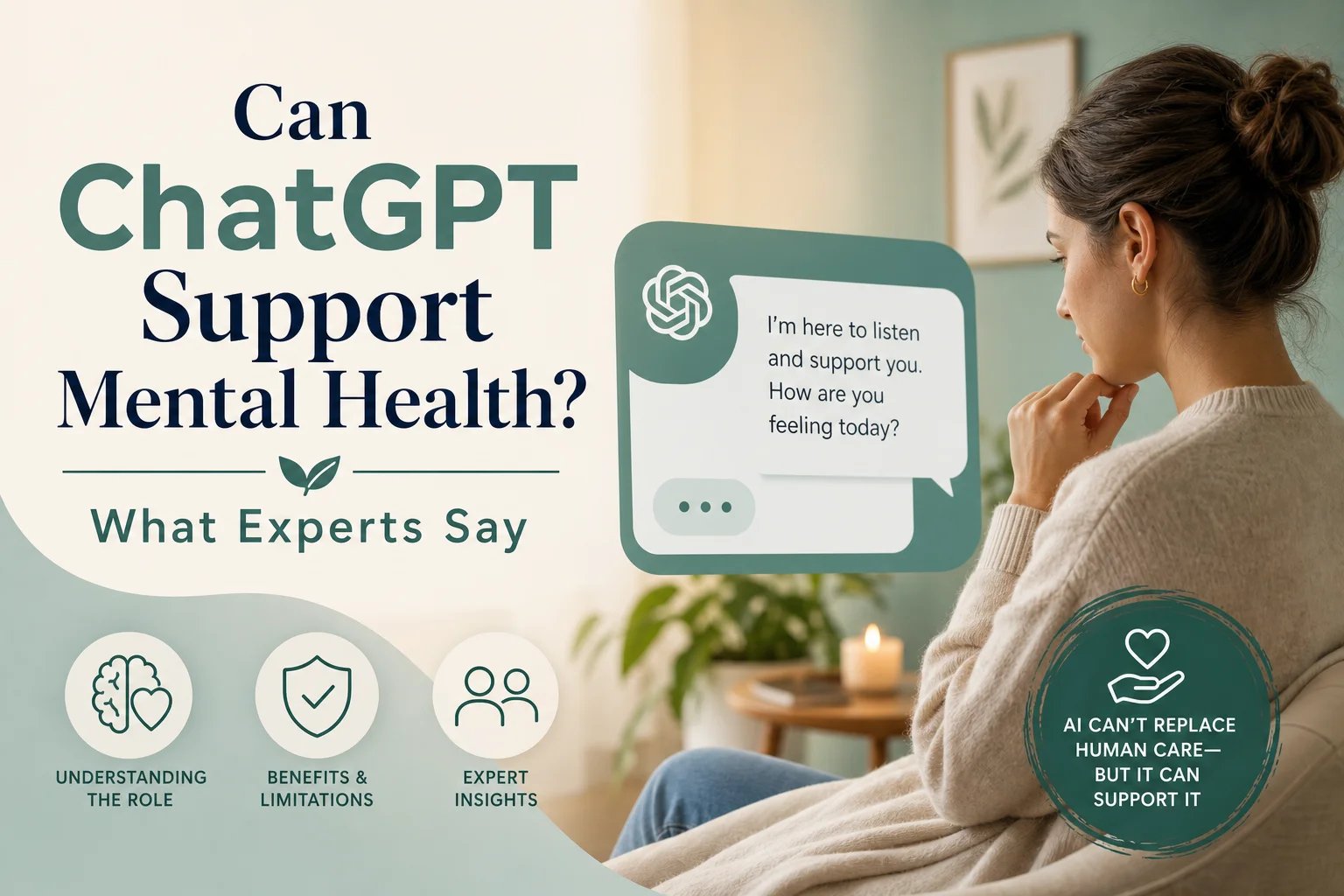
Introduction: A New Mental Health Question for a Stressed-Out World
At 2:13 a.m., when anxiety is loud, the therapist’s office is closed, friends are asleep, and your mind refuses to slow down, many people now reach for something new: ChatGPT.
That single moment captures why the question “Can ChatGPT Support Mental Health? What Experts Say” has become so urgent. Mental health needs are rising globally, therapy is expensive or hard to access for many, and people increasingly want immediate, private, nonjudgmental support. ChatGPT and similar AI tools seem to offer exactly that: a responsive conversation partner available anytime.
But here is the deeper question: is that support truly helpful, or can it become risky?
Experts are not dismissing AI outright. Many psychologists, psychiatrists, digital health researchers, and ethicists see promise in AI-assisted mental health tools. At the same time, they warn that ChatGPT is not a therapist, cannot diagnose conditions reliably, and should never replace emergency help or professional care.
So, can ChatGPT support mental health? What experts say is both encouraging and cautious: yes, ChatGPT may help with reflection, coping strategies, journaling, emotional labeling, psychoeducation, and preparation for therapy—but it must be used wisely, with clear limits.
This in-depth guide explores what ChatGPT can and cannot do for mental health, where experts see real value, what risks matter most, and how people can use AI tools more safely.
Can ChatGPT Support Mental Health? What Experts Say in One Sentence
If you want the short version: Can ChatGPT support mental health? What experts say is that it can be a useful supplement for emotional self-care, but it is not a replacement for licensed mental health care, crisis support, diagnosis, or treatment.
That distinction is everything.
ChatGPT can help you organize thoughts, practice coping skills, and learn about mental health concepts. It can simulate supportive conversation and offer structured exercises such as breathing techniques, cognitive reframing, or journaling prompts.
However, ChatGPT does not know you the way a trained clinician can. It cannot observe body language, assess safety with the depth of a professional, understand your full history, coordinate care, prescribe medication, or intervene in a crisis.
The best expert view is not “AI is dangerous” or “AI will replace therapy.” It is more balanced: Can ChatGPT support mental health? What experts say is that AI may expand access to low-level support while creating new responsibilities around safety, privacy, accuracy, and human oversight.
Why People Are Turning to ChatGPT for Mental Health Support
Before asking whether ChatGPT should support mental health, it helps to understand why people are using it in the first place.
Mental health care has several access barriers:
- Long waitlists for therapists
- High costs for counseling or psychiatry
- Lack of local providers in rural areas
- Stigma around asking for help
- Cultural or language barriers
- Fear of being judged
- Difficulty explaining emotions to another person
- Need for support outside office hours
This is where ChatGPT feels different. It is instant, conversational, and available around the clock. For someone feeling overwhelmed, the ability to type, “I’m anxious and don’t know what to do,” and receive a calm, structured response can feel surprisingly reassuring.
When experts discuss Can ChatGPT Support Mental Health? What Experts Say, they often begin here: AI is filling a gap that already existed. The demand for emotional support is larger than the current mental health system can meet.
That does not mean ChatGPT is the perfect solution. It means people are using it because traditional systems often fail to provide timely, affordable, accessible care.
What ChatGPT Can Realistically Do for Mental Health
ChatGPT is most useful when treated as a self-help and reflection tool. It can support mental health in practical, everyday ways—especially for people dealing with stress, mild anxiety, low motivation, decision fatigue, or emotional confusion.
Here are some realistic uses.
1. Emotional Check-Ins
ChatGPT can help users name what they are feeling. Sometimes people know they feel “bad,” but not whether that means anxious, ashamed, lonely, frustrated, grieving, or exhausted.
A simple prompt like:
“Help me identify what I might be feeling based on this situation.”
can encourage emotional awareness.
This matters because emotional labeling is a known self-regulation strategy. Naming emotions can reduce their intensity and make them easier to manage.
2. Journaling and Self-Reflection
One of the strongest answers to Can ChatGPT support mental health? What experts say is journaling support. ChatGPT can ask reflective questions, summarize patterns, and suggest prompts.
For example:
“Ask me five gentle journaling questions about why I feel stuck at work.”
This can help users move from rumination to structured reflection.
3. Coping Skills and Grounding Techniques
ChatGPT can guide users through common coping exercises, such as:
- Box breathing
- Progressive muscle relaxation
- 5-4-3-2-1 grounding
- Cognitive reframing
- Gratitude exercises
- Values clarification
- Sleep wind-down routines
These are not unique to ChatGPT, but the conversational format can make them easier to use in the moment.
4. Psychoeducation
ChatGPT can explain mental health terms in plain language. For example, it can describe the difference between stress and anxiety, what burnout may feel like, or how cognitive distortions work.
This kind of education can reduce confusion and help people decide whether to seek professional support.
5. Therapy Preparation
ChatGPT can help users prepare for therapy by organizing concerns, creating questions, or summarizing symptoms.
A useful prompt might be:
“Help me make a list of topics to bring up with my therapist. I’ve been feeling irritable, tired, and disconnected.”
For people who freeze during appointments, this can be genuinely helpful.
What ChatGPT Cannot Do for Mental Health
To answer Can ChatGPT Support Mental Health? What Experts Say responsibly, we must be very clear about limitations.
ChatGPT cannot:
- Diagnose mental health conditions
- Replace a therapist, psychologist, psychiatrist, or doctor
- Provide emergency crisis intervention
- Prescribe or manage medication
- Reliably assess suicide or self-harm risk
- Know whether its advice is clinically appropriate for your specific history
- Guarantee privacy in the same way a licensed professional might
- Provide long-term therapeutic accountability
- Understand nonverbal cues, tone shifts, or hidden risk factors
This is why experts stress that ChatGPT should be used as a supplement, not a substitute.
If someone is in immediate danger, thinking about suicide, considering self-harm, or at risk of harming someone else, they should contact emergency services or a crisis hotline immediately. In the U.S. and Canada, call or text 988 for the Suicide & Crisis Lifeline. If outside those regions, contact local emergency services or a local crisis line.
Expert Consensus: Where ChatGPT Fits in Mental Health Care
The expert conversation around Can ChatGPT Support Mental Health? What Experts Say is nuanced. Different professionals focus on different benefits and risks.
| Expert Group | What They Often See as Helpful | Main Concern | Best-Use Recommendation |
|---|---|---|---|
| Psychologists/Therapists | Reflection, coping practice, therapy preparation | Users may rely on AI instead of care | Use between sessions, not instead of therapy |
| Psychiatrists | Education about symptoms and treatment options | Misdiagnosis, medication misinformation | Discuss AI-generated insights with a clinician |
| Digital Health Researchers | Scalable support and accessibility | Lack of long-term evidence | Test carefully and monitor outcomes |
| Ethicists | Potential to reduce stigma and access barriers | Privacy, bias, emotional dependency | Use transparent, regulated systems |
| Primary Care Providers | Early support for stress and mild concerns | Missing serious symptoms | Seek professional evaluation when symptoms persist |
| Crisis Specialists | May encourage help-seeking if designed well | AI can fail in high-risk moments | Use human crisis services for urgent risk |
The central answer remains consistent: Can ChatGPT support mental health? What experts say is yes, but only within boundaries.
Case Study 1: The College Student Using ChatGPT for Anxiety Before Exams
Scenario:
Maya, a 20-year-old college student, feels intense anxiety before exams. She has access to campus counseling, but appointments are booked three weeks out. One night, she asks ChatGPT:
“I’m panicking about my exam tomorrow. Can you help me calm down and make a plan?”
ChatGPT suggests a breathing exercise, helps her divide study time into manageable blocks, and encourages sleep rather than all-night cramming. It also recommends contacting campus counseling if anxiety keeps interfering with daily life.
Outcome:
Maya feels calmer and completes a realistic study plan. She later schedules a counseling appointment to discuss recurring test anxiety.
Analysis:
This case shows one of the strongest practical answers to Can ChatGPT Support Mental Health? What Experts Say. ChatGPT can help with immediate coping, emotional organization, and behavioral planning. It did not diagnose Maya or replace therapy. Instead, it helped her stabilize enough to take the next healthy step.
Relevance:
For mild to moderate situational anxiety, ChatGPT may function like an interactive self-help tool. The key is that Maya still pursued human support for an ongoing issue.
Case Study 2: A Rural Adult Facing Therapy Access Barriers
Scenario:
Daniel lives in a rural area where the nearest therapist is over an hour away. He has been feeling isolated after a divorce. He uses ChatGPT to journal at night, asking:
“Help me process loneliness after a major life change.”
ChatGPT asks reflective questions about his support network, daily routines, grief, and values. It suggests small actions: calling a sibling, joining a local walking group, and looking into teletherapy.
Outcome:
Daniel begins journaling three nights a week. He eventually finds a licensed therapist who offers video sessions.
Analysis:
When discussing Can ChatGPT support mental health? What experts say, access is one of the biggest themes. For Daniel, ChatGPT did not solve loneliness, but it reduced the sense of being completely alone and helped him identify practical next steps.
Relevance:
AI tools may be especially useful in underserved areas, but they work best when they guide users toward real-world connection and professional help when needed.
Case Study 3: Workplace Burnout and Daily Emotional Debriefing
Scenario:
Priya manages a busy team and feels emotionally drained. She is not in crisis, but she notices irritability, poor sleep, and dread before work. She asks ChatGPT at the end of each day:
“Help me debrief my workday without spiraling into negativity.”
ChatGPT helps her separate facts from interpretations, identify stress triggers, and plan boundaries. It suggests writing down one controllable action for the next day.
Outcome:
Priya realizes her burnout is connected to constant after-hours messages. She speaks with her manager and creates a communication boundary.
Analysis:
This example highlights another answer to Can ChatGPT Support Mental Health? What Experts Say: AI can help people notice patterns. Burnout often builds gradually. A conversational tool can make daily reflection easier and more structured.
Relevance:
For workplace stress, ChatGPT may support self-awareness and boundary-setting. However, if burnout becomes depression, panic, substance misuse, or severe impairment, professional care is important.
Case Study 4: A Therapist Using ChatGPT for Psychoeducation Drafts
Scenario:
A licensed therapist wants to create a simple handout explaining cognitive distortions to clients. She uses ChatGPT to draft plain-language examples, then edits the content for accuracy, tone, and clinical appropriateness.
Outcome:
The therapist saves time while maintaining professional responsibility for the final material.
Analysis:
Experts discussing Can ChatGPT support mental health? What experts say often point out that AI may support clinicians too. It can help draft educational materials, brainstorm metaphors, or simplify complex concepts.
Relevance:
In professional settings, ChatGPT may be useful as an administrative or educational assistant. But clinicians must review outputs carefully and protect client privacy.
Case Study 5: When ChatGPT Is Not Enough
Scenario:
Jordan feels hopeless and begins asking ChatGPT whether life is worth continuing. A safe AI response should encourage immediate human support, crisis resources, and contacting trusted people.
Outcome:
Jordan contacts a crisis line and speaks to a trained counselor.
Analysis:
This is where the answer to Can ChatGPT Support Mental Health? What Experts Say becomes most serious. AI should not be the primary support during suicidal thoughts or imminent danger. Human crisis care matters because it can assess risk, escalate support, and stay connected in ways AI cannot.
Relevance:
ChatGPT can point someone toward help, but it should never be treated as sufficient crisis intervention.
Benefits and Risks at a Glance
| Potential Benefit | Why It Matters | Risk to Watch | Safer Use Tip |
|---|---|---|---|
| 24/7 availability | Support outside office hours | Overreliance | Use as a bridge, not a replacement |
| Nonjudgmental tone | May reduce shame | False sense of intimacy | Remember it is not a human relationship |
| Structured coping tools | Helps during stress | Generic advice | Personalize with professional guidance |
| Journaling support | Encourages insight | Rumination loops | Ask for action-oriented reflection |
| Therapy preparation | Improves appointments | Inaccurate summaries | Verify with your therapist |
| Psychoeducation | Builds mental health literacy | Misinformation | Cross-check with trusted sources |
| Accessibility | Helps underserved users | Privacy concerns | Avoid sharing sensitive identifiers |
This table captures the expert middle ground: Can ChatGPT support mental health? What experts say is that the benefits are real, but so are the risks.
The Science Behind AI Mental Health Support: What We Know So Far
Research on digital mental health tools has been growing for years. Before ChatGPT became widely popular, researchers studied mental health apps, online cognitive behavioral therapy programs, chatbots, and teletherapy platforms.
Some chatbot-based mental health tools have shown promise in reducing symptoms of anxiety and depression in limited studies, especially when based on cognitive behavioral therapy principles. However, evidence varies widely depending on the tool, user population, study design, and level of human oversight.
ChatGPT is different from many purpose-built therapy chatbots because it is a general-purpose language model. It can discuss mental health, but it was not originally designed as a regulated medical device or a licensed therapist.
That is why experts remain cautious. When asking Can ChatGPT Support Mental Health? What Experts Say, the current research answer is: promising for low-intensity support, but not yet proven as a standalone mental health treatment.
Important research questions remain:
- Does ChatGPT reduce anxiety or depression symptoms over time?
- For whom is it most helpful?
- For whom might it be harmful?
- How often does it provide inaccurate or unsafe advice?
- Can it recognize crisis situations reliably?
- How does it affect the therapeutic relationship?
- What privacy protections are adequate?
- Can it worsen avoidance of human connection?
Until stronger evidence exists, experts recommend cautious, informed use.
Can ChatGPT Help With Anxiety?
Yes, ChatGPT may help some people manage anxiety symptoms in the moment. It can guide grounding techniques, help challenge catastrophic thoughts, and break overwhelming problems into smaller steps.
For example, someone might ask:
“I’m having anxious thoughts about tomorrow’s meeting. Help me separate realistic concerns from worst-case thinking.”
ChatGPT can then help identify cognitive distortions such as catastrophizing, mind-reading, or all-or-nothing thinking.
But there is a limit. If anxiety is frequent, severe, causing panic attacks, interfering with work or relationships, or leading to avoidance, professional support is recommended.
So, can ChatGPT support mental health? What experts say about anxiety is that it may be useful for coping and reflection, but persistent anxiety deserves clinical attention.
Can ChatGPT Help With Depression?
ChatGPT may offer supportive conversation, behavioral activation ideas, journaling prompts, and gentle encouragement. For someone experiencing mild low mood, this can feel helpful.
A prompt might be:
“I feel low and unmotivated. Help me choose one small thing I can do today.”
ChatGPT might suggest taking a shower, stepping outside, texting a friend, eating something nourishing, or completing one manageable task.
However, depression can distort thinking, reduce energy, increase isolation, and sometimes involve suicidal thoughts. ChatGPT cannot monitor safety like a clinician or loved one can.
When experts answer Can ChatGPT Support Mental Health? What Experts Say in relation to depression, they usually emphasize this: AI can support small steps, but depression should not be managed alone if it persists, worsens, or includes self-harm thoughts.
Can ChatGPT Help With Loneliness?
This is one of the most emotionally complex questions.
ChatGPT can simulate conversation. For someone lonely, that may feel comforting. It may help them practice social scripts, process rejection, or brainstorm ways to reconnect.
However, experts worry about emotional dependency. If a person begins replacing human relationships with AI conversation, loneliness may deepen over time.
A healthier use would be:
“Help me draft a message to reconnect with an old friend.”
or:
“Give me ideas for low-pressure ways to meet people in my community.”
In other words, ChatGPT is best used to support human connection—not replace it.
So, can ChatGPT support mental health? What experts say about loneliness is cautiously optimistic only when AI encourages real-world relationships.
Can ChatGPT Support Therapy?
Yes, ChatGPT can support therapy in several ways when used thoughtfully.
It can help clients:
- Prepare for sessions
- Track moods between appointments
- Practice skills assigned by a therapist
- Summarize concerns
- Generate questions
- Reflect after sessions
- Turn therapy goals into daily habits
For example:
“My therapist asked me to notice negative self-talk this week. Help me create a simple tracking template.”
That kind of support can reinforce therapy.
However, users should tell their therapist if they are using ChatGPT for mental health support. This allows the therapist to help interpret AI-generated content and correct anything unhelpful.
The expert answer to Can ChatGPT Support Mental Health? What Experts Say in therapy settings is clear: AI can be a between-session aid, but the therapist remains responsible for clinical care.
Privacy and Confidentiality: A Major Concern
Mental health conversations are deeply personal. People may share trauma histories, relationship problems, substance use, suicidal thoughts, medical information, or identifying details.
This raises a serious issue: privacy.
A licensed therapist is bound by legal and ethical confidentiality rules. ChatGPT, depending on the version and settings used, may not offer the same protections. Consumer AI tools should not automatically be treated as confidential clinical spaces.
Before using ChatGPT for mental health, consider:
- What information are you sharing?
- Are you including names, addresses, workplaces, or identifying details?
- Could the conversation be stored or reviewed?
- Are you using a personal, workplace, or school account?
- Does the platform offer privacy controls?
- Is the tool approved for clinical use?
A safer approach is to avoid sharing highly identifiable details. You can speak generally while still getting support.
Instead of:
“My boss, Sarah Miller at X Company, humiliated me in yesterday’s meeting…”
Try:
“My manager criticized me publicly, and I feel embarrassed. Help me process it.”
When experts debate Can ChatGPT Support Mental Health? What Experts Say, privacy is one of the biggest caution flags.
Bias, Culture, and the Limits of Generic Advice
Mental health is shaped by culture, identity, religion, family systems, trauma history, disability, socioeconomic status, and lived experience. ChatGPT may not fully understand these layers.
It can produce responses that sound polished but miss cultural nuance. It may give advice that fits one person’s context but not another’s.
For example, “set boundaries with your family” may be useful advice for one person but risky or culturally complicated for another. “Talk to your manager” may be reasonable in some workplaces and unsafe in others.
This is why Can ChatGPT support mental health? What experts say often includes concerns about bias. AI systems learn from large datasets that may contain stereotypes, gaps, or dominant cultural assumptions.
Users can improve responses by adding context:
“Please consider that I come from a family culture where direct confrontation is considered disrespectful. Suggest gentle boundary-setting options.”
Still, AI should not be treated as culturally competent in the same way a skilled human professional can be.
How to Use ChatGPT Safely for Mental Health Support
If you choose to use ChatGPT for emotional support, use it intentionally.
Safer Ways to Use ChatGPT
| Goal | Helpful Prompt |
|---|---|
| Calm down quickly | “Guide me through a 3-minute grounding exercise.” |
| Understand emotions | “Help me name what I might be feeling based on this situation.” |
| Stop spiraling | “Help me separate facts from anxious assumptions.” |
| Prepare for therapy | “Help me organize what to discuss with my therapist.” |
| Improve sleep routine | “Create a calming 30-minute bedtime routine.” |
| Set boundaries | “Help me write a respectful boundary statement.” |
| Process conflict | “Ask me reflective questions about this disagreement.” |
| Build motivation | “Help me choose one tiny next step I can do in 5 minutes.” |
Less Safe Ways to Use ChatGPT
Avoid using ChatGPT to:
- Decide whether to stop medication
- Diagnose yourself
- Replace therapy during severe symptoms
- Handle suicidal thoughts without human help
- Confirm harmful beliefs
- Make major life decisions while distressed
- Share private identifying information
- Seek validation for revenge, self-harm, or risky behavior
A practical answer to Can ChatGPT Support Mental Health? What Experts Say is this: the quality of the prompt matters, but the safety boundary matters more.
A Simple “Traffic Light” Model for Using ChatGPT
Here is an easy framework.
| Zone | Your Situation | Is ChatGPT Appropriate? | What to Do |
|---|---|---|---|
| Green | Everyday stress, journaling, mild worry, self-reflection | Yes, as a support tool | Use coping prompts and reflection |
| Yellow | Persistent anxiety, depression, trauma triggers, relationship distress, functional impairment | Maybe, but not alone | Use ChatGPT plus professional or trusted human support |
| Red | Suicidal thoughts, self-harm urges, psychosis, abuse danger, mania, overdose risk, immediate crisis | No, not as primary support | Contact emergency services, crisis line, or trusted person immediately |
This model reflects what experts mean when they answer Can ChatGPT support mental health? What experts say: context determines appropriateness.
What Experts Say About AI Replacing Therapists
The fear that AI will replace therapists is common. But most experts do not see ChatGPT as a true replacement for therapy.
Therapy is not just conversation. It includes:
- Clinical assessment
- Treatment planning
- Ethical responsibility
- Human attunement
- Trust built over time
- Recognition of subtle changes
- Accountability
- Crisis management
- Professional judgment
- Repair after relational rupture
ChatGPT can imitate parts of supportive conversation, but it does not form a real therapeutic relationship. It does not have lived empathy, moral responsibility, or clinical accountability.
So, can ChatGPT support mental health? What experts say about replacing therapists is mostly no. It may support people around the edges of care, but it cannot fully replicate human therapy.
The Best Role for ChatGPT: A Mental Health “Co-Pilot”
The most useful metaphor may be this: ChatGPT can be a mental health co-pilot, not the pilot.
A co-pilot helps organize information, suggests options, and supports navigation. But it does not own the journey. You, your support system, and qualified professionals remain central.
Used well, ChatGPT can help people:
- Notice patterns
- Practice coping skills
- Prepare for difficult conversations
- Reduce emotional overwhelm
- Learn mental health language
- Take small positive actions
- Seek professional help sooner
Used poorly, it can lead to:
- Avoiding real help
- Over-trusting generic advice
- Sharing sensitive data
- Reinforcing distorted beliefs
- Mistaking fluency for expertise
- Becoming emotionally dependent
That is the heart of Can ChatGPT Support Mental Health? What Experts Say: ChatGPT can be helpful when it strengthens human agency, not when it replaces human care.
Long-Tail Keyword Variations People Search For
Readers searching for Can ChatGPT Support Mental Health? What Experts Say often also look for related questions such as:
- Can ChatGPT help with anxiety?
- Is ChatGPT safe for mental health support?
- What do experts say about ChatGPT and therapy?
- Can AI replace therapists?
- How can ChatGPT support emotional well-being?
- Is ChatGPT good for journaling and self-reflection?
- Can ChatGPT help during a panic attack?
- Should I use ChatGPT for depression support?
- What are the risks of using ChatGPT for mental health?
- Can ChatGPT support mental health between therapy sessions?
These variations all point to the same central issue: people want accessible support, but they also want to know what is safe.
Practical Prompts for Mental Health Support
Here are some safer, structured prompts you can use.
For Anxiety
“I’m feeling anxious. Please guide me through a grounding exercise, then help me identify one practical next step.”
For Overthinking
“Help me separate facts, assumptions, and fears in this situation.”
For Low Mood
“I feel unmotivated. Suggest three very small actions I could take today, without pressure or toxic positivity.”
For Therapy Preparation
“Help me summarize my main concerns for a therapy session in bullet points.”
For Emotional Awareness
“Ask me questions to help identify what emotion I’m feeling and what need may be underneath it.”
For Conflict
“Help me draft a calm message that expresses my feelings without blaming the other person.”
For Burnout
“Help me identify signs of burnout and create a realistic recovery plan for this week.”
These prompts reflect the healthiest answer to Can ChatGPT support mental health? What experts say: use AI for structure, not authority.
Warning Signs You Need Human Support
ChatGPT may be helpful for everyday emotional support, but some signs call for human help.
Please consider reaching out to a mental health professional, doctor, crisis line, or trusted person if you experience:
- Thoughts of suicide or self-harm
- Feeling unsafe with yourself or someone else
- Hearing or seeing things others do not
- Extreme mood swings or risky impulsive behavior
- Panic attacks that interfere with life
- Depression lasting more than two weeks
- Trauma symptoms affecting sleep, work, or relationships
- Substance use that feels hard to control
- Eating disorder behaviors
- Inability to function at work, school, or home
- Abuse, coercion, or domestic violence
- Medication concerns or side effects
In urgent danger, contact emergency services immediately.
This is where Can ChatGPT Support Mental Health? What Experts Say must be grounded in safety: AI can support, but humans must respond when risk is high.
The Future of ChatGPT and Mental Health
The future of AI in mental health will likely include more specialized tools, stronger safeguards, clearer regulations, and better integration with professional care.
Possible developments include:
- AI-assisted therapy homework
- Mood tracking with clinician dashboards
- Personalized psychoeducation
- Multilingual mental health support
- Early screening tools
- AI-supported crisis routing
- Clinician documentation assistance
- Digital companions for low-intensity support
But the future also needs guardrails:
- Evidence-based design
- Strong privacy protections
- Bias testing
- Clinical oversight
- Transparent limitations
- Crisis escalation protocols
- Clear labeling when users are interacting with AI
- Regulation for tools making health claims
The best future answer to Can ChatGPT support mental health? What experts say may depend less on the technology itself and more on how responsibly we design, regulate, and use it.
Conclusion: So, Can ChatGPT Support Mental Health? What Experts Say Matters
So, Can ChatGPT Support Mental Health? What Experts Say can be summarized in one balanced truth: ChatGPT can support mental health, but it cannot replace mental health care.
It can help you reflect, journal, calm your body, organize your thoughts, prepare for therapy, learn coping skills, and take small steps forward. For many people, that is meaningful.
But it cannot diagnose you, treat complex mental illness, manage medication, guarantee confidentiality, or replace the presence and judgment of a trained human professional. And in a crisis, it is not enough.
The most empowering way to use ChatGPT is as a bridge—to self-awareness, to better conversations, to therapy, to healthier habits, and to human connection.
If you use it, use it wisely. Ask better questions. Protect your privacy. Check important advice with professionals. Reach out to real people. And remember: technology can support healing, but healing still happens through courage, connection, care, and action.
1. Can ChatGPT support mental health safely?
Yes, ChatGPT can support mental health safely when used for low-risk purposes such as journaling, stress management, emotional reflection, grounding exercises, and therapy preparation. However, it should not replace professional care, especially for severe symptoms, trauma, suicidal thoughts, or medication concerns.
2. Is ChatGPT a substitute for therapy?
No. Experts generally agree that ChatGPT is not a substitute for therapy. It can support therapy by helping users reflect between sessions or organize thoughts, but it does not provide clinical assessment, diagnosis, ethical accountability, or crisis intervention.
3. Can ChatGPT help with anxiety or panic?
ChatGPT may help with anxiety by guiding breathing exercises, grounding techniques, and cognitive reframing. During a panic attack, it may provide calming steps. However, recurring panic attacks or severe anxiety should be discussed with a licensed mental health professional.
4. Is it private to talk to ChatGPT about mental health?
Not in the same way it is private to speak with a licensed therapist. Users should avoid sharing identifying details or highly sensitive personal information unless they fully understand the platform’s privacy policies and settings.
5. What should I do if ChatGPT gives bad mental health advice?
Do not follow advice that feels unsafe, extreme, or medically questionable. Cross-check important information with a licensed professional, trusted medical source, or crisis service. ChatGPT can make mistakes, even when it sounds confident.
6. Can ChatGPT diagnose depression, ADHD, PTSD, or other conditions?
No. ChatGPT can explain symptoms and suggest when to seek help, but it cannot provide a reliable diagnosis. A proper diagnosis requires evaluation by a qualified healthcare or mental health professional.
7. Can ChatGPT help me prepare for therapy?
Yes. This is one of its better uses. ChatGPT can help you list symptoms, identify patterns, write questions, summarize concerns, or create a session agenda. You can bring those notes to your therapist.
8. What do experts say about ChatGPT and mental health overall?
Experts say ChatGPT may be useful as a supplemental mental health tool, especially for education, reflection, coping skills, and access support. They also warn about privacy, misinformation, bias, overreliance, and the danger of using AI during crises instead of contacting human help.
About the Author