Childhood to Adulthood: The Essential Stages of Cognitive Evolution
Introduction
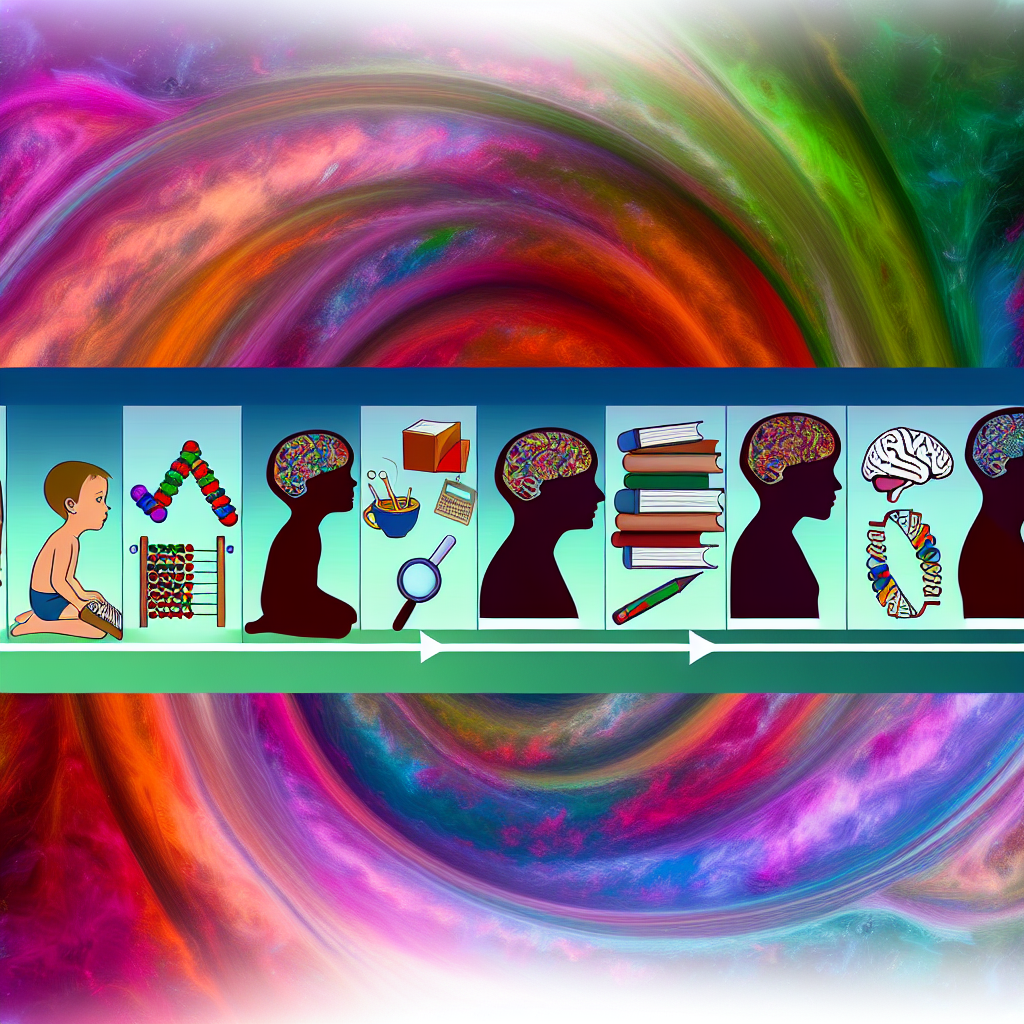
From the curious explorations of toddlers to the complex reasoning of adults, the journey from childhood to adulthood is a remarkable evolution of cognitive abilities. Understanding these stages not only equips us with insights into human development but also guides educators, parents, and society in supporting individuals through this transformative period. In this article, we will explore Childhood to Adulthood: The Fascinating Stages of Cognitive Evolution, breaking down the intricate processes of the mind as it matures, while presenting real-world applications and case studies that demonstrate these concepts in action.
The Foundations of Cognitive Development
Early Childhood: The Formative Years
In the earliest years of life, cognitive development begins at a frenetic pace. During infancy, children develop from mere reflexive actions into more conscious forms of learning and exploration. Jean Piaget, a pioneering developmental psychologist, identified key stages in this journey, including the sensorimotor stage that spans from birth to about two years of age.
Milestones in Infancy
- Sensory Exploration: Infants begin to learn through their senses – sight, touch, and sound.
- Object Permanence: A critical realization occurs at around 8-12 months; children understand that objects exist even when they can’t see them.
Case Study: Maria’s Milestones
Maria, a typical infant, exhibits remarkable cognitive progress in line with Piaget’s theories. At six months, she engages in face-to-face interactions, demonstrating her budding social cognition. By ten months, Maria begins to search for hidden toys, displaying her grasp of object permanence.
Preschools and Play: The Cognitive Playground
Preschool years mark a pivotal period where imaginative play acts as a crucial ingredient in cognitive evolution. Children learn problem-solving and social skills through cooperative play. The cognitive benefits are profound: research shows that kids who engage in play-based learning tend to have enhanced language skills and creativity.
The Transition through Childhood: Concrete Operational Stage
Early School Years: A New Framework for Learning
As children enter school, they transition into the concrete operational stage (ages 7-11) where logical thinking emerges. Children can classify objects, understand the concept of conservation, and perform operations mentally.
Essential Skills Developed
- Logical Reasoning: Children can follow rules and understand cause and effect.
- Mathematical Concepts: Basic arithmetic can be grasped, laying the groundwork for future learning.
Case Study: Jason’s Journey
Consider Jason, who struggles with arithmetic in the third grade. His teacher uses manipulatives to foster his understanding of numbers. By fourth grade, Jason demonstrates proficiency in math, showcasing cognitive growth through interactive learning experiences.
Middle Childhood: Refining Thought Processes
Emotional and Social Cognition
As children grow into middle childhood (ages 6-12), emotional and social cognition develops. This includes an understanding of others’ perspectives and feelings, which is crucial for navigating social relationships.
The Role of Education
Educational environments play a vital role in nurturing these skills. Collaborative group projects can enhance social insight and communication abilities.
Case Study: Emma’s Group Project
Emma works on a school project with peers that involves building a model of an ecosystem. Through cooperation and collective problem-solving, Emma not only learns about ecosystems but also develops empathy and teamwork skills, marking significant cognitive evolution.
Adolescence: Cognitive Maturity
The Formal Operational Stage
As children transition into adolescence (ages 12 and up), they enter the formal operational stage. Here, abstract thinking flourishes, enabling them to grasp complex concepts and engage in hypothetical reasoning.
Characteristics of Adolescent Cognition
- Hypothetical-Deductive Reasoning: Teens can solve problems systematically.
- Metacognition: Adolescents become aware of their thought processes, allowing them to strategize their learning.
Case Study: Alex’s Academic Achievement
Alex, a high school student, excels in debate and philosophy classes. Utilizing formal operational thinking, he constructs persuasive arguments based on abstract principles. This capability not only aids in academics but prepares him for real-world challenges.
Young Adulthood: Integration of Cognitive Skills
The Transition to Independence
As young adults (ages 18-25), individuals further integrate their cognitive skills. Higher education and workforce experiences present opportunities to apply cognitive strategies in real-life scenarios.
Real-world Applications
The transition to adulthood often involves practical problem-solving skills, financial literacy, and career planning.
Case Study: Sara’s Real-Life Decisions
Sara, recently graduated from college, faces the challenge of entering the workforce. By using her critical thinking skills, she navigates job offers, weighing benefits against her career goals. This active application demonstrates the culmination of cognitive evolution from childhood to adulthood.
The Neurobiological Underpinnings of Cognitive Development
Brain Development Across the Ages
Cognitive evolution isn’t just about behavioral changes; it’s also intricately tied to brain development. During childhood, the brain undergoes significant growth, particularly in areas linked to reasoning and impulse control, such as the prefrontal cortex.
Key Findings
- Neural Plasticity: The brain’s ability to reorganize itself is most prominent in childhood.
- Myelination: The thickening of neural pathways occurs, enabling faster and more efficient thought processes.
Table: Key Brain Changes Throughout Childhood to Adulthood
| Age Range | Key Developmental Features | Cognitive Implications |
|---|---|---|
| 0-2 years | Rapid brain growth, synaptic formation | Sensory exploration, language development |
| 2-6 years | Increased frontal lobe activity | Imaginative play, problem-solving |
| 6-12 years | Growth in logical reasoning skills | Understanding of conservation, categorization |
| 12-18 years | Maturation of the prefrontal cortex | Abstract thinking, decision-making skills |
| 18-25 years | Continued brain maturation | Integration of cognitive and emotional skills |
Conclusion
The journey from childhood to adulthood is a fascinating narrative of cognitive evolution, reflecting the intricate interplay between biological maturation, environmental influences, and social experiences. By understanding the stages outlined—from the sensory explorations of infancy to the abstract reasoning of young adulthood—we gain valuable insights into the importance of fostering cognitive development at each stage.
Should we believe that these stages are static? Absolutely not. Each individual’s path may differ, influenced by diverse factors such as cultural contexts, educational opportunities, and personal experiences. Therefore, it is vital for educators, parents, and communities to provide supportive environments that nurture cognitive growth through interactive learning, social engagement, and emotional intelligence development.
Motivational Takeaway
As you reflect on the cognitive evolution from childhood to adulthood, remember that each stage presents both challenges and opportunities. Embrace them, support those in your care, and foster environments where curiosity, inquiry, and critical thinking flourish.
FAQs
1. What are the key stages of cognitive development?
The key stages outlined by Piaget include the sensorimotor stage (birth to 2 years), preoperational stage (2-7 years), concrete operational stage (7-11 years), and formal operational stage (12 years and up).
2. How can parents support cognitive development?
Parents can encourage exploration, engage in play-based learning, provide stimulating environments, and foster discussions that promote reflective thinking.
3. Is cognitive development influenced by culture?
Yes, cultural contexts significantly affect how children learn, express themselves, and interact with their environments, shaping cognitive development uniquely.
4. What role does education play in cognitive evolution?
Education provides structured opportunities for cognitive growth through curriculum and social interactions, allowing children to develop critical thinking and problem-solving skills.
5. How do social experiences impact cognitive development?
Social interactions foster emotional intelligence and empathy, crucial for navigating relationships and understanding diverse perspectives, which are integral to cognitive evolution.
This article not only encapsulates the fascinating stages of cognitive evolution from Childhood to Adulthood but also inspires actionable insights for every reader. With understanding and support, we can enrich our journey through the mind’s incredible landscape.
About the Author