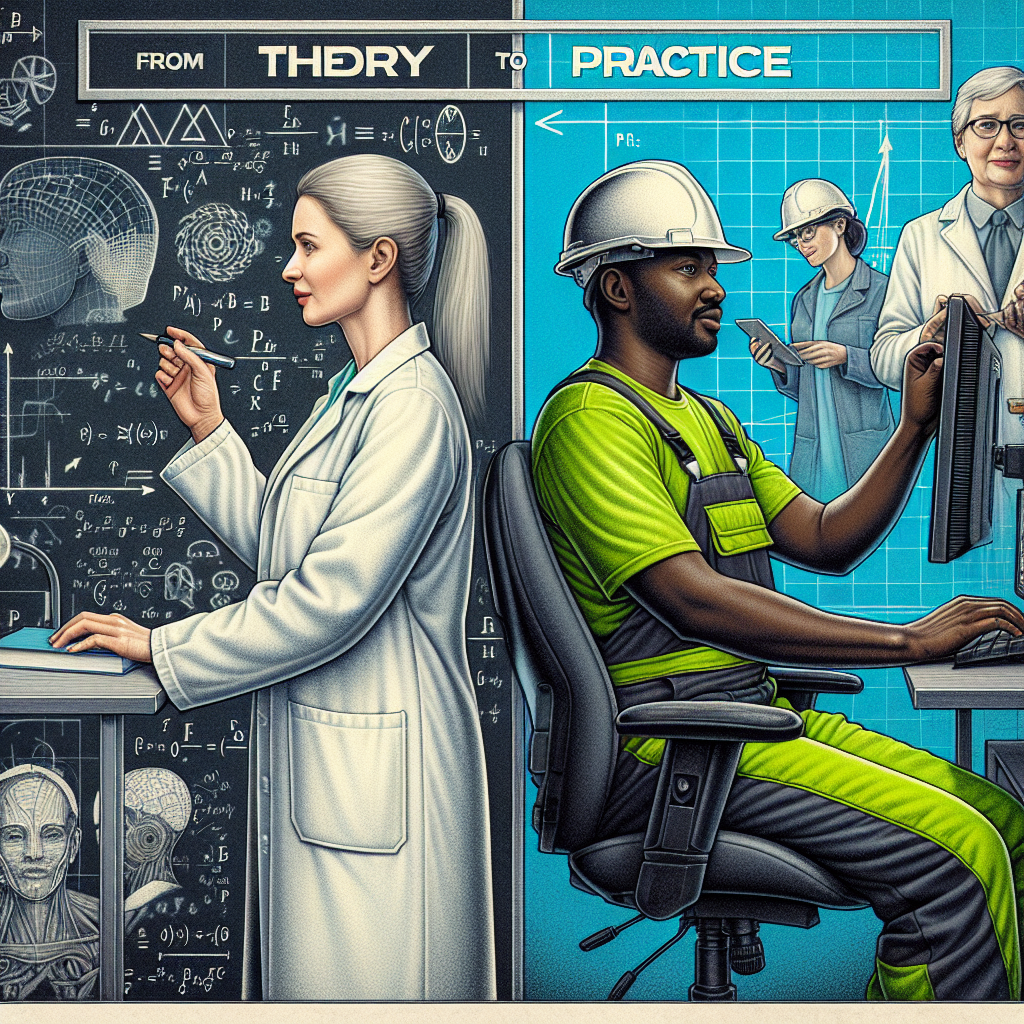
Introduction: The Critical Intersection of Psychology and Real-World Applications
Imagine sitting in a cockpit, navigating countless dials and switches while your life hangs in the balance. Now think about the countless hours of research and design that go into ensuring that cockpit is user-friendly. This scenario exemplifies a critical field: Human Factors Psychology. The study of how humans interact with systems, products, and environments is not just theoretical; it has profound implications in the real world.
From Theory to Practice: Real-World Applications of Human Factors Psychology navigates the bridge between academic understanding and practical implementation. Each day, countless industries, from aviation to healthcare, are transformed by insights gained through this essential branch of psychology. In this article, we will delve deeply into its applications, showcasing how theory translates into effective practices that enhance safety, productivity, and user satisfaction.
Understanding Human Factors Psychology
What is Human Factors Psychology?
Human Factors Psychology studies the relationship between humans and the systems they use. It focuses on understanding human capabilities and limitations to improve system efficiency, safety, and comfort.
The Importance of Human Factors
Applying Human Factors principles can profoundly impact areas like ergonomics, usability, and safety. A well-designed system considers human behavior, leading to improved outcomes such as fewer errors, increased satisfaction, and enhanced overall performance.
Key Components: A Framework for Application
To understand the application of Human Factors Psychology, we need to look at its core components:
- Cognitive Psychology: Understanding how people think and make decisions.
- Physical Ergonomics: The design of tools and environments to fit human anatomy.
- Environmental Design: Creating spaces that promote wellbeing and efficiency.
Real-World Applications of Human Factors Psychology
1. Aviation: Safety in the Skies
Case Study: Cockpit Design in Commercial Aviation
One of the most striking real-world applications of Human Factors Psychology is in aviation cockpit design. The Federal Aviation Administration (FAA) emphasizes the importance of ergonomic design in pilot interfaces.
Analysis
The design modifications of cockpit layouts have led to significant improvements in pilot performance. Research has shown that clear and intuitive displays reduce cognitive load and enhance situational awareness. For instance, the implementation of color-coded instruments allows pilots to process information quickly.
| Feature | Traditional Design | Human Factors-Informed Design |
|---|---|---|
| Instrument Readability | Cluttered displays | Color-coded, minimalistic |
| Button Placement | Random, non-intuitive | Logical, grouped by function |
| Information Overload | High cognitive load | Streamlined, prioritized displays |
By applying Human Factors Psychology principles from theory to practice, the aviation industry has seen a substantial decrease in pilot errors.
2. Healthcare: Improving Patient Safety
Case Study: Medication Administration Systems
In healthcare, Human Factors Psychology informs the design of medication administration systems. A study by the Institute of Medicine highlighted the alarming number of medication errors within hospitals.
Analysis
By redesigning the medication administration processes with a focus on usability and ergonomic design—such as using bar coding and computerized order entry—hospitals reported reduced errors and increased compliance with safety protocols.
| Aspect | Pre-Redesign | Post-Redesign |
|---|---|---|
| Error Rate | 1 in 10 doses | 1 in 100 doses |
| Staff Training Time | 4 hours | 1 hour |
| Compliance Rate | 75% | 95% |
The transition from theory to practice in this case has yielded tangible improvements in patient safety and care quality.
3. Technology: User-Centric Software Design
Case Study: Google’s User Experience Research
In tech, Human Factors Psychology drives user-centric software design. Google employs extensive user experience (UX) research to shape its products.
Analysis
Through iterative testing and feedback loops, Google implements features that align with user behavior. An example is the simplified search bar, which has drastically improved user interaction and satisfaction.
| Design Metric | Before UX Research | After UX Research |
|---|---|---|
| User Satisfaction Score | 70/100 | 90/100 |
| Task Completion Rate | 80% | 95% |
| Average Task Time | 5 minutes | 2 minutes |
Such practical applications highlight the importance of applying theoretical principles to enhance software usability.
4. Transportation: Engineering Safer Road Systems
Case Study: Highway Signage Design
Proper signage is essential in ensuring road safety. Transportation agencies apply Human Factors Psychology to design highway signage that is informative and easily understandable.
Analysis
Taking into account factors such as sightlines, color contrast, and font legibility, agencies have revamped signage protocols. Data shows that well-designed signage reduces accidents by improving driver comprehension.
| Sign Characteristics | Traditional | Human Factors-Focused |
|---|---|---|
| Font Size | Small | Large |
| Color Contrast | Low | High |
| Comprehension Time | 5 seconds | 2 seconds |
By applying Human Factors principles in practice, we can create safer driving experiences for everyone.
5. Consumer Products: Usability in Everyday Items
Case Study: Ergonomic Kitchen Tools
Human Factors Psychology also finds its way into everyday life through product design. Ergonomic kitchen tools, like those developed by OXO, illustrate this perfectly.
Analysis
Customer feedback methods and usability testing have led to designs that reduce strain and enhance the cooking experience. The success of OXO’s tools showcases the importance of consumer input in product design.
| Product Feature | Traditional Design | Ergonomically Designed |
|---|---|---|
| Handle Comfort | Hard, slippery | Soft, non-slip grip |
| Weight Distribution | Uneven | Balanced for ease of use |
These practical applications highlight how Human Factors principles transform mundane products into better tools.
Conclusion: The Path from Theory to Practice
As we’ve seen through various case studies, the journey from theory to practice in Human Factors Psychology offers invaluable insights across multiple domains. By understanding human behavior and applying that knowledge to real-world challenges, we create systems and products that enhance safety, efficiency, and user satisfaction.
The integration of Human Factors principles leads not only to improved functionality but fosters innovation. Whether in aviation, healthcare, technology, or everyday products, the real-world applications of Human Factors Psychology are both broad and deeply impactful.
Looking Ahead: The Future of Human Factors Psychology
As industries continue to evolve, the incorporation of Human Factors Psychology will play an increasingly vital role in developing technology, systems, and processes that prioritize human capabilities.
FAQs
1. What is Human Factors Psychology?
Human Factors Psychology is the study of how humans interact with systems, products, and environments, focusing on optimizing safety, performance, and user experience.
2. How can Human Factors Psychology improve safety?
By designing systems that consider human limitations and capabilities, organizations can minimize errors and enhance safety outcomes across various industries.
3. What role does user feedback play in Human Factors applications?
User feedback is crucial in Human Factors applications, as it informs design decisions and adjustments, ensuring that products and systems meet real users’ needs.
4. How does Human Factors Psychology apply to technology?
In technology, Human Factors Psychology is used to create user-friendly interfaces, enhancing usability and improving the overall user experience.
5. What industries benefit from Human Factors Psychology?
Industries such as aviation, healthcare, transportation, consumer products, and technology all benefit significantly from the principles of Human Factors Psychology.
By embedding these principles into every corner of our lives, we can create a world where systems, products, and environments work seamlessly with human capabilities—proving that the journey from theory to practice in Human Factors Psychology is not merely academic; it is foundational to a better world.
About the Author


The PsyForU Editorial Collective is the research and editorial team of PsyForU Research International. The collective prepares educational, psychological, mental-health-awareness, inclusion, neurodiversity, and research-methodology content for students, parents, educators, researchers, and general readers. PsyForU content is intended for awareness, education, and capacity-building and should not be treated as clinical diagnosis, therapy, medical advice, legal advice, or emergency mental-health support.