What if the secret to lasting success isn’t working harder? Maybe it’s about building smarter systems that protect your most valuable resources? 🤔
You’re about to discover a game-changing approach that connects personal excellence with global impact! From 2015, 193 countries have worked together on the United Nations’ 17 goals for sustainable development. This blueprint works everywhere. Research shows real progress from 2000 to 2020, proving these strategies deliver results! 🌟
This guide changes how you think about achieving your goals while staying balanced. We’ll explore proven methods for performance optimization that don’t leave you exhausted.
You’ll learn practical frameworks for managing your resources effectively. You’ll set protective limits that stick and create habits that support long-term business viability. Whether you’re preparing for certification exams or leveling up your career, these strategies help you thrive without burning out! 💪
Get ready to build your personal roadmap to success that actually lasts! 🚀
Key Takeaways
- Global research from 193 countries proves sustainable strategies deliver measurable results over time
- Effective resource management creates lasting success without exhaustion or burnout
- Setting protective limits helps you maintain consistent achievement across all life areas
- Performance optimization focuses on working smarter through proven systems and frameworks
- Building sustainable habits supports your professional goals while protecting personal well-being
- Practical strategies align your daily actions with your biggest career ambitions
Understanding the Three Pillars of Sustainable Performance
Your journey to long-term excellence starts with mastering three critical components. These pillars—energy management, boundaries, and performance metrics—create a foundation for success. Think of them as the legs of a sturdy stool: remove one, and everything collapses! 💥
Research shows that sustainable outcomes require multiple interconnected factors working together. Clean energy adoption, technological innovation, and smart resource allocation all contribute to long-term viability. The same principle applies to your personal and professional sustainability! 🌱
When you understand how these three pillars support each other, you unlock organizational efficiency and create systems that actually last. Let’s dive into each pillar so you can start building your sustainable success framework today! ✨

What Energy Management Means for Sustainability
Energy management isn’t just about getting more sleep or drinking another coffee! ☕ It’s about strategically allocating your physical, mental, and emotional resources to maximize output without burning out. This is the foundation of sustainable performance that keeps you going year after year!
Think of your energy as a bank account with deposits and withdrawals. Deposits include quality rest, nutritious food, meaningful connections, and activities that bring you joy! 💰 Withdrawals are work tasks, stress responses, difficult conversations, and energy-draining commitments.
Effective resource management means tracking both sides of this equation. You need to know where your energy goes throughout the day! Studies confirm that managing resources—whether clean energy in environmental contexts or personal energy in performance contexts—directly impacts long-term sustainability outcomes. When you master energy management, you create the fuel needed for everything else! 🔥
Why Boundaries Determine Long-Term Success
Boundaries are your protective force field that guards your time, energy, and well-being! 🛡️ Without clear boundaries, you’ll find yourself saying yes to everything and accomplishing nothing that truly matters. This is where most high performers stumble!
Strong boundaries prevent energy leaks—those subtle drains that happen when you take on tasks outside your priorities. They protect your focus by creating dedicated time blocks for deep work. They ensure you’re investing in high-impact activities that align with your goals, not others’ agendas! 📱
Research demonstrates that establishing clear parameters and policies creates the framework for sustained success. Just as organizations need boundary systems to function efficiently, you need personal boundaries to maintain peak performance. When boundaries are firm, your energy management becomes exponentially more effective! 💪
Connecting Performance Metrics to Sustainable Outcomes
You can’t improve what you don’t measure, right? 📊 That’s why performance metrics are the third essential pillar! They give you objective data to make informed decisions about your energy allocation and boundary effectiveness.
Sustainable performance metrics create a feedback loop that shows exactly what’s working and what needs adjustment. Are your morning routines actually boosting productivity? Is that boundary script reducing interruptions? Your metrics tell the truth! 📈
The beauty of tracking lies in continuous improvement. Studies show that R&D expenditures, technological innovation, and measurement systems promote environmental sustainability through long-term cointegrating relationships. Your personal metrics create connections between daily actions and long-term outcomes. When you track consistently, you optimize everything else! 🎯
| Pillar | Primary Function | Key Benefit | Measurement Approach |
|---|---|---|---|
| Energy Management | Strategic resource allocation | Prevents burnout and depletion | Daily energy logs and recovery tracking |
| Boundaries | Protection of time and focus | Eliminates energy leaks | Boundary violation counts and compliance rates |
| Performance Metrics | Data-driven optimization | Enables continuous improvement | Weekly performance reviews and trend analysis |
| Organizational Efficiency | System integration | Creates synergistic effects | Quarterly sustainability assessments |
These three pillars work together synergistically to create something greater than the sum of their parts! Strong energy management supports boundary enforcement. Clear boundaries improve your performance metrics. And tracking metrics helps you optimize energy use. It’s a beautiful cycle of continuous improvement that builds both personal resilience and organizational efficiency! 🌈
Assessing Your Current Energy and Resource Baseline
Let’s talk about where your energy goes each day. Awareness is the first step to change! 🌟 You can’t manage resources well without knowing where you start. This baseline helps you make smart choices about saving energy and improving performance.
Think of this as budgeting for your most valuable resource: your energy! Just like tracking money shows spending habits, tracking energy shows where you invest it daily. This will reveal patterns you never knew existed! 💡
Step 1: Conduct a Complete Energy Audit
Your energy audit is key to managing resources sustainably! It reviews your natural rhythms and shows your daily energy patterns. Track for seven full days to get a full picture, including weekends and weekdays. ⏰
Rate your energy every two hours while awake. Note what you’re doing and how you feel. This detailed tracking is essential for your energy-saving plan!
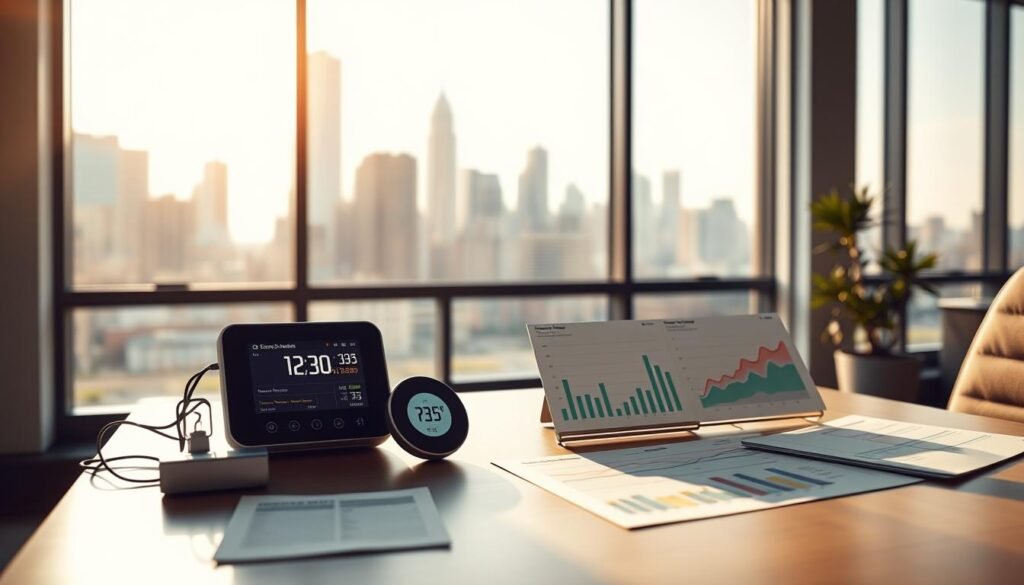
You’ll need the right tools for easy tracking! Here are your best options for capturing energy data:
- Digital apps: Toggl Track, RescueTime, or Clockify for automatic time tracking with manual energy ratings
- Spreadsheet templates: Google Sheets or Excel with columns for time, activity, energy rating, and notes
- Notebook method: A simple journal with timestamps and energy scores works perfectly for analog lovers! 📝
- Habit tracking apps: Habitica or Streaks can send reminders to log your energy levels consistently
Recording Your Energy Patterns Over Seven Days
Here’s how to record for maximum insight! Set reminders every two hours during your waking hours. When it goes off, note your current energy level, what you’re doing, and any relevant factors like hunger or stress.
Just observe and record without judgment! You might find your energy dips after lunch or soars mid-morning. These discoveries help you plan better! ✨
Step 2: Map Your Daily Energy Expenditure
Now, it’s time to uncover your unique energy signature! After seven days, analyze your data to see which activities drain or boost your energy. This mapping turns raw data into useful insights for managing resources! 🔍
Look for patterns across multiple days, not just single instances. Your goal is to find consistent energy trends that show your natural rhythms. ⏰
Categorizing High-Drain and Low-Drain Activities
Review your seven-day log and sort activities into three categories:
- High-drain activities: Tasks that lower your energy rating by 2+ points (meetings, complex problem-solving, difficult conversations)
- Low-drain activities: Tasks that keep or slightly lower your energy (routine work, familiar processes)
- Energy-boosting activities: Tasks that increase your energy rating (creative projects, collaboration, learning new skills) 🚀
This categorization is your roadmap for better scheduling! Knowing the cost of different activities helps you plan days that balance energy use with recovery.
Identifying Peak Performance Windows
Your peak performance windows are when your energy naturally peaks! Look at your data and circle times when you rated 7 or higher. These are prime real estate for your most important work! 🎯
Most people find 2-3 peak windows daily. Maybe you’re sharpest from 9-11 AM, or after 2 PM. Knowing these times lets you schedule tough tasks when you’re best equipped! 📚
Step 3: Calculate Your Sustainability Baseline
Now, bring everything together to find your sustainability baseline! This shows if you’re running an energy surplus or deficit. This info is powerful! 💪 Your baseline combines all data into strategies for improvement.
This step turns tracking into planning by quantifying your current state. You’re setting a benchmark for measuring progress as you adopt eco-efficient practices! 🌱
Creating Your Energy Balance Sheet
Your energy balance sheet works like a financial statement – it shows inputs versus outputs! Create a simple table to capture your weekly energy economics:
| Category | Weekly Hours | Energy Impact | Net Balance |
|---|---|---|---|
| High-drain activities | 25 hours | -50 points | Deficit |
| Low-drain activities | 20 hours | -10 points | Manageable |
| Energy-boosting activities | 10 hours | +30 points | Surplus |
| Recovery time (sleep, breaks) | 56 hours | +40 points | Foundation |
This balance sheet shows where you’re losing energy! If your outputs exceed your inputs, you’re headed for burnout. The numbers guide your next steps! 📊
Setting Realistic Improvement Targets
Based on your balance sheet, set specific, measurable improvement targets for the next 30 days. Aim for progress, not perfection! Your targets might include reducing high-drain activities or increasing recovery time.
Start small to make your targets realistic. A 10-15% improvement in your energy balance is a great first goal! Remember, sustainable resource management is about building lasting systems, not quick fixes. You’ve got this! 🌟
Building Resilient Habits for Energy Conservation
Strong habits protect your energy for what’s important. By creating resilient habits, you build automatic systems for sustainable productivity. These habits help you avoid burnout and work better! 🎯
Good habits grow over time. Small actions add up, changing how you work and live. Let’s explore habits that stick and bring lasting results! 💪
Designing Morning Routines That Protect Your Energy
Your morning sets the tone for the day. It’s key for managing your energy. Start wisely to build energy reserves, not drain them. ☀️
The First-Hour Framework for Sustainable Starts
Keep the first 60 minutes after waking special. Use this time to build energy, not lose it. Start with water to rehydrate. Then, do some light exercise to get your blood flowing.
Eat a nutritious breakfast to fuel your brain. Also, take a few minutes to plan your day. These steps prepare you for success! 🚀
Avoiding Common Morning Energy Drains
Stay away from morning energy thieves! Hitting snooze messes up your sleep. Checking work emails too early stresses you out.
Don’t skip breakfast; your brain needs it. And avoid stressful news to keep your cortisol levels down. Stay away from these energy vampires! 🚫
Implementing Focus Sprints Throughout Your Workday
Focus sprints change how you work. They mix intense focus with breaks to avoid burnout. You’ll do more with less effort! 🎉
The 52-17 Method for Optimal Productivity
Work for 52 minutes, then take a 17-minute break. This boosts your productivity without burning out. Focus on one task during your work block.
When it’s time for a break, take it fully. Use the time for regenerative practices like walking. This rhythm keeps you productive all day. ⏱️
Structuring Deep Work Sessions
Deep work is sacred. Set clear goals before starting. Turn off distractions and focus fully.
Do deep work when you’re most focused. Find your best times and plan around them. 💎
“We are what we repeatedly do. Excellence, then, is not an act, but a habit.”
Creating Evening Wind-Down Protocols
Your evening routine is key for recovery and tomorrow’s success. Regenerative practices help you avoid work stress. A good wind-down is essential for long-term health! 🌙
Step-by-Step Shutdown Routine
Have a consistent shutdown routine. Review your day’s work first. Then, plan for tomorrow without overthinking.
Close work apps and turn off notifications. Change clothes or take a walk to mark the end of work. This helps you separate work from personal time! 🔄
Preparing for Tomorrow Without Depleting Today
Plan wisely, but don’t overdo it. Limit tomorrow’s planning to 10 minutes. Write down your priorities and prepare what you need, then let it go!
Trust your preparation. Your brain needs rest, not more work. Save your energy for tomorrow! 🧠
Tracking and Adjusting Habit Consistency
Tracking your habits shows real progress. Use a notebook, app, or calendar to track. The method doesn’t matter as much as being consistent. 📊
Review your data weekly to see what’s working. Identify patterns and adjust as needed. Flexibility is key—habits should fit your life, not the other way around.
If a habit is slipping, find out why. Is it too hard? Does it clash with other routines? Make changes to keep it working for you! ✨
Building sustainable habits takes time. Celebrate small wins and learn from setbacks. The habits you build now will pay off big time in energy, performance, and well-being! 🏆
Implementing Effective Boundary Scripts and Communication
Boundary communication changes how you balance work and life. It keeps you performing at your best over time. Just like nature needs its boundaries, so do you. This skill helps you avoid burnout and thrive long-term! 🔥
Boundary scripts are your tool for setting limits. They make saying no easier and boost your confidence in tough talks. You’re about to learn a key skill for lasting success! 💪
Step 1: Define Your Non-Negotiable Boundaries
To set boundaries well, you first need to know what they are. This clarity makes everything easier! Start by figuring out your boundaries in key areas of life.
Work-Life Boundary Categories
Your work-life boundaries help you manage your time and energy. They keep you from being overwhelmed by too many demands:
- Time boundaries: Specific work hours, meeting availability windows, and response timeframes
- Energy boundaries: Types of tasks you accept based on your capacity and expertise
- Communication boundaries: Preferred contact methods and expected response times
- Physical boundaries: Workspace separation and personal space requirements
Personal Energy Protection Zones
These are sacred times when you’re off-limits for work. Your morning workout, family dinner, or Sunday rest deserve protection! 🛡️
Choose three to five non-negotiable time blocks each week. Write them down and treat them like important work meetings. These zones help you recharge for everything else!
Step 2: Craft Your Boundary Communication Scripts
Now, let’s make setting boundaries easy with pre-written responses. Boundary scripts take the stress out of saying no.
Your scripts should be clear, professional, and firm. Notice the difference between “Sorry, but I can’t…” and “My current commitments don’t allow me to take this on.” The second version respects limits without making you feel less valuable! 🎯
Professional Email Templates for Boundary Setting
Email templates give you quick responses when you’re too busy. Here are some scripts you can use:
- “Thank you for thinking of me! My current commitments don’t allow me to take this on, but I can revisit in [specific timeframe].”
- “I’m protecting my evening hours for personal priorities, but I’m happy to address this first thing tomorrow morning.”
- “This falls outside my current focus areas. Here’s what I can offer: [alternative solution].”
- “I appreciate the opportunity. To maintain quality on existing projects, I need to decline at this time.”
Verbal Scripts for In-Person Conversations
Setting boundaries face-to-face needs confidence. Practice these phrases until they feel natural:
- “I appreciate the opportunity, but I need to decline to maintain my current project quality.”
- “That’s outside my capacity right now, but here’s what I CAN do…”
- “I’m not available during that timeframe, but I can help you on [alternative date].”
- “Let me check my commitments and get back to you by [specific time].” (Buying decision time)
Handling Boundary Pushback Professionally
Some people will test your boundaries – that’s normal! How you respond matters more than their pushback.
Stay calm and repeat your boundary with slight variation: “I understand this is important, AND my answer remains the same.” Notice the word “and” instead of “but” – this acknowledges their needs without changing your position! 💬
If pressure continues, use the broken record technique. Repeat your core message three times with consistent tone. Most people respect boundaries when they see you’re serious about maintaining them.
Step 3: Practice and Refine Your Delivery
Scripts only work when you deliver them confidently. This requires practice before big moments! You wouldn’t perform without rehearsal, right? 🎭
Role-Playing Scenarios for Confidence Building
Practice with a trusted colleague or friend. Create scenarios where they play demanding roles.
Focus on maintaining steady tone and clear body language. Record practice sessions to identify areas where you sound uncertain or apologetic. Adjust until your delivery projects confidence!
Adjusting Scripts Based on Outcomes
Track which scripts work best in different situations. If certain phrases don’t land well, refine them! Your communication should feel authentic to your personality while maintaining firm boundaries.
Create a simple feedback log noting what worked and what needs adjustment. This iterative process builds your personal library of effective boundary scripts.
Maintaining Boundaries Under Pressure
The real test comes during deadline crunches, urgent requests, and guilt-inducing appeals. This is where your commitment to sustainable performance gets challenged! 💪
Remember that every time you honor your boundaries, you reinforce them. Each protected boundary strengthens your capacity for long-term success. Temporary discomfort beats permanent burnout!
When pressure mounts, pause before responding. Take three deep breaths and recall why these boundaries exist. Your future self will thank you for staying strong when it mattered most! 🌟
Review your boundary effectiveness monthly. Are you maintaining your energy protection zones? Do your scripts need updating? Continuous refinement keeps your boundary system working as your situation evolves.
Designing Your Optimal Ergonomic Setup for Sustained Performance
Many professionals overlook how their workspace affects their energy. Let’s change that! ⚡ Your workspace design impacts your ability to stay focused without getting tired. An ergonomic setup is key to keeping your body and mind healthy over time! 🪑
Things like lighting, temperature, and where you place your furniture affect your productivity a lot. When your workspace doesn’t match your body’s natural alignment, you waste energy all day.
“Good design is good business.”
Step 1: Assess Your Current Workspace
Start by checking how your workspace feels after a few hours. Do you feel tension in your neck, shoulders, or back? These signs show your setup needs improvement! 🔍
Identifying Ergonomic Risk Factors
Look out for these common problems in your workspace:
- Monitor too low, making you tilt your head
- Chair doesn’t support your lower back
- Keyboard and mouse are hard to reach
- Feet don’t have enough support
- Screen glare from windows or lights
These issues add up and hurt your performance all day! 😓
Measuring Your Setup Against Best Practices
Use the “90-90-90 rule” to check your setup: Your elbows, hips, and knees should form 90-degree angles. This helps spread out your body weight and reduces muscle strain.
Measure with a tape or use apps to check your workspace. Many people find their setup causes chronic discomfort! 📏
Step 2: Select and Arrange Essential Equipment
Now, fix the problems you found by choosing and arranging the right equipment! This step turns your workspace into a place that helps you perform better. 💪
Chair Height and Lumbar Support Configuration
Your chair is vital for sustainable growth in your career! Adjust it so your feet are flat on the floor or on a footrest. This keeps your circulation good and your back comfortable.
The lumbar support should fit your lower spine well. If it doesn’t, add a cushion or towel. This simple change can stop back pain and save your energy! 🎯
Monitor Placement and Eye-Level Optimization
Put your monitor so the top is at or below eye level, about an arm’s length away. This avoids “tech neck” and its headaches and shoulder tension! 🎯
If you use a laptop, get a stand and external keyboard. Laptops make it hard to have good neck and wrist positions at the same time. 💻
Keyboard and Mouse Positioning Techniques
Place your keyboard right in front of you and your mouse at the same level, close enough to keep your elbows in. Your wrists should be straight, not bent up or down.
Try a split keyboard or vertical mouse if your wrists hurt. These tools help your body stay in natural positions and prevent injuries! ⌨️
Step 3: Control Environmental Factors
Your workspace environment is also key to saving your energy! Things like temperature, lighting, and air quality affect how well you think and feel.
Lighting Setup for Reduced Eye Strain
Face your desk away from windows to avoid glare. Use adjustable lights for focused work, like in the morning or evening. 💡
Good lighting is bright enough to read without squinting but not too harsh. It should avoid shadows or reflections on your screen.
Temperature and Air Quality Management
Research shows you work best in temperatures between 68-72°F (20-22°C). Too cold or too warm can make you uncomfortable. Find the perfect temperature for your environmental resilience! 🌡️
Air quality is also important. Add plants, use an air purifier, and open windows for fresh air. Better air means better brain function! 🌿
Creating Movement Zones in Your Workspace
Even with the best ergonomic setup, sitting too long is bad for you. Make areas for different activities in your workspace.
Use a standing desk or adjustable desk to switch between sitting and standing. Create a spot for stretching or quick breaks. These green business practices help your body stay active! 🏃
Even a small yoga mat or resistance bands can remind you to move. Your workspace should support both work and physical health! 🎯
Mastering Micro-Breaks and Strategic Recovery Periods
Breaks might seem like a waste of time, but science says they’re key to staying sharp! 🚀 The secret to staying focused all day is knowing when to take breaks. These breaks are not just a luxury; they’re a must for keeping your energy up and your mind sharp!
Understanding the Science of Recovery Intervals
Your brain has natural cycles called ultradian rhythms. These cycles make you more alert and less alert at different times. They last about 90-120 minutes, meaning you can focus better in short bursts throughout the day! Ignoring these cycles can drain your energy and hurt your performance. 🧠
Working with your natural cycles can make you more productive! It’s about listening to your body’s needs instead of ignoring them.
How Micro-Breaks Prevent Energy Depletion
Micro-breaks of 5-15 minutes every 90 minutes stop you from getting too tired. They’re not a break from work; they’re part of it! These short pauses help you focus better later on.
Studies show that taking regular breaks keeps you performing well all day. Without breaks, your brain function drops by 40% by late afternoon!
The Ultradian Rhythm and Natural Energy Cycles
Ultradian rhythms affect more than just how alert you are. They also impact your creativity, decision-making, and mood. Working with these cycles helps you build up your energy over time! 💪
Being productive isn’t about working longer hours. It’s about working smarter by respecting your body’s natural rhythms.
Step 1: Schedule Your Break Intervals
It’s important to plan your breaks ahead of time. Waiting until you feel tired means you’ve already lost too much energy! ⏰ You might not notice you’re tired until it’s too late.
Having a set break schedule helps you stay consistent. It’s a powerful way to keep your energy up all day!
Technology makes it easy to remember when to take breaks! Set reminders on your phone or computer to remind you when it’s time for a break. Apps like Time Out or simple alarms work great for this! 📱
Using technology for breaks saves you mental energy. It makes sure you take breaks without having to think about it, helping you stay consistent.
Aligning Breaks with Task Completion
Try to take breaks when you’ve finished a task or reached a milestone. This makes breaks feel more rewarding! It also helps you avoid interrupting your flow of work.
Work in 90-minute blocks, followed by a break. This rhythm helps you stay energized all day!
Step 2: Choose High-Impact Recovery Activities
What you do during breaks is very important! Not all breaks are created equal. The best ones restore your energy, focus, and mood. 🌟
Choosing the right activities for your breaks can greatly improve your day. Let’s look at some effective options!
Physical Movement Breaks for Desk Workers
If you sit a lot, moving during breaks is key! Just 5 minutes of activity boosts your blood flow and brain function. Your body wasn’t made for sitting all day! 🏃♀️
Try these activities during your breaks:
- Standing and stretching – Release muscle tension that accumulates during focused work
- Walking – Even around your room or office provides cardiovascular benefit
- Shoulder rolls and neck stretches – Target areas that hold stress from computer work
- Spinal twists – Restore mobility to your back and improve posture
- Desk yoga poses – Gentle movements that fit any workspace
The goal is not to exercise hard. It’s to move gently to counteract sitting. These activities help you handle tough workdays better!
Mental Refresh Techniques and Breathing Exercises
Mental breaks are just as important as physical ones! Your focus is a limited resource that gets used up. Mental refresh techniques help you recharge. 🧘
Powerful ways to refresh your mind include:
- 4-7-8 breathing – Inhale for 4 counts, hold for 7, exhale for 8 (calms nervous system)
- Eye rest exercises – Close your eyes or gaze at distant objects to relax eye muscles
- Quick guided meditation – 5-minute sessions that clear mental clutter
- Nature viewing – Looking at outdoor scenes reduces stress hormones measurably
These techniques are not just nice extras. They’re proven ways to keep your mind sharp! People who use mental breaks report 35% less mental fatigue by the end of the day.
Step 3: Measure and Optimize Break Effectiveness
To know if your breaks are working, you need to measure them! Track how you feel before and after breaks using simple scores. This data shows you what works best for you! 📊
Keep a log of your breaks for two weeks. You’ll see which activities help you the most. What works for others might not work for you, and that’s okay!
If breaks aren’t helping, try changing a few things. Adjust the length, timing, or activities. Your break strategy should change based on what you learn from your data!
Remember, making your breaks better is an ongoing process. Your needs change over time. Regularly checking how your breaks are working keeps you at your best! 🎯
Establishing Digital Detox Modes for Boundary Protection
Reclaiming control over your digital life is not just about being productive. It’s about protecting your most valuable resource: your energy! ⚡ Think of digital detox modes as eco-friendly practices for your mental environment. They help reduce the pollution of constant notifications and create a circular economy of focused attention. This attention flows back to what truly matters! 🌟
When you set clear boundaries around technology use, you protect your cognitive resources from depletion. The average person checks their phone 96 times per day—that’s once every 10 minutes during waking hours! Each interruption costs you precious mental energy that could fuel your peak performance.
Step 1: Audit Your Digital Consumption Patterns
Let’s start with brutal honesty about your screen habits! 📊 You can’t manage what you don’t measure, so tracking your digital consumption across all devices is essential for understanding where your attention actually goes.
Tracking Screen Time Across All Devices
Your smartphone already has powerful built-in tracking tools that reveal shocking truths about your usage patterns. Navigate to Settings → Screen Time on iPhone or Digital Wellbeing on Android to access detailed reports.
Track your usage for a full week without changing your behavior. Note which apps consume the most time and when you tend to use them—morning, afternoon, evening, or late night. Most people discover they spend 3-5 hours daily on their phones alone, not counting computers and tablets! 😱
Identifying High-Impact Digital Stressors
Not all screen time affects your energy equally. Some digital activities energize you, while others drain you completely. High-impact digital stressors are those apps, websites, or communication channels that leave you feeling depleted.
Common culprits include social media platforms (triggering comparison and anxiety), news websites (inducing stress and overwhelm), and work email after hours (violating personal boundaries). Identify your top three digital stressors by noticing how you feel after using each app or platform.
Step 2: Create Your Digital Boundary Framework
Now that you understand your patterns, it’s time to design your digital boundary framework with specific, actionable rules! 🎯 This framework transforms vague intentions into concrete sustainable practices that protect your energy reserves.
Setting Device-Free Time Blocks
Establish sacred device-free zones in your daily schedule. These aren’t suggestions—they’re non-negotiables for maintaining peak performance! Your device-free time blocks should include the first hour after waking, all meal times, the last hour before bed, and during family or social activities.
These protected periods allow your nervous system to reset and your attention to fully engage with the present moment. Without digital interruptions, you experience deeper connections, better sleep, and enhanced creativity! 💤
Step 3: Implement Technology Tools and App Limits
Leverage technology itself to reinforce your digital detox modes! Modern smartphones and computers offer powerful tools that limit access to distracting apps during designated periods. 💪
Using Focus Mode and Screen Time Controls
iOS Focus Modes and Android’s Digital Wellbeing features allow you to create customized profiles for different contexts—Work, Personal, Sleep, and more. Each profile determines which apps can send notifications and which are accessible.
Set app limits that automatically lock distracting apps after you’ve used them for a specified duration. For example, limit social media to 30 minutes total per day. When you hit that limit, the app becomes inaccessible until the next day.
Installing Website Blockers and Productivity Apps
Install dedicated website blockers like Freedom, Cold Turkey, or StayFocusd that prevent access to time-wasting sites during work hours. These tools work across all browsers and can’t be easily disabled—removing temptation entirely!
Forest is an engaging app that gamifies focus by growing virtual trees while you stay off your phone. RescueTime tracks your digital activity automatically and provides detailed productivity reports. These tools transform abstract intentions into concrete accountability! 🌳
Building Engaging Offline Alternatives
Nature abhors a vacuum, and so does your attention! Simply removing digital distractions creates an uncomfortable void. Fill that space with engaging offline alternatives that genuinely energize you. 📚
Build a list of eco-friendly practices for your attention: physical books, hands-on hobbies (woodworking, painting, gardening), outdoor activities (hiking, cycling, walking), face-to-face conversations, or creative projects. These activities create a true circular economy where attention flows toward meaningful experiences that replenish your energy! 🎨
| Digital Activity | Energy Impact | Offline Alternative | Implementation Strategy |
|---|---|---|---|
| Social media scrolling | High depletion, comparison anxiety | Phone call with friend or family member | Replace 30 min of scrolling with one meaningful conversation daily |
| News consumption | Stress induction, overwhelm | Read physical newspaper or book | Limit news to 15 minutes at breakfast, switch to book afterward |
| Late-night phone use | Sleep disruption, melatonin suppression | Evening journaling or light reading | Charge phone outside bedroom, keep journal on nightstand |
| Mindless gaming | Time loss, delayed obligations | Board games or outdoor sports | Schedule weekly game night with friends or family |
The key to maintaining your digital detox modes long-term is making offline alternatives more appealing than their digital counterparts. When reading a physical book feels more rewarding than scrolling Instagram, you’ve achieved true sustainability! 🌟
Sustainability: Energy, Boundaries, and Long-Term Performance in Organizations
Organizations that focus on sustainability do more than just survive. They thrive in tough times, thanks to their commitment to the planet and people. By applying personal energy management to the company level, businesses become strong and protect their people and the environment. Corporate sustainability changes how companies use resources, set limits, and measure success across all areas and groups! 🏢
Implementing Corporate Sustainability Frameworks
Starting a sustainable organization means setting up frameworks for making decisions at every level. This is like giving your company a sustainability DNA that shapes everything from planning to daily work. Your framework should have two key parts that work well together! 🎯
Conducting Organizational Energy Audits
To improve how your company works, you need to know how it uses resources. An energy audit looks at how much energy your company uses, how it treats its people, and how efficient it is. This shows where you can save resources and where your investments pay off! 📊
Your audit should track things like carbon emissions, waste, employee happiness, and how green your supply chain is. What gets measured gets managed, and detailed audits are the first step to real improvement!
Setting Company-Wide Sustainability Goals
After you know your starting point, set clear, achievable goals that match sustainable development goals (SDGs) and industry standards. Your goals should tackle environmental, social, and governance issues. For example, companies might aim to cut emissions and make their supply chains more transparent. Service companies might focus on keeping employees happy and using digital resources wisely! 🌍
Share these goals openly to keep everyone accountable and build trust. Being open shows you’re serious about corporate sustainability!
Designing Energy Management Systems for Businesses
Good energy management systems help your company use, save, and generate power better. They cut costs and reduce harm to the environment. Studies show that new tech and clean energy investments help companies be more corporate environmental responsibility by cutting carbon emissions! 💡
Resource Allocation and Conservation Strategies
Smart use of resources means investing in energy-saving tech, planning production better, and cutting waste. Use systems that watch energy use in real-time and adjust when needed. Saving energy means using less electricity, water, and raw materials, and working smarter! ⚡
Don’t forget to save employee time, the most valuable resource in your company!
Implementing Renewable Energy Solutions
Switching to renewable resources like solar, wind, or geothermal power cuts down on fossil fuel use. Many companies start with solar panels or buy green energy credits. The oil and gas sector needs to show it’s working on long-term carbon reduction through methane cuts, carbon capture, and clean energy investments! 🌱
Renewable energy solutions cost money upfront but save money in the long run and improve your brand. Investing in clean energy tech makes your company a leader in the field!
Establishing Organizational Boundaries and Policies
Just like personal boundaries protect energy, company boundaries protect employees and sustainability. Companies that really care about corporate social responsibility have policies that prevent burnout and respect work-life balance. These boundaries show what your company values and help people work their best! 🛡️
Work-Life Balance Policies and Flex Arrangements
Companies that offer flexible schedules, remote work, plenty of vacation time, and family leave show they care about their people. These aren’t just perks; they’re smart investments in your team’s well-being. Companies that value work-life balance have happier, more productive employees! 🏠
Being flexible shows corporate responsibility and attracts top talent who value their well-being and career growth!
Meeting-Free Zones and Communication Protocols
Too many meetings can drain a company’s energy fast! Create “No Meeting Wednesdays” to protect focused work time. Set up clear rules for when to respond, after-hours work, and how to communicate different types of messages! 📧
These rules stop meetings from ruining productivity and let deep work drive innovation and strategy! 🤔
Measuring Corporate Sustainability Performance
To see if you’re getting closer to your sustainability goals, you need to track progress in environmental, social, and economic areas. Sustainable business practices mean always checking and adjusting based on data. Most countries have gotten better at sustainable development from 2000 to 2020, showing that setting goals and measuring progress works! 📈
Keep an eye on things like carbon footprint, energy use, waste, employee happiness, and SDG progress. Compare your performance to others in your field and over time to find areas for improvement! 📊
| Industry Sector | Primary Sustainability Focus | Key Performance Metrics | Strategic Initiatives |
|---|---|---|---|
| Manufacturing | Emissions reduction and supply chain responsibility | Carbon emissions per unit, waste diversion rate, supplier sustainability scores | Circular economy practices, renewable energy strategies, ethical sourcing programs |
| Oil and Gas | Decarbonization and governance transparency | Methane reduction percentage, carbon capture capacity, renewable investment ratio | Alternative energy portfolios, carbon offset programs, ESG reporting frameworks |
| Technology | Data center efficiency and e-waste management | Power usage effectiveness, renewable energy percentage, electronic recycling rates | Green computing initiatives, sustainable hardware design, digital sustainability tools |
| Services | Employee wellbeing and operational footprint | Employee engagement scores, remote work percentage, office energy consumption | Flexible work policies, wellness programs, sustainable office operations |
Regularly sharing your progress shows you’re serious about sustainability. It builds trust and shows your commitment to a better future! 🌟
Recognizing and Responding to Burnout Signals
Burnout doesn’t happen overnight. It builds up slowly through ignored burnout signals and crossed boundaries! ⚠️ Learning to recognize these warning signs early is key to protecting your career and wellbeing. Your body and mind give you plenty of advance notice before reaching critical depletion levels!
Think of burnout prevention like monitoring a car’s dashboard. You wouldn’t ignore the check engine light, right? 🚗 Your personal warning indicators deserve the same immediate attention and response!
Identifying Early Warning Signs of Energy Depletion
Your body communicates clearly when you’ve pushed beyond sustainable limits. The challenge is learning to listen before minor symptoms become major problems! Understanding these early warnings helps you maintain resource efficiency in your daily performance.
Catching burnout signals early gives you maximum flexibility for correction. Wait too long, and your recovery options become significantly more limited and time-consuming! 🕐
Physical Symptoms of Unsustainable Practices
Your physical body responds first when you exceed ecological limits in your work patterns. These tangible symptoms shouldn’t be ignored or pushed through with caffeine and willpower!
- Chronic fatigue: Exhaustion that doesn’t improve even after full nights of sleep
- Weakened immunity: Frequent colds, infections, or illnesses that last longer than normal
- Persistent tension: Ongoing headaches, muscle pain, or jaw clenching throughout the day
- Sleep disruption: Difficulty falling asleep, staying asleep, or waking feeling unrefreshed
- Appetite changes: Significant increases or decreases in eating patterns or food cravings
Emotional and Mental Burnout Indicators
Mental and emotional symptoms often develop alongside physical warnings. These psychological signals reveal when your current practices have become unsustainable! 🧠
- Cynicism or detachment: Feeling disconnected from work you previously found meaningful
- Reduced accomplishment: Sense that nothing you do makes a real difference despite effort
- Concentration difficulties: Inability to focus, make decisions, or remember important details
- Emotional reactivity: Increased irritability, anxiety, or unexpected emotional responses
- Social withdrawal: Avoiding colleagues, friends, or activities you normally enjoy
Step 1: Conduct an Immediate Energy Assessment
When you recognize multiple warning signs, take action immediately! An honest energy assessment helps you understand exactly where you stand and what needs to change right now. ✅
This assessment isn’t about judgment – it’s about gathering accurate data to guide your recovery strategy. Brutal honesty serves you better than optimistic denial!
Rating Your Current Depletion Level
Use a simple 1-10 scale to measure your current state. A rating of 1-3 indicates you’re functioning well with adequate reserves. Scores of 4-6 suggest moderate depletion requiring attention. Ratings of 7-10 signal crisis territory demanding immediate intervention! 🚨
Check your energy level at three specific times: morning (after waking), midday (after lunch), and evening (before bed). This pattern reveals whether your depletion is temporary or chronic.
Identifying the Primary Contributing Factors
Pinpoint the specific sources draining your energy reserves. Common culprits include excessive workload, inadequate boundaries, poor sleep quality, toxic relationships, insufficient recovery time, or misaligned values! 🎯
List your top three energy drains in order of impact. You can’t fix everything at once, but you can address the biggest contributors first!
Step 2: Implement Emergency Recovery Protocols
When your assessment reveals serious depletion, activate emergency measures immediately! These protocols focus on rapid stabilization before building long-term prevention strategies. Think of this as first aid for your wellbeing! 🏥
Emergency protocols require courage because they often mean disappointing others temporarily. Remember: you can’t pour from an empty cup, and burning out helps nobody!
Taking Strategic Time Off for Restoration
Complete disconnection isn’t a luxury – it’s a necessity when facing genuine burnout signals! Even 2-3 days of total rest can begin reversing depletion when you truly unplug from all work demands.
During restoration time, avoid checking email, thinking about projects, or “just quickly” handling urgent matters. Your brain needs permission to fully disengage and recover! 🏖️
Delegating and Renegotiating Commitments
Identify everything on your plate that someone else could handle or that could be postponed. Delegate tasks even when you think only you can do them properly – perfection isn’t the goal right now, survival is!
Use clear boundary scripts to renegotiate deadlines: “I need to adjust this timeline to maintain quality and effectiveness. Can we move the deadline to [date] or reduce the scope?” Most people will understand and support your honesty! 💬
Step 3: Build Long-Term Burnout Prevention Strategies
Recovery addresses the immediate crisis, but prevention ensures you never reach that point again! Building sustainable practices requires integrating organizational resilience principles into your daily rhythms. This means creating systems that protect you automatically! 🛡️
Prevention strategies work best when they become non-negotiable habits. Make your wellbeing infrastructure as reliable as your morning coffee routine!
| Prevention Strategy | Implementation Method | Expected Outcome | Review Frequency |
|---|---|---|---|
| Energy buffers | Schedule only 60% of available time | Flexibility for unexpected demands | Weekly adjustment |
| Boundary maintenance | Protected focus blocks and off-hours | Sustained concentration and recovery | Daily monitoring |
| Recovery rituals | Non-negotiable breaks and restorative activities | Consistent energy replenishment | Daily tracking |
| Workload monitoring | Track hours, stress levels, and satisfaction | Early warning before depletion | Weekly review |
Incorporate environmental resilience thinking into your work design. Just as ecosystems need diversity and recovery periods, you need variety in tasks and regular restoration intervals! 🌱
Build proactive check-ins into your calendar – monthly energy assessments that catch small declines before they become major problems. Prevention requires ongoing attention, not one-time fixes!
Remember that sustainable performance isn’t about working at maximum capacity constantly. It’s about finding your optimal rhythm that you can maintain year after year without breaking down! 💪
Developing Your Review Cadence System
A multi-layered review system is like having an accountability partner. It helps you stay on track with your energy and boundary goals. Without regular checks, you might lose your way without even noticing. 🔄
Studies on sustainable development show that regular checks are key. They help measure progress. Your review cadence is the secret to getting better all the time! Let’s create a system that keeps you on track every day, week, quarter, and year! 🎯
Creating Daily Reflection Practices
Daily reflection takes just 5-10 minutes but offers huge benefits. It happens at the end of each day. It builds awareness and drives improvement.
The power of daily review is catching issues early and celebrating wins right away. You’ll spot patterns before they become big problems! ✨
End-of-Day Energy Review Questions
Every evening, ask yourself these four questions:
- What gave me energy today? Find out what activities or accomplishments boosted your energy.
- What drained me? Identify what drained your energy without judgment.
- Did I honor my boundaries? Be honest about your boundary successes and failures.
- What’s one thing I’ll do differently tomorrow? Choose one thing to improve tomorrow.
Tracking Boundary Successes and Violations
Keep a log of your boundary moments every day. Track successes like saying no to non-urgent requests. Also, document violations when you overcommit or sacrifice self-care. This isn’t about judgment, but awareness and learning! 🎉
Celebrate every win, no matter how small. Protecting your boundaries strengthens your sustainability foundation!
Conducting Weekly Performance Reviews
Your weekly review is every Sunday evening or Monday morning. It transforms daily data into insights. 📊
Set aside 30-45 minutes for this important practice. You’ll analyze trends, adjust strategies, and plan ahead with purpose.
Analyzing Energy Trends and Patterns
Look at your daily tracking from the past week. Ask: Are certain days more draining? Do specific activities always energize or deplete you? What patterns do you see?
Maybe you notice that Tuesday afternoons always crash your energy. Or morning meetings energize you while afternoon calls drain you. These insights are gold for optimization! 💡
Adjusting Strategies Based on Data
Now take action on those patterns! If Thursday afternoons always crash your energy, schedule lighter tasks then. Protect Thursday mornings for deep work.
Data-driven decisions eliminate guesswork. You’re not guessing – you’re responding to real performance metrics from your own experience!
Planning the Week Ahead with Sustainability Focus
Look at your upcoming calendar proactively. Identify energy drains before they happen. Schedule breaks around challenging meetings and block time for priorities before filling your schedule with reactive tasks!
This forward-thinking approach protects your energy and boundaries in advance. Prevention beats recovery every time! 🛡️
Implementing Quarterly Goal Assessment
Every three months, do a deep evaluation of your sustainability journey. This quarterly goal assessment connects your daily efforts to long-term outcomes.
Block 1-2 hours for this important review. You’re stepping back to see the bigger picture!
Evaluating Long-Term Performance Metrics
Compare your current state against your initial targets. Are you making progress toward your energy, boundary, and performance goals?
Sustainable performance metrics show if your approach is working over time. What’s working well? What needs a big change? Be honest and specific! 📈
Realigning Priorities and Boundaries
Life changes, and so should your boundaries. Maybe your role has grown, personal circumstances have shifted, or new priorities have emerged. That’s normal and healthy!
Adjust your boundaries to reflect current realities. This flexibility prevents frustration and keeps your system relevant and sustainable.
Annual Sustainability Review Process
Once a year – usually in January or on your work anniversary – do a big-picture assessment. This annual review looks at long-term business viability and corporate longevity factors. 🌟
Ask the key question: Is your current approach sustainable for another year? Five years? What major changes are needed for continued success and well-being?
This process informs your goal-setting for the year ahead and celebrates your journey so far!
| Review Frequency | Time Investment | Key Focus Areas | Primary Outcomes |
|---|---|---|---|
| Daily Reflection | 5-10 minutes | Energy sources, boundary moments, immediate adjustments | Pattern awareness, quick corrections, momentum building |
| Weekly Review | 30-45 minutes | Trend analysis, strategy adjustments, proactive planning | Data-driven decisions, optimized schedules, prevented burnout |
| Quarterly Assessment | 1-2 hours | Goal progress evaluation, priority realignment, boundary updates | Course corrections, sustained performance metrics, strategic pivots |
| Annual Review | 2-3 hours | Long-term viability assessment, major system changes, celebration | Renewed commitment, strategic vision, corporate longevity planning |
Your review cadence system keeps you accountable, aware, and always improving! Start with daily reflection this week – you’ll be amazed at the insights you gain! 🚀
Maintaining Travel Rhythm and Sustainable Mobility
Traveling for work can be tough on your energy and boundaries. But, you can keep your performance up while being kind to the planet. 🌍
Here’s a three-step plan to stay energized and effective while traveling. It helps protect your personal resources and supports the environment!
Step 1: Prepare Your Energy Reserves Before Travel
Getting ready before you leave is key. Start 2-3 days early to build up your energy. This helps you deal with travel surprises.
Pre-Travel Sleep Banking and Nutrition Planning
Sleep banking means getting extra sleep before you go. It’s like saving energy for when you need it most! 💤
It helps you handle airports and new time zones better. This simple trick cuts down on travel fatigue a lot.
Plan your snacks too. Pack healthy foods like nuts and fruit. Knowing what to eat at your destination helps when you’re tired and hungry. Your choices get worse when you’re tired!
Packing Essential Boundary-Maintenance Tools
Make sure your packing list includes things that keep your routines going:
- Headphones for personal space in busy places
- Sleep aids like eye mask, ear plugs, and melatonin
- Regular supplements or medications to keep things consistent
- Workout clothes for keeping up with your exercise routine
- Ritual items like your journal, book, or meditation app downloaded offline
Step 2: Protect Boundaries During Travel
Keeping your boundaries up while traveling needs clear plans. You can’t just hope for the best. ✈️
Setting Expectations with Colleagues and Clients
Tell people you’re available before you leave, not while you’re away. Use scripts like: “I’ll have limited availability during travel days but will respond to urgent items by end of business.” This stops stress from building up!
Also, say things like: “I’m traveling Tuesday-Thursday and will be fully available again on Friday.” This keeps your energy up and helps others plan better.
Creating Travel-Specific Routines and Rituals
Having routines helps you stay consistent in new places. Make a morning stretch you can do anywhere. Create a playlist for work or relaxation. And schedule a call home to feel grounded! ⚓
These rituals keep you stable. They tell your brain you’re staying true to yourself, even in new places!
Managing Time Zone Transitions Sustainably
Time zone changes mess with your body’s rhythm. Try to adjust your schedule a bit each day before traveling. Stay hydrated to avoid getting too tired! 💧
Get sunlight at the right times to adjust naturally. It takes a day or two to get back to normal. Plan your schedule so you’re not too tired for important meetings right away.
| Travel Phase | Energy Protection Strategy | Boundary Action | Recovery Focus |
|---|---|---|---|
| Pre-Travel (2-3 days before) | Sleep banking 30-60 extra minutes | Set availability expectations | Build energy reserves |
| During Travel | Maintain simplified routines | Use boundary scripts consistently | Hydration and movement |
| Post-Travel (1-2 days after) | Buffer days with reduced load | Gradual capacity resumption | Active rest and reintegration |
| Ongoing Pattern | Assess sustainable frequency | Evaluate travel necessity | Long-term rhythm maintenance |
Step 3: Execute Post-Travel Recovery and Reintegration
Most people forget about recovery after trips. But it’s just as important as getting ready! 🏥
Scheduling Buffer Days After Returning
Take at least one day off after you get back. Use it to unpack, do laundry, and restock. These tasks help prevent stress and overwhelm! 🛋️
Buffer days also let you catch up on emails without feeling rushed. This stops the post-travel stress that can drain your energy! 💻
Gradually Resuming Full Performance Capacity
Don’t try to go back to full speed right away. Your body and mind need time to adjust. Start at 70-80% capacity on your first day back and increase slowly.
This careful approach helps avoid the crash that often happens after travel. Your immune system is weaker after traveling, so don’t push too hard! 💊
“Sustainable travel isn’t just about carbon offsets—it’s about recognizing that your personal energy is a finite resource that deserves the same conservation attention we give to environmental resources.”
Building Sustainable Travel Frequency Patterns
Really think about if your travel schedule is sustainable. Traveling too much can hurt you and the planet! 🌍
Consider the carbon footprint and ecological footprint of flying often. Each flight harms the environment. Look for video calls instead of meetings when you can.
Resource conservation means taking care of your energy too! Your travel schedule should match your recovery time. Most people can handle 1-2 trips a month without burning out. More than that needs special recovery plans! 📅
Check in every quarter to see if your travel fits your goals. Saying no to a trip can be the most sustainable choice! ✈️
Common Mistakes and Troubleshooting Solutions
Every high performer faces obstacles. The key is knowing how to solve them fast! 🔧 Spotting common mistakes helps you fix them before they get worse. Let’s look at the most common problems and how to solve them.
Overcommitment and Boundary Collapse
This is a big mistake for ambitious people! Saying yes to everything can hurt your resilience and make you less efficient. Let’s figure out how to fix this together!
Recognizing When You’ve Taken on Too Much
You know you’ve taken on too much when you work all the time. Feeling stressed about your tasks, dropping important projects, or ignoring your health and relationships are signs too.
Do these sound familiar? 😅 Your body and mind are trying to tell you something. Listen to them!
Emergency Protocols for Reducing Commitments
First, list all your commitments. Then, sort them by importance and urgency. This helps you see what you can handle.
Next, decide what you can delegate, defer, delete, or diminish. Then, have tough talks to adjust deadlines or say no. This is hard but necessary for staying efficient! 💪
Preventing Future Overcommitment Patterns
Always pause before saying yes to something new. Say: “Let me check my capacity and get back to you tomorrow.”
This helps you make better decisions instead of always saying yes. Your future self will be grateful. 🎯
Energy Management Failures and Recovery
Sometimes, you do everything right but feel drained. This means you need to check and adjust your energy system for better resilience!
Diagnosing Why Your Energy System Isn’t Working
Ask yourself if you’re really doing what you planned. Are you really resting during breaks or just switching tasks?
Look for hidden energy drains like toxic relationships or health issues. Is your energy expectation too high? 🤔
Resetting Your Energy Management Approach
Sometimes, you need a fresh start with a simpler system. We often make things too complicated trying to be perfect!
Focus on the basics: sleep, food, exercise, and rest. Start with one new strategy at a time. This builds a strong foundation for long-term success.
Building More Realistic Energy Expectations
7/10 energy is actually great for most days. It’s sustainable! Accept that your energy levels change throughout the day.
Stop chasing constant peak performance. It’s not realistic and can burn you out. Aim for consistent good performance instead! ✨
| Common Mistake | Warning Signs | Immediate Solution | Prevention Strategy |
|---|---|---|---|
| Overcommitment | Working evenings/weekends, anxiety about tasks, missing deadlines | Apply the 4 Ds: Delegate, Defer, Delete, Diminish commitments | Implement 24-hour decision pause before accepting new commitments |
| Energy Depletion | Constant fatigue despite rest, emotional flatness, motivation loss | Return to basics: prioritize sleep, nutrition, and genuine recovery breaks | Track energy patterns and adjust schedules to match natural rhythms |
| Boundary Violations | Resentment building, saying yes when you mean no, guilt about self-care | Use prepared scripts to reset boundaries clearly and respectfully | Regular boundary reviews and communication practice sessions |
| Performance Plateau | Boredom, lack of progress, decreased motivation, stagnation feeling | Identify one small challenge to add progressive difficulty | Alternate growth phases with consolidation phases for balance |
Breaking Through Performance Plateaus
Plateaus can be frustrating after making progress! 📈 But they’re normal in sustainable development. Here’s how to handle them wisely.
Identifying Stagnation Root Causes
Check what’s changed recently. Have you stopped tracking progress or faced environmental changes? Are you avoiding challenges or mastered current skills?
Honest assessment shows the way forward!
Implementing Progressive Challenge Increases
Gradually increase your challenges by small amounts. Think of it like fitness training – don’t jump from 10 to 50 pounds at once!
Add 5-10% more challenge each week. This keeps your development balanced and builds real capacity. 🌱
Balancing Growth with Sustainability
Don’t push for growth all the time! Growth phases alternate with consolidation phases. This maintains balance in your development.
Value both expansion and integration periods equally. It’s like sustainable development goals – steady progress without depleting resources!
Remember, plateaus are chances to solidify gains before growing again! 🚀
Conclusion
You’ve explored a complete guide for sustainable practices. These practices change how you handle energy, protect your space, and boost your performance! 🌟 The way ahead is clear and easy to follow.
Studies reveal that hitting sustainable development goals means balancing many things at once. Countries that do well keep all their goals in sync and tweak their plans as needed. Your own system works the same way!
Begin with the area that speaks to you the most. It could be overhauling your morning routine, setting clear boundaries, or taking smart breaks. Choose one thing and start building from there. Sustainable growth is all about steady progress, not being perfect! 💪
Eco-efficiency is just as important for your daily life as it is for big companies. The strategies you’ve learned help businesses last long and keep you strong too. Your success and the company’s success are linked!
Your dedication to these practices has a big impact on others. You’re showing a better way to live to your friends, family, and community. By leading, you’re already making a difference! 🚀
Feel free to go back to certain parts when you need help. Sustainability is a journey, not a finish line. Keep improving your methods as things change. The three main areas – energy, boundaries, and performance – will help you through every part of your life and career! ✨
FAQ
What exactly is energy management and why does it matter for my long-term success?
How do I know if my boundaries are actually working or if I need to adjust them?
What’s the difference between a regular break and a strategic micro-break?
How long does it actually take to see results from implementing these sustainability practices?
What should I do if my workplace culture doesn’t support boundaries or sustainable practices?
How do I balance the need for high performance with sustainable practices – aren’t they contradictory?
What’s the most important habit to start with if I can only focus on one thing right now?
How do I maintain these practices when I’m traveling frequently for work?
What’s the difference between a regular break and a strategic micro-break?
What should I do if I implement all these strategies but I’m constantly exhausted?
How do I convince my organization to invest in corporate sustainability initiatives when leadership is focused only on short-term profits?
What’s the connection between personal energy management and environmental conservation?
How do I handle guilt when I set boundaries and other people are disappointed or frustrated with me?
What are the most effective renewable energy solutions for improving organizational sustainability?
How do I measure the environmental impact of my personal or organizational practices?
How do focus sprints differ from the Pomodoro Technique, and which is more effective for sustainable productivity?
What role does nutrition play in energy management and sustainable performance?
About the Author