Introduction
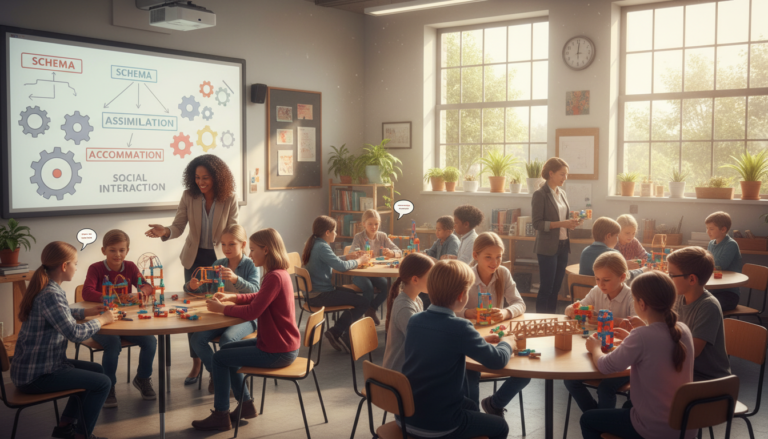
Imagine a landscape where the mind is a garden, rich with the promise of growth. Each thought, feeling, and reaction is akin to a seed, nurtured by the environment around it. Understanding how this garden flourishes is crucial for parents, educators, and anyone interested in the development of human cognition. Enter Jean Piaget, a pioneer in developmental psychology. His theory covers the fascinating journey of intellectual evolution that children undertake as they mature—what we call The Evolution of Thought: An In-Depth Look at Piaget’s Stages of Development.
Piaget’s stages—sensorimotor, preoperational, concrete operational, and formal operational—offer a framework to examine how our thought processes evolve from infancy through adolescence. In this article, we will explore each of these stages in-depth, using case studies, charts, and practical insights to illuminate their real-world applications. By the end, you’ll have a deeper appreciation for how children think and learn, along with actionable insights to support their cognitive growth.
The Stages of Development: An Overview
1. Sensorimotor Stage (0-2 years)
During the sensorimotor stage, infants learn about the world through their senses and motor activities. This preliminary phase lays the groundwork for later cognitive development. Here are the key characteristics:
- Object Permanence: The understanding that objects continue to exist even when they cannot be seen.
- Exploration through sensory experience: Babies engage with their environment via touch, taste, and sound.
Case Study: Mia’s Transformation
Consider Mia, an energetic 10-month-old. Initially, she doesn’t seem to understand where her toys go when they’re hidden under a blanket. However, as she discovers her toy bunny peeking out, she not only retrieves it but becomes fascinated by the process. This discovery marks a breakthrough in her understanding of object permanence, illustrating a significant milestone in Piaget’s sensorimotor stage.
Table 1: Key Features of the Sensorimotor Stage
| Feature | Description |
|---|---|
| Age | 0-2 years |
| Key Concept | Object Permanence |
| Interaction Style | Sensory Exploration |
2. Preoperational Stage (2-7 years)
The preoperational stage is marked by rapid language development and symbolic thinking. Children begin to use words and images to represent objects and experiences but struggle with logic.
- Egocentrism: Difficulty in seeing things from perspectives other than their own.
- Magical Thinking: A belief that thoughts can bring about physical changes in the world.
Case Study: Leo’s Dilemma
Leo, a 5-year-old, is playing with a toy set that allows him to build structures. He constructs a tower and believes it can withstand any force. When his sibling knocks it down, Leo throws a tantrum, revealing his inability to separate his emotions from reality. This behavior exemplifies egocentrism and magical thinking, both of which are hallmarks of the preoperational stage.
Table 2: Key Features of the Preoperational Stage
| Feature | Description |
|---|---|
| Age | 2-7 years |
| Key Concepts | Egocentrism, Symbolic Play |
| Interaction Style | Creative and Imaginative Play |
3. Concrete Operational Stage (7-11 years)
During this stage, children’s cognitive abilities become more logical and organized. They can perform operations on concrete objects but struggle with abstract concepts.
- Conservation: Understanding that quantity doesn’t change even when its shape does.
- Reversibility: The ability to determine that a number can be changed back to its original state.
Case Study: Olivia’s Math Homework
Olivia, a 9-year-old, is learning about fractions in school. When given a pizza cut into eight slices, she can confidently say that two slices are one-fourth of the pizza. This ability to reason about quantities and make logical deductions exemplifies the concrete operational stage.
Table 3: Key Features of the Concrete Operational Stage
| Feature | Description |
|---|---|
| Age | 7-11 years |
| Key Concepts | Conservation, Reversibility |
| Interaction Style | Logical Problem Solving |
4. Formal Operational Stage (12 years and up)
The formal operational stage encompasses the ability to think abstractly and critically. Adolescents can tackle hypothetical situations, consider future possibilities, and use deductive reasoning.
- Abstract Thought: The ability to think about concepts and ideas not directly tied to concrete objects.
- Hypothetical-Deductive Reasoning: The ability to devise plans and hypotheses.
Case Study: Jake’s Scientific Inquiry
Jake, a 14-year-old, is conducting a science project where he must formulate a hypothesis about plant growth under different light conditions. He sets up various experiments, structures his findings, and is capable of understanding theoretical principles behind photosynthesis. His approach showcases the capabilities of the formal operational stage of development.
Table 4: Key Features of the Formal Operational Stage
| Feature | Description |
|---|---|
| Age | 12 years and up |
| Key Concepts | Abstract Thinking, Hypothetical Reasoning |
| Interaction Style | Engaged in Complex Problem Solving |
The Importance of Piaget’s Stages
Understanding the stages of cognitive development serves multiple purposes. It enables educators to design age-appropriate learning experiences and helps parents foster an environment conducive to growth. The Evolution of Thought: An In-Depth Look at Piaget’s Stages of Development equips readers with the insights needed to stimulate intellectual curiosity in children.
How Piaget’s Theory Shapes Education
Piaget’s insights influence educational methods around the globe. Here are some key principles derived from his work:
Hands-On Learning: Activities encouraging exploration of the environment are crucial during the sensorimotor stage.
Encouraging Symbolic Play: During the preoperational stage, allowing children to engage in imaginative play enhances cognitive abilities.
Logical Reasoning Development: In the concrete operational stage, focus on problems that require logical thinking and manipulation of tangible objects.
- Challenging Hypothetical Thinking: For adolescents, presenting real-world problems fosters critical thinking and encourages scientific inquiry.
Limitations of Piaget’s Theory
While Piaget’s stages offer invaluable insights into cognitive development, it’s essential to recognize their limitations:
- Cultural Factors: Piaget’s theory may not account for cultural variations in cognitive development.
- Individual Variability: Each child develops at their own pace, and some may exhibit characteristics from multiple stages simultaneously.
Conclusion
Piaget’s framework provides a meaningful lens through which to view the evolution of thought. From the sensorimotor stage’s tactile exploration to the abstract reasoning of the formal operational stage, these developmental milestones integrate seamlessly with educational practices and parenting approaches.
As we conclude this in-depth exploration of The Evolution of Thought: An In-Depth Look at Piaget’s Stages of Development, remember that supporting a child’s cognitive journey requires nurturing curiosity, patience, and understanding. Parents and teachers are not mere observers; they are gardeners who cultivate young minds, helping them navigate and make sense of the world around them.
FAQs
1. What is the significance of Piaget’s theory in modern education?
Piaget’s theory helps educators and parents understand developmental milestones, allowing for the design of appropriate learning experiences tailored to children’s cognitive abilities.
2. How can I recognize which stage my child is in?
Observe their interactions: Are they exploring physically? Using symbols in play? Solving logical problems? Each stage has associated behaviors that you can recognize.
3. Are Piaget’s stages rigid or flexible?
While Piaget proposed distinct stages, many experts agree that children may exhibit characteristics from multiple stages, making cognitive development a fluid process.
4. Is Piaget’s theory applicable to all children, regardless of culture?
Piaget’s stages provide a general framework, but cultural factors can significantly influence cognitive development. Individual experiences and environments also play roles.
5. How can I support my child’s cognitive development based on Piaget’s theory?
Engage your child with age-appropriate activities, foster their curiosity through open-ended questions, and provide opportunities for both hands-on experiences and abstract thinking.
By understanding and applying the insights from The Evolution of Thought: An In-Depth Look at Piaget’s Stages of Development, we can create empowering environments in which children thrive cognitively, emotionally, and socially, laying the groundwork for lifelong learning.
About the Author


The PsyForU Editorial Collective is the research and editorial team of PsyForU Research International. The collective prepares educational, psychological, mental-health-awareness, inclusion, neurodiversity, and research-methodology content for students, parents, educators, researchers, and general readers. PsyForU content is intended for awareness, education, and capacity-building and should not be treated as clinical diagnosis, therapy, medical advice, legal advice, or emergency mental-health support.