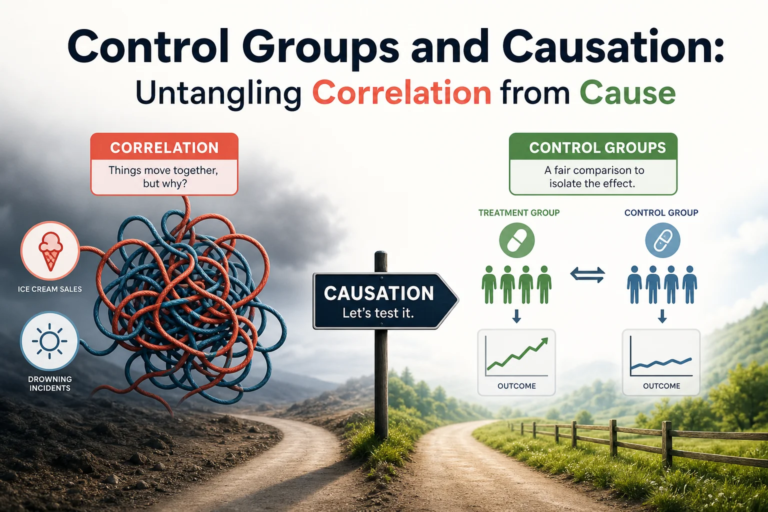
Can we really understand human behavior and mental processes through research? The answer is yes, through effective psychology research. It helps us find out what drives our thoughts and actions.
It’s important to know about variables and research design. This lets researchers focus on specific factors that affect us. By learning research methods in psychology, we can better understand how our minds and surroundings interact.
As we look into mastering psychology research, we’ll cover key points. These are the basics of doing solid and meaningful studies in this field.
Key Takeaways
- Understanding variables is key in psychology research.
- Research design is vital for studying specific factors.
- Mastering research methods helps us understand more deeply.
- Good research reveals the secrets behind our actions.
- Thorough studies are needed to grow our knowledge.
Understanding the Basics of Psychology Research
Learning about psychology research is key to growing our knowledge of how we think and act. It covers many areas, like how we think and our behaviors. It’s all about studying these things in a careful way.
Definition of Psychology Research
Psychology research is about studying our thoughts, actions, and feelings. It uses different ways to collect data and test ideas. This helps us understand more about our minds.
Key characteristics of psychology research include:
- It’s based on real observations and experiences.
- It follows a set plan to study things.
- It aims to explain, predict, or understand our behaviors.
Importance of Research in Psychology
Psychology research is very important. It helps us understand why we act the way we do. It also helps in creating better treatments for mental health issues. And it guides policies that affect our mental health.
The significance of psychology research can be seen in its applications:
- It leads to better treatments for mental health.
- It helps us understand how we grow and change throughout our lives.
- It informs policies that support our mental well-being.
Common Research Methods
Psychology research uses many methods, like experiments, watching people, and studying data. The method chosen depends on the question being asked and what data is needed.
| Research Method | Description | Example |
|---|---|---|
| Experimental | It involves changing things to see cause-and-effect. | Studying how sleep affects our thinking |
| Observational | It’s about watching people without changing anything. | Watching kids in a playground |
| Qualitative | It looks at non-numerical data to understand experiences. | Doing interviews to learn about anxiety |
By knowing these basics, researchers can create studies that really help us understand our minds. This helps the field grow.
Types of Psychology Research
It’s important to know about the different types of psychology research. This knowledge helps us understand human psychology and behavior better. Psychology research falls into several categories, each with its own methods, strengths, and weaknesses.
Experimental Research
Experimental research is key in psychology. It helps find cause-and-effect links between variables. Researchers change one variable and see how it affects another. This way, they learn about psychological processes.
Key characteristics of experimental research include:
- Manipulation of variables to observe effects
- Control over extraneous variables
- Random assignment of participants to conditions
This research is very useful in developmental psychology. It helps understand how certain things affect child development.
Observational Research
Observational research studies people in their natural settings without changing anything. It’s great for seeing real-world behaviors and phenomena. It’s often used in social psychology to study group dynamics or social interactions.
Observational research is characterized by:
- Studying behaviors in natural or semi-natural settings
- No manipulation of variables by the researcher
- Often used for hypothesis generation
Qualitative vs. Quantitative Research
Psychology research can also be divided into qualitative and quantitative types. Quantitative research uses numbers and statistics to test hypotheses. Qualitative research looks at non-numerical data like text or observations to understand psychological phenomena.
The main differences between qualitative and quantitative research are:
| Aspect | Qualitative Research | Quantitative Research |
|---|---|---|
| Data Type | Non-numerical (text, observations) | Numerical |
| Analysis | Thematic analysis, content analysis | Statistical analysis |
| Purpose | Exploratory, hypothesis generation | Hypothesis testing, prediction |
Both qualitative and quantitative research are important in psychology. They help us understand complex psychological issues in different ways.
Setting Research Objectives
The start of any good research project in psychology is setting clear goals. This step makes sure the research is focused, can be done, and adds value to clinical psychology.

Formulating a Research Question
Creating a research question is the first step. A good question should be clear, short, and important to the field. It helps guide the whole research, from looking at past studies to collecting and analyzing data. Think about how your question can add to what’s already known in psychological research articles.
- Make sure the question is specific and focused.
- Do some initial research to make your question better.
- Think about if you can really answer your question.
Establishing Hypotheses
After you have your research question, it’s time to make hypotheses. Hypotheses are educated guesses that guide your research. They should be able to be tested and proven or disproven. In research methods in psychology, hypotheses are key in designing experiments.
- Make a null hypothesis and an alternative hypothesis.
- Make sure your hypotheses fit with the theory.
- Think about how you’ll test your hypotheses.
Identifying Variables
Finding variables is a key part of setting research goals. Variables are things that can change how your research turns out. You need to find the independent, dependent, and control variables for a strong study. Knowing how these variables work is key in clinical psychology research.
- Find the independent variable(s) you’ll change.
- Figure out the dependent variable(s) you’ll measure.
- Keep out variables that could mess up your results.
Designing a Psychology Research Study
To do effective psychology research, you need a study that’s both solid and fair. A good study makes sure the results are true, dependable, and right for the question being asked.
Selecting a Research Design
The study’s design is like a map, showing how data will be gathered and looked at. In psychology, there are many designs to pick from, like experimental, quasi-experimental, and non-experimental ones. Experimental designs are great for showing cause-and-effect links between things.
For example, a study on sleep and thinking might use an experimental design. Participants are split into groups, one sleep-deprived and the other well-rested. Then, their thinking skills are tested and compared.
Sampling Methods and Considerations
Choosing a sample is key, as it decides who the study’s results apply to. Researchers must pick a method that avoids bias and shows a fair picture. Common methods include random, stratified, and convenience sampling.
| Sampling Method | Description | Advantages | Disadvantages |
|---|---|---|---|
| Random Sampling | Every member of the population has an equal chance of being selected. | Minimizes bias, ensures representativeness. | Can be time-consuming and costly. |
| Stratified Sampling | The population is divided into subgroups, and random samples are taken from each. | Ensures representation of key subgroups. | Requires prior knowledge of the population’s strata. |
| Convenience Sampling | Participants are selected based on ease of access. | Quick and cost-effective. | May introduce significant bias. |
Ethical Considerations in Research
Keeping ethics in mind is critical in psychology research to protect participants. Researchers must get consent, keep things private, and avoid harm. Institutional review boards (IRBs) check research to make sure it’s ethical.
In studies with people, researchers must explain the study’s purpose, what will happen, and any risks or benefits. This is usually in a consent form that participants sign before joining.
By carefully planning a psychology study, thinking about design, sampling, and ethics, researchers can make sure their work helps psychology a lot.
Data Collection Techniques
Data collection techniques are key in psychology research. The method chosen affects the study’s validity and reliability.
Researchers have many options for collecting data. Each has its own strengths and weaknesses. The best method depends on the research question and the data needed.
Surveys and Questionnaires
Surveys and questionnaires are common in psychology. They gather self-report data from participants. These tools can be given online or in person, reaching many people.
Advantages: Surveys are cheap, allow for anonymous answers, and can reach many people. They’re great for studying attitudes and behaviors.
Limitations: The data’s quality depends on the honesty and understanding of the participants. Badly made surveys can give wrong or biased results.
Interviews and Focus Groups
Interviews and focus groups give deeper insights into thoughts and feelings. These methods allow for more detailed data collection.
Interviews can be structured, semi-structured, or unstructured, depending on the need. Focus groups involve group discussions, showing different views and dynamics.
Behavioral Observations
Behavioral observations record participants’ actions in natural or controlled settings. This method is great in experimental psychology for studying how people react to different things.
Advantages: Observational data gives real insights into behaviors, not just what people say.
Limitations: There’s a risk of observer bias and the Hawthorne effect, where people change their behavior when observed.
Knowing about different data collection methods helps researchers choose the best for their studies. This improves the quality of their findings.
Analyzing Research Data
When we analyze research data, we use both statistical tools and qualitative methods. This helps us get deep insights. In psychology, this process is key to understanding complex behaviors and testing hypotheses.
Statistical Tools for Analysis
Statistical analysis is vital in psychology research. It uses various methods to analyze data from experiments, surveys, and more. Some common tools include:
- Descriptive statistics to summarize data
- Inferential statistics to draw conclusions about a population based on a sample
- Regression analysis to model the relationship between variables
For example, a study on cognitive-behavioral therapy might use t-tests to compare anxiety scores before and after treatment. This helps figure out if the changes are real and support the research hypothesis.
| Statistical Method | Application in Psychology Research | Example |
|---|---|---|
| Descriptive Statistics | Summarizing data characteristics | Calculating mean anxiety scores |
| Inferential Statistics | Making inferences about a population | Using sample data to infer average anxiety levels in a larger population |
| Regression Analysis | Modeling relationships between variables | Predicting anxiety levels based on demographic factors |
Qualitative Data Analysis Techniques
Qualitative research in psychology dives deep into people’s experiences and behaviors. It uses coding, categorizing, and interpreting data from interviews, focus groups, and surveys.
Techniques like thematic analysis help find common themes in the data. For example, a study on PTSD might find common themes in interview transcripts about triggers and coping mechanisms.
Interpreting Results
Interpreting data is a key step. It involves drawing conclusions from the findings. Researchers must consider the research question, study design, and analysis limitations.
In research articles, interpreting results often means comparing findings to existing literature. It also involves discussing implications for theory and practice, and suggesting future research directions. For instance, a study showing mindfulness reduces stress might discuss how it supports or challenges existing theories.
Effective interpretation requires a deep understanding of the data and its context. By analyzing and interpreting their data, researchers add valuable insights to clinical psychology and beyond.
Writing a Research Proposal
Research proposals are like blueprints for studies. They outline the research question, how to do the study, and what results are expected. A good proposal is key to getting approval and funding for psychological studies.
When writing a research proposal, several important parts need to be included. These parts help guide the research and show the researcher’s grasp of the topic. They also show the researcher’s ability to carry out the study well.
Key Components of a Proposal
A research proposal has several key sections:
- Introduction: Gives an overview of the research topic. It explains why it’s important and relevant to cognitive psychology.
- Literature Review: Summarizes what’s known about the topic. It points out gaps that the study aims to fill.
- Methodology: Explains the research methods in psychology used. This includes how participants are chosen, how data is collected, and how it’s analyzed.
- Expected Outcomes: Discusses what results are expected. It talks about the study’s implications for the field.
| Component | Description | Importance |
|---|---|---|
| Introduction | Provides context and background | High |
| Literature Review | Summarizes current knowledge | High |
| Methodology | Describes research design and methods | Critical |
| Expected Outcomes | Outlines anticipated results | High |
Tips for Persuasive Writing
To make a research proposal persuasive, clearly state the research question and its importance. Show a deep understanding of the topic and a solid plan for the study. Use simple language, avoid jargon, and provide a detailed methodology. This makes the proposal compelling.
Common Mistakes to Avoid
Several common mistakes can weaken a research proposal. These include:
- Lack of clarity in the research question or objectives
- Insufficient detail in the methodology section
- Failure to adequately address ethical issues
- Unrealistic timelines or budgets
By avoiding these mistakes and following the guidelines, researchers can create a strong proposal. This proposal will clearly communicate their research plan. It will also increase their chances of getting approval and funding.
Conducting Literature Reviews
Literature reviews are key in psychological research. They combine existing findings and show where new studies are needed. They help researchers grasp the current knowledge in fields like behavioral psychology and social psychology.
The Significance of Literature Reviews
Literature reviews are very important. They lay the groundwork for new research by summarizing what’s already known. They help spot the good and bad in research methods and theories.
They also point out where more study is needed. This helps in creating research questions and hypotheses. It shows where the current research is lacking.
By looking at psychological research articles, researchers can see patterns and debates. They can also figure out where research should go next. This is key for placing new studies in the bigger picture of research.
Locating and Assessing Sources
Finding the right sources is a big part of a literature review. Researchers need to use systematic search methods. They should look for peer-reviewed articles and other trusted sources.
They use databases like PsycINFO or PubMed. They also use filters to find the best matches. This helps narrow down the search.
After finding sources, they need to check their quality and relevance. They look at the study design, sample size, and data analysis. They also see how the research adds to the field. Critical evaluation is key to a solid literature review.
Organizing Research Findings
Once sources are found and checked, the next step is to organize the findings. This means combining the information to find themes and gaps. Researchers can use different ways to do this, like thematic analysis or chronological ordering.
Organizing findings well is important for a clear and strong narrative. It shows the importance of the literature review. It helps advance knowledge in fields like behavioral psychology or others.
Presenting Research Findings
It’s key for psychology researchers to present their findings clearly and simply. This skill is vital for sharing the study’s significance and what it means.
Structuring a Research Paper
A well-organized research paper is essential. It usually has an introduction, methodology, results, and discussion sections. The introduction explains the study’s background. The methodology section describes how the study was done. The results section shares the findings, and the discussion explains these findings in the study’s context.
Dr. Robert Sternberg, a famous psychologist, says, “The key to a successful research paper is clarity in presenting complex ideas.”
“Clarity is the most important aspect of writing a research paper. It’s not just about sharing information, but making it easy to understand.”
Crafting an Effective Presentation
Making a good presentation is more than just sharing facts. It’s about engaging the audience and showing the study’s importance. Researchers should focus on the most important findings and use stories to make the information more relatable.
In experimental psychology, researchers often use visual aids to show complex designs. In developmental psychology, presentations might talk about how research affects child development. In clinical psychology, the focus is on how research can help in treatments.
| Research Field | Key Focus | Presentation Tips |
|---|---|---|
| Experimental Psychology | Experimental design and results | Use diagrams to illustrate experimental setups |
| Developmental Psychology | Implications for development practices | Highlight practical applications |
| Clinical Psychology | Application to treatment protocols | Emphasize clinical relevance |
Visual Aids and Their Use
Visual aids are key in presenting research. They help clarify complex info, show important findings, and keep the audience interested. Common aids include graphs, charts, and images.

It’s important to make sure visual aids are clear, simple, and relevant. Researchers should also think about making their aids accessible to everyone in the audience.
Collaboration in Psychology Research
Working together is key in psychology studies. It makes research more reliable and valid. Researchers share their skills, resources, and solve big problems faster.
Advantages of Collaborative Research
Collaboration in psychology has many benefits. It brings in different views, improves study design, and makes results more applicable. This is very helpful in cognitive psychology, where many disciplines are needed.
Effective Team Communication
Good communication is essential for teamwork in research. Team members need to share ideas, talk about problems, and solve disagreements. Regular meetings and updates keep everyone on track and focused on the goals.
Managing Conflicts and Differences
Differences in opinion and approach are normal in team projects. Good teams talk things through, keeping the research goals in mind. They use proven research methods.
By working together and valuing respect and open talk, psychology researchers can create top-notch studies. These studies help us understand human behavior and mental processes better.
FAQ
What is the significance of psychology research in understanding human behavior?
What are the different types of psychology research?
How do I formulate a research question in psychology?
What are the key elements of designing a psychology research study?
What data collection techniques are commonly used in psychology research?
How do I analyze research data in psychology?
What are the essential components of a research proposal in psychology?
How do I conduct a literature review in psychology?
What are the benefits of collaborative research in psychology?
How can I effectively present research findings in psychology?
What are some common research methods used in cognitive psychology?
How do I address conflicts and differences in collaborative research teams?
About the Author