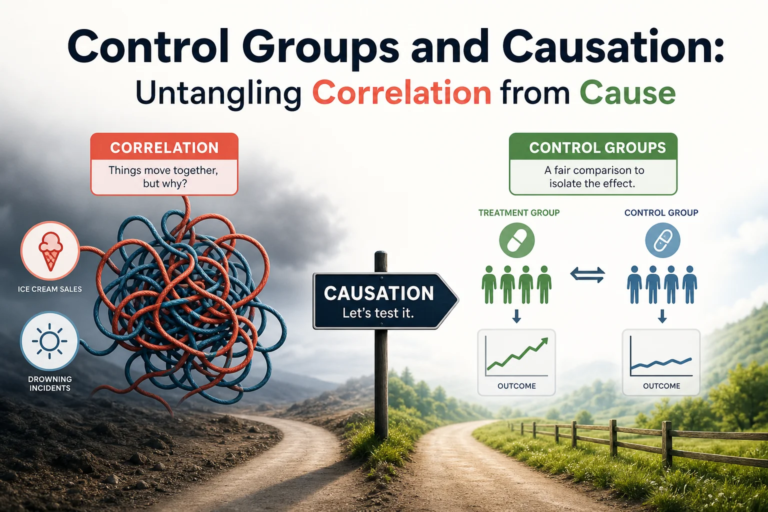
Random assignment is one of the most powerful tools researchers have for discovering what truly causes what. When done well, it can turn a good study into a credible, decision-shaping piece of evidence. When done poorly, it can quietly undermine months—or years—of work.
That is why Navigating Challenges in Random Assignment: Tips for Researchers is not just a technical topic. It is a practical survival guide for anyone designing experiments in education, public health, psychology, economics, business, medicine, social science, or digital product research.
Random assignment sounds simple: take participants, assign them by chance to different groups, compare outcomes. But in the real world, researchers face ethical constraints, recruitment problems, attrition, contamination, noncompliance, small samples, institutional pressure, and messy human behavior.
This article offers an in-depth, practical look at Navigating Challenges in Random Assignment: Tips for Researchers, with real-world case studies, tables, and actionable strategies you can use to strengthen your study design from the start.
Why Random Assignment Matters So Much
Random assignment is the process of allocating participants, classrooms, clinics, users, communities, or other units to treatment and control conditions using a chance-based method.
Its greatest strength is that, in expectation, it balances both observed and unobserved characteristics across groups. This means that differences in outcomes can more confidently be attributed to the intervention rather than preexisting differences.
For example, if researchers are testing a new tutoring program, students who receive tutoring may perform better because the program works. But they may also perform better because more motivated students selected into the program. Random assignment helps solve that problem by ensuring motivation, prior ability, parental involvement, and countless other factors are distributed more evenly between groups.
In short, random assignment protects causal inference.
But Navigating Challenges in Random Assignment: Tips for Researchers requires understanding that randomization is not a magic wand. It does not automatically fix poor recruitment, weak measurement, implementation failure, or flawed analysis.
A randomized study can still produce misleading results if researchers ignore the practical challenges that appear after assignment.
Random Assignment vs. Random Sampling: A Crucial Distinction
One common source of confusion is the difference between random assignment and random sampling.
Random sampling refers to how participants are selected from a population. Random assignment refers to how selected participants are allocated into study conditions.
You can have random assignment without random sampling. For example, a researcher may recruit volunteers from one university and randomly assign them to two groups. The assignment is random, but the sample may not represent all university students.
You can also have random sampling without random assignment. A national survey may randomly sample adults, but it does not assign them to treatment conditions.
Understanding this distinction is central to Navigating Challenges in Random Assignment: Tips for Researchers because it helps clarify what kind of validity is at stake.
| Concept | Main Question | Strengthens | Example |
|---|---|---|---|
| Random sampling | Who gets into the study? | External validity | Randomly selecting 2,000 voters from a national database |
| Random assignment | Who gets which condition? | Internal validity | Randomly assigning participants to treatment or control |
| Both together | Who is selected and how are they assigned? | Internal and external validity | Randomly sampling schools, then randomly assigning them to programs |
| Neither | Selection and assignment are nonrandom | Weaker causal claims | Comparing volunteers who choose a program to those who do not |
Researchers often focus heavily on assignment while forgetting sample representativeness. But both matter depending on the research question.
The Core Challenge: Randomization Works in Theory, People Complicate It in Practice
In theory, random assignment is clean. In practice, people miss appointments, reject assigned conditions, share information across groups, leave the study, or pressure staff to change assignments.
This is where Navigating Challenges in Random Assignment: Tips for Researchers becomes especially important.
A well-designed random assignment plan must anticipate human behavior. Participants are not data points. Teachers may prefer one condition. Doctors may resist withholding a promising treatment. Managers may want high performers in the intervention group. Parents may object to their child being assigned to a control group.
The best researchers do not wait for these problems to appear. They build safeguards into the design.
Common Challenges in Random Assignment and How to Handle Them
Below is a practical overview of the most common random assignment challenges and strategies for addressing them.
| Challenge | Why It Matters | Practical Strategy |
|---|---|---|
| Noncompliance | Participants do not follow assigned condition | Use intention-to-treat analysis; track adherence |
| Attrition | Participants drop out unevenly across groups | Build retention plans; analyze attrition patterns |
| Contamination | Control group receives elements of treatment | Use cluster randomization; separate delivery channels |
| Small sample size | Groups may remain imbalanced by chance | Use blocking, stratification, or covariate adjustment |
| Ethical concerns | Some participants may be denied beneficial treatment | Use waitlist controls, stepped-wedge designs, or equipoise |
| Allocation manipulation | Staff may influence who gets assigned | Use allocation concealment and automated systems |
| Implementation variation | Treatment is not delivered consistently | Monitor fidelity; train implementers |
| Baseline imbalance | Groups differ before treatment begins | Report differences; adjust models carefully |
| Institutional resistance | Stakeholders dislike randomization | Communicate fairness and value early |
| Missing data | Outcome data are incomplete | Predefine missing-data strategy; use sensitivity analysis |
This table captures the heart of Navigating Challenges in Random Assignment: Tips for Researchers: most problems are predictable, and predictable problems can be planned for.
Challenge 1: Noncompliance With Assigned Conditions
Noncompliance happens when participants do not receive or follow the condition to which they were assigned.
Examples include:
- A participant assigned to treatment never attends the sessions.
- A control participant finds a way to access the intervention.
- A doctor does not follow the assigned protocol.
- A student assigned to online tutoring logs in only once.
Noncompliance is one of the most common issues in randomized studies. It threatens interpretation because the assigned condition no longer perfectly reflects the received condition.
The best practice is usually to preserve the original random assignment in the main analysis. This is known as intention-to-treat analysis.
Why Intention-to-Treat Matters
Intention-to-treat, or ITT, analyzes participants according to their original assigned groups regardless of whether they fully complied.
This may seem counterintuitive. If someone assigned to treatment did not receive treatment, why include them in the treatment group?
Because random assignment creates comparable groups at baseline. Once researchers start reclassifying participants based on what they actually did, they may reintroduce selection bias.
For instance, people who comply with a health intervention may be more motivated, healthier, or more organized than those who do not. Comparing compliers to noncompliers can distort the true effect.
A strong approach to Navigating Challenges in Random Assignment: Tips for Researchers is to report both:
- Intention-to-treat effects, showing the effect of being assigned to treatment.
- Treatment-on-the-treated estimates, when appropriate, showing estimated effects among those who actually received treatment.
Challenge 2: Attrition and Missing Outcomes
Attrition occurs when participants drop out or fail to provide outcome data.
Attrition is especially dangerous when dropout rates differ between groups. If 5% of the control group drops out but 30% of the treatment group disappears, the final comparison may no longer be trustworthy.
Imagine testing a demanding job-training program. Participants who struggle may leave the treatment group at higher rates. If the analysis includes only those who complete the program, results may overstate the program’s effectiveness.
Strategies to Reduce Attrition
Researchers can reduce attrition by designing retention into the study from day one.
| Retention Strategy | Why It Helps |
|---|---|
| Collect multiple contact methods | Makes follow-up easier |
| Use reminders and flexible scheduling | Reduces accidental dropout |
| Offer appropriate incentives | Encourages continued participation |
| Keep surveys short and respectful | Reduces participant burden |
| Maintain neutral communication | Avoids influencing outcomes |
| Track reasons for dropout | Helps interpret missing data |
| Predefine missing-data procedures | Prevents biased post hoc decisions |
Attrition management is a core part of Navigating Challenges in Random Assignment: Tips for Researchers because outcome data are the foundation of credible inference.
Challenge 3: Contamination Between Groups
Contamination occurs when participants in the control group are exposed to the treatment or when treatment effects spill over.
This is common in schools, workplaces, hospitals, and online communities.
For example, if one teacher receives training in a new instructional method and shares materials with colleagues in the control group, the control group is no longer truly untreated. Similarly, if employees assigned to leadership coaching discuss the content with coworkers, the intervention may spread.
Contamination usually reduces the apparent difference between groups, making effective interventions look weaker than they really are.
How to Prevent Contamination
Researchers can use several methods:
- Randomize at the group or cluster level.
- Separate treatment and control delivery teams.
- Schedule intervention activities at different times.
- Ask participants not to share intervention materials.
- Measure exposure to treatment among control participants.
- Use geographic or organizational separation when possible.
In many field studies, some contamination is unavoidable. The key is to anticipate it, measure it, and discuss its implications honestly.
Challenge 4: Small Sample Sizes and Baseline Imbalance
Random assignment balances groups on average, but small studies can still end up with meaningful baseline differences by chance.
For example, in a study with only 40 participants, one group might randomly include more high-performing students, more severe patients, or more experienced employees.
This does not mean random assignment failed. It means chance did what chance sometimes does.
Better Designs for Small Samples
When sample sizes are limited, researchers can improve balance through:
Blocked randomization
Participants are grouped into blocks, then randomized within each block.Stratified randomization
Participants are grouped by key characteristics, such as gender, site, baseline score, or risk level.Matched-pair randomization
Similar participants are paired, then one from each pair is assigned to treatment.- Covariate-adaptive randomization
Assignment probabilities are adjusted to maintain balance across important variables.
| Method | Best Used When | Example |
|---|---|---|
| Simple random assignment | Sample is large | Randomly assigning 5,000 app users |
| Blocked randomization | Need equal group sizes over time | Assigning participants in blocks of 10 |
| Stratified randomization | Key characteristics matter | Randomizing within gender and baseline score groups |
| Matched-pair randomization | Sample is small and units can be paired | Pairing similar schools before assignment |
| Cluster randomization | Spillover is likely | Assigning entire classrooms or clinics |
Small-sample planning is one of the most practical parts of Navigating Challenges in Random Assignment: Tips for Researchers because it can prevent avoidable criticism later.
Challenge 5: Ethical Issues in Random Assignment
Random assignment raises ethical questions, especially when interventions may help vulnerable populations.
Is it fair to deny some people access to a promising program? Is it ethical to assign patients to a placebo? Should schools with urgent needs be placed in a control group?
These questions do not have one-size-fits-all answers. Ethical random assignment depends on uncertainty, fairness, transparency, and participant protection.
Useful Ethical Designs
Researchers can consider alternatives when traditional treatment-control assignment is difficult.
| Design | How It Works | Ethical Advantage |
|---|---|---|
| Waitlist control | Control group receives intervention later | Everyone eventually gets access |
| Stepped-wedge design | All clusters receive treatment in phases | Allows phased rollout |
| Encouragement design | Participants are randomly encouraged to use a service | Avoids denying access |
| Add-on design | Everyone receives standard care; treatment group receives extra support | No one receives less than usual care |
| Equipoise-based trial | Used when genuine uncertainty exists | Ethically supports comparison |
Ethics should never be treated as paperwork after the study is designed. Ethical thinking belongs at the center of Navigating Challenges in Random Assignment: Tips for Researchers.
Challenge 6: Allocation Concealment and Researcher Bias
Random assignment can be compromised if people involved in recruitment or enrollment know upcoming assignments.
For example, if a staff member knows the next participant will be assigned to treatment, they may consciously or unconsciously enroll someone they believe will benefit most. This undermines the randomness of the process.
Allocation concealment prevents researchers, recruiters, or implementers from predicting or manipulating assignments before participants are enrolled.
Practical Allocation Concealment Tools
- Centralized randomization systems
- Sealed, opaque, sequentially numbered envelopes
- Computer-generated assignment after enrollment
- Independent data managers
- Automated randomization in survey or platform software
- Audit trails documenting assignment timing
Allocation concealment is sometimes confused with blinding. They are related but different.
| Concept | Meaning | Timing |
|---|---|---|
| Allocation concealment | Prevents knowledge of upcoming assignments | Before and during enrollment |
| Blinding | Prevents knowledge of assigned condition | After assignment |
| Masked outcome assessment | Outcome assessors do not know group status | During measurement |
For serious random assignment challenges, concealment is one of the simplest and most powerful safeguards.
Challenge 7: Blinding Is Not Always Possible
In many social, behavioral, and educational studies, participants know what condition they are in. A student knows whether they are receiving tutoring. An employee knows whether they are attending leadership training. A patient may know whether they are receiving counseling.
When participant blinding is impossible, researchers can still reduce bias through:
- Blinded outcome assessors
- Objective outcome measures
- Standardized scripts
- Automated data collection
- Equal attention controls
- Neutral framing of study conditions
For example, instead of telling participants they are in the “innovative new treatment” group or the “regular control” group, researchers can describe both conditions neutrally.
This is another essential lesson in Navigating Challenges in Random Assignment: Tips for Researchers: when perfect design is impossible, thoughtful safeguards still matter.
Case Study 1: Random Assignment in an Education Tutoring Trial
A school district wanted to evaluate whether a new after-school math tutoring program improved test scores among middle school students.
The district had more interested students than available tutoring slots, which created a fair opportunity for random assignment. Eligible students were randomly assigned either to receive tutoring immediately or to a waitlist control group.
What Went Well
Random assignment helped ensure that motivation, prior achievement, and family support were balanced between groups. Because demand exceeded capacity, stakeholders viewed randomization as fair.
What Became Difficult
The study faced three major challenges:
- Some students assigned to tutoring attended inconsistently.
- Some control students received private tutoring outside school.
- Outcome data were missing for students who transferred schools.
Researcher Response
The research team used intention-to-treat analysis, tracked attendance, collected information about outside tutoring, and requested test score records from transfer schools when possible.
Brief Analysis
This case is highly relevant to Navigating Challenges in Random Assignment: Tips for Researchers because it shows how real-world implementation can complicate an otherwise strong design. The random assignment was fair and valuable, but attendance, contamination, and missing data still required careful handling.
Case Study 2: Public Health Messaging and Vaccination Reminders
A public health department tested whether text-message reminders increased vaccination appointments.
Eligible residents were randomly assigned to one of three groups:
- No reminder
- Standard reminder
- Personalized reminder with clinic location and appointment link
The study used automated random assignment through the department’s communication platform.
What Went Well
The large sample size reduced baseline imbalance concerns. Automated assignment prevented staff manipulation. Outcomes were measured objectively using appointment records.
What Became Difficult
Some residents changed phone numbers, and others received vaccine information from separate community campaigns. There was also concern that personalized reminders might work differently across age groups.
Researcher Response
The team conducted subgroup analyses by age group, tracked message delivery failure, and documented overlapping campaigns during the study period.
Brief Analysis
This example illustrates modern Navigating Challenges in Random Assignment: Tips for Researchers in digital and public health contexts. Even when randomization is technically clean, external influences and communication failures can shape outcomes.
Case Study 3: Workplace Training and Cluster Randomization
A company wanted to test whether a leadership training program improved team productivity and employee satisfaction.
At first, the company planned to randomize individual managers. But managers in the same department frequently shared materials, coached one another, and attended meetings together. Individual randomization would likely create contamination.
Instead, researchers randomized departments as clusters. Some departments received training immediately, while others continued standard management practices and received training later.
What Went Well
Cluster randomization reduced spillover. The waitlist design made the study more acceptable to leadership and employees.
What Became Difficult
The number of departments was small, creating a risk of baseline imbalance. Some departments had very different workloads and team sizes.
Researcher Response
The research team matched departments based on size, function, and baseline productivity before randomizing within matched pairs.
Brief Analysis
This case demonstrates a key principle of Navigating Challenges in Random Assignment: Tips for Researchers: the unit of randomization should match the way the intervention spreads. When individuals influence each other, cluster randomization may be the smarter choice.
Case Study 4: A/B Testing in a Digital Product Environment
A software company tested a redesigned onboarding flow for new users. Users were randomly assigned to the old onboarding experience or the new one.
The primary outcome was activation: whether users completed three key actions within seven days.
What Went Well
The platform enabled instant random assignment, large sample sizes, and automated outcome tracking. This made the experiment fast and statistically powerful.
What Became Difficult
The experiment coincided with a marketing campaign that brought in a different type of user. Also, some users accessed the product from multiple devices, creating duplicate assignment risks.
Researcher Response
The team randomized at the account level rather than the device level, controlled for acquisition channel, and examined whether results differed before and after the campaign launch.
Brief Analysis
This case expands Navigating Challenges in Random Assignment: Tips for Researchers beyond traditional academic studies. Digital experiments may look clean, but timing, duplicate users, platform bugs, and external campaigns can threaten validity.
Building a Strong Random Assignment Plan Before the Study Begins
The best way to handle random assignment problems is to anticipate them before launch.
A strong plan should answer the following questions:
- What is the unit of assignment?
- What randomization method will be used?
- Who will generate the randomization sequence?
- How will allocation be concealed?
- What baseline variables should be balanced?
- What forms of noncompliance are likely?
- How will attrition be minimized?
- How will contamination be measured?
- What analysis strategy will be used?
- What ethical concerns must be addressed?
This planning process is the backbone of Navigating Challenges in Random Assignment: Tips for Researchers.
Choosing the Right Unit of Randomization
One of the most important design decisions is choosing the unit of randomization.
Should researchers randomize individuals, classrooms, clinics, neighborhoods, teams, or organizations?
The answer depends on the intervention and the risk of spillover.
| Unit of Randomization | Best For | Main Risk |
|---|---|---|
| Individual | Drug trials, online experiments, individual coaching | Contamination if participants interact |
| Classroom | Education interventions | Teacher effects may influence results |
| Clinic | Healthcare delivery studies | Fewer units reduce statistical power |
| Workplace team | Management or productivity studies | Team culture may vary |
| Community | Public health campaigns | Expensive and complex |
| Household | Family-based interventions | Outcomes within household are correlated |
Choosing the wrong unit can weaken the entire study. For example, randomizing students individually may not work if teachers deliver the intervention to the whole class. Randomizing clinics may be better if doctors cannot realistically treat patients differently within the same workflow.
This is a major part of navigating challenges in random assignment for researchers because the assignment unit shapes design, power, ethics, and analysis.
The Role of Pre-Registration and Analysis Plans
Pre-registration means documenting the study design, hypotheses, outcomes, and analysis plan before seeing the results.
A pre-analysis plan is especially useful in randomized studies because it reduces the temptation to make data-driven decisions after outcomes are known.
It should include:
- Primary and secondary outcomes
- Sample size and power calculations
- Randomization method
- Exclusion criteria
- Handling of missing data
- Subgroup analyses
- Statistical models
- Treatment of noncompliance
- Adjustments for multiple comparisons
Pre-registration supports transparency and credibility. It also protects researchers from accusations of cherry-picking results.
For anyone serious about Navigating Challenges in Random Assignment: Tips for Researchers, pre-registration is no longer optional in many fields. It is a mark of professional discipline.
Power, Sample Size, and the Danger of Underpowered Studies
Random assignment does not guarantee that a study can detect meaningful effects. A study may be beautifully randomized but too small to answer the research question.
An underpowered study increases the chance of inconclusive findings. It can also produce unstable effect estimates.
Researchers should conduct power calculations before launching the study. These calculations depend on:
- Expected effect size
- Outcome variability
- Sample size
- Number of groups
- Desired statistical power
- Significance threshold
- Cluster design effects, if applicable
- Expected attrition
Cluster randomized trials often require larger samples because participants within clusters tend to be similar. This similarity is measured through the intraclass correlation coefficient, or ICC.
| Design Feature | Impact on Required Sample Size |
|---|---|
| Smaller expected effect | Requires larger sample |
| Higher outcome variability | Requires larger sample |
| More attrition | Requires larger initial sample |
| Cluster randomization | Usually requires more clusters |
| Strong baseline covariates | Can improve precision |
| Repeated measures | Can improve power if analyzed properly |
A key insight in Navigating Challenges in Random Assignment: Tips for Researchers is that randomization and power must work together. One protects validity; the other protects interpretability.
Measuring Implementation Fidelity
Even if assignment is perfect, the intervention may not be delivered as intended.
Implementation fidelity refers to whether the treatment was delivered according to protocol.
Low fidelity can make an effective program appear ineffective. For example, a mentoring program may fail not because mentoring does not work, but because mentors met students only once instead of weekly.
Researchers should measure:
- Dose delivered
- Dose received
- Attendance or participation
- Quality of delivery
- Adherence to protocol
- Participant engagement
- Contextual barriers
Fidelity data help explain results. If a study finds no effect, fidelity measures can clarify whether the theory failed or the implementation failed.
This is a practical but often overlooked part of Navigating Challenges in Random Assignment: Tips for Researchers.
Managing Stakeholders Without Compromising Randomization
Many random assignment studies happen in real organizations: schools, hospitals, companies, nonprofits, and government agencies.
Stakeholders may not understand why randomization matters. Some may see it as unfair, inefficient, or politically risky.
Researchers must communicate clearly.
Useful messages include:
- Random assignment is often the fairest way to allocate limited resources.
- It helps determine whether the program truly works.
- It prevents favoritism.
- It can support future funding.
- It protects organizations from investing in ineffective interventions.
However, researchers must also listen. Stakeholders often know practical constraints that can improve study design.
Successful Navigating Challenges in Random Assignment: Tips for Researchers requires both methodological rigor and relationship-building.
Data Monitoring During Randomized Studies
Randomized studies should not run on autopilot.
Researchers need monitoring systems to detect problems early, including:
- Uneven enrollment across groups
- Technical errors in assignment
- Unexpected attrition
- Low treatment uptake
- Data collection delays
- Protocol deviations
- Adverse events
- Contamination
A simple dashboard can help.
| Monitoring Area | Warning Sign | Action |
|---|---|---|
| Enrollment | One group growing faster than expected | Check randomization system |
| Attrition | Higher dropout in one condition | Strengthen retention outreach |
| Compliance | Low treatment participation | Investigate barriers |
| Fidelity | Intervention inconsistently delivered | Retrain implementers |
| Contamination | Control participants exposed | Measure and document exposure |
| Data quality | Missing or inconsistent records | Audit collection process |
Monitoring does not mean changing the study every time something goes wrong. It means identifying threats early enough to respond appropriately and transparently.
Reporting Random Assignment Clearly
Transparent reporting helps readers judge study quality.
A strong report should explain:
- Eligibility criteria
- Recruitment process
- Randomization method
- Allocation ratio
- Unit of assignment
- Allocation concealment
- Baseline characteristics
- Participant flow
- Attrition rates
- Protocol deviations
- Analysis approach
- Limitations
A participant flow diagram is especially helpful.
Example Participant Flow Chart
| Stage | Treatment Group | Control Group |
|---|---|---|
| Randomly assigned | 500 | 500 |
| Received assigned condition | 420 | 485 |
| Completed follow-up | 390 | 455 |
| Included in ITT analysis | 500 | 500 |
| Included in per-protocol analysis | 380 | 450 |
This type of reporting strengthens trust. It also shows that the research team understands Navigating Challenges in Random Assignment: Tips for Researchers in a transparent and responsible way.
Advanced Tip: Use Randomization Checks Carefully
Researchers often compare baseline characteristics after random assignment to see whether groups are balanced.
This can be useful descriptively, but it should be interpreted carefully. Randomization does not guarantee identical groups, and a statistically significant baseline difference can occur by chance.
Instead of overreacting to every difference, researchers should:
- Report baseline characteristics.
- Focus on substantively important imbalances.
- Adjust for prespecified covariates when appropriate.
- Avoid changing the analysis plan based solely on post-randomization inspection.
- Remember that randomization validity depends on the assignment process, not perfect balance in every variable.
This is an important nuance in Navigating Challenges in Random Assignment: Tips for Researchers because many teams mistakenly treat baseline balance tables as proof that randomization “worked” or “failed.”
Advanced Tip: Document Every Deviation
In real studies, deviations happen.
A participant may be assigned incorrectly. A site may begin treatment late. A staff member may accidentally invite a control participant to a treatment session.
The worst response is to hide or ignore these problems.
Instead, researchers should maintain a deviation log that includes:
- Date of deviation
- Description
- Participants or clusters affected
- Likely cause
- Corrective action
- Whether outcome data may be affected
- Whether analysis changes are needed
Documentation protects the integrity of the study and allows honest interpretation.
In the real world, Navigating Challenges in Random Assignment: Tips for Researchers is not about achieving perfection. It is about building systems that preserve credibility when imperfection appears.
Practical Checklist for Researchers
Use this checklist before launching a randomized study.
| Question | Yes/No |
|---|---|
| Have we clearly defined the unit of randomization? | |
| Is random assignment appropriate for the research question? | |
| Have we selected the right randomization method? | |
| Is the assignment sequence generated independently or automatically? | |
| Is allocation concealed from recruiters and implementers? | |
| Have we considered blocking or stratification? | |
| Have we calculated sample size and power? | |
| Have we planned for attrition? | |
| Have we planned for noncompliance? | |
| Have we addressed ethical concerns? | |
| Have we considered contamination and spillover? | |
| Have we written a pre-analysis plan? | |
| Have we defined primary and secondary outcomes? | |
| Have we planned fidelity monitoring? | |
| Have we created a transparent reporting plan? |
This checklist summarizes many of the most important lessons in Navigating Challenges in Random Assignment: Tips for Researchers.
Long-Tail Keyword Variations Researchers Often Search For
To place this topic in a broader research context, here are natural variations of the focus keyword:
- Navigating random assignment challenges in field experiments
- Tips for researchers using random assignment in social science
- How to handle noncompliance in randomized studies
- Random assignment best practices for researchers
- Avoiding contamination in randomized controlled trials
- Ethical issues in random assignment for research
- Random assignment tips for small sample studies
- How researchers can improve random assignment validity
- Practical guide to random assignment challenges
- Strategies for managing attrition in randomized experiments
These variations reflect the same central concern: Navigating Challenges in Random Assignment: Tips for Researchers in realistic, high-stakes research settings.
Common Mistakes to Avoid
Even experienced researchers can make avoidable mistakes when designing randomized studies.
Mistake 1: Treating Random Assignment as the Entire Design
Random assignment is crucial, but it is only one part of study quality. Measurement, implementation, retention, and analysis matter too.
Mistake 2: Randomizing Too Late
If participants learn about conditions before assignment, their expectations or willingness to participate may shift. Randomization timing should be carefully planned.
Mistake 3: Ignoring the Delivery Context
A design that works in a lab may fail in a school, clinic, or workplace. Context shapes feasibility.
Mistake 4: Failing to Track Compliance
Without compliance data, researchers cannot explain whether weak effects reflect weak treatment or weak participation.
Mistake 5: Overcomplicating the Design
Sophisticated randomization methods are useful, but complexity can create errors. The design should be as simple as possible and as rigorous as necessary.
Avoiding these mistakes is a practical step toward Navigating Challenges in Random Assignment: Tips for Researchers with confidence.
Conclusion: Random Assignment Is Powerful, but Rigorous Planning Makes It Trustworthy
Random assignment remains one of the strongest methods for estimating causal effects. It can reduce bias, support fair allocation, and produce evidence that influences policy, practice, and investment.
But randomization alone is not enough.
Researchers must plan for noncompliance, attrition, contamination, small samples, ethical concerns, allocation concealment, stakeholder pressure, fidelity issues, and missing data. They must choose the right unit of randomization, pre-register their analysis, monitor implementation, and report results transparently.
That is the real message of Navigating Challenges in Random Assignment: Tips for Researchers: credible research is not built by chance alone. It is built through careful design, honest execution, and thoughtful interpretation.
If you are planning a randomized study, start with one simple question: “What could go wrong after assignment?” Then build your design around the answer.
The strongest researchers are not those who assume perfect conditions. They are the ones who prepare wisely for imperfect ones.
1. Why is random assignment important in research?
Random assignment helps create comparable groups so researchers can make stronger causal claims. It reduces the likelihood that preexisting differences between participants explain the results. This is why Navigating Challenges in Random Assignment: Tips for Researchers is essential for credible experimental design.
2. What is the biggest challenge in random assignment?
One of the biggest challenges is noncompliance, where participants do not follow their assigned condition. Attrition, contamination, ethical concerns, and baseline imbalance are also common. Effective random assignment tips for researchers include planning for these problems before the study begins.
3. How can researchers prevent contamination between groups?
Researchers can reduce contamination by randomizing clusters instead of individuals, separating intervention delivery, measuring spillover, and using clear communication with participants. Preventing contamination is a major part of Navigating Challenges in Random Assignment: Tips for Researchers.
4. What should researchers do if participants drop out?
Researchers should track who drops out, compare attrition rates across groups, use retention strategies, and follow a predefined missing-data plan. Intention-to-treat analysis can help preserve the benefits of random assignment.
5. Is random assignment always ethical?
Not always. Random assignment is most ethical when there is genuine uncertainty about whether the intervention works and when participants are treated fairly. Waitlist controls, stepped-wedge designs, and standard-care comparison groups can help address ethical concerns.
6. What is allocation concealment?
Allocation concealment prevents recruiters or researchers from knowing upcoming assignments before participants are enrolled. It protects the randomization process from manipulation or unconscious bias.
7. Can random assignment work with small samples?
Yes, but small samples are more vulnerable to chance imbalances. Researchers can use blocked randomization, stratification, matched pairs, or covariate adjustment to improve precision and credibility.
8. What is the difference between intention-to-treat and per-protocol analysis?
Intention-to-treat analysis compares participants based on their original assignment. Per-protocol analysis includes only those who followed the study protocol. ITT preserves the benefits of randomization, while per-protocol analysis can provide useful but potentially biased supplemental insight.
9. How should researchers report random assignment?
Researchers should clearly report eligibility criteria, randomization method, allocation concealment, group sizes, attrition, baseline characteristics, deviations, and analysis strategy. Transparent reporting is central to Navigating Challenges in Random Assignment: Tips for Researchers.
10. What is the best takeaway for researchers?
Plan for imperfection. Random assignment is powerful, but real-world studies are messy. The best approach to Navigating Challenges in Random Assignment: Tips for Researchers is to anticipate threats early, document decisions carefully, and analyze results transparently.
About the Author


The PsyForU Editorial Collective is the research and editorial team of PsyForU Research International. The collective prepares educational, psychological, mental-health-awareness, inclusion, neurodiversity, and research-methodology content for students, parents, educators, researchers, and general readers. PsyForU content is intended for awareness, education, and capacity-building and should not be treated as clinical diagnosis, therapy, medical advice, legal advice, or emergency mental-health support.