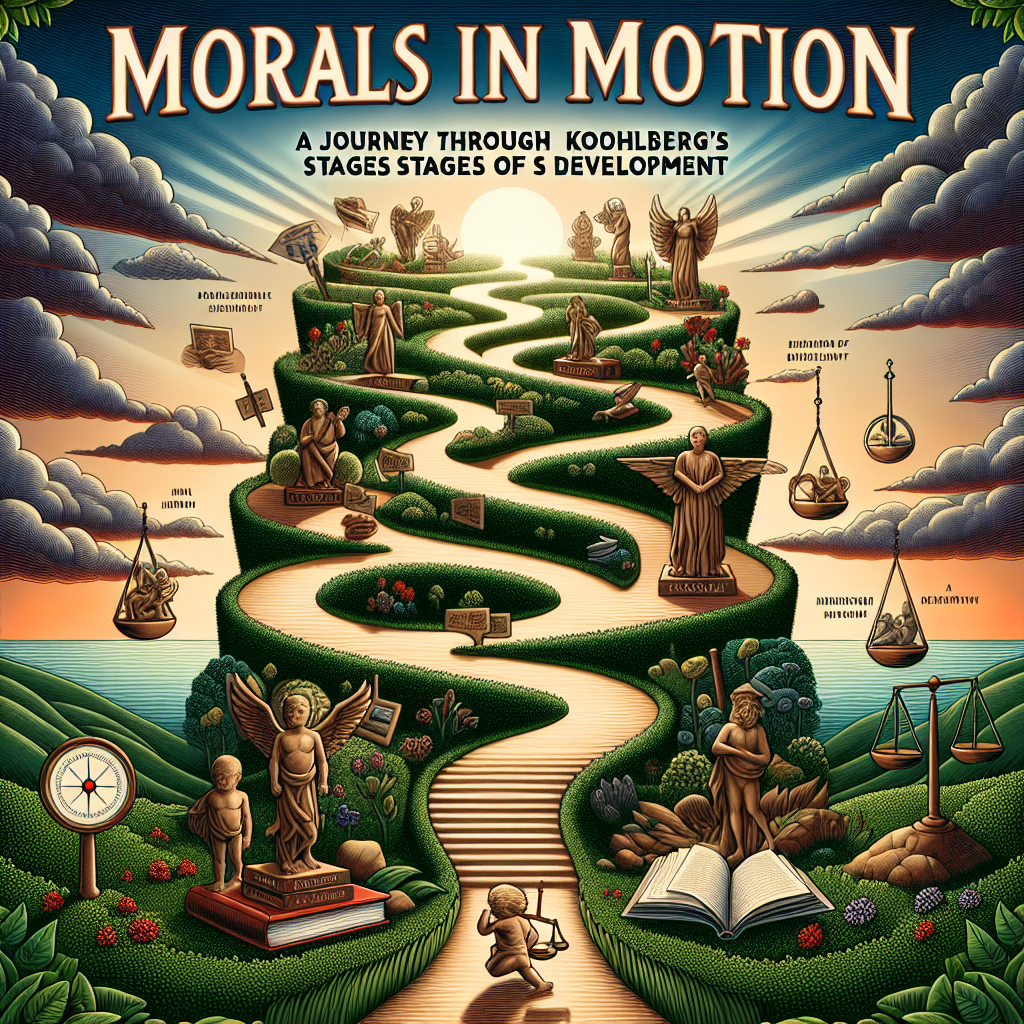
Introduction
Imagine a world where our decisions are influenced by levels of moral understanding, shaping everything from personal relationships to global politics. This dynamic landscape of ethics can be intriguing, daunting, and enlightening. Enter Morals in Motion: A Journey Through Kohlberg’s Stages of Development—a profound exploration into how we evolve morally throughout our lives. Lawrence Kohlberg’s theory provides a framework that not only examines individual moral development but also offers insights into collective societal ethics.
In this article, we will navigate through Kohlberg’s six stages of moral development, dissecting each phase with real-world applications, case studies, and relevant insights that can guide us toward a more ethical future.
Understanding Kohlberg’s Stages of Development
Lawrence Kohlberg, a prominent psychologist, proposed a model that emphasizes the progression of moral reasoning divided into three core levels, each containing two distinct stages. Each phase shifts our moral compass from self-interest to considering societal welfare.
Level 1: Pre-Conventional Morality
Stage 1: Obedience and Punishment Orientation
At this stage, moral decisions are made based on the consequences of actions. A child might avoid stealing because they fear punishment rather than understanding the act’s morality.
Stage 2: Individualism and Exchange
Here, individuals begin to recognize that there is not just one right view. They grasp that self-interest and reciprocity play crucial roles in decision-making, leading to a barter system of morals.
Case Study: Childhood Decision Making
Consider a child faced with the decision to share their toys. If the child gives away a toy simply to avoid being punished or to receive another toy in return, they display the characteristics of the pre-conventional level.
Level 2: Conventional Morality
Stage 3: Interpersonal Relationships
At this stage, individuals seek approval from others. Moral reasoning is based on maintaining good relationships and aligning with societal norms.
Stage 4: Maintaining Social Order
Individuals begin to understand the importance of laws and rules. Their moral compass is guided by a sense of duty and upholding the law.
Case Study: Adolescent Behavior in Groups
Teenagers often exhibit conventional morality as they strive to fit in with peers. They may prioritize conformity, even abandoning personal beliefs to maintain group harmony.
Level 3: Post-Conventional Morality
Stage 5: Social Contract and Individual Rights
At this level, individuals recognize that laws are social contracts. They weigh the rights of the individual against the needs of the community.
Stage 6: Universal Ethical Principles
The final stage involves adhering to universal moral principles, such as justice, dignity, and equality, which transcend laws.
Case Study: Activism and Social Justice
Consider an activist fighting against unjust laws for civil rights. Operating at this stage, they prioritize ethical principles over societal norms, showcasing the heights of moral reasoning discussed in Morals in Motion: A Journey Through Kohlberg’s Stages of Development.
The Relevance of Kohlberg’s Theory Today
Kohlberg’s stages provide a useful lens through which to view moral dilemmas in contemporary society. Understanding where individuals might fall within these stages can foster empathy and bridge gaps in communication.
Ethical Dilemmas in Leadership
Leaders often face challenges that require more than just strategic decision-making. They must navigate complex ethical landscapes. Leaders who operate at higher stages of moral development may be more likely to consider the long-term impact of their decisions on a wider community.
| Leadership Stage | Moral Consideration |
|---|---|
| Pre-Conventional | Self-interest |
| Conventional | Group norms |
| Post-Conventional | Universal principles |
Inspiring Change Through Moral Development
As we delve deeper into Morals in Motion: A Journey Through Kohlberg’s Stages of Development, it’s crucial to cultivate environments where moral reasoning can flourish. Here are some action steps for fostering moral growth in various settings:
Educational Settings: Encourage discussions about ethical dilemmas. This empowers students to think critically and empathically.
Workplaces: Implement ethics training that prompts employees to consider their decisions within the context of variety and social responsibility.
- Family: Foster open dialogues about moral choices, encouraging children to articulate their reasoning and understand diverse perspectives.
Conclusion
The journey through Kohlberg’s stages provides essential insights into moral reasoning that is as relevant today as it ever was. Understanding these stages empowers us to foster ethical behaviors not just in ourselves, but also in the communities around us.
Embracing Morals in Motion: A Journey Through Kohlberg’s Stages of Development encourages a collective evolution in our moral landscape. Let’s inspire one another, reaching not just for societal norms but for the universal principles that bind us all together.
FAQs
1. What are Kohlberg’s Stages of Moral Development?
Kohlberg outlined six stages of moral development, grouped into three levels: Pre-Conventional, Conventional, and Post-Conventional, each reflecting different aspects of moral reasoning.
2. How do these stages apply to adults?
Adults often exhibit behaviors from various stages depending on the context. Understanding where individuals fall can enhance communication and conflict resolution.
3. Can moral development be influenced?
Yes, moral development can be influenced through education, dialogue, and exposure to diverse viewpoints and ethical dilemmas.
4. What role does culture play in moral development?
Culture significantly shapes moral reasoning, dictating what is deemed acceptable behavior and influencing individuals’ moral decisions.
5. Are there criticisms of Kohlberg’s theory?
Critics argue that Kohlberg’s model is culturally biased, primarily reflecting Western values, and may overlook the complexities of moral development in different cultural contexts.
By embarking on Morals in Motion: A Journey Through Kohlberg’s Stages of Development, we not only enhance our understanding of morality but also take actionable steps towards a more ethical and empathetic society. Let’s move forward, continually evolving, learning, and applying these insights in the real world.
About the Author


The PsyForU Editorial Collective is the research and editorial team of PsyForU Research International. The collective prepares educational, psychological, mental-health-awareness, inclusion, neurodiversity, and research-methodology content for students, parents, educators, researchers, and general readers. PsyForU content is intended for awareness, education, and capacity-building and should not be treated as clinical diagnosis, therapy, medical advice, legal advice, or emergency mental-health support.