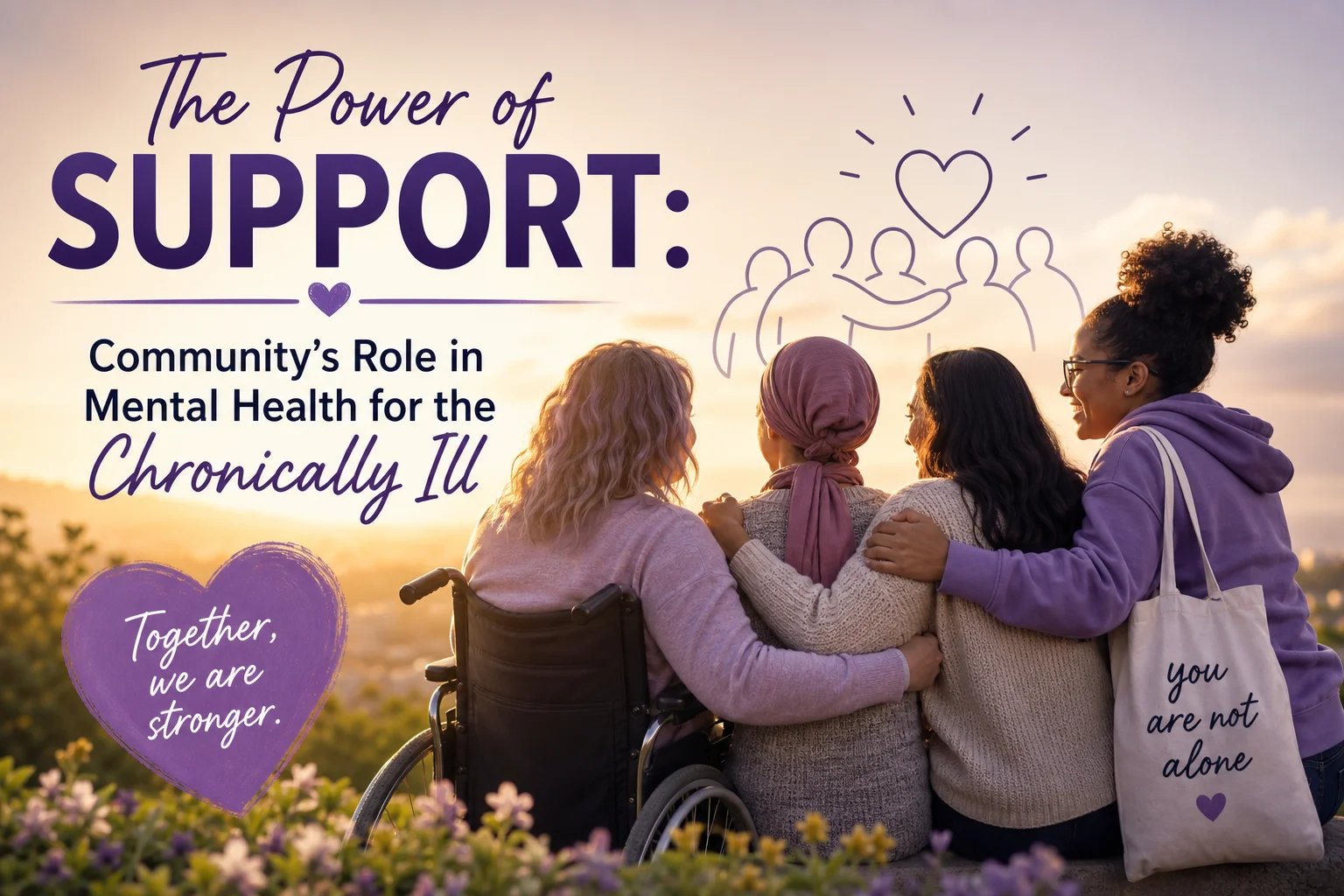
The Proven Power of Support: Community’s Role in Mental Health for the Chronically Ill
Introduction: Chronic Illness Is Medical—But It Is Also Deeply Human
A chronic illness rarely arrives alone. It may come with pain, fatigue, appointments, medications, flare-ups, financial stress, identity shifts, grief, and the exhausting task of explaining yourself over and over again. But one of its heaviest companions is often invisible: emotional isolation.
A person can be surrounded by doctors and still feel alone. They can have a diagnosis, a treatment plan, and a calendar full of checkups—yet still wonder, Who really understands what this is doing to my life?
That is where The Power of Support: Community’s Role in Mental Health for the Chronically Ill becomes more than a hopeful phrase. It becomes a survival tool, a mental health strategy, and for many people, a bridge back to meaning.
Community does not cure chronic illness. It does not erase pain, uncertainty, or medical complexity. But the right kind of support can reduce loneliness, protect against depression, improve coping skills, strengthen self-advocacy, and remind people that their lives are larger than their diagnosis.
This article explores The Power of Support: Community’s Role in Mental Health for the Chronically Ill from multiple angles: emotional, psychological, practical, cultural, digital, and clinical. We will look at real-world-style case studies, support models, tables, and actionable strategies for patients, caregivers, healthcare professionals, and community leaders.
Because when chronic illness changes a life, community can help that life stay connected, dignified, and full of possibility.
Understanding the Mental Health Burden of Chronic Illness
Chronic illness is not simply a long-term medical condition. It is often a long-term emotional negotiation.
People living with conditions such as autoimmune disease, diabetes, multiple sclerosis, endometriosis, inflammatory bowel disease, chronic kidney disease, fibromyalgia, long COVID, cancer survivorship, chronic pain disorders, heart disease, or rare genetic conditions may face ongoing uncertainty. Symptoms can fluctuate. Treatments may help one month and fail the next. Friends may not understand why plans get canceled. Workplaces may offer sympathy without real accommodation.
Over time, this can create emotional strain.
Common mental health challenges among chronically ill people include:
- Depression
- Anxiety
- Medical trauma
- Social withdrawal
- Grief over lost abilities
- Fear of disease progression
- Body image distress
- Identity disruption
- Anger and frustration
- Shame around dependency
- Burnout from self-management
This is why The Power of Support: Community’s Role in Mental Health for the Chronically Ill deserves serious attention. Mental health support is not a luxury add-on to medical care. It is part of whole-person health.
Why Chronic Illness Can Feel So Isolating
Many chronically ill people experience what is sometimes called “invisible labor.” They manage symptoms, medication schedules, insurance issues, dietary needs, sleep disruption, medical research, mobility limitations, and emotional stress—often while trying to appear “normal.”
The outside world may see only a fraction of the effort.
A person with chronic fatigue may look fine during a 30-minute coffee date but spend the next two days recovering. Someone with rheumatoid arthritis may smile through pain at work because they fear being judged as unreliable. A person with Crohn’s disease may avoid social events because they are worried about bathroom access.
This gap between appearance and reality can deepen loneliness.
Community helps close that gap. Supportive people say, in different ways: I believe you. I see the effort. You do not have to perform wellness for me.
That simple validation is one of the most essential expressions of The Power of Support: Community’s Role in Mental Health for the Chronically Ill.
The Science Behind Support and Mental Health
Social support is strongly associated with better mental health outcomes. While support cannot replace medical treatment, therapy, or medication when needed, it can influence stress levels, coping behaviors, and emotional resilience.
Supportive communities may help by:
- Reducing perceived isolation
- Encouraging healthy routines
- Increasing hope and motivation
- Improving treatment adherence
- Providing practical problem-solving
- Normalizing difficult emotions
- Helping people access resources
- Protecting against shame and stigma
When a person feels connected, their nervous system may experience less chronic threat. Emotional safety matters. Being able to say, “I am scared,” “I am exhausted,” or “I need help,” without being dismissed can reduce internal pressure.
That is the quiet but profound impact of The Power of Support: Community’s Role in Mental Health for the Chronically Ill.
Table: How Different Types of Support Improve Mental Health
| Type of Support | What It Looks Like | Mental Health Benefit | Example |
|---|---|---|---|
| Emotional support | Listening, empathy, validation | Reduces loneliness and shame | A friend says, “I believe you. That sounds exhausting.” |
| Practical support | Rides, meals, childcare, errands | Lowers daily stress load | A neighbor picks up prescriptions |
| Informational support | Sharing resources and guidance | Builds confidence and self-advocacy | A support group recommends questions for a specialist |
| Peer support | Connection with others who “get it” | Normalizes experiences | A lupus patient joins an online community |
| Professional support | Therapy, counseling, social work | Provides coping tools and crisis care | A therapist helps process medical trauma |
| Spiritual or meaning-based support | Faith communities, meditation groups, purpose work | Strengthens hope and emotional grounding | A person attends a chronic illness-friendly prayer group |
| Advocacy support | Workplace, school, disability, policy help | Reduces systemic stress | A patient advocate helps request accommodations |
This table shows that support is not one single thing. The Power of Support: Community’s Role in Mental Health for the Chronically Ill comes from a network of care, not one perfect person.
Community as a Protective Factor Against Depression
Depression among chronically ill people is not a sign of weakness. It is a common and understandable response to ongoing stress, pain, limitations, and uncertainty.
But community can act as a protective factor.
A supportive network can help a person notice early signs of depression, such as:
- Loss of interest in activities
- Increased isolation
- Hopelessness
- Changes in sleep or appetite
- Irritability
- Feeling like a burden
- Difficulty keeping up with treatment
- Thoughts of self-harm
Supportive communities can gently intervene. A friend might say, “I’ve noticed you’ve been quieter lately. I’m here.” A peer group member might share, “I went through that too, and therapy helped me.” A caregiver might help schedule a mental health appointment.
This is one reason The Power of Support: Community’s Role in Mental Health for the Chronically Ill should be discussed in clinics, homes, workplaces, and online spaces.
Community and Anxiety: Making Uncertainty More Bearable
Chronic illness often involves uncertainty. Will the medication work? Will symptoms flare during an important event? Will insurance cover treatment? Will the disease progress?
Anxiety thrives in uncertainty.
Support does not eliminate uncertainty, but it can make uncertainty less lonely. A trusted community can help people reality-check fears, prepare for appointments, create flare plans, and separate realistic concern from spiraling panic.
For example, a person with multiple sclerosis may feel anxious about a new symptom. In an informed support group, they might receive encouragement to contact their neurologist rather than panic alone at midnight. A friend might help write down symptoms before the appointment. A partner might sit beside them while they wait for test results.
That is The Power of Support: Community’s Role in Mental Health for the Chronically Ill in action: not fixing everything, but making frightening moments more manageable.
The Unique Value of Peer Support
Not all support feels the same.
A loving family member may care deeply, but they may not understand what it feels like to wake up with unpredictable pain. A physician may be knowledgeable, but appointments are often brief. A therapist may provide coping tools, but they may not share the lived experience.
Peer support fills a different need.
Peer communities allow chronically ill people to say things they might hesitate to say elsewhere:
- “I’m tired of being brave.”
- “I miss who I used to be.”
- “I feel guilty that my partner does so much.”
- “I’m scared people think I’m exaggerating.”
- “I hate being told to stay positive.”
In a healthy peer community, these statements are met with recognition rather than discomfort.
This is a central part of The Power of Support: Community’s Role in Mental Health for the Chronically Ill: the relief of being understood without needing to translate every detail.
Case Study 1: Maria and the Diabetes Support Circle
Maria, 42, was diagnosed with type 2 diabetes after years of caring for her family and working long shifts. At first, she tried to manage everything privately. She checked her blood sugar, changed her diet, attended appointments, and told everyone she was “fine.”
But she was not fine.
She felt ashamed, overwhelmed, and afraid of complications. Her family tried to help but often gave advice that sounded like criticism: “Should you be eating that?” or “Just exercise more.” Maria began skipping social meals because food had become emotionally loaded.
Her clinic referred her to a community diabetes education and peer support group. At the first meeting, Maria barely spoke. But she listened as others described the same guilt, fear, and frustration she had been carrying.
Over time, she learned practical meal strategies, but more importantly, she stopped seeing herself as a failure. The group helped her prepare questions for her doctor and encouraged her to talk honestly with her family about supportive language.
Brief Analysis
Maria’s story illustrates The Power of Support: Community’s Role in Mental Health for the Chronically Ill because her improvement was not only about information. It was about emotional reframing. The peer group helped reduce shame, increased self-efficacy, and gave her language to ask for better support at home.
Case Study 2: James, Chronic Pain, and Online Community
James, 35, developed chronic nerve pain after a workplace injury. His pain was invisible, but it affected everything: sleep, mood, finances, intimacy, and his sense of identity. Friends stopped inviting him out after repeated cancellations. He began spending most evenings alone.
Eventually, James found an online chronic pain community moderated by trained volunteers. At first, he expected negativity. Instead, he found people sharing pacing strategies, doctor communication tips, mental health resources, and dark humor that made him feel less alone.
He learned about pain psychology, nervous system regulation, and the importance of tracking symptoms without obsessing over them. When he posted after a difficult pain flare, several members responded with compassion and practical ideas.
Brief Analysis
James’s experience highlights the digital side of The Power of Support: Community’s Role in Mental Health for the Chronically Ill. For people with mobility limits, fatigue, immune vulnerability, or rural isolation, online communities can be lifelines. The key is quality: moderated, respectful, evidence-aware spaces are far more helpful than fear-based forums.
Case Study 3: Aisha, Lupus, and Faith-Based Community Care
Aisha, 29, lived with lupus. Her symptoms fluctuated, and she struggled with fatigue, joint pain, and photosensitivity. She missed community gatherings and worried people thought she was unreliable.
Her faith community wanted to help but did not understand her needs. Some people unintentionally minimized her illness by saying, “You look healthy,” or “Just pray harder.” Aisha withdrew.
Eventually, one close friend asked, “What kind of support would actually help?” That conversation changed everything. A small care team formed around Aisha. They offered rides to appointments, helped with groceries during flares, and created flexible social plans that did not pressure her to attend every event.
They also learned to offer spiritual encouragement without implying blame.
Brief Analysis
Aisha’s case demonstrates The Power of Support: Community’s Role in Mental Health for the Chronically Ill within faith and cultural communities. Support becomes healing when it is humble, educated, and patient-centered. Good intentions are not enough; communities must listen and adapt.
Case Study 4: Ben, Multiple Sclerosis, and Workplace Support
Ben, 51, was diagnosed with multiple sclerosis. He worried that disclosing his illness at work would damage his career. For months, he hid his fatigue and cognitive fog. He worked late to compensate, skipped lunch breaks, and avoided asking for help.
The stress worsened his symptoms.
After speaking with a counselor and a patient advocacy organization, Ben requested accommodations: flexible scheduling, remote work on flare days, and written meeting summaries. His manager responded supportively and helped normalize accommodations within the team.
Ben still had MS. But he no longer felt like he was fighting two battles: illness and secrecy.
Brief Analysis
Ben’s story shows that The Power of Support: Community’s Role in Mental Health for the Chronically Ill includes workplaces. Supportive environments reduce emotional strain, preserve dignity, and help people remain engaged in meaningful roles.
What Healthy Support Looks Like
Not all support is supportive.
People with chronic illness often receive comments that are meant kindly but land painfully:
- “Everything happens for a reason.”
- “At least it’s not worse.”
- “Have you tried yoga?”
- “You don’t look sick.”
- “Stay positive.”
- “My cousin cured that with supplements.”
Healthy support is different. It centers the person’s lived experience.
Table: Helpful vs. Unhelpful Support
| Unhelpful Response | Why It Hurts | Helpful Alternative |
|---|---|---|
| “You don’t look sick.” | Dismisses invisible symptoms | “I know symptoms aren’t always visible. How are you really?” |
| “Just think positive.” | Implies emotions are the problem | “It makes sense that this is hard. I’m here with you.” |
| “Have you tried this cure?” | Can feel blaming or overwhelming | “Would you like suggestions, or would listening help more?” |
| “At least you can still…” | Minimizes grief | “It’s okay to miss what life used to feel like.” |
| “Let me know if you need anything.” | Too vague for exhausted people | “I’m free Tuesday. Can I bring dinner or pick up groceries?” |
| Silence | Increases isolation | “I don’t know what to say, but I care and I’m not going anywhere.” |
The heart of The Power of Support: Community’s Role in Mental Health for the Chronically Ill is not perfection. It is willingness: willingness to learn, listen, show up, and repair mistakes.
The Emotional Tasks of Chronic Illness
Chronic illness often asks people to repeatedly adapt to new realities. These emotional tasks may include:
1. Grieving the Old Normal
Many people grieve their former energy, body, spontaneity, career path, fertility, independence, or social life. This grief can return during flares, birthdays, holidays, or major life transitions.
Supportive communities make room for grief without rushing people toward gratitude.
2. Rebuilding Identity
A diagnosis can disrupt self-image. Someone who once identified as athletic, independent, adventurous, or highly productive may struggle when illness changes what they can do.
Community can remind them: You are still you. Your value was never based only on output.
3. Managing Uncertainty
Chronic illness can make the future feel unstable. Supportive relationships help people face uncertainty without facing it alone.
4. Asking for Help
Many people feel shame around dependency. Community can normalize mutual care. Everyone needs support at different times.
5. Finding Meaning
Meaning does not require pretending illness is good. It means finding connection, purpose, beauty, or contribution within a changed life.
These emotional tasks explain why The Power of Support: Community’s Role in Mental Health for the Chronically Ill is so deeply connected to resilience.
The Role of Family: A Powerful but Complicated Support System
Family can be a source of comfort, but also tension. Chronic illness may shift household roles, finances, intimacy, parenting, and daily routines.
Some families become closer. Others struggle with misunderstanding, resentment, or caregiver fatigue.
How Families Can Support Mental Health
Families can help by:
- Believing symptoms, even when invisible
- Learning about the illness from reliable sources
- Asking what kind of support is wanted
- Respecting autonomy
- Avoiding blame or overprotection
- Sharing household responsibilities
- Attending appointments when invited
- Encouraging mental health care
- Making room for joy, not only illness talk
Family support is one of the most personal examples of The Power of Support: Community’s Role in Mental Health for the Chronically Ill. When families respond with empathy and flexibility, the home can become a place of recovery rather than another battlefield.
Caregivers Need Community Too
Caregivers often carry emotional weight that remains hidden. They may manage medications, transportation, insurance calls, household tasks, emotional reassurance, and crisis planning.
Caregivers can experience:
- Burnout
- Anxiety
- Depression
- Sleep disruption
- Financial stress
- Loss of personal time
- Guilt
- Resentment
- Isolation
Supporting chronically ill people also means supporting caregivers. A burned-out caregiver cannot provide sustainable care.
Caregiver support groups, respite care, therapy, community meal trains, and shared responsibility can protect both the caregiver and the person receiving care.
This expands The Power of Support: Community’s Role in Mental Health for the Chronically Ill beyond the patient alone. Chronic illness affects networks, and healing support must include networks too.
Online Communities: Lifeline or Landmine?
Digital support has transformed chronic illness life. For people who cannot easily attend in-person groups, online communities can provide connection at any hour.
Benefits of Online Support
- Accessible from bed or home
- Helpful for rare conditions
- Reduces geographic isolation
- Offers practical lived-experience tips
- Allows anonymity
- Provides validation during flares
- Connects people across cultures and countries
Risks of Online Support
- Misinformation
- Fear-based posts
- Comparison spirals
- Unmoderated conflict
- Medical advice from unqualified sources
- Overidentification with illness
- Emotional overwhelm
How to Choose a Healthy Online Community
Look for spaces that:
- Have clear rules
- Are moderated
- Discourage miracle cures
- Respect medical diversity
- Encourage professional care
- Allow venting without becoming hopeless
- Protect privacy
- Welcome boundaries
Online spaces can beautifully demonstrate The Power of Support: Community’s Role in Mental Health for the Chronically Ill, but quality matters. A good community helps people feel informed and less alone. A harmful one leaves them more frightened, ashamed, or confused.
Chart: Signs a Support Community Is Helping—or Hurting
| Green Flags: Helping | Red Flags: Hurting |
|---|---|
| Members validate without catastrophizing | Members compete over who has it worse |
| Evidence-based resources are encouraged | Miracle cures are aggressively promoted |
| Boundaries are respected | People demand constant availability |
| Hope and honesty coexist | Toxic positivity or constant despair dominates |
| Privacy is protected | Personal stories are shared outside the group |
| Professional care is supported | Doctors or therapists are universally demonized |
| Diversity of experiences is welcomed | One “right” way to be ill is enforced |
A strong community does not require everyone to have the same symptoms, beliefs, or treatment choices. It requires respect.
The Importance of Belonging
Belonging is more than social contact. A person can have many acquaintances and still not feel they belong.
Belonging means feeling accepted without constant performance. It means being able to show up tired, sad, joyful, frustrated, or uncertain—and still be included.
For chronically ill people, belonging may require flexibility:
- Plans that can be changed without guilt
- Events with seating and accessible bathrooms
- Fragrance-free gatherings
- Outdoor or virtual options
- Understanding around dietary restrictions
- Acceptance of mobility aids
- No pressure to explain symptoms repeatedly
When communities create flexible belonging, they embody The Power of Support: Community’s Role in Mental Health for the Chronically Ill in practical, everyday ways.
Social Prescribing: When Community Becomes Healthcare
In some healthcare systems, clinicians use “social prescribing” to connect patients with non-medical supports such as walking groups, art classes, peer groups, volunteer opportunities, financial counseling, housing resources, or community gardens.
The idea is simple: health is shaped by more than prescriptions.
For chronically ill people, social prescribing may support mental health by reducing isolation, increasing purpose, and connecting them with resources beyond the clinic.
Examples include:
- A doctor referring a patient with arthritis to an accessible movement class
- A social worker connecting a cancer survivor with a peer mentor
- A clinic linking a patient with transportation assistance
- A therapist recommending a chronic illness writing group
- A nurse referring someone to a benefits advisor
Social prescribing reflects The Power of Support: Community’s Role in Mental Health for the Chronically Ill because it recognizes that loneliness, poverty, transportation barriers, and lack of belonging can worsen health outcomes.
Practical Support: The Unsung Hero of Mental Health
Emotional support matters, but practical support can be just as powerful.
When someone is sick, overwhelmed, or in pain, small tasks can become enormous. Dishes, laundry, forms, phone calls, grocery shopping, meal prep, prescription pickup, childcare, and transportation can drain limited energy.
Practical support reduces mental load.
Instead of saying, “Let me know if you need anything,” offer something specific:
- “I’m going to the store. Can I pick up groceries?”
- “I can drive you to your appointment Thursday.”
- “I made soup. Can I drop it off at 6?”
- “I can sit with you while you call insurance.”
- “Would a quiet visit or a video call feel better?”
- “I can take your kids to the park for an hour.”
These actions show The Power of Support: Community’s Role in Mental Health for the Chronically Ill because they communicate: Your burden is not yours alone.
The Role of Healthcare Professionals
Doctors, nurses, therapists, social workers, occupational therapists, pharmacists, and patient navigators all influence a chronically ill person’s mental health.
A dismissive clinician can deepen trauma. A validating clinician can restore hope.
Healthcare professionals can support mental health by:
- Screening for depression and anxiety
- Asking about social support
- Referring patients to peer groups
- Validating symptoms
- Explaining treatment clearly
- Avoiding weight, gender, race, or disability bias
- Coordinating care
- Encouraging therapy when needed
- Including caregivers with patient consent
- Recognizing medical trauma
When clinicians understand The Power of Support: Community’s Role in Mental Health for the Chronically Ill, care becomes less transactional and more humane.
Medical Trauma and the Need for Safe Support
Many chronically ill people have experienced medical trauma: being dismissed, misdiagnosed, undertreated, disbelieved, or subjected to painful procedures without adequate explanation or consent.
Medical trauma can lead to:
- Avoidance of appointments
- Panic before tests
- Distrust of providers
- Hypervigilance
- Emotional shutdown
- Shame or self-doubt
Supportive communities can help people rebuild trust. A peer might recommend trauma-informed providers. A therapist can help process fear. A friend can accompany someone to an appointment. A patient advocate can help organize records and questions.
This is another vital dimension of The Power of Support: Community’s Role in Mental Health for the Chronically Ill: support can help people return to care after painful experiences.
Cultural Sensitivity in Chronic Illness Support
Community support is not one-size-fits-all. Culture shapes how people discuss illness, disability, mental health, family roles, spirituality, privacy, and help-seeking.
Some people come from communities where mental health struggles are stigmatized. Others may face medical racism, language barriers, immigration stress, anti-fat bias, gender bias, or disability discrimination.
Support must be culturally responsive.
That means:
- Listening before assuming
- Offering language-accessible resources
- Respecting privacy preferences
- Understanding family dynamics
- Avoiding stereotypes
- Recognizing systemic barriers
- Including diverse patient voices
- Making support groups accessible and welcoming
A truly inclusive approach to The Power of Support: Community’s Role in Mental Health for the Chronically Ill must address not only individual loneliness but also social inequity.
The Role of Friendship: Staying Close Without Knowing What to Say
Many friends disappear after a diagnosis—not always because they do not care, but because they feel awkward, helpless, or afraid of saying the wrong thing.
But silence hurts more than imperfect words.
Friends can support chronically ill loved ones by:
- Checking in consistently
- Believing them
- Inviting them without pressuring them
- Offering flexible plans
- Remembering important medical dates
- Sending low-pressure messages
- Celebrating non-medical milestones
- Learning about the condition
- Not taking cancellations personally
- Asking, “Do you want advice, distraction, or empathy?”
Friendship is one of the most accessible forms of The Power of Support: Community’s Role in Mental Health for the Chronically Ill. You do not need clinical training to be kind, reliable, and willing to learn.
Support Without Toxic Positivity
Hope matters. But forced positivity can become harmful.
Chronically ill people are often told to “stay strong,” “keep fighting,” or “focus on the good.” While encouragement can help, it can also silence honest emotion.
Healthy support allows both hope and grief.
A person can be grateful and angry. Hopeful and exhausted. Resilient and overwhelmed. Brave and scared.
Supportive language sounds like:
- “This is hard, and you are not alone.”
- “You don’t have to make this inspirational.”
- “I’m here for the messy parts too.”
- “We can hope for better while still naming how painful this is.”
This balance is key to The Power of Support: Community’s Role in Mental Health for the Chronically Ill. Real support does not demand emotional performance.
Building a Personal Support Map
One person cannot meet every need. A support map helps identify different people and resources for different forms of care.
Table: Personal Support Map Template
| Need | Who Can Help? | How They Can Help | Backup Option |
|---|---|---|---|
| Emotional listening | Best friend, therapist | Weekly check-in, crisis support | Peer support group |
| Medical appointments | Partner, sibling | Rides, note-taking | Patient navigator |
| Meals | Neighbor, church group | Meal train during flares | Grocery delivery |
| Condition-specific advice | Peer group | Questions, lived experience | Patient organization |
| Mental health care | Therapist, psychiatrist | Coping tools, medication support | Crisis line |
| Work/school support | HR, supervisor, disability office | Accommodations | Legal aid/advocacy group |
| Emergency support | Family member, close friend | Flare plan, urgent care ride | Local emergency services |
A support map turns The Power of Support: Community’s Role in Mental Health for the Chronically Ill into something practical and visible.
How to Ask for Help Without Feeling Like a Burden
Asking for help can feel vulnerable. Many chronically ill people worry they are asking too much, especially if their illness is ongoing.
But support is not a burden when it is honest, consensual, and shared across a network.
Try using clear, specific requests:
- “Could you drive me to my appointment next Monday?”
- “I’m having a flare. Could you bring a simple meal?”
- “Can I vent for ten minutes without advice?”
- “Would you sit with me while I open medical bills?”
- “Can we make plans that are easy to cancel if symptoms spike?”
It can also help to give people options:
“I need support this week. Would you be able to help with a grocery pickup, a phone call, or just a check-in text?”
This approach honors The Power of Support: Community’s Role in Mental Health for the Chronically Ill while respecting everyone’s boundaries.
Boundaries: The Foundation of Sustainable Support
Support without boundaries can become resentment. Boundaries protect relationships.
For chronically ill people, boundaries may sound like:
- “I appreciate suggestions, but I’m not looking for medical advice.”
- “I can talk for 20 minutes, then I need to rest.”
- “Please don’t share my diagnosis with others.”
- “I may cancel plans last minute because of symptoms.”
- “I need encouragement, not pressure.”
For supporters, boundaries may sound like:
- “I can help with groceries this week, but I can’t do daily calls.”
- “I care about you, and I also need rest tonight.”
- “I’m not sure how to help. Can we make a plan together?”
Boundaries do not weaken The Power of Support: Community’s Role in Mental Health for the Chronically Ill. They make it sustainable.
Community Support Across the Illness Journey
Support needs change over time.
At Diagnosis
People may need information, emotional reassurance, help finding specialists, and space to process shock.
During Treatment Changes
They may need appointment support, symptom tracking, encouragement, and help managing side effects.
During Flares
They may need meals, childcare, flexible expectations, transportation, and emotional grounding.
During Remission or Stability
They may need help rebuilding identity, returning to meaningful activities, and managing fear of relapse.
During Progression
They may need grief support, adaptive equipment, disability resources, and deeper care coordination.
During End-of-Life or Palliative Stages
They may need dignity-centered care, spiritual support, family counseling, comfort, and presence.
At every stage, The Power of Support: Community’s Role in Mental Health for the Chronically Ill looks slightly different. The best communities keep asking, “What do you need now?”
Creating Community When You Do Not Have One
Not everyone has supportive family or friends. Some people are geographically isolated, estranged from relatives, newly diagnosed, or surrounded by people who do not understand.
Community can be built gradually.
Possible starting points:
- Condition-specific nonprofits
- Hospital support groups
- Online moderated communities
- Local disability organizations
- Therapy groups
- Faith or spiritual communities
- Accessible hobby groups
- Chronic illness podcasts or book clubs
- Mutual aid networks
- Patient advocacy organizations
- Social prescribing programs
- Volunteer peer mentoring
Start small. One safe connection can be the beginning of a wider network.
This is perhaps the most hopeful lesson of The Power of Support: Community’s Role in Mental Health for the Chronically Ill: community is not always found fully formed. Sometimes it is built, one honest conversation at a time.
For Community Leaders: How to Make Spaces More Inclusive
If you lead a workplace, school, religious group, nonprofit, club, or online community, you can make your space more welcoming to chronically ill people.
Consider:
- Offering virtual participation
- Making events fragrance-free when possible
- Providing seating and rest areas
- Choosing accessible venues
- Sharing agendas in advance
- Avoiding attendance-based guilt
- Including captions for videos
- Offering flexible volunteer roles
- Respecting dietary needs
- Training staff on disability inclusion
- Creating confidential ways to request accommodations
Inclusive design is a community-level expression of The Power of Support: Community’s Role in Mental Health for the Chronically Ill. It says, “You belong here without having to fight for access.”
The Link Between Advocacy and Mental Health
Advocacy can be emotionally protective. When people feel powerless in medical systems, workplaces, or insurance battles, advocacy restores agency.
Advocacy may include:
- Learning patient rights
- Requesting workplace accommodations
- Appealing insurance denials
- Joining awareness campaigns
- Educating others about invisible illness
- Supporting disability justice
- Participating in research advisory boards
- Sharing personal stories when safe
However, advocacy should not be forced. Chronically ill people do not owe the world education. Rest is valid.
Still, for those who choose it, advocacy can transform pain into purpose. It is another form of The Power of Support: Community’s Role in Mental Health for the Chronically Ill because collective action reminds people they are part of something larger.
Action Plan: How to Strengthen Support This Week
Whether you are chronically ill, a caregiver, a friend, or a professional, small steps matter.
If You Are Chronically Ill
- Make a support map.
- Identify one specific need.
- Ask one trusted person for one concrete form of help.
- Join one peer support space and observe before participating.
- Talk to a mental health professional if symptoms of depression or anxiety are increasing.
- Create a flare plan.
- Practice saying no without apologizing excessively.
If You Are a Friend or Family Member
- Send a low-pressure check-in.
- Offer specific help.
- Learn about the illness from reliable sources.
- Stop giving unsolicited cures.
- Invite your loved one, but make cancellation safe.
- Ask what kind of support feels best.
- Remember that chronic means ongoing. Support is not only needed at diagnosis.
If You Are a Healthcare Professional
- Ask about loneliness and support systems.
- Screen for mental health concerns.
- Keep a list of reputable peer communities.
- Validate symptoms before problem-solving.
- Include social workers and patient navigators when possible.
- Recognize caregiver strain.
- Practice trauma-informed communication.
These steps bring The Power of Support: Community’s Role in Mental Health for the Chronically Ill from theory into daily life.
Common Myths About Chronic Illness and Support
Myth 1: “If someone needs support for years, they are too dependent.”
Chronic illness is ongoing, so support needs may also be ongoing. Interdependence is not weakness. Humans are built for connection.
Myth 2: “Only professionals can provide meaningful mental health support.”
Professionals are important, especially for depression, anxiety, trauma, or crisis. But friends, peers, families, and communities also play powerful roles.
Myth 3: “Talking about illness makes people feel worse.”
Silence often feels worse. The key is balance: people need space to discuss illness and space to be seen beyond illness.
Myth 4: “Support groups are depressing.”
Some are poorly moderated, but many are empowering, practical, funny, warm, and deeply validating.
Myth 5: “Positive thinking is enough.”
Mindset can influence coping, but it cannot replace medical care, accessibility, financial stability, or genuine support.
Understanding these myths helps clarify The Power of Support: Community’s Role in Mental Health for the Chronically Ill without romanticizing it.
Conclusion: Support Does Not Cure Chronic Illness—But It Can Change the Experience of Living With It
Chronic illness can shrink a person’s world. Pain, fatigue, uncertainty, stigma, and medical demands can pull people away from relationships, work, hobbies, and identity. But community can help widen that world again.
The Power of Support: Community’s Role in Mental Health for the Chronically Ill is not about cheerful slogans or perfect caregiving. It is about steady presence. It is the friend who keeps inviting you without guilt. The peer group that understands your fear before you explain it. The family member who learns instead of dismisses. The doctor who listens. The workplace that accommodates. The online community that says, “You are not alone at 2 a.m.”
Support helps people cope, grieve, adapt, advocate, rest, and hope. It protects mental health not by denying the difficulty of chronic illness, but by refusing to let anyone carry it alone.
If you are chronically ill, your need for support is not a flaw. It is human.
If you love someone with chronic illness, your presence matters more than perfect words.
And if you are building a community, remember this: accessibility, empathy, and flexibility are not extras. They are lifelines.
That is the essential truth behind The Power of Support: Community’s Role in Mental Health for the Chronically Ill—healing is not always cure. Sometimes healing is connection, dignity, and the courage to keep going together.
FAQs About The Power of Support: Community’s Role in Mental Health for the Chronically Ill
1. Why is community support so important for chronically ill people?
Community support reduces isolation, validates difficult experiences, and provides practical help. Chronic illness can affect mood, identity, finances, relationships, and daily routines. Supportive communities help people cope emotionally and manage life more effectively.
2. Can support groups really improve mental health?
Yes, many people find support groups helpful because they provide understanding, shared coping strategies, and emotional validation. The best groups are respectful, moderated, and balanced. They allow honesty without spreading fear or misinformation.
3. What should I say to a chronically ill friend who is struggling?
Try saying, “I’m sorry this is so hard. I believe you, and I’m here.” Ask whether they want advice, distraction, or simply someone to listen. Avoid minimizing their experience or offering unsolicited cures.
4. How can chronically ill people ask for help without feeling guilty?
Start with specific, manageable requests. For example: “Could you pick up my prescription?” or “Can I talk for ten minutes?” Remember that needing help is not failure. Support works best when it is clear, consensual, and shared among multiple people.
5. Are online chronic illness communities safe?
Some are very helpful, while others can spread misinformation or increase anxiety. Look for moderated communities with clear rules, respect for medical care, privacy protections, and a balanced tone. Leave spaces that make you feel more hopeless, pressured, or ashamed.
6. What role do caregivers play in mental health support?
Caregivers often provide emotional, practical, and medical support. Their role can be essential, but caregivers also need support to prevent burnout. Healthy caregiving includes boundaries, shared responsibility, respite, and emotional care for both people.
7. How can healthcare providers support the mental health of chronically ill patients?
Providers can screen for depression and anxiety, validate symptoms, refer patients to support groups or therapists, use trauma-informed communication, and ask about social stressors such as transportation, finances, and loneliness.
8. What is the most important takeaway from The Power of Support: Community’s Role in Mental Health for the Chronically Ill?
The most important takeaway is that chronic illness should not be faced in isolation. Medical treatment matters, but emotional connection, practical help, peer understanding, and inclusive communities can profoundly improve quality of life and mental well-being.
About the Author