Break Free from the Bubbles: Tips for Managing Social Anxiety in Daily Activities — The Essential Proven Guide to Confident Everyday Living
Introduction: The Bubble Is Comfortable—Until It Becomes a Cage
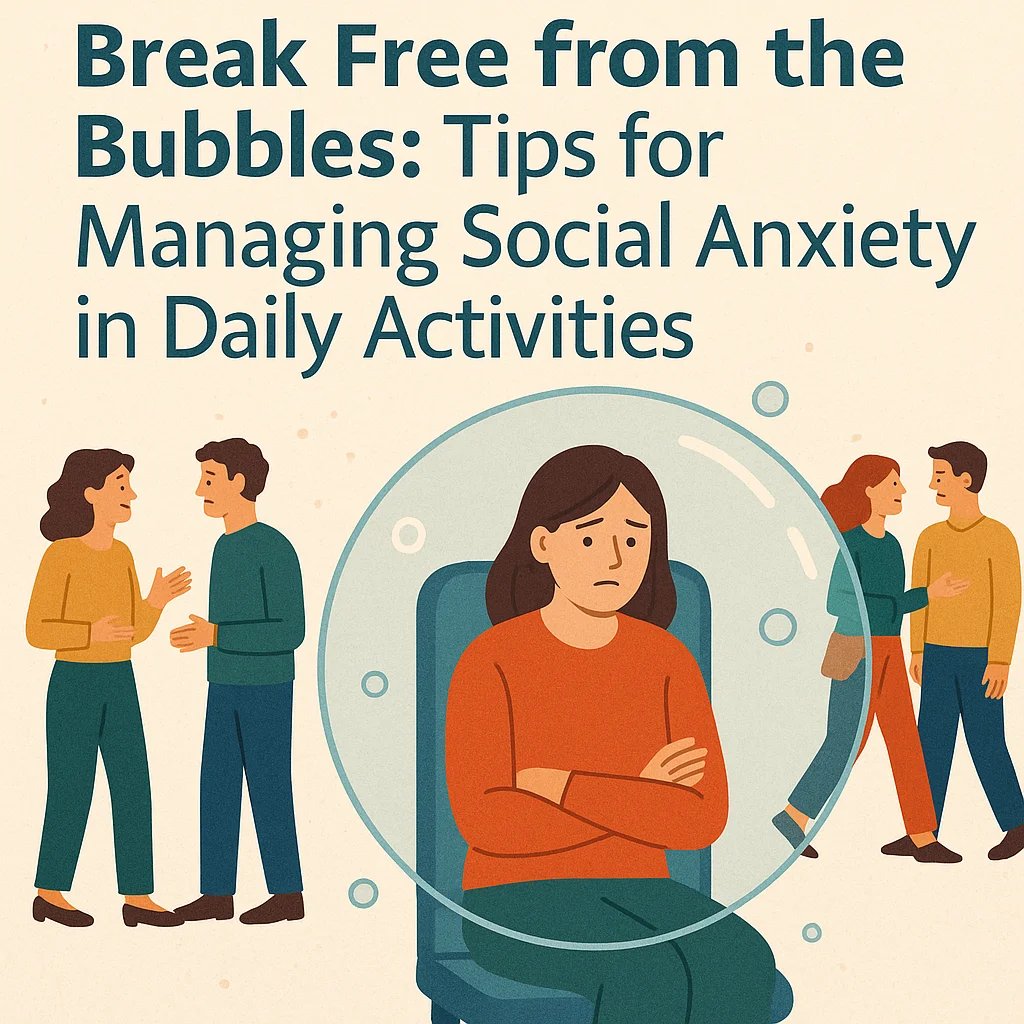
Social anxiety often feels like living inside an invisible bubble.
From the outside, everything may look normal. You go to work, answer texts, run errands, attend family gatherings, and smile when expected. But inside, everyday moments can feel charged with pressure: What if I say something awkward? What if they judge me? What if I blush, freeze, stumble, or seem strange?
That is why Break Free from the Bubbles: Tips for Managing Social Anxiety in Daily Activities is more than a self-help topic. It is a practical roadmap for reclaiming ordinary life.
Social anxiety does not only show up during speeches, job interviews, or crowded parties. It can appear while ordering coffee, walking into a gym, asking a cashier a question, joining a work meeting, replying to a group chat, or simply being seen in public. The “bubble” becomes a protective shield—but over time, it can shrink your world.
This guide is designed to help you break free from anxious bubbles gently, realistically, and sustainably. You do not need to become the loudest person in the room. You do not need to force yourself into overwhelming situations overnight. You simply need tools that help you participate in daily activities with more freedom, less fear, and greater self-trust.
Important note: This article offers education and practical strategies, not a medical diagnosis or replacement for therapy. If social anxiety severely limits your life, professional support from a therapist, counselor, or doctor can be deeply helpful.
Understanding the “Bubble” of Social Anxiety
The phrase Break Free from the Bubbles: Tips for Managing Social Anxiety in Daily Activities captures a common experience: social anxiety often creates mental “bubbles” that separate you from the world around you.
These bubbles can look like:
- Avoiding eye contact so no one starts a conversation
- Wearing headphones to appear unavailable
- Skipping events even when you want to go
- Overthinking conversations for hours afterward
- Rehearsing simple sentences before saying them
- Leaving places early to escape discomfort
- Choosing online interaction over face-to-face contact
- Staying silent in meetings despite having ideas
At first, the bubble feels safe. It protects you from embarrassment, judgment, and uncertainty. But avoidance teaches the brain that social situations are dangerous. The more you avoid, the more threatening ordinary interactions can feel.
That is the core challenge of managing social anxiety in daily activities: learning how to step out of the bubble without overwhelming yourself.
What Social Anxiety Feels Like in Daily Life
Social anxiety is not “just shyness.” Shyness is a personality tendency; social anxiety is often driven by intense fear of negative evaluation. You may worry that others will notice your nervousness, judge your appearance, misunderstand your words, or reject you.
Common Physical Symptoms
| Symptom | How It May Show Up |
|---|---|
| Racing heart | Feeling panicked before speaking |
| Sweating | Worrying others can see you are nervous |
| Blushing | Feeling exposed or embarrassed |
| Trembling | Avoiding holding cups, papers, or phones |
| Tight throat | Struggling to speak clearly |
| Nausea | Avoiding meals or social gatherings |
| Muscle tension | Feeling stiff or unnatural around others |
| Brain fog | Forgetting what you planned to say |
Common Thought Patterns
People dealing with social anxiety often experience thoughts like:
- “Everyone is looking at me.”
- “I sounded stupid.”
- “They probably think I’m weird.”
- “I need to leave before I embarrass myself.”
- “I can’t handle this.”
- “If I make a mistake, people will remember forever.”
One of the most useful tips for managing social anxiety in daily activities is learning to recognize these thoughts as anxiety predictions—not facts.
The Social Anxiety Cycle: Why Avoidance Keeps the Bubble Strong
Social anxiety is often maintained by a cycle of fear, avoidance, temporary relief, and increased fear.
| Stage | What Happens | Example |
|---|---|---|
| Trigger | A social situation appears | You are invited to lunch with coworkers |
| Prediction | Anxiety creates a scary story | “I’ll say something awkward” |
| Physical reaction | Your body enters threat mode | Racing heart, sweating, tension |
| Avoidance or safety behavior | You escape or protect yourself | You say you are too busy |
| Short-term relief | Anxiety drops quickly | “Thank goodness I didn’t go” |
| Long-term cost | Fear becomes stronger | Lunch feels even scarier next time |
The goal of Break Free from the Bubbles: Tips for Managing Social Anxiety in Daily Activities is not to eliminate anxiety instantly. The goal is to interrupt this cycle little by little.
Instead of avoiding everything, you practice manageable steps. Instead of believing every anxious thought, you question it. Instead of waiting to feel confident, you build confidence through action.
A Better Goal: Courage, Not Perfection
Many people with social anxiety believe they need to feel calm before participating in life.
But confidence usually comes after practice, not before.
A more helpful goal is:
“I can do meaningful things while feeling some anxiety.”
This mindset matters because trying to erase anxiety can create more pressure. If you think, “I must not blush,” you may blush more. If you think, “I must sound confident,” you may become more self-conscious.
Instead, breaking free from social anxiety bubbles begins with allowing discomfort to exist without letting it control your choices.
The Four-Part Framework: Notice, Normalize, Nudge, Nourish
A practical framework for managing social anxiety in daily activities is:
| Step | Meaning | Example |
|---|---|---|
| Notice | Identify anxiety without fusing with it | “I’m having the thought that I’ll be judged.” |
| Normalize | Remind yourself anxiety is common and temporary | “My body is trying to protect me.” |
| Nudge | Take a small action toward life | Ask one question, make eye contact, stay five minutes |
| Nourish | Recover kindly afterward | Reflect on effort, not perfection |
This framework keeps progress realistic. You do not need to leap from isolation to public speaking. You simply need repeated, doable nudges outside the bubble.
Start Small: Build a Social Anxiety Exposure Ladder
Exposure means gradually facing feared situations in a planned way. It is one of the most evidence-supported approaches for anxiety. The key word is gradually.
Do not start with your biggest fear. Start with something mildly uncomfortable and repeat it until your brain learns, “I can survive this.”
Sample Exposure Ladder
| Level | Daily Activity | Anxiety Rating 1–10 |
|---|---|---|
| 1 | Smile at a neighbor | 2 |
| 2 | Say “thank you” clearly to a cashier | 3 |
| 3 | Ask a store employee where something is | 4 |
| 4 | Make small talk with a coworker | 5 |
| 5 | Speak once in a team meeting | 6 |
| 6 | Attend a small social event for 30 minutes | 7 |
| 7 | Invite someone for coffee | 8 |
| 8 | Give a short presentation | 9 |
The exposure ladder is central to Break Free from the Bubbles: Tips for Managing Social Anxiety in Daily Activities because it transforms vague fear into specific, trainable steps.
How to Use the Ladder
- Pick one activity that feels challenging but possible.
- Repeat it several times across the week.
- Track what actually happened—not what anxiety predicted.
- Move up only when you are ready.
- Celebrate effort, not flawless performance.
Before, During, and After: A Practical Plan for Daily Activities
Social anxiety becomes easier to manage when you stop improvising under pressure. Use a simple plan.
Before the Activity
Ask yourself:
- What am I afraid will happen?
- How likely is that, realistically?
- What is one small action I can take?
- What will I do if anxiety shows up?
- What would I tell a friend in this situation?
Example:
“I’m going to the grocery store. Anxiety says people will notice me looking awkward. My goal is to buy three items and ask one employee where something is. If I feel anxious, I’ll breathe slowly and keep going.”
During the Activity
Use grounding strategies:
- Feel your feet on the floor.
- Relax your shoulders.
- Look around and name five neutral objects.
- Speak a little slower than usual.
- Focus on the task, not your performance.
- Remind yourself: “I can be anxious and still do this.”
After the Activity
Avoid harsh post-event analysis. Instead, write down:
| Reflection Question | Helpful Example |
|---|---|
| What did I do that was brave? | “I asked the employee for help.” |
| What did anxiety predict? | “That they would judge me.” |
| What actually happened? | “They answered normally.” |
| What can I practice next? | “Ask a follow-up question next time.” |
This aftercare step is one of the most overlooked social anxiety tools for daily life.
Rethink the Spotlight Effect
Social anxiety often convinces you that everyone is watching. Psychologists call this the spotlight effect—the tendency to overestimate how much others notice us.
In reality, most people are absorbed in themselves: their phones, schedules, worries, errands, and insecurities.
When you walk into a room and think, “Everyone noticed I’m nervous,” a more balanced thought might be:
“Some people may glance at me, but most are focused on themselves.”
This shift is vital for anyone trying to break free from anxious bubbles in everyday life.
Conversation Skills for Social Anxiety
Many people with social anxiety fear conversations because they feel unpredictable. You cannot control every response, but you can use simple structures.
The ECHO Method
| Step | What It Means | Example |
|---|---|---|
| E | Echo a keyword | “You mentioned hiking?” |
| C | Curiosity question | “How did you get into that?” |
| H | Honest small share | “I’ve only done easy trails.” |
| O | Open the door | “Do you have a favorite place nearby?” |
This method helps you stay engaged without needing to perform.
Simple Conversation Starters
| Situation | Easy Starter |
|---|---|
| Work | “How’s your week going so far?” |
| Class | “Have you started the assignment yet?” |
| Gym | “Do you know if this machine is free?” |
| Store | “Excuse me, where can I find this?” |
| Social event | “How do you know the host?” |
| Neighbor | “Beautiful weather today, isn’t it?” |
The goal is not to be fascinating. The goal is to practice connection.
Safety Behaviors: The Hidden Habits That Keep Anxiety Alive
Safety behaviors are things you do to feel protected in social situations. Some are harmless in moderation, but they can reinforce anxiety if you rely on them too much.
Examples include:
- Avoiding eye contact completely
- Rehearsing every sentence mentally
- Checking your face repeatedly
- Speaking as little as possible
- Over-apologizing
- Hiding behind your phone
- Only going places with a “safe” person
- Leaving as soon as anxiety rises
A key part of Break Free from the Bubbles: Tips for Managing Social Anxiety in Daily Activities is slowly reducing safety behaviors.
Try This
Instead of eliminating all safety behaviors at once, choose one.
For example:
- If you always look down, practice brief eye contact.
- If you always rehearse, allow one spontaneous sentence.
- If you always leave early, stay five extra minutes.
- If you always hide behind your phone, keep it in your pocket for ten minutes.
Small changes teach your brain that you can cope without constant protection.
Managing Social Anxiety at Work
Workplace social anxiety can be especially stressful because participation may affect performance, relationships, and career growth.
Common triggers include:
- Meetings
- Presentations
- Lunch breaks
- Small talk
- Asking questions
- Receiving feedback
- Networking
- Speaking to managers
Practical Workplace Strategies
| Challenge | Strategy |
|---|---|
| Fear of speaking in meetings | Prepare one sentence or question in advance |
| Avoiding coworkers | Start with brief greetings |
| Anxiety before presentations | Practice aloud, not just mentally |
| Fear of feedback | Ask for specifics and take notes |
| Lunchroom discomfort | Stay for 10 minutes before leaving |
| Networking anxiety | Prepare two simple questions |
A helpful workplace version of tips for managing social anxiety in daily activities is to focus on contribution rather than impression.
Instead of asking, “Do they think I’m awkward?” ask:
“What is one useful thing I can contribute here?”
Case Study 1: Maya and the Coffee Shop Challenge
Maya, 29, worked remotely and noticed her world getting smaller. She ordered everything online, avoided phone calls, and felt anxious whenever she had to interact with strangers. Her first goal was simple: order coffee in person twice a week.
At first, she rehearsed her order repeatedly before entering. Her heart raced, and she worried the barista would judge her voice. But she committed to staying in line and speaking clearly.
Week one: she ordered without customizing anything.
Week two: she asked one question about the menu.
Week three: she made brief eye contact and said, “Thanks, have a good day.”
Week four: she sat inside for ten minutes instead of leaving immediately.
Analysis
Maya’s progress shows that Break Free from the Bubbles: Tips for Managing Social Anxiety in Daily Activities works best when the steps are specific and repeatable. She did not begin with a party or presentation. She began with a daily activity that gave her consistent practice.
Her confidence grew because her brain gathered new evidence: I can interact with strangers and be okay.
Managing Social Anxiety While Running Errands
Errands can feel surprisingly intense when you have social anxiety. Stores, banks, pharmacies, post offices, salons, and appointments all involve being seen, asking questions, and sometimes making decisions under pressure.
Errand Anxiety Plan
| Errand | Small Brave Action |
|---|---|
| Grocery store | Ask where one item is |
| Pharmacy | Ask a question about dosage instructions |
| Bank | Request clarification instead of pretending to understand |
| Hair salon | State your preference clearly |
| Restaurant | Ask for a modification politely |
| Post office | Ask which shipping option is best |
One of the best daily activities with social anxiety practices is turning errands into low-stakes exposure opportunities. Most interactions are brief, structured, and predictable—perfect for skill-building.
Case Study 2: Devon and the Monday Meeting
Devon, 36, was respected at work but rarely spoke in meetings. He had ideas but feared sounding unprepared. His manager encouraged participation, which made him even more anxious.
Devon created a meeting ladder:
- Attend without hiding behind laptop
- Make eye contact once
- Nod when agreeing
- Ask one prepared question
- Share one short update
- Offer one idea
He started by preparing a single sentence before each meeting. The first time he spoke, his voice shook slightly. Anxiety told him everyone noticed. But afterward, a coworker simply responded to his idea and moved the discussion forward.
After six weeks, Devon was not anxiety-free, but he spoke more consistently.
Analysis
Devon’s story highlights a major lesson in managing social anxiety in daily activities: progress does not require complete calm. His voice shook, and he still succeeded. The win was not perfect delivery—the win was participation.
Managing Social Anxiety in Friendships and Relationships
Social anxiety can make relationships complicated. You may want closeness but fear rejection. You may delay replying to messages because you want the “perfect” response. You may avoid invitations, then worry people will stop asking.
Relationship Patterns Social Anxiety Can Create
| Pattern | Result |
|---|---|
| Avoiding plans | Others may assume disinterest |
| Overthinking texts | Communication becomes exhausting |
| People-pleasing | Needs go unspoken |
| Fear of vulnerability | Relationships stay surface-level |
| Cancelling often | Trust may weaken |
| Comparing yourself | Social events feel like performance |
Small Relationship Actions
- Reply with a simple message instead of waiting for perfection.
- Suggest a low-pressure plan, like a walk or coffee.
- Tell a trusted person, “I get anxious socially, but I do want to spend time.”
- Practice saying preferences: “I’d rather meet somewhere quieter.”
- Stay at gatherings for a planned amount of time.
A powerful part of breaking free from the bubbles of social anxiety is letting safe people know what is happening. You do not need to share everything, but honest communication can reduce misunderstandings.
Digital Bubbles: When Online Life Becomes Avoidance
Technology can be supportive, but it can also deepen avoidance. Texting, delivery apps, remote work, and social media make it easier than ever to avoid face-to-face interaction.
Ask yourself:
- Am I choosing online options for convenience or fear?
- Do I avoid phone calls even when they would be easier?
- Do I compare myself to others online and feel worse?
- Do I use scrolling to recover—or to disappear?
Digital tools are not bad. But Break Free from the Bubbles: Tips for Managing Social Anxiety in Daily Activities includes noticing when your digital life becomes a hiding place.
Healthier Digital Habits
| Instead of… | Try… |
|---|---|
| Rewriting texts for 20 minutes | Send a “good enough” reply |
| Avoiding all phone calls | Make one short call weekly |
| Using delivery for every meal | Pick up food in person sometimes |
| Scrolling before events | Do grounding exercises |
| Comparing on social media | Follow accounts that support growth |
In-the-Moment Tools for Anxiety Surges
When anxiety spikes, you need tools that work quickly. These will not erase fear, but they can help your nervous system settle enough to continue.
| Tool | How to Use It | Best For |
|---|---|---|
| Slow exhale breathing | Inhale 4, exhale 6 | Racing heart |
| 5-4-3-2-1 grounding | Name sensory details | Panic or dissociation |
| Feet press | Press feet into floor | Feeling unsteady |
| Labeling | “This is anxiety, not danger” | Fearful thoughts |
| Task focus | Focus on what you are doing | Self-consciousness |
| Gentle posture reset | Relax jaw and shoulders | Muscle tension |
A simple phrase can help:
“My body is alarmed, but I am not in danger.”
This is one of the most practical tips for managing social anxiety day to day because it separates discomfort from threat.
Case Study 3: Lina and the Grocery Store Loop
Lina, 24, avoided grocery stores during busy hours. She worried people would notice her indecision or judge what she bought. She often abandoned her cart and left.
Her therapist suggested a structured plan:
- Visit during a moderately busy time
- Bring a short list
- Stay for at least 15 minutes
- Ask one employee a question
- Avoid checking her appearance in reflective surfaces
- Record what happened afterward
The first few visits felt uncomfortable. But over time, Lina realized most people were focused on their own shopping. Her anxiety dropped from an 8 to a 4 after repeated practice.
Analysis
Lina’s experience shows why Break Free from the Bubbles: Tips for Managing Social Anxiety in Daily Activities emphasizes repetition. One successful grocery trip helps, but repeated trips retrain the brain. Ordinary places become ordinary again through practice.
How to Stop Overthinking After Social Interactions
Post-event rumination is one of the most painful parts of social anxiety. You replay what you said, analyze facial expressions, and imagine others judging you.
Rumination vs. Reflection
| Rumination | Reflection |
|---|---|
| “Why am I so awkward?” | “What did I practice?” |
| Replays mistakes repeatedly | Reviews facts briefly |
| Increases shame | Builds learning |
| Assumes negative judgment | Allows uncertainty |
| Lasts hours or days | Has a time limit |
A Five-Minute Post-Interaction Review
Set a timer for five minutes and answer:
- What did anxiety say would happen?
- What actually happened?
- What did I do well?
- What can I try next time?
- What kind thing can I say to myself now?
When the timer ends, redirect your attention to a task. This trains your mind not to turn every interaction into a courtroom trial.
Self-Compassion: The Skill That Makes Courage Sustainable
Many people try to shame themselves out of social anxiety:
- “I’m ridiculous.”
- “Why can’t I be normal?”
- “Everyone else handles this.”
- “I should be over it by now.”
But shame rarely creates lasting courage. It usually increases avoidance.
Self-compassion does not mean making excuses. It means treating yourself like someone worth helping.
Try replacing harsh thoughts:
| Harsh Thought | Compassionate Reframe |
|---|---|
| “I was so awkward.” | “I was anxious and still showed up.” |
| “They think I’m weird.” | “I don’t know what they think.” |
| “I failed.” | “I practiced.” |
| “I’ll never change.” | “Small repetition changes the brain.” |
| “I shouldn’t feel this way.” | “Anxiety is hard, and I can learn skills.” |
Self-compassion is essential to breaking free from social anxiety bubbles because progress involves discomfort. You need encouragement, not internal punishment.
Lifestyle Habits That Support Social Confidence
Social anxiety is psychological, but the body matters too. Sleep, caffeine, movement, and stress levels can influence anxiety intensity.
Supportive Habits
| Habit | Why It Helps |
|---|---|
| Consistent sleep | Reduces emotional reactivity |
| Regular movement | Burns stress hormones |
| Lower caffeine | Reduces jitters and racing heart |
| Balanced meals | Stabilizes mood and energy |
| Mindfulness | Builds awareness of thoughts |
| Journaling | Tracks patterns and progress |
| Time outdoors | Calms the nervous system |
These habits are not cures by themselves, but they make managing social anxiety in daily activities easier.
When to Seek Professional Help
Self-help strategies can be powerful, but professional support may be necessary if social anxiety significantly interferes with your life.
Consider seeking help if:
- You avoid work, school, or important responsibilities
- You rarely leave home because of anxiety
- You depend on alcohol or substances to socialize
- Panic attacks are frequent
- Relationships are suffering
- You feel hopeless or depressed
- Anxiety has lasted for months or years without improvement
Helpful Treatment Options
| Treatment | Description |
|---|---|
| Cognitive Behavioral Therapy | Helps change anxious thoughts and avoidance patterns |
| Exposure Therapy | Gradual practice facing feared situations |
| Acceptance and Commitment Therapy | Builds willingness to act despite anxiety |
| Group Therapy | Provides safe social practice |
| Medication | May help some people when prescribed by a professional |
| Skills Coaching | Builds communication and confidence habits |
Professional help can accelerate the process of Break Free from the Bubbles: Tips for Managing Social Anxiety in Daily Activities by providing structure, accountability, and support.
Case Study 4: Sam and the University Seminar
Sam, 20, avoided speaking in university seminars. Participation counted toward his grade, but he felt frozen when discussions began. He worried his classmates would think his comments were obvious or unintelligent.
Sam began with a realistic plan:
- Read one article highlight before class
- Prepare one comment and one question
- Sit in the same seat each week
- Speak within the first 15 minutes
- Keep comments to two sentences
- Reward himself afterward with a walk and music
The first time, he stumbled over his words. But the professor nodded and built on his point. Over the semester, Sam participated more often. He still felt nervous, but he no longer saw silence as his only option.
Analysis
Sam’s story illustrates that tips for managing social anxiety in daily activities apply to academic life too. His progress came from preparation, repetition, and lowering the pressure to sound brilliant. He learned that participation matters more than perfection.
Create a Weekly “Bubble-Breaking” Plan
To make progress, turn intention into a schedule.
Weekly Plan Template
| Day | Small Exposure | Anxiety Rating Before | What Happened | Lesson |
|---|---|---|---|---|
| Monday | Say hello to coworker | 4 | They smiled back | Brief contact is safe |
| Tuesday | Ask cashier a question | 5 | Got answer quickly | No one seemed annoyed |
| Wednesday | Reply to group chat | 3 | Two people reacted | Good enough is fine |
| Thursday | Speak once in meeting | 6 | Voice shook but okay | Anxiety is tolerable |
| Friday | Attend coffee meetup | 7 | Stayed 30 minutes | I can stay anxious |
| Saturday | Call to book appointment | 5 | Call lasted 2 minutes | Phone calls are manageable |
| Sunday | Rest and reflect | — | Reviewed wins | Progress needs recovery |
This plan turns Break Free from the Bubbles: Tips for Managing Social Anxiety in Daily Activities into an actual practice rather than a hopeful idea.
What Not to Do When Managing Social Anxiety
Some strategies seem helpful but backfire.
Avoid These Common Traps
| Trap | Why It Backfires | Better Option |
|---|---|---|
| Waiting to feel ready | Readiness may never arrive | Start small while anxious |
| Over-rehearsing | Increases self-monitoring | Prepare lightly |
| Avoiding all discomfort | Shrinks your world | Use gradual exposure |
| Seeking constant reassurance | Keeps doubt alive | Practice tolerating uncertainty |
| Comparing yourself | Fuels shame | Track your own progress |
| Using alcohol to cope | Can create dependence | Learn sober coping tools |
| Quitting after one bad experience | Blocks learning | Repeat with adjustment |
The path to break free from anxious bubbles is not about never having awkward moments. Everyone has awkward moments. The difference is learning not to treat them as disasters.
A Script for Handling Awkward Moments
One fear behind social anxiety is: What if something awkward happens?
Here is the truth: something awkward will happen eventually. You may forget a word, interrupt someone accidentally, spill water, mispronounce a name, or tell a joke that does not land.
That does not mean you failed. It means you are human.
Simple Recovery Scripts
| Situation | Script |
|---|---|
| You stumble over words | “Let me say that again.” |
| You interrupt | “Sorry, go ahead.” |
| You forget someone’s name | “Remind me of your name again?” |
| You misunderstand | “Oh, I see what you mean now.” |
| You need a moment | “Let me think about that.” |
| You make a small mistake | “Oops, that came out wrong.” |
Prepared recovery scripts are excellent social anxiety tools for daily life because they reduce the fear that one mistake will ruin everything.
The Role of Values: Why Do You Want Out of the Bubble?
Fear tells you what to avoid. Values tell you what to move toward.
Ask yourself:
- Do I value friendship?
- Do I value learning?
- Do I value career growth?
- Do I value independence?
- Do I value kindness?
- Do I value creativity?
- Do I value community?
When anxiety gets loud, values provide direction.
For example:
- “I’m attending this event because I value friendship.”
- “I’m asking this question because I value learning.”
- “I’m speaking in this meeting because I value contribution.”
- “I’m going to the appointment because I value health.”
Values make Break Free from the Bubbles: Tips for Managing Social Anxiety in Daily Activities personally meaningful. You are not facing discomfort for no reason. You are making room for the life you want.
Quick Daily Practices to Build Confidence
Here are small practices you can use every day.
The 1% Braver Rule
Each day, do one thing 1% braver than usual.
Examples:
- Say hello first.
- Ask a simple question.
- Make brief eye contact.
- Send the message without rewriting it five times.
- Walk into a room without checking your phone.
- Speak one sentence in a discussion.
- Stay slightly longer than you planned.
The “Good Enough” Rule
Social anxiety often demands perfect performance. Practice doing things “good enough.”
- A good enough text
- A good enough conversation
- A good enough outfit
- A good enough question
- A good enough introduction
The Evidence Log
Write down proof that anxiety predictions are not always accurate.
| Anxiety Prediction | What Happened |
|---|---|
| “The cashier will be annoyed.” | They answered politely. |
| “Everyone will stare.” | No one seemed to notice. |
| “I’ll freeze completely.” | I spoke, even though nervous. |
| “They won’t reply.” | They replied later. |
Over time, this log becomes evidence that you can manage social anxiety during daily activities.
Long-Tail Keyword Variations and Natural Phrases Used
For readers, writers, and wellness professionals interested in this topic, here are useful long-tail variations related to Break Free from the Bubbles: Tips for Managing Social Anxiety in Daily Activities:
| Keyword Variation | Context |
|---|---|
| managing social anxiety in daily activities | General daily coping |
| tips for managing social anxiety day to day | Practical lifestyle guidance |
| break free from anxious bubbles | Motivational framing |
| social anxiety tools for daily life | Skills-based support |
| daily activities with social anxiety | Real-world examples |
| how to manage social anxiety at work | Workplace focus |
| overcoming social anxiety during errands | Public interaction practice |
| social anxiety exposure ladder | Therapy-informed strategy |
| reduce avoidance from social anxiety | Behavior change |
| build confidence with social anxiety | Growth and recovery |
These phrases reflect the same goal: helping people participate more fully in everyday life.
Frequently Asked Questions
1. Can social anxiety go away completely?
For some people, social anxiety becomes very mild or no longer interferes with life. For others, it may still appear in certain situations, but it becomes manageable. The goal of Break Free from the Bubbles: Tips for Managing Social Anxiety in Daily Activities is not perfection—it is freedom, flexibility, and confidence in handling discomfort.
2. What is the fastest way to manage social anxiety in the moment?
Use your body first. Slow your breathing, relax your shoulders, feel your feet on the ground, and focus on the task instead of how you appear. Then take one small action. These quick tools can help you manage social anxiety in daily activities without escaping immediately.
3. Should I avoid situations that make me anxious?
Avoidance helps briefly but usually strengthens anxiety over time. Instead, use gradual exposure. Start with manageable situations and build up slowly. The idea is to break free from anxious bubbles without overwhelming your nervous system.
4. How do I stop replaying conversations afterward?
Set a five-minute reflection limit. Write what anxiety predicted, what actually happened, what you did well, and one thing to practice next time. Then redirect your attention. This prevents reflection from turning into rumination.
5. Is medication necessary for social anxiety?
Not always. Many people benefit from therapy, exposure practice, lifestyle changes, and self-help tools. Others find medication helpful, especially when anxiety is severe. A qualified healthcare professional can help you decide what is appropriate.
6. How can I support a friend with social anxiety?
Be patient, invite them without pressuring them, and avoid shaming them for anxiety. You can say, “I’m happy to go at your pace.” Encourage small steps and celebrate effort. Support works best when it respects autonomy.
7. What if I embarrass myself?
You probably will at some point—because everyone does. Embarrassment feels uncomfortable, but it is rarely as catastrophic as anxiety predicts. Learning to recover from awkward moments is a major part of managing social anxiety in daily activities.
Conclusion: Your World Can Get Bigger Again
Social anxiety may have convinced you that the bubble is the safest place to live. But safety is not the same as freedom.
The heart of Break Free from the Bubbles: Tips for Managing Social Anxiety in Daily Activities is learning that you can move through ordinary life even when anxiety comes along. You can order the coffee, ask the question, attend the meeting, send the message, walk into the room, and stay long enough to discover that fear does not get the final vote.
Start small. Repeat often. Treat yourself kindly. Track evidence. Let your values—not anxiety—choose your direction.
You do not have to burst the bubble all at once.
Just make one small opening today. Then another tomorrow. Over time, those openings become doors. And eventually, the world that once felt too sharp, too loud, or too risky begins to feel available again.
About the Author