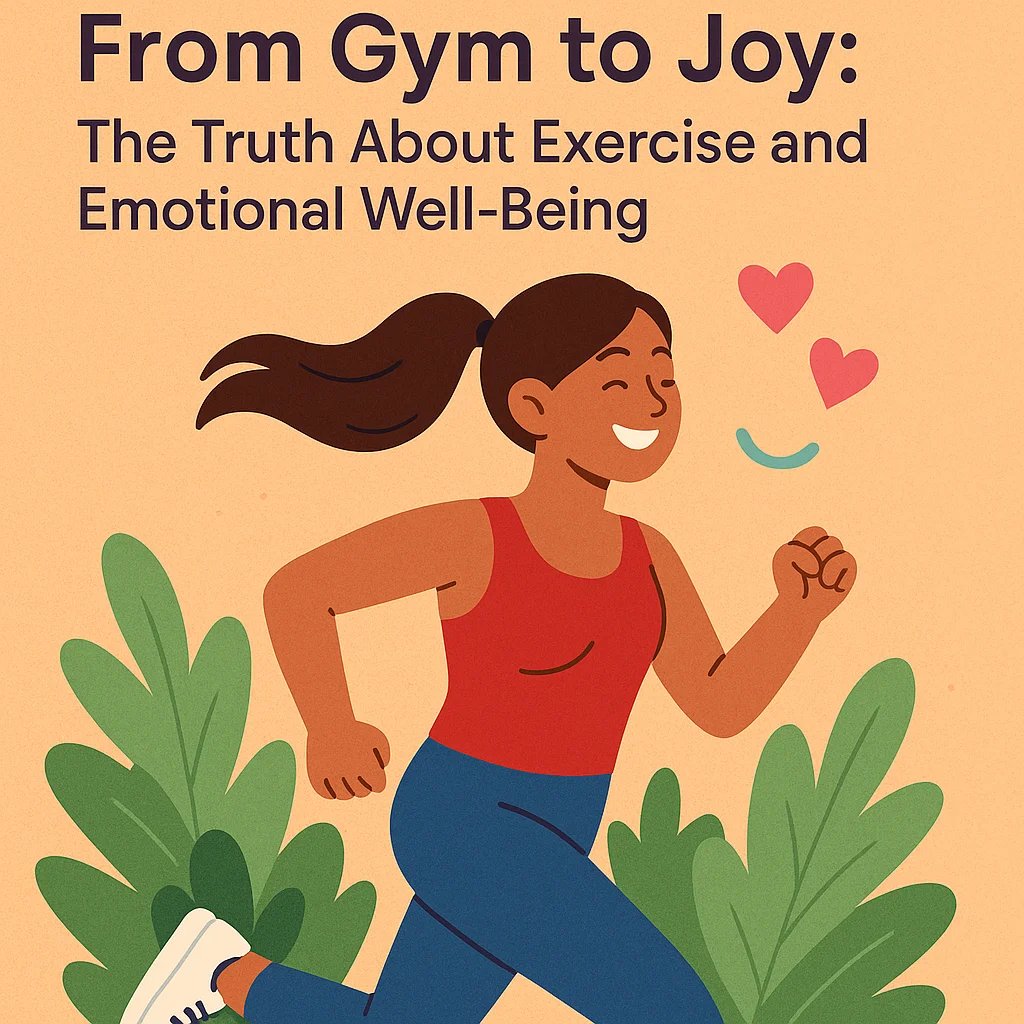
From Gym to Joy: The Proven Truth About Exercise and Emotional Well-Being
Introduction: What If Feeling Better Didn’t Start in Your Head—but in Your Body?
Some days, happiness feels like a locked room and you’ve misplaced the key. You try to think your way into a better mood. You scroll, snack, overwork, withdraw, or promise yourself you’ll “get it together” tomorrow. But one of the most reliable emotional tools available to us is not hidden in a productivity hack or a perfect morning routine.
It is movement.
Not punishment. Not obsession. Not forcing your body into exhaustion. Movement.
That is the heart of From Gym to Joy: The Truth About Exercise and Emotional Well-Being: exercise is not merely about building muscle, burning calories, or changing how you look. At its best, exercise changes how you live inside your own mind.
A walk can soften anxiety. Strength training can rebuild confidence. Dancing can release stress you did not know you were carrying. Yoga can help your nervous system exhale. Even ten minutes of movement can interrupt a spiral of rumination and give your brain a different story to follow.
But the truth is also more nuanced than “exercise makes you happy.” Emotional well-being is complex. Depression, anxiety, trauma, grief, burnout, loneliness, and chronic stress cannot always be solved with a jog around the block. Exercise is powerful, but it is not magic. It works best when approached with compassion, consistency, and realistic expectations.
This in-depth guide explores From Gym to Joy: The Truth About Exercise and Emotional Well-Being through science, real-world case studies, practical strategies, and honest discussion. You will learn why movement affects mood, how different types of exercise support emotional health, what mistakes to avoid, and how to build a routine that feels less like a chore and more like a lifeline.
Understanding From Gym to Joy: The Truth About Exercise and Emotional Well-Being
The phrase From Gym to Joy: The Truth About Exercise and Emotional Well-Being captures a major shift in how we think about fitness. For decades, exercise was often marketed through appearance: lose weight, get lean, sculpt abs, burn fat, fit into smaller clothes.
Those goals may motivate some people, but they are not always emotionally nourishing. In fact, appearance-driven fitness can sometimes create shame, comparison, and unhealthy pressure.
A more sustainable approach asks a different question:
How does movement help me feel, function, connect, and cope?
That question changes everything.
Exercise becomes less about controlling your body and more about caring for your whole self. It becomes a practice of emotional regulation, resilience, self-respect, and energy management.
Emotional well-being includes more than happiness
Emotional well-being is not the same as being cheerful all the time. It includes:
- The ability to manage stress
- A sense of purpose and motivation
- Emotional flexibility
- Healthy self-esteem
- Social connection
- Better sleep
- Reduced anxiety and irritability
- Improved ability to recover from setbacks
- A feeling of agency over your life
When we talk about exercise and emotional well-being, we are talking about the way physical activity can support these deeper aspects of mental and emotional life.
The Science Behind Exercise and Mood
Exercise affects the brain and body through multiple pathways. That is why its emotional benefits can feel immediate in some cases and cumulative in others.
After one workout, you may feel calmer, lighter, or more energized. After several weeks, you may notice better sleep, improved confidence, reduced anxiety, and a more stable mood.
Key ways exercise supports emotional well-being
| Mechanism | What Happens | Emotional Benefit |
|---|---|---|
| Endorphin release | Physical activity can increase natural pain-relieving chemicals | Improved mood, reduced discomfort |
| Dopamine regulation | Movement supports reward and motivation pathways | More drive, pleasure, and focus |
| Serotonin support | Exercise may influence serotonin activity | Better mood stability |
| Reduced cortisol | Regular exercise can improve stress hormone regulation | Lower stress reactivity |
| BDNF production | Brain-derived neurotrophic factor supports brain plasticity | Improved learning, resilience, and mood |
| Improved sleep | Movement helps regulate circadian rhythm and sleep depth | Better emotional control |
| Nervous system regulation | Rhythmic movement can calm fight-or-flight responses | Less anxiety and tension |
| Self-efficacy | Completing workouts builds trust in yourself | Greater confidence and agency |
This is why From Gym to Joy: The Truth About Exercise and Emotional Well-Being is not just a catchy phrase. It reflects a biological reality: your body and mind are not separate systems. They constantly talk to each other.
When you move your body, you send signals to your brain: I am alive. I am capable. I can respond. I can adapt.
Exercise Is Not Just a Mood Booster—It Is an Emotional Regulator
Many people think of exercise as something that creates happiness. But its deeper value may be emotional regulation.
Emotional regulation means the ability to move through feelings without being overwhelmed or controlled by them. Exercise can help because it gives emotion a physical outlet.
Anger has energy. Anxiety has energy. Grief can feel heavy in the body. Stress tightens the jaw, shoulders, stomach, and chest. Movement helps metabolize these states.
A brisk walk can turn mental chaos into rhythm. Strength training can transform frustration into focus. Stretching can create space where tension has been stored. Swimming can quiet sensory overload. Dancing can turn sadness into expression.
This is central to From Gym to Joy: The Truth About Exercise and Emotional Well-Being: joy often arrives not because exercise erases pain, but because it helps us process what we feel.
The “Feel-Better” Effect: Why Even One Workout Can Change Your Day
One of the most encouraging findings about exercise and emotional well-being is that benefits do not require months of effort before you feel anything.
A single session of moderate physical activity can improve mood, reduce tension, and increase energy. Even short bouts matter.
What can happen after one movement session?
| Type of Movement | Possible Immediate Emotional Effect |
|---|---|
| 10-minute walk | Mental clarity, reduced rumination |
| 20-minute bike ride | Increased energy, improved mood |
| Strength workout | Confidence, emotional release |
| Yoga or stretching | Calm, reduced tension |
| Dancing | Joy, playfulness, self-expression |
| Hiking outdoors | Awe, perspective, stress relief |
The important word here is possible. Not every workout feels amazing. Sometimes exercise feels ordinary. Sometimes it feels hard. But over time, the emotional return becomes more reliable.
That is why one of the best long-tail variations of From Gym to Joy: The Truth About Exercise and Emotional Well-Being might be: how exercise improves mood and emotional resilience over time.
The Difference Between Exercise as Punishment and Exercise as Care
A major truth about fitness and emotional health is this: the same activity can either heal or harm depending on the mindset behind it.
Running because you love the feeling of freedom is different from running because you hate your body. Lifting weights to feel strong is different from lifting weights to “earn” food. Going to the gym to support your mental health is different from going because you feel worthless if you miss a day.
Exercise as punishment sounds like:
- “I ate too much, so I have to burn it off.”
- “I’m disgusting unless I work out.”
- “Rest days are lazy.”
- “My body is a project I must fix.”
- “If I miss one workout, I failed.”
Exercise as care sounds like:
- “Movement helps me feel grounded.”
- “I deserve to feel strong and alive.”
- “Rest is part of fitness.”
- “My body is my partner, not my enemy.”
- “Something is better than nothing.”
The journey from gym to joy begins when movement becomes an act of respect rather than self-punishment.
Which Type of Exercise Is Best for Emotional Well-Being?
There is no single “best” exercise for everyone. The best exercise for emotional well-being is usually the one you can do consistently, safely, and with some degree of enjoyment or meaning.
That said, different forms of exercise offer different emotional benefits.
Exercise types and emotional benefits
| Exercise Type | Emotional Strength | Best For |
|---|---|---|
| Walking | Gentle mood support, stress relief | Beginners, anxiety, burnout |
| Running | Emotional release, energy boost | Restlessness, low mood |
| Strength training | Confidence, empowerment | Self-esteem, trauma recovery support |
| Yoga | Nervous system calming, body awareness | Anxiety, stress, emotional tension |
| Dancing | Joy, play, self-expression | Loneliness, sadness, creativity |
| Team sports | Connection, motivation | Social isolation, belonging |
| Swimming | Soothing sensory experience | Stress, joint pain, mental fatigue |
| Hiking | Awe, perspective, nature connection | Rumination, burnout |
| Martial arts | Discipline, confidence, boundaries | Anger, fear, self-trust |
| Pilates | Control, posture, mindful strength | Body awareness, stability |
The truth about exercise and emotional well-being is that your nervous system may respond differently depending on your personality, history, fitness level, and current emotional state.
If you are anxious, high-intensity exercise might help release adrenaline—or it might make you feel more activated. If you are depressed, gentle movement may feel more accessible than intense training. If you feel emotionally numb, music-based movement may help you reconnect with sensation and pleasure.
The key is experimentation.
How Much Exercise Do You Need to Feel Better?
Many health guidelines recommend around 150 minutes of moderate-intensity aerobic activity per week, plus strength training two days a week. But when it comes to emotional well-being, it is helpful to start smaller.
If you are overwhelmed, depressed, stressed, or exhausted, the idea of 150 minutes can feel impossible. So begin with what psychologists often call a “minimum viable action.”
That might be:
- Five minutes of walking
- One song of dancing
- Ten bodyweight squats
- A few stretches before bed
- A slow walk around the block
- Standing outside and breathing deeply
The goal is not to impress anyone. The goal is to create momentum.
A realistic movement ladder
| Level | Action | Emotional Goal |
|---|---|---|
| Level 1 | 2–5 minutes of movement | Break inertia |
| Level 2 | 10 minutes of walking or stretching | Shift mood gently |
| Level 3 | 20–30 minutes moderate exercise | Build consistency |
| Level 4 | 3–5 weekly sessions | Support long-term resilience |
| Level 5 | Balanced routine with cardio, strength, mobility, rest | Whole-person well-being |
This is a practical way to apply From Gym to Joy: The Truth About Exercise and Emotional Well-Being in real life. Start where you are, not where your ideal self thinks you should be.
Case Study 1: The Burned-Out Professional Who Started Walking
Background
Maya, a 38-year-old project manager, was experiencing chronic stress, poor sleep, irritability, and Sunday-night anxiety. She had tried joining a gym several times but always quit within a month because intense workouts felt like another demand on her schedule.
Instead of beginning with a fitness transformation plan, Maya started walking for 15 minutes after lunch three days a week. She did not track calories. She did not aim for speed. She simply walked outdoors without checking email.
After four weeks, she noticed she was less reactive in afternoon meetings. After eight weeks, she began sleeping better. Eventually, she increased her walks to 25 minutes and added a weekend nature walk.
Analysis
Maya’s story illustrates an important lesson in From Gym to Joy: The Truth About Exercise and Emotional Well-Being: exercise does not need to be intense to be meaningful.
Walking helped her interrupt stress cycles, get sunlight, create mental separation from work, and build a small sense of control. Her emotional improvement came not from pushing harder, but from choosing movement that matched her nervous system’s needs.
Why Walking Is Underrated for Mental Health
Walking may be the most accessible emotional wellness tool available. It requires no expensive equipment, no special skill, and no gym membership.
Walking is especially powerful because it combines several mood-supporting elements:
- Rhythmic bilateral movement
- Fresh air, if outdoors
- Exposure to natural light
- Gentle cardiovascular activation
- Time away from screens
- Opportunity for reflection
- Reduced physical intimidation
For people who dislike gyms, walking may be the simplest path from gym to joy—or from no gym to joy.
Walking also pairs well with other emotional supports. You can walk with a friend for connection, walk alone for clarity, walk in silence for mindfulness, or walk with music for motivation.
Strength Training and Emotional Confidence
Strength training deserves special attention in any discussion of From Gym to Joy: The Truth About Exercise and Emotional Well-Being.
Why? Because lifting weights does something emotionally profound: it gives you evidence of your own capacity.
You pick up something heavy. You learn technique. You practice. You improve. Over time, the weight that once felt impossible becomes manageable.
That physical experience can translate into emotional self-trust.
Strength training may support:
- Confidence
- Body respect
- Reduced anxiety
- Better posture and presence
- Improved metabolic health
- A stronger sense of personal agency
- Healthier aging
- Emotional resilience
For many people, especially those who have felt powerless, strength training can become symbolic. The barbell, dumbbell, kettlebell, or resistance band becomes more than equipment. It becomes a conversation with fear: I can do hard things carefully. I can progress. I can support myself.
Case Study 2: Strength Training After a Difficult Life Transition
Background
After a divorce, Daniel, 45, felt emotionally depleted. He described himself as “floating through life” and had lost confidence. A friend invited him to a beginner strength class twice a week.
At first, Daniel was intimidated. He worried he would look weak. But the class focused on form, gradual progression, and community support. After three months, he could deadlift more than his body weight and perform push-ups with good technique.
The emotional shift surprised him. He did not suddenly become happy all the time, but he felt more grounded. He began making decisions more confidently and reported feeling “back in my body.”
Analysis
Daniel’s experience shows how the truth about exercise and emotional well-being often involves identity. Strength training helped him rebuild a sense of competence at a time when life felt unstable.
The relevance to From Gym to Joy: The Truth About Exercise and Emotional Well-Being is clear: exercise can become a structured way to practice resilience. Progress in the gym can remind people that change is possible outside the gym too.
Exercise, Anxiety, and the Nervous System
Anxiety is not only a thought pattern. It is a body state.
Racing heart. Tight chest. Shallow breath. Restlessness. Muscle tension. Digestive discomfort. Sweaty palms.
Exercise can help anxiety because it gives the body a way to complete the stress response. When you move, your body uses some of the adrenaline and energy that anxiety creates.
However, not all exercise feels calming to every anxious person. High-intensity workouts can mimic anxiety symptoms: fast heartbeat, breathlessness, sweating. For some, this is helpful exposure. For others, it feels overwhelming.
Exercise options for anxiety
| Anxiety State | Helpful Movement Options |
|---|---|
| Restless, agitated anxiety | Brisk walking, cycling, jogging |
| Panic-prone anxiety | Gentle yoga, slow strength training, walking |
| Social anxiety | Home workouts, solo walking, small classes |
| Work stress anxiety | Lunch walks, mobility breaks, evening stretching |
| Chronic tension | Pilates, swimming, progressive muscle relaxation |
A compassionate approach to From Gym to Joy: The Truth About Exercise and Emotional Well-Being means listening to your body. If a workout leaves you consistently more anxious, adjust the intensity, environment, or style.
Exercise and Depression: Helpful, But Not a Moral Test
Exercise can be a powerful support for people with depressive symptoms. It may improve mood, increase energy, support sleep, reduce isolation, and create small moments of accomplishment.
But here is the truth: when someone is depressed, exercise can feel incredibly difficult.
Depression often brings fatigue, hopelessness, low motivation, body heaviness, and loss of pleasure. Telling someone to “just work out” can sound dismissive and even cruel.
A better message is:
Movement may help, and you can start very small. You are not failing if it feels hard.
Gentle ways to start moving with low mood
- Put on shoes and step outside for two minutes.
- Stretch while sitting on the floor.
- Walk to the mailbox.
- Do five wall push-ups.
- Play one song and sway.
- Ask someone to walk with you.
- Choose daylight movement to support sleep rhythms.
The journey From Gym to Joy: The Truth About Exercise and Emotional Well-Being is not about forcing happiness. It is about creating tiny openings where energy, hope, and self-connection can return.
If depression is severe, persistent, or includes thoughts of self-harm, professional support is essential. Exercise can support treatment, but it should not replace medical or mental health care.
Case Study 3: Group Exercise and Loneliness
Background
A community health center launched a twice-weekly low-cost dance fitness class for adults over 60. Many participants initially joined for physical health reasons: balance, mobility, and heart health.
After six months, attendance remained high. When surveyed, participants often mentioned emotional benefits first. They felt less lonely, more cheerful, and more connected to their neighborhood. Several participants formed friendships outside class.
One participant said, “I came for my knees. I stayed because people know my name.”
Analysis
This case study highlights the social dimension of From Gym to Joy: The Truth About Exercise and Emotional Well-Being. Exercise is not always about individual discipline. Sometimes its greatest emotional benefit comes from belonging.
Group movement can reduce isolation, create accountability, and provide shared joy. For older adults, new parents, remote workers, students, and anyone experiencing loneliness, social exercise may be especially valuable.
The Social Side of Fitness: Why Connection Changes Everything
Humans are social creatures. Emotional well-being depends heavily on connection, and exercise can create natural opportunities for it.
Consider the difference between:
- Running alone because you “should”
- Joining a beginner running group where people cheer your progress
- Doing isolated workouts in silence
- Taking a class where the instructor remembers your name
- Walking alone every evening
- Walking with a neighbor and sharing honest conversation
Movement can become a bridge back to people.
Social forms of exercise
- Walking clubs
- Community sports leagues
- Dance classes
- Hiking groups
- Martial arts studios
- Yoga circles
- Charity fitness events
- Parent-and-baby fitness classes
- Senior mobility programs
- Workplace wellness challenges
The emotional power of exercise increases when it includes encouragement, belonging, and shared purpose.
That is another key truth in From Gym to Joy: The Truth About Exercise and Emotional Well-Being: joy is often relational.
Nature, Movement, and Emotional Restoration
Exercise outdoors may offer additional emotional benefits. Research on green spaces suggests that time in nature can support stress reduction, attention restoration, and improved mood.
Outdoor movement combines physical activity with sensory nourishment:
- Natural light
- Fresh air
- Trees, water, sky, and open space
- Seasonal rhythms
- Distance from digital overload
- A sense of perspective
A treadmill workout can be excellent. But a walk through a park may provide emotional restoration in a different way.
Outdoor movement ideas
| Environment | Movement Option | Emotional Benefit |
|---|---|---|
| Park | Walking or jogging | Calm and clarity |
| Forest trail | Hiking | Awe and grounding |
| Beach | Walking, swimming | Sensory soothing |
| Garden | Stretching, tai chi | Peace and mindfulness |
| Neighborhood | Evening walk | Routine and decompression |
| Mountains | Trekking | Perspective and accomplishment |
For many people, the most direct path from gym to joy is actually through trees.
Mindful Movement: When Exercise Becomes Emotional Awareness
Not all exercise needs to be intense. Mindful movement practices such as yoga, tai chi, qigong, stretching, and slow mobility work help people notice the connection between body sensations, breath, and emotion.
Mindful movement can be especially useful for those who feel disconnected from their bodies or overwhelmed by stress.
Instead of asking, “How many calories did I burn?” mindful movement asks:
- Where am I holding tension?
- What does my breath feel like?
- Can I soften my jaw?
- Can I move with patience?
- What emotion is present?
- What does my body need today?
This is a vital part of From Gym to Joy: The Truth About Exercise and Emotional Well-Being because emotional health requires awareness. You cannot regulate what you cannot notice.
Exercise and Sleep: The Overlooked Emotional Link
Poor sleep can make everything feel harder. Anxiety intensifies. Irritability increases. Motivation drops. Food cravings shift. Emotional control weakens.
Exercise supports emotional well-being partly because it supports sleep.
Regular physical activity can help:
- Improve sleep quality
- Increase sleep pressure at night
- Regulate circadian rhythms
- Reduce stress-related insomnia
- Improve daytime energy
However, timing matters. Some people sleep well after evening workouts. Others feel too stimulated. If intense night exercise disrupts sleep, try morning or afternoon sessions, or choose gentle stretching in the evening.
The emotional lesson is simple: better movement often supports better sleep, and better sleep supports better mood.
When Exercise Becomes Too Much
No honest guide to From Gym to Joy: The Truth About Exercise and Emotional Well-Being would ignore the risks of overexercise or unhealthy fitness obsession.
Exercise is beneficial, but more is not always better. Emotional well-being can suffer when movement becomes compulsive, rigid, or tied to self-worth.
Healthy vs. harmful exercise patterns
| Healthy Exercise | Potentially Harmful Exercise |
|---|---|
| Includes rest days | Panic or guilt when resting |
| Supports mood and energy | Causes chronic exhaustion |
| Flexible around life events | Rigid and obsessive |
| Motivated by care and enjoyment | Motivated by shame or fear |
| Allows adequate food intake | Used to compensate for eating |
| Improves relationships | Interferes with relationships |
| Adapts during illness or injury | Continues despite pain or illness |
Warning signs include:
- Feeling intense guilt after missing workouts
- Exercising despite injury
- Using exercise to “earn” meals
- Avoiding social events to maintain workout control
- Increasing exercise even when exhausted
- Feeling worthless without physical achievement
The true goal of From Gym to Joy: The Truth About Exercise and Emotional Well-Being is freedom, not another form of pressure.
Building an Emotionally Supportive Exercise Routine
A routine that supports emotional well-being should be realistic, flexible, and enjoyable enough to sustain.
Instead of asking, “What is the perfect workout plan?” ask:
What kind of movement helps me feel more like myself?
Step 1: Identify your emotional goal
Different emotional needs call for different movement choices.
| Emotional Need | Movement Strategy |
|---|---|
| I feel anxious | Rhythmic cardio, yoga, walking |
| I feel numb | Dance, music-based movement, outdoor activity |
| I feel angry | Strength training, boxing drills, fast walking |
| I feel sad | Gentle walking, social exercise, sunlight |
| I feel scattered | Yoga, Pilates, slow lifting |
| I feel lonely | Group class, walking club, team sport |
| I feel powerless | Strength training, martial arts |
| I feel burned out | Low-intensity movement, nature walks, stretching |
Step 2: Choose a minimum baseline
Your baseline is the smallest version of your habit.
Examples:
- “I walk for five minutes after lunch.”
- “I stretch for one song before bed.”
- “I do two strength exercises on Mondays.”
- “I attend one class per week.”
- “I take the stairs once a day.”
The baseline matters because emotional well-being improves through consistency, not perfection.
Step 3: Add variety
A balanced weekly routine might include:
| Day | Movement | Emotional Purpose |
|---|---|---|
| Monday | Strength training | Confidence and focus |
| Tuesday | Walk outdoors | Stress relief |
| Wednesday | Yoga or mobility | Nervous system reset |
| Thursday | Cardio or dance | Energy and joy |
| Friday | Rest or gentle walk | Recovery |
| Saturday | Hike, sport, or class | Connection and pleasure |
| Sunday | Stretching and planning | Grounding |
This kind of routine embodies From Gym to Joy: The Truth About Exercise and Emotional Well-Being because it respects both the body and the mind.
Motivation: Why Waiting to “Feel Like It” Does Not Work
One of the biggest myths about exercise is that motivated people simply feel eager to work out.
In reality, motivation often comes after action, not before it.
You may not feel like walking. But after five minutes, your body warms up. Your thoughts shift. Your mood improves slightly. That small improvement becomes motivation for next time.
This is called an action-first approach.
Try the 10-minute rule
Promise yourself you only have to move for ten minutes. After ten minutes, you can stop with no guilt.
Often, you will continue. But even if you stop, you still succeeded. You kept the promise.
This approach is especially helpful in the journey from gym to joy because it removes the pressure of dramatic transformation. You are simply proving that you can begin.
The Role of Music, Play, and Pleasure
If your workout routine feels lifeless, add joy on purpose.
Exercise does not have to be solemn. It can be playful, rhythmic, expressive, even silly.
Music can dramatically change the emotional experience of movement. A favorite song can increase energy, evoke memories, and make effort feel easier.
Ways to make exercise more joyful
- Create mood-based playlists
- Dance while cleaning
- Try a sport you loved as a child
- Walk somewhere beautiful
- Wear clothes that feel comfortable
- Exercise with a friend
- Track mood instead of weight
- Celebrate consistency
- Try classes with supportive instructors
- Let yourself be a beginner
A central message of From Gym to Joy: The Truth About Exercise and Emotional Well-Being is that pleasure is not a bonus. Pleasure helps habits last.
Tracking Emotional Progress Instead of Just Physical Progress
Many people track steps, calories, weight, pace, or reps. These metrics can be useful, but they do not tell the whole story.
If your goal is emotional well-being, track emotional outcomes too.
Mood-based tracking ideas
| Before Movement | After Movement |
|---|---|
| Energy level 1–10 | Energy level 1–10 |
| Stress level 1–10 | Stress level 1–10 |
| Mood word | Mood word |
| Body tension area | Tension change |
| Main thought | New thought |
| Sleep quality next day | Notes |
Example:
- Before: anxious, tense shoulders, energy 4/10
- Movement: 20-minute walk
- After: calmer, shoulders looser, energy 6/10
Over time, this creates personal evidence. You stop relying on generic advice and start seeing how exercise and emotional well-being connect in your own life.
Case Study 4: A Workplace Wellness Program That Focused on Mood
Background
A mid-sized company noticed rising burnout among employees. Instead of launching a weight-loss challenge, leadership introduced a “Move for Mood” initiative.
Employees were invited to take two 10-minute movement breaks during the workday. Options included walking meetings, stretch sessions, stair breaks, and short guided mobility videos. Participation was voluntary, and no weight or body metrics were collected.
After three months, employees reported improved afternoon energy, better team connection, and reduced perceived stress. Managers also noticed fewer complaints about post-lunch fatigue.
Analysis
This case study is highly relevant to From Gym to Joy: The Truth About Exercise and Emotional Well-Being because it shows the power of reframing exercise. When movement was presented as mood support instead of body correction, participation felt safer and more inclusive.
The program succeeded because it was accessible, brief, non-shaming, and emotionally relevant.
Exercise Across Life Stages
The connection between movement and emotional well-being changes across life stages.
Children and teens
For young people, exercise supports mood, confidence, social development, and attention. Team sports, dance, martial arts, swimming, and outdoor play can all be helpful.
However, pressure and performance obsession can harm emotional well-being. The goal should be enjoyment, skill-building, friendship, and healthy confidence.
Young adults
Young adulthood often brings academic stress, identity pressure, career uncertainty, and social comparison. Exercise can provide structure, stress relief, and community.
Parents and caregivers
Caregivers often struggle to prioritize themselves. Short, flexible movement routines can help reduce stress and restore a sense of personal identity.
Midlife adults
In midlife, exercise can support emotional resilience through career stress, hormonal transitions, family responsibilities, and changing health needs. Strength training becomes especially important.
Older adults
Movement supports independence, balance, social connection, cognitive health, and mood. Walking groups, tai chi, water aerobics, and strength training can be excellent options.
Across every stage, From Gym to Joy: The Truth About Exercise and Emotional Well-Being remains relevant because movement helps people adapt to change.
Cultural Pressure, Body Image, and Fitness Shame
A major barrier to joyful exercise is shame.
Many people avoid gyms because they fear being judged. Others carry painful memories from school sports, weight stigma, diet culture, or family criticism. Some feel they must look fit before entering fitness spaces.
This is why emotional safety matters.
A truly supportive fitness culture says:
- All bodies deserve movement.
- Beginners belong.
- Modification is strength, not weakness.
- Rest is valid.
- Health is not visible from appearance alone.
- Exercise is not a punishment for eating.
- Joy matters.
The truth about From Gym to Joy: The Truth About Exercise and Emotional Well-Being is also a truth about inclusion. People are more likely to move when they feel welcome.
How to Choose the Right Fitness Environment
Your exercise environment can either support or sabotage emotional well-being.
Look for environments that:
- Welcome beginners
- Offer modifications
- Avoid body-shaming language
- Emphasize strength, energy, skill, or well-being
- Have qualified instructors
- Encourage rest and safety
- Feel emotionally comfortable
- Match your personality
Be cautious of environments that:
- Promote extreme dieting
- Shame body size or appearance
- Encourage pushing through injury
- Use guilt-based motivation
- Treat rest as weakness
- Focus only on aesthetics
- Make you feel anxious or inadequate
The right space can make the journey from gym to joy feel natural. The wrong space can make exercise emotionally draining.
Practical “From Gym to Joy” Workout Templates
Below are sample routines designed around emotional needs rather than appearance goals.
For stress relief
| Time | Activity |
|---|---|
| 5 minutes | Easy warm-up walk |
| 15 minutes | Brisk walking or cycling |
| 5 minutes | Slow breathing and stretching |
For confidence
| Exercise | Sets |
|---|---|
| Squat or sit-to-stand | 3 |
| Push-up variation | 3 |
| Row or resistance band pull | 3 |
| Deadlift pattern or hip hinge | 3 |
| Farmer carry | 3 short rounds |
For anxiety calming
| Time | Activity |
|---|---|
| 3 minutes | Slow breathing |
| 10 minutes | Gentle yoga flow |
| 10 minutes | Easy walk |
| 5 minutes | Stretching |
For joy and energy
| Time | Activity |
|---|---|
| 5 minutes | Warm-up |
| 15 minutes | Dance playlist |
| 5 minutes | Core or mobility |
| 5 minutes | Cooldown |
These are examples, not rules. The best version of From Gym to Joy: The Truth About Exercise and Emotional Well-Being is the one you can personalize.
The Emotional Power of Rest and Recovery
Rest is not the opposite of progress. Rest is part of progress.
Without recovery, exercise can become another stressor. The body needs time to adapt. The mind needs space to integrate.
Rest supports:
- Muscle repair
- Hormonal balance
- Motivation
- Injury prevention
- Sleep quality
- Emotional stability
Recovery can include:
- Sleep
- Gentle stretching
- Walking
- Hydration
- Nourishing food
- Relaxation
- Massage
- Breathwork
- Time outdoors
If your goal is emotional well-being, rest is not optional. It is essential.
Nutrition, Hydration, and Mood: The Supporting Cast
Exercise does not happen in isolation. Food and hydration influence energy, mood, and recovery.
Under-fueling can cause irritability, fatigue, anxiety, dizziness, and poor performance. Over-restrictive dieting can also damage your relationship with movement.
A supportive approach includes:
- Eating enough overall
- Including carbohydrates for energy
- Getting adequate protein for repair
- Including healthy fats
- Staying hydrated
- Avoiding extreme restriction
- Paying attention to how foods affect mood and energy
Exercise feels more joyful when your body is properly supported.
Common Barriers and How to Overcome Them
“I don’t have time.”
Start with five to ten minutes. Short movement breaks count.
“I hate the gym.”
You do not need a gym. Walk, dance, hike, stretch, garden, swim, or exercise at home.
“I’m too tired.”
Try gentle movement, not intense workouts. Sometimes movement creates energy; sometimes rest is the better choice.
“I feel self-conscious.”
Begin privately or choose beginner-friendly spaces. Remember: your body has a right to move.
“I never stick with it.”
Lower the bar. Make the habit easier. Connect it to an existing routine.
“I don’t enjoy exercise.”
You may not have found your style yet. Experiment with music, nature, classes, sports, or social movement.
This practical problem-solving is part of From Gym to Joy: The Truth About Exercise and Emotional Well-Being because emotional transformation requires real-life accessibility.
A 30-Day From Gym to Joy Challenge
This challenge focuses on emotional consistency, not physical perfection.
Week 1: Begin gently
- Day 1: Walk for 5 minutes
- Day 2: Stretch for one song
- Day 3: Rest and notice your body
- Day 4: Walk for 10 minutes
- Day 5: Try 5 squats and 5 wall push-ups
- Day 6: Dance to one song
- Day 7: Reflect: What movement felt best?
Week 2: Build rhythm
- Move for 10–15 minutes on four days
- Try one outdoor session
- Track mood before and after movement
Week 3: Add strength and variety
- Two strength sessions
- Two walking or cardio sessions
- One mindful movement session
Week 4: Personalize
- Repeat what worked
- Remove what felt draining
- Invite a friend or join a class
- Create a sustainable plan for next month
The challenge is not about becoming a different person in 30 days. It is about learning that movement can be a trustworthy emotional ally.
The Honest Truth: Exercise Helps, But It Does Not Fix Everything
A responsible article on From Gym to Joy: The Truth About Exercise and Emotional Well-Being must be clear: exercise is not a replacement for therapy, medication, medical treatment, social support, financial stability, or rest.
If someone is living with clinical depression, severe anxiety, trauma, bipolar disorder, eating disorder symptoms, chronic illness, or major life stress, exercise may help—but it may not be enough by itself.
That does not make exercise less valuable. It makes it part of a broader care system.
Think of movement as one pillar of emotional well-being, alongside:
- Sleep
- Relationships
- Therapy or counseling
- Medical care when needed
- Meaningful work or purpose
- Nutrition
- Stress management
- Community
- Spiritual or reflective practices
- Rest and play
Exercise is powerful because it is accessible and embodied. But people deserve comprehensive support.
How to Make Exercise Feel Like Self-Respect
If you want to move from gym to joy, try changing the language you use with yourself.
Instead of: “I have to work out because I’m out of shape.”
Try: “I’m going to move because my body and mind deserve care.”
Instead of: “I failed because I only walked for ten minutes.”
Try: “I kept the habit alive today.”
Instead of: “I need to punish myself for what I ate.”
Try: “Food fuels me. Movement supports me.”
Instead of: “I’m not fit enough to start.”
Try: “Starting is how I become stronger.”
This mindset shift is the emotional core of From Gym to Joy: The Truth About Exercise and Emotional Well-Being.
Key Takeaways: From Gym to Joy in Real Life
Here are the most important truths to remember:
- Exercise supports emotional well-being through brain chemistry, stress regulation, sleep, confidence, and social connection.
- Movement does not need to be intense to be effective.
- The best exercise is the one you can sustain with care and consistency.
- Walking, strength training, yoga, dance, sports, and outdoor movement all offer unique emotional benefits.
- Exercise should not be punishment for your body.
- Rest and recovery are essential.
- Tracking mood can be more meaningful than tracking calories.
- Social movement can reduce loneliness and increase joy.
- Exercise can support mental health treatment but should not replace professional care when needed.
- Joy grows when movement becomes an act of self-respect.
Conclusion: Your Body Can Be a Doorway Back to Joy
The journey From Gym to Joy: The Truth About Exercise and Emotional Well-Being is not about becoming a flawless fitness person. It is not about perfect discipline, perfect body composition, or perfect motivation.
It is about discovering that your body is not just something to manage. It is something to listen to. Something to care for. Something that can carry you through stress, sadness, anxiety, anger, and uncertainty.
Exercise can help you sleep better, think more clearly, feel stronger, connect with others, and regulate emotions that once felt unmanageable. It can remind you that change is possible one small action at a time.
Start small. Move kindly. Choose what feels supportive. Rest when needed. Let movement become less about proving yourself and more about returning to yourself.
That is the real truth about From Gym to Joy: The Truth About Exercise and Emotional Well-Being: joy is not always found at the finish line. Sometimes it begins with the first step.
FAQs About From Gym to Joy: The Truth About Exercise and Emotional Well-Being
1. How quickly can exercise improve emotional well-being?
Some people feel better after a single workout, especially after walking, dancing, cycling, or stretching. However, deeper benefits such as improved stress resilience, confidence, and sleep often develop over several weeks of consistent movement.
2. What is the best exercise for anxiety?
The best exercise depends on the person. Walking, yoga, swimming, cycling, and moderate strength training are often helpful. Some people benefit from vigorous exercise, while others need gentler movement to avoid feeling overstimulated.
3. Can exercise replace therapy or medication?
No. Exercise can be a powerful support for emotional well-being, but it should not replace therapy, medication, or medical care when those are needed. It works best as part of a complete mental health plan.
4. What if I hate going to the gym?
You do not need a gym to benefit from movement. Walking, dancing at home, gardening, hiking, swimming, yoga, stretching, sports, and bodyweight exercises can all support emotional health.
5. How much exercise do I need for better mood?
Even 5 to 10 minutes can help shift mood. For long-term benefits, many people do well with a mix of moderate cardio, strength training, mobility work, and rest across the week. Start small and build gradually.
6. Is intense exercise better for emotional well-being?
Not always. Intense exercise can be helpful for some people, but it can also increase stress if overdone. Emotional well-being depends on balance, recovery, and choosing movement that fits your current needs.
7. Why do I feel worse after some workouts?
You may be exercising too intensely, under-fueling, dehydrated, sleep-deprived, or choosing a workout environment that feels stressful. Try reducing intensity, eating adequately, resting more, or switching activities.
8. Can strength training improve confidence?
Yes. Strength training often improves self-efficacy because it provides measurable evidence of progress. Getting stronger can help people feel more capable, grounded, and empowered.
9. What if depression makes it hard to exercise?
Start extremely small. Try two minutes of walking, stretching in bed, or standing outside in daylight. Ask for support if possible. If depression is severe or persistent, seek professional help.
10. How do I keep exercise from becoming another source of pressure?
Focus on how movement helps you feel, not just how it changes your body. Include rest, avoid punishment-based thinking, choose enjoyable activities, and allow flexibility. The goal is care, not perfection.
About the Author