A single lapse in judgment, a delayed reaction, or an employee working while impaired can change everything—injuries, lawsuits, damaged trust, operational shutdowns, and lives permanently affected. Yet many organizations still treat fitness for duty as a reactive issue: something addressed only after an accident, a complaint, or a visible crisis.
The better approach is proactive, fair, and human-centered.
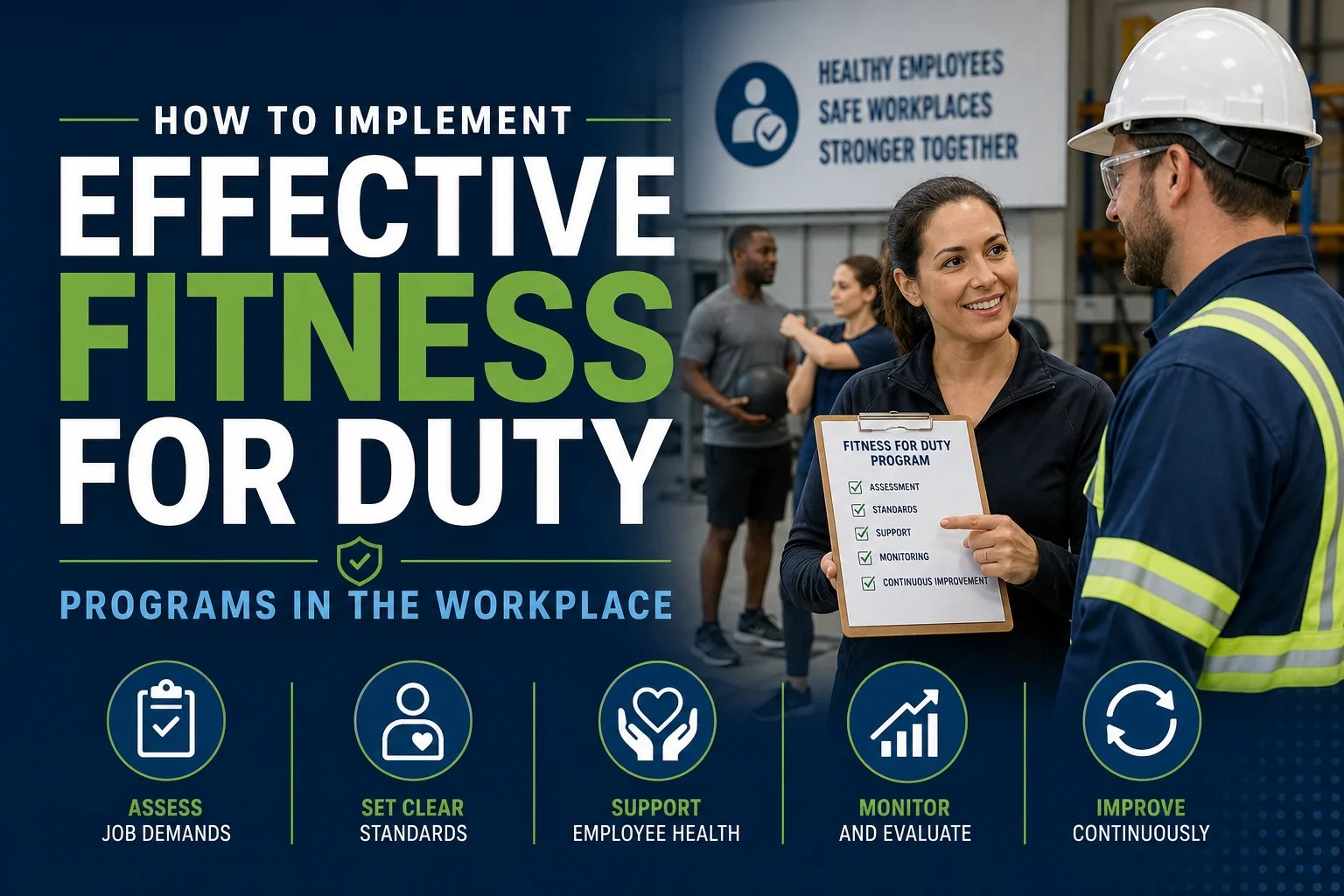
The real question is: How to Implement Effective Fitness for Duty Programs in the Workplace in a way that protects employees, respects privacy, supports productivity, and reduces risk without creating a culture of suspicion.
A well-designed fitness for duty program is not about “catching” people. It is about making sure employees can safely and effectively perform the essential duties of their roles. That may involve addressing fatigue, substance use, mental health concerns, physical limitations, medication side effects, heat stress, or other conditions that could affect workplace safety and performance.
This article gives you a practical roadmap for How to Implement Effective Fitness for Duty Programs in the Workplace, with real-world examples, practical frameworks, tables, and actionable steps your organization can adapt.
What Is a Fitness for Duty Program?
A fitness for duty program is a workplace process used to determine whether an employee is physically, mentally, and emotionally capable of performing job duties safely and effectively.
It is especially important in safety-sensitive environments such as:
- Transportation
- Manufacturing
- Construction
- Healthcare
- Energy and utilities
- Mining
- Public safety
- Aviation
- Warehousing and logistics
- Chemical processing
- Heavy equipment operations
However, fitness for duty is not limited to high-risk industries. Any workplace can benefit from a thoughtful program that helps identify and manage risks before they become incidents.
Before we talk tactics, How to Implement Effective Fitness for Duty Programs in the Workplace begins with understanding that “fitness” is not a moral judgment. It is a practical assessment of whether someone can meet job requirements at a specific point in time.
A fitness for duty concern may arise because of:
- Observable impairment
- Excessive fatigue
- Unsafe behavior
- Sudden performance decline
- Medical restrictions
- Return-to-work after injury or illness
- Substance use concerns
- Emotional distress
- Medication that may affect alertness or coordination
- Threatening or erratic conduct
- Post-incident evaluation
A strong program creates a consistent way to respond to these concerns without bias, panic, or improvisation.
Why Fitness for Duty Programs Matter More Than Ever
Workplaces have changed dramatically. Employees are managing longer commutes, rotating shifts, remote work stress, second jobs, caregiving responsibilities, burnout, anxiety, chronic illness, and rising substance misuse risks. At the same time, employers are under increasing pressure to maintain safe, compliant, and productive operations.
A sound answer to How to Implement Effective Fitness for Duty Programs in the Workplace must account for this modern complexity.
Here is why these programs are now essential:
| Workplace Challenge | Why It Matters | How a Fitness for Duty Program Helps |
|---|---|---|
| Fatigue and burnout | Tired employees are more likely to make errors | Creates fatigue reporting, scheduling controls, and assessment protocols |
| Substance misuse | Impairment can lead to safety incidents and liability | Provides consistent testing, referral, and return-to-duty processes |
| Mental health concerns | Distress can affect concentration, behavior, and performance | Encourages early intervention and supportive resources |
| Aging workforce | Physical abilities may change over time | Uses job-specific assessments and accommodations |
| Remote and hybrid work | Impairment may be harder to observe | Clarifies expectations and performance indicators |
| Legal scrutiny | Inconsistent actions can create discrimination claims | Standardizes documentation and decision-making |
| Safety-sensitive work | Errors can cause severe harm | Ensures employees are capable before performing critical tasks |
Organizations that master How to Implement Effective Fitness for Duty Programs in the Workplace usually experience fewer safety incidents, better documentation, higher supervisor confidence, and more trust from employees because expectations are clear.
The Core Principles Behind How to Implement Effective Fitness for Duty Programs in the Workplace
A fitness for duty program must be built on more than policies and forms. It needs principles that guide decision-making in real situations.
The strongest programs are:
Job-related
Evaluations should connect directly to essential job functions, not vague assumptions.Consistent
Similar situations should be handled in similar ways across departments and locations.Respectful
Employees should be treated with dignity, confidentiality, and fairness.Legally compliant
Programs must align with labor laws, disability protections, privacy rules, drug testing laws, union agreements, and industry regulations.Evidence-based
Decisions should rely on observable facts, objective criteria, and qualified professional opinions.Preventive
The goal should be early intervention, not punishment after harm occurs.- Supportive
Where possible, employees should be connected to resources such as employee assistance programs, medical support, accommodations, or treatment options.
When leaders study How to Implement Effective Fitness for Duty Programs in the Workplace, they often focus on testing and medical exams. Those are only pieces of the puzzle. The deeper work is building a culture where safety and support can exist together.
Step 1: Define the Purpose and Scope of the Program
The first step is clarity. Why are you creating the program? What problems are you trying to solve? Which employees and situations will it cover?
Step one is often overlooked in How to Implement Effective Fitness for Duty Programs in the Workplace, but it determines whether the program feels fair or arbitrary.
Your purpose statement might include:
- Protecting employees, customers, and the public
- Ensuring employees can perform essential job functions safely
- Supporting early intervention when concerns arise
- Creating consistent procedures for supervisors and HR
- Complying with legal and regulatory obligations
- Reducing preventable injuries and operational risk
Your scope should define:
- Which roles are considered safety-sensitive
- When fitness for duty evaluations may be required
- Who can initiate a concern
- What evidence is required
- What types of assessments may be used
- How decisions will be documented
- What happens after an employee is found fit, unfit, or fit with restrictions
Practical Tip
Avoid creating a policy that says the employer can evaluate anyone at any time for any reason. That may feel flexible, but it can create legal risk and employee distrust. Instead, anchor the program in job-related concerns and observable indicators.
Step 2: Identify Safety-Sensitive Roles and Essential Job Functions
A fitness for duty program should not treat every role the same. A forklift operator, nurse, pilot, chemical technician, and office administrator may all need to be fit for work, but the risks and essential functions differ.
A risk assessment turns How to Implement Effective Fitness for Duty Programs in the Workplace from a generic HR policy into a targeted safety strategy.
Start by identifying essential job functions. These may include:
- Operating machinery
- Driving vehicles
- Lifting or carrying heavy materials
- Making rapid decisions under pressure
- Working at heights
- Handling hazardous substances
- Providing direct patient care
- Carrying a firearm
- Monitoring critical systems
- Responding to emergencies
- Maintaining attention for long periods
Then classify roles based on risk.
| Risk Level | Example Roles | Fitness for Duty Considerations |
|---|---|---|
| High risk | Commercial drivers, crane operators, armed security, emergency responders | Strict protocols, possible periodic assessments, post-incident testing, fatigue controls |
| Moderate risk | Warehouse workers, nurses, maintenance technicians | Job-specific evaluations, return-to-work assessments, reasonable suspicion procedures |
| Lower risk | Administrative staff, remote knowledge workers | Focus on performance, mental wellness, accommodations, and behavioral concerns |
This classification helps ensure that your program is proportional. It also supports legal defensibility because actions are connected to actual job demands.
Step 3: Build a Clear Fitness for Duty Policy
A policy is the backbone of the program. It tells employees what to expect and gives supervisors a consistent process to follow.
Step two matters because How to Implement Effective Fitness for Duty Programs in the Workplace depends on written standards that are clear before a problem occurs.
Your policy should include:
1. Purpose
Explain why the organization has a fitness for duty program.
Example:
“The purpose of this policy is to help ensure that employees are able to perform their duties safely, effectively, and without posing a direct threat to themselves, coworkers, customers, or the public.”
2. Definitions
Define important terms such as:
- Fitness for duty
- Safety-sensitive position
- Reasonable suspicion
- Impairment
- Essential job functions
- Medical restriction
- Return-to-duty evaluation
- Direct threat
3. Employee Responsibilities
Employees should understand they are expected to:
- Report to work fit for duty
- Follow medication reporting requirements where applicable
- Notify supervisors of restrictions that may affect safe work
- Avoid working under the influence of prohibited substances
- Participate in required evaluations when appropriately directed
- Comply with return-to-work conditions
4. Supervisor Responsibilities
Supervisors should know how to:
- Observe and document concerns
- Avoid diagnosing medical conditions
- Remove an employee from safety-sensitive work when needed
- Contact HR or safety personnel
- Maintain confidentiality
- Follow reasonable suspicion procedures
5. Evaluation Triggers
Common triggers include:
- Observable impairment
- Workplace accident or near miss
- Unsafe behavior
- Return from medical leave
- Request for accommodation
- Sudden decline in performance with safety implications
- Violation of drug and alcohol policy
- Concern raised by a qualified professional
- Threatening or erratic conduct
6. Evaluation Process
Clarify:
- Who initiates the process
- Who conducts the evaluation
- Whether the employee is paid during evaluation time
- Transportation arrangements if impairment is suspected
- Documentation requirements
- How results are communicated
- How restrictions are handled
7. Confidentiality
Medical information should be kept separate from personnel files and shared only with those who have a legitimate need to know.
8. Consequences and Support
The policy should describe possible outcomes, including:
- Return to work
- Temporary removal from duty
- Modified duty
- Medical leave
- Referral to treatment or employee assistance program
- Disciplinary action for policy violations
- Return-to-duty requirements
Use the following matrix as you design How to Implement Effective Fitness for Duty Programs in the Workplace:
| Policy Component | Weak Approach | Strong Approach |
|---|---|---|
| Reasonable suspicion | “Supervisor thinks something is wrong” | Two trained observers document specific behaviors when possible |
| Medical information | Shared informally with managers | Stored confidentially and shared only as needed |
| Safety-sensitive roles | Undefined | Identified through job hazard analysis |
| Return to work | Manager discretion | Based on medical clearance and essential functions |
| Employee support | Punishment only | Balanced accountability, EAP, treatment, accommodations |
Step 4: Train Supervisors to Recognize and Respond Properly
Supervisors are usually the first people to notice fitness for duty concerns. Unfortunately, they are also the people most likely to mishandle them if they are not trained.
In How to Implement Effective Fitness for Duty Programs in the Workplace, supervisor training is not optional. It is one of the most important safeguards.
Training should cover:
- Observable signs of impairment
- Fatigue indicators
- Behavioral warning signs
- Documentation standards
- What not to say
- How to avoid medical assumptions
- Escalation procedures
- De-escalation techniques
- Reasonable suspicion protocols
- Privacy and confidentiality
- Emergency response
Observable Signs Supervisors May Document
| Category | Examples |
|---|---|
| Physical | Unsteady movement, slurred speech, glassy eyes, odor of alcohol, poor coordination |
| Cognitive | Confusion, delayed responses, difficulty following instructions |
| Behavioral | Aggression, unusual withdrawal, erratic actions, excessive risk-taking |
| Performance | Repeated mistakes, missed safety steps, inability to complete routine tasks |
| Fatigue | Microsleeps, yawning, slowed reaction time, attention lapses |
Supervisors should document what they observe, not what they assume.
Poor documentation:
“Employee seemed drunk.”
Better documentation:
“Employee stumbled while walking to the loading area, spoke with slurred speech, knocked over two tools, and smelled strongly of alcohol at approximately 8:15 a.m.”
This distinction matters. Fitness for duty decisions should be based on observable facts, not labels.
Step 5: Design a Fair Assessment Process
Not every concern requires the same type of evaluation. The assessment should match the situation, job duties, and level of risk.
In How to Implement Effective Fitness for Duty Programs in the Workplace, fairness depends on choosing the right evaluation method and applying it consistently.
Common assessment types include:
Medical Fitness for Duty Evaluation
Used when a medical condition, injury, illness, or treatment may affect the employee’s ability to perform essential job functions.
Psychological Fitness for Duty Evaluation
Used when behavior raises concerns about emotional stability, judgment, risk of harm, or ability to perform safety-sensitive duties.
Drug and Alcohol Testing
Used when allowed by law and policy, such as pre-employment, random testing for regulated roles, reasonable suspicion, post-incident, or return-to-duty testing.
Functional Capacity Evaluation
Used to measure physical abilities such as lifting, carrying, standing, reaching, pushing, pulling, or mobility.
Cognitive or Neuropsychological Evaluation
Used in limited circumstances when cognitive ability, memory, attention, or decision-making is directly relevant to job safety.
Fatigue Risk Assessment
Used when shift schedules, overtime, sleep deprivation, or long work hours may affect alertness and safety.
| Trigger | Possible Evaluation | Key Safeguard |
|---|---|---|
| Employee returns after injury | Medical or functional assessment | Compare restrictions to essential functions |
| Forklift operator appears impaired | Reasonable suspicion drug/alcohol test | Document observations and arrange safe transportation |
| Nurse shows repeated medication errors | Medical or cognitive evaluation | Focus on patient safety and job duties |
| Dispatcher shows severe emotional distress | Psychological fitness evaluation | Use qualified professional and confidentiality |
| Worker reports new medication causing drowsiness | Medical review | Explore temporary modifications if possible |
The assessment provider should receive the employee’s job description, essential functions, physical demands, safety risks, and specific reason for referral. Avoid asking broad or invasive questions unrelated to work.
Step 6: Protect Privacy and Legal Compliance
Fitness for duty programs touch sensitive areas: health, disability, substance use, mental health, and employment status. That means privacy and compliance must be built into the process from the beginning.
Privacy is central to How to Implement Effective Fitness for Duty Programs in the Workplace because employees will not trust a program that spreads personal information unnecessarily.
Key legal and compliance considerations may include:
- Disability discrimination laws
- Occupational safety obligations
- Drug and alcohol testing laws
- Privacy and medical record rules
- Workers’ compensation requirements
- Family and medical leave laws
- Collective bargaining agreements
- Industry-specific regulations
- Human rights protections
- State or local cannabis laws
Because requirements vary by jurisdiction, organizations should consult qualified legal counsel before launching or revising a program.
Best Practices for Privacy
- Keep medical records separate from personnel files
- Limit access to HR, safety, or decision-makers with a need to know
- Share restrictions, not diagnoses, with supervisors
- Use secure systems for storing documents
- Obtain appropriate releases where required
- Avoid discussing employee health in team settings
- Train managers on confidentiality
For example, a supervisor may need to know:
“The employee may not operate heavy machinery for two weeks.”
The supervisor usually does not need to know:
“The employee is taking a specific medication for a specific diagnosis.”
That distinction protects dignity and reduces legal exposure.
Step 7: Create a Supportive Return-to-Duty Process
A fitness for duty program should not end with an employee being removed from work. The real value comes from helping employees return safely when appropriate.
Training makes How to Implement Effective Fitness for Duty Programs in the Workplace operational, but return-to-duty planning makes it sustainable.
A return-to-duty process may involve:
- Medical clearance
- Review of restrictions
- Temporary modified duty
- Reduced hours
- Follow-up testing if applicable
- Supervisor check-ins
- Employee assistance program support
- Treatment compliance verification where appropriate
- Reassessment dates
- Documentation of work limitations
Return-to-Duty Decision Path
| Outcome | What It Means | Possible Next Step |
|---|---|---|
| Fit for duty | Employee can perform essential duties safely | Return to regular work |
| Fit with restrictions | Employee can work with limitations | Temporary accommodation or modified duty |
| Temporarily unfit | Employee cannot safely perform duties now | Leave, treatment, reassessment |
| Permanently unable to perform essential functions | Limitations cannot be resolved or accommodated | Explore reassignment, accommodation, or separation according to law |
The best return-to-duty programs are collaborative. HR, safety, the supervisor, the employee, and medical professionals each play a role.
Step 8: Address Fatigue as a Fitness for Duty Issue
Many organizations focus heavily on drugs and alcohol while underestimating fatigue. Yet fatigue can impair reaction time, attention, decision-making, and emotional regulation in ways similar to substance impairment.
Knowing How to Implement Effective Fitness for Duty Programs in the Workplace requires treating fatigue as a serious safety risk.
Fatigue risks increase with:
- Night shifts
- Rotating schedules
- Long commutes
- Excessive overtime
- Consecutive shifts
- On-call work
- Sleep disorders
- Physically demanding labor
- Monotonous tasks
- High-stress environments
Fatigue Control Measures
| Control | Example |
|---|---|
| Scheduling limits | Cap consecutive night shifts or total weekly hours |
| Rest breaks | Require breaks during long shifts |
| Self-reporting | Allow employees to report fatigue without automatic discipline |
| Supervisor observation | Train leaders to identify fatigue indicators |
| Work rotation | Rotate monotonous or high-risk tasks |
| Education | Teach sleep hygiene and fatigue risks |
| Incident review | Include fatigue in root cause analysis |
A mature fitness for duty program gives employees a safe way to say, “I am too fatigued to perform this task safely,” without fear that the only outcome will be punishment.
Step 9: Integrate Mental Health Without Stigma
Mental health is one of the most sensitive areas of fitness for duty. Employers should not try to diagnose employees, pry into personal matters, or treat stress as weakness. At the same time, behavior that creates safety concerns must be addressed.
A thoughtful approach to How to Implement Effective Fitness for Duty Programs in the Workplace includes mental health in a respectful, non-stigmatizing way.
Focus on behavior and job impact:
- Is the employee making serious safety errors?
- Has the employee made threats?
- Is the employee unable to concentrate on critical tasks?
- Is there erratic behavior that creates risk?
- Has the employee requested help or accommodation?
Supportive resources may include:
- Employee assistance programs
- Mental health benefits
- Crisis support lines
- Manager referral pathways
- Peer support programs
- Flexible scheduling where feasible
- Leave options
- Reasonable accommodations
The message should be clear: seeking help is encouraged, and safety concerns will be handled consistently and respectfully.
Step 10: Communicate the Program Before You Need It
Employees should not first learn about the fitness for duty program during a crisis. Communication should happen during onboarding, safety training, policy rollouts, and periodic refreshers.
Case study 1 below demonstrates How to Implement Effective Fitness for Duty Programs in the Workplace through clear communication and supervisor training, but the core lesson is simple: people are more likely to trust a process they understand.
Your communication plan should explain:
- Why the program exists
- Which roles are covered
- What employees are expected to report
- What supervisors can and cannot do
- How privacy is protected
- What support resources are available
- How return-to-duty works
- How concerns are documented
- What happens in emergencies
Avoid fear-based messaging. Instead of saying, “We will remove impaired workers,” say:
“We are committed to ensuring everyone can work safely. If a condition, medication, fatigue, or other concern affects your ability to perform your job safely, we want a process that protects you and your coworkers while connecting you to appropriate support.”
That tone matters.
Case Study 1: Manufacturing Plant Reduces Near Misses Through Supervisor Training
Background
A mid-sized manufacturing company had several near misses involving machine operators. None resulted in severe injury, but incident reviews showed a pattern: supervisors noticed warning signs but hesitated to act. They were unsure whether they had enough evidence, feared accusing employees unfairly, and did not know how to document concerns.
Action Taken
The company revised its fitness for duty policy and trained all supervisors on:
- Observable impairment indicators
- Fatigue warning signs
- Documentation standards
- Escalation procedures
- Reasonable suspicion protocols
- How to speak with employees respectfully
- When to involve HR and safety
The company also implemented a two-observer rule when practical and created a simple checklist for documenting concerns.
Results
Within 12 months:
- Near misses involving operator inattention declined
- Supervisors reported concerns earlier
- HR saw fewer inconsistent decisions
- Employees said the process felt clearer and less personal
- The company improved incident investigation quality
Brief Analysis
The lesson for How to Implement Effective Fitness for Duty Programs in the Workplace is that frontline supervisors are the program’s “early warning system.” Without training, they may ignore risks or respond inconsistently. With training, they can act confidently, fairly, and quickly.
Case Study 2: Hospital Improves Return-to-Work Decisions After Medical Leave
Background
A regional hospital struggled with return-to-work decisions for nurses and clinical staff after injury, surgery, or extended illness. Managers often received vague notes stating “cleared to work” without understanding whether the employee could safely lift patients, stand for long shifts, respond to emergencies, or administer medication accurately.
Action Taken
The hospital created a structured return-to-duty process. It included:
- Updated job descriptions with physical and cognitive demands
- A medical clearance form tied to essential functions
- Temporary modified-duty options
- HR review of restrictions
- Confidential handling of medical information
- Follow-up assessments for complex cases
Managers were instructed to receive only work restrictions, not diagnoses.
Results
The hospital saw:
- Fewer disputes about restrictions
- Faster placement into modified duty
- Reduced risk of reinjury
- Better communication between HR, occupational health, and supervisors
- Improved employee confidence in the process
Brief Analysis
This case shows How to Implement Effective Fitness for Duty Programs in the Workplace when medical leave and safety-sensitive work intersect. A generic doctor’s note is often not enough. Employers need job-specific information while still protecting employee privacy.
Case Study 3: Logistics Company Tackles Fatigue in Long-Hour Operations
Background
A logistics company operating 24/7 distribution routes noticed an increase in minor vehicle incidents, warehouse errors, and late-shift injuries. Drug and alcohol tests were negative. Incident reviews pointed to fatigue, overtime, and schedule instability.
Action Taken
The company expanded its fitness for duty program to include fatigue risk management. It introduced:
- Maximum shift length guidelines
- Minimum rest periods between shifts
- Fatigue self-reporting without automatic discipline
- Supervisor fatigue training
- Rest break enforcement
- Data review of incidents by shift and overtime level
- Education on sleep and alertness
Results
Over the next year:
- Late-shift errors declined
- Employees reported fatigue concerns earlier
- Overtime became more predictable
- Supervisors began treating fatigue as a safety issue
- Incident reviews became more accurate
Brief Analysis
This case proves How to Implement Effective Fitness for Duty Programs in the Workplace is not just about substance use. Fatigue is one of the most common and underestimated causes of workplace risk. When the company treated fatigue as part of fitness for duty, it addressed the real root cause.
A Practical Fitness for Duty Implementation Roadmap
If you are wondering where to begin, use this roadmap.
| Phase | Key Actions | Owners | Output |
|---|---|---|---|
| Phase 1: Assess risk | Identify safety-sensitive roles, review incidents, evaluate legal requirements | HR, Safety, Legal | Risk profile |
| Phase 2: Build policy | Define triggers, process, roles, confidentiality, consequences | HR, Legal | Written policy |
| Phase 3: Select providers | Choose occupational health, testing vendors, evaluators | HR, Procurement | Provider network |
| Phase 4: Train leaders | Train supervisors on observation, documentation, escalation | HR, Safety | Trained supervisors |
| Phase 5: Communicate | Educate employees on expectations and support | HR, Communications | Employee awareness |
| Phase 6: Launch process | Implement forms, workflows, recordkeeping | HR, Safety, Operations | Active program |
| Phase 7: Measure results | Track incidents, referrals, outcomes, consistency | HR Analytics, Safety | Improvement dashboard |
| Phase 8: Improve | Audit cases, revise policy, refresh training | HR, Legal, Safety | Continuous improvement |
This roadmap supports How to Implement Effective Fitness for Duty Programs in the Workplace because it keeps the program organized, measurable, and adaptable.
Fitness for Duty Program Maturity Chart
Organizations often evolve through stages. Use this chart to identify where your workplace stands.
| Maturity Level | Description | Common Signs | Next Move |
|---|---|---|---|
| Level 1: Reactive | Responds only after incidents | No clear policy, inconsistent decisions | Create basic policy and escalation process |
| Level 2: Compliant | Meets minimum legal requirements | Policy exists but training is limited | Train supervisors and update job descriptions |
| Level 3: Structured | Uses consistent processes | Clear triggers, documentation, provider network | Add analytics and fatigue controls |
| Level 4: Integrated | Connects safety, HR, wellness, and operations | Strong communication and return-to-duty planning | Improve early intervention |
| Level 5: Preventive | Uses data and culture to prevent issues | Employees report concerns early, leadership acts proactively | Continuous improvement and benchmarking |
A mature program does not simply remove unfit employees from duty. It prevents avoidable risk while supporting people.
Key Metrics to Track
Metrics table below helps evaluate How to Implement Effective Fitness for Duty Programs in the Workplace after launch.
| Metric | Why It Matters |
|---|---|
| Number of fitness for duty referrals | Shows program utilization |
| Referral source | Identifies whether supervisors, HR, or employees are raising concerns |
| Type of concern | Tracks patterns: fatigue, substance, medical, behavioral |
| Time from concern to action | Measures responsiveness |
| Return-to-duty outcomes | Shows how often employees return with or without restrictions |
| Repeat incidents | Indicates whether interventions are effective |
| Safety incidents by shift | Helps identify fatigue or staffing risks |
| Supervisor documentation quality | Measures training effectiveness |
| Employee complaints or grievances | Reveals fairness or communication issues |
| Accommodation outcomes | Shows whether employees are supported appropriately |
Do not use metrics to shame departments. Use them to improve systems.
Common Mistakes That Undermine Fitness for Duty Programs
Even well-intentioned employers can make mistakes. Common mistakes can derail How to Implement Effective Fitness for Duty Programs in the Workplace if they are not addressed early.
Mistake 1: Treating Fitness for Duty as Discipline Only
Some situations involve misconduct and may require discipline. But not every fitness concern is misconduct. An employee affected by a medical condition, fatigue, or medication side effect may need assessment and support, not punishment.
Mistake 2: Relying on Gut Feelings
Supervisor intuition is not enough. Decisions should be based on observable facts and documented behavior.
Mistake 3: Using Vague Job Descriptions
If essential functions are unclear, medical providers cannot determine whether an employee can safely perform the job.
Mistake 4: Ignoring Mental Health
Avoiding mental health concerns does not make them disappear. The right approach is behavior-based, respectful, and connected to resources.
Mistake 5: Overlooking Fatigue
Fatigue is often normalized in demanding workplaces. That is dangerous. Long hours and insufficient rest can create serious safety risks.
Mistake 6: Sharing Too Much Medical Information
Managers usually need restrictions, not diagnoses. Oversharing damages trust and increases legal exposure.
Mistake 7: Inconsistent Enforcement
If one employee is evaluated for a behavior while another is ignored for the same behavior, the program may appear biased.
Mistake 8: Failing to Review the Program
A fitness for duty program should evolve. Review cases, outcomes, laws, and employee feedback regularly.
The Role of Technology in Fitness for Duty Programs
Technology can support How to Implement Effective Fitness for Duty Programs in the Workplace, but it should never replace judgment, privacy, or fairness.
Useful tools may include:
- Digital incident reporting systems
- Supervisor observation forms
- Secure medical document storage
- Fatigue risk management software
- Scheduling analytics
- Learning management systems for training
- Drug testing vendor portals
- Case management platforms
- Wearable fatigue detection tools in limited settings
However, technology raises important questions:
- What data is collected?
- Who can access it?
- How accurate is it?
- Is employee consent required?
- Could it create bias?
- Is it compliant with labor and privacy laws?
- How long is data retained?
Use technology to improve consistency and early intervention, not to create a surveillance culture.
Building Trust: The Human Side of Fitness for Duty
A program may be legally compliant and still fail if employees do not trust it.
Trust grows when employees believe:
- The policy applies equally
- Privacy is respected
- Supervisors are trained
- The process is not used for retaliation
- Employees can ask for help early
- Medical information is protected
- Decisions are based on job requirements
- Return-to-work options are fair
- Leadership follows the same safety values it expects from employees
If you want to understand How to Implement Effective Fitness for Duty Programs in the Workplace at a deeper level, remember this: the program is not just a compliance tool. It is a culture signal.
It tells employees whether the organization values both safety and humanity.
Example Long-Tail Keyword Variations for Contextual SEO
To support search visibility without sounding repetitive, you can naturally use long-tail variations such as:
- workplace fitness for duty program implementation
- how to create a fitness for duty policy
- employee fitness for duty assessment process
- fitness for duty program best practices
- return-to-duty process after medical leave
- reasonable suspicion fitness for duty evaluation
- fitness for duty testing in safety-sensitive jobs
- how to manage impairment in the workplace
- workplace fatigue fitness for duty policy
- employee fitness for work evaluation
- safety-sensitive employee fitness assessment
- fitness for duty compliance requirements
- drug and alcohol fitness for duty procedures
- mental health fitness for duty workplace policy
These variations support the broader topic of How to Implement Effective Fitness for Duty Programs in the Workplace while keeping the writing natural and useful.
Sample Fitness for Duty Conversation Framework
When a supervisor needs to speak with an employee, the conversation should be calm, private, and factual.
A Simple Framework
State the concern factually
“I observed that you appeared unsteady while walking and had difficulty following the lockout procedure.”Connect it to safety or performance
“Because this task involves energized equipment, we need to make sure it can be performed safely.”Avoid diagnosis
Do not say: “Are you drunk?” or “Are you having a mental health episode?”Explain the next step
“We are going to pause your work assignment and contact HR/safety to follow our fitness for duty process.”Arrange safety
If impairment is suspected, do not allow the employee to drive.- Document immediately
Record the time, location, observations, witnesses, and actions taken.
This approach keeps the discussion respectful and focused on work-related concerns.
Implementation Checklist
Use this checklist as a quick reference for How to Implement Effective Fitness for Duty Programs in the Workplace.
| Task | Completed? |
|---|---|
| Identify safety-sensitive positions | ☐ |
| Update essential job function descriptions | ☐ |
| Review legal and regulatory requirements | ☐ |
| Draft or revise fitness for duty policy | ☐ |
| Define reasonable suspicion procedures | ☐ |
| Select occupational health and testing providers | ☐ |
| Create medical clearance and referral forms | ☐ |
| Train supervisors and HR staff | ☐ |
| Communicate program to employees | ☐ |
| Establish confidential recordkeeping | ☐ |
| Build return-to-duty procedures | ☐ |
| Include fatigue risk management | ☐ |
| Integrate employee support resources | ☐ |
| Track metrics and review outcomes | ☐ |
| Schedule annual policy review | ☐ |
Conclusion: Turning Fitness for Duty Into a Safer, Smarter Workplace Strategy
Learning How to Implement Effective Fitness for Duty Programs in the Workplace is not about creating a rigid system that treats employees like liabilities. It is about building a thoughtful process that protects people, supports managers, improves safety, and gives employees a fair path forward when concerns arise.
The most effective programs are clear, consistent, confidential, and compassionate. They define expectations before problems occur. They train supervisors to act on facts. They connect evaluations to essential job duties. They protect medical privacy. They address fatigue and mental health. They support return-to-duty whenever possible.
Most importantly, they reinforce a powerful message:
Safety and dignity can coexist.
If your organization is just beginning, start small but start seriously. Review your risks. Update your job descriptions. Train your supervisors. Clarify your policy. Build trusted partnerships with qualified providers. Communicate openly with employees.
The organizations that truly understand How to Implement Effective Fitness for Duty Programs in the Workplace do more than reduce incidents. They create workplaces where people know safety is shared, support is available, and everyone has a role in protecting one another.
1. What does “fitness for duty” mean?
Fitness for duty means an employee is physically, mentally, and emotionally able to perform the essential functions of their job safely and effectively. It does not necessarily mean the employee is in perfect health. It means they can meet job requirements without creating unacceptable safety risk.
2. When can an employer require a fitness for duty evaluation?
An employer may require an evaluation when there is a legitimate, job-related reason, such as observable impairment, safety concerns, return from medical leave, workplace incidents, or behavior that affects essential job functions. The process should be consistent, documented, and compliant with applicable laws.
3. Is a fitness for duty exam the same as a drug test?
No. A drug test may be one part of a fitness for duty process, but fitness for duty is broader. It can include medical evaluations, psychological assessments, functional capacity testing, fatigue assessment, or return-to-work reviews depending on the situation.
4. How can employers protect employee privacy?
Employers should keep medical information confidential, store it separately from personnel files, limit access to those with a need to know, and share work restrictions rather than diagnoses with supervisors. Privacy training for managers is essential.
5. What should supervisors document when they suspect an employee is unfit for duty?
Supervisors should document observable facts: behavior, physical signs, performance issues, safety concerns, time, location, witnesses, and actions taken. They should avoid medical conclusions or unsupported labels.
6. Can fitness for duty programs include mental health concerns?
Yes, but employers must be careful. The focus should be on observable behavior and job-related safety or performance concerns, not assumptions about a diagnosis. Employees should be treated respectfully and connected with appropriate resources when needed.
7. How often should a fitness for duty policy be reviewed?
At least annually, and sooner if laws change, incidents reveal gaps, operations change, or employee feedback indicates confusion. Regular review helps keep the program compliant and effective.
8. What is the biggest mistake employers make with fitness for duty programs?
The biggest mistake is inconsistency. If policies are vague, supervisors are untrained, or similar situations are handled differently, the program can lose credibility and create legal risk. Consistent training, documentation, and communication are critical.
About the Author


The PsyForU Editorial Collective is the research and editorial team of PsyForU Research International. The collective prepares educational, psychological, mental-health-awareness, inclusion, neurodiversity, and research-methodology content for students, parents, educators, researchers, and general readers. PsyForU content is intended for awareness, education, and capacity-building and should not be treated as clinical diagnosis, therapy, medical advice, legal advice, or emergency mental-health support.