Introduction: Why “Doing Time” Is Not Enough
A prison sentence can punish a crime, but punishment alone rarely solves the problems that helped create it.
Many people enter jail or prison carrying untreated trauma, substance use disorders, mental health challenges, low literacy, unstable housing histories, unemployment barriers, and broken family connections. If those issues remain untouched, release becomes less of a fresh start and more of a return to the same pressures—only now with a criminal record added to the burden.
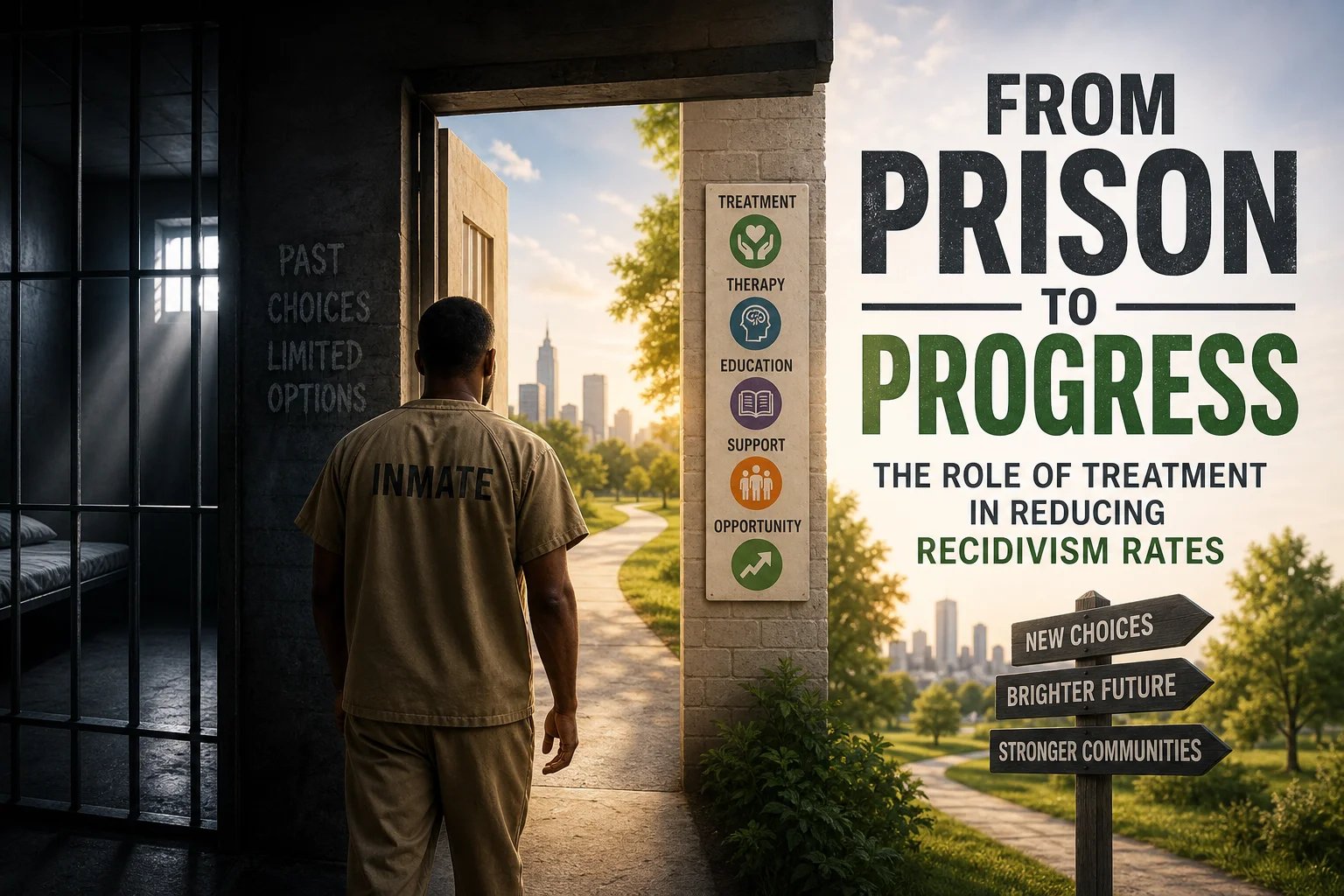
That is why From Prison to Progress: The Role of Treatment in Reducing Recidivism Rates is not just a criminal justice topic. It is a public safety strategy, a community health priority, and a human dignity issue.
Recidivism—commonly defined as re-arrest, reconviction, or return to prison after release—has long been treated as an unfortunate but expected outcome. Yet growing evidence shows that people are far more likely to succeed after incarceration when they receive targeted, evidence-based treatment before and after release.
The shift from prison to progress through treatment asks a powerful question: What if correctional systems focused not only on confinement, but also on change?
This article explores From Prison to Progress: The Role of Treatment in Reducing Recidivism Rates in depth, looking at what works, why it works, where systems often fail, and how treatment-centered reentry can build safer, healthier communities.
Understanding Recidivism: The Revolving Door Problem
Recidivism is often described as a “revolving door” because many people cycle repeatedly between prison and the community. They are released, struggle to stabilize, violate parole conditions or commit new offenses, and return to custody.
But that revolving door does not spin on its own. It is powered by predictable barriers.
Common drivers of recidivism include:
- Untreated substance use disorders
- Mental health conditions
- Lack of housing
- Unemployment or underemployment
- Low education levels
- Weak social support
- Trauma and unresolved grief
- Criminal thinking patterns
- Lack of access to healthcare after release
- Stigma and legal restrictions tied to criminal records
When these issues are ignored, incarceration becomes temporary containment rather than long-term correction.
The central idea behind From Prison to Progress: The Role of Treatment in Reducing Recidivism Rates is that lasting public safety depends on addressing the root causes of repeated offending. People do not need excuses for harmful behavior. They need accountability paired with practical tools for change.
What “Treatment” Really Means in a Correctional Setting
When people hear the word “treatment,” they may think only of drug rehabilitation or therapy. Those are important, but treatment in corrections is broader.
In the context of From Prison to Progress: The Role of Treatment in Reducing Recidivism Rates, treatment refers to structured, evidence-informed interventions that reduce risk factors and strengthen protective factors.
Key Types of Treatment That Reduce Recidivism
| Treatment Type | What It Addresses | Why It Matters for Recidivism |
|---|---|---|
| Substance use treatment | Addiction, relapse, drug-related crime | Reduces relapse and illegal activity tied to substance use |
| Mental health care | Depression, PTSD, bipolar disorder, anxiety, psychosis | Improves emotional stability and decision-making |
| Cognitive behavioral therapy | Criminal thinking, impulsivity, anger, problem-solving | Helps people change thoughts and behaviors linked to crime |
| Medication-assisted treatment | Opioid and alcohol use disorders | Lowers overdose risk and supports recovery |
| Education programs | Literacy, GED completion, college access | Improves employment options and self-efficacy |
| Vocational training | Job skills, certifications, work habits | Increases employability after release |
| Trauma-informed care | Childhood trauma, violence exposure, grief | Reduces reactive behaviors and emotional dysregulation |
| Family therapy and parenting programs | Broken relationships, parenting gaps | Builds support systems and accountability |
| Reentry case management | Housing, healthcare, IDs, benefits, employment | Smooths the transition from prison to community |
A strong treatment model does not treat people as problems to be managed. It treats them as people with problems that can be addressed.
That distinction is at the heart of From Prison to Progress: The Role of Treatment in Reducing Recidivism Rates.
Why Treatment Works Better Than Punishment Alone
Punishment can create consequences. But treatment creates capacity.
A person may understand that crime leads to prison and still lack the emotional regulation, recovery support, job skills, or stable housing needed to make different choices. Treatment helps fill that gap.
The Risk-Need-Responsivity Model
One of the most influential frameworks in correctional rehabilitation is the Risk-Need-Responsivity model, often called RNR.
It is built on three principles:
- Risk principle: Focus the most intensive services on people at higher risk of reoffending.
- Need principle: Target criminogenic needs—factors directly linked to criminal behavior.
- Responsivity principle: Deliver treatment in ways that match a person’s learning style, motivation, culture, mental health, and abilities.
This model helps explain why generic programs often fail. A low-risk person may be harmed by over-programming, while a high-risk person may need intensive, coordinated support. Treatment must match the person and the problem.
In other words, From Prison to Progress: The Role of Treatment in Reducing Recidivism Rates is not about giving everyone the same class or counseling session. It is about using the right intervention, at the right time, for the right person.
The Human Side: Why People Return to Prison
Imagine someone released from prison with $40, no stable address, no driver’s license, untreated depression, an old group of friends who still use drugs, and a parole appointment across town the next morning.
Technically, that person is “free.”
Practically, they are walking a tightrope.
The first days and weeks after release are among the most dangerous and unstable. Overdose risk increases sharply. Housing insecurity can trigger parole violations. Job rejection can deepen hopelessness. Without healthcare, medication gaps can become crises.
Treatment changes the release story.
Instead of walking out alone, a person may leave with:
- A recovery plan
- Medication continuity
- A scheduled therapy appointment
- A peer mentor
- Transportation support
- Transitional housing
- Job training connections
- Identification documents
- Family reunification support
- A realistic parole compliance plan
That is what From Prison to Progress: The Role of Treatment in Reducing Recidivism Rates looks like in real life. It is not soft. It is strategic.
Evidence-Based Treatment Approaches That Reduce Recidivism
Not all programs are equal. Some sound good but produce little measurable impact. Others have decades of research behind them.
The strongest correctional treatment programs tend to be structured, skill-based, measurable, and connected to post-release support.
1. Cognitive Behavioral Therapy
Cognitive behavioral therapy, or CBT, helps people identify distorted thinking patterns and replace impulsive reactions with better choices.
In correctional settings, CBT may focus on:
- Anger management
- Moral reasoning
- Decision-making
- Conflict resolution
- Emotional regulation
- Problem-solving
- Accountability
CBT is one of the most studied approaches in reducing reoffending. Programs based on CBT principles have shown meaningful reductions in recidivism, especially when delivered with fidelity by trained facilitators.
For the broader theme of From Prison to Progress: The Role of Treatment in Reducing Recidivism Rates, CBT matters because it addresses the thinking patterns that often drive harmful behavior.
2. Substance Use Disorder Treatment
A large share of incarcerated people have substance use disorders. If addiction remains untreated, release can quickly lead to relapse, violations, new charges, or overdose.
Effective substance use treatment may include:
- Individual counseling
- Group therapy
- Therapeutic communities
- Relapse prevention planning
- Peer recovery support
- Medication-assisted treatment
- Family education
- Continuing care after release
Treatment must continue beyond prison walls. Recovery rarely succeeds when services stop at the gate.
3. Medication-Assisted Treatment
Medication-assisted treatment, or MAT, uses FDA-approved medications such as methadone, buprenorphine, or naltrexone, combined with counseling and support.
MAT is especially important for opioid use disorder. It reduces cravings, lowers overdose risk, and helps people stabilize enough to pursue employment, housing, and family rebuilding.
In the journey from prison to progress, MAT can be lifesaving.
4. Mental Health Treatment
Mental illness does not cause all crime, but untreated mental health conditions can increase instability, impulsivity, homelessness, and substance use.
Correctional mental health treatment may involve:
- Psychiatric evaluation
- Medication management
- Trauma therapy
- Crisis intervention
- Group counseling
- Discharge planning
- Community mental health referrals
A person leaving prison with untreated psychosis, severe depression, or PTSD is at high risk of crisis. Treatment reduces that risk.
5. Education and Vocational Training
Education is one of the strongest long-term protective factors against recidivism.
Correctional education can include:
- Adult basic education
- GED preparation
- College courses
- Digital literacy
- Financial literacy
- Trade certifications
- Apprenticeships
Vocational programs are especially powerful when tied to real labor market demand. Training someone for a job that does not exist locally is not enough. The best programs connect training with employers willing to hire people with criminal records.
Education turns idle time into future opportunity. That is a key part of From Prison to Progress: The Role of Treatment in Reducing Recidivism Rates.
A Simple View of What Works
Below is a practical chart showing how different interventions connect to recidivism reduction.
| Intervention | Short-Term Impact | Long-Term Impact | Best When Paired With |
|---|---|---|---|
| CBT | Better impulse control and decision-making | Lower likelihood of reoffending | Mentoring, supervision, family support |
| Substance use treatment | Reduced relapse risk | Lower drug-related crime | MAT, housing, peer recovery |
| MAT | Reduced cravings and overdose risk | Greater recovery stability | Counseling and reentry planning |
| Education | Increased confidence and credentials | Improved employment prospects | Job placement and coaching |
| Vocational training | Marketable skills | Higher income and stability | Employer partnerships |
| Housing support | Immediate stability | Reduced technical violations | Case management |
| Trauma-informed therapy | Emotional regulation | Healthier relationships and coping | Mental health care |
| Reentry planning | Fewer gaps after release | Stronger community adjustment | All treatment services |
The lesson is clear: single interventions help, but integrated treatment works best.
From Prison to Progress: The Role of Treatment in Reducing Recidivism Rates is most effective when services are coordinated rather than scattered.
Case Study 1: Norway’s Rehabilitation-Focused Prison Model
Norway is frequently discussed in criminal justice reform because of its unusually strong emphasis on rehabilitation. Its prisons focus on normalization, education, work, therapy, and preparation for community life. Correctional officers often receive extensive training and are expected to act partly as mentors, not just guards.
At facilities such as Halden Prison, the environment is designed to encourage responsibility and social functioning. People cook meals, attend classes, participate in counseling, and develop work skills. The goal is not to make prison comfortable for its own sake. The goal is to make life after prison possible.
Norway reports comparatively low recidivism rates by international standards, though comparisons across countries are complicated because definitions differ. Still, its model is widely studied because it challenges the assumption that harshness produces safety.
Analysis: Why This Case Matters
Norway’s approach supports the core message of From Prison to Progress: The Role of Treatment in Reducing Recidivism Rates: people are more likely to return to society successfully when prison itself is organized around reintegration.
The lesson is not that every country can copy Norway exactly. Culture, law, funding, and population size matter. But the principle travels well: humane treatment, skill-building, mental health support, and release preparation can reduce future harm.
Case Study 2: Delaware’s KEY-CREST Substance Abuse Program
The Delaware KEY-CREST program is one of the most cited examples of prison-based substance use treatment combined with aftercare.
The model included three stages:
- KEY: A prison-based therapeutic community
- CREST: A work-release therapeutic community
- Aftercare: Community-based continuing treatment
Participants moved from intensive in-prison treatment to transitional support and then into community recovery services. Research found that people who completed the full continuum had better outcomes than those who received little or no treatment.
The important point is not just that treatment happened in prison. It continued after release.
Analysis: Why This Case Matters
KEY-CREST shows that the phrase From Prison to Progress: The Role of Treatment in Reducing Recidivism Rates must include continuity of care. A person may make real progress inside prison, but without aftercare, relapse risk rises.
This case also demonstrates the power of therapeutic communities, peer accountability, and staged reentry. Treatment is strongest when it follows people through the transition.
Case Study 3: Rhode Island’s Medication-Assisted Treatment Expansion
Rhode Island became a national example when it expanded access to medication-assisted treatment for incarcerated people with opioid use disorder. The state offered medications such as methadone, buprenorphine, and naltrexone in correctional settings and connected people to community care after release.
The program became especially important because the weeks after release are associated with a high risk of fatal overdose. Research found a major reduction in post-release overdose deaths after implementation.
While overdose reduction is not identical to recidivism reduction, survival and recovery stability are directly connected to successful reentry. A person who stays alive, remains in treatment, and avoids relapse is better positioned to comply with supervision, work, reconnect with family, and avoid new offenses.
Analysis: Why This Case Matters
Rhode Island’s experience expands the meaning of From Prison to Progress: The Role of Treatment in Reducing Recidivism Rates. Reducing recidivism is not only about preventing crime; it is also about preventing death, crisis, and collapse.
Medication can be a bridge between incarceration and recovery. For many people with opioid use disorder, MAT is not a shortcut. It is evidence-based care.
Case Study 4: Correctional Education and the RAND Findings
A major research review by the RAND Corporation found that people who participated in correctional education programs were significantly less likely to return to prison than those who did not. The review also found that correctional education was cost-effective because reduced reincarceration saved public money.
Education programs varied widely, from basic literacy to GED classes to postsecondary coursework. Still, the overall pattern was clear: education improves reentry outcomes.
Why? Because education changes both opportunity and identity.
A person who earns a GED or college credit in prison may begin to see themselves as capable of more than survival. That mindset shift matters. So do the practical benefits: better reading skills, stronger communication, and improved job prospects.
Analysis: Why This Case Matters
This case reinforces the progress side of From Prison to Progress: The Role of Treatment in Reducing Recidivism Rates. Treatment is not limited to clinical care. Education can be rehabilitative because it addresses a major criminogenic need: lack of legitimate opportunity.
When education is paired with job placement and mentoring, it becomes even more powerful.
Case Study 5: Drug Courts and Treatment-Based Accountability
Drug courts are an alternative to traditional prosecution or incarceration for eligible individuals with substance use disorders. Instead of simply sentencing someone to jail, drug courts combine judicial supervision, drug testing, treatment participation, incentives, and graduated sanctions.
The best drug courts are not “easy.” Participants must show up, engage in treatment, remain accountable, and work toward recovery. Many programs are demanding, but they offer something traditional punishment often does not: a structured path away from addiction-driven crime.
Research generally shows that well-run drug courts can reduce recidivism and substance use, especially when they target high-risk, high-need participants and use evidence-based treatment.
Analysis: Why This Case Matters
Drug courts illustrate a community-based version of From Prison to Progress: The Role of Treatment in Reducing Recidivism Rates. In some cases, the best way to reduce future incarceration is to interrupt the cycle before a long prison term occurs.
Treatment-based accountability can protect public safety while preserving family ties, employment, and community stability.
The Role of Trauma-Informed Care
Many incarcerated people have histories of trauma: childhood abuse, neglect, community violence, sexual assault, domestic violence, military trauma, or traumatic loss.
Trauma does not excuse criminal behavior. But ignoring trauma can make rehabilitation less effective.
A trauma-informed correctional system recognizes that some behaviors—hypervigilance, aggression, withdrawal, distrust, emotional numbness—may be survival responses. Treatment helps people develop healthier coping strategies.
Trauma-informed care includes:
- Emotional safety
- Predictable routines
- Respectful communication
- Avoiding unnecessary humiliation
- Staff training
- Therapy options
- Gender-responsive programming
- Cultural awareness
This matters deeply in From Prison to Progress: The Role of Treatment in Reducing Recidivism Rates because unresolved trauma can drive substance use, violence, self-sabotage, and relationship breakdown.
Healing is not a luxury. It is prevention.
Why Reentry Planning Must Begin on Day One
One of the biggest mistakes correctional systems make is waiting until the last few weeks of incarceration to begin release planning.
Reentry should begin at intake.
From the first day, staff should assess:
- Substance use history
- Mental health needs
- Education level
- Employment background
- Housing situation
- Family connections
- Medical conditions
- Risk level
- Strengths and motivation
- Community resources available after release
A strong reentry plan is not a folder handed to someone at the gate. It is a living roadmap.
The Reentry Timeline
| Timeframe | Treatment/Reentry Priority |
|---|---|
| Intake | Assessment, risk screening, medical and mental health evaluation |
| Early incarceration | Treatment matching, education enrollment, recovery planning |
| Mid-sentence | Skill-building, therapy, vocational training, family work |
| 6 months before release | Housing plan, IDs, benefits, employer connections |
| 90 days before release | Community treatment appointments, medication continuity |
| First week after release | Transportation, check-ins, urgent healthcare, housing stability |
| First 6 months after release | Ongoing treatment, job support, relapse prevention |
| First year after release | Long-term goals, community integration, mentorship |
The more seamless the transition, the lower the risk of failure.
This is why From Prison to Progress: The Role of Treatment in Reducing Recidivism Rates must include both prison-based care and community-based continuity.
The Importance of Housing in Treatment Success
It is difficult to attend therapy while sleeping under a bridge. It is hard to stay sober in a shelter where drug use is common. It is nearly impossible to keep a job without a safe place to shower, sleep, and store clothes.
Housing is not always labeled “treatment,” but it supports every treatment goal.
Stable housing helps people:
- Keep appointments
- Maintain medication routines
- Avoid high-risk environments
- Comply with supervision
- Search for work
- Rebuild family relationships
- Reduce stress and crisis behavior
Housing-first and transitional housing models can be especially useful for people with mental illness, substance use disorders, or long histories of homelessness.
The path from prison to progress through treatment must include a place to land.
Employment: The Bridge Between Treatment and Independence
Treatment can help a person stabilize, but employment helps them build a future.
Work provides:
- Income
- Structure
- Purpose
- Social connection
- Accountability
- Legal alternatives to survival crime
Still, people leaving prison face major employment barriers. Many applications ask about criminal records. Some occupational licenses restrict applicants with convictions. Gaps in work history create suspicion. Transportation can be a problem.
Effective reentry employment programs do more than teach résumé writing. They build employer partnerships, provide coaching, help with interview preparation, offer transitional jobs, and support workers after hiring.
Vocational treatment is most effective when it is realistic. Training should match local labor market needs in fields such as:
- Construction
- Commercial driving where eligible
- Culinary work
- Manufacturing
- HVAC
- Welding
- Warehousing
- Peer recovery support
- Technology and digital services
- Landscaping
- Auto repair
In From Prison to Progress: The Role of Treatment in Reducing Recidivism Rates, employment is not just an economic issue. It is a behavioral health issue, a dignity issue, and a public safety issue.
Family and Community Support: The Often-Missing Ingredient
Many people leaving prison return to families carrying years of pain, distrust, financial strain, and disappointment. Rebuilding those relationships takes more than a heartfelt apology.
Family-focused treatment can help with:
- Communication
- Parenting skills
- Conflict resolution
- Boundaries
- Trust rebuilding
- Reunification planning
- Healing from harm
For parents, incarceration can create deep wounds. Parenting programs and family visitation initiatives can reduce isolation and strengthen motivation for change.
Community support also matters. Faith groups, peer mentors, recovery communities, neighborhood organizations, and credible messengers can provide belonging. People are more likely to change when they are connected to others who believe change is possible.
That human connection is one of the most overlooked elements of From Prison to Progress: The Role of Treatment in Reducing Recidivism Rates.
Measuring Success: What Should We Track?
If a program claims to reduce recidivism, it should be evaluated carefully. Good intentions are not enough.
Important measures include:
| Outcome | Why It Matters |
|---|---|
| Re-arrest rates | Shows possible new law enforcement contact |
| Reconviction rates | Indicates new proven criminal behavior |
| Return-to-prison rates | Measures reincarceration, including violations |
| Employment rates | Shows economic stability |
| Housing stability | Indicates reduced crisis risk |
| Treatment completion | Measures engagement |
| Sobriety or reduced use | Important for recovery-based programs |
| Mental health stability | Reflects improved functioning |
| Family reunification | Shows social support |
| Cost savings | Helps policymakers allocate resources |
However, recidivism data can be tricky. A return to prison may reflect a technical violation, not a new crime. Re-arrest may reflect policing patterns, not guilt. A narrow focus on recidivism can miss meaningful progress, such as fewer hospitalizations, better parenting, or sustained employment.
A fair evaluation of From Prison to Progress: The Role of Treatment in Reducing Recidivism Rates should measure both public safety and human stability.
Common Barriers to Treatment in Correctional Systems
If treatment works, why is it not available everywhere?
The answer is complicated.
1. Funding Shortages
Quality treatment requires trained staff, facilities, medication, technology, and community partnerships. Many correctional systems are underfunded or spend heavily on security while treatment remains limited.
2. Staff Burnout and Culture
Correctional staff work in stressful environments. If they are not trained in rehabilitation principles, treatment may be seen as secondary or even as a threat to security.
3. Fragmented Systems
Prisons, parole agencies, healthcare providers, courts, housing authorities, and workforce boards often operate separately. People leaving prison fall through the cracks between systems.
4. Stigma
Some policymakers and community members believe incarcerated people do not deserve treatment. This belief is emotionally understandable for some victims and communities, but it can undermine public safety. People who receive treatment are often less likely to create future victims.
5. Poor Program Quality
A program is not evidence-based simply because it has a good name. Poorly trained facilitators, weak implementation, and lack of follow-up can erase potential benefits.
6. Lack of Continuity After Release
Treatment that stops at release is incomplete. The community transition is when support matters most.
To make From Prison to Progress: The Role of Treatment in Reducing Recidivism Rates more than a slogan, these barriers must be addressed directly.
The Economics: Treatment Saves Money
Incarceration is expensive. So are emergency medical care, homelessness services, court processing, foster care disruptions, and repeated policing.
Treatment costs money upfront, but effective treatment can reduce long-term public spending.
Correctional education, substance use treatment, mental health care, and reentry support can be cost-effective because they reduce reincarceration and increase employment.
A simplified cost comparison looks like this:
| Approach | Upfront Cost | Long-Term Public Safety Impact | Long-Term Financial Impact |
|---|---|---|---|
| Incarceration only | High | Often limited if needs remain untreated | High ongoing costs |
| Prison treatment without aftercare | Moderate | Some benefit, but fragile | Savings may be limited |
| Treatment plus reentry support | Moderate to high | Stronger reduction in reoffending | Greater potential savings |
| Community-based diversion treatment | Often lower than prison | Strong for eligible participants | Can avoid incarceration costs |
The economic case supports the moral case. From Prison to Progress: The Role of Treatment in Reducing Recidivism Rates is not about spending more for the sake of compassion alone. It is about spending smarter to create safer outcomes.
Treatment and Accountability Can Work Together
One common misconception is that treatment means avoiding accountability.
In reality, strong treatment requires accountability.
A person in recovery must take responsibility for harm, attend sessions, follow supervision rules, repair relationships where possible, and practice new behaviors consistently. Treatment does not erase consequences. It makes consequences productive.
Accountability asks, “What did you do?”
Treatment asks, “What needs to change so it does not happen again?”
Justice needs both questions.
The most effective version of From Prison to Progress: The Role of Treatment in Reducing Recidivism Rates does not minimize harm to victims. Instead, it seeks to prevent more harm by helping people change in measurable ways.
Victims, Communities, and Public Safety
Any serious conversation about recidivism must include victims and communities affected by crime.
Treatment-centered justice should never dismiss their pain. In fact, reducing recidivism is one of the most practical ways to honor victims: by preventing future victimization.
Communities benefit when people returning from prison are:
- Sober or in recovery
- Employed
- Housed
- Mentally stable
- Connected to family
- Less likely to commit new offenses
- Able to contribute positively
Victim services, restorative justice options, and community healing initiatives can exist alongside treatment for incarcerated people. These goals are not opposites.
A mature approach to From Prison to Progress: The Role of Treatment in Reducing Recidivism Rates recognizes that safety is not created by punishment alone. Safety is created when harm decreases.
Building a Better Treatment-Centered Reentry System
A strong system should include several essential components.
1. Universal Screening and Assessment
Every person entering custody should receive validated assessments for risk, needs, substance use, mental health, education, and medical concerns.
2. Individualized Treatment Plans
Treatment should match the person’s needs, not just available program slots.
3. Evidence-Based Programming
Programs should be grounded in research, monitored for quality, and adjusted based on outcomes.
4. Qualified Staff
Counselors, educators, officers, case managers, and peer mentors need training and support.
5. Continuity of Care
Prison treatment must connect directly to community providers.
6. Peer Support
People with lived experience can build trust and model success.
7. Family Engagement
Families need preparation and support, not last-minute surprises.
8. Housing and Employment Partnerships
Treatment gains collapse without stability.
9. Data Transparency
Systems should track outcomes honestly and publicly.
10. A Culture of Reintegration
Every part of the correctional system should ask: How does this help someone return safely to the community?
That question is the operating principle behind From Prison to Progress: The Role of Treatment in Reducing Recidivism Rates.
Practical Recommendations for Policymakers
Policymakers can support treatment-based recidivism reduction by:
- Expanding access to prison-based mental health and addiction treatment
- Funding medication-assisted treatment in jails and prisons
- Supporting correctional education and Pell Grant access
- Removing unnecessary occupational licensing barriers
- Investing in transitional housing
- Creating incentives for employers who hire returning citizens
- Improving Medicaid enrollment before release
- Funding community-based reentry organizations
- Requiring program evaluation and outcome reporting
- Reducing technical violations that do not involve new crimes
- Supporting specialized courts where appropriate
- Training correctional staff in rehabilitation and trauma-informed practices
The goal is not simply to release people. The goal is to prepare people.
That is the policy promise of From Prison to Progress: The Role of Treatment in Reducing Recidivism Rates.
Practical Recommendations for Correctional Leaders
Correctional administrators can make immediate improvements by:
- Starting reentry planning at intake
- Prioritizing high-risk, high-need individuals for intensive treatment
- Integrating security and treatment teams
- Expanding telehealth for mental health and recovery services
- Tracking waitlists and program completion rates
- Building partnerships with local providers
- Offering family contact and parenting programs
- Ensuring people leave with medications and appointments
- Creating peer mentor roles
- Using incentives to encourage program participation
Leadership matters. A prison can either warehouse people or prepare them. The difference often comes down to vision, training, and consistency.
Practical Recommendations for Communities
Communities also play a role in reducing recidivism.
Local organizations, employers, landlords, healthcare providers, and residents can support reentry by:
- Hiring qualified people with criminal records
- Offering mentorship
- Supporting recovery groups
- Partnering with reentry programs
- Providing transportation assistance
- Donating professional clothing or tools
- Supporting fair-chance housing policies
- Welcoming people into positive community spaces
- Advocating for treatment funding
The movement from prison to progress through treatment does not end at the prison gate. It continues in neighborhoods, workplaces, clinics, churches, schools, and families.
The Future of Recidivism Reduction
The future of criminal justice will likely be shaped by several trends:
More Behavioral Health Integration
Jails and prisons will increasingly be expected to provide addiction and mental health care equivalent to community standards.
More Data-Driven Programming
Programs will face greater pressure to prove results.
More Use of Peer Specialists
People with lived experience will become central to reentry support.
More Alternatives to Incarceration
Diversion programs, treatment courts, and community supervision models may expand for eligible individuals.
More Focus on Women and Gender-Responsive Care
Women in prison often have high rates of trauma, caregiving responsibilities, and histories of abuse. Treatment must reflect those realities.
More Technology-Assisted Reentry
Telehealth, digital education, electronic case management, and virtual job coaching can help bridge service gaps.
The future of From Prison to Progress: The Role of Treatment in Reducing Recidivism Rates depends on whether systems are willing to move from reaction to prevention.
Conclusion: Turning Release Into Real Progress
Recidivism is not inevitable.
When people leave prison without treatment, housing, healthcare, employment support, or hope, failure becomes far more likely. But when they receive evidence-based care, practical skills, and continuity after release, the story can change.
From Prison to Progress: The Role of Treatment in Reducing Recidivism Rates is about replacing the revolving door with a real pathway forward. It recognizes that accountability and compassion are not enemies. It understands that public safety improves when people are equipped to live differently.
The most successful reentry systems do not ask, “How do we punish people harder?” They ask, “How do we reduce future harm?”
The answer is treatment—structured, humane, evidence-based, and continuous.
If we want safer communities, fewer victims, lower costs, and more restored lives, we must invest in what works. The journey from prison to progress is possible, but it does not happen by accident. It happens when correctional systems, policymakers, communities, and families choose preparation over neglect and transformation over resignation.
1. What does recidivism mean?
Recidivism refers to a person’s return to criminal justice involvement after release from jail or prison. It may be measured by re-arrest, reconviction, or return to incarceration. Different agencies define it differently, so rates can vary.
2. How does treatment reduce recidivism rates?
Treatment reduces recidivism by addressing factors that contribute to reoffending, such as addiction, mental illness, trauma, unemployment, low education, and poor decision-making skills. The core idea of From Prison to Progress: The Role of Treatment in Reducing Recidivism Rates is that people are less likely to reoffend when their underlying needs are treated.
3. Is treatment in prison effective?
Yes, when it is evidence-based, properly implemented, and connected to community aftercare. Prison treatment alone can help, but the strongest outcomes usually occur when treatment continues after release.
4. What type of treatment works best?
There is no single best treatment for everyone. Effective approaches include cognitive behavioral therapy, substance use treatment, medication-assisted treatment, mental health care, education, vocational training, trauma-informed therapy, and reentry case management.
5. Does treatment mean offenders are not held accountable?
No. Treatment and accountability can work together. A strong treatment program requires participants to take responsibility, follow rules, attend sessions, repair harm where possible, and practice healthier behavior.
6. Why is aftercare so important?
Aftercare is critical because the period immediately after release is high-risk. People need housing, medication, counseling, employment support, and recovery services. Without aftercare, progress made in prison can quickly unravel.
7. Can treatment save taxpayers money?
Yes. Effective treatment can reduce reincarceration, emergency healthcare use, homelessness, and court costs. Programs such as correctional education and substance use treatment often cost less than repeated imprisonment.
8. What role do communities play in reducing recidivism?
Communities provide the environment where reentry succeeds or fails. Employers, landlords, healthcare providers, mentors, family members, and local organizations can help people stabilize and avoid returning to prison.
9. Why is housing part of recidivism reduction?
Stable housing supports treatment participation, employment, sobriety, and supervision compliance. Without housing, people are more likely to experience crisis, relapse, or technical violations.
10. What is the main takeaway from From Prison to Progress: The Role of Treatment in Reducing Recidivism Rates?
The main takeaway is simple: incarceration alone rarely creates lasting change. Evidence-based treatment, continued after release, gives people the tools to rebuild their lives and helps communities become safer.
About the Author


The PsyForU Editorial Collective is the research and editorial team of PsyForU Research International. The collective prepares educational, psychological, mental-health-awareness, inclusion, neurodiversity, and research-methodology content for students, parents, educators, researchers, and general readers. PsyForU content is intended for awareness, education, and capacity-building and should not be treated as clinical diagnosis, therapy, medical advice, legal advice, or emergency mental-health support.