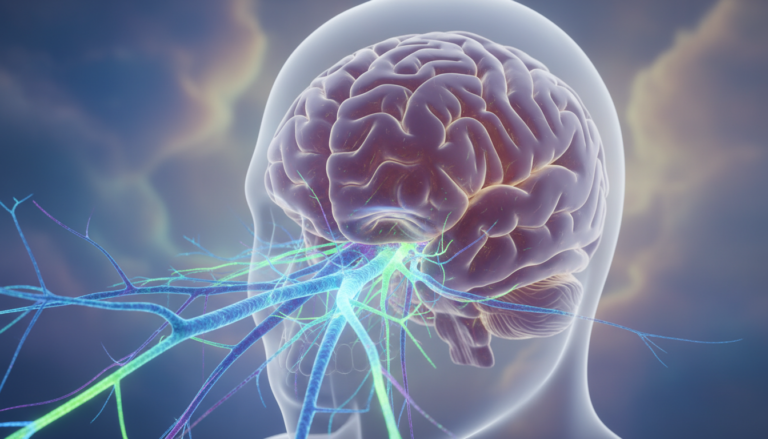
Is your child’s restlessness just high energy, or is it something more? Many families in India wonder about this. They often ignore signs that might mean their child has a real neurodevelopmental condition.
Attention deficit hyperactivity disorder is more than just being easily distracted or full of energy. It’s a serious condition that affects millions in India. It makes it hard for people to focus, control their impulses, and manage their activity levels. This can really mess up their daily lives.
Finding the right diagnosis and treatment can be tough, even more so in places with few mental health resources. But, things are changing fast in big Indian cities.
Now, there are better support systems all over the country. Places like Bangalore and Delhi NCR have specialized diagnostic services. The national Tele MANAS helpline (1-800-891-4416) also helps people get mental health support across the country. This helps fill important gaps in care.
Key Takeaways
- ADHD is a real neurodevelopmental condition that needs professional help, not just discipline or laziness.
- It affects how well people can pay attention, control their impulses, and manage their activity levels at any age.
- Mental health services for diagnosis and treatment have grown a lot in cities like Bangalore and Delhi NCR.
- The national Tele MANAS helpline (1-800-891-4416) offers easy-to-reach support for those looking for mental health help.
- Spotting ADHD early and using the right management strategies are key to helping people in school, work, and social life.
- Good treatments mix old and new methods, tailored to each person’s needs.
Understanding ADHD: An Overview
ADHD has been studied a lot in recent years. It shows how the brain works differently in people with ADHD. This disorder affects how we pay attention, control impulses, and stay active.
Getting a correct diagnosis and treatment in India is hard. This is true for both individuals and their families.
To understand ADHD, we need to look at its symptoms and how common it is in India. We will explore the brain’s role in ADHD and its prevalence in the Indian population.
What is ADHD?
ADHD is a brain disorder that makes it hard to focus, control impulses, and stay active. It comes from differences in brain structure and chemicals like dopamine and norepinephrine.
People with ADHD have different brain areas. The prefrontal cortex, which helps us make decisions, is less active. The basal ganglia and cerebellum also have differences that affect movement and attention.
The main symptoms of ADHD are inattention, hyperactivity, and impulsivity. Inattention makes it hard to focus and follow instructions. Hyperactivity is too much movement and trouble sitting. Impulsivity means acting without thinking and interrupting others.
ADHD is seen as a spectrum, not just a yes or no condition. Symptoms vary in severity and type. Kids might be more hyperactive, while adults might be more inattentive.
| Symptom Domain | Neurobiological Basis | Behavioral Manifestations | Developmental Variations |
|---|---|---|---|
| Inattention | Reduced prefrontal cortex activation and dopamine dysregulation | Difficulty sustaining focus, frequent careless errors, poor task completion | More recognizable in academic settings; persists into adulthood affecting work performance |
| Hyperactivity | Basal ganglia differences affecting motor control circuits | Excessive movement, fidgeting, inability to remain seated, constant talking | Prominent in childhood; often decreases with age but internal restlessness continues |
| Impulsivity | Compromised inhibitory control mechanisms in frontal-striatal pathways | Hasty decisions, interrupting others, difficulty delaying gratification | Consistent across lifespan; impacts social relationships and risk-taking behaviors |
Genetics and environment play a role in ADHD. Stress, inconsistent routines, and too much stimulation can make symptoms worse. But, structured environments with clear rules can help.
ADHD is not just a yes or no condition. It exists on a spectrum. Some people might need simple changes, while others need more help like therapy and medication.
Prevalence of ADHD in India
Finding out how common ADHD is in India is hard. This is because of different ways of diagnosing, cultural views, and unequal access to healthcare. Studies worldwide say ADHD affects 5-7% of kids and 2-5% of adults. But, in India, the numbers vary a lot.
Studies in big cities in India say ADHD affects 2% to 12% of school kids. This big range shows how different the ways of diagnosing and the people studied can be. Urban-rural disparities also play a big role, with more cases found in cities because of better awareness and access to specialists.
ADHD is often not recognized in India. Doctors in primary care don’t always know about it. Teachers might see ADHD behaviors as bad behavior, not as a medical issue.
Cultural beliefs also affect how families seek help for ADHD. They might think it’s because of laziness or poor parenting, not knowing it’s a brain disorder. This makes it hard to get diagnosed and treated on time.
There’s a big gap in understanding ADHD in India. People don’t know it’s a real medical condition like in the West. Families often wait until things get really bad before seeking help.
There’s not much research on ADHD in adults in India. Most studies are on kids. To really understand ADHD in India, we need more research using the same methods everywhere.
Symptoms of ADHD in Adults
ADHD in adults is often misunderstood in India. It affects career success, relationships, and quality of life. Many people struggle their whole lives without knowing it’s ADHD.
ADHD in adults shows up differently than in kids. It’s not as obvious, making it hard to diagnose. People might think it’s laziness or lack of intelligence, when it’s really a brain difference.
Adults with ADHD face unique challenges. They need special tests to find out. Finding these symptoms is the first step to getting help.
Recognizing Behavioral Patterns in Adults
ADHD in adults shows up in many ways. It affects how they manage time and focus. They might always be late or struggle to finish tasks.
Time blindness is a big problem. Adults with ADHD often think tasks will take less time. This leads to rushing and missing deadlines.
Keeping things organized is hard for them. They might lose important papers or forget to pay bills. It’s hard to keep the house tidy too.
Key behavioral indicators include:
- They often put things off until the last minute.
- They find it hard to focus on tasks that need a lot of concentration.
- They have trouble following through on plans and responsibilities.
- They might change jobs a lot or not use their full abilities.
- They are often late and have trouble being on time.
Hyperactivity changes as people get older. Instead of being restless, they feel mentally busy all the time. They can’t relax, even when they’re supposed to.
These behaviors make it hard to work, manage money, take care of the house, and keep relationships strong. They might find ways to hide their problems, but it’s exhausting.
Understanding Emotional Regulation Difficulties
Emotional problems are a big part of ADHD in adults. They affect how they feel and how they relate to others. It’s not just about paying attention or being restless.
Adults with ADHD get upset easily. They can’t handle small problems like others do. This causes trouble at work and in personal relationships.
They also have mood swings. Their feelings change quickly, without reason. This makes it hard to know how they’ll feel from one moment to the next.
Emotional challenges frequently include:
- They often feel like they’re not doing well, even when they are.
- They might feel bad about themselves because of past failures.
- They can be very sensitive to criticism or feeling left out.
- They have trouble controlling their excitement or enthusiasm.
Not getting help for ADHD can lead to other mental health problems. These problems can make them feel even more overwhelmed. It’s like they’re carrying a heavy load in their mind all the time.
These emotional and behavioral problems are linked. A person might put off a task, then feel anxious about it. They might then be too hard on themselves. This cycle makes them feel worse about themselves and more vulnerable to other mental health issues.
Seeing emotional problems as part of ADHD is important. It opens up new ways to help. This can improve how they function in many areas of life.
Symptoms of ADHD in Children
Children with ADHD show behaviors that go beyond normal energy and distractibility. They have three main symptom groups that affect school, social life, and family. It’s important to watch these ADHD symptoms in different places for at least six months.
In India, it’s hard to spot these signs because of cultural differences in how kids behave. Knowing the difference between a lively kid and one with ADHD is key. Doctors look at how often and how badly these behaviors happen, not just once.
Motor Restlessness and Excessive Activity
Hyperactive kids move a lot and seem to be always on the go. They have trouble sitting during lessons or meals. They also climb and run when they shouldn’t.
These kids talk a lot and interrupt others. They can’t stop talking, even when they should. Teachers in India say these kids can’t stop talking and always want to say something.
They also fidget a lot. They tap their hands or feet and can’t stay calm. They move too much, even when it’s not needed.
Helping kids with ADHD involves teaching them to control their movements. Programs use rewards for staying calm and teach them to use their energy in better ways. Parents learn how to help at home.
Difficulties with Sustained Focus
Inattentive kids have trouble with schoolwork. They make mistakes and can’t follow instructions. It’s not because they’re lazy, but because they can’t focus.
They also have trouble organizing things. They lose stuff and can’t do tasks in order. Parents say they forget things and don’t listen.
They get distracted easily. Sounds, sights, or thoughts can make them lose focus. This makes their schoolwork incomplete and they seem not to care.
Special help is needed for these kids. Therapy teaches them how to organize and finish tasks. This helps them manage their focus better.
Acting Without Adequate Forethought
Impulsive kids act without thinking. They interrupt others and do things without waiting. This causes problems with friends and teachers.
They also take risks without thinking. They might run into traffic or climb dangerous places. It’s not because they’re reckless, but because they can’t control their impulses.
Impulsive behavior hurts their social life. Friends don’t want to play with them because they’re too bossy. They can’t control their impulses, which makes it hard to make friends.
Training parents helps kids with impulsivity. Families learn how to create safe spaces and teach kids to think before acting. This helps kids control their impulses better.
Diagnosing ADHD is strict. Symptoms must last six months, appear in different places, and be out of place for their age. This makes sure ADHD is not just normal kid behavior.
Diagnosing ADHD
Getting diagnosed with ADHD is a detailed process. It uses proven methods and the skills of experts. Unlike simple tests, ADHD diagnosis needs careful watching, detailed history, and specific criteria. It involves steps to check for other conditions and confirm ADHD symptoms that affect daily life.
In India, diagnosing ADHD is challenging. Healthcare providers’ awareness varies, and access to specialized services is limited. Yet, experts in big cities and some smaller towns follow international standards for thorough checks.
Understanding the Diagnostic Criteria
The Diagnostic and Statistical Manual of Mental Disorders, Fifth Edition (DSM-5) guides ADHD diagnosis worldwide. It ensures that doctors identify ADHD the same way everywhere. The criteria look for specific symptoms that last a long time.
For kids under 17, doctors need to see at least six symptoms from two areas: inattention or hyperactivity-impulsivity. Teens and adults need only five symptoms from either area. These symptoms must start before age 12, showing ADHD begins in childhood, even if diagnosed later.
Symptoms must show up in multiple settings like home, school, or work. This helps tell ADHD apart from problems caused by specific situations or relationships.
The DSM-5 lists three main types of ADHD:
- Predominantly Inattentive Presentation: Mainly about trouble focusing, organizing, and finishing tasks
- Predominantly Hyperactive-Impulsive Presentation: About too much movement, fidgeting, and acting without thinking
- Combined Presentation: Has big symptoms from both inattention and hyperactivity-impulsivity
Doctors must decide if symptoms are severe enough to be a problem. ADHD symptoms vary in severity, and doctors must judge if they really affect someone’s life.
Role of Pediatricians and Psychiatrists
Many healthcare workers help diagnose ADHD, each with their own skills. Knowing their roles helps families understand the process better.
Pediatricians often start by checking for ADHD. They look for signs during regular visits or when parents worry about their child’s behavior. They also check for other health issues that might look like ADHD.
Psychiatrists and clinical psychologists are trained to do detailed checks. They use special interviews, rating scales, and gather information from parents, teachers, and sometimes the person themselves.
The full check-up includes:
- Looking at developmental milestones and health history
- Structured interviews with the DSM-5
- Rating scales from parents, teachers, and others
- Watching behavior in different places
- Tests to check thinking and planning skills when needed
In India, getting help for ADHD varies by where you live and how much money you have. Big cities like Mumbai, Delhi, Bangalore, and Chennai have many experts. But, smaller places and rural areas often have fewer.
| Healthcare Professional | Primary Role in ADHD Diagnosis | Key Competencies | Typical Setting |
|---|---|---|---|
| Pediatrician | Initial screening and medical evaluation | Developmental assessment, ruling out medical causes, general health monitoring | Primary care clinics, hospitals |
| Psychiatrist | Comprehensive psychiatric assessment and differential diagnosis | Diagnostic interviews, medication management, co-occurring condition identification | Specialized clinics, psychiatric hospitals |
| Clinical Psychologist | Psychological testing and behavioral assessment | Standardized testing, rating scales, cognitive assessment, behavioral observation | Psychology clinics, educational institutions |
| Neurologist | Ruling out neurological conditions | Neurological examination, brain imaging when necessary, seizure disorder evaluation | Neurology departments, specialty hospitals |
Families looking for ADHD diagnosis should choose experts in neurodevelopmental disorders over general doctors. Special centers in big Indian cities have teams for detailed checks.
Working together, professionals make sure they look at all parts of a person’s life. This careful approach helps avoid wrong diagnoses and finds other conditions that often go with ADHD, like learning problems or anxiety.
Treatment Options for ADHD
ADHD treatment in India has grown a lot, giving people access to many effective treatments. The best way to manage ADHD is a mix of medicine and therapy, tailored for each person. This approach helps because ADHD affects everyone differently.
Studies from holistic care centers in India show that treating ADHD well can quickly help people. 83% of clients saw big improvements in their mental health in just two weeks. This shows how important it is to get professional help.
Good ADHD therapy works on both the brain and behavior. Doctors and families work together to create a treatment plan. This plan includes medicine and therapy to help manage symptoms and improve daily life.
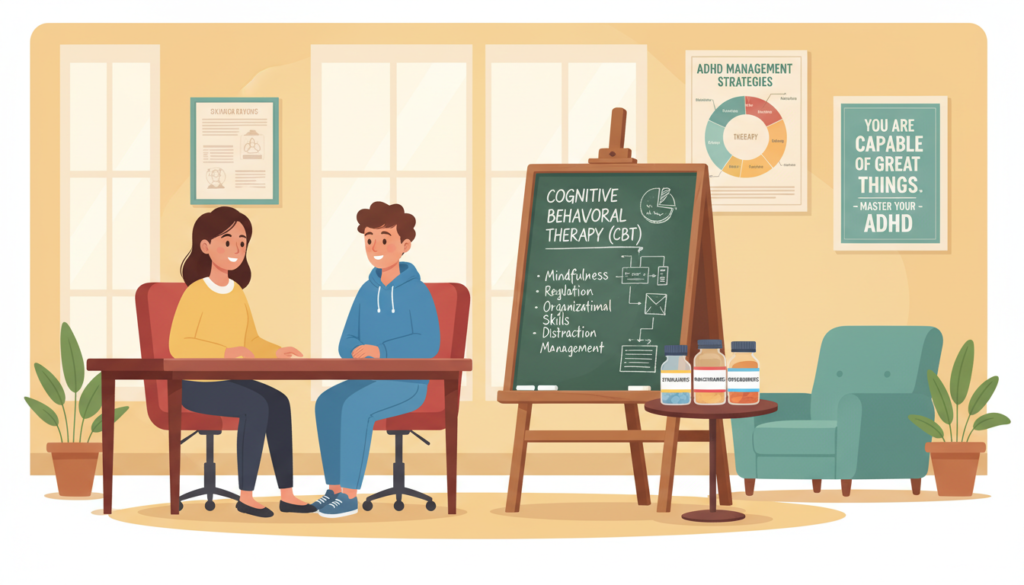
Behavioral Therapy
Behavioral therapy is key in treating ADHD. It teaches people to find ways to deal with their ADHD. This therapy helps change bad behaviors and teaches new ways to handle daily tasks.
Behavioral parent training helps parents support their children with ADHD. Parents learn how to manage their child’s behavior at home. This makes the home a place where ADHD symptoms can be managed.
For kids in school, teachers use special techniques to help with ADHD. These techniques help kids focus and learn better. They make the classroom a place where ADHD doesn’t get in the way.
Adults and teens get help with organizational skills training. This training helps them manage their time and tasks better. It makes daily life easier by reducing stress.
Cognitive-behavioral therapy (CBT) helps adults with ADHD. It teaches them to think differently and handle challenges better. This helps them feel more in control of their lives.
Social skills training helps people with ADHD deal with others better. It teaches them how to talk, handle feelings, and solve problems. This training is done through practice and real-life situations.
Medication Management
Medicine is a big part of ADHD treatment for many. It helps by changing how the brain works. This helps with focus, impulse control, and planning.
There are two main types of ADHD medicine: stimulants and non-stimulants. Each type works differently and has its own benefits. Knowing about these medicines is important for treatment plans.
Choosing medicine is a team effort between doctors and patients. They talk about the good and bad of each medicine. They also think about how the person might react to it. Regular checks make sure the medicine is working right.
In India, doctors who specialize in ADHD carefully pick medicines. They look at how bad the symptoms are, the person’s age, and other health issues. This makes sure the medicine is right for each person.
Medicine works best when used with therapy. This mix tackles ADHD from different angles. It helps manage symptoms and improve daily life.
Alternative Therapies
There are also other treatments for ADHD, like neurofeedback and mindfulness. These might help some people, but they should not replace proven treatments. They should be used along with medicine and therapy.
Neurofeedback training helps people change their brain waves. It uses computer screens to show how to control brain activity. But, research on its effectiveness is mixed.
Mindfulness practices, like meditation, might help with ADHD. They teach being present and aware. This can help with focus and impulsiveness. Mindfulness meditation, yoga, and breathing exercises can help people control their thoughts and actions better.
Exercise is also good for ADHD. It boosts brain chemicals that help with focus and calmness. Doctors in India often suggest regular exercise as part of treatment.
Some people try changing their diet to help with ADHD. This includes eating more omega-3 fatty acids and avoiding artificial additives. But, there’s not enough proof that this works for everyone. Talking to a doctor before making big changes is important.
When looking at other treatments, it’s important to be careful. Most of these treatments don’t have as much evidence as medicine and therapy. Doctors can help figure out if these treatments are safe and might help.
Combining treatments and making them fit each person’s needs is key. Regular checks and changes help keep treatment working well over time.
Medications Used for ADHD
Managing ADHD with medication involves understanding brain chemistry. Doctors use treatments to balance neurotransmitters that control attention and impulse. A psychiatrist chooses the right medication based on each person’s needs and health history.
Using ADHD medication is a big decision that needs careful thought. It works best when combined with behavioral and environmental changes. Regular check-ups help adjust doses and watch for side effects.
In India, getting ADHD medication has gotten easier over the last ten years. But, there are differences in what’s available and how it’s prescribed. Knowing about stimulants and non-stimulants helps patients and families talk to doctors about treatment.
First-Line Pharmaceutical Interventions
Stimulant medications are the most studied and used for ADHD worldwide. They increase dopamine and norepinephrine in key brain areas. This helps with attention, planning, and controlling impulses.
About 70-80% of people with ADHD see big improvements with stimulants. This makes them the first choice for most doctors. But, everyone reacts differently, so doses need to be adjusted carefully.
In India, methylphenidate is the main stimulant used. It comes in different forms to last longer or work faster:
- Immediate-release formulations: Last 3-4 hours, need to be taken several times a day
- Extended-release preparations: Last 8-12 hours, easier to take and keeps symptoms under control
- Modified-release versions: Mix immediate and delayed release for all-day coverage
Doctors can choose the right type based on how long it lasts and when symptoms happen. Morning doses help with school or work, while extended-release options cover all day without needing a midday dose.
Amphetamine-based medications are also effective but harder to find in India. They work by releasing neurotransmitters and blocking their reabsorption.
Stimulants might raise concerns, but they are safe when used right. Studies show they don’t lead to addiction or substance abuse when used as prescribed. It’s important to know the difference between using them for ADHD and misusing them.
Side effects of stimulants need to be watched, but most can be managed. The biggest concern is appetite loss, which is more common in kids. Ways to deal with this include:
- Give medication after breakfast to keep appetite in the morning
- Offer healthy snacks when medication effects wear off
- Make sure kids eat enough during evenings and weekends
Some people might have trouble sleeping if they take medication too late or take too much. It’s important to check blood pressure and heart rate, and to watch how kids grow while they’re on medication.
| Medication Aspect | Stimulant Characteristics | Clinical Considerations |
|---|---|---|
| Onset of Action | 30-60 minutes for immediate-release; gradual for extended-release | Allows for observable therapeutic window and timing optimization |
| Response Rate | 70-80% show significant improvement | High efficacy establishes stimulants as first-line treatment |
| Duration of Effect | 3-4 hours (immediate) to 8-12 hours (extended) | Formulation selection based on symptom timing needs |
| Primary Side Effects | Appetite suppression, sleep impact, mild cardiovascular changes | Generally manageable with monitoring and adjustment |
Alternative Pharmaceutical Options
Non-stimulant medications are good for people who can’t take stimulants or don’t respond well. They work differently and can be helpful in certain situations.
Atomoxetine is a non-stimulant that works by blocking the reabsorption of norepinephrine. It takes a few weeks to start working and lasts all day with one dose. It’s important to tell patients it takes time to start working.
Atomoxetine has some advantages. It’s not a controlled substance, so there’s less risk of misuse. It’s also good for people with anxiety disorders. It needs to be taken every day, not just when needed.
Alpha-2 adrenergic agonists, like guanfacine and clonidine, are another type of non-stimulant. They were first used for other health issues but work for ADHD too. They can be used alone or with stimulants to help with remaining symptoms or side effects.
These medications are good for people who have trouble sleeping or emotional issues along with ADHD. Their sedating effects can help with sleep if taken at the right time.
Some antidepressants, like bupropion, are sometimes used for ADHD. They’re not as well-studied for ADHD, but might help people with depression or who can’t take other medications. Doctors decide based on each person’s situation.
Non-stimulant medications have their own benefits compared to stimulants:
- Efficacy timeline: Non-stimulants take 2-6 weeks to fully work, while stimulants start right away
- Symptom coverage: Non-stimulants manage symptoms all day without ups and downs
- Side effect profile: Different side effects mean you can switch if needed
- Regulatory status: Not controlled substances makes them easier to get and refill
In India, getting ADHD medication is getting better, but there are differences in what’s available and how it’s prescribed. Costs vary between brand and generic, and insurance for psychiatric meds is not always consistent. This can make treatment hard for some families.
More places are selling ADHD medication, including online. Regular check-ups are key to make sure medication is working and to catch any side effects. Doctors adjust doses based on how well the medication is working and how well it’s being tolerated.
Medication is just one part of treating ADHD. The best results come when medication is used with behavioral strategies, school help, and family support. This approach helps manage ADHD’s many aspects.
The relationship between patient, family, and doctor is key to successful treatment. Talking openly about the benefits and concerns helps make treatment better for everyone involved.
Coping Strategies for ADHD
Medication and therapy are key for ADHD treatment. But, learning specific coping strategies is also vital. These strategies help manage symptoms and improve daily life. For example, Cognitive Behavioral Therapy is very effective for adults with ADHD, helping with planning and organization.
Developing coping strategies is a big part of managing ADHD. These strategies help people control their symptoms instead of feeling overwhelmed. Success in managing ADHD also depends on using strategies that fit each person’s lifestyle and challenges.
“The goal is not to cure ADHD but to develop compensatory strategies that allow individuals to function effectively despite their executive function differences.”
Practical Time Management Techniques
Time management is a big challenge for people with ADHD. They often struggle with keeping track of time. Using external devices like timers helps make time more visible.
Timers, alarms, and smartphone apps help people stay aware of time. They signal when it’s time to move on to the next task. This helps because people with ADHD often lose track of time.
Time-blocking is a structured way to plan the day. It helps avoid the stress of deciding what to do next. By setting specific times for tasks, it makes planning easier.
Setting artificial deadlines helps with procrastination. It creates a sense of urgency. This is helpful in school and work in India.
- Use the Pomodoro Technique with 25-minute focused work intervals followed by 5-minute breaks
- Break large time periods into smaller, manageable segments to maintain engagement
- Build transition time between activities to account for ADHD-related time optimism
- Maintain visual schedules or calendars that make temporal information concrete
- Establish consistent daily routines that reduce decision-making demands
Visual tools like calendars help make time concrete. They remind you of what needs to be done. Regular routines save time by making some tasks automatic.
Building Sustainable Organizational Skills
Organizing daily life is hard for people with ADHD. They need systems that are easy to use and maintain. Simple systems work best.
Designating places for things makes finding them easier. This reduces stress and saves time. It becomes a habit with practice.
Filing systems should be simple. Too many categories are hard to keep up with. A simple system is better.
Visual tools help people with ADHD. Color-coding makes it easy to find things. Labels on containers reduce the effort needed to stay organized.
| Organizational Strategy | Implementation Method | Primary Benefit |
|---|---|---|
| Designated Item Locations | Create specific homes for keys, documents, devices | Eliminates search time and reduces daily frustration |
| Simplified Filing Systems | Use minimal categories with clear labels | Increases likelihood of consistent maintenance |
| Visual Organization Tools | Implement color-coding and clear labeling | Reduces cognitive load for finding items |
| Clutter Reduction | Regular removal of unnecessary items | Minimizes environmental distraction |
| External Memory Systems | Written lists, smartphone reminders, shared calendars | Compensates for working memory limitations |
Clutter distracts and overwhelms people with ADHD. Regular cleaning helps. Handling paperwork right away prevents piles from growing.
Tools like lists and reminders help with memory. They make it easier to remember tasks. This reduces stress and improves organization.
The key to organizing is to aim for function, not perfection. Systems should be simple and easy to maintain. Getting started may need help, but it’s worth it in the long run.
Using these strategies improves daily life. It reduces stress and boosts independence. While it takes time and effort, the benefits are worth it.
Support Systems for ADHD
Managing ADHD is not just about the person with the condition. It also involves family, teachers, and doctors working together. ADHD’s symptoms affect not just the person but also their relationships and daily life. Studies show that ADHD treatment works better when there’s a strong support network.
Managing ADHD needs a team effort. It’s important for everyone involved to use the same strategies at home, school, and in social settings. When they all work together, people with ADHD can learn and succeed better.
The Foundation of Family Involvement
Family is key in ADHD treatment. They provide emotional support and help in ways professionals can’t. In India, extended families can offer more support or need education about ADHD.
Parent training programs are vital for kids with ADHD. They teach parents how to manage behavior at home. These programs cover positive reinforcement, consequences, and breaking tasks into steps.
Having a family member or friend for support is very helpful during treatment. They offer practical help and emotional support.
Family members help with daily tasks and remind the person with ADHD about important things. They also help with medication and talk to doctors. This helps make treatment plans better.
Psychoeducation teaches families about ADHD. It helps them understand it’s not about being lazy or disobedient. This knowledge reduces blame and helps families cope better.
Dealing with ADHD is hard on families. Parents get stressed, and siblings might feel left out. Good ADHD treatment plans help everyone in the family.
Family therapy helps with communication and solving problems. It teaches families how to handle conflicts and stay connected despite ADHD challenges.
Educational Accommodations and School Partnerships
Schools are important in ADHD treatment. They provide support so students can learn despite ADHD challenges. Accommodations help level the playing field without lowering standards.
Classroom accommodations are the first step. They include things like special seating and extra time for tasks. These help students focus and succeed.
- Preferential seating near the teacher and away from distractions
- Modified assignment lengths that assess mastery without overwhelming attention capacity
- Additional time for task completion and test-taking
- Frequent breaks during extended work periods
- Use of organizational aids such as checklists and visual schedules
Formal plans provide more detailed support when needed. They outline specific help and who will provide it. Regular talks between families and schools ensure these plans work well.
Teachers need to understand ADHD to help students. In India, raising awareness among teachers is key. This helps create a supportive classroom environment.
The collaborative problem-solving approach involves teachers, families, and students. They work together to find solutions and make sure they work across different settings. This way, ADHD treatment plans can change as needed.
Technology helps in classrooms too. It can remind students of tasks and provide feedback. This keeps them focused and on track.
Good communication is key to supporting someone with ADHD. When families, teachers, and doctors work together, they can offer a strong support network. This requires understanding ADHD, using evidence-based methods, and working together in all areas of life.
Role of Schools in Managing ADHD
Schools play a key role in helping students with ADHD. They offer support and accommodations that change how students learn. Schools are more than places to learn; they are where kids spend a lot of their time.
Studies show that school help can improve students’ grades and future chances. In India, schools vary in how they help with ADHD. Some schools have good support, but many don’t have plans for ADHD students.
There’s a big difference between government and private schools. Private schools often have more resources and better-trained teachers. This means some students get more help than others.
Effective Instructional Approaches for Students with Attention Challenges
Teachers can make lessons better for all students by using strategies that help ADHD students. These strategies make learning easier for everyone. Teachers who know about ADHD can use methods that work well with these students.
Adding movement to lessons helps students with ADHD stay focused. They learn better when they can move around. Breaking lessons into short parts keeps students interested by matching their short attention span.
Quick feedback helps students with ADHD stay motivated. They do better when they get praise or correction right away. This helps them stay on track.
Visual aids help students with ADHD remember things better. They make learning easier by reducing the load on their brains. Using interesting materials makes students more excited to learn.
Using response cards keeps students engaged in class. It helps them stay focused and avoid distractions. Clear rules and rewards help students with ADHD stay on track.
Daily Report Cards are a great way to help students with ADHD. They help teachers and parents work together. This system gives students the feedback they need to do better.
This method involves setting clear goals and checking on progress every day. It helps students stay on track and get the help they need. It also helps families understand how their child is doing.
Teachers who care about their students help them do better. When teachers see ADHD as a challenge, not a problem, students feel safe. This makes students more willing to take risks and ask for help.
| Teaching Strategy | ADHD Challenge Addressed | Implementation Method | Expected Outcome |
|---|---|---|---|
| Movement Integration | Hyperactivity and restlessness | Incorporate physical activities, standing desks, fidget tools | Improved focus and reduced disruptive behavior |
| Instructional Chunking | Limited sustained attention | Break lessons into 10-15 minute segments with transitions | Maintained engagement throughout class |
| Immediate Feedback | Delayed reward sensitivity | Provide specific praise and correction within moments | Increased motivation and behavior modification |
| Visual Supports | Working memory limitations | Use graphic organizers, visual schedules, color coding | Enhanced comprehension and organization |
| Active Participation | Passive attention difficulties | Implement response cards, frequent questioning, peer discussion | Reduced off-task behavior and improved retention |
Formal Accommodation Mechanisms and Support Plans
Having a plan for students with ADHD is important. Plans like IEPs and 504 Plans help schools support these students. They make sure students get the help they need.
Accommodations like extra time on tests help students with ADHD. They also help with homework and using tools to stay organized. This makes learning easier for them.
Breaks during long tasks help students stay focused. Testing in quiet places helps them show what they know. This is important because ADHD can make it hard to focus.
Grading that separates behavior from learning helps students with ADHD. This way, grades show what they know, not just how well they behave. This is important because ADHD can make it hard to stay organized.
Creating support plans needs teamwork. Teachers, families, and school leaders all play a part. Plans should be clear and easy to follow. For example, “extra time on tests” should say exactly how much time and when.
In India, schools vary in how they help students with ADHD. Some schools have good support, but many don’t have plans for ADHD students.
Parents and mental health professionals are working to help. They are pushing for better support in schools. Some educational boards are starting to make guidelines for students with special needs.
Seeing accommodations as fair helps everyone. Students with ADHD face real challenges in school. Accommodations help level the playing field, not give unfair advantages.
Helping students with ADHD succeed is important. It opens doors to better education and jobs. Schools that support ADHD students help students and society as a whole.
Stigma Surrounding ADHD in India
Stigma around attention deficit hyperactivity disorder is a big problem in India. Cultural views and social expectations make it hard for families to get help. This misunderstanding can delay diagnosis and limit treatment options.
In India, ADHD stigma meets cultural values, making it tough for those with ADHD. Families worry about social standing and reputation over medical needs. They often hide the struggles to avoid social shame.
It’s key to understand these cultural aspects to improve ADHD care in India. We need to tackle both medical and social attitudes towards ADHD.
Societal Misunderstandings
Many in India misunderstand ADHD, seeing it as poor parenting or lack of discipline. This misunderstanding affects how families and communities react to ADHD.
Some think ADHD is a Western problem or overdiagnosed. This skepticism makes families hesitant to seek help, even when symptoms are clear.
Indian culture values academic success and conformity. Children with ADHD struggle to meet these expectations. This leads to shame and criticism from family and community.
Gender plays a big role in ADHD recognition in India. Boys with ADHD are noticed sooner than girls. Girls’ symptoms are often overlooked, seen as daydreaming.
This gender gap in diagnosis causes long-term suffering. Girls and women with ADHD may feel they’re not trying hard enough. This affects their self-esteem and mental health.
| Common Misconception | Reality | Impact on Care |
|---|---|---|
| ADHD results from bad parenting or lack of discipline | Neurobiological condition with genetic and brain structure differences | Delays diagnosis; increases family blame and shame |
| Children will outgrow ADHD with age | Condition persists into adulthood in majority of cases | Prevents appropriate long-term management planning |
| ADHD is overdiagnosed and not a real disorder | Valid diagnosis with consistent criteria across cultures | Discourages families from seeking evaluation |
| Medication for ADHD is dangerous or unnecessary | Medications are evidence-based with established safety profiles | Limits access to effective treatment options |
Mental health stigma affects ADHD in India. Families worry about social consequences of acknowledging ADHD. This fear can delay seeking help.
Stigma creates shame for those with ADHD. Many hide their struggles, fearing social judgment. This fear can outweigh the desire for treatment.
Overcoming Stigmas
Psychoeducation is key to fighting ADHD misconceptions. Accurate information helps change views. Community programs and healthcare training are important.
Media campaigns help normalize ADHD talks in India. Public figures and families sharing their ADHD stories help. This makes ADHD seem manageable and successful.
More mental health services for ADHD help legitimize it. This recognition challenges the view that ADHD is a personal failing. It shows ADHD as a real health issue.
Professional groups and advocacy play a big role in reducing stigma. They provide accurate info, support, and push for policy changes. Their work leads to better understanding and care for ADHD in India.
Support groups offer a safe space for families to share. They help reduce isolation and provide practical advice. This support is vital for navigating ADHD challenges.
Culturally sensitive approaches are most effective in India. They respect traditional values while challenging harmful beliefs. This gradual shift in understanding is key.
Schools play a big role in reducing ADHD stigma. ADHD-friendly practices and teacher training help. This shows ADHD can be managed, not a limitation.
Reducing ADHD stigma needs ongoing efforts from all. Every positive step helps change attitudes. Recognizing ADHD as a neurological variation opens new possibilities for millions in India.
ADHD and Co-occurring Conditions
Mental health experts know ADHD often comes with other conditions. This makes diagnosing ADHD more complex. Studies in India show that most people with ADHD also have another condition.
Checking for other conditions is key when diagnosing ADHD. This is because other conditions can change how we treat ADHD. Treating all conditions together can lead to better results.
Understanding ADHD and other conditions helps families and doctors plan better. Having more than one condition doesn’t mean treatment failed. It shows ADHD is a complex issue that needs a team approach.
Elevated Anxiety in ADHD Populations
People with ADHD are more likely to have anxiety. Studies say 25-40% of kids with ADHD also have anxiety. This problem stays into adulthood, making life harder.
ADHD and anxiety can go hand in hand. The stress of ADHD can lead to anxiety. Feeling like you can’t do things well can make anxiety worse.
ADHD makes it hard to handle stress. People with ADHD have trouble planning and feeling emotions. This makes them feel overwhelmed.
Genetics might play a role in both ADHD and anxiety. Research shows they share some brain and chemical links. Some ADHD medicines might make anxiety worse in some people.
Diagnosing ADHD and anxiety together is tricky. Anxiety can look like ADHD symptoms. Doctors need to look closely at symptoms to tell them apart.
Treating both ADHD and anxiety at the same time works best. Therapy that helps with both ADHD and anxiety is very effective. This helps people feel better overall.
Choosing the right medicine is important when treating both ADHD and anxiety. Some medicines help with anxiety but might not be good for ADHD. Doctors need to test for anxiety first to choose the right treatment.
Learning Challenges Accompanying ADHD
Learning disabilities often go with ADHD. Studies say 30-50% of people with ADHD also have a learning disability. This means a detailed test is needed when diagnosing ADHD.
ADHD and learning disabilities affect the brain in different ways. ADHD makes it hard to focus and remember things. Learning disabilities make it hard to read, do math, or write.
| Condition | Primary Deficit | Academic Impact | Required Intervention |
|---|---|---|---|
| ADHD | Executive function and attention regulation | Difficulty completing work across all subjects | Medication, behavioral strategies, accommodations |
| Dyslexia | Phonological processing | Reading accuracy and fluency challenges | Structured literacy instruction, decoding strategies |
| Dyscalculia | Numerical reasoning | Mathematics computation and concept difficulties | Explicit math instruction, visual supports |
| Dysgraphia | Written expression and motor planning | Handwriting and composition struggles | Assistive technology, alternative response methods |
Getting a detailed test is important when diagnosing ADHD. This test shows what skills are weak and what are strong. It helps figure out if it’s ADHD or a learning disability causing problems.
Each condition needs its own treatment. ADHD needs medicine, therapy, and help with planning. Learning disabilities need special teaching that focuses on the specific problem.
Having both ADHD and a learning disability makes school harder. It can lead to feeling frustrated and wanting to avoid school. Treating both conditions is key to doing well in school and feeling good.
Schools in India are starting to work together when ADHD and learning disabilities are present. They make plans that help with both ADHD and learning problems. This way, everyone involved can help the student succeed.
It’s important to remember that everyone is different. Some people with ADHD and learning disabilities do well in math but struggle with reading. A thorough test is needed to understand the full picture.
Families need to know that having more than one condition doesn’t mean ADHD is worse. With the right help, people can get better. It’s all about understanding and treating all conditions together.
Lifestyle Changes to Manage ADHD
While professional help is key, making lifestyle changes can also help with ADHD. These changes don’t replace treatments but make them work better. They support brain health by focusing on sleep, nutrition, exercise, and managing stress.
Managing ADHD means paying attention to daily habits. These habits affect how well the brain works and how symptoms show up. Changes in lifestyle create a supportive environment for treatments to work better.
Doctors now include lifestyle tips in treatment plans. These tips help the whole person, not just symptoms. Making these changes can make symptoms less intense and improve life quality for people with ADHD.
Nutrition and Diet
The link between diet and ADHD is complex and sometimes debated. Nutritional interventions show promise as adjunctive treatments, but results vary. Knowing which diets are backed by research helps families make better choices.
Omega-3 fatty acids, found in fish oil, may help reduce ADHD symptoms. These fats are good for brain function and reduce inflammation. Taking them daily can help with focus and reduce hyperactivity in some.
Elimination diets might help a few people with real food sensitivities. But, research shows they work best for those with allergies or intolerances. Widespread dietary restrictions without sensitivities rarely help and can lead to nutritional problems.
Research on refined sugars and artificial additives shows little effect for most kids. But, some kids might react differently. Parents should watch for reactions to specific foods and talk to a doctor before making big changes.
What’s more important than single nutrients is a balanced diet. A good diet includes:
- Enough protein at meals to help make neurotransmitters
- Complex carbs for steady energy and to prevent blood sugar swings
- Regular meals to keep the brain fueled
- Whole foods rich in vitamins, minerals, and phytonutrients for brain health
- Staying hydrated to help with thinking
Changing your diet to fit Indian cuisine can be sustainable and culturally fitting. Foods like lentils, whole grains, and vegetables are good for the brain. You can make your diet healthier without giving up your favorite foods.
Dietary changes should be part of a bigger plan to manage ADHD. Setting realistic goals helps avoid disappointment when changes take time. Getting help from a professional ensures you’re getting enough nutrients while trying new diets.
Physical Activity
Research shows that regular exercise is good for ADHD. It helps with attention, executive functions, emotional control, and symptom severity. Exercise can be as helpful as some medicines for some people.
Exercise helps ADHD by increasing dopamine and norepinephrine, like some medicines do. It also boosts brain health and improves sleep and stress levels.
Structured activities like sports and dance are more than just exercise. They help with following rules, planning, and self-control. They also improve physical fitness and social skills.
Activities that get your heart rate up are best for your brain. Even short bursts of exercise before hard tasks can help focus. Outdoor activities also have extra benefits from being in nature.
Finding fun activities is key to sticking with exercise. Enjoying what you do makes it easier to keep doing it. Try different things to find what you like and can do well.
In India, where screen time and less outdoor play are common, activities like yoga are great. They combine physical movement with focus and breathing exercises. Yoga helps with self-control, which is hard for people with ADHD.
Schools can help by adding short breaks for movement. These breaks can improve focus and behavior in class. Activities like climbing stairs and playing during breaks are good too.
Start with small goals for physical activity. Aim for 60 minutes a day for kids and 150 minutes a week for adults. Break activities into shorter parts to make them easier to do.
Lifestyle changes are important for managing ADHD. They should fit your life and what you can do. Even small improvements in symptoms or overall health are worth making these changes.
Professional Resources Available in India
India has a wide range of support systems for ADHD treatment. These include specialized services and community resources. The mental health infrastructure has grown a lot in recent years.
Managing ADHD often requires help from various services. Knowing what resources are available helps families get the right support. Urban areas have more sophisticated services than rural ones.
Peer Support Networks and Advocacy Organizations
Support groups offer a place for people with ADHD and their families to connect. They share experiences and strategies. Both in-person and online groups are helpful.
In-person groups meet in mental health organizations or hospitals. They help people feel less alone and understand their condition better.
Online groups are great for those in remote areas. They connect people no matter where they are. Social media and forums are active spaces for ADHD communities in India.
Peer support is more than just emotional support. It offers practical advice from others who have faced similar challenges. This advice is very helpful for families starting their ADHD journey.
Advocacy groups play a big role in improving ADHD services in India. They raise awareness, influence education policies, and reduce stigma. They provide educational materials and organize events.
To find support groups, you need to search in different places:
- Mental health facilities and hospitals have lists of local groups
- Online searches using keywords like “ADHD support group” and city names help
- Professional associations and advocacy groups have directories of support resources
- Social media has public and private communities for ADHD support
Choosing the right support group is important. Look for groups that follow scientific information and are supportive. Peer support is a complement to professional treatment.
Therapeutic Services and Professional Counseling
Clinical psychologists, counselors, and coaches offer various services for ADHD. Major cities have more counseling services now. Different approaches help different age groups and challenges.
Individual therapy helps with emotional issues and developing coping strategies. It’s a confidential space to work on attention and impulse control. Therapists use cognitive-behavioral approaches to help clients.
Family therapy improves communication and reduces conflict. It involves the whole family to understand ADHD’s impact. This helps create a supportive home environment for treatment.
Parent training teaches behavior management skills. It helps caregivers use positive reinforcement and consistent consequences. This training is very useful for daily situations.
Academic coaching focuses on study skills and time management for students. Coaches work one-on-one to develop personalized systems. This support is very helpful during educational transitions.
Finding the right professionals requires checking their credentials and specialization. Clinical psychologists and psychiatrists are key for ADHD treatment. They have the necessary training and medical expertise.
There are many ways to find professionals:
- Hospital directories list specialists in neurodevelopmental disorders
- Professional association websites have searchable databases
- Online platforms feature mental health professionals
- Referrals from doctors provide trusted recommendations
Counseling session costs vary based on the provider and location. Typical fees range from ₹1,800 to ₹5,000 per session in big cities. Some places offer lower fees based on income.
Online counseling is great for those in smaller cities or rural areas. Video platforms connect people with specialists. This is helpful for follow-up sessions and ongoing support.
Big cities have the most resources for ADHD treatment. Delhi NCR, Noida, Bangalore, and other cities have specialized clinics. These offer integrated care combining psychiatric, psychological, and educational support.
Psychiatric hospitals in these cities provide both residential and outpatient services. Teams work together to address medical, psychological, and social aspects of care. This ensures individualized treatment plans.
| Service Type | Provider Credentials | Typical Cost Range | Primary Focus Areas |
|---|---|---|---|
| Individual Therapy | Clinical Psychologist (M.Phil/PhD) | ₹2,000-₹4,000 per session | Emotional regulation, coping strategies, self-esteem |
| Family Therapy | Licensed Family Therapist | ₹2,500-₹5,000 per session | Communication patterns, conflict resolution, support systems |
| Parent Training | Behavioral Specialist | ₹1,800-₹3,500 per session | Behavior management, positive reinforcement, consistency |
| Academic Coaching | Educational Specialist | ₹2,000-₹4,500 per session | Study skills, organization, time management |
The national Tele MANAS helpline provides mental health support and crisis intervention. It’s available at 1-800-891-4416 and helps those in need. It’s very important for acute distress or lack of local services.
Smaller cities and rural areas face challenges in getting ADHD treatment. Advocacy efforts aim to improve mental health infrastructure. Telemedicine and online counseling are promising solutions for these areas.
Getting professional help is key to managing ADHD. Multidisciplinary care addresses medical, psychological, educational, and social aspects. The growing resources in India show a growing recognition of neurodevelopmental disorders.
The Role of Technology in ADHD Management
Technology has grown fast in India, helping people with ADHD a lot. Smartphones, apps, and online services offer new ways to manage ADHD. They help fill the gap between doctor visits and daily life.
Digital tools play a big role in ADHD care. They sit between doctor visits and self-help. They help people get support that might be hard to find because of money or shame.
Technology is becoming a big part of health care in India. More people have phones and computers. This makes it easier for many to find ways to manage their ADHD symptoms.
Digital Applications for Organization
Apps for phones and computers help with ADHD a lot. They help with problems like remembering things and staying organized. Task management applications help make to-do lists and remind you to do things.
These apps help because they make it easier to start tasks. They turn mental lists into real ones. They also let you see how you’re doing, which helps stay motivated.
Calendar apps help with planning. They send reminders so you don’t forget things. They also help you figure out how long things will take, which helps plan better.
Note-taking applications keep your notes safe across all your devices. This means you can always find important info. They also help you find things quickly without having to remember everything.
Apps that help you focus use the Pomodoro method. They block distracting websites and play sounds to help you concentrate. This makes it easier to stay focused on what you need to do.
Habit-tracking apps show you how consistent you are. They use games to make it fun to do the right things. They give you points and streaks to keep you going.
Key features beneficial for ADHD management include:
- Simple, easy-to-use interfaces
- Good reminder systems
- Works on all your devices
- Uses pictures instead of text
- Easy to set up
There are many apps out there, some for ADHD and some for general use. ADHD apps might have special features, but not all have been well-studied. It’s important to choose based on what you need.
Starting with just a few apps is best. This way, you can get used to them without feeling overwhelmed. It’s better to start small and add more later.
Learning new apps can be hard, but it’s worth it. Some people might download a lot of apps but not use them much. Technology can also be a distraction if not used wisely.
Having a coach or therapist help you use these apps can make a big difference. They can help you find the right features for your needs. They also keep you accountable, which helps you stick with it.
Online Therapeutic Services
Online therapy and mental health services have grown a lot in India, thanks to the pandemic. They make it easier for people to get help, no matter where they live. You can even get help from doctors without going to the office.
Online therapy costs between ₹1,500 to ₹4,500 per session. This makes it more affordable for many families. It also saves time and money on travel.
Video therapy lets you talk to therapists online. They can give you the same help as in-person therapy. This keeps the connection and communication strong.
Text-based support lets you talk to therapists anytime. You can share your problems and get advice without having to schedule a time. This is great for people who prefer writing or have busy schedules.
Online programs offer structured help. They teach you skills and track your progress. You can do them at your own pace, which is helpful if you’re busy.
Advantages of online ADHD therapy services include:
- No need to travel
- More flexible scheduling
- Access to specialists
- Less stigma
- Comfort of home
Important considerations when choosing online or in-person therapy. You need a good internet connection and a private space. Some things are harder to see or do online.
Technical problems can mess up therapy sessions. But, research shows online therapy can be just as good as in-person. Insurance and rules for online therapy are changing in India.
Finding a good online therapist is key. Make sure they are licensed and follow privacy rules. It’s also important to think about what you need and what’s available in your area. Sometimes, a mix of online and in-person therapy works best.
| Technology Type | Primary Function | Cost Range | Best Suited For |
|---|---|---|---|
| Task Management Apps | Organizing responsibilities and deadlines with reminders | Free to ₹500/month | Individuals struggling with task initiation and completion |
| Focus Enhancement Tools | Reducing distractions and structuring work periods | Free to ₹300/month | Those with significant attention regulation challenges |
| Online Video Consultations | Professional diagnosis and ADHD therapy sessions | ₹1,500-₹4,500/session | Accessing specialists unavailable locally |
| Digital Therapeutic Programs | Self-paced skill building and psychoeducation | ₹2,000-₹10,000/program | Supplementing professional treatment with structured learning |
Technology is a powerful tool for managing ADHD. It works best when used with professional help. As technology keeps getting better, more people in India will have access to the help they need.
It’s important to check if new apps and services really work for ADHD. Not all technology is created equal. Choosing wisely based on your needs can make a big difference.
Research and Developments in ADHD
Research on ADHD has grown a lot, with a big focus in India. Scientists are trying to understand ADHD better, even though it’s well-studied. They want to know more about how it works and how to treat it best.
Over the last ten years, we’ve learned a lot about ADHD’s brain effects. Researchers use new tools to study the brain and find out why some people have trouble paying attention and controlling impulses.
In India, doctors and researchers are working together to learn more about ADHD. They study how ADHD affects people in different places and cultures. They want to find the best ways to help people with ADHD, taking into account their surroundings and culture.

Ongoing Studies in India
Indian researchers are doing big studies to find out how common ADHD is. They want to know more about it in different places and ages. This will help plan better for health care and education.
ADHD can look different in different cultures. Indian studies are looking at how family and culture affect ADHD. They want to understand how to help people in India better.
Doctors in India are testing different treatments for ADHD. They want to see how well medicines work and how to use them best. This is important because people in different places might react differently to the same medicine.
Researchers are also looking at how to make therapy work better in India. They want to know which treatments families will use and how to make them fit with Indian culture. They’re trying to find ways to help families that work in India.
Studies are looking at how ADHD affects students in India. They want to know how common it is and how teachers can help. This will help teachers find ways to help students with ADHD in their classrooms.
Indian scientists are using new tools to study ADHD’s brain effects. They’re using advanced technology to learn more about ADHD. This will help them understand ADHD better and find new ways to treat it.
Future Directions for ADHD Treatment
New ways of treating ADHD are being explored. One idea is to use genetic information to find the best treatment for each person. This could make finding the right medicine easier and faster.
Researchers are working on algorithms to help choose treatments. These tools might help families find the right medicine sooner. But, more work is needed before they can be used in clinics.
Technology is also being used to help treat ADHD. There are special programs that help kids with ADHD. These programs are fun and can help kids learn to focus better.
Technology is being used in new ways to help with ADHD. Mobile apps can help kids with organization and time management. This can help them all day, not just during therapy sessions.
New medicines are being developed for ADHD. These medicines work in different ways than current ones. They might be easier to take and could help more people.
There are also new ways to help the brain, like magnetic stimulation. This is not widely used yet but could be helpful for some people. More research is needed before it can be used in clinics.
Artificial intelligence is being explored for ADHD diagnosis. It could make diagnosing ADHD easier and more accurate. But, more testing is needed before it can be used in clinics.
Working together is seen as the best way to help people with ADHD. Doctors, teachers, and families are all working together. This approach is being studied to see if it works better than the old way of doing things.
ADHD in adults is getting more attention. Many people are diagnosed as adults. Researchers are studying how ADHD affects adults and how to help them. This includes work and family issues.
Preventing ADHD in young children is also being studied. Researchers want to know if early help can prevent problems later. This could lead to better health policies for young children.
Getting research into practice is important. Researchers are studying how to share new ideas with doctors and teachers. This is key to helping people with ADHD.
More research is needed to keep improving ADHD treatment. India is playing a big role in this research. The goal is to help people with ADHD live better lives.
Conclusion: Path Forward for ADHD Management in India
Managing ADHD in India is a big challenge but also a chance for change. Knowing the symptoms is the first step to getting help. Modern treatments have shown great results, helping people live focused and organized lives.
When ADHD is caught early and treated fully, it works well. This means a better life for many.
Building Awareness Through Education
Improving ADHD care in India starts with more awareness. Families, teachers, and doctors need to know about ADHD. Schools should teach teachers to spot symptoms and help students.
Doctors must keep learning about diagnosing and treating ADHD. Families should get education to help them understand and support their loved ones. The media should share true facts about ADHD, showing it’s a real condition that needs care.
We need better diagnostic services everywhere. Treatments should include medicine and behavior changes. Schools should offer support, and there should be less shame so families can ask for help without fear.
Working together is key. We need help from healthcare, schools, research, and government. By focusing on ADHD, we can unlock the full human promise in India.
FAQ
What is ADHD and is it a real medical condition?
Can adults have ADHD or is it only a childhood disorder?
What are the main symptoms of ADHD in children?
How is ADHD diagnosed?
What treatment options are available for ADHD in India?
Are ADHD medications safe and do they cause addiction?
What coping strategies can help manage ADHD symptoms?
How can families support someone with ADHD?
What educational accommodations help students with ADHD?
Is ADHD common in India and how does stigma affect those with the condition?
What co-occurring conditions commonly accompany ADHD?
Can dietary changes help manage ADHD symptoms?
Where can I find professional help for ADHD in India?
How can technology help manage ADHD symptoms?
Does ADHD medication affect growth in children?
Can ADHD be outgrown or does it require lifelong treatment?
How does ADHD affect relationships and social functioning?
Are there specific considerations for girls and women with ADHD?
What is the role of exercise and physical activity in ADHD management?
About the Author