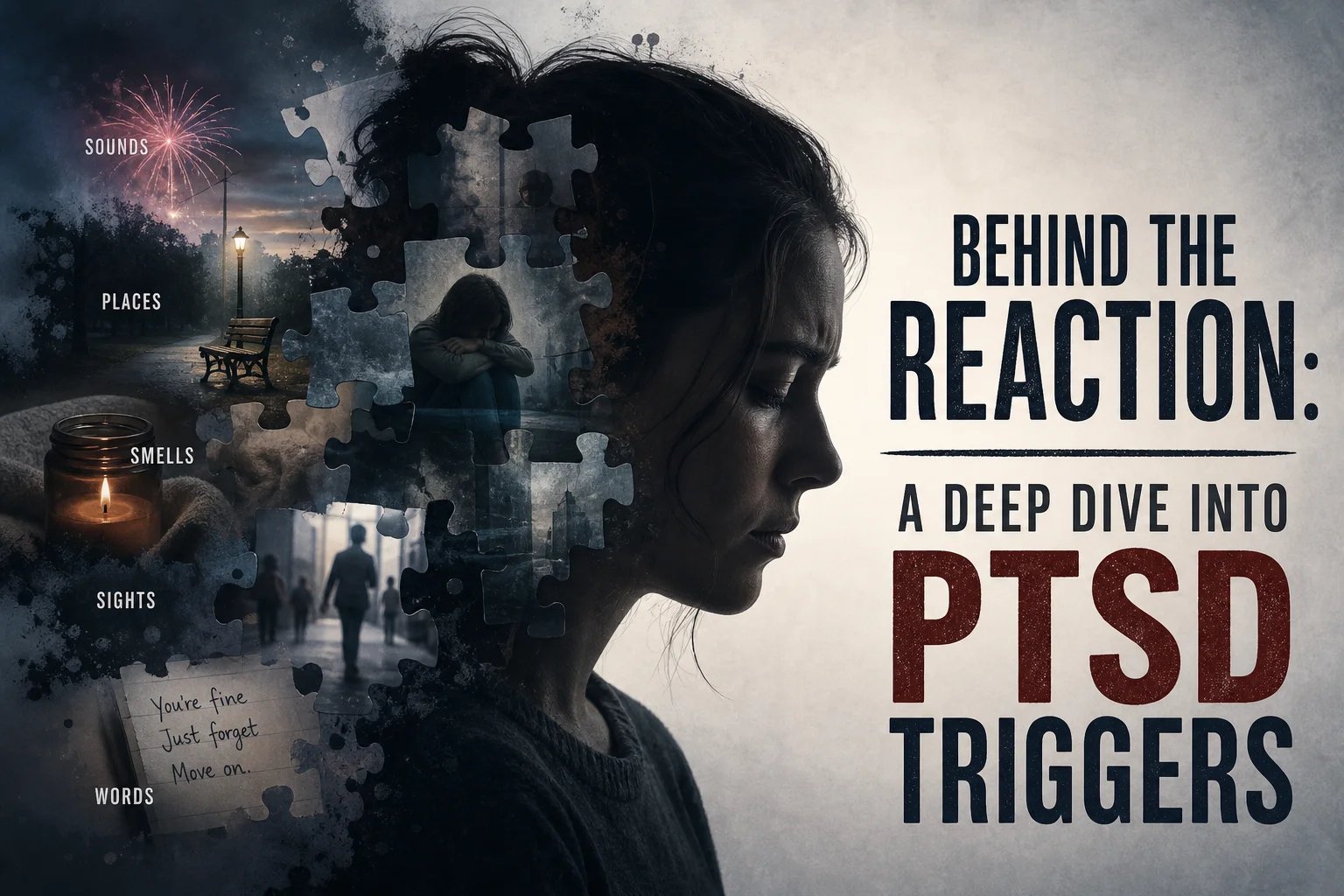
The Essential Guide: Behind the Reaction: A Deep Dive into PTSD Triggers
A door slams. A car backfires. Someone raises their voice in a crowded room. To one person, these are ordinary moments. To someone living with post-traumatic stress disorder, they can feel like a sudden drop through a trapdoor—heart racing, muscles tightening, breath shortening, the present moment blurring into a past that still feels painfully alive.
That is why Behind the Reaction: A Deep Dive into PTSD Triggers matters so much. PTSD triggers are often misunderstood as “overreactions,” mood swings, or personality flaws. In reality, they are survival alarms—sometimes outdated, sometimes intense, but rarely random.
Understanding what happens behind the reaction can change everything. It can help survivors feel less ashamed. It can help loved ones respond with compassion instead of confusion. It can help workplaces, schools, families, and communities become safer spaces for people carrying invisible wounds.
This article offers Behind the Reaction: A Deep Dive into PTSD Triggers from a practical, human, and trauma-informed perspective. We’ll explore what triggers are, why they happen, how they show up in daily life, and what can help people regain a sense of control.
Important note: This article is educational and not a substitute for professional mental health care. If you or someone you know is in immediate danger, experiencing suicidal thoughts, or feeling unable to stay safe, contact local emergency services or a crisis hotline right away.
What Are PTSD Triggers?
PTSD triggers are internal or external cues that remind the brain and body of a traumatic experience. These reminders may be obvious, like seeing someone who resembles an abuser, or subtle, like smelling a certain cologne, hearing a specific song, or feeling trapped in a crowded elevator.
At the heart of Behind the Reaction: A Deep Dive into PTSD Triggers is one key idea: triggers are not simply “memories.” They are full-body responses.
A trigger can activate:
- Thoughts
- Emotions
- Physical sensations
- Defensive behaviors
- Flashbacks
- Panic responses
- Dissociation
- Urges to escape, freeze, fight, or shut down
For many people with PTSD, the body reacts before the thinking mind has time to catch up. That is why someone may suddenly feel unsafe even when they logically know they are not in danger.
PTSD Triggers Are Not Always Predictable
One of the most frustrating parts of PTSD is that triggers can appear inconsistent. A survivor may handle a stressful meeting one day but become overwhelmed by a harmless sound the next.
This does not mean the person is “making it up.” It means the nervous system is influenced by many variables, including sleep, stress load, physical health, current relationships, environment, and emotional exhaustion.
That is an essential point in Behind the Reaction: A Deep Dive into PTSD Triggers: reactions make more sense when we stop judging them and start tracing their roots.
The Science Behind the Reaction
To understand PTSD triggers, we need to understand the brain’s threat system.
When a person experiences trauma, the brain may encode the event differently from ordinary memories. Instead of being filed away neatly as “something that happened in the past,” traumatic memory can remain fragmented, sensory, and emotionally charged.
Three areas of the brain are especially important:
| Brain/Body System | Role in PTSD Triggers | What It May Feel Like |
|---|---|---|
| Amygdala | Detects threat and sounds the alarm | Fear, panic, anger, dread |
| Hippocampus | Helps place memories in time and context | Confusion between past and present |
| Prefrontal Cortex | Supports reasoning and emotional regulation | Difficulty thinking clearly during a trigger |
| Nervous System | Activates fight, flight, freeze, or fawn responses | Racing heart, numbness, shaking, people-pleasing |
In PTSD, the amygdala can become highly sensitive. It may interpret certain cues as danger even when no actual threat exists. Meanwhile, the prefrontal cortex—the part responsible for calming, reasoning, and decision-making—may temporarily go offline.
This is why “just calm down” rarely works.
A trauma response is not a lack of willpower. It is a biological survival process. Behind the Reaction: A Deep Dive into PTSD Triggers reveals that what looks like anger, withdrawal, avoidance, or panic may actually be the nervous system trying to protect the person.
Common Types of PTSD Triggers
PTSD triggers can be sensory, emotional, relational, environmental, or internal. Some are easy to identify. Others take time, reflection, and sometimes therapy to uncover.
1. Sensory Triggers
These involve the senses:
- Sounds: sirens, yelling, fireworks, footsteps
- Smells: smoke, alcohol, hospital disinfectant, perfume
- Sights: uniforms, certain vehicles, dark hallways
- Touch: unexpected contact, restraint, certain textures
- Taste: foods or drinks linked to traumatic events
Sensory triggers are powerful because traumatic memories are often stored in sensory fragments.
2. Emotional Triggers
Certain emotions can trigger PTSD symptoms, even if the current situation is safe.
Common emotional triggers include:
- Feeling trapped
- Feeling rejected
- Feeling powerless
- Feeling criticized
- Feeling abandoned
- Feeling watched or judged
In Behind the Reaction: A Deep Dive into PTSD Triggers, emotional triggers matter because they often explain reactions that appear “too big” for the moment.
For example, a partner saying, “We need to talk,” may trigger fear in someone whose past included emotional abuse or sudden abandonment.
3. Relational Triggers
Relationships can be deeply healing, but they can also activate trauma wounds.
Possible relational triggers include:
- Raised voices
- Silent treatment
- Sudden changes in tone
- Being ignored
- Conflict
- Physical closeness
- Authority figures
- Perceived disappointment
A person may intellectually trust their loved one and still feel unsafe during conflict. That does not mean the relationship is doomed. It means both people may need tools, patience, and trauma-informed communication.
4. Environmental Triggers
Places and situations can also bring trauma back to life.
Examples include:
- Hospitals
- Schools
- Military settings
- Crowded stores
- Dark parking lots
- Small rooms
- Public transportation
- Certain neighborhoods
Sometimes a person avoids these places without realizing why. Avoidance can reduce distress in the short term, but over time, it can shrink someone’s life.
5. Internal Triggers
Not all triggers come from the outside world.
Internal triggers may include:
- Pain
- Fatigue
- Hunger
- Rapid heartbeat
- Sexual arousal
- Illness
- Nightmares
- Intrusive thoughts
- Body sensations similar to those felt during trauma
This is a critical part of Behind the Reaction: A Deep Dive into PTSD Triggers because people often blame themselves for “random” symptoms. In reality, the body itself can become a reminder.
PTSD Triggers vs. Ordinary Stress: What’s the Difference?
Everyone gets stressed. Everyone has bad days. But PTSD triggers are different because they can reactivate trauma responses that feel intense, immediate, and overwhelming.
| Ordinary Stress | PTSD Trigger Response |
|---|---|
| Usually connected to a current challenge | May be connected to past trauma |
| Person often knows why they feel upset | Reaction may feel confusing or sudden |
| Emotions may rise gradually | Symptoms can hit quickly and intensely |
| Coping skills may be easier to access | Thinking may become foggy or unavailable |
| Stress decreases when problem is solved | Body may stay activated even after situation ends |
This comparison is central to Behind the Reaction: A Deep Dive into PTSD Triggers. A PTSD reaction is not simply stress. It is the body responding as though survival is at stake.
What Happens During a Trigger?
A PTSD trigger can unfold in seconds. The process often looks like this:
Cue appears
A sound, smell, tone, place, image, memory, or sensation occurs.
Threat system activates
The brain links the cue to danger, often before conscious awareness.
Body prepares for survival
Adrenaline rises. Heart rate increases. Muscles tense. Breathing changes.
Emotion floods in
Fear, shame, rage, sadness, or numbness may take over.
Behavior follows
The person may leave, argue, freeze, dissociate, cry, shut down, or become hyper-alert.
- Aftermath begins
Exhaustion, embarrassment, guilt, confusion, or self-criticism may follow.
This sequence is a major focus of Behind the Reaction: A Deep Dive into PTSD Triggers because it helps replace shame with understanding. The reaction is not meaningless. It has a pattern.
The Hidden Role of Memory
Traumatic memories do not always behave like ordinary memories.
An ordinary memory might feel like watching an old movie. You know it happened before. It has a beginning, middle, and end.
A traumatic memory may feel like being pulled back into the event. It may come as images, body sensations, emotions, sounds, or flashes rather than a clear story.
This is why people may say:
- “I know I’m safe, but I don’t feel safe.”
- “It felt like I was back there.”
- “I couldn’t think.”
- “My body reacted before I understood what was happening.”
A deep dive into PTSD triggers shows that traumatic memory is not just stored in the mind. It can be stored in the body, in posture, in reflexes, in breathing patterns, and in the nervous system’s expectations of danger.
Case Study 1: The Veteran and the Grocery Store
Composite case study for educational purposes.
Marcus, a 38-year-old military veteran, avoided grocery stores for years. He told friends he simply hated shopping. But when he tried to go, his body reacted strongly. His chest tightened. He scanned every aisle. He positioned himself near exits. If someone dropped a box or a child screamed, he felt a surge of panic and anger.
At first, Marcus thought he was just impatient. Later, in therapy, he realized that grocery stores combined several triggers: crowds, unpredictable noises, blocked exits, and people approaching from behind.
Analysis
Marcus’s story is a clear example of Behind the Reaction: A Deep Dive into PTSD Triggers. His reaction was not about groceries. It was about his nervous system interpreting the environment as tactically unsafe.
The trigger was not one single thing. It was a cluster:
| Trigger Element | Why It Mattered |
|---|---|
| Crowds | Reduced sense of control |
| Loud sudden sounds | Resembled combat-related threat cues |
| Narrow aisles | Limited escape routes |
| People behind him | Activated hypervigilance |
| Bright lighting/noise overload | Increased nervous system arousal |
With support, Marcus began going to stores during quiet hours, using grounding techniques, shopping with a trusted friend, and gradually expanding his tolerance. The goal was not to “force himself to get over it.” The goal was to teach his brain and body that the present was different from the past.
Why Triggers Can Cause Anger
One misunderstood PTSD symptom is anger. Many people think PTSD looks only like fear or sadness. But anger can be a survival response too.
When the nervous system senses threat, it may choose fight rather than flight or freeze. Anger can create a sense of power when someone feels vulnerable. It may also appear when a person feels cornered, disrespected, controlled, or unsafe.
In Behind the Reaction: A Deep Dive into PTSD Triggers, anger is not excused when it harms others—but it can be understood. Understanding the source of anger creates room for responsibility and change.
Helpful questions include:
- What happened right before the anger?
- Did I feel trapped, dismissed, threatened, or ashamed?
- Was the current situation similar to something from my past?
- What did my body feel before I reacted?
- What would have helped me pause?
Anger can become more manageable when people learn to identify early warning signs, communicate needs, and step away before escalation.
Why Triggers Can Cause Shutdown or Dissociation
Not all trauma reactions are loud. Some are silent.
A person may become quiet, numb, distant, foggy, sleepy, or unable to speak. This may be dissociation—a protective response in which the mind creates distance from overwhelming experience.
Dissociation can look like:
- Staring blankly
- Losing track of time
- Feeling unreal or detached
- Not responding to questions
- Feeling outside the body
- Forgetting parts of what happened
- Speaking in a flat or robotic tone
A deep dive into PTSD triggers must include dissociation because many survivors are criticized for “checking out” or “not caring.” In truth, shutdown may mean the nervous system is overloaded.
Grounding, gentle orientation, and safety cues can help. Harsh confrontation usually makes it worse.
Case Study 2: The Survivor and the Sound of Keys
Composite case study for educational purposes.
Elena, a 29-year-old survivor of domestic violence, noticed that she became tense whenever she heard keys jingling outside her apartment door. Even years after leaving the abusive relationship, that sound made her freeze. She held her breath, listened intensely, and sometimes hid in her bedroom.
Her current apartment was safe. Her ex-partner did not know where she lived. Still, the sound triggered terror.
In therapy, Elena connected the reaction to evenings when her former partner came home intoxicated. The sound of keys had become her body’s warning signal.
Analysis
Elena’s experience illustrates Behind the Reaction: A Deep Dive into PTSD Triggers at a sensory level. The trigger was small, ordinary, and easy for others to dismiss. But to her nervous system, keys meant danger was about to enter.
Her recovery involved:
- Naming the trigger
- Practicing grounding when hearing keys
- Creating a safety ritual
- Installing a camera doorbell for reassurance
- Working with a trauma therapist
- Learning to separate “then” from “now”
Elena’s case shows how healing does not always begin with dramatic breakthroughs. Sometimes it begins with one sound, one breath, one moment of recognizing, “This is a memory alarm.”
The Trigger Map: A Practical Tool
One of the most useful steps in understanding PTSD is creating a trigger map. This is a written or visual guide that helps identify patterns.
Here is a simple format:
| Trigger | Body Response | Emotion | Thought | Behavior | Helpful Response |
|---|---|---|---|---|---|
| Loud voices | Tight chest, shaking | Fear/anger | “I’m not safe” | Leave room, snap back | Step outside, breathe, name 5 objects |
| Crowds | Sweating, scanning | Panic | “I’m trapped” | Avoid stores | Go during quiet hours, use exit plan |
| Criticism | Numbness, nausea | Shame | “I’m worthless” | Shut down | Ask for pause, self-compassion statement |
| Sudden touch | Flinch, tense muscles | Fear | “I’m in danger” | Pull away | Communicate boundaries clearly |
This tool supports the goal of Behind the Reaction: A Deep Dive into PTSD Triggers: helping people move from confusion to clarity.
A trigger map is not about obsessing over trauma. It is about learning the nervous system’s language.
The Difference Between Triggers and Boundaries
This distinction matters.
A trigger is a cue that activates trauma-related distress. A boundary is a limit that protects wellbeing.
For example:
- Trigger: Loud voices make me panic.
Boundary: I will not stay in conversations where someone yells at me.
- Trigger: Unexpected touch makes me freeze.
Boundary: People need to ask before hugging me.
- Trigger: Alcohol smell reminds me of past violence.
- Boundary: I do not date people who regularly drink heavily.
In Behind the Reaction: A Deep Dive into PTSD Triggers, boundaries are not avoidance by default. They can be healthy, respectful, and necessary.
The key question is: Does this boundary help me live more safely and fully, or does it shrink my world from fear? Sometimes the answer is both, and that is where therapeutic support can be valuable.
How Loved Ones Can Respond to PTSD Triggers
Loved ones often want to help but feel unsure what to do. The most important thing is to avoid taking the reaction personally too quickly.
That does not mean accepting harmful behavior. It means staying curious before becoming defensive.
Helpful Responses
- “You seem overwhelmed. Do you want space or support?”
- “You’re safe with me right now.”
- “Let’s pause this conversation.”
- “I’m going to lower my voice.”
- “Would it help to step outside?”
- “I’m here. You don’t have to explain immediately.”
Unhelpful Responses
- “You’re overreacting.”
- “That happened years ago.”
- “Calm down.”
- “You’re being dramatic.”
- “Why are you always like this?”
- “I can’t say anything around you.”
Supportive communication is a powerful part of Behind the Reaction: A Deep Dive into PTSD Triggers. The goal is not to walk on eggshells. The goal is to build emotional safety while maintaining respectful limits.
Case Study 3: The Workplace Trigger No One Saw
Composite case study for educational purposes.
Darren, a 44-year-old project manager, was respected at work but struggled during performance reviews. Even mild feedback caused him to sweat, lose focus, and become defensive. His supervisor saw him as resistant to growth.
Darren later recognized that criticism reminded him of childhood emotional abuse. Growing up, “feedback” often came with humiliation, threats, and hours of verbal attacks.
At work, a normal review triggered an old survival response.
Analysis
Darren’s case highlights Behind the Reaction: A Deep Dive into PTSD Triggers in professional settings. The trigger was not feedback itself. It was the combination of authority, evaluation, and perceived failure.
His workplace improved the process by:
- Sharing written feedback in advance
- Beginning reviews with strengths
- Using specific behavioral examples
- Allowing Darren to take notes
- Offering breaks during difficult conversations
- Keeping tone calm and collaborative
Darren also worked on grounding skills and self-talk: “This is a review, not an attack. I am an adult. I can respond.”
This case shows that trauma-informed adjustments can improve performance, trust, and wellbeing without lowering standards.
PTSD Triggers in Relationships
Relationships often bring triggers to the surface because intimacy requires vulnerability.
A partner’s delayed text may trigger abandonment fear. A disagreement may trigger memories of danger. Physical affection may trigger body memories. Silence may feel like punishment.
This is why Behind the Reaction: A Deep Dive into PTSD Triggers is especially important for couples, families, and close friendships.
Common Relationship Trigger Patterns
| Situation | Possible Trauma Meaning | Healthier Support |
|---|---|---|
| Partner needs space | “I’m being abandoned” | Agree on when to reconnect |
| Conflict begins | “I’m not safe” | Use calm voices and time-outs |
| Physical affection | “My body isn’t mine” | Ask consent, move slowly |
| Delayed response | “Something is wrong” | Create communication expectations |
| Feedback | “I’m bad/unlovable” | Use reassurance plus clarity |
The goal is not for loved ones to become therapists. The goal is to create relationships where both safety and accountability exist.
PTSD Triggers in Children and Teens
Children may not say, “I’m triggered.” They may show it through behavior.
A child with trauma history might:
- Have tantrums after visits or transitions
- Become aggressive when startled
- Hide under furniture
- Refuse school
- Become overly compliant
- Wet the bed
- Have stomachaches
- Struggle with sleep
- Panic when separated from caregivers
Teens may show triggers through anger, withdrawal, self-harm, risky behavior, substance use, or sudden academic decline.
A deep dive into PTSD triggers in young people requires looking beneath behavior. Instead of asking only, “What’s wrong with this child?” trauma-informed adults ask, “What happened, what reminds them of it, and what helps them feel safe?”
The Role of Culture, Identity, and Environment
PTSD does not happen in a vacuum. Culture, identity, race, gender, sexuality, disability, immigration history, poverty, and community violence can all shape trauma and triggers.
For example:
- A refugee may be triggered by government paperwork or uniformed officials.
- A person who experienced racism may be triggered by certain institutional settings.
- A LGBTQ+ person may be triggered by religious language used in past rejection.
- A disabled person may be triggered by medical environments where they felt powerless.
- A survivor of community violence may be triggered by sirens or neighborhood conflict.
This broader perspective enriches Behind the Reaction: A Deep Dive into PTSD Triggers because it reminds us that triggers are not only personal. Sometimes they are social, historical, and systemic.
Healing may require individual therapy, but it may also require safer communities, respectful institutions, and real-world support.
Coping Skills for PTSD Triggers
Coping skills do not erase trauma, but they can reduce the intensity of triggered states and help the brain return to the present.
Grounding Techniques
Grounding helps reconnect the person to the here and now.
Try:
- Name five things you see.
- Press your feet into the floor.
- Hold a cold object.
- Describe the room out loud.
- Count backward from 100 by sevens.
- Notice the date, time, and location.
- Say: “I am here, not there.”
Breathing Skills
Breathing can signal safety to the nervous system.
One simple method:
| Step | Action |
|---|---|
| Inhale | Breathe in for 4 counts |
| Pause | Hold gently for 2 counts |
| Exhale | Breathe out for 6 counts |
| Repeat | Continue for 2–5 minutes |
Longer exhales can help activate the parasympathetic nervous system, which supports calming.
Movement
Trauma responses involve survival energy. Gentle movement can help discharge that energy.
Options include:
- Walking
- Stretching
- Shaking out hands
- Wall push-ups
- Yoga
- Slow dancing
- Pacing intentionally
Sensory Regulation
Because many PTSD triggers are sensory, sensory tools can help.
Examples:
- Weighted blanket
- Noise-canceling headphones
- Calming scent
- Soft clothing
- Warm tea
- Fidget object
- Dim lighting
- Soothing music
A practical deep dive into PTSD triggers must include these small tools because recovery often happens in ordinary moments.
Professional Treatments That Can Help
Many people benefit from trauma-focused therapy. Different approaches work for different people, and treatment should be guided by a qualified professional.
Common evidence-informed treatments include:
| Treatment | What It Focuses On |
|---|---|
| Trauma-Focused CBT | Changing trauma-related thoughts and behaviors |
| EMDR | Processing traumatic memories using bilateral stimulation |
| Prolonged Exposure | Safely reducing avoidance and fear responses |
| Cognitive Processing Therapy | Challenging stuck beliefs related to trauma |
| Somatic Therapies | Working with body-based trauma responses |
| DBT Skills | Emotion regulation, distress tolerance, relationship skills |
| Medication | May reduce symptoms such as anxiety, depression, nightmares |
Behind the Reaction: A Deep Dive into PTSD Triggers is not about telling every survivor to handle triggers alone. Professional support can be life-changing, especially when symptoms interfere with daily functioning, relationships, work, or safety.
Avoidance: Helpful Short-Term, Limiting Long-Term
Avoidance makes sense. If something causes distress, the natural response is to stay away from it.
In the short term, avoidance can provide relief. In the long term, it can reinforce the belief that the trigger is dangerous and that the person cannot cope.
Examples:
- Avoiding all crowds
- Refusing medical appointments
- Never driving
- Ending conversations at the first sign of discomfort
- Avoiding sleep to prevent nightmares
- Staying emotionally distant from everyone
This is one of the most delicate parts of Behind the Reaction: A Deep Dive into PTSD Triggers. Survivors should not be shamed for avoidance. Avoidance often helped them survive. But healing may involve gently, gradually, and safely reclaiming parts of life that trauma took away.
The keyword is gradually. Pushing too hard can retraumatize. Moving with support can build confidence.
Building a Trigger Response Plan
A trigger response plan is a practical guide created before distress hits.
Here is a simple template:
| Phase | Plan |
|---|---|
| Early signs | Tight chest, irritability, scanning exits |
| What I need | Space, calm tone, cold water, grounding |
| What helps | Walk outside, text support person, breathing |
| What worsens it | Being crowded, yelled at, questioned rapidly |
| My reminder | “This is a trigger. It will pass.” |
| Aftercare | Rest, journal, eat, reduce stimulation |
A response plan is a core tool in Behind the Reaction: A Deep Dive into PTSD Triggers because it gives people something to follow when thinking becomes difficult.
Loved ones can have a plan too:
- Ask what support is wanted.
- Speak calmly.
- Do not block exits.
- Avoid sudden touch unless consent is clear.
- Offer choices.
- Follow up later when the person is regulated.
How to Talk About Your Triggers
Talking about PTSD triggers can feel vulnerable. You do not have to share every detail of your trauma to communicate your needs.
You can say:
- “Loud voices are hard for me. Can we keep this conversation calm?”
- “I need a moment. I’m feeling triggered.”
- “Please ask before touching me.”
- “Crowded places can overwhelm me. I may need breaks.”
- “If I shut down, it helps if you give me space and check in gently.”
- “I’m working on this, but I need patience.”
This approach keeps the focus on present needs rather than forcing disclosure. Behind the Reaction: A Deep Dive into PTSD Triggers encourages communication that is honest, boundaried, and empowering.
Myths About PTSD Triggers
Misunderstandings can make PTSD more painful. Let’s clear up a few.
| Myth | Reality |
|---|---|
| “Triggers are just excuses.” | Triggers are real nervous system responses. |
| “Only veterans have PTSD.” | PTSD can affect survivors of many types of trauma. |
| “If it happened long ago, it shouldn’t matter.” | Trauma can remain active in the body for years. |
| “Avoiding triggers is always bad.” | Some avoidance is protective; long-term avoidance may become limiting. |
| “People with PTSD are dangerous.” | Most people with PTSD are not dangerous; many are more likely to harm themselves than others. |
| “Healing means never getting triggered.” | Healing often means recognizing triggers sooner and recovering faster. |
This myth-busting is essential to Behind the Reaction: A Deep Dive into PTSD Triggers because stigma keeps people silent. Education opens the door to support.
The Power of Self-Compassion
Many people with PTSD feel embarrassed after being triggered. They may replay the moment and think:
- “Why am I like this?”
- “I ruined everything.”
- “I should be over it.”
- “I’m too much.”
- “No one will understand.”
Self-compassion does not mean avoiding responsibility. It means refusing to attack yourself for having a nervous system that learned to survive.
Try replacing shame with more accurate language:
| Shame Thought | Compassionate Reframe |
|---|---|
| “I’m broken.” | “My nervous system adapted to trauma.” |
| “I overreacted.” | “I was triggered, and I can learn from it.” |
| “I’m impossible to love.” | “I need safety, communication, and support.” |
| “I’ll never heal.” | “Healing is gradual, and progress counts.” |
A compassionate lens is one of the most powerful lessons in Behind the Reaction: A Deep Dive into PTSD Triggers. The reaction may have a history, but it does not have to define the future.
When to Seek Professional Help
Consider reaching out to a mental health professional if PTSD triggers:
- Disrupt work, school, or relationships
- Cause panic attacks or flashbacks
- Lead to substance use as a coping strategy
- Cause self-harm urges
- Make daily life feel unsafe
- Create severe avoidance
- Cause frequent dissociation
- Lead to aggression or loss of control
- Interfere with sleep, eating, or health
Support is not a sign of weakness. It is a way to stop carrying trauma alone.
If you are supporting someone with PTSD, therapy can also help you learn boundaries, communication skills, and ways to avoid burnout.
Conclusion: Understanding the Reaction Is the Beginning of Healing
Behind the Reaction: A Deep Dive into PTSD Triggers is ultimately about seeing what is hidden beneath the surface.
A panic response may be a memory alarm. Anger may be a shield. Shutdown may be protection. Avoidance may be an old survival strategy. A trigger may look small from the outside while feeling enormous inside the body.
But here is the hopeful truth: triggers can be understood. Patterns can be mapped. Nervous systems can learn. Relationships can become safer. Life can expand again.
Healing does not mean never reacting. It means noticing sooner, recovering more gently, asking for support, and building a life where trauma is part of the story—not the author of every chapter.
If you live with PTSD, your reactions are not proof that you are broken. They are evidence that something in you fought to survive. And with care, skill, support, and time, that same survival system can learn something new: the danger is not always here anymore.
That is the heart of Behind the Reaction: A Deep Dive into PTSD Triggers—not just understanding pain, but opening a path toward safety, dignity, and hope.
FAQs About PTSD Triggers
1. What is a PTSD trigger?
A PTSD trigger is a cue that reminds the brain or body of a traumatic experience. It can be a sound, smell, place, emotion, body sensation, relationship dynamic, or memory. The trigger may cause anxiety, flashbacks, anger, shutdown, or a strong urge to escape.
2. Why do PTSD triggers seem irrational?
They may seem irrational because the current situation is not actually dangerous. But the nervous system may be responding to trauma-based associations. Behind the Reaction: A Deep Dive into PTSD Triggers shows that the body can react before the logical brain has time to assess the present moment.
3. Can PTSD triggers go away completely?
Some triggers may fade significantly with time, therapy, and nervous system healing. Others may still appear occasionally but become easier to manage. Healing often means the person recognizes triggers sooner, feels less overwhelmed, and recovers more quickly.
4. How can I help someone who is triggered?
Stay calm, speak gently, avoid sudden touch, offer space, and ask what they need. Simple phrases like “You’re safe right now” or “Do you want space or support?” can help. Avoid saying things like “calm down” or “you’re overreacting.”
5. Are PTSD triggers always related to obvious trauma reminders?
No. Some triggers are subtle. A tone of voice, a smell, a certain date, a facial expression, or even a body sensation can activate PTSD symptoms. That is why a deep dive into PTSD triggers often involves careful pattern tracking.
6. What should I do after I get triggered?
After a trigger, focus on regulation and recovery. Drink water, breathe slowly, ground yourself, rest if possible, and avoid harsh self-criticism. Later, when calm, reflect on what happened and update your trigger response plan.
7. Is avoiding triggers healthy?
Sometimes avoidance is necessary for safety, especially if a situation is genuinely harmful. However, long-term avoidance can make life smaller and reinforce fear. A trauma-informed therapist can help distinguish healthy boundaries from fear-based avoidance.
8. Can therapy help with PTSD triggers?
Yes. Trauma-focused therapies such as EMDR, Cognitive Processing Therapy, Trauma-Focused CBT, Prolonged Exposure, somatic approaches, and DBT skills can help many people reduce PTSD symptoms and respond differently to triggers.
About the Author