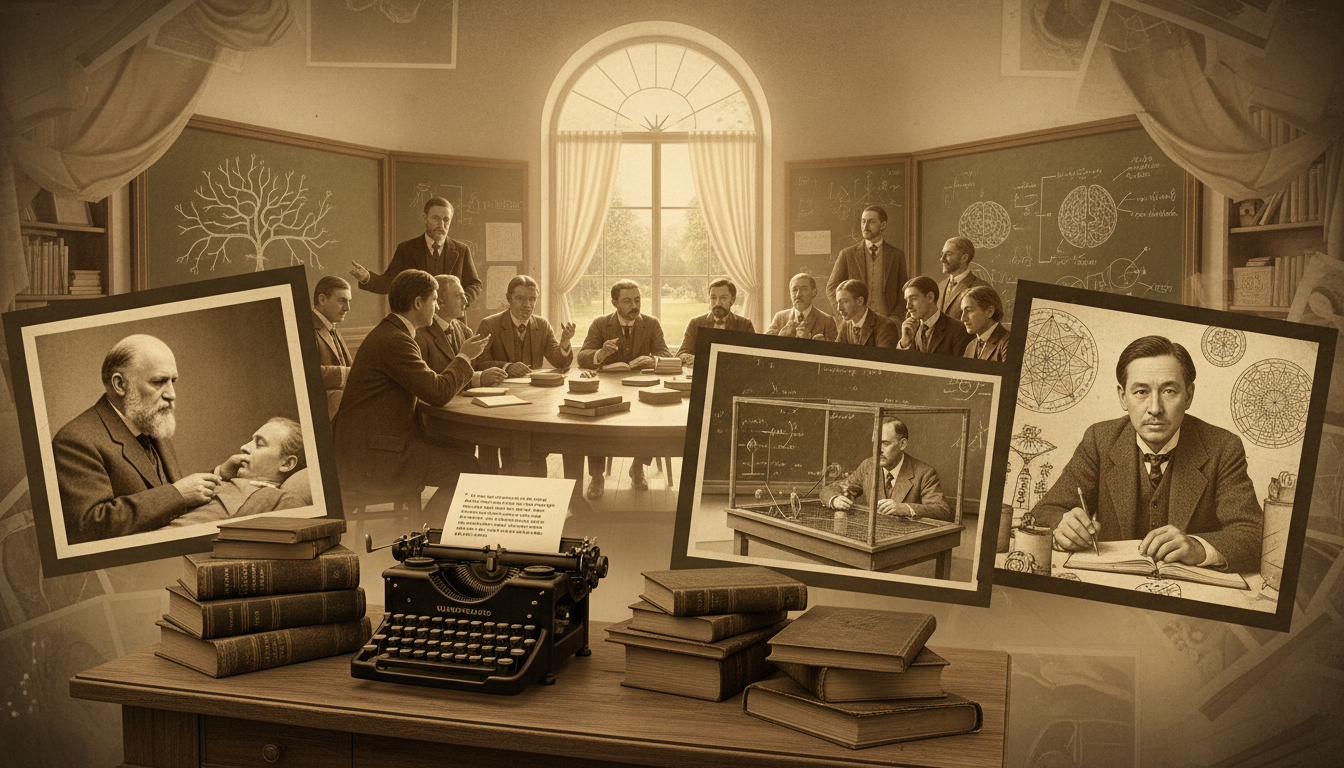
What are the most significant events that have shaped our understanding of the human mind? The history of psychology is a rich tapestry, woven from the contributions of numerous philosophers and psychologists over the centuries.
The establishment of the world’s first psychology laboratory by Wilhelm Wundt in 1879 marked a turning point. It signaled the beginning of psychology as a separate scientific discipline. This moment laid the groundwork for the field’s evolution, influencing generations of psychologists and researchers.
As we explore the pivotal moments that have defined psychology, we gain insight into the complex and dynamic nature of this field. From its philosophical roots to the latest empirical findings, the history of psychology is a story of continuous discovery and growth.
Key Takeaways
- The history of psychology is a rich and varied field that has evolved significantly over time.
- Wilhelm Wundt’s establishment of the first psychology laboratory in 1879 was a key moment in the field’s development.
- The field of psychology has been shaped by numerous philosophers and psychologists throughout history.
- Understanding the history of psychology provides valuable insights into the complex nature of the field.
- The evolution of psychology continues to influence contemporary research and practice.
The Beginnings of Psychological Thought
Psychological inquiry started in ancient times. Thinkers explored human behavior and mental processes back then. The Ebers Papyrus from 1550 B.C.E. shows our long interest in the mind and behavior.
Looking into psychology’s history, we see ancient philosophies were key. They set the stage for later theories and practices.
Ancient Philosophies Influencing Psychology
Ancient civilizations like Egypt, China, and Greece were big contributors. They explored the mind, behavior, and human nature. Their ideas formed the base of later psychological theories.
“The unexamined life is not worth living.”
Socrates’ famous words highlight the value of self-reflection. This idea is central to many psychological theories.
Greek Philosophers and Their Contributions
Greek philosophers like Plato and Aristotle were major figures. They questioned the nature-nurture debate and the mind’s role. Their ideas are key to psychology today.
Plato’s theories on reality and knowledge influenced perception and cognition. Aristotle focused on empirical research and behavior. His work laid groundwork for later psychology.
Their work is among the key developments in psychology. They challenged old beliefs and pushed for systematic study of human behavior and mental processes.
These early philosophical inquiries shaped psychology. They are among the significant achievements in psychology. They founded the diverse field of psychology we have today.
Foundations of Modern Psychology
Pioneers in psychology challenged old views on the mind and behavior. This era saw big steps in philosophy and science. These changes shape psychology today.
René Descartes and Dualism
René Descartes, a 17th-century thinker, brought up dualism. He said the mind and body are different things. This idea changed how we think about the mind and body working together.
Key aspects of Descartes’ dualism include:
- The mind as a non-material substance
- The body as a machine governed by physical laws
- The interaction between mind and body
The Impact of the Enlightenment
The Enlightenment brought big changes in science, including psychology. It focused on reason, observation, and the scientific method. This helped psychology grow as a science.
| Period | Key Figures | Contributions |
|---|---|---|
| 17th Century | René Descartes | Introduced dualism, stressing mind and body are separate |
| 18th Century (Enlightenment) | Various thinkers | Pushed for reason, observation, and scientific method |
Breakthroughs in psychology during this time were key. They made psychology a science. The focus on evidence and studying behavior set the stage for today’s psychology.
The Birth of Psychology as a Science
In 1879, Wilhelm Wundt opened the first psychology lab. This was a big step for psychology to become its own science. It moved away from philosophy and physiology. Wundt’s work was a key start for major contributions to psychology.
Wilhelm Wundt and the First Laboratory
Wilhelm Wundt started the first psychology lab in Leipzig, Germany. This was a pivotal moment for psychology. It changed psychology from a philosophical study to a science based on research.
Wundt’s lab was a place for new research methods. He used introspection to study the mind. This helped develop theories about the mind’s structure.
The Role of Structuralism
Structuralism, led by Wundt and Edward Titchener, was key in early psychology. It aimed to break down mental processes into basic parts. This was like analyzing chemical compounds.
The structuralist approach was important for applying science to the mind. It faced criticism, but it helped develop new theories and methods. It was a significant achievement in psychology, pushing the field towards more systematic research.
In conclusion, Wilhelm Wundt’s lab and structuralism were key to psychology becoming a science. These steps helped psychology grow into a field that understands human behavior and mental processes better.
Key Theories and Approaches in Psychology
Many important theories and approaches have shaped modern psychology. They have not only helped the field grow but also keep influencing today’s research and practice.
Behaviorism: Pavlov and Skinner
Behaviorism became a big part of psychology in the early 20th century. It focuses on what we can see, not what’s inside our minds. Ivan Pavlov and B.F. Skinner were key figures in this area.
Pavlov showed how dogs could learn to react to new things. Skinner then explained how behavior changes based on rewards or punishments.
Psychoanalysis: The Freudian Model
Sigmund Freud’s psychoanalysis changed how we see the mind. He said our unconscious mind drives us. His ideas on personality and development were groundbreaking.
Psychoanalysis looked at how early life shapes us. It used free association to uncover hidden thoughts and desires.
Humanistic Psychology and Maslow
Humanistic psychology, led by Abraham Maslow, countered the views of behaviorism and psychoanalysis. It focused on personal growth and the value of each person.
Maslow’s hierarchy of needs is a key idea. It says we have different needs that must be met in order to grow.
| Theory/Approach | Key Figures | Main Contributions |
|---|---|---|
| Behaviorism | Pavlov, Skinner | Classical and operant conditioning |
| Psychoanalysis | Freud | Theory of the unconscious, psychosexual stages |
| Humanistic Psychology | Maslow | Hierarchy of needs, self-actualization |
These theories and approaches have enriched psychology. They continue to shape today’s research and practice.
The Evolution of Psychological Testing
Psychological testing has grown a lot, helping us understand how we think and act. These tests are key in checking our intelligence and personality. They’ve become essential in many fields.
These tests have a long history, shaped by big discoveries in psychology. One early and key test is the Stanford-Binet Intelligence Test.
Stanford-Binet Intelligence Test
The Stanford-Binet Intelligence Test was made to measure kids’ intelligence. It looks at both verbal and non-verbal skills, giving an IQ score. It has changed a lot over the years, but is used a lot today.
This test is important because it gives a standard way to measure intelligence. It’s a big deal in education and psychology.
Projective Tests and Their Uses
Projective tests are another big part of psychological testing. Tests like the Rorschach test look at personality and emotions. They use unclear pictures and see how people react.
These tests work on the idea that people show their thoughts and feelings through their reactions. Even though some question their accuracy, they’re used in psychology to help people.
Projective tests show how varied and useful psychological testing can be. They help us understand ourselves and others better.
The Impact of World Wars on Psychology
The World Wars greatly changed psychology, marking a key moment in its history. The wars led to a huge need for psychological help, pushing the field forward.
Psychological Research During World War I
In World War I, psychology was used in many military ways. This included testing soldiers to see if they were fit for duty. These tests were a big step forward in psychology.
The war also led to studies on “war neuroses,” now known as PTSD. This research helped start understanding the effects of war on the mind. It also led to new ways to help veterans.
The Emergence of Clinical Psychology
After the wars, there was a big need for psychological help, mainly for veterans. This need helped make clinical psychology a real field. Clinical psychologists started to help with diagnosing and treating mental health issues.
This time also saw new tools and ways to help people. The work done then made clinical psychology a key part of healthcare. It set the stage for more progress in the field.
In summary, the World Wars had a huge effect on psychology. They led to big steps in research, testing, and helping people. The impact of this time is felt in psychology today, showing how important history is in the field.
The Rise of Cognitive Psychology
The cognitive revolution changed psychology’s focus to mental processes. It moved away from just looking at behaviors. Now, it explores how we think, see, remember, and make decisions.
This shift was influenced by key theories. One major theory is the Information Processing Theory.
Information Processing Theory
This theory says our minds work like computers. It talks about how we take in, process, store, and get back information. It shows how we handle information in stages, from first seeing it to remembering it.
Key parts of this theory are:
- Sensory memory: Where we first get information.
- Short-term memory: Where we hold information briefly.
- Long-term memory: Where we keep information forever.
| Stage | Description | Duration |
|---|---|---|
| Sensory Memory | Initial processing of sensory information | Less than 1 second |
| Short-term Memory | Temporary holding and processing of information | Up to 30 seconds |
| Long-term Memory | Permanent storage of information | Potentially lifelong |
The Role of Albert Bandura
Albert Bandura is a key figure in cognitive psychology. His Social Learning Theory showed how we learn by watching and imitating. His famous Bobo doll experiment proved this point.
Bandura’s work showed how important thinking and memory are in learning. He also introduced the idea of self-efficacy. This is our belief in our ability to do things.
The rise of cognitive psychology has changed how we see human behavior. It has opened new ways to study and help people in education and psychology.
Expanding Areas of Research
Recently, psychology has grown a lot, mainly in social psychology and neuroscience. These fields have made big strides, helping us understand people better. They show how we act and interact with others.
Social Psychology and Group Dynamics
Social psychology looks at how people are shaped by others. It studies group behaviors and social interactions. Important studies have shown how much influence others can have on us.
- The impact of social norms on individual behavior
- The role of group dynamics in shaping attitudes and actions
- The influence of social media on psychological well-being
These studies are key in psychology’s history. They’ve helped us understand social influences better.

Neuroscience’s Influence on Psychology
Neuroscience has changed psychology a lot. It gives us insights into why we behave the way we do. New tools let us see the brain’s inner workings, linking it to our thoughts and feelings.
Some important areas include:
- The role of neurotransmitters in mood regulation
- The impact of brain injuries on cognitive functions
- The neural basis of decision-making processes
These discoveries have led to new treatments for mental health issues. They’ve made a big impact on psychology.
The Integration of Psychology and Technology
Psychology and technology are coming together, changing mental health care. This mix makes care more available and better. It’s changing how we get and use mental health services.
The Rise of Digital Mental Health Tools
Digital tools for mental health are becoming key. They include apps, online sites, and wearables. These tools help track moods and offer therapy. They make it easier for people to get help.
A report says the digital mental health market will grow a lot. This is because more people want mental health services and know more about mental health. Technology is helping fill gaps in care.
“The future of mental health care is not just about treating illness, but about promoting wellness through innovative and accessible solutions.”
Online Therapy Platforms and Effectiveness
Online therapy sites are getting more popular. They offer many types of therapy, like one-on-one and group sessions. These sites let users find therapists easily and affordably.
Studies show online therapy works as well as in-person therapy for many. The key is the bond between the client and therapist, which can work through digital means.
Online therapy is great because it’s flexible. People can pick times that fit their lives. This is a big plus for those who are busy or live far away.
As we mix technology with psychology, we must think about its impact on mental health. Technology can help make care more accessible, improve results, and save money. It’s a big help in the field of psychology.
Milestones in Educational Psychology
Over the years, educational psychology has made many important discoveries. These findings have greatly changed how we teach and learn. They have helped us understand how students learn and have shaped educational policies.
Developmental Theories and Their Significance
Developmental theories have been key in educational psychology. Jean Piaget’s theory of cognitive development says children go through four stages of thinking. This theory shows how children build knowledge and has led to more active learning in schools.
Lev Vygotsky’s sociocultural theory also plays a big role. It shows that learning is better with others. Vygotsky’s idea of the Zone of Proximal Development means students learn best with help from others. This supports the idea of learning together.
The Influence of Learning Styles
The idea of learning styles has been a big area of study. It says people learn in different ways, like seeing, hearing, or doing. This has led to teaching methods that fit these styles. Even though some question its science, it has made teaching more varied.
- Visual learners do well with diagrams, charts, and videos.
- Auditory learners learn best from lectures, discussions, and audio.
- Kinesthetic learners need hands-on activities and practical exercises.
By knowing and using these ideas, teachers can make learning better for everyone. As educational psychology keeps growing, it’s key for improving how we teach and learn.
Landmark Cases in Psychological Ethics
Several landmark cases have shaped the study of psychological ethics. They continue to influence research today. These cases have deepened our understanding of human behavior and raised important ethical concerns.
The Stanford Prison Experiment
In 1971, Philip Zimbardo conducted the Stanford Prison Experiment. It explored how role-playing affects behavior. College students played the roles of prisoners and guards in a simulated prison.
The study was meant to last two weeks but ended in six days. The “guards” showed sadistic tendencies, and the “prisoners” faced psychological distress.
Milgram’s Obedience Studies
Stanley Milgram’s obedience studies in the 1960s also raised ethical concerns. These experiments tested how far people would go to obey an authority, even if it harmed others. Participants were told to give electric shocks to an actor for wrong answers, with the shock increasing each time.
Most participants were willing to give the highest shock, despite feeling uneasy. The Stanford Prison Experiment and Milgram’s studies led to big changes in research ethics. They showed the need for careful ethical guidelines in psychological research.
Cultural Psychology’s Rising Importance
Cultural psychology is now a key field, showing how culture and human behavior interact. It helps us understand psychological phenomena in different cultures better.
Adding cross-cultural views to research has been a big step in psychology’s history. It lets researchers see how culture shapes behavior and mental processes. They find both common and unique patterns across cultures.
Cross-Cultural Perspectives in Research
Research across cultures has broadened our view of human psychology. It shows the wide range of human experiences. Cultural differences impact how we see, think, and act socially.
For example, studies on collectivist and individualist cultures show big differences. These differences affect how we see ourselves and our relationships. They help us understand cooperation, conflict, and social influence better.
| Cultural Dimension | Description | Example |
|---|---|---|
| Collectivism | Prioritizes group harmony over individual goals | Many Asian cultures |
| Individualism | Emphasizes personal freedom and autonomy | Many Western cultures |
The Contribution of Asian Psychological Studies
Asian psychological studies have greatly contributed to cultural psychology. Researchers from China, Japan, and Korea have given us valuable insights. They’ve shown how culture affects our psychology.
For instance, studies on “wa” (harmony) in Japan have revealed how social harmony works. They’ve also shown its impact on individual behavior. Research on Confucianism in East Asia has explored its role in moral values and social norms.

These diverse views enrich our understanding of human psychology. They show how important culture is in shaping our behavior and mental processes.
Contemporary Issues and Future Directions
Today, psychology deals with many issues, like mental health and new research methods. It helps us face the challenges of modern life.
Mental Health Awareness Trends
Mental health awareness is a big trend now. It aims to reduce stigma and make mental health services more accessible. Initiatives promoting mental health awareness help people feel more comfortable seeking help.
There’s also a lot of talk about how social media affects our mental health. Research shows both good and bad sides of it. So, we’re working on ways to use social media healthily.
The Future of Psychological Research
The future of psychology research looks bright, thanks to new tech and methods. Technological innovations like AI and VR will change the field a lot.
Also, there’s a big push for more diverse and culturally sensitive research. Studies will focus more on cross-cultural perspectives. This will help us understand psychology better across different cultures.
As psychology grows, it’s ready to tackle big challenges. These include mental health issues and understanding human behavior in a fast-changing world.
Conclusion: Celebrating the Journey of Psychology
Looking back at psychology’s history helps us understand how it has grown. From old philosophies to new tech, psychology has changed a lot. This journey shows its big impact on our understanding of the mind.
Understanding the Significance
Knowing the key moments in psychology’s history is important. It shows the field’s depth and richness. By looking at major theories and findings, we see how far we’ve come and what’s left to do.
Exploring Further
If you want to learn more, there are many resources out there. Books and articles on psychology’s history and current issues offer great insights. These can help you see where psychology has been, is, and might go.
FAQ
What are the major milestones in the history of psychology?
How did ancient philosophies influence the development of psychology?
What is the significance of René Descartes’ concept of dualism in psychology?
How did the Enlightenment impact the development of psychological thought?
What is the role of structuralism in the early development of psychology?
What are the key theories and approaches in psychology?
How have psychological tests evolved over time?
What impact did the World Wars have on the development of psychology?
What is cognitive psychology, and how did it emerge?
How has technology integrated with psychology?
What are some significant milestones in educational psychology?
Why is cultural psychology important?
What are some contemporary issues in psychology?
What are the future directions for psychological research?
What is the significance of understanding the history of psychology?
About the Author