What makes some workplaces great places to work while others lose talent fast? It’s not just about money or fun perks. It’s about the workplace inclusion that shapes every day.
Workplace culture is more than just a mission statement. It’s the real experience of every employee, filled with moments of feeling included or left out. Today’s workplaces need to be designed with care. They must focus on safety, use inclusive language, and have allies who support fairness at all levels.
Studies show that companies with strong diversity and inclusion do better in many areas. They innovate more, make better decisions, and keep their best people. The numbers are clear: having allies at work makes employees happier and safer.
This guide offers clear steps for changing a company’s culture. We look at how allyship in the workplace helps bring out the best in everyone. It makes places where different ideas lead to success and respect.
Key Takeaways
- Organizational culture directly impacts employee satisfaction, retention, and innovation capacity through daily workplace experiences
- Companies implementing comprehensive DEIB practices significantly outperform competitors across multiple business metrics
- Employees with workplace allies are twice as likely to report job satisfaction and feelings of safety
- Psychological safety, inclusive language, and trained allies form the foundational pillars of effective workplace inclusion
- Cultural transformation requires systematic frameworks, leadership accountability, and continuous refinement based on employee data
- Authentic inclusion practices create measurable business advantages beyond performative diversity initiatives
Why Workplace Culture Transformation Starts with Intentional Leadership
Intentional leadership is key to real cultural change. It sets apart organizations that truly change from those that just go through the motions. Leaders must make inclusive leadership a top priority, just like they do with money and efficiency.
Real cultural change can’t just happen on its own. While employee efforts are valuable, leaders must show they are committed. Without leaders’ support, even the best efforts can fade away.
Leadership is all about being seen and heard. When leaders talk about inclusion everywhere, it shows they really mean it. Good leaders keep working on being allies, always getting better at it.

People can tell when leaders are truly committed. Organizational trust grows when leaders act as they speak. If leaders only talk about inclusion during special months, people start to doubt them.
True inclusive leadership development means taking action. Leaders who really care set aside money for training and make sure everyone is included. These actions speak louder than words.
Good team building strategies make everyone feel safe. Leaders who are open about their mistakes show they are serious about improving. This honesty helps everyone feel they can grow too.
“Leadership is not about being in charge. It is about taking care of those in your charge.”
Real leaders act in certain ways. Knowing these differences helps organizations improve their own leadership.
| Authentic Leadership Actions | Performative Leadership Gestures | Employee Impact |
|---|---|---|
| Integrating inclusion into quarterly business reviews and strategic decisions | Limiting diversity discussions to designated heritage months only | High trust and engagement versus skepticism and disengagement |
| Allocating dedicated budget and personnel resources for cultural initiatives | Expecting cultural change without resource investment or time allocation | Measurable progress versus stagnation and frustration |
| Acknowledging mistakes and modeling vulnerability in learning journey | Presenting perfect image without admitting growth areas | Psychological safety versus fear of failure |
| Applying accountability measures equally across all organizational levels | Enforcing standards for lower levels while exempting senior leadership | Perceived fairness versus resentment and cynicism |
Intentional leaders see cultural change as ongoing. They know that the world and what people expect changes all the time. This way, they avoid thinking they’ve fixed everything after one training session.
True leaders face their past mistakes head-on. They know how to balance owning up to past errors while moving forward. This is hard for many organizations to do.
Accountability is key at all levels to keep trust. If leaders don’t follow the rules they set for others, trust drops fast. But when leaders join in on inclusive leadership training, it shows everyone that growth is valued.
Good leadership leads to happier, more diverse teams. These teams are more creative and loyal. Studies show that diverse teams are more profitable too.
Linking team building strategies with cultural efforts is key. Leaders must make sure inclusion is part of everyday work, not just special programs. This is how real change happens.
Inclusive leadership development works when it teaches both mindset and skills. Leaders need to understand their biases and know how to talk about tough topics. Without these tools, good intentions don’t lead to action.
The true test of leadership is in how employees feel every day. When people feel valued and heard, leaders have done their job well.
Assess Your Current Team Culture and Identify Gaps
Starting meaningful workplace inclusion begins with a true look at your current culture. You can’t fix what you don’t know. So, it’s key to assess your culture first. Without knowing where you stand, it’s hard to see if changes are real or just surface-level.
Looking at your culture means checking many areas. This includes how safe team members feel, if they face microaggressions, and if everyone has a chance to grow. Research shows that training can really help, making 93% of employees feel supported.
Using both numbers and stories helps paint a full picture of your culture. Numbers show trends, while stories give a real look at what’s happening. Together, they help you know where to focus your efforts.
Conduct Anonymous Culture Audits and Surveys
Anonymous audits are key for getting honest feedback. They let employees speak freely without fear. This is important for revealing true workplace conditions.
Surveys need to be carefully made to keep answers safe. They should ask questions that show trends without revealing who said what. This way, you can spot problems without putting anyone at risk.
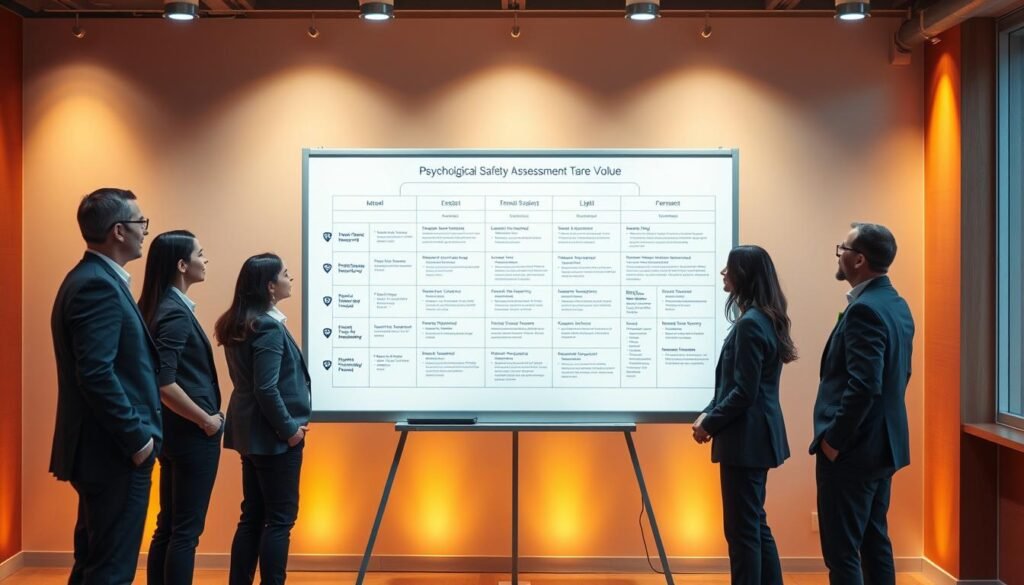
Culture audits should look at several important areas. These include how safe team members feel, if they’re included, and if everyone has a fair shot at growing.
- Psychological safety perceptions: Check if team members feel safe to speak up and share ideas.
- Inclusion experiences: See if everyone feels valued and heard, no matter who they are.
- Advancement equity: Find out if everyone has the same chances to grow and get noticed.
- Leadership accountability: See if leaders are doing what they say they will about fairness and inclusion.
- Interpersonal respect: Look at how team members treat each other and if respect is shown across differences.
How you do surveys can affect how many people answer and how good the answers are. It’s important to be clear about keeping answers private and to show that you’ll act on what you learn. Sometimes, having someone else run the survey can help people feel more comfortable sharing their thoughts.
Recognize Warning Signs of Exclusion and Microaggressions
Microaggressions are small, everyday things that can make people feel unwelcome. They can be hard to notice but can really hurt how team members feel. Training leaders to spot these can help stop problems before they get worse.
Signs of trouble can be seen in how people talk and make decisions. At first, it might seem like small things, but if it keeps happening, it’s a big problem. Paying attention to who is being left out is key.
Some signs that things might not be right include:
- Differential interruption patterns: Some people get interrupted a lot, while others can talk without being stopped.
- Idea attribution disparities: Ideas from certain people are often ignored until someone else says them.
- Informal network exclusion: Some groups are left out of social events and chances to learn from others.
- Stereotypical assumptions: People are judged based on what they look like, not what they can do.
- Linguistic microaggressions: Small comments that make someone feel like they don’t belong.
- Differential feedback quality: Feedback is not always fair or helpful, depending on who you are.
- Tokenization practices: People from underrepresented groups are always asked to speak for their whole group.
It’s important to have a system to track these issues without making one person do all the work. Everyone should help spot problems. This way, no one gets overwhelmed.
Understanding the context is important. One-off mistakes might not be a big deal, but if it keeps happening, it’s a sign of a bigger problem. Looking at who is doing the problem and the whole organization helps find the root of the issue.
Map Your Cultural Starting Point with Honest Data
Creating a cultural map involves using surveys, focus groups, and interviews. This way, you get a full picture of your workplace. Being honest about what you find is the first step to making things better.
Looking at who gets what opportunities can show if things are fair. This includes who gets promoted, paid, and recognized. By looking at these things, you can see if there are any big gaps.
Having a baseline helps you see how far you’ve come. It shows where you need to focus and if your efforts are working. Without a starting point, it’s hard to know if you’re really making progress.
Looking at both the official rules and the unwritten ones is important. This includes policies and how people really interact. Both are important for understanding your workplace culture.
| Assessment Dimension | Quantitative Metrics | Qualitative Indicators | Analysis Focus |
|---|---|---|---|
| Representation Equity | Demographic composition at all levels, hiring and promotion rates by group | Employee perceptions of advancement barriers, narrative accounts of career progression experiences | Identify pipeline gaps and advancement obstacles for specific groups |
| Inclusion Experience | Survey scores on belonging, psychological safety ratings, participation metrics | Focus group themes about feeling valued, interview narratives about exclusion experiences | Understand daily experience quality and identify exclusion patterns |
| Cultural Competence | Training completion rates, incident report frequencies, response time to concerns | Employee confidence in leadership commitment, satisfaction with conflict resolution processes | Assess organizational capability to address diversity and inclusion training needs |
| System Fairness | Compensation analysis by demographics, performance rating distributions, resource allocation patterns | Perceived fairness of evaluation processes, transparency concerns, trust in decision-making | Detect systemic biases embedded in organizational processes and decision criteria |
Being open about what you find helps build trust. It shows that you’re serious about making things better. This openness also keeps everyone on track and accountable.
It’s important to highlight both the good and the areas that need work. This way, you can build on what’s already working and improve where needed. This approach keeps everyone motivated and focused on making things better.
Establish Psychological Safety as Your Cultural Foundation
Psychological safety is key to improving workplace culture. It lets employees contribute openly, not just to please. Without it, they hide problems instead of solving them.
Studies show that teams that feel safe and included perform better. Companies that focus on diversity and inclusion do well. Employees in safe environments stay longer, mentor more, and recommend their workplaces.
Psychological safety is more than just being friendly. It’s about feeling safe to share ideas and admit mistakes. This lets teams focus on solving problems, not just protecting themselves.
Define Team Psychological Safety Standards
To make psychological safety real, set clear rules for teams. These rules should guide how teams work every day. They help in both normal and tough situations.
Good psychological safety standards cover many areas. They tell teams how to disagree well, learn from mistakes, and be open about vulnerabilities. This makes teams stronger and more honest.
Here are some key standards to consider:
- Constructive disagreement protocols: Team members should challenge ideas respectfully while supporting the person presenting them.
- Learning-oriented mistake responses: Leaders and peers should look at mistakes to improve, not blame.
- Question-welcoming norms: Questions should be seen as valuable, not signs of lack of knowledge.
- Idea-generation openness: Teams should seek diverse opinions during planning, not just from leaders.
- Vulnerability reciprocity: Leaders should show vulnerability, encouraging others to do the same.
These standards work best when they’re part of how teams are judged and led. Team belonging grows when everyone sees these standards followed everywhere.

Create Confidentiality Boundaries That Protect Everyone
Psychological safety needs clear rules about sharing information. This protects privacy while helping the team learn. It’s about keeping personal issues private while sharing important information.
Start by telling everyone what stays private and what can be shared. Make sure people know how reports of problems are handled. This builds trust and helps solve big issues.
Here’s how to set up these rules:
- Information classification frameworks: Sort information into types like personal concerns, general data, and urgent issues.
- Consent-based disclosure practices: Always ask before sharing personal details, explaining the risks of sharing or not.
- Aggregation and anonymization procedures: Use special methods to keep identities safe while finding patterns in reports.
- Mandatory reporting clarity: Tell everyone when you must report serious issues, like threats or ongoing problems.
- Information security standards: Keep sensitive reports safe by limiting who can see them.
These confidentiality boundaries protect brave employees and help the team grow. When people trust you with their concerns, more problems get reported, and leaders can act sooner.
Psychological safety is not about being nice. It’s about giving honest feedback, admitting mistakes, and learning together.
Build Trust Through Consistent Leadership Actions
Trust comes from actions, not words. Team trust building means leaders act on their values, even when it’s hard. This builds a strong team culture.
Research shows trust is built by how leaders handle tough situations. They should admit mistakes, solve conflicts, and share credit fairly. Being consistent is key.
Here’s how leaders can build trust:
- Acknowledging knowledge limitations: Leaders should say when they don’t know something, avoiding false promises.
- Following through on commitments: Keep promises, even when it’s hard or changes.
- Accepting accountability for harm: Take blame when mistakes happen, not just blame others.
- Responding consistently across hierarchy: Treat everyone the same, no matter their job or status.
- Soliciting and implementing feedback: Ask for feedback and change based on what you hear.
Team trust building gets better with regular feedback. This lets teams share concerns openly, without fear. Use surveys, conversations, or neutral third parties for this.
Consistent actions from leaders create a culture where teams thrive. They share ideas, work together, and feel valued. This makes all future efforts to improve the workplace more effective.
Implement Inclusive Language Practices Across All Communications
Inclusive language changes how we talk at work. It replaces old ways of speaking with new ones that respect everyone’s identity. This change is more than just being polite; it’s about showing respect through our words.
Language is both a symbol and a tool. It can either support or challenge power structures. The words we choose decide who is heard and who is ignored in our conversations.
Inclusive language means using the right words for everyone. This includes using the right pronouns, avoiding stereotypes, and choosing terms that people prefer. Using person-first language when talking about disabilities is a good example.
On the other hand, exclusionary language ignores the experiences of others. It assumes everyone will agree with the speaker’s words. This makes the views of others invisible.
Identify and Eliminate Microaggressions in Daily Interactions
Teaching people to spot microaggressions is key to a welcoming workplace. These small, often unintentional, words can make a big difference. They can make people feel unsafe and less engaged.
There are many types of microaggressions. For example, assuming someone is not good at their job because of who they are. Or being surprised when someone from a minority group does well.
Other harmful patterns include asking someone to speak for their whole group. Or giving compliments that imply you didn’t expect much from them. These actions show that you don’t see them as equal.
To fix these issues, we need to be aware of our biases. We should have ways for people to report when they feel excluded. This way, we can make sure everyone feels valued and heard.
When microaggressions happen, we need to act fast. We should have clear rules for how to handle these situations. This way, we can stop harmful behaviors before they become a norm.
- Assumptions questioning professional qualifications based on demographic characteristics
- Surprise expressions about accomplishments by underrepresented individuals
- Requests to represent entire identity groups in discussions or decisions
- Compliments embedding stereotypes or lowered expectations
- Denial of discrimination experiences shared by colleagues
Develop Manager Scripts for Addressing Language Issues
Managers need clear manager scripts to handle language problems. These scripts should be easy to use and not disrupt meetings. They help keep conversations on track and respectful.
Scripts should suggest better words to use. Saying “Let’s use X term instead of Y” is helpful. It keeps the conversation moving and sets a standard for language.
It’s also good to ask people to think about their words. Saying “I’m wondering how that phrasing might be received by…” encourages understanding. It shows that we care about how our words affect others.
Scripts that acknowledge good intentions while addressing the impact are very effective. Saying “I know you didn’t mean harm, and that phrase can cause discomfort because…” is helpful. It shows we value both the speaker’s feelings and the impact of their words.
| Situation | Manager Script | Purpose |
|---|---|---|
| Outdated terminology used | “The current term we use is [preferred term] instead of [outdated term]” | Direct education with clear alternative |
| Stereotypical assumption made | “That assumption doesn’t reflect everyone’s experience. Let’s avoid generalizations” | Challenge bias without personal attack |
| Pronoun misuse occurs | “Just a reminder that [name] uses [correct pronouns]” | Gentle correction maintaining respect |
| Microaggression observed | “I want to pause and reflect on how that comment might impact our colleagues” | Create awareness moment for learning |
Managers should practice using these scripts. Role-playing helps them feel more comfortable. They need to be able to use these scripts naturally.
Organizations should update manager scripts often. Language and what is considered respectful can change. Training materials should always reflect the latest best practices.
Create Organization-Wide Respectful Communication Practices
Creating respectful communication practices is more than just teaching people to be nice. It involves changing how we communicate in many ways. This includes onboarding, emails, meetings, and public messages.
These practices should be the same for everyone, no matter their role. Leaders need to show they care about inclusive language. When they do, everyone knows what is expected.
New employees learn about communication standards right away. They get clear guidelines on how to talk and what is valued. This helps prevent problems from starting.
Using inclusive language in emails and meeting agendas is important. It shows everyone’s voice is heard. Using gender-neutral language in documents helps avoid assumptions.
Checking how we talk to the outside world is also key. Marketing and job postings should reflect our values. This shows we are serious about being inclusive, not just pretending to be.
We need to make sure everyone follows these rules. Leaders should be held accountable for language issues just like everyone else. This shows we are serious about being fair and respectful.
We should always check if our communication practices are working. Listening to feedback helps us improve. This way, we can make sure our language is always respectful and inclusive.
Training people to be allies is important. It helps them use language that respects everyone’s identity. Using the right pronouns and avoiding harmful words is part of being an ally.
By creating these practices, we can build a better workplace. Respectful communication becomes a part of our daily work. It helps us connect with each other, even though we are different.
Building a Safe, Respectful Team Culture with Trained Allies
Creating inclusive spaces relies on having trained allies. These individuals use their power to help those who face barriers. They fight against unfair systems, even if it doesn’t affect them.
Being an ally is not just a title. It’s about taking action every day. Effective ally development turns good intentions into real change. This change is felt by those who need it most.
Studies show allies make workplaces better. They make employees happier and healthier. Allies help women and LGBTQ+ people feel safer at work.
Having allies improves wellbeing. Even one ally can change how someone feels at work. This is true for those facing tough or unfair environments.
Define What Effective Allyship Looks Like in Your Organization
Allyship means different things in different places. It depends on the workplace and its challenges. Each place needs its own way of doing allyship.
Organizations should say what they expect from allies. Diversity allies should act in ways that really help. They should address real problems in their workplace.
Here are some key ally behaviors:
- Amplifying marginalized colleagues’ contributions during meetings without taking credit
- Sponsoring underrepresented employees for high-visibility assignments and leadership opportunities
- Intervening immediately when exclusionary language or microaggressions occur
- Dedicating personal time to self-education about marginalization systems
- Accepting feedback from marginalized colleagues about ally effectiveness
Allyship is about listening and learning. Allies should amplify voices, not replace them. They come from outside the groups they support.
Having clear standards helps prevent allyship from being just a show. When organizations say what allyship means, everyone knows how to act.
Identify and Recruit Diversity Champions and Allies
Finding the right allies is key. Look for those who act on their beliefs and are respected by all. Diversity champions set the example for everyone.
Choose allies based on what they do, not who they are. Good champions have influence and listen to feedback. They are reliable and willing to learn.
Look for these traits in allies:
- History of speaking up against exclusionary practices even when personally uncomfortable
- Relationships built across demographic boundaries within the organization
- Reputation for reliability and follow-through on commitments
- Willingness to acknowledge mistakes and adjust behavior based on feedback
- Influence within their department or functional area
Don’t assume marginalized people should always be allies. This is unfair and lets others off the hook. Everyone should work on diversity, not just those who face bias.
True allies know diversity work is for everyone, including those with power.
When recruiting allies, make sure they understand what’s expected. Look for those who are genuinely interested, not just going through the motions. People motivated by real values stay committed, even when it’s hard.
Establish Clear Ally Responsibilities and Boundaries
It’s important to know what allies should do and what they shouldn’t. Allyship programs need to set clear rules. This helps allies do their job without overstepping.
Good allies educate themselves, listen, and use their power to help. They also take responsibility when they make mistakes. This takes a lot of effort and dedication.
But, there are things allies should not do:
- Centering their own experiences and feelings during discussions about marginalization
- Expecting gratitude or recognition for basic decency and equity support
- Speaking over marginalized voices or explaining their experiences to them
- Treating allyship as an identity label instead of a continuous practice
- Withdrawing support when feedback feels uncomfortable or challenging
Training should teach about these mistakes. It’s important for allies to know when they’re going wrong. This helps them improve and avoid dominating conversations.
Setting boundaries also helps allies avoid burnout. It shows that allyship is part of a bigger plan for inclusion. Organizations are responsible for creating a welcoming culture, with allies helping along the way.
Connect Allyship Development to Business Outcomes
Linking allyship to business goals helps get resources for programs. Showing how allies help the company makes sense. This includes better innovation, keeping employees, and pleasing clients.
Studies show inclusive workplaces do better. They have happier employees, keep people longer, and solve problems better. This is because they value diversity and inclusion.
The following table shows how allyship helps businesses:
| Business Metric | Impact of Allyship Programs | Measurement Approach |
|---|---|---|
| Employee Retention | 15-25% reduction in turnover among underrepresented groups | Track retention rates by demographic segments before and after program implementation |
| Innovation Output | 30% increase in new ideas generated through diverse team collaboration | Monitor patent applications, process improvements, and product innovations |
| Employee Engagement | 20-35% improvement in engagement survey scores related to inclusion | Analyze pulse survey results focusing on psychological safety and belonging metrics |
| Client Satisfaction | 18% increase in satisfaction among diverse client populations | Review client feedback and retention data segmented by client demographics |
| Recruitment Efficiency | 40% faster time-to-fill for positions requiring diverse candidate pools | Compare hiring timeline metrics and candidate quality assessments |
Executives are more likely to support equity when it’s linked to goals. Ally development becomes a competitive advantage when framed this way.
Start by measuring things before starting allyship programs. Then, check progress regularly. This shows that the effort is worth it and helps make things better.
When planning, include both the costs of allyship training and the benefits. The benefits usually show up in 12-18 months. This is when the culture changes and operations improve.
Design Comprehensive Ally Development and Diversity Training Programs
Effective diversity training programs know that knowledge gaps, not lack of goodwill, stop people from being good allies at work. Studies show that skills and knowledge gaps are the main challenge to being an ally, even for those who want to be inclusive. This is why only 56% of employees say they have allies at work.
When companies have formal allyship training, the number of employees who see allies jumps to 93%. This shows that teaching skills can really make a difference. It helps build supportive networks in the workplace.
The Anatomy of an Ally framework is a key part of training. It has six parts that help people go from just knowing to actually helping. These parts include taking action, listening, recognizing privilege, speaking out, spotting bias, and being empathetic.
Structure Your Allyship Training Modules for Maximum Impact
How you design training is key to changing behavior, not just raising awareness. Research says shorter training sessions are better than long ones. This way, people can learn and practice without feeling overwhelmed.
Good diversity training has three main parts. It teaches about discrimination, gives practice, and motivates people to keep practicing. This mix helps people understand and apply what they learn.
It’s important to check if people can actually do what they’ve learned. Just asking if they’re happy with the training isn’t enough. Better ways include watching how they act, asking them to solve problems, and checking in later.
Spacing out training helps people remember what they’ve learned. After getting new information, people can try it out and then learn more. This way, they really understand and can apply what they’ve learned.
Teach Bystander Intervention Techniques Step by Step
Bystander intervention teaches people how to act without making things worse. The “Four Ds” method is a good way to learn this. It helps people choose the right action for the situation.
Direct intervention is when you directly address the problem. This works best when you have power or a good relationship with the people involved. You might say something like, “That comment is harmful.”
Distraction techniques are about changing the subject without being confrontational. This can be useful when you don’t have power or when you’re not sure how serious the situation is. It helps without making things worse.
Delegation strategies involve getting someone else to handle the situation. This shows smart thinking, not lack of courage. You might ask a manager or HR to help.
Delayed response is when you talk about the issue later, privately. This is useful when you can’t act right away. It’s a way to support people without making things worse.
Teaching bystander intervention needs clear steps and examples. People need to learn how to choose the right action based on the situation. This helps them feel confident and prepared to act.
Incorporate Cultural Competence Training into Onboarding
Starting new employees with cultural competence training is key. It makes sure they understand the importance of being inclusive from the start. This way, everyone knows that being inclusive is a core value.
Cultural competence has three parts: knowledge, awareness, and skills. It helps people understand different cultures and how to communicate and work with them. This is important for working well together.
Onboarding should include cultural competence training. This way, everyone learns the same things and can talk about them. It helps avoid confusion and makes sure everyone is on the same page.
Make cultural competence part of everything, not just a separate module. This way, everyone sees how important it is. It helps create a workplace where everyone feels included.
Practice Bias Intervention Scenarios Through Role-Play
Role-play exercises help people practice what they’ve learned. They make it safe to try out new skills in a real way. This builds confidence and prepares people for real situations.
Use real-life scenarios in role-play. This makes it more meaningful and relevant. It helps people see how they can apply what they’ve learned in their own workplace.
Get feedback on role-play exercises to make them even more helpful. This can be from watching how people act or from talking about their decisions. It helps people learn and grow.
Make sure everyone gets to see things from different perspectives. This includes being a bystander, a target, or even someone who is causing problems. It helps people understand different viewpoints and how to act in different situations.
| Training Component | Primary Learning Objective | Delivery Method | Assessment Approach |
|---|---|---|---|
| Anatomy of Ally Framework | Understand six core allyship competencies | Interactive workshop with discussion | Competency self-assessment and action planning |
| Four Ds Intervention Model | Master situation-appropriate response strategies | Video examples and guided practice | Scenario application and strategy selection |
| Cultural Competence Foundations | Develop cross-cultural awareness and skills | Onboarding module with reflection exercises | Knowledge check and personal insight documentation |
| Bias Intervention Role-Play | Build confidence through experiential practice | Small group scenarios with peer feedback | Behavioral demonstration and facilitator observation |
Start with simple skills and then add more complexity. This helps people learn and grow. It makes sure they’re ready for real situations.
See training as a journey, not a one-time event. Start with the basics, but keep learning and practicing. This helps create a workplace where everyone feels included and valued.
Launch Employee Resource Groups and Peer Mentoring Networks
Creating a welcoming workplace needs formal groups and mentorship programs. These help support diverse communities. They turn diversity plans into real actions that help everyone feel included.
ERGs and peer mentoring help with both immediate needs and long-term growth. They work together to support everyone.
Professional mentorship networks and ERGs help overcome barriers. They make workplaces better for everyone. This leads to happier and more successful employees.
Establish ERGs That Drive Workplace Inclusion Initiatives
ERGs are groups led by employees with shared experiences. They help make workplaces more inclusive. Effective ERGs can propose policy changes and get resources.
One company made ERGs for employees of color, transgender staff, and LGBTQ+ parents. This made their workplace safer and more welcoming. The company gave each group leaders who helped make changes happen.
Good ERGs have a few key things:
- Executive sponsorship: Leaders who support ERG ideas and get resources
- Decision-making pathways: Ways to suggest and track policy changes
- Budget authority: Money for events and learning
- Impact metrics: Ways to measure success
- Cross-functional representation: Members from different areas for a full view
Allies help ERGs by attending meetings and helping with budgets. They should listen and support, not take over. This way, allies help without stepping on ERG members’ toes.
Build Professional Mentorship Networks for Underrepresented Groups
Mentorship networks help underrepresented employees grow. They offer guidance and connections that help overcome barriers. Peer mentoring focuses on support among peers.
Another company paired LGBTQ+ employees with allies. This improved job satisfaction and career growth. The program had regular meetings and reviews to track progress.
Mentorship and sponsorship are different but important:
| Aspect | Mentorship Function | Sponsorship Function |
|---|---|---|
| Primary Role | Provides advice and emotional support | Advocates for opportunities and projects |
| Relationship Dynamic | Confidential dialogue for development | Public endorsement for opportunities |
| Career Impact | Improves skills and confidence | Directly affects career advancement |
| Risk Level | Low-risk for mentor | Higher-risk for sponsor |
Good mentorship programs teach mentors to advocate when needed. This helps mentees grow in their careers. Peer mentoring helps understand workplace culture.
Organizations need clear mentorship structures. This includes how to match mentors and mentees, meeting frequency, and success measures. Regular checks help improve the program.
Connect Diversity Allies with Employee Advocacy Programs
Working together, ERGs and ally networks make a big difference. Allies help ERGs reach more people. This makes sure everyone’s voice is heard.
Ally networks help people outside certain groups contribute to inclusion. They work with ERGs to make workplaces better. Workplace inclusion strategies get stronger when everyone works together.
Organizations need to set boundaries for ally-ERG relationships. This keeps everyone working well together:
- Designated liaison roles: Allies act as main contacts for ERGs
- Quarterly joint planning sessions: ERGs share plans, allies offer support
- Skill-sharing initiatives: Allies help with ERG projects, learn from members
- Amplification protocols: Allies share ERG messages without taking over
- Feedback mechanisms: ERGs check if allies are really helping
Together, peer mentoring, ERGs, and ally networks make workplaces inclusive. Ally networks show they care by being involved all the time. This makes everyone feel included.
Employee advocacy programs get better with ally help. Allies use their power to make sure ERG ideas are heard. This makes inclusion a key part of the business.
ERGs and ally networks working together makes everyone accountable.
Keeping this collaboration going needs regular checks. Organizations set clear rules for when ally help is good or bad. This keeps ERGs in charge while allies help.
Implement Anti-Bullying and Anti-Harassment Policies
Stopping harassment needs more than good intentions. It requires clear policies that set rules, consequences, and protections. Without these policies, bad behavior can keep happening. Having strong anti-bullying policies shows a company’s commitment to a safe workplace.
Good policies do many things. They clearly state what behaviors are not allowed. They also set up ways to report problems early. And they have consequences for those who break the rules.
Without clear policies, companies seem to tolerate bad behavior. This can lead to legal trouble and harm to employees. Training on being an ally helps, but it needs policy support to work well.
Craft Clear Anti-Discrimination Policies with Specific Examples
Just saying “don’t do this” isn’t enough. Good policies give specific examples of what’s not allowed. This helps employees know what to do in different situations.
Companies need policies that give clear examples. This way, they avoid vague messages. Good policies cover both obvious and subtle forms of discrimination.
A strong anti-bullying policy covers all kinds of harassment. This includes things like race, gender, and sexual orientation. It also covers harassment in words, actions, pictures, and online.
Examples make policies clear. Here are some things that are not allowed:
- Unwanted sexual advances or requests for sexual favors in exchange for professional opportunities
- Derogatory comments, jokes, or slurs about identity characteristics or cultural backgrounds
- Differential treatment in assignments, evaluations, or promotion decisions based on protected characteristics
- Deliberate exclusion from professional opportunities, meetings, or informal networking events
- Intimidation tactics including threats, aggressive confrontations, or sabotage of work products
- Retaliation against individuals who report concerns or support others’ complaints
- Display of offensive imagery, symbols, or materials in physical or digital workspaces
- Persistent unwanted attention or communication despite clear requests to stop
Policy documents should give examples for different situations. This makes the rules clear and easy to follow.
Communicate Zero-Tolerance Standards Organization-Wide
For policies to work, everyone needs to know what’s expected. Zero-tolerance rules must be clear to everyone. This shows the company is serious about keeping workplaces safe.
There are many ways to share these rules. New employees learn them during onboarding. Annual training keeps everyone up to date. Leaders show their support by talking about these rules too.
Make sure everyone knows the rules, from top leaders to new hires. This way, no one thinks they’re above the rules. Everyone must follow the same standards.
Use different ways to share the rules. This helps everyone learn in their own way. Make sure materials are in many languages for a diverse workforce.
Establish Confidential Reporting Mechanisms and Protections
How you report problems affects whether people will speak up. Make sure reporting is safe and private. This way, people feel comfortable sharing their concerns.
Zero-tolerance means having safe ways to report problems. Offer many ways to report, like hotlines or online forms. Make sure these ways are private and safe.
Make sure people know how you handle their reports. Be clear about what stays private and when you might need to share information. Being open builds trust in the reporting system.
Protect people who report problems. Make it clear that punishing them is not allowed. This includes both direct and subtle ways of retaliation.
When someone reports a problem, handle it carefully. Keep them safe and involved in the process. Be open about how long it will take and what will happen next.
Define Consequences and Team Accountability Measures
Consistent rules are key to a fair workplace. Make sure everyone knows the consequences for breaking the rules. This shows that everyone is treated the same.
Have clear rules for different levels of problems. For small mistakes, offer training. For bigger issues, like repeated bad behavior, take stronger action.
For serious problems, like sexual harassment, act fast. Terminate the person involved to show that safety is the top priority. This shows that no one is more important than keeping the workplace safe.
Have a plan for dealing with problems. Here are some steps:
- Initial coaching: Teach people about unintentional mistakes through education
- Formal warning: Tell people about repeated small problems or one big problem with clear steps to improve
- Performance improvement plan: Set specific goals for behavior change with a timeline
- Suspension: Take someone out of work temporarily while you investigate or as a punishment
- Termination: Fire someone for serious problems or not meeting improvement goals
Make sure leaders are held accountable too. If a manager doesn’t fix problems, they can face the same consequences as the person causing the problem. This shows that everyone is responsible for a safe workplace.
Keep records of problems and how you solved them. This helps you see patterns and make sure everyone is treated fairly. It also helps protect the company legally.
Check your policies regularly to make sure they’re working. Update them as needed. This shows that you’re serious about keeping your workplace safe and respectful.
Master Conflict De-Escalation and Resolution Strategies
Organizations stand out by handling conflicts well, not by avoiding them. Disagreements show that people are engaged and have different views. The key is to solve these issues in a way that keeps relationships strong and addresses the real problems.
When conflicts touch on identity, power, or feeling left out, it’s even more important to get it right. Simple fixes can sometimes make things worse. Teaching leaders how to handle these situations helps prevent bigger problems and keeps good people from leaving.
Training on allyship helps employees deal with bias right away. This means stopping hurtful comments, making sure everyone gets a say, and supporting those who are struggling. Leaders play a big role by showing these behaviors and fixing any problems they see.
Train Leaders in Conflict Resolution Techniques
Leadership training should teach more than just how to talk. It should cover the deep issues in workplace disagreements. This training helps leaders understand and manage the emotions and thoughts behind these conflicts.
Active listening is key. Leaders learn to hear out all sides without judging too quickly. This makes it safe for everyone to speak their mind.
Using reframing helps leaders find out what’s really important. For example, when arguing about who gets what, they dig deeper to find out about fairness, recognition, or growth. Finding out these deeper needs often solves the surface-level problems.
Training should also teach about common biases that can mess up how we see conflicts:
- Similarity bias: Leaders tend to favor those who are like them
- Attribution errors: They often blame personality over situation
- Conflict avoidance: They might not tackle problems head-on
- Confirmation bias: They look for evidence that supports their first thoughts
Restorative practices focus on fixing relationships and healing harm. This is great for preventing bias and keeping teams accountable. It helps fix the damage done by exclusion and offers a chance for real change.
Provide Manager Scripts for Immediate Intervention
Managers need simple, clear ways to step in and steer conversations in the right direction. Good scripts help redirect without accusing, and focus on actions, not character.
Studies show that framing matters a lot. Instead of saying “You’re being rude,” say “Let’s avoid interruptions so everyone can contribute.” This approach keeps dignity and encourages better communication.
Using impact-focused language helps too. Say “I’m wondering how that comment might be received by colleagues with different backgrounds.” This invites reflection without blame, making learning more likely.
Offering clear alternatives makes interventions more effective:
- Clearly state the problem
- Explain why it’s a concern
- Give concrete alternatives
- Ask if they understand
Manager scripts do more than just solve problems. They show how to handle conflicts and encourage others to do the same. This helps everyone play a part in keeping the workplace culture positive.
Create Step-by-Step De-Escalation Protocols
When emotions run high, managers need clear steps to calm things down. These protocols help them navigate tough moments when just talking it out won’t work.
Good de-escalation protocols follow a few key steps:
| Phase | Action | Purpose | Duration |
|---|---|---|---|
| Recognition | Identify escalation indicators including increased volume, aggressive body language, or personal attacks | Early intervention prevents further deterioration | Immediate |
| Interruption | Use procedural interventions such as calling breaks or separating parties temporarily | Disrupts escalation momentum and prevents harm | 1-5 minutes |
| Regulation | Create space for emotional regulation before problem-solving continues | Enables rational engagement instead of reactive responses | 15-30 minutes |
| Re-engagement | Establish ground rules for productive dialogue and facilitate structured conversation | Addresses underlying issues with psychological safety restored | 30-60 minutes |
Separation protocols are key when conflicts involve power or identity. Letting people calm down individually helps prevent more harm and encourages thoughtful communication.
When re-engaging, set clear rules for the conversation. This might include time limits, no personal attacks, and focusing on specific issues. This helps keep the conversation productive and respectful.
Know When to Escalate to HR or Senior Leadership
Knowing when to call in HR or senior leaders is important. It keeps everyone safe and ensures problems get the right attention. This way, managers know they’re not alone in handling tough situations.
Immediate escalation indicators include serious allegations of harassment or discrimination. These need special handling and follow legal rules. Managers aren’t trained or authorized to deal with these on their own.
When there’s a big power gap or personal stakes, managers can’t stay neutral. This is when it’s best to bring in someone else to help. It keeps the process fair and ensures everyone’s voice is heard.
Pattern recognition is another reason to escalate. This includes repeated problems with the same people or similar issues across teams. It shows it’s time for a bigger solution, not just a quick fix.
- Repeated conflicts involving the same individuals despite previous interventions
- Similar issues emerging across multiple teams suggesting systemic problems
- Conflicts reflecting broader organizational culture challenges
- Situations where informal resolution attempts have failed repeatedly
These patterns mean it’s time for a bigger solution. HR, senior leaders, or outside mediators can bring the needed perspective and authority. They can tackle the root causes, not just the symptoms.
Having clear rules for when to escalate helps keep teams accountable. Managers who try to handle everything themselves might miss the mark. It’s better to have clear lines of authority and know when to ask for help.
Keeping records of conflicts is also important. Managers should document dates, who was involved, what happened, and how it was solved. This information is key when deciding what to do next and how to handle similar situations in the future.
Build Recognition Systems That Reinforce Inclusive Behaviors
Organizations change culture best when they link recognition to inclusion goals. This makes sure everyone feels safe and valued. Actions that get noticed and rewarded happen more often. But actions that don’t get attention fade away.
Companies need to reward inclusion skills as much as individual achievements. This shows that being inclusive is just as important as being good at your job. It’s about creating a workplace where everyone feels welcome and valued.
When companies make inclusion a part of how they judge performance, it sends a strong message. It shows that diversity and fairness are top priorities. This makes the workplace more inclusive and collaborative.
Celebrate Allyship in Action Through Formal Programs
Good recognition programs highlight allyship in action. They celebrate specific examples of allyship through different channels. This includes managers who help develop diverse talent and employees who stand up against exclusion.
It’s important to be specific when recognizing others. Vague praise doesn’t teach others what to do. Specific examples show exactly what behaviors to follow.
Organizations can use several ways to recognize allyship:
- Monthly Allyship Awards: Public recognition during company meetings for specific allyship actions
- Featured Story Series: Written profiles shared company-wide about how employees used allyship in real situations
- Leadership Visibility Programs: Executives recognizing teams that did well and showed great inclusion
- Peer Nomination Systems: Ways for employees to recognize colleagues who made spaces safe and advocated for fairness
Public recognition does more than just praise individuals. It reinforces the behaviors you want to see more of. When leaders join in, it shows they really care about inclusion.
Recognition should explain what was done and why it helped inclusion. This turns values into actions everyone can see and do.
When recognition connects individual efforts to the bigger picture, it empowers employees. It shows how helping others can help the whole team. This makes everyone see the value in being inclusive.
Integrate Workplace Inclusion into Performance Reviews
Performance reviews should look at how employees help make the workplace inclusive. This means changing how we judge people. It’s about showing that being inclusive is as important as being productive.
Reviews should look at several things:
- Cross-Cultural Collaboration: How well individuals work with people from different backgrounds
- Psychological Safety Contribution: How employees make sure everyone feels safe to share ideas
- Allyship Application: Specific times when individuals helped others by giving credit fairly or standing up for them
- Inclusive Decision-Making: Evidence of considering different views before making decisions
- Development Investment: Time spent helping others grow or being part of groups for underrepresented groups
Reviews should focus on how employees support and include others. This creates a workplace where everyone feels valued. It shows that fairness is everyone’s job, not just the diversity team’s.
To make this work, we need to make sure managers judge fairly. Training them to see and reward inclusive behaviors is key. When reviews include how employees help others, inclusion becomes a key part of their job.
| Traditional Performance Criteria | Integrated Inclusion Criteria | Assessment Method |
|---|---|---|
| Individual sales targets achieved | Team collaboration quality and knowledge sharing | Peer feedback surveys and project outcomes |
| Project completion speed | Stakeholder engagement across diverse groups | Multi-rater assessments and inclusion observations |
| Technical skill demonstration | Mentorship of underrepresented colleagues | Mentee progress tracking and relationship quality |
| Cost reduction initiatives | Bias interruption in resource allocation | Documented intervention examples and impact |
Create Visible Accountability for Team Leaders and Managers
Leaders have a big impact on their teams. So, they must be accountable for creating an inclusive workplace. This means their career growth depends on how well they promote inclusion.
Accountability should look at several things:
- Team Diversity Metrics: How well teams reflect the company’s diversity
- Disaggregated Engagement Scores: How happy different groups of employees are
- Inclusion Training Participation: If leaders have learned about allyship
- Response Time Accountability: How fast leaders respond to concerns
Companies can tie bonuses to diversity goals. This shows that inclusion is as important as making money. When leaders’ bonuses depend on diversity, everyone knows it’s a priority.
Being open about diversity goals and progress builds trust. It shows that the company is serious about being inclusive. When leaders talk openly about challenges and successes, it shows they are committed to change.
Recognition systems shape what behaviors are valued in a company. By celebrating allyship, including it in reviews, and holding leaders accountable, companies can create a culture of inclusion. This makes being inclusive the norm, not just something special.
Measure Progress Through Data and Employee Feedback
Measuring progress in trust and team cohesion turns abstract goals into real business results. The idea that measurable goals drive action is key to changing culture. Without a way to measure, efforts may stay just ideas.
Organizations that really value diversity use detailed measurement systems. These systems mix numbers with stories from employees. This way, they get a full picture of the workplace culture.
Data helps in many ways. It sets a baseline to measure progress against. It shows which efforts work and which need a change. It also makes the workplace culture clear to everyone involved.
Track Key Inclusion Metrics and Team Cohesion Indicators
For a truly inclusive workplace, tracking specific metrics is essential. Demographic representation data shows if diverse talent is being hired and promoted fairly. This data looks at all levels, not just entry-level jobs.
Promotion rates by demographic group show if opportunities are fair. If some groups advance slower, it points to barriers that need fixing. Salary checks ensure pay is fair for similar jobs.
Retention and attrition data shows if certain groups leave more often. This often points to cultural issues. Seeing who leaves and why helps fix these problems.
Participation in training and leadership shows if everyone has a chance to grow. These measures show if opportunities are open to all.
Team cohesion indicators show how well teams work together. These include how well teams collaborate, solve conflicts, and share knowledge. They also show if team members trust each other.
Employee engagement scores by group show different experiences. If scores vary a lot, it means diversity efforts are not working the same for everyone. This shows the need for better inclusion.
Conduct Regular Pulse Surveys on Psychological Safety
Pulse surveys are quick, regular checks on the workplace. They give insights faster than big surveys. They focus on specific issues, like safety and respect.
Psychological safety survey items ask if people feel safe sharing different views. They check if mistakes are seen as learning chances, not failures. They also see if reporting bias or discrimination leads to action.
Surveys must keep data safe while giving useful insights. Looking at data for each group helps find real problems. But, too small groups might not give honest answers.
Good pulse surveys are short, consistent, and share results openly. They make sure everyone can answer, no matter where they work or what language they speak.
Questions about trust might ask if leaders really support diversity. They check if policies are followed for everyone. They also see if unique contributions are valued.
Analyze Patterns and Adjust Strategies Based on Results
Looking at data over time shows if efforts are working. Pattern analysis helps see if things get better, stay the same, or get worse. This way, you know what works best.
Comparing data across teams shows where things are going well or not. Good teams can teach others. Bad teams need help.
Seeing how programs affect outcomes helps decide what to keep or change. If certain groups stay longer after joining groups, it’s worth keeping those groups. If training doesn’t improve safety, it needs a new approach.
| Metric Category | Leading Indicators | Lagging Indicators | Analysis Frequency |
|---|---|---|---|
| Team Diversity Representation | Application demographics, interview slate composition | Hiring rates by demographic group, promotion velocity | Quarterly review with annual deep analysis |
| Organizational Trust | Pulse survey scores, anonymous feedback volume | Retention rates, internal mobility patterns | Monthly pulse with quarterly pattern analysis |
| Workplace Inclusivity Climate | Participation in ERGs, allyship training completion | Engagement scores by demographic group, reported incidents | Quarterly assessment with biannual strategy review |
| Team Cohesion Quality | Collaboration tool usage patterns, cross-functional project participation | Project success rates, innovation metrics, conflict resolution outcomes | Quarterly team assessments with annual comparisons |
Qualitative research adds depth to numbers. It finds out why certain groups leave. This helps fix real problems, not just symptoms.
Strategy adjustment based on evidence means making changes based on what data shows. If some areas aren’t improving, try new things. Use what works in good areas to help others.
Sharing results shows you care about making things better. It builds trust and shows you’re serious about diversity. This way, everyone works together to improve the workplace.
Sustain Momentum with Ongoing Development and Reinforcement
Keeping workplace inclusion going needs a strong plan that lasts long after the excitement of starting. Many groups lose steam as other things take their focus. The key is to see inclusion as an ongoing effort, not just a one-time thing.
Smart companies know allyship needs to grow with the times and the people they work with. What was good a few years ago might not cut it today. So, they keep improving their programs, not just sticking with what they have.
The future workplace will succeed because it values allyship deeply. Studies show new ways of doing things need time to stick. Without regular checks, old habits can come back too quickly.
Real cultural change means moving from short-term programs to ongoing efforts that are part of the company’s core.
Schedule Continuous Diversity Training Refreshers
Diversity training needs to be refreshed to stay effective. This keeps skills sharp and introduces new ideas. It’s better to have regular sessions than to wait for a crisis.
How often to refresh training depends on the team and the company. Research says every few months is good for most people. But managers might need more frequent updates.
Good ally training programs learn from past experiences. They let employees share how they apply what they’ve learned in real situations. These sessions should tackle real problems, not just theory.
Training should keep up with the latest research on inclusion. This means updating content regularly. It shows employees that the company is always looking to improve.
| Approach Element | One-Time Implementation | Continuous Reinforcement | Sustainability Impact |
|---|---|---|---|
| Training Frequency | Single annual session | Quarterly refreshers with role-specific modules | 67% higher retention of key concepts |
| Content Evolution | Static materials unchanged over years | Regular updates reflecting emerging research | Maintains relevance and employee engagement |
| Employee Participation | Passive attendance requirement | Active sharing of real workplace challenges | Increases practical application by 54% |
| Leadership Involvement | Delegation to HR department | Visible ongoing executive commitment | Signals organizational priority and accountability |
Evolve Your Programs Based on Changing Team Needs
Programs need to change as the team and world around them do. This means listening to what employees say works and what doesn’t. Programs that don’t adapt become outdated fast.
It’s important to understand if different parts of the company face different challenges. Some groups might need special help. This way, solutions can be tailored, not one-size-fits-all.
Changes in society or laws can also mean programs need to adjust. Companies that keep an eye on these changes can stay ahead. Regular reviews of programs are key.
Employee groups can give insights into what’s needed before it becomes a big issue. Leaders should listen to these groups to make sure programs are effective. This way, workplace inclusion efforts are based on real experiences, not just guesses.
Embed Inclusion Principles in Daily Operations
Inclusion should be part of how things are done every day. Meetings should make sure everyone has a say. Decisions on projects should help everyone grow, not just stick to what’s usual.
Every day, inclusion should be more than just a special program. Managers should know they play a big role in making teams safe. Everyone should feel they can help make the workplace welcoming for all.
Decisions should consider different viewpoints. Success should include workplace inclusion as well as other goals. This shows that inclusion is a key part of the business, not just an afterthought.
True inclusion means it feels natural, not forced. Employees can’t imagine working any other way. It’s about everyday actions, not just special programs.
Companies that will do well in the future see allyship and inclusion as key strengths. They know it’s not just about following rules. It’s about growing and staying relevant over time.
Conclusion
This guide offers leaders practical ways to build a safe, respectful team culture with trained allies. These strategies are key changes, not just quick fixes. Companies that stick to these methods see innovation and talent grow.
Workplace inclusion leads to real business wins. Companies that focus on allyship keep their best workers, make better decisions, and stay ahead of the competition. The numbers show that inclusive leadership boosts performance in every area.
Starting this journey needs a long-term commitment. Leaders must put in the resources they promise. By tracking progress and listening to feedback, they can truly change.
Companies that adopt these strategies now will be ready for the future. Allyship will become a key driver of success, not just a project. When people feel they belong and are valued, everyone does better.
Diversity and inclusion are key to success in today’s markets. Being culturally competent sets companies apart. The journey starts with checking where you are, then builds and keeps going with the right values.
FAQ
What is psychological safety and why does it matter for team performance?
How can organizations measure the effectiveness of their allyship programs?
What distinguishes inclusive language from political correctness?
How do microaggressions differ from overt discrimination, and why do they require attention?
What specific actions constitute effective workplace allyship?
How should managers address problematic language in real-time without derailing meetings?
What measurable impact do workplace allies have on employee experience?
How do Employee Resource Groups differ from social affinity groups?
What should organizations include in their anti-harassment policies?
When should workplace conflicts be escalated beyond manager resolution?
How can organizations integrate inclusion competencies into performance evaluations?
What are the Four Ds of bystander intervention?
How frequently should organizations provide diversity training refreshers?
What confidentiality boundaries should organizations establish for psychological safety?
How can organizations prevent initiative fatigue in their diversity efforts?
What specific behaviors should organizations recognize and reward as effective allyship?
About the Author


The PsyForU Editorial Collective is the research and editorial team of PsyForU Research International. The collective prepares educational, psychological, mental-health-awareness, inclusion, neurodiversity, and research-methodology content for students, parents, educators, researchers, and general readers. PsyForU content is intended for awareness, education, and capacity-building and should not be treated as clinical diagnosis, therapy, medical advice, legal advice, or emergency mental-health support.