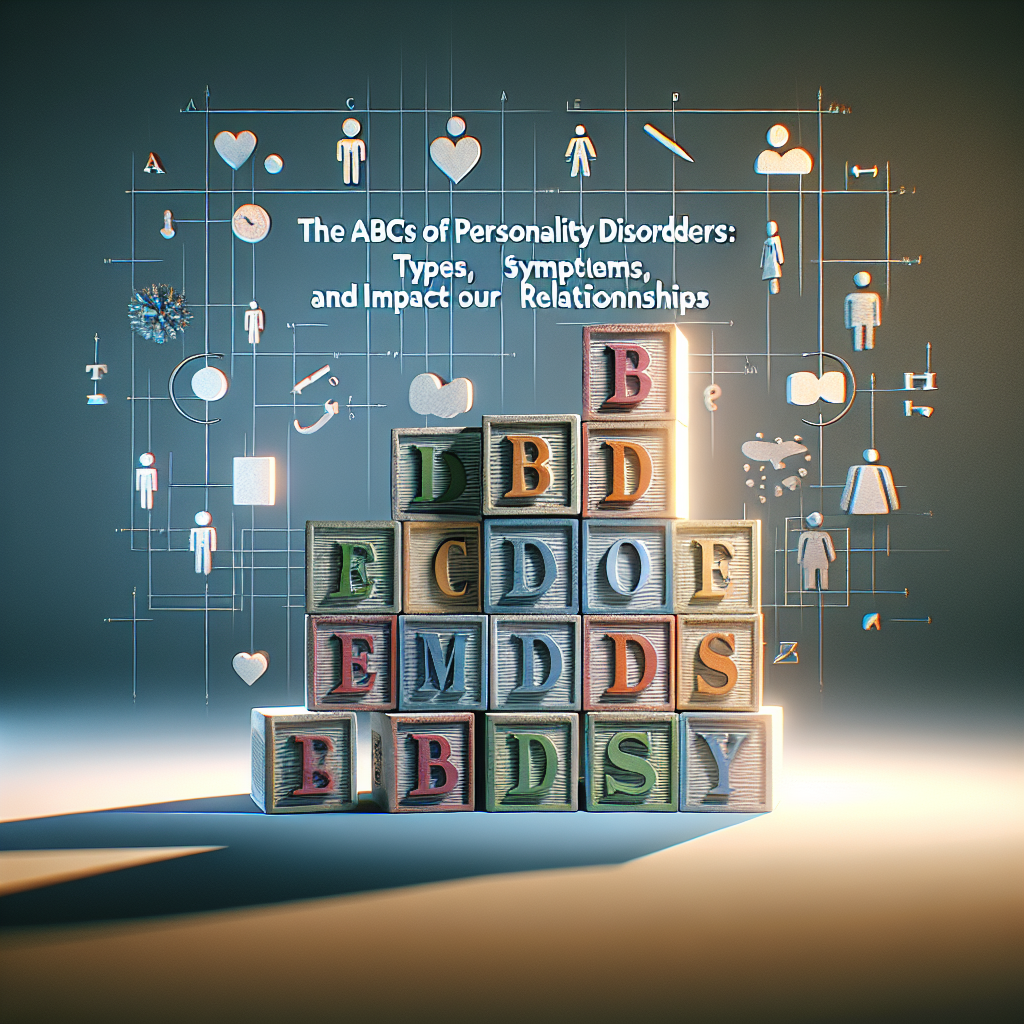
The Ultimate Guide to the ABCs of Personality Disorders: Types, Symptoms, and Impact on Relationships
Introduction
Imagine navigating a relationship where your partner’s actions are unpredictable, emotions seem volatile, and communication feels like walking through a minefield. For many, this experience is not just a scenario—it’s a reality shaped by personality disorders. Understanding the ABCs of personality disorders: types, symptoms, and impact on relationships is vital in fostering healthier connections and creating a more compassionate environment for those affected.
In this comprehensive guide, we’ll dive deep into the intricacies of personality disorders, exploring their types, symptoms, and the profound effects they can have on relationships. Whether you are dealing with someone who has a personality disorder, are pursuing a career in mental health, or simply wish to expand your understanding, this article offers valuable insights that can assist you in navigating these complex terrains.
Understanding Personality Disorders
What Are Personality Disorders?
Personality disorders are mental health conditions characterized by pervasive patterns of thought, behavior, and inner experience that deviate significantly from cultural expectations. These patterns can lead to distress or impairment in social, occupational, or other important areas of functioning. According to the Diagnostic and Statistical Manual of Mental Disorders (DSM-5), personality disorders are grouped into three clusters:
- Cluster A: Odd or eccentric behavior
- Cluster B: Dramatic, emotional, or erratic behavior
- Cluster C: Anxious or fearful behavior
Prevalence of Personality Disorders
Estimates suggest that approximately 10-15% of adults in the U.S. suffer from a personality disorder. This statistic highlights the widespread relevance of understanding the ABCs of personality disorders: types, symptoms, and impact on relationships.
Types of Personality Disorders
1. Cluster A Disorders
Paranoid Personality Disorder
Symptoms:
- Distrust and suspicion of others
- Believing others have malicious intent
- Reluctance to confide in others
Impact on Relationships:
Relationships may become fraught with tension due to constant suspicion and perceived betrayal.
Schizoid Personality Disorder
Symptoms:
- Emotional detachment
- Avoidance of social interactions
- Limited expression of emotions
Impact on Relationships:
Individuals with Schizoid Personality Disorder often struggle to connect, making intimate relationships difficult to establish.
Schizotypal Personality Disorder
Symptoms:
- Distorted thinking and behavior
- Eccentric behavior
- Social anxiety and discomfort in close relationships
Impact on Relationships:
Eccentric behaviors can alienate friends and family, leading to loneliness.
| Cluster A Disorders | Key Symptoms | Relationship Challenges |
|---|---|---|
| Paranoid | Distrust, suspicion | Conflict, emotional distance |
| Schizoid | Detachment | Lack of intimacy |
| Schizotypal | Eccentricity, social anxiety | Isolation, misunderstandings |
2. Cluster B Disorders
Antisocial Personality Disorder
Symptoms:
- Disregard for the rights of others
- Deceitfulness
- Impulsivity
Impact on Relationships:
High potential for manipulation or exploitation in relationships.
Borderline Personality Disorder
Symptoms:
- Intense emotions
- Fear of abandonment
- Unstable relationships
Impact on Relationships:
Difficulties in maintaining stable relationships due to emotional volatility.
Histrionic Personality Disorder
Symptoms:
- Excessive emotionality
- Attention-seeking behavior
- Need for approval
Impact on Relationships:
Relationships may become superficial as emotions are often dramatized.
Narcissistic Personality Disorder
Symptoms:
- Grandiosity
- Need for admiration
- Lack of empathy
Impact on Relationships:
Can foster imbalanced relationships where the needs of the narcissist overshadow those of others.
| Cluster B Disorders | Key Symptoms | Relationship Challenges |
|---|---|---|
| Antisocial | Disregard for others | Manipulation, exploitation |
| Borderline | Intense emotions | Instability, fear of abandonment |
| Histrionic | Attention-seeking | Superficial interactions |
| Narcissistic | Grandiosity | Imbalanced, dominance issues |
3. Cluster C Disorders
Avoidant Personality Disorder
Symptoms:
- Extreme shyness
- Feelings of inadequacy
- Hypersensitivity to negative evaluation
Impact on Relationships:
Individuals may avoid social situations, fearing rejection.
Dependent Personality Disorder
Symptoms:
- Excessive need for care
- Submissiveness
- Difficulty making decisions
Impact on Relationships:
Can lead to codependent relationships and power imbalances.
Obsessive-Compulsive Personality Disorder
Symptoms:
- Preoccupation with orderliness
- Perfectionism
- Control issues
Impact on Relationships:
The need for control and perfection can create significant stress in relationships.
| Cluster C Disorders | Key Symptoms | Relationship Challenges |
|---|---|---|
| Avoidant | Shyness, inadequacy | Social avoidance, missed opportunities |
| Dependent | Need for care | Codependency, lack of autonomy |
| Obsessive-Compulsive | Perfectionism | Conflicts over control |
Case Studies
Case Study 1: The Impact of Borderline Personality Disorder
Scenario:
Jane, a 28-year-old woman, was diagnosed with Borderline Personality Disorder. Her relationships were characterized by intense emotional highs and lows, resulting in frequent breakups.
Analysis:
Jane’s experience illustrates how emotional instability can hinder relationships. Understanding the symptoms of Borderline Personality Disorder can lead to better communication and support strategies, enabling partners to navigate emotional crises together.
Case Study 2: Navigating a Relationship with a Narcissist
Scenario:
David, who has Narcissistic Personality Disorder, frequently dominated conversations and dismissed his partner’s feelings.
Analysis:
Understanding the ABCs of personality disorders: types, symptoms, and impact on relationships helps identify strategies for establishing boundaries and improving communication with individuals like David.
Further Examples
In similar vein, consider the personality disorders within the context of familial relationships or friends. Each case can unveil the varying degrees of impact personality disorders can have on daily interactions.
The Impact of Personality Disorders on Relationships
Understanding Interpersonal Dynamics
The effects of personality disorders are profound, often reshaping interpersonal dynamics. Partners, friends, or family members may find themselves struggling to adapt to behavioral patterns that are often confusing or distressing. Moreover, individuals with personality disorders may experience disturbances in their own self-image, further complicating relationships.
Emotional Labor in Relationships
Relationships with individuals who have personality disorders can often entail significant emotional labor. Loved ones might feel perpetually on edge, fearing outbursts or emotional volatility. This can lead to caregiver fatigue and resentment over time.
Therapy and Healing
Therapeutic interventions play a crucial role in managing personality disorders, providing individuals with coping mechanisms to improve relational dynamics. Cognitive Behavioral Therapy (CBT), Dialectical Behavior Therapy (DBT), and psychodynamic therapy are often employed to address specific symptoms and enhance interpersonal skills.
The Role of Support Systems
Support systems are indispensable for both individuals with personality disorders and their loved ones. Engaging in support groups can foster understanding, offer coping strategies, and reduce isolation.
Conclusion
Understanding the ABCs of personality disorders: types, symptoms, and impact on relationships is essential for both personal growth and the nurturing of healthier relational dynamics. Recognizing the intricacies of these disorders can make a monumental difference in how we manage our interactions with loved ones who may be affected.
Awareness leads to compassion, and compassion fosters healing. By educating ourselves and practicing empathy, we can create environments that allow individuals with personality disorders to thrive alongside their relationships.
FAQs
1. What is the primary cause of personality disorders?
Personality disorders often arise from a combination of genetic, environmental, and psychological factors. Early childhood experiences and trauma can play particularly significant roles.
2. Are personality disorders curable?
While personality disorders are challenging to treat and may not be fully curable, therapeutic interventions can significantly alleviate symptoms and improve relational capabilities.
3. How can I support a loved one with a personality disorder?
Offering consistent support, encouraging therapy, and maintaining open lines of communication can be beneficial. It’s also important to set boundaries to protect your own mental health.
4. Can personality disorders be misdiagnosed?
Yes, due to overlapping symptoms with other mental health issues, personality disorders can sometimes be misdiagnosed. A comprehensive assessment by a qualified mental health professional is essential.
5. What should I do if I think I have a personality disorder?
If you suspect you have a personality disorder, seeking professional help is the best course of action. Early intervention can lead to more effective management of symptoms.
By fostering a deeper understanding of the ABCs of personality disorders: types, symptoms, and impact on relationships, we can take significant steps toward creating healthier connections for ourselves and the people we care about.
About the Author