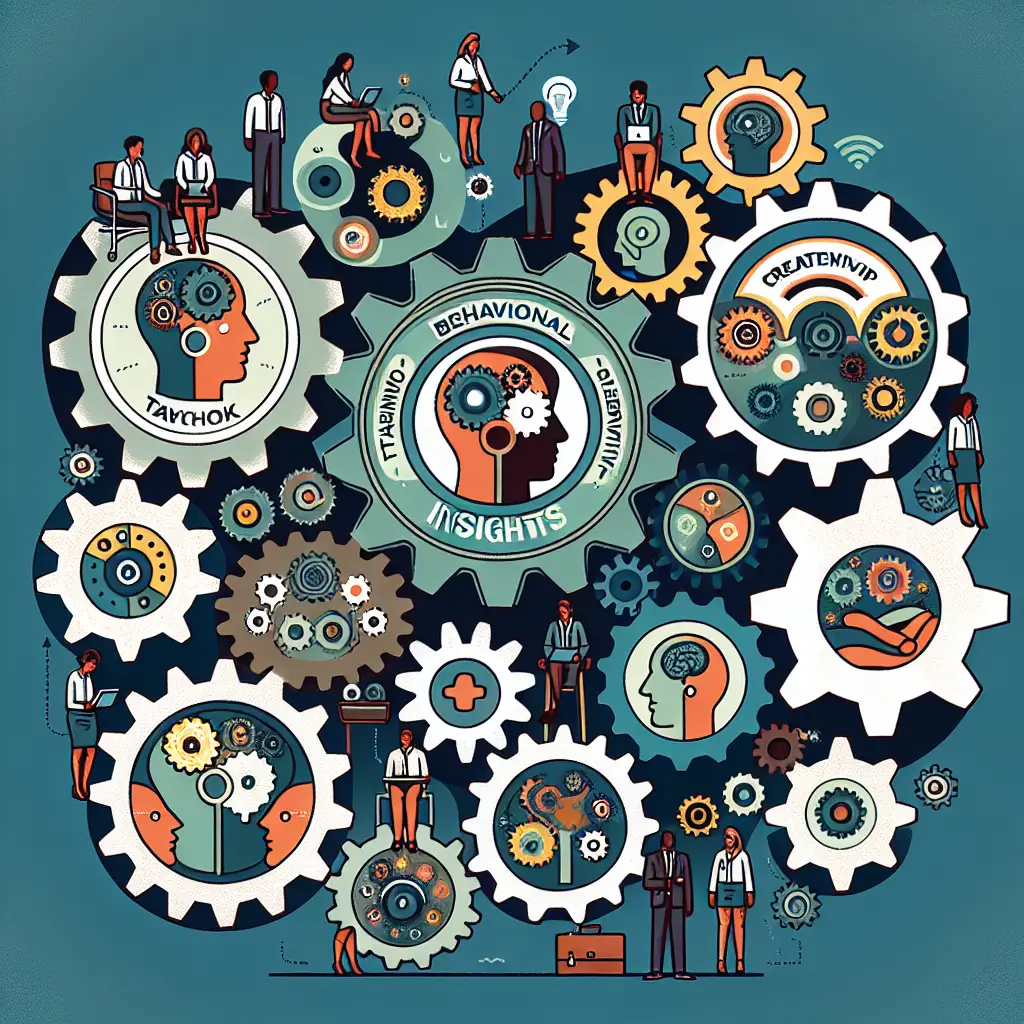
The Ultimate Guide to The Power of Behavioral Insights: How Psychology Shapes Workplace Dynamics
Introduction
In a rapidly changing world, companies are realizing that success is not only contingent upon having the right products or services—but also understanding the people who drive their success. Businesses today are investing heavily in behavioral insights derived from psychology to foster workplace dynamics that promote productivity, engagement, and well-being. The Power of Behavioral Insights: How Psychology Shapes Workplace Dynamics focuses on this multi-faceted phenomenon. This article delves into how leaders can harness psychological principles to foster a thriving workplace.
Understanding Behavioral Insights
Behavioral insights are a synthesis of psychology, sociology, and economics, understood as tools that reveal human behavior patterns. At the Workplace level, this means understanding how employees think, feel, and behave in their environments can lead to significant enhancements in productivity and morale.
The Science Behind Behavioral Insights
Understanding the Basics
Behavioral insights are drawn from cognitive behavioral theories which inform us that individuals’ thoughts influence their feelings and behaviors. By identifying this relationship, organizations can craft interventions that lead to desired behaviors.
Making Data-Driven Decisions
To implement these insights effectively, companies rely on data analytics to interpret patterns within employee behavior. For instance, using surveys and performance metrics, organizations can unveil trends influencing employee satisfaction and productivity.
Case Study: Google’s Project Aristotle
One of the most promising examples of behavioral insights in action is Google’s Project Aristotle, which studied over 180 teams to identify the factors that contribute to effective teamwork. The findings highlighted psychological safety as the most crucial aspect. Team members felt safe to take risks and express their thoughts without judgment, ultimately leading to higher performance levels.
Relevance Analysis
This case underscores the essence of The Power of Behavioral Insights: How Psychology Shapes Workplace Dynamics. By focusing on emotional safety, Google not only improved team dynamics but also set a precedent for other companies to follow.
The Impact of Psychological Safety
Creating a Safe Space
Interestingly, psychological safety signifies a team climate characterized by interpersonal trust and mutual respect, where people feel safe to take risks.
Benefits of Psychological Safety
| Benefit | Description |
|---|---|
| Increased Innovation | Employees are more likely to propose new ideas. |
| Enhanced Collaboration | Fosters open communication and trust among team members. |
| Higher Retention Rates | Employees are likely to stay in an environment where they feel valued. |
The statistics related to these benefits are compelling. Companies that promote psychological safety often see a boost in innovation metrics by as much as 30%.
Employee Engagement: The Behavioral Insights Connection
Employee engagement is an indicator of how connected employees feel to their work, and it’s crucial for workplace dynamics. Research indicates that engaged employees are 17% more productive and have 21% higher profitability.
Factors Driving Employee Engagement
Understanding the behavioral factors that drive employee engagement is key. This includes:
- Recognition – Regular acknowledgment of employee contributions fosters motivation.
- Empowerment – Allowing employees to make decisions can significantly enhance their connection to the workplace.
- Professional Development – Investing in employees’ growth creates a sense of value.
Case Study: Starbucks’ Employee Engagement Strategy
Starbucks has implemented a groundbreaking approach to employee engagement through its “Partner” program. By equipping employees with benefits equivalent to those of full-time workers and fostering a culture of respect, the company has enjoyed a remarkably high engagement rate of 85%.
Relevance Analysis
This case illustrates The Power of Behavioral Insights: How Psychology Shapes Workplace Dynamics whereby understanding employee needs allows for a more engaged workforce, impacting overall company performance positively.
The Role of Feedback and Recognition
Feedback is integral to effective workplace dynamics as it aligns expectations and enhances performance. However, it’s crucial to balance constructive feedback with appreciation for accomplishments.
Implementing Effective Feedback Mechanisms
Positive Reinforcement
Applying the principles of operant conditioning, reinforcing positive behaviors through recognition can lead to repeated desirable actions.
Tips for Providing Effective Feedback:
- Be Specific – Clear feedback ensures employees know exactly what’s being acknowledged.
- Timeliness – Immediate feedback is more impactful than delayed recognition.
- Create a Feedback Culture – Encourage peer-to-peer recognition, fostering a more inclusive environment.
Case Study: Adobe’s Check-In Model
Adobe replaced traditional performance reviews with a “Check-In” system, emphasizing regular feedback and recognition. This shift led to a significant rise in employee satisfaction and engagement metrics.
Relevance Analysis
Adobe’s transition underscores the essence of The Power of Behavioral Insights: How Psychology Shapes Workplace Dynamics by showcasing how ongoing feedback systems can significantly enhance performance and satisfaction.
Behavioral Insights in Leadership Styles
Leadership greatly influences workplace dynamics, and understanding behavioral psychology can inform the leaders’ approaches.
Different Leadership Styles and Their Psychological Impacts
Transformational Leadership
- Encourages and inspires employees by creating a vision.
- Psychological Insight: Sparks intrinsic motivation.
Transactional Leadership
- Focuses on supervision and performance rewards.
- Psychological Insight: Operates on rewards and penalties basis.
- Servant Leadership
- Focus on serving others and prioritizing team needs.
- Psychological Insight: Builds trust and community.
Case Study: The Servant Leadership Model at Southwest Airlines
Southwest Airlines is well-known for its servant leadership approach, which emphasizes the importance of employees’ well-being. This philosophy has led to an environment where employees perform better and are more engaged.
Relevance Analysis
The case exemplifies The Power of Behavioral Insights: How Psychology Shapes Workplace Dynamics by demonstrating how effective leadership directly impacts employee motivation and commitment.
Fostering Diversity and Inclusion
A diverse workforce fuels innovation by bringing multiple perspectives to the table. Understanding the psychological effects of diversity can enhance workplace dynamics.
Benefits of Diversity and Inclusion
| Aspect | Impact on Workplace Dynamics |
|---|---|
| Innovation & Creativity | Diverse teams are more likely to generate creative solutions. |
| Enhanced Problem Solving | A variety of viewpoints leads to better decisions. |
| Employee Satisfaction | Inclusive work environments positively impact overall morale. |
Case Study: Accenture’s Approach to Diversity
Accenture has made a commitment to achieving a diverse workforce, with initiatives focused on hiring, training, and promoting inclusivity. The sustained efforts have led to higher employee satisfaction rates and innovation initiatives that outperform competitors.
Relevance Analysis
This case highlights The Power of Behavioral Insights: How Psychology Shapes Workplace Dynamics as it demonstrates how diversity acts as a catalyst for improving workplace morale and performance.
Conclusion
In conclusion, The Power of Behavioral Insights: How Psychology Shapes Workplace Dynamics cannot be overstated. Organizations that harness these insights have the potential to create a vibrant workplace that promotes innovation, engagement, and satisfaction. By focusing on psychological safety, recognizing employee contributions, offering constructive feedback, employing effective leadership styles, and embracing diversity, companies can transform their workplaces into environments that thrive.
Key Takeaway
Embrace the power of psychological principles in the workplace. Observe behavior patterns, listen to feedback, and strive for inclusivity, and your workplace dynamics will flourish.
FAQs
What are behavioral insights?
Behavioral insights are empirical understandings derived from psychology that help organizations recognize patterns in behavior among employees.
How can psychological principles improve workplace dynamics?
By implementing feedback, recognition, and empowerment strategies, organizations foster an environment conducive to growth and productivity.
What role does leadership play in shaping workplace dynamics?
Leadership styles can significantly influence employee morale, motivation, and engagement levels.
Why is diversity important in the workplace?
Diversity brings various perspectives that enhance creativity and problem-solving and contribute to a more engaging environment for all employees.
- How can we measure the effectiveness of behavioral insights in our organization?
Metrics such as employee satisfaction surveys, turnover rates, and performance indicators can help gauge the success of implementing behavioral insights.
In leveraging these insights wisely, organizations can at last unveil the full potential of their teams. The engagement, productivity, and satisfaction that ensue create not just a better workplace but also a thriving culture that stands the test of time.
About the Author


The PsyForU Editorial Collective is the research and editorial team of PsyForU Research International. The collective prepares educational, psychological, mental-health-awareness, inclusion, neurodiversity, and research-methodology content for students, parents, educators, researchers, and general readers. PsyForU content is intended for awareness, education, and capacity-building and should not be treated as clinical diagnosis, therapy, medical advice, legal advice, or emergency mental-health support.