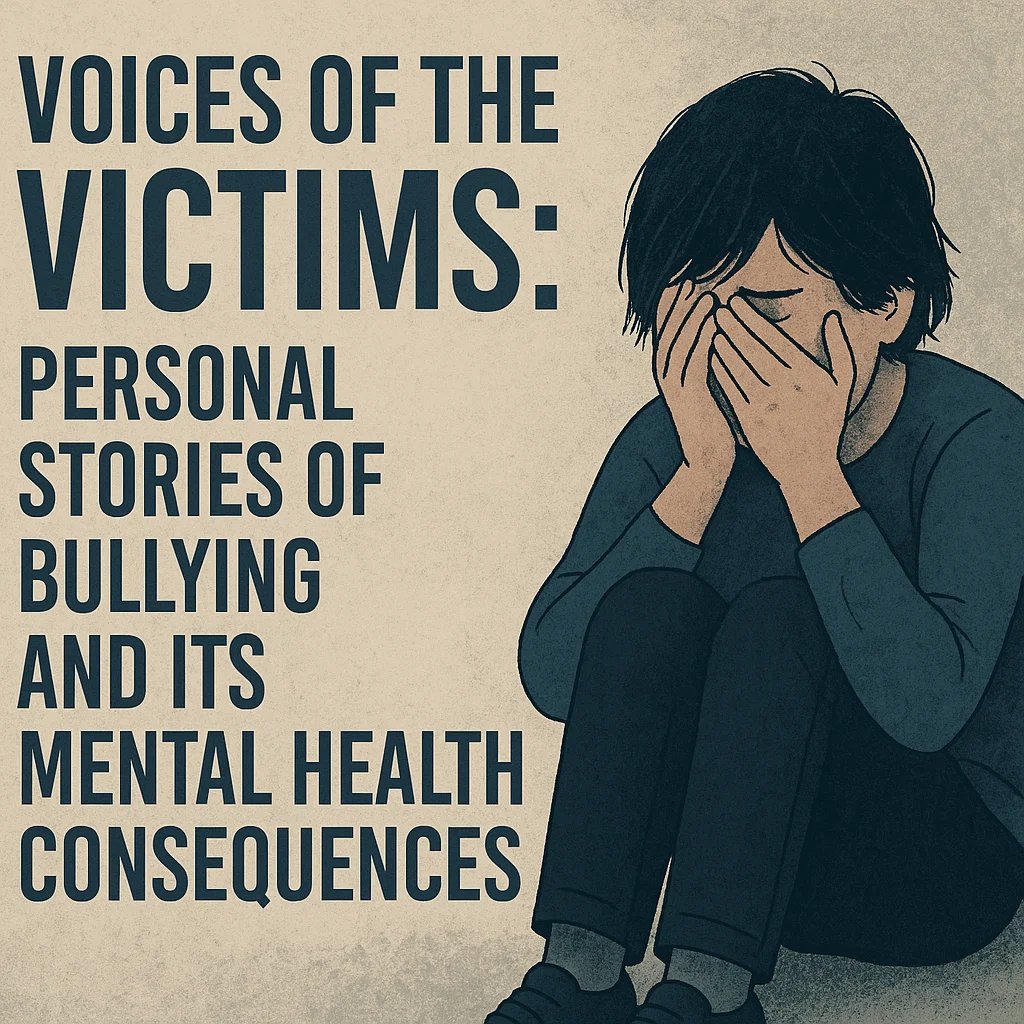
Essential Voices of the Victims: Personal Stories of Bullying and its Mental Health Consequences
Introduction: The Pain Behind the Silence
Bullying is often described in small words: teasing, drama, conflict, joking, “kids being kids.” But for the person living through it, bullying can become a daily assault on safety, identity, and self-worth. It can follow someone into the classroom, the workplace, the locker room, the family dinner table, and—through a phone screen—into the quietest corners of the night.
That is why Voices of the Victims: Personal Stories of Bullying and its Mental Health Consequences matters. Statistics help us understand the scale of bullying, but personal stories reveal its emotional truth. Behind every percentage is a person who learned to scan rooms for danger, delete social media apps to avoid harassment, fake a stomachache to escape school, or smile through work meetings while privately falling apart.
This article explores Voices of the Victims: Personal Stories of Bullying and its Mental Health Consequences through composite case studies, psychological insights, practical response strategies, and prevention-focused guidance. The stories shared here are anonymized and blended from common real-world patterns to protect privacy while reflecting experiences many victims and survivors know too well.
Most importantly, this article is not only about pain. It is about recognition, recovery, and responsibility. When we listen to the voices of victims of bullying, we learn how to intervene earlier, support better, and build environments where cruelty is not dismissed as normal.
Understanding Bullying: More Than “Being Mean”
Bullying is repeated aggressive behavior involving a real or perceived power imbalance. It may be physical, verbal, social, sexual, digital, racial, disability-based, gender-based, or workplace-related. It can be loud and visible, or quiet and carefully hidden.
A single rude comment can hurt. But bullying is different because it creates a pattern of fear. Victims do not simply experience one bad moment; they begin to anticipate the next one.
In the context of Voices of the Victims: Personal Stories of Bullying and its Mental Health Consequences, this distinction matters. Many victims are told they are “too sensitive” or that they should “just ignore it.” But bullying is not harmless discomfort. It can reshape how a person sees themselves, how safe they feel around others, and how much hope they carry into the future.
Common Types of Bullying and Their Effects
| Type of Bullying | What It Looks Like | Possible Mental Health Consequences |
|---|---|---|
| Verbal bullying | Insults, name-calling, threats, humiliation | Anxiety, low self-esteem, depression |
| Social bullying | Exclusion, rumors, public embarrassment | Loneliness, shame, social withdrawal |
| Physical bullying | Hitting, pushing, damaging belongings | Fear, trauma symptoms, school/work avoidance |
| Cyberbullying | Harassment via texts, posts, images, group chats | Sleep problems, panic, helplessness |
| Identity-based bullying | Targeting race, religion, disability, gender, sexuality | Internalized shame, identity distress, chronic stress |
| Workplace bullying | Sabotage, intimidation, public criticism, isolation | Burnout, depression, career trauma |
| Sexual bullying | Unwanted comments, rumors, coercion, harassment | Trauma, body shame, fear, dissociation |
When we center personal stories of bullying and mental health consequences, we see that these categories often overlap. A student may be mocked in school and harassed online. An employee may face both public humiliation and professional sabotage. A child may endure verbal cruelty that eventually becomes physical intimidation.
Why Victims Often Stay Silent
One of the most heartbreaking parts of Voices of the Victims: Personal Stories of Bullying and its Mental Health Consequences is how often victims suffer quietly. Silence is not proof that the bullying is minor. Silence often means the victim has calculated the risk of speaking up and fears things may get worse.
Victims may stay silent because they:
- Fear retaliation
- Believe adults or leaders will not help
- Feel ashamed or embarrassed
- Blame themselves
- Worry they will be called weak
- Do not want to burden their family
- Think no one will believe them
- Have previously reported bullying and been ignored
- Depend on the bully socially, financially, academically, or professionally
For children and teens, bullying can feel like being trapped in a world where popularity is power. For adults, workplace bullying can feel impossible to challenge when the bully controls schedules, promotions, references, or team relationships.
Listening to the voices of bullying victims means understanding that silence is often a survival strategy—not consent, exaggeration, or indifference.
The Mental Health Consequences of Bullying
Bullying can affect mental health in immediate and long-term ways. Some victims experience short-term distress that improves with support. Others carry emotional wounds for years, especially if the bullying was severe, prolonged, identity-based, or ignored by trusted adults or institutions.
Common Psychological Effects
| Mental Health Impact | How It May Appear |
|---|---|
| Anxiety | Worry, panic attacks, avoidance, hypervigilance |
| Depression | Hopelessness, loss of interest, fatigue, sadness |
| Low self-esteem | Self-blame, shame, negative self-talk |
| Trauma symptoms | Flashbacks, nightmares, emotional numbness |
| Social withdrawal | Isolation, distrust, difficulty making friends |
| Academic/work decline | Poor concentration, absenteeism, reduced performance |
| Sleep disturbance | Insomnia, nightmares, oversleeping |
| Eating changes | Loss of appetite, emotional eating, disordered patterns |
| Anger or irritability | Outbursts, defensiveness, frustration |
| Suicidal thoughts | Feeling trapped, believing life will not improve |
If you or someone you know is in immediate danger or thinking about self-harm, contact local emergency services or a crisis hotline right away. In the U.S. and Canada, call or text 988 for the Suicide & Crisis Lifeline. If outside those countries, contact your local emergency number or a trusted crisis support service.
The goal of discussing Voices of the Victims: Personal Stories of Bullying and its Mental Health Consequences is not to sensationalize pain. It is to take the pain seriously enough to act.
Case Study 1: Maya’s Story — “I Started Believing Them”
Maya was twelve when a group of girls in her class began commenting on her appearance. At first, it sounded like teasing. They called her “awkward” and laughed at her clothes. Then they made a group chat without her and used it to share edited photos of her face. At lunch, they saved seats for everyone except Maya.
When Maya told her teacher, the response was gentle but ineffective: “Try not to let it bother you.” Her parents noticed she had stopped talking about school. She began saying she felt sick in the mornings. Her grades slipped. She spent more time in her room and less time drawing, something she once loved.
Months later, Maya told her mother, “I think maybe they’re right. Maybe I am disgusting.”
That sentence captures one of the deepest mental health consequences of bullying: victims may begin to internalize the bully’s voice.
Analysis: Why Maya’s Story Matters
Maya’s experience reflects a common pattern in Voices of the Victims: Personal Stories of Bullying and its Mental Health Consequences: social bullying can be just as damaging as physical bullying. Exclusion, humiliation, and rumor-spreading attack a young person’s need for belonging.
For preteens and teens, peer acceptance is not trivial. It is tied to identity development and emotional safety. When bullying is dismissed as drama, victims may conclude that their pain is invisible—or worse, deserved.
What Helped Maya
Maya’s recovery began when a school counselor took her seriously. The counselor documented incidents, involved administrators, contacted parents, and helped Maya rebuild confidence through small social connections. Maya also joined an art club outside her grade level, where she met peers who knew her for her creativity rather than the rumors.
Support did not erase the bullying overnight. But it interrupted the lie that Maya was alone.
Case Study 2: Jordan’s Story — Cyberbullying That Followed Him Home
Jordan was sixteen, funny, athletic, and active online. After he made a mistake during a basketball game, someone posted a clip with a cruel caption. The post spread quickly. Classmates added comments. Someone created a fake account pretending to be him. His phone buzzed constantly with insults.
At school, people laughed when he walked by. At home, the harassment continued through messages and screenshots. Jordan stopped checking his phone, then started checking it obsessively. He slept poorly. He became jumpy whenever he heard a notification. Eventually, he quit the team.
His parents were confused. “Just delete the app,” his father said. But Jordan knew deleting the app would not delete what everyone else had already seen.
Analysis: Why Jordan’s Story Matters
Cyberbullying changes the geography of bullying. In older generations, home could sometimes be a refuge. Today, digital harassment can remove that refuge completely.
In discussions of Voices of the Victims: Personal Stories of Bullying and its Mental Health Consequences, cyberbullying deserves special attention because it can be:
- Public
- Permanent or screenshot-able
- Anonymous
- Rapidly amplified
- Difficult to escape
- Active at all hours
Jordan’s anxiety was not simply about a phone. It was about humiliation without boundaries.
What Helped Jordan
Jordan’s school eventually treated the online harassment as a serious disciplinary issue. His parents helped him preserve evidence, report fake accounts, and create a plan for limited technology use without isolating him from supportive friends.
A therapist helped Jordan work through shame, panic, and avoidance. He later returned to basketball in a community league, away from the classmates involved.
The key lesson: telling a cyberbullying victim to “just log off” often misses the point. Digital harm has real emotional consequences.
Case Study 3: Sofia’s Story — Workplace Bullying in Plain Sight
Sofia was thirty-four and excited about her new role in a marketing department. Her manager praised her during the interview process, but within months, the tone changed. The manager criticized her in meetings, assigned impossible deadlines, withheld information, and then blamed Sofia for being unprepared.
When Sofia asked clarifying questions, her manager sighed loudly and said, “I already explained this.” Colleagues noticed but avoided getting involved. Sofia started arriving early and staying late to prove herself. She developed headaches and stomach pain. On Sunday evenings, she felt dread so intense she could barely eat.
She eventually began to wonder if she was incompetent, even though she had years of strong performance behind her.
Analysis: Why Sofia’s Story Matters
Bullying is not limited to schools. Workplace bullying can be devastating because employment is tied to income, identity, healthcare, housing, and professional reputation.
In the broader conversation around Voices of the Victims: Personal Stories of Bullying and its Mental Health Consequences, Sofia’s story shows how adult victims often face pressure to “be professional” while enduring behavior that is anything but professional.
Workplace bullying may be disguised as:
- High standards
- Tough management
- Personality clashes
- “Feedback”
- Competition
- Organizational culture
But repeated humiliation, sabotage, intimidation, and isolation are not leadership. They are abuse of power.
What Helped Sofia
Sofia began documenting incidents with dates, quotes, witnesses, and outcomes. She spoke with a trusted mentor outside the company and later contacted HR with a clear written record. She also consulted a therapist, who helped her separate her professional identity from the manager’s treatment.
Eventually, Sofia transferred departments. Her symptoms did not disappear immediately, but her confidence began returning once she was no longer in a hostile environment.
The lesson: workplace bullying is not just a career issue. It is a mental health issue.
Case Study 4: Aiden’s Story — Identity-Based Bullying and the Burden of Being “Different”
Aiden was fourteen and had recently come out as gay to a small group of friends. Within a week, the news spread. Some classmates whispered slurs. Others made jokes in the locker room. Aiden’s social media comments filled with rainbow emojis used mockingly.
The bullying was not constant every minute, but it was unpredictable. That made it worse. Aiden never knew who had heard the rumors, who was laughing, or who might say something next.
He became quiet in class and stopped changing clothes for gym. He told his parents he was “fine,” but privately he felt exposed and unsafe. He wondered if life would always feel like being watched.
Analysis: Why Aiden’s Story Matters
Identity-based bullying targets something central to who a person is or is perceived to be. This can include sexuality, gender identity, race, ethnicity, religion, disability, body size, language, immigration status, or socioeconomic background.
In Voices of the Victims: Personal Stories of Bullying and its Mental Health Consequences, identity-based bullying stands out because the message is not merely “you did something wrong.” The message is “who you are is wrong.”
That kind of harm can lead to:
- Internalized shame
- Fear of self-expression
- Chronic stress
- Depression
- Social withdrawal
- Distrust of institutions
- Increased risk of self-harm, especially when support is absent
What Helped Aiden
Aiden’s school had an LGBTQ+ affirming counselor who helped him create a safety plan. A teacher intervened when slurs were used in class. His parents joined a support group to better understand what he was experiencing.
Most importantly, Aiden found affirming spaces where he did not have to defend his existence. That sense of belonging became a protective factor.
The takeaway: victims of identity-based bullying do not only need bullying to stop. They need affirmation, dignity, and community.
Case Study 5: Marcus’s Story — When the Victim Becomes Angry
Marcus was ten when older boys started pushing him on the bus. They took his backpack, mocked his reading difficulties, and dared him to cry. He told himself he would never cry in front of them.
Over time, Marcus became aggressive at home. He yelled at his younger sister and threw objects when frustrated. At school, he snapped at classmates who tried to joke with him. Teachers began seeing him as a “behavior problem.”
No one connected his anger to fear.
Analysis: Why Marcus’s Story Matters
Not every victim looks sad or withdrawn. Some look angry, defiant, sarcastic, or difficult. In the context of Voices of the Victims: Personal Stories of Bullying and its Mental Health Consequences, Marcus’s story reminds us that trauma can come out sideways.
Children may not say, “I feel powerless and humiliated.” They may say, “Leave me alone,” or “I don’t care,” or “I hate school.”
Anger can become armor. Unfortunately, when adults punish the armor without investigating the wound, victims may feel even more misunderstood.
What Helped Marcus
A school social worker noticed that Marcus’s behavior was worse after the bus ride. After careful conversation, Marcus disclosed the bullying. The school changed bus seating, contacted families, increased supervision, and gave Marcus reading support.
Marcus also learned emotional regulation skills: naming feelings, asking for help, and using physical activity to release stress.
The lesson: when a child’s behavior changes, adults should ask not only “What’s wrong with you?” but “What happened to you?”
The Hidden Language of Bullying Trauma
Victims often communicate distress indirectly. Many do not have the words, safety, or confidence to explain what is happening. This is especially true for children, teens, people with disabilities, employees in toxic workplaces, and individuals who have previously been dismissed.
Warning Signs That Someone May Be Experiencing Bullying
| Area of Life | Possible Signs |
|---|---|
| Mood | Sadness, irritability, anxiety, emotional outbursts |
| Behavior | Avoidance, secrecy, withdrawal, aggression |
| School/work | Absences, declining performance, fear of certain places |
| Body | Headaches, stomachaches, fatigue, sleep issues |
| Social life | Loss of friends, isolation, sudden friend group changes |
| Digital habits | Fear of phone notifications, deleting accounts, obsessive checking |
| Self-image | Negative self-talk, shame, sudden appearance concerns |
| Safety concerns | Talk of hopelessness, self-harm, or not wanting to exist |
These signs do not automatically prove bullying is happening. But they are invitations to ask gentle, specific questions.
Instead of “Are you being bullied?” try:
- “Who do you feel safest around right now?”
- “Is there anyone making school or work harder for you?”
- “Have people been saying things online that hurt you?”
- “Do you ever avoid certain places because of someone there?”
- “What do you wish adults understood about what’s happening?”
When exploring Voices of the Victims: Personal Stories of Bullying and its Mental Health Consequences, one truth appears again and again: victims often open up when they feel they will not be blamed, rushed, or minimized.
Why Bullying Affects the Brain and Body
Bullying is not “just emotional.” Repeated social threat can activate the body’s stress response. When someone expects humiliation, exclusion, or attack, the nervous system may stay on high alert.
This can lead to:
- Increased cortisol and stress hormones
- Muscle tension
- Digestive problems
- Sleep disruption
- Trouble concentrating
- Emotional reactivity
- Exhaustion
- Heightened startle response
The brain is designed to protect us from danger. But when the danger is social and repeated, the brain may begin treating ordinary environments as unsafe. A hallway, meeting room, bus stop, or notification sound can become a trigger.
This is why bullying and its mental health consequences can persist even after the bullying stops. The body may need time, therapy, and safe relationships to relearn safety.
The Role of Bystanders: Silence Can Strengthen Bullying
Many victims say the cruelty hurt—but the silence around it hurt almost as much.
Bystanders often underestimate their power. They may think, “It’s not my business,” or “Someone else will help,” or “If I speak up, I’ll be next.” These fears are understandable. But silence can be interpreted by the bully as permission and by the victim as abandonment.
Helpful Bystander Actions
| Situation | Helpful Response |
|---|---|
| Someone is mocked in a group | Redirect: “That’s not funny. Let’s move on.” |
| A rumor is spreading | Refuse to repeat it and challenge the source |
| Cyberbullying appears online | Do not like/share; screenshot evidence; report |
| Someone is excluded | Invite them in without making it performative |
| Workplace bullying occurs | Document what you observed; check in privately |
| A victim seems distressed | Ask gently and offer to go with them for help |
In Voices of the Victims: Personal Stories of Bullying and its Mental Health Consequences, bystanders often become turning points. One person saying “I saw what happened, and it wasn’t okay” can interrupt the victim’s isolation.
What Victims Need Most
Every situation is different, but victims of bullying commonly need five things: safety, belief, documentation, support, and restoration.
1. Safety
The first priority is reducing exposure to harm. This may involve changing seating, increasing supervision, blocking accounts, adjusting schedules, reporting threats, or involving authorities when necessary.
2. Belief
Victims need to hear: “I’m glad you told me. I believe you. This is not your fault.”
Belief does not mean skipping investigation. It means not beginning from suspicion or blame.
3. Documentation
Documentation creates clarity. It can include dates, times, screenshots, witnesses, descriptions, and emotional or academic/work impacts.
4. Emotional Support
Victims may benefit from counseling, peer support, family support, advocacy groups, or trusted mentors.
5. Restoration
Stopping bullying is not the same as healing. Victims may need help rebuilding confidence, friendships, routines, identity, and joy.
This is a central theme in Voices of the Victims: Personal Stories of Bullying and its Mental Health Consequences: intervention must go beyond punishment. It must include repair.
A Practical Response Plan for Bullying
| Step | What to Do | Why It Matters |
|---|---|---|
| 1. Name the behavior | Identify what happened: threats, exclusion, harassment, humiliation | Clarity reduces self-blame |
| 2. Record incidents | Save messages, screenshots, dates, witnesses | Documentation supports action |
| 3. Tell a trusted person | Parent, teacher, counselor, HR, supervisor, mentor | Isolation increases harm |
| 4. Create a safety plan | Avoid high-risk situations, increase supervision, block/report accounts | Reduces immediate exposure |
| 5. Seek mental health support | Therapy, counseling, support groups | Helps process trauma and rebuild self-worth |
| 6. Escalate when needed | School administration, workplace leadership, legal help, law enforcement | Some situations require formal protection |
| 7. Rebuild connection | Join safe groups, hobbies, communities | Belonging supports recovery |
For anyone reading Voices of the Victims: Personal Stories of Bullying and its Mental Health Consequences because they are currently being bullied: you do not have to solve it alone. Start with one safe person. One conversation can become the beginning of a support system.
How Parents and Caregivers Can Help
Parents often feel panic, anger, or guilt when they discover their child is being bullied. Those feelings are natural, but the child needs calm leadership.
What to Say
- “Thank you for telling me.”
- “I’m sorry this happened.”
- “You did not deserve it.”
- “We will figure this out together.”
- “I won’t take action without talking with you first, unless someone is in danger.”
What Not to Say
- “Just ignore it.”
- “Fight back.”
- “They’re probably jealous.”
- “Are you sure you didn’t do something?”
- “This happens to everyone.”
Even well-meant comments can accidentally minimize the harm. In Voices of the Victims: Personal Stories of Bullying and its Mental Health Consequences, many victims remember not only what bullies said, but also how adults responded when they finally asked for help.
Parents should document, communicate with schools, follow up in writing, monitor emotional health, and consider counseling if symptoms persist.
How Schools Can Respond Better
Schools are one of the most important settings for bullying prevention. A strong response is not limited to posters, assemblies, or one-time awareness campaigns. Students notice what adults tolerate.
Effective school responses include:
- Clear anti-bullying policies
- Easy reporting systems
- Protection from retaliation
- Staff training
- Consistent consequences
- Restorative practices when appropriate
- Mental health support for victims
- Support for students who bully others
- Bystander education
- Family communication
- Follow-up after reports
A school that takes personal stories of bullying and mental health consequences seriously does not ask, “How do we make this complaint go away?” It asks, “How do we make this student safe and restore trust?”
How Workplaces Can Address Bullying
Workplace bullying is often mishandled because organizations confuse performance management with mistreatment. Feedback is appropriate when it is specific, respectful, and work-related. Bullying is repeated, degrading, intimidating, or sabotaging.
Healthy workplaces should:
- Define bullying clearly
- Train managers on respectful leadership
- Create confidential reporting options
- Protect employees from retaliation
- Investigate patterns, not isolated fragments
- Track turnover and complaints by department
- Offer employee assistance or counseling resources
- Hold high performers accountable for harmful behavior
- Promote psychological safety
In the larger discussion of Voices of the Victims: Personal Stories of Bullying and its Mental Health Consequences, workplaces must understand that dignity is not a perk. It is part of occupational health.
The Long-Term Impact: What Happens Years Later?
Some people believe bullying ends when school ends, when the job changes, or when the victim leaves the environment. Sometimes it does. But for many, the effects echo.
Adults who were bullied as children may struggle with:
- Fear of rejection
- People-pleasing
- Social anxiety
- Difficulty trusting groups
- Perfectionism
- Shame around appearance or identity
- Conflict avoidance
- Imposter syndrome
- Depression or anxiety flare-ups
A person who was mocked for their weight may feel panic at the gym years later. Someone who was humiliated by a boss may freeze during performance reviews in a new job. A former cyberbullying victim may feel dread when tagged in photos.
This does not mean victims are broken. It means the brain remembers danger. Healing is possible, especially when people receive validation, safe relationships, and therapeutic tools.
That is one of the most hopeful lessons from Voices of the Victims: Personal Stories of Bullying and its Mental Health Consequences: harm can be deep, but recovery can be real.
Healing After Bullying: Reclaiming the Self
Healing does not mean pretending it did not matter. It means the bully’s voice no longer gets the final word.
Helpful Recovery Strategies
1. Tell the Story Safely
Speaking about bullying with a therapist, support group, trusted friend, or journal can help organize painful memories. Silence often keeps shame alive.
2. Separate Their Words from Your Identity
A bully’s insult is not a diagnosis. It is a reflection of their behavior, not your worth.
3. Rebuild Safe Relationships
Positive relationships repair the damage of hostile ones. Healing often happens through repeated experiences of being respected, included, and believed.
4. Practice Nervous System Regulation
Breathing exercises, grounding techniques, movement, sleep routines, and mindfulness can help the body recover from chronic stress.
5. Seek Professional Support
Therapy can be especially helpful when bullying leads to anxiety, depression, trauma symptoms, self-harm thoughts, or major life disruption.
6. Reclaim Joy
Bullies often shrink a victim’s world. Recovery includes expanding it again—through hobbies, friendships, learning, creativity, sports, spirituality, or advocacy.
7. Turn Pain Into Purpose, If and When Ready
Some survivors become mentors, educators, advocates, writers, or supportive bystanders. But no one owes the world a beautiful lesson from their pain. Healing is enough.
The Power of Listening
The phrase Voices of the Victims: Personal Stories of Bullying and its Mental Health Consequences is more than an SEO keyword. It is a moral instruction: listen first.
Listen when a child says they hate school.
Listen when an employee’s confidence collapses under one manager.
Listen when a teenager suddenly deletes every social media account.
Listen when someone jokes about being unwanted.
Listen when the “difficult” child is actually frightened.
Listen when the quiet person finally speaks.
Listening does not automatically fix bullying. But it creates the first condition for change: the victim is no longer alone with the truth.
Long-Tail Keyword Variations for Context
For readers, writers, educators, and advocates exploring this topic further, here are natural long-tail variations related to Voices of the Victims: Personal Stories of Bullying and its Mental Health Consequences:
| Keyword Variation | Search Intent |
|---|---|
| personal stories of bullying victims | Understanding lived experiences |
| mental health effects of bullying | Learning psychological consequences |
| bullying survivor stories and recovery | Finding hope and healing |
| emotional impact of cyberbullying | Understanding online harassment |
| workplace bullying and mental health | Adult bullying support |
| how bullying affects self-esteem | Understanding identity and confidence |
| signs a child is being bullied | Parent and caregiver guidance |
| trauma from bullying experiences | Mental health education |
| identity-based bullying consequences | Support for marginalized groups |
| how to help someone being bullied | Practical intervention |
These variations support the broader theme of Voices of the Victims: Personal Stories of Bullying and its Mental Health Consequences while keeping the language natural and reader-focused.
Key Takeaways
- Bullying is repeated harm involving power imbalance, not harmless teasing.
- Victims may experience anxiety, depression, trauma symptoms, shame, isolation, and suicidal thoughts.
- Personal stories reveal emotional realities that statistics alone cannot capture.
- Cyberbullying can follow victims everywhere and requires serious intervention.
- Workplace bullying is a mental health issue, not simply a personality conflict.
- Identity-based bullying attacks a person’s core sense of self and requires affirmation as well as protection.
- Victims may look sad, angry, withdrawn, high-achieving, or “fine.”
- Bystanders can either reinforce bullying through silence or interrupt it through action.
- Healing requires safety, belief, support, and restoration.
Conclusion: Let the Victim’s Voice Be the Beginning of Change
Bullying thrives in silence, confusion, and minimization. It grows when victims are told to toughen up, when bystanders look away, when institutions protect reputations over people, and when cruelty is excused as humor, tradition, or leadership.
But change begins when we listen.
Voices of the Victims: Personal Stories of Bullying and its Mental Health Consequences reminds us that every victim has a story worth hearing. Maya needed belonging. Jordan needed digital safety. Sofia needed workplace dignity. Aiden needed affirmation. Marcus needed someone to see the fear beneath his anger.
Their stories point us toward a better response: believe early, document clearly, intervene consistently, support emotionally, and restore dignity intentionally.
If you are being bullied, your pain is real. You are not weak. You are not overreacting. You deserve safety, respect, and help.
If you are a parent, teacher, manager, friend, or bystander, your response can become part of someone’s healing story. One steady voice can interrupt a chorus of cruelty.
The voices of victims should not have to shout to be believed. We can choose to listen sooner.
FAQs About Voices of the Victims: Personal Stories of Bullying and its Mental Health Consequences
1. What are the most common mental health consequences of bullying?
The most common mental health consequences include anxiety, depression, low self-esteem, social withdrawal, sleep problems, shame, panic, and trauma-related symptoms. In severe cases, bullying can contribute to self-harm or suicidal thoughts. This is why Voices of the Victims: Personal Stories of Bullying and its Mental Health Consequences is such an important topic.
2. How can I tell if my child is being bullied?
Look for sudden changes in mood, sleep, appetite, school performance, friendships, or technology habits. A child may avoid school, complain of stomachaches, become withdrawn, or act unusually angry. Ask calm, specific questions and reassure them they will not be blamed.
3. Is cyberbullying as harmful as in-person bullying?
Yes. Cyberbullying can be extremely harmful because it can happen 24/7, spread quickly, involve public humiliation, and feel impossible to escape. The emotional impact of cyberbullying can include anxiety, depression, panic, shame, and social isolation.
4. What should I do if I am being bullied at work?
Document incidents carefully, including dates, times, witnesses, and exact behavior. Seek support from a trusted colleague, mentor, HR representative, union representative, or employment adviser if available. Consider mental health support, especially if the bullying is affecting sleep, confidence, or daily functioning.
5. Why do bullying victims sometimes not report what is happening?
Victims may fear retaliation, blame themselves, worry no one will believe them, or believe reporting will make things worse. Some have previously asked for help and been dismissed. Listening without judgment is essential.
6. Can bullying cause trauma?
Yes. Repeated bullying can create trauma symptoms, especially when the victim feels trapped, powerless, or unsupported. Symptoms may include nightmares, avoidance, hypervigilance, emotional numbness, and intense distress when reminded of the bullying.
7. How can bystanders help without becoming targets themselves?
Bystanders can help by checking in privately with the victim, refusing to spread rumors, reporting incidents, documenting what they witness, and getting support from trusted adults or leaders. Public confrontation is not always safe, but silence is not the only option.
8. Can someone recover fully after bullying?
Yes, many people heal after bullying, especially with support, safety, therapy, and healthy relationships. Recovery does not mean forgetting. It means rebuilding self-worth and no longer allowing the bully’s words to define your identity.
About the Author